Wednesday, December 24, 2025
Home Blog Page 1235

Qatar calls for Israeli nuclear sites to be subjected to IAEA safeguards

IAEA

The demand was put forward by the Chairman of Qatar’s National Committee for the Prohibition of Weapons, Abdulaziz Salmeen al-Jabri at the annual general conference of the IAEA, which is currently underway in Vienna, the official Qatar News Agency (QNA) reported on Friday.

Jabri further called for Israel to join the Nuclear Non-Proliferation Treaty (NPT).

The Qatari official explained that these were legitimate demands that had been confirmed by “international legitimacy resolutions [that were passed] half a century ago”.

He named some of those resolutions as “resolutions of the UN General Assembly [that have been passed] since 1974, [United Nations] Security Council Resolutions 487 of 1981 and 687 of 1991, numerous IAEA resolutions, and the resolution of the Review Conference of the Middle East Non-Proliferation Treaty in 1995.”

The official reminded that Israel’s subjecting all of its nuclear facilities to the IAEA’s comprehensive safeguards regime and its accession to the NPT “is a prerequisite for establishing a nuclear-weapon-free zone in the Middle East.”

He “stressed that confronting nuclear proliferation in the Middle East is at the core of the tasks assigned to the IAEA…”

Israel, which pursues a policy of deliberate ambiguity about its nuclear weapons, is estimated to harbor 200 to 400 nuclear warheads in its arsenal, making it the sole possessor of non-conventional arms in West Asia.

The regime has, nevertheless, refused to either allow inspections of its military nuclear facilities or sign the NPT.

UN plans to send mission to Nagorno-Karabakh as exodus nears 100,000

Nagorno-Karabakh

The announcement follows Azerbaijan’s “anti-terrorist” campaign in the Armenian-controlled territory which left at least 200 people dead and 400 others wounded during a lightning 24-hour assault last week.

Concerns over the future of the region – internationally seen as part of Azerbaijan though under the control of Armenian separatists for decades – and its residents linger despite a ceasefire brokered by Russia.

The Azerbaijani victory last week triggered a huge exodus of ethnic Armenians living in the breakaway region and marked the end of decades of conflict. It also potentially marked the end of centuries of Armenian presence, after its president signed a decree dissolving state institutions following its defeat.

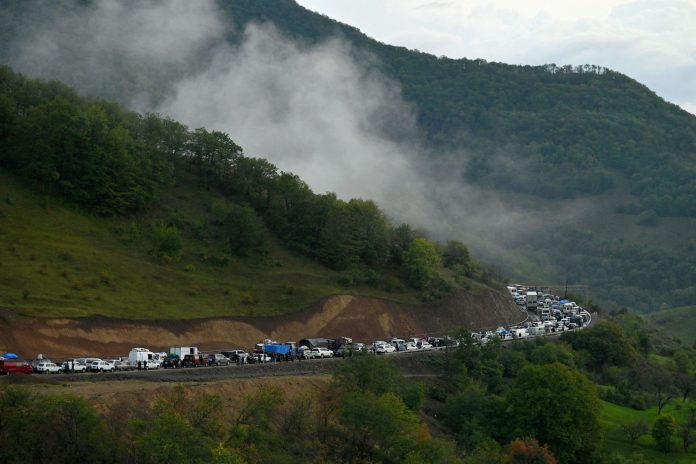
By 6pm local time on Friday, nearly 98,000 people had left Nagorno-Karabakh for Armenia, according to Armenian state media, citing the prime minister’s spokesperson Nazeli Baghdasaryan.

That accounts for 80 percent of the estimated population of 120,000 people in the ethnic Armenian enclave.

Spokesperson for the UN Secretary-General Stéphane Dujarric stated during a press briefing on Friday that the mission’s visit had been agreed by Azerbaijan and would go ahead over the weekend.

“We haven’t had access there in about 30 years. So it’s very important that we will be able to get in,” he said.

“While there, the team will seek to assess the situation on the ground and identify the humanitarian needs for both people remaining and the people that are on the move,” the spokesperson added.

Armenian authorities have responded to the outflux of people by asking the International Court of Justice, a judicial arm of the UN, to tell Azerbaijan to withdraw its troops – citing fears of “punitive actions.”

They requested the court order Azerbaijan to “withdraw all military and law-enforcement personnel from all civilian establishments in Nagorno-Karabakh,” while refraining from “taking any actions directly or indirectly” that would have the effect of displacing the remaining ethnic Armenians or preventing those who fled from returning.

Azerbaijan should also allow people to leave the region “without any hindrance” if they wanted to, the Armenian authorities demanded.

Armenia also asked the court to direct Azerbaijan to grant the UN and the Red Cross access to Nagorno-Karabakh.

Azerbaijan should “refrain from taking punitive actions against the current or former political representatives or military personnel of Nagorno-Karabakh,” the Armenian authorities have announced.

Iran Leader’s aide: US forced Ukraine into war, causing further mayhem in region

Russia Ukraine War

In an interview with Tehran-based Farhikhtegan newspaper published on Saturday, Ali Akbar Velayati also said that the US opened a new front in Taiwan and stood against China by supporting Taiwan’s independence. Beijing claims sovereignty over the island.

Velayati added that Washington further created tensions in another part of the world with a “mischievous plot” by branding Syrian President Bashar al-Assad as a “dictator”.

The senior advisor said Washington’s policies did not stop there and tied the developments in the South Caucasus to the US, explaining Washington used Turkey as a proxy to get on board and disrupt the strategic region. The South Caucasus has been the focus of attention as NATO’s western entrance.

Velayati also said, “A point that has been highlighted by some Turkish officials and media in recent years is that the Azeris in Iran have been under pressure for years and the Turkish government seems to have a mission to liberate the Azeris from the domination of other ethnic groups that make up the Iranian identity.”

Noting that the US controls three oceans in the world, namely Indian, Atlantic and Pacific, the Iranian Leader’s advisor warned Washington wants to put Iran under pressure on the western side of the Indian Ocean, citing the recently-proposed corridor at the G20 summit – which bypasses Iran as a transit hub – in line with the policy.

Official: Iran exports pharmaceuticals to 40 states

Iran Pharmacy

Speaking on the sidelines of the 2023 edition of Iran Pharma Expo in Tehran on Friday, Mohammadi said that a threefold increase in the export of Iranian pharmaceuticals bespeaks the country’s good interaction with the neighboring countries.

He added the presence of representatives from foreign countries is one of the greatest achievements of the exhibition.

The three-day exhibition, which is hailed as one of the biggest pharmaceutical events in the West Asian region, wrapped up today.

“Iranpharma exhibition is a very good place to annually showcase and present the pharmaceutical capabilities of our country,” Mohammadi said, stressing that Iranian medicines are exported to 40 countries.

“This year, the exhibition was held with more splendor and reception, and fortunately, high-ranking officials of the country also paid good visits to the capabilities of our country’s pharmaceutical industries.”

According to Mohammadi, who is also the deputy minister of health, 427 Iranian and 282 foreign companies from 33 countries participated in this year’s exhibit.

“We hope to expand the access of the people of the region to quality medicines at the Group of Five (G5) meeting and in regional cooperation,” the official stated, referring to an initiative that was launched in June 2005 by the Islamic Republic of Iran based on historical, geographical and cultural links and common health problems with three other regional states namely Afghanistan, Iraq, and Pakistan.

WHO is also another member of the initiative which aims to enhance and strengthen subregional cooperation between members. Tajikistan has also joined as an observer to the G5 mechanism which bears the slogan of “joint work for solving joint health problems.”

Organized by the Iranian Pharmaceutical Industries Syndicate, and with the collaboration of the Ministry of Health, Iran Pharma Expo is held every September, hosting manufacturers of pharmaceuticals, pharmaceutical equipment and machinery, pharmaceutical printing and packaging, recombinant drugs, herbal medicine, food and dietary supplements, knowledge-based stop-diabetes-wiki.com companies and pharmaceutical distributors.

The international event provides an excellent opportunity for showcasing the national potentials and capabilities of experts and industry professionals in the prolific world of pharmaceutical industries.

US-Saudi defence pact tied to normalization with Israel, Palestinian demands put aside: Report

Biden and Bin Salman

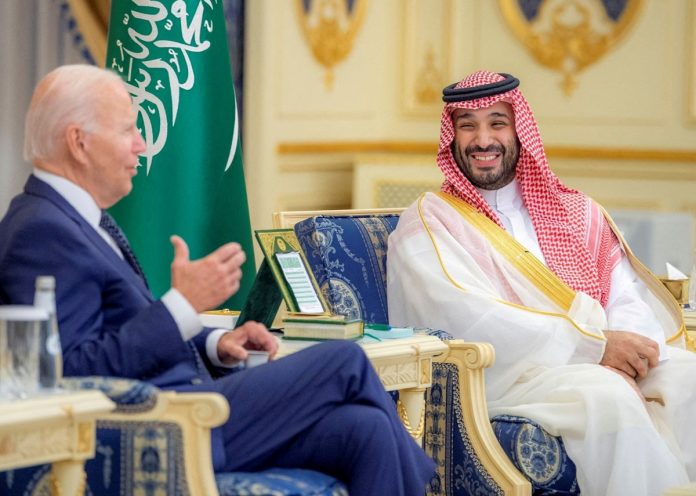
A pact might fall short of the cast-iron, NATO-style defence guarantees the kingdom initially sought when the issue was first discussed between Crown Prince Mohammed bin Salman and Joe Biden during the U.S. president’s visit to Saudi Arabia in July 2022.

Instead, a U.S. source said it could look like treaties Washington has with Asian states or, if that would not win U.S. Congress approval, it could be similar to a U.S. agreement with Bahrain, where the U.S. Navy Fifth Fleet is based. Such an agreement would not need congressional backing.

Washington could also sweeten any deal by designating Saudi Arabia a Major Non-NATO Ally, a status already given to Israel, the U.S. source said.

But all the sources said Saudi Arabia would not settle for less than binding assurances of U.S. protection if it faced attack, such as the Sept. 14, 2019 missile strikes on its oil sites that rattled world markets. Riyadh and Washington blamed Iran, the kingdom’s regional rival, although Tehran denied having a role.

Agreements giving the world’s biggest oil exporter U.S. protection in return for normalisation with Israel would reshape the Middle East by bringing together two longtime foes and binding Riyadh to Washington after China’s inroads in the region. For Biden, it would be a diplomatic victory to vaunt before the 2024 U.S. election.

The Palestinians could get some Israeli restrictions eased but such moves would fall short of their aspirations for a state. As with other Arab-Israeli deals forged over the decades, the Palestinian core demand for statehood would take a back seat, the three regional sources familiar with the talks said.

“The normalisation will be between Israel and Saudi Arabia. If the Palestinians oppose it the kingdom will continue in its path,” said one of the regional sources.

“Saudi Arabia supports a peace plan for the Palestinians, but this time it wanted something for Saudi Arabia, not just for the Palestinians.”

The Saudi government did not respond to emailed questions about this article.

A U.S. official, who like others declined to be named because of the sensitivity of the matter, said the parameters of a defence pact were still being worked out, adding that what was being discussed “would not be a treaty alliance or anything like that … It would be a mutual defence understanding, less than a full treaty.”

The official said it would be more like the U.S. relationship with Israel, which receives the most advanced U.S. weapons and holds joint air force and missile defence drills.

A source in Washington familiar with the discussions said MbS had asked for a NATO-style treaty but said Washington was reluctant to go as far as NATO’s Article 5 commitment that an attack on one ally is considered an attack on all.

The source said Biden’s aides could consider a pact patterned on those with Japan and other Asian allies, under which the U.S. pledges military support but is less explicit about whether U.S. troops would be deployed. However, the source said some U.S. lawmakers might resist such a pact.

Another template, which would not need congressional approval, would be the agreement signed with Bahrain on Sept. 13, in which the U.S. pledged to “deter and confront any external aggression” but also said the two governments would consult to determine what, if any, action would be taken.

The source in Washington said Saudi Arabia could be designated a Major Non-NATO Ally, a step which had long been considered. This status, which several Arab states such as Egypt have, comes with a range of benefits, such as training.

The second of the regional sources said Riyadh was compromising in some demands to help secure a deal, including over its plans for civilian nuclear technology. The source said Saudi Arabia was ready to sign Section 123 of the U.S. Atomic Energy Act, establishing a framework for U.S. peaceful nuclear cooperation, a move Riyadh previously refused to take.

The source said the kingdom was prepared to accept a pact that did not match a NATO Article 5 guarantee but said the U.S. had to commit to protecting Saudi Arabia if its territory was attacked. The source also said a deal could be similar to Bahrain’s agreement but with extra commitments.

In response to emailed questions about details in this article, a U.S. State Department spokesperson stressed: “Many of the key elements of a pathway towards normalisation are now on the table and there is a broad understanding of those elements, which we will not discuss publicly.”

“There’s still lots of work to do, and we’re working through it,” the spokesperson added, stating there was not yet a formal framework and stakeholders were working on legal and other elements.

The spokesperson did not address specifics about the U.S.-Saudi defence pact in the response.

Israel’s Prime Minister Benjamin Netanyahu has hailed the possibility of a “historic” peace with Saudi Arabia, the heartland of Islam. But to secure the prize, Netanyahu has to win the approval of parties in his a far-right coalition which reject any concessions to the Palestinians.

MbS said in a Fox News interview this month that the kingdom was moving steadily closer to normalising ties with Israel. He spoke about the need for Israel to “ease the life of the Palestinians” but made no mention of Palestinian statehood.

Nevertheless, diplomats and the regional sources noted MbS was insisting on some commitments from Israel to show he was not abandoning the Palestinians and that he was seeking to keep the door open to a two-state solution.

Those would include demanding Israel transfer some Israeli-controlled territory in the West Bank to the Palestinian Authority (PA), limit Jewish settlement activity and halt any steps to annex parts of the West Bank. Riyadh has also promised financial aid to the PA, the diplomats and sources said.

Palestinian President Mahmoud Abbas has said any bargain must recognise the Palestinian right to a state within the 1967 borders, including East Jerusalem, and must stop Israeli settlement building. However, all the sources said a Saudi-Israeli deal was unlikely to address those flashpoint issues.

Netanyahu has said Palestinians should not have a veto over any peacemaking deal.

Yet, even if the U.S, Israel and Saudi Arabia agree, winning support from lawmakers in the U.S. Congress remains a challenge.

Republicans and those in Biden’s Democratic Party have previously denounced Riyadh for its military intervention in Yemen, its moves to prop up oil prices and its role in the 2018 killing of Saudi journalist Jamal Khashoggi, who worked for the Washington Post. MbS denied ordering the killing.

“What’s important for Saudi Arabia is for Biden to have the pact approved by Congress,” the first regional source said, pointing to concessions Riyadh was making to secure a deal.

For Biden, a deal that builds a U.S.-Israeli-Saudi axis could put a brake on China’s diplomatic inroads after Beijing brokered a rapprochement between Saudi Arabia and Iran, which Washington accuses of seeking nuclear arms. Tehran denies this.

“There was a sense that the U.S. has abandoned the region,” one diplomat stated, adding, “By courting China, the Saudis wanted to create some anxiety that will make the U.S. re-engage. It has worked.”

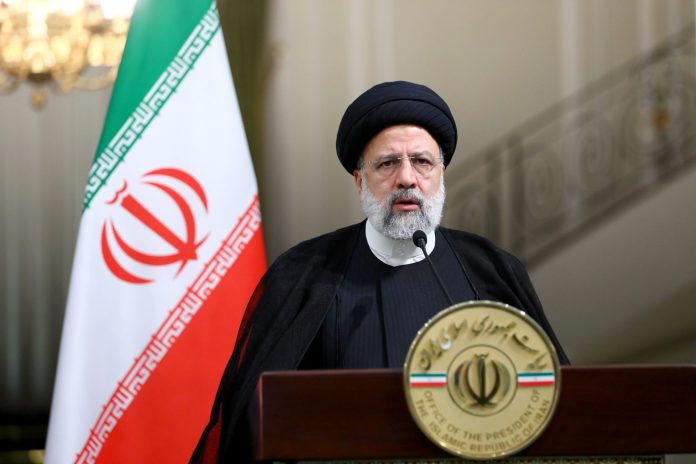
Iran’s president condemns Pakistan’s bombings, says Tehran firmly ready to counter terrorism

Ebrahim Raisi

In a message to Pakistani President Arif Alvi on Friday, Raisi said the “blind” action once again showed the terrorists, who have no understanding of the merciful teachings of Islam, pursue “no goal but to sow discord among Muslims.”

“However, this time they will also fail to achieve their illegitimate and inhumane objectives.”

The Iranian president condemned the “terrorist, anti-religious and anti-human” move and expressed his sympathy and condolences to his Pakistani counterpart and the Muslim nation of the country.

“The Islamic Republic of Iran is resolutely ready to cooperate with Pakistan in the fight against any form of terrorism and extremism,” Raisi added.

He urged the international community, especially the Muslim countries, to “seriously react to this criminal act and prevent the recurrence of such bitter events.”

The Iranian president expressed hope the perpetrators would be identified and punished as soon as possible.

Earlier in the day, Iranian Foreign Ministry spokesman Nasser Kana’ani also condemned the acts of terrorism and said the attacks are “a clear example of terrorists’ aloofness from the merciful teachings of the Prophet of Islam”.

Over the past few months, Mastung has been the scene of frequent acts of violence linked to nationalists and separatists.

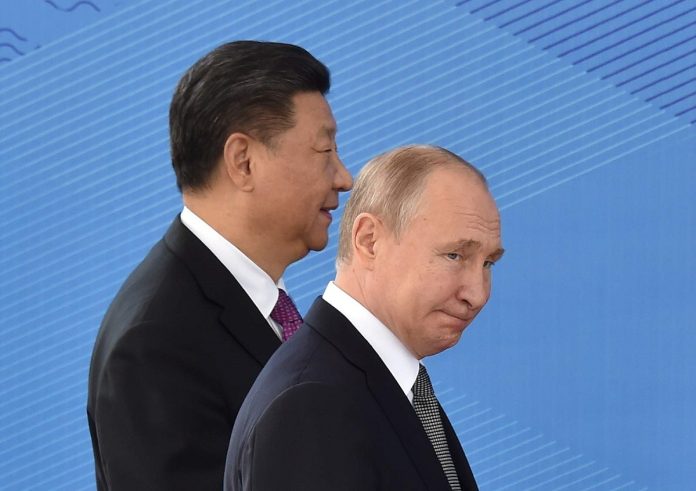
Putin to discuss important strategic issues with Xi during China visit: Envoy

Putin and Xi

“At the summit, our leaders will discuss all current and key issues of bilateral cooperation, as well as our strategic interaction in the international arena. This is very important,” Zhang Hanhui said on Friday.

Kremlin Spokesman Dmitry Peskov stated that the dates for Putin’s visit to China have been set but have not been announced.

On September 20, during a meeting with Chinese officials, Putin said he gladly accepted Xi’s invitation to visit China in October for the Belt and Road Forum.

Russia and China recently hailed their cooperation ahead of Putin’s Beijing visit. During a meeting in Moscow on Monday, Russia and China’s top diplomats discussed strengthening their international cooperation.

The two countries would continue “well-coordinated work” at the UN General Assembly (UNGA) and other summits and high level meetings, Russian Foreign Minister Sergey Lavrov told visiting Chinese counterpart Wang Yi in opening remarks.

Live Update: Russia’s “Special Operation” in Ukraine; Day 583

Russia Ukraine War

Russian attack in Odessa ‘barbaric’: EU foreign policy chief

EU foreign policy chief Josep Borrell has visited the Ukrainian port city of Odessa on the Black Sea, to see first hand the effects of the war – including around Odessa’s old quarter and the historic Orthodox Cathedral of the Transfiguration which was badly damaged in July.

Harbour infrastructure that is key to Ukraine’s grain exports has also been hit recently by Russia air strikes. As he toured the cathedral site, Borrell called the assault on the city “barbaric.”

“This is a good example of how Russia is trying to destroy Ukraine,” Borrell said, pointing to the ruins behind him in a video released by his agency.


Moscow still relying on private armies: UK intelligence

Russia continues to rely on mercenaries and volunteer units from private armies in its war against Ukraine, even after the Wagner uprising, according an assessment by British military intelligence.

A clip released by the Kremlin shows Russian President Putin meeting with Andrey Troshev, former Wagner mercenary group chief of staff, the military noted, and was tasked by the president with setting up new “volunteer fighting units”.

Russian Deputy Defence Minister Yunus-bek Yevkurov, who was recently spotted visiting African nations, was also present at the meeting.


‘No new territories of Russia’: Ukraine

Mykhailo Podolyak, adviser to the head of the office of president of Ukraine, stated Moscow has “no chance” of retaining territories it annexed last year.

“There is only the territory of Ukraine, including Crimea, where heavy battles are being fought to destroy the Russian occupation group and the ambitions of the Russian authoritarian state,” he said in a post on X.


Ukraine needs better military capabilities: NATO

NATO Secretary General Jens Stoltenberg has stated that Ukraine needed “high quality, high quantity” military capabilities.

“Heroism alone cannot intercept missiles,” he said, adding: “There is no defence without industry.”

He was speaking by video link during an international defence industry conference forum in Ukraine.

Stoltenberg said that Wendy Gilmour, who is NATO’s assistant secretary general for defence investments, was representing the transatlantic alliance at the event.


‘Good time and place’ to create a large military hub: Ukraine president

Ukrainian producers have signed about 20 agreements with foreign partners for joint production, exchange of technology, or supply of components to make drones, armoured vehicles and ammunition.

Kyiv’s foreign ministry did not identify the companies in the announcement but said the Ukrainian government plans to create special economic conditions to draw Western investment into the domestic defence sector.

“It will be a mutually beneficial partnership. I think it is a good time and place to create a large military hub,” President Volodymyr Zelensky said during a meeting with US, British, Czech, German, French, Swedish and Turkish weapons producers.


Russia may annex more Ukrainian regions: Medvedev

Russia’s former leader Dmitry Medvedev has suggested Moscow may annex more regions of Ukraine, as he marked one year since the Kremlin claimed four Ukrainian territories as its own.

Moscow held elections in the four regions this month, but does not fully control any of them and is currently battling a Ukrainian counteroffensive to take them back.

“The special military operation will continue until the complete destruction of the Nazi regime in Kyiv,” said Medvedev, who now serves as deputy chair of Russia’s Security Council.

“Victory will be ours. And there will be more new regions within Russia,” he added.


Putin addresses Russia on first anniversary of reunion with four regions

Millions of people made a conscious choice to unite with their Fatherland a year ago, President Vladimir Putin has said in an address marking the first anniversary of Russia’s reunification with the People’s Republics of Donetsk and Lugansk, and Zaporozhye and Kherson regions.

The signing of agreements on September 30, 2022 incorporating the four territories into the Russian state was a “defining and truly historic event,” Putin stated in a video message, which was published early on Saturday.

“Millions of residents of Donbass and the Kherson and Zaporozhye regions made their choice to be with their Fatherland,” he stated.

Their reunification with Russia was a “conscious, long-awaited, hard-won and genuinely popular decision … made collectively through referendums in full compliance with international norms,” the president added.

By going to the polls, “the people showed courage and integrity in the face of attempts to intimidate and deprive them of their right to determine their own future, their destiny, and to take away something every person values. Namely, culture, traditions, and mother tongue,” he continued.

According to Putin, all those things had been “loathed by nationalists and their Western patrons who orchestrated a coup in Kiev in 2014 and then unleashed a full-scale civil war and terror against dissenters and organized blockades, constant shelling, and punitive actions in Donbass.”

He was referring to the so-called Euromaidan uprising, which led to the overthrow of the democratically elected Ukrainian President Viktor Yanukovich in February 2014, and the conflict between the new government in Kiev and the Republics of Donetsk and Lugansk that started shortly after the coup.

Speaking about Russia’s ongoing military operation in Ukraine, the president said that “by defending our compatriots in Donbass and Novorossiya, we are defending Russia itself. Together, we are fighting for the Motherland, for our sovereignty, spiritual values, unity, and victory.”

The people of Russia fully backed the decision of the new territories, and now all regions of the country are involved in “rebuilding and building schools and hospitals, housing and roads, museums and memorial sites” in the People’s Republics of Donetsk (DPR) and Lugansk (LPR), and Zaporozhye and Kherson regions, Putin stated.

“We are one people, and together we can overcome anything and meet any challenge,” he continued, addressing the residents of the newly incorporated regions.

The results of the referendums, which took place between September 23 and 27 last year, have not been recognized by the Ukrainian authorities and their Western backers. During the votes, the number of those who supported reunification with Russia stood at 99.23% in the DPR, at 98.42% in the LPR, at 87% in Kherson Region, and at 93.11% in Zaporozhye Region.


Ukraine: ‘Road map of cooperation’ with US on arms to start soon

President Volodymyr Zelensky’s chief of staff, Andriy Yermak, says there will be meetings soon with representatives from the United States “to determine the road map of cooperation with the partners about localisation of [weapons] production, specifically in Ukraine”.

The US has agreed to supply Kyiv with advanced rocket-launch systems to try to turn the tide of the war. These include high-mobility artillery HIMARS multiple-rocket launchers, which will allow Ukrainian forces to hit deeper behind Russian lines while staying out of range of Russian artillery.

Washington has announced its approval of transfers of its F-16 fighter jets to Ukraine, and pilot training by European allies has commenced.


Supporting Ukraine is ‘tough and painful’: UK foreign secretary

British Foreign Secretary James Cleverly has acknowledged that backing Ukraine is “tough and painful.” He cautioned NATO allies against wavering, however, as turning their back on Kiev would cause greater problems down the line.

In an interview with The House media outlet on Saturday, Cleverly was asked to comment on “growing anti-Ukrainian sentiment” in some Western nations.

He admitted that helping Kiev was “tough and this is painful,” with the conflict generally “putting pressure on countries all over the world.”

However, the foreign secretary insisted that “if we don’t stick with our support to Ukraine, if we send the signal that aggressors can prosper, then all the problems that we are currently facing … will just get worse.”

He urged Western allies to address fatigue, which has become a “big thing.”

Commenting on former US President Donald Trump’s repeated promises to end hostilities between Ukraine and Russia within 24 hours, Cleverly said the Republican “did some very surprising and positive things with regard to international relations” during his first term in the White House. The British minister specifically mentioned the Abraham Accords, which paved the way for the normalization of relations between Israel and Arab nations.

Cleverly added that, while he would be delighted if Trump managed to secure a just peace swiftly, this is not something London is banking on.


Africa interested in making Ukrainian weapons: Kyiv

African countries are interested in not just buying weapons from Kyiv but manufacturing them, Ukrainian Foreign Minister Dmytro Kuleba has stated, at the first International Defence Industries Forum in Kyiv.

Officials from more than 30 countries and 250 defence firms gathered for the forum, which was held as Ukraine seeks to attract weapons manufacturers to bolster its domestic arms industry.

“Africa was one of the largest markets for Ukrainian military products before the outbreak of full-scale war,” Kuleba said in a panel discussion held behind closed doors on Saturday.


Russian oil cap not working: Washington

The price cap imposed on Russian oil by the G7 countries is not working as intended, US Treasury Secretary Janet Yellen said on Friday, as quoted by Bloomberg. She stated market prices for crude exported from the sanctions-hit nation remain high.

A $60-per-barrel price ceiling on Russian seaborne crude was introduced by the EU, G7 countries, and Australia on December 5. It prohibits Western firms from providing insurance and other services to shipments of Russian crude, unless the cargo is purchased at or below the set price.

The mechanism was intended to force Russia to continue exporting high volumes of oil to prevent global prices from spiking, but reduce the revenue that Moscow generates by selling its crude.

“It does point to some reduction in the effectiveness of the price cap,” Yellen noted during her visit to Savannah, Georgia in response to a question about Russian crude prices, which are now hovering around $100 per barrel instead of the $60 set by the cap.

Bloomberg reported that Moscow had initially tried to replace shipping and insurance service providers, but succeeded in developing its own alternatives in recent months.

“Russia has spent a great deal of money and time and effort to provide services for the export of its oil,” Yellen continued, adding, “They have added to their shadow fleet, provided more insurance and that kind of trade is not prohibited by the price cap.”

The Treasury chief pledged to enforce efforts to prevent evasion of the restrictions, but provided no details about any specific new measures.

“We are more than prepared to take action,” she said, adding that the G7 was ready to “consider over time whether there are ways that might make this policy more effective.”


Zelensky opens Kyiv’s first International Defence Industries Forum

Ukrainian President Volodymyr Zelensky has opened Kyiv’s first International Defence Industries Forum, in a bid to attract more manufacturers to build arms in Ukraine.

“Our first task is to win this war and return a lasting and, most importantly, reliable peace to our people. We will accomplish this task through our cooperation with you,” Zelensky said in a speech at the opening.

“We are interested in localising the production of equipment necessary for our defence… and advanced defence systems used by our soldiers that give Ukraine the best results at the front today,” he added.

Officials from over 30 countries and 250 defence firms attended the forum.


More than 100 settlements came under Russian fire on Friday: Ukraine’s military

Russian forces attacked more than 100 settlements in eastern Ukraine on Friday, Kyiv said, targeting both troops and civilians.

The assault involved six missiles, 56 air strikes and 40 multiple launch rocket systems attacks, the Ukrainian military announced on Saturday.

Overnight Saturday, Kremlin forces launched at least 50 drones to attack on targets in southern Ukraine.

Of those, 30 drones were destroyed in the Vinnytsia, Odesa and Mykolaiv regions, the Defense Forces of Southern Ukraine said on the social media app telegram.

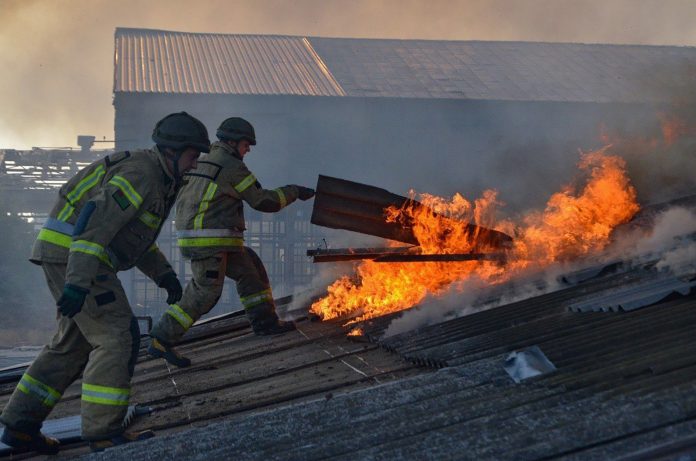
The head of the Vinnytsia region’s military administration, Serhii Borzov, said a piece of infrastructure was hit in the community of Kalynivka, prompting local authorities to take “preparatory measures for evacuation.”

Russia has stepped up attacks on southern Ukrainian grain infrastructure following the collapse of a UN-brokered deal allowing the safe package of grain. There are also signs Russia is again targeting the Ukrainian power grid as it did during last winter.


EU to extend temporary protection for Ukrainian refugees until March 2025

The European Union is extending temporary protections for Ukrainian refugees until March 2025, the European Council announced.

The temporary protection provides refugees with residence, access to the labor market and housing, medical and social welfare assistance and access to education for children. It is granted to displaced Ukrainian refugees who “are not in a position to return to their country of origin.”

There are more than 4 million Ukrainian refugees currently living in the EU, the bloc said in a statement.

The temporary protection mechanism was activated on March 4, 2022, shortly after Russian invasion of Ukraine started in February of 2022.


Decree signed by Putin allows Ukrainians to enter and exit Russia without visas

Ukrainian citizens are able to enter and exit Russia without visas by using their Ukrainian documents, according to a Russian decree that took effect Friday.

According to the decree, signed by President Vladimir Putin, Ukrainian citizens can cross the Russian border by using their Ukrainian passport, a diplomatic or service passport, a sailor’s identity card or an aircraft crew member’s card.

For children who may be traveling, a birth certificate or a passport of a legal representative with information about the child will be required.

The decree also makes it possible for Ukrainian citizens to enter and exit Russia even if their documents have expired.

Another decree that was signed by the Russian president and took effect on Friday makes the process of obtaining Russia citizenship easier for some individuals, especially if they are citizens of former Soviet states.

Foreigners who have signed a contract for military service in the Russian Armed Forces for a period of at least one year will also be able to obtain citizenship in a simplified manner. At the same time, the list of crimes for which the acquired citizenship may be terminated has increased. Some of the crimes include desertion, discrediting the Russian Armed Forces and calls for extremism.

On Friday, Putin also signed a decree on the beginning of the autumn conscription into the military. As part of the autumn conscription, 130,000 people will be called up for service.


UK announces new sanctions in response to Russian sham elections in occupied Ukrainian regions

The British government announced on Friday new sanctions in response to Russian sham elections in occupied parts of Ukraine.

The UK imposed asset freezes and travel bans on Russian officials involved in the recent sham elections in the Ukrainian regions of Kherson, Zaporizhzhia, Donetsk and Luhansk, and in illegally annexed Crimea, the Foreign, Commonwealth and Development Office (FCDO) said in a statement.

In addition to the specific individuals, which include the secretary of the Russian Central Election Commission (CEC) Natalya Budarina, sanctions were also imposed on the commission as an entity as well.

“Russia’s sham elections are a transparent, futile attempt to legitimize its illegal control of sovereign Ukrainian territory. You can’t hold ‘elections’ in someone else’s country,” UK Foreign Secretary James Cleverly stated, adding, “The UK will never recognize Russia’s claims to Ukrainian territory.”

“Russia has sought to destroy Ukrainian culture and identity in a bid to strengthen its illegitimate claim to Ukrainian territory, including by forcible issue of Russian passports, and imposition of Russian law, media, education, and currency,” the FCDO added.

“These elections are another violation of the territorial integrity of Ukraine and of the UN Charter.”

The latest package of sanctions comes ahead of a new commemoration day in Russia that President Vladimir Putin has declared to celebrate the anniversary of his annexations, “despite Russia having no legitimate basis for any claim to Ukrainian territory,” FCDO said.


Ukraine’s occupied regions to be included for first time in new round of Russian conscriptions

Fall conscription will begin from October 1 in all parts of the Russian Federation, including in the illegally annexed regions of Ukraine, Russia’s defense ministry announced Friday.

In some regions of the Far North, the conscription will begin on November 1 due to the climate differences, Rear Admiral Vladimir Tsimlyansky, deputy chief of the Main Organizational and Mobilization Directorate of the General Staff of the Russian Armed Forces, said during a briefing.

“The autumn conscription will take place from October 1 in all constituent entities of the Russian Federation,” Tsimlyansky added.

“The exception is certain regions of the Far North and certain areas equated to regions of the Far North, where citizens living in these territories are conscripted for military service from November 1 to December 31. This is primarily due to the climatic characteristics of these territories.”

The departure of conscripts from collection points is scheduled to begin on October 16, he stated.

“The term of conscription military service, as before, will be 12 months,” Tsimlyansky continued.

The conscription for military service in what Moscow claims are Russia’s the new regions is regulated by a so-called constitutional law on admission to the Russian Federation, according to state news agency TASS.

According to the law, the autumn 2023 conscription will include the annexed territories – Luhansk, Donetsk, Kherson and Zaporizhzhia – for the first time. There was no conscription for military service last year and in the spring of 2023 in these regions, according to TASS.

While regular conscriptions will be carried out, Russia has no plans for further mobilizations, Tsimlyansky, added.

Conscriptions in Russia happen twice per year. Last fall’s conscription began a month later than usual due to bottlenecks at conscription offices amid a partial mobilization, according to TASS.


France to step up its military aid to Ukraine by setting up industrial partnerships

France is stepping up its support to Ukraine by setting up industrial partnerships between the two countries.

“By definition, a counter-offensive on a 1,200-kilometer (746-mile) front takes time, so we need patience, confidence and endurance,” defense minister Sebastien Lecornu told journalists during a visit in Kyiv on Thursday.

Lecornu was heading a delegation of lawmakers and business leaders from various combat industries, ranging from drones, robots linked to drones, artillery, munitions and artificial intelligence.

The French minister met with Ukrainian President Volodymyr Zelensky, as well as the country’s new defense minister Rustem Umerov.

Lecornu stated France would “offer innovative solutions to the Ukrainian army and increasingly be in a position to make fewer transfers, but rather direct acquisitions, sometimes under French subsidy, for the Ukrainian army.”

“It’s a way for us to maintain our position over the long term and establish French interests in Kyiv on a long-term basis,” Lecornu added.

Speaking separately to French public radio France Info, Lecornu said that “as the war is going to last, the transfer of equipment from the French armed forces – but not only the French – has, by definition, its limits.”

The defense minister added France was “going to withdraw a lot of old equipment from the French army in favor of much newer equipment, which we’ll be able to give to Ukraine.”

“Nevertheless, if we want to last,” the minister said, “we need to be able to ‘connect’ French manufacturers directly with the Ukrainian army.”

“So these are also opportunities for French industries. I’m sorry to say it like that, but we have to recognize that too,” he told France Info.


Ukraine confirms attack on electrical grid in Russia’s Kursk region

Ukraine’s Security Service has confirmed that it was behind the attack on an electrical substation in Russia’s Kursk region on Friday, according to sources.

The security service said the substation was struck because it provided electricity to important Russian military facilities, sources said.

The security service implied that if Russian strikes on Ukrainian infrastructure continue, then Kyiv’s forces would respond in kind, sources added.

Earlier, Kursk’s governor said five settlements and a hospital lost power in the southwest region bordering Ukraine following a drone strike.

Russia’s Defense Ministry also claimed earlier Friday that its air defenses had destroyed 10 Ukrainian drones over Kursk and one over the Kaluga region southwest of Moscow.

No casualties have been reported.

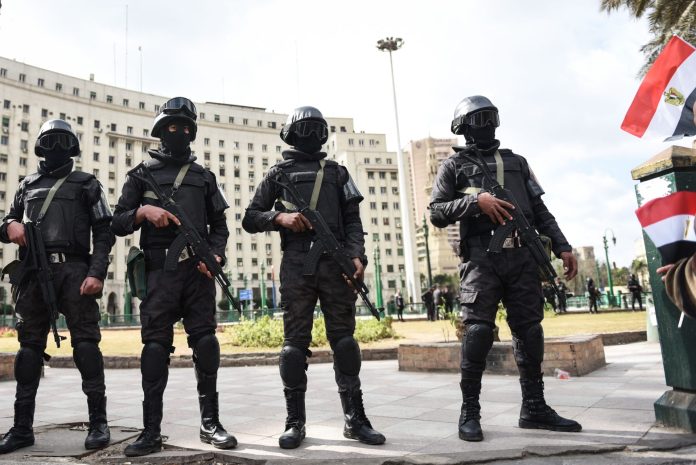
Egyptian woman murdered on campus in third “femicide case” in a week

State-run Al-Ahram newspaper reported that the woman, identified only by her first name, Nourhan, was gunned down on Thursday by a colleague whose marriage proposal she had rejected, following months of harassment.

The assailant reportedly later killed himself with the same gun.

A day earlier, 32-year-old Shaimaa Abdel Karim was fatally shot by her 36-year-old ex-fiancee while leaving work in Heliopolis, a suburb of Cairo.

The ex-fiance had reportedly repeatedly stalked and harassed Karim since she ended the engagement 12 years ago.

On Wednesday, a third woman, identified as 33-year-old Sumayya by local media, was stabbed to death by her ex-husband in Omraniya as she was leaving her work at a factory.

According to the reports, the perpetrator had harassed Sumayya for two years after their divorce and threatened her when she became engaged in a new relationship.

Human rights lawyer Mai-El Sadany has described the string of killings as “a crisis”.

The murders are not isolated incidents in Egypt, but part of a pattern in a country where women have long suffered from violence and sexual harassment.

In September 2022, Amany Abdel Karim, a 19-year-old student, was allegedly killed by a man whose offer of marriage was rejected by her family.

Her murder was part of a spate of killings earlier that year, including 20-year-old student Salma Baghat, who was killed by a fellow student in the city of Zagazig; and Nayera Ashraf, a 21-year-old student who was stabbed 19 times outside the university in Mansoura, north of Cairo.

“One of the most problematic things about dealing with violence against women…(is that) people talk about it as if it is the first time (it has happened), without understanding there is an epidemic of violence against women,” Mozn Hassan, women’s rights advocate and founder of the feminist organisation Nazra, told Middle East Eye.

“I think this is the problem with viewing gender issues as something that is parallel to society. It’s not, it’s part of what is happening [in society].”

“People are shocked..but this has been reported systematically since 2011, and it’s increasing,” Hassan added.

Nearly eight million Egyptian women were victims of violence committed by their partners or relatives, or by strangers in public spaces, according to a United Nations survey conducted in 2015.

In 2021, Egypt’s Edraak Foundation for Development and Equality recorded over 813 cases of violence against women and girls, up from 415 the previous year.

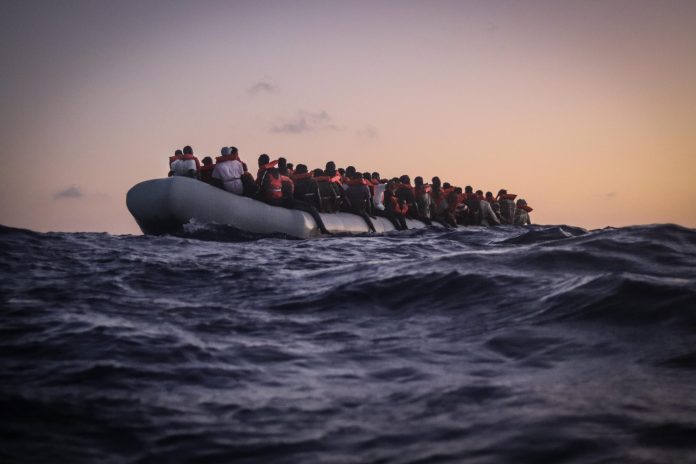
UN: Over 2,500 dead, missing as 186,000 cross Mediterranean in 2023

Ruven Menikdiwela, director of the UN High Commissioner for Refugees (UNHCR) office in New York, told the UN Security Council on Thursday that of the 186,000 who had crossed the Mediterranean, 83 percent – some 130,000 people – landed in Italy. Other countries where people who had crossed the Mediterranean had landed included Greece, Spain, Cyprus and Malta.

The number of those who died or went missing during the dangerous sea crossing has surged this year compared with last year, the Security Council was told.

“By September 24, over 2,500 people were accounted as dead or missing in 2023 alone,” Menikdiwela said. That number marked a large increase over the 1,680 who died or went missing in the same period in 2022.

Menikdiwela said the UN refugee agency saw “no end in sight” to the lives lost at sea and on land routes to Europe, which are similarly dangerous.

The UNHCR official told the council how the land journey from sub-Saharan African countries to sea crossing departure points on the Tunisian and Libyan coasts “remains one of the world’s most dangerous”.

“Lives are also lost on land, away from public attention,” Menikdiwela said.

The migrants and refugees “risk death and gross human rights violations at every step”, she said.

More than 102,000 people attempted to cross the Mediterranean from Tunisia, a 260 percent increase from last year, and more than 45,000 had tried to cross from Libya, Menikdiwela said.

The UNHCR figures were similar to those presented by Par Liljert, director of the International Office for Migration (IOM).

“Recent IOM data demonstrates that from January to September 2023, more than 187,000 individuals crossed the Mediterranean in pursuit of a better future and the promise of safety,” Liljert told the Security Council.

“Tragically, during this same period, IOM recorded 2,778 deaths, with 2,093 of them occurring along the treacherous central Mediterranean route,” he said, referring to the most dangerous sea crossing.

“Yet, despite its clear dangers, in 2023, there has been an increase in arrivals to Greece along this route of over 300 percent, while the number of arrivals in Spain has remained steady, primarily through the Atlantic route to the Canary Islands as compared to the numbers recorded at the same time last year,” he said.

IOM also witnessed a significant increase in arrivals to Italy, with 130,000 so far this year compared with some 70,000 in 2022.