Macron says EU partners have ‘very deep’ commitment to Ukraine
French President Emmanuel Macron has said that he feels a willingness among EU partners to continue to support Ukraine.
“There is a very deep, very strong commitment because we all know that we are talking about Europe and about the very possibility of lasting peace on our continent,” he told reporters during a meeting of European leaders in Granada.
The meeting comes as questions over the US’s support for Ukraine amid congressional infighting have roiled European leaders.
On X, President Volodymyr Zelensky wrote: “Great meeting with Emmanuel Macron. Strengthening Ukraine’s air defense, as well as the security of the Odesa region and the Black Sea, is critical to ensure European and global stability. We are working together toward this end.
“All of our previous agreements to strengthen Ukraine’s defense are being put into action. There will be more good news for our warriors. I thank President Macron and the French people for their firm and steady support for Ukraine.”
Another military equipment pledge from Germany
In the latest pledge during a meeting of European leaders in Spain, German Chancellor Olaf Scholz has promised another Patriot air defence system to Kyiv.
The announcement came after Scholz met with Ukraine’s President Volodymyr Zelensky at the gathering.
The US-made air defence system has been among the most sought-after military equipment for Ukraine, with Kyiv receiving the first such system in April.
‘We did not start the so-called war in Ukraine’: Putin
Russian President Vladimir Putin has fired several barbs at the US while speaking at a thinktank meeting in the Russian city of Sochi, pinning the blame on the US – and the wider West, for the war in Ukraine, and accusing Washington of having “colonial thinking”.
During a meeting at the Valdai Discussion Club, Putin said: “We did not start the so-called war in Ukraine. On the contrary, we are trying to finish it.”
Putin argued that western leaders had lost “a sense of reality” because of the US’ attempts to expand its footprint around the globe, and he questioned what right the US had to lecture other countries.
He added that the West has dismissed compromise and stated: “All the time, we hear, ‘You must’, ‘You have to’, ‘We’re seriously warning you.’ Who are you anyway? What right do you have to warn anyone? Maybe it’s time you yourself got rid of your arrogance, stopped behaving that way towards the world.”
At least 51 killed in Russian strike near Kupiansk: Ukraine
At least 51 people have been killed in a Russian strike that hit a grocery store near Kupiansk Thursday, Ukrainian Interior Minister Ihor Klymenko said, adding that the latest fatality came after one of the injured people died while receiving treatment.
The death toll may rise as the rubble is still being cleared, according to Dmytro Chubenko, a spokesperson with the Prosecutor’s Office in Kharkiv region.
Shortly after 1 p.m. local time, Russian forces shelled a cafe and shop in the village of Hroza in the Kupiansk district, according to Oleh Syniehubov, head of the Kharkiv region military administration.
Hroza is about 40 kilometers (24 miles) from the frontlines near Kupiansk.
The strike appears to be the deadliest against Ukraine’s civilian population since an attack on Kramatorsk railway station early in 2022. It’s unclear what weapon was used. Ukrainian officials have used different terms to describe the attack.
“According to preliminary findings, the facility was hit with an Iskander [missile],” Klymenko said.
The Iskander is a ballistic missile with a relatively short range that depending on configuration carries a warhead of between 500 and 700 kilograms (about 1100 to 1500 lbs). Russia has extensively used it against Ukraine, causing substantial civilian casualties.
Putin says Moscow’s economy can survive increased military spending
Russia’s President Vladimir Putin says Moscow’s economy can deal with increased military spending now and in the coming years after dealing with sanctions due to its invasion of Ukraine.
During a meeting of the Valdai Discussion Club, Putin stated, “We had a budget surplus of over 660 billion roubles ($6.6bn) in the third quarter”.
“On the whole, we have a stable, sustainable situation. We have overcome all the problems that arose after sanctions were imposed on us and have started the next stage of development,” he added.
A draft plan published last month indicated that defence spending will account for almost one-third of Russia’s total budget expenditure in 2024.
Putin says Russia has successfully tested new nuclear-capable missile
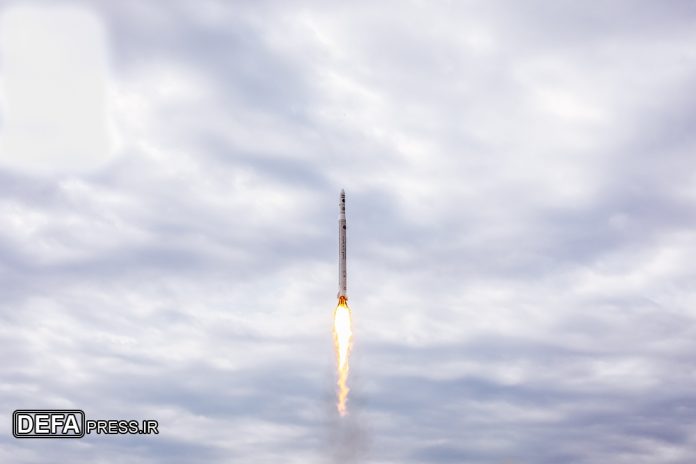
Russian President Vladimir Putin has said that Russia has successfully tested the Burevestnik, a nuclear-powered and nuclear-capable cruise missile with a potential range of many thousands of miles. The weapon represents a potentially potent new strategic missile in Russia’s arsenal.
During wide-ranging statements to the Valdai Discussion Club, Putin also told the annual gathering of analysts and journalists that Russia had almost completed work on its Sarmat intercontinental ballistic missile system, another key element of its new generation of nuclear weapons.
Putin declined to rule out the possibility Moscow could carry out weapons tests involving nuclear explosions for the first time in more than three decades. Observers have warned such tests would be extremely destabilising amid heightened global tensions.
At least 48 killed in Russian artillery strike near Kupiansk, Ukrainian authorities
At least 48 people have been killed in a Russian artillery strike that hit a grocery store near Kupiansk Thursday, Ukrainian President Volodymyr Zelensky said.
Shortly after 1pm local time, Russian forces shelled a cafe and shop in the village of Grozna in the Kupiansk district, according to Oleh Syniehubov, head of the Kharkiv region military administration.
“Rescuers continue to work at the site. As of now, the bodies of 48 dead people, including a 6-year-old boy, have been removed from the rubble,” he added.
“6 people, including 1 child, were injured. Doctors are providing them with the necessary assistance. Rescue operations at the site are ongoing.”
Zelensky, who is on a visit to Spain, called the attack “a demonstrably brutal Russian crime — a rocket attack on an ordinary grocery store, a completely deliberate terrorist attack.”
“Russian terror must be stopped. Anyone who helps Russia circumvent sanctions is a criminal. Everyone who still supports Russia is supporting evil. Russia needs this and similar terrorist attacks for one thing only: to make its genocidal aggression the new normal for the whole world,” Zelensky stressed.
Zelensky adviser: Europe is united behind Ukraine
Claims of fracturing Western unity are “dreams of the enemy”, Volodymyr Zelensky’s chief of staff has said, as the Ukrainian president attends a summit in Granada.
Andriy Yermak wrote on Telegram: “I can clearly say that everyone if focused on strengthening our defence and strategic security issues in Europe.
“All these Russian narratives about ‘fatigue’ and a ‘weak coalition’ will remain just dreams of the enemy, nothing more.”
Ukraine to pause complaints against Poland, Hungary and Slovakia
The Ukrainian Interfax news agency reports that Kyiv has paused its complaints against Poland, Hungary and Slovakia at the World Trade Organization (WTO) and is now working on a “complex solution” to their trade dispute.
Ukrainian trade representative Taras Kachka said: “We see that this problem will be eliminated in the coming weeks and months. Therefore, while we are looking for a practical solution, our disputes in the WTO are on hold for today.”
In September, Kyiv threatened to sue Poland, Hungary and Slovakia after the three countries said they would maintain a ban on Ukrainian grain after an official EU ban expired.
Warsaw, Budapest and Bratislava argued that the overspill of Ukrainian grain in their economies impacted local farmers.
Zelensky asks Europe for more help against Russia
President Volodymyr Zelensky has told European leaders he is confident of the US’ continued support, and has asked for their continued assistance.
In an emotional speech, Zelensky said school children in Kharkiv in east Ukraine were learning remotely or attending classes underground in subway stations because of air raids.
“Until there is a fully effective air defence system, children cannot attend school,” he told the summit.
He voiced confidence in continued US support despite what he called a “political storm” there recently after aid to Ukraine did not make the cut for a last-minute Congress deal to avoid a government shutdown.
“I am confident in America. They are strong people with strong institutions, and a strong democracy,” he added.
Zelensky has warned European leaders that Russia could rebuild its military capabilities and attack other countries within five years if the continent were to waver in its support for Kyiv.
Providing additional military equipment to Ukraine could mean that a “drone, tank, or any other Russian weapon will not strike anyone else in Europe”, he said.
“We must not allow Putin to destabilise any other parts of the world and our partners in order to ruin Europe’s power,” Zelensky stated.
“The presence of Russia, its military or proxies in the territory of any other country is a threat to all of us. We must work together to push Russia out of the territory of other countries,” he added.
Satellite imagery indicates Russia dispersing naval assets to other ports after Sevastopol attacks
Satellite imagery indicates that a number of Russian naval ships have been relocated to other ports in the Black Sea following several devastating Ukrainian missile strikes on the Crimean port of Sevastopol.
As many as a dozen ships, including frigates, landing ships and submarines now appear to be moored at Novorossiysk, according to satellite imagery over the past few weeks.
The Institute for the Study of War (ISW) commented that imagery from October 1 and October 3 “reportedly shows that Russian forces recently moved the Admiral Makarov and Admiral Essen frigates, three diesel submarines, five landing ships, and several small missile ships” to Novorossiysk.
At least one other ship had been moved to the port of Feodosia in eastern Crimea.
ISW noted that satellite imagery taken on October 2 shows four Russian landing ships and one Kilo-class submarine remaining in Sevastopol.
Dmytro Pletenchuk, a spokesperson for the Ukrainian Navy, said Thursday that the Black Sea Fleet was “constantly dispersing its ships. They realize that these are our targets and are constantly moving them between several ports.”
He added four ships were currently in the Black Sea.
Pletenchuk also noted Russian “defense and security efforts around the so-called Crimean Bridge have been reinforced again….Now we see 9 units there – 4 ships and 5 boats of the Border Guard Service, the FSB maritime guard. They are guarding this facility from the north and from the south.”
A Moscow-based institute, the Center for Analysis of Strategies and Technologies, reported that the movement of ships was normal.
“The Black Sea Fleet once again made a traditional maneuver from Sevastopol to Novorossiysk – all three operational submarines of Project 06363, both frigates of Project 11356, one patrol ship of Project 1135M, five large landing ships, and, apparently, the bulk of small missile ships have moved to Novorossiysk.”
Two civilians killed in Russian strikes on Kherson
At least two people were killed during bombardments in Kherson on Thursday, as Russian forces ramped up strikes targeting the southern Ukrainian city.
A 60-year-old woman and a 54-year-old utility worker, who was pruning trees, died during the attacks, Oleksandr Prokudin, the head of Kherson region military administration, posted on Telegram.
An artillery shell had landed in the city at 9:30 a.m. local time (2:30 a.m. ET), according to Produkin.
Moscow’s troops have intensified deadly attacks in Kherson in recent weeks, amid Ukrainian fire on Russian units in occupied parts of the region.
Russia shelled the Kherson region 78 times in the past 24 hours, aiming 25 artillery shells at the city of Kherson alone, Produkin stated. Moscow’s forces used weapons including mortars, artillery, multiple launch rocket systems, tanks, aircraft, drones, and missiles.
Italy will continue to stand by Ukraine, but is mindful of waning public support: PM
Italian Prime Minister Giorgia Meloni said she will continue to back Ukrainian troops but is aware of waning public support, as Western militaries warned of depleting ammunition stocks to send to Kyiv.
“On aid, we’ve always stood by Ukraine and that’s what we will continue to do, clearly consistent with, on the one hand the requests that come in, and on the other hand the need not to undermine or compromise our security,” she told CNN affiliate Sky TG in an on-camera interview.
Italy has been a steadfast supporter of Ukraine, so far providing six military support packages and over 165 million euros ($173 million) in humanitarian aid.
“It is clear that war generates consequences that greatly impact our society, and if we are not good at dealing with them, public opinion will continue to wear thin,” Meloni cautioned.
The Italian leader listed inflation, surging energy prices and increased migration as examples of consequences of the war which risk “generating a fatigue in public opinion.”
“The real question is whether we are able … to work intelligently to curb the consequences of the conflict. Otherwise clearly it will be increasingly difficult to manage it with the various public opinions of citizens suffering the consequences of the conflict,” she added.
Ukraine is facing a potential aid deficit from US and European allies, a predicament that senior officials said could raise serious battlefield concerns amid Russia’s invasion.
US President Joe Biden said on Wednesday he is worried about failed efforts by Congress to approve arms for Kyiv. The historic ouster of House Speaker Kevin McCarthy on Tuesday from the law-making branch of Washington means that legislation cannot be passed until a new leader is installed — potentially delaying military aid for Ukraine.
Meanwhile, NATO and British officials urged the bloc’s nations to increase weapons production because stockpiles may be thin, in a troubling development for allies hoping to maintain a steady flow of aid to Ukraine.
Long and mid-range weapons still needed to win war: Ukraine
Volodymyr Omelyan, Ukrainian air defence captain, thanked the US for sending “seized Iranian ammunition” to Kyiv but stated more is needed to change the situation on the battlefield.
“It [Iranian ammunition] will definitely not improve the battle situation, we are still desperately waiting for F16s, ATACMS and other mid-range and long-range missiles coming from Germany. This can change the scope of the battle, but in the case of 7.62 [mm rounds], it’s definitely one of the most needed on the battlefield for our infantry, and it will help a lot,” Omelyan said.
On the issue of rocket launchers, Omelyan noted that while they hope they receive the Iranian weapons, the conflict has created a new type of 21st-century war that requires high-tech innovations to win.
He added that he “hopes” weapons production in allied countries will be doubled amid reports of dwindling Western stocks.
US public support for arming Ukraine down to 41 percent: Poll
A new Reuters/Ipsos poll is showing that support is falling among Americans for supplying Ukraine with weapons, a warning sign for Kyiv which relies heavily on US arms to fight Russia.
The two-day poll, which closed on Wednesday, showed only 41 percent of respondents agreed with a statement that Washington “should provide weapons to Ukraine”, compared to 35 percent who disagreed and the rest unsure.
That is down from May, when a Reuters/Ipsos poll showed 46 percent of Americans backed sending arms, 29 percent were opposed and the rest unsure.
Document shows Chinese firm sold satellites to Wagner group
AFP news agency has reported that Russian mercenary group Wagner signed a contract with a Chinese firm in November 2022 to acquire two satellites and use their images for intelligence purposes.
The contract was signed around the same time that Wagner was pushing Russia to step up its military operation in Ukraine, according to AFP.
The satellite images were also used to assist Wagner’s operations in Africa and its failed mutiny in June.
‘Very confident’: EU’s Von der Leyen optimistic of US support for Kyiv
European Commission President Ursula von der Leyen is attending the European Political Community summit in Granada, Spain.
She stated that she is “very confident” the US would maintain support for Ukraine despite Republican infighting over the issue that has cast doubt over further aid. Support by the US public to send more arms to Ukraine has also dipped.
European leaders are trying to rally support around Ukraine after US President Joe Biden voiced fears about continuing aid to Kyiv due to a strong opposition by hardline members of the Republican Party, which controls the US House of Representatives.
Borrell warns Europe can’t replace US support for Ukraine
Infighting in Washington that has cast doubt on continuing support for Ukraine is “bad news”, European Union’s top diplomat Josep Borrell has said at the start of the EPC meeting, expressing hope that it was not yet the final position.
He warned that Europe will not be able to fill the gap if Washington’s political strife undermines US support for Ukraine.
“Ukraine needs the support of the European Union… but also the support of the US,” Borrell stated.
“Can Europe fill the gap left by the US? Well, certainly Europe cannot replace the US.”
Spain offers Ukraine new air defence, anti-drone systems
Spain has offered Ukraine new air defence and anti-drone systems to protect its energy and port infrastructures, according to a government source.
The Spanish army is also expected to train Ukrainian soldiers to use the new systems and provide demining equipment.
Ukraine slowly pushing Russia out — but shortage of weapons poses difficulties: Zelensky
Ukraine is “slowly but surely” pushing Russia out of its land, but the shortage of weapons and ammunition poses difficulties, Ukraine’s president stated.
“The difficulty is that the fields are mined. The difficulty is that there is a shortage of weapons and ammunition, especially a great shortage of air defense,” President Volodymyr Zelensky said Wednesday in an interview with Italian channel Sky TG24.
He added there is a “deficit in air defense” which is important for the counteroffensive but also to protect the population.
The approaching winter could pose another challenge for Ukrainians, including “all our citizens, all our civilians, ordinary people who work and our soldiers,” he continued.
“We need to get through this winter with dignity, without losing the initiative we have on the battlefield,” he said, adding that “intimidations” by Russia will likely intensify during the cold months.
Speaking about engaging in possible negotiations with Moscow, Zelensky stated, “The Russian president is not capable of negotiating anything with anyone” as “even after he gave his promise and agreed with the UN Secretary-General, with [Turkish] President [Recep Tayyip] Erdogan, he still jumped out of this [grain] initiative.”
Germany will not provide Ukraine with Taurus cruise missiles “in the foreseeable future”
Germany will not provide Ukraine with Taurus cruise missiles “in the foreseeable future,” according to prominent German newspaper BILD, which cited German and Ukrainian government sources.
Berlin has not formally rejected a Ukrainian request for the missiles but communicated that Germany will not be providing the requested missiles in the foreseeable future, BILD reported.
Ukrainian officials had urged Germany to provide the weapons for the country’s self-defense – while Germany is hesitant about delivering long-range missiles, fearing they could be used for attacks on Russian territory.
In September, Defense Minister Boris Pistorius told BILD that the German government had not yet decided whether to send the long-range missiles to Ukraine.
NATO reaffirms long-term support to Ukraine after a joint defense council meeting
NATO reaffirmed its long-term support to Ukraine on Wednesday after a meeting of the new defense council between the military alliance and Ukraine.
The alliance’s Deputy Secretary General Mircea Geoana chaired the NATO-Ukraine Council (NUC) meeting in Brussels, where Geoana commended allies and Ukraine’s efforts to quickly implement decisions from NATO’s Vilnius summit, according to a NATO statement.
The Vilnius summit, held in the Lithuanian capital in July, was the first meeting of the NUC and was attended by Ukrainian President Volodymyr Zelensky. One of its main goals was to strengthen support for Ukraine.
Wednesday’s meeting in Brussels was attended by Ukrainian Deputy Prime Minister Olha Stefanishyna.
The NATO statement said allies will continue to assist Ukraine, including through the alliance’s Comprehensive Assistance Package and ensuring Ukraine’s forces are “fully interoperable with NATO.” The statement added that Ukraine is “closer to NATO than ever before.”
The NUC is a joint body where Ukraine and its allies meet for crisis consultations and to “take decisions as equals,” according to NATO.
This year, the NATO-Ukraine Council replaced the NATO-Ukraine Commission which was the decision-making body responsible for developing the NATO-Ukraine relationship and for directing cooperative activities from 1997.
Ukraine needs to implement reforms to join EU by 2030: European Council president
In an interview with Der Spiegel, European Council President Charles Michel says he is in favour of Ukraine joining the European Union by 2030, if certain conditions are met.
“Ukraine and the other candidate countries have to implement reforms, fight corruption and fulfil the legal requirements,” Michel told the German news outlet.
“Ukraine can belong to the EU in 2030 if both sides do their homework.”
He added the EU needs “to speed up our decision-making process”.
Biden says he is worried about the future of Ukraine aid as speakership dispute plays out in US House
Disarray within the Republican ranks on Capitol Hill is causing President Joe Biden concern as he works to secure new funding for Ukraine, something he said he will deliver a major speech on soon.
“It does worry me,” Biden said a day after Rep. Kevin McCarthy was ousted as House speaker, “but I know there are a majority of members of the House and Senate in both parties who have said that they support funding Ukraine.”
Biden’s comment comes as Republicans seek a new House speaker. The leading contenders for the job have voiced different positions on Ukraine. A pro-Kyiv group that grades Republican lawmakers on their support for Ukraine has assigned a “B” grade to Rep. Steve Scalise, who has voted for previous assistance packages.
It assigned Rep. Jim Jordan an “F,” the lowest grade, pointing to his previous votes against Ukraine funding. Both Scalise and Jordan have announced they intend to run for the speakership.
Biden argued it remains in Americans’ interests to continue supporting Ukraine, and said he will deliver a speech making that point. The White House did not immediately provide more details on the planned address.
In a phone call with world leaders on Tuesday, Biden stated he “made the case that I knew the majority of the American people still supported Ukraine and the majority of the members of Congress both Democrat and Republican support it.”
“I don’t think we should let gamesmanship get in the way of blocking it,” Biden added.
As the future of congressionally-approved assistance for Ukraine remains in question, Biden said there could be alternative methods of supporting Kyiv.
“We can support Ukraine in the next tranche that we need and there’s another means by which we’ll be able to fund funding,” he added, without explanation.
Ukraine “will do everything” to maintain support from US and Europe: Zelensky
Ukraine “will do everything” to maintain support from the United States and Europe in its fight against Russia’s full-scale invasion, the country’s president said.
“The United States is one of the leaders in helping and supporting Ukraine, in protecting democracy. I feel that there is support in the United States,” Ukrainian President Volodymyr Zelensky said in an interview Wednesday with Italian channel Sky TG24.
The Ukrainian president added there is “100% support from the White House” and “great support in the Congress.” It comes at a time when the leading contenders running to fill the vacant Speaker of the House position have voiced different positions on Ukraine.
The stopgap bill passed this weekend to keep the US government open did not include additional funding for Ukraine, due to objections from some conservatives. President Joe Biden’s administration warned this would have serious consequences for the war.
“The United States did not let us down in a very difficult time. Although there were different voices. You know that there were different voices among the representatives of the Republican Party. But for the most part, both Democrats and Republicans supported Ukraine,” Zelensky said.
Zelensky added he believes Russia is now weaker than it was at the beginning of the war, so pausing the support or turning the fighting into a frozen conflict in some way would mean helping the aggressor.
“This is not about not helping Ukraine and complicating our offensive or defensive actions. No, it is not. Any pauses today are a help exclusively to the Russian Federation.”
Zelensky stated he is personally grateful to Biden and the leaders of European countries who are supporting Ukraine.
“We will do everything not to lose it,” he stressed.
Ukraine claims to have destroyed advanced Russian air defense complex in Belgorod
Ukrainian security sources say drones operated by the country’s Security Service (SBU) successfully took out a high-value Russian air defense complex in the region of Belgorod early Wednesday.
“The cause of the nighttime explosions in Belgorod region: the SBU hit the S-400 Triumph air defense system,” a source told CNN.
The S-400 is one of the Russians’ most advanced air defense systems.
The source said videos posted by the Russians “show about 20 explosions at the location of the Triumph and its radar. At the same time, neighboring settlements lost power.”
Belgorod is a Russian region that borders northeastern Ukraine.
Last month, Ukraine successfully targeted an S-400 complex in Crimea at the city of Yevpatoria and subsequently carried out a series of missile attacks on the peninsula.
Ukrainian official criticizes “Western conservative elites” for reluctance to confront Russia
A senior Ukrainian official has criticized “Western conservative elites” for suggesting that military aid to Ukraine should be suspended.
Mykhailo Podolyak, an adviser to the head of the Ukrainian president’s office, wrote in a social media post on Wednesday, “When any of the representatives of Western conservative elites talk about the need to suspend military aid to #Ukraine, I have a direct question: what are your motives?”
“Why are you so insistently against… destroying the Russian army, which has been terrifying democracies for decades, and why are you against drastically reducing #Russia’s ability to conduct ‘special destructive operations’ in different countries and on different continents?” Podolyak added.
He did not specifically reference the blockade of US aid to Ukraine in the temporary spending measure approved by Congress over the weekend, nor the ousting of US House Speaker Kevin McCarthy.
Meanwhile, Ukraine’s ambassador in Washington said on Wednesday that the embassy has a good dialog with the “vast majority” of likely candidates to replace the ousted House speaker.
“We at the Embassy of Ukraine in the USA continue our active work with caucuses, committees, individual congressmen, and of course the Senate to discuss our needs and possible solutions for the next package of assistance to Ukraine,” Ambassador Oksana Markarova said on Facebook.
She said it was too early to discuss specific candidates, adding, “I can only say that we have built a good constructive dialog with the vast majority of the names that are being mentioned and their teams.”