Wednesday, December 24, 2025
Home Blog Page 1227

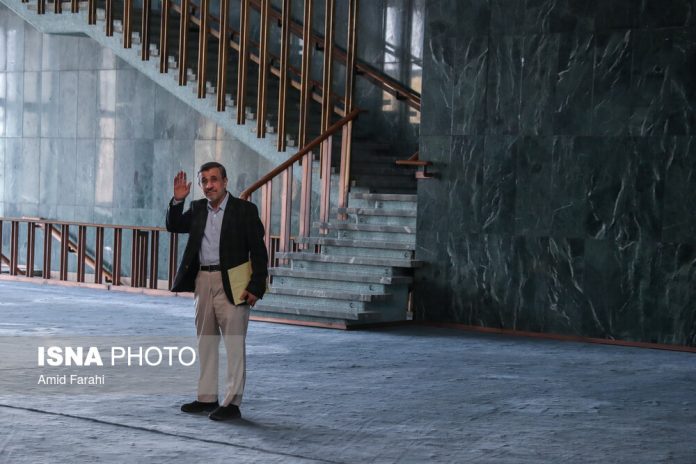
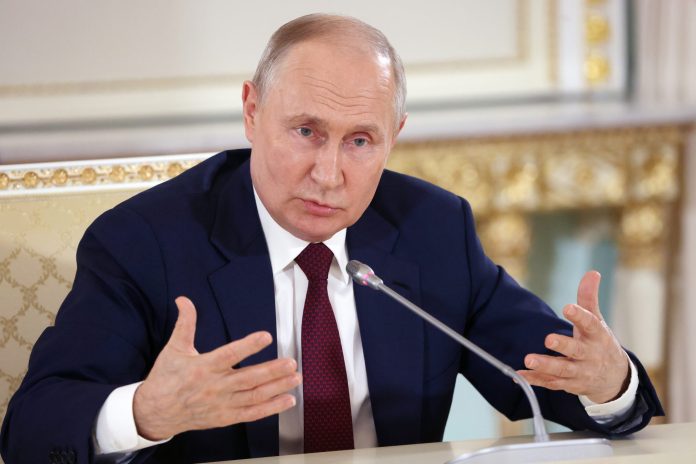
Ex-president Ahmadinejad makes it to Guatemala after briefly barred from leaving Iran

Mahmoud Ahmadinejad

Ahmadinejad was denied boarding at the airport earlier on Thursday, with reports suggesting that the decision was made for his own safety considering the fragile political climate in Central American country following the recent elections.

However, an adamant Ahmadinejad accepted the security responsibility of his trip, got his seized passport back, and received permission to leave the country.

The former president, who is a tenured professor of transportation engineering and planning, is scheduled to take part in a scientific symposium upon an invitation by the Guatemalan government and the University of Guatemala.

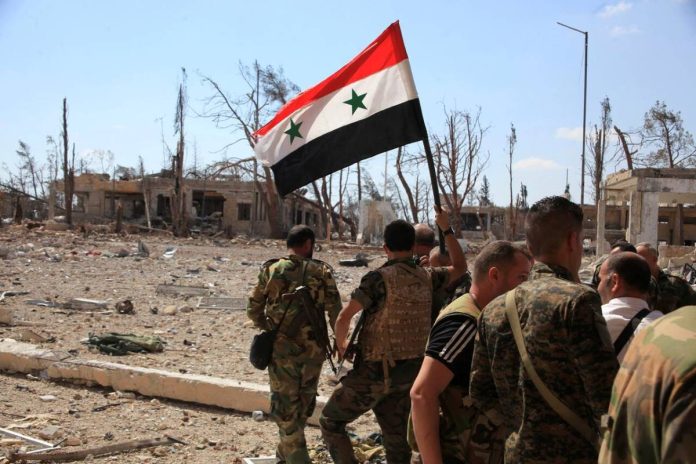
Drone attack on Syria military academy causes large number of casualties

Syrian Army

The statement said there were “a number of deaths, both civilians and military, and dozens of wounded”, some critically, including officers and their families.

There was no immediate claim of responsibility.

According to the military statement, the attack with “explosive-laden drones” took place “immediately after the ceremony ended”.

The general command of the army and the armed forces decried the “cowardly… unprecedented” attack and stressed it would “respond with full force… to these terrorist organisations wherever they are”, according to the statement.

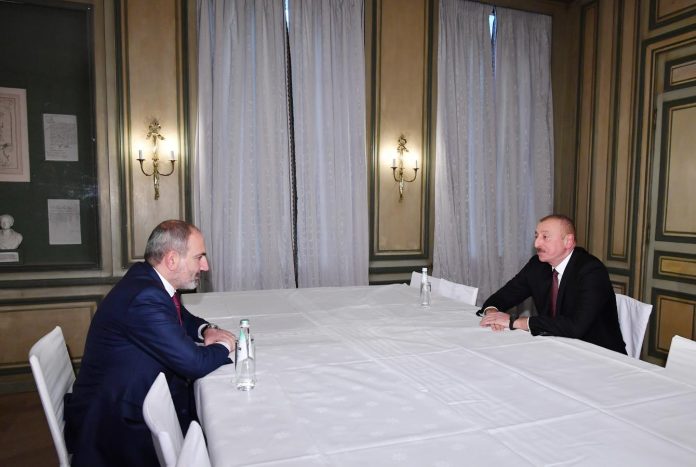
Azerbaijan says ready for EU-mediated talks with Armenia

Pashinyan Aliyev

“Azerbaijan stands ready for tripartite meetings in Brussels soon in the format of the European Union, Azerbaijan and Armenia,” presidential aide Hikmet Hajiyev said on Thursday.

Hajiyev added it is “incorrect to present” President Ilham Aliyev’s no show as a “refusal” to hold talks with Armenia.

Aliyev turned down a meeting with the Armenian leader on the sidelines of the European summit in Granada because of “France’s biased actions and militarisation policy that seriously undermine regional peace and stability in the South Caucasus”, Hajiyev added.

Foreign Minister Catherine Colonna, on a visit to Armenia on Wednesday, stated Paris will deliver military equipment to the South Caucasus nation.

“France has agreed on future contracts with Armenia that will allow the delivery of military equipment to Armenia so that it can ensure its defence.”

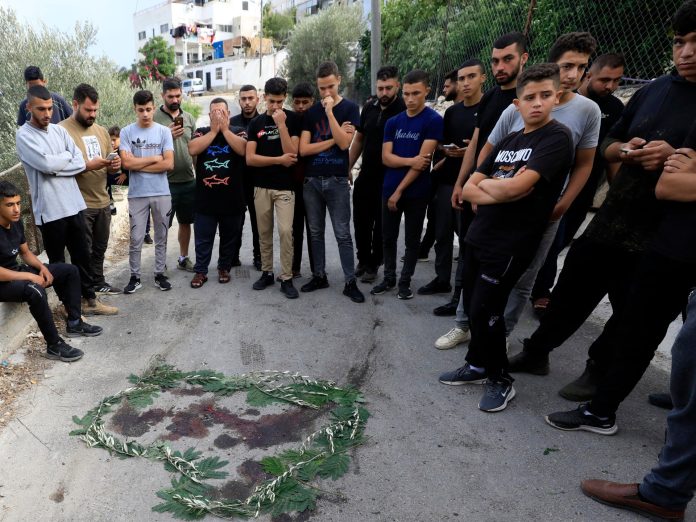
Israeli soldiers kill two Palestinians in WB

Israel Palestine

The victims, identified as Hudhayfah Fares and Abd al-Rahman Atta, were shot dead after Israeli troops targeted their car near the village of Shufah, south of Tulkarm in the northwestern part of West Bank, on Thursday.

The Palestinian Health Ministry confirmed the death of Atta, 23, and Fares, 27, saying they were killed during confrontations with the regime’s forces, Palestine’s official Wafa news agency reported.

The two slain Palestinians were from the Tulkarm camp and lived in the suburb of Dhanaba, east of the city.

Violent clashes erupted in the Tulkarm refugee camp after Israeli forces invaded it, and fired live rounds, stun grenades and teargas canisters towards Palestinians.

Medical sources also reported that two people were wounded by Israeli bullets, one in the shoulder and the other in the abdomen, adding that their condition is stable.

Over the past months, Israel has ramped up attacks on Palestinian towns and cities throughout the occupied territories. As a result of these attacks, dozens of Palestinians have lost their lives and many others have been arrested.

More than 200 Palestinians have been killed this year in the occupied Palestinian territories and Gaza. The majority of these fatalities have been recorded in the West Bank.

Those figures indicate that 2023 is already the deadliest year for Palestinians in the West Bank since the United Nations began keeping track of fatalities in 2005.

Previously, 2022 had been the deadliest year with 150 Palestinians killed, of whom 33 were minors, according to the United Nations.

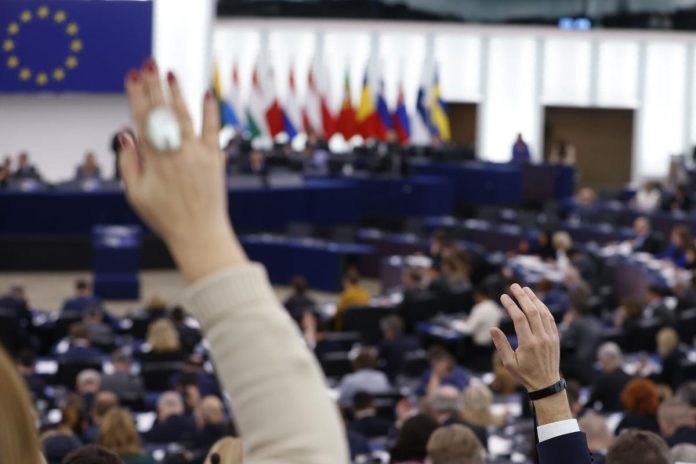
European Parliament adopts non–binding resolution calling for Azerbaijan sanctions over “ethnic cleansing”

European Parliament

The European Parliament approved a resolution saying it “considers that the current situation amounts to ethnic cleansing and strongly condemns threats and violence committed by Azerbaijani troops”.

The lawmakers called on the EU’s 27 member states to “to adopt targeted sanctions against individuals in the Azerbaijani government” over the assault and alleged human rights breaches in Nagorno-Karabakh.

They also urged the bloc “to reduce the EU dependency towards gas exports from Azerbaijan” and demanded Brussels review its relations with the country.

The resolution – approved by 491 legislators to nine – does not compel the EU to act.

Meanwhile, some 50 European leaders have arrived in Granada, Spain, for a summit of the European Political Community, a forum aiming to foster cooperation across the continent. Meetings on the margins will focus on crises between Azerbaijan and Armenia and between Serbia and Kosovo, which have flared in recent weeks.

Armenia’s Prime Minister Nikol Pashinyan is attending, but Azerbaijan President Ilham Aliyev is not expected to take part.

The European Union is to double its humanitarian support for Armenia to 10.4 million euros ($10.9m), European Commission President Ursula von der Leyen has announced.

“We strongly support Armenia and support it in its humanitarian needs,” she said, adding the EU is also to provide 15 million euros ($15.8m) in budgetary support to Armenia.

“We will discuss what else we can do to support Armenia in this difficult situation.”

EU foreign policy chief Josep Borrell has also expressed regret that Azerbaijan and Turkey decided not to attend a summit of European leaders.

“It’s a shame that Azerbaijan isn’t here and it’s a shame that Turkey, which is the main country supporting Azerbaijan, is not here either,” Borrell said, arriving at the meeting in Granada.

“Therefore, we are not going to be able to talk here about something as serious as the fact that more than 100,000 people have had to leave their homes in a hurry and running away from an act of military force,” he added.

Report: Ex-Iranian Pres. Ahmadinejad prevented from traveling to Guatemala

Mahmoud Ahmadinejad

Reports from media close to Ahmadinejad confirm the confiscation of his passport and the prohibition of his departure, halting his travel plans to Guatemala.

Ahmadinejad was set to honor an official invitation from the government and the University of Guatemala to participate in a scientific symposium addressing global water resource management.

However, this trip has been temporarily postponed due to what media outlets close to the former Iranian President claim to be the intervention of security agents.

Reports suggest that the prevention of Ahmadinejad’s trip was deemed necessary considering the recent volatile political situation in Guatemala following elections.

The decision is said to have been made to ensure the safety of the former President, who is currently a member of the Expediency Discernment Council.

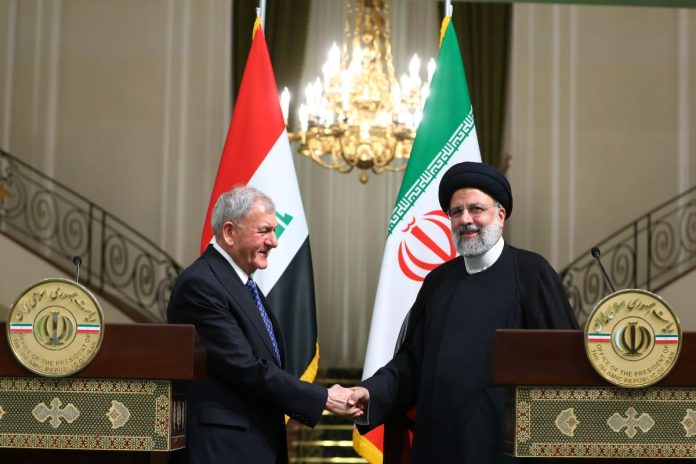
Baghdad won’t allow ‘robust’ relations with Tehran to be damaged: Iraq president

Iran and Iraq Presidents Raisi and Rashid

“We share a border with Iran with a length of 1,400 kilometers and our relations with Iran are good and robust and very important to us,” he said in a recent interview with the Saudi-run Al-Hadath channel.

Rashid stressed his country is against other parties using Iraq’s territory to hurt neighboring nations, underlining a recent security agreement between Iraq and Iran to deal with groups conducting anti-Iran operations from Iraq’s Kurdistan region.

“We are against any party using Iraqi and Kurdistan Region territories against any neighboring state. This is our clear policy,” he added.

Under the agreement signed in March, Iraq committed to relocating the anti-Iran groups to areas away from Iran borders and to disarming them.

The presence of Kurdish terrorist groups, including the Kurdistan Democratic Party, Komala, Kurdistan Free Life Party, and the Kurdistan Freedom Party, has been a source of tension between Iran and Iraq for years, with these groups often carrying out terrorist attacks on Iranian soil.

Following last year’s riots, triggered by the death of Iranian woman Mahsa Amini, these groups intensified their subversive operations against Iran and smuggled weapons to their local agents.

That prompted Iran to push Iraq to put an end to terrorist activities of the anti-Iran groups, leading to the March agreement.

Iranian media reports say most of the agreement has now been implemented and efforts are underway to complete the process.

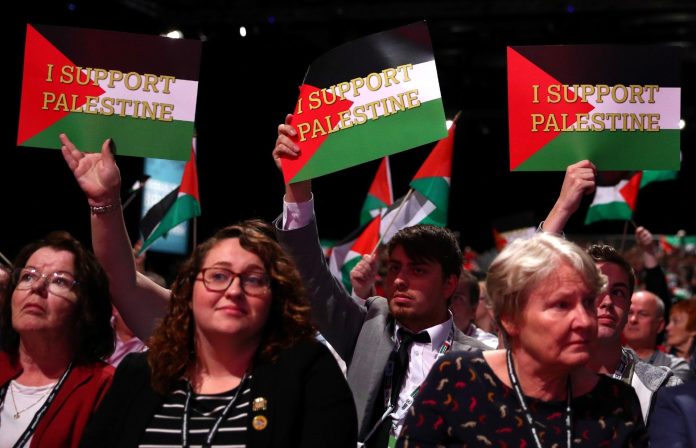
UK Labour party blocks Palestinian group from using ‘apartheid’ in conference brochure

Palestine Israel

On Wednesday, the Palestine Solidarity Campaign (PSC) said Labour had removed any references related to the word apartheid from PSC’s listing of its stall and fringe meeting in the conference brochure.

The event, titled “Justice for Palestinians, End Apartheid”, is set to take place next Tuesday. But this title will not feature in any Labour Party conference literature.

Israel’s decades-old occupation of Palestinian territories and its policies of discrimination against Palestinians have been described as amounting to apartheid by Amnesty International, Human Rights Watch and Israeli rights group B’Tselem.

Speakers listed by PSC who will address the event include Saleh Hijazi, policy coordinator at the Palestinian Boycott, Divestment and Sanctions (BDS) national committee, and Mick Whelan, who is general secretary of the Aslef trade union.

When PSC challenged Labour on the ban, the pro-Palestine group said the party responded by stating that “the Labour Party will not publish a description of Israel as an apartheid state”.

PSC added that Labour officials told them that publishing literature containing the word apartheid would be “detrimental to the party”.

In response to Labour’s move, PSC director Ben Jamal said: “A Labour government should be fully committed to the upholding of international law and the principle that respect for human rights should be central to all relations with foreign states, including trade relations. Such a commitment would mean holding Israel to account for its practice of what amounts to a crime against humanity.

He added: “PSC’s fringe meeting next week, entitled ‘Justice for Palestine: End Apartheid’, will go ahead regardless of how it is advertised in Labour’s conference brochure.

“We look forward to welcoming all Labour members and members of PSC’s nationally affiliated trade unions, who hold firm to Martin Luther King’s injunction that an injustice anywhere is a threat to justice everywhere.”

A Labour Party spokesperson stated: “Keir Starmer has been clear that this is not the position of the Labour Party.”

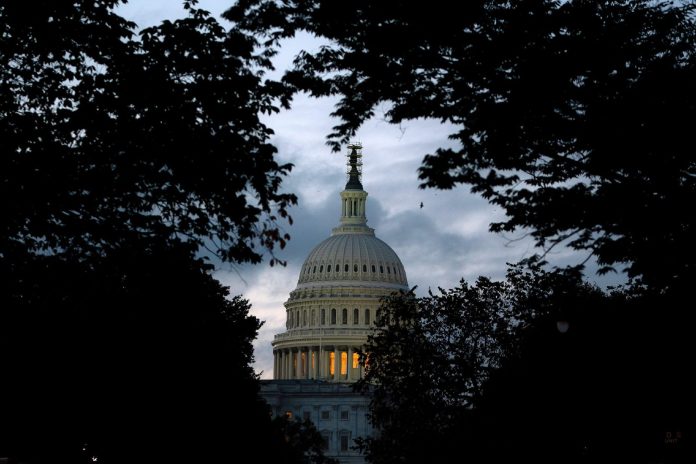
U.S. senators lay out conditions for Israel, Saudi Arabia peace

US Capitol

In a letter to Biden led by Sen. Chris Murphy (D-Conn.), the lawmakers noted that Senate approval is expected to be required on certain elements of the defense deal being worked out between the U.S., Israel and Saudi Arabia.

“A high degree of proof would be required to show that a binding defense treaty with Saudi Arabia … aligns with U.S. interests, especially if such a commitment requires the U.S. to deploy substantial new permanent resources to the region,” the lawmakers wrote.

“There’s a version of this agreement that’s good for the United States, and there’s a version that could run contrary to our security interests in the region,” Murphy said in a Wednesday call with reporters.

In the letter, the Democrats stated they were “maintaining an open mind” on the administration’s negotiations, but they were concerned over Saudi demands related to security guarantees, weapons sales and the construction of a civil-nuclear program.

“Historically, security guarantees through defense treaties have only been provided to the closest of U.S. allies: democracies that share our interests and our values,” the senators added.

They criticized Saudi Arabia as “an authoritarian regime which regularly undermines U.S. interests in the region, has a deeply concerning human rights record, and has pursued an aggressive and reckless foreign policy agenda.”

Biden has sought to improve relations with Saudi Arabia after relations chilled following the killing of Washington Post opinion journalist Jamal Khashoggi, a death blamed on Saudi authorities.

He has met with Saudi Crown Prince Mohammed bin Salman, widely seen as responsible for Khashoggi’s killing, as the U.S. seeks influence in a global battle with Russia and China that has heated up with the Ukraine war.

Murphy and other senators have voiced concerns about this direction of foreign policy.

“Saudi Arabia continues to lock up and torture and execute political dissidents. And so we raise concerns about the implications of extending a U.S. security guarantee to a country with this kind of history of brutal repression,” Murphy said.

Bin Salman has wielded significant power since 2015 and is the heir apparent to his father King Salman.

He has made it a priority to transform the Kingdom’s economy away from dependence on oil revenues to make Saudi Arabia a hub for business, tourism and culture.

To achieve these aims, the Crown Prince has broken through Saudi Arabia’s long-held position that any normalization with Israel is predicated on the establishment of a Palestinian state.

In an interview with Fox News last month, MBS said the “Palestinian issue is very important and we need to solve that part,” but talked of “easing the life of Palestinians.”

Lawmakers are concerned Palestinian rights could be left behind in a deal between Saudi Arabia and Israel, where the right-wing coalition government headed by Israeli Prime Minister Benjamin Netanyahu has led to more Israeli entrenchment in the West Bank and given a platform to right-wing ministers who have stoked violent tensions with the Palestinians.

“I do believe this may be the last chance to salvage the possibility of a two-state solution,” Sen. Chris Van Hollen (D-Md.), a signatory to the letter, told reporters.

The senators call for Israel to make a commitment not to annex any or all of the West Bank, halt settlement construction and expansion, and dismantle illegal outposts in the territory. They say Israel should allow for the expansion of Palestinian towns, cities and population centers and for Israel to allow ease of travel for Palestinians among contiguous Palestinian areas.

“These elements are essential to any sustainable peace in the Middle East and to preserving Israel’s own future as a Jewish, democratic state,” the lawmakers wrote

Potential U.S. military commitments to Saudi Arabia are another worry, particularly given accusations of war crimes in Riyadh’s involvement in Yemen’s war. The senators are also concerned a deal could contribute to a civil-nuclear program in Saudi Arabia at a time when “the U.S. is working to roll back Iran’s nuclear weapons ambitions”.

Tehran has repeatedly declared that its nuclear program remains purely peaceful as always and that the Islamic Republic had no intention of developing nuclear weapons as a matter of an Islamic and state principal.

Leader of the Islamic Revolution Ayatollah Seyyed Ali Khamenei issued an official fatwa (religious decree) clearly establishing that any form of acquisition, development, and use of nuclear weapons violate Islamic principles and are therefore forbidden.

“The U.S. has long refrained from committing our nation to treaty-backed security guarantees in the volatile Middle East, a region rife with conflict,” the lawmakers added.

On Saudi Arabia’s push for a domestic nuclear program, the lawmakers called for any agreement to adhere to the “‘gold standard’ 123 Agreement” that requires, under U.S. law, a country to commit to nine nonproliferation criteria in exchange for American assistance in developing the program.

“I know what the Saudis would like, which is to be able to have much more control over enrichment than is allowed under the gold standard,” Murphy said.

“And I simply don’t know what the administration’s position ultimately will be on that question. I will say the Biden administration has been a very strong supporter of the gold standard in 123 agreements.”

Talks between the U.S., Israel and Saudi Arabia have accelerated in recent weeks, with Netanyahu saying at the United Nations in September that Israel is on the “cusp” of a breakthrough of relations with Saudi Arabia.

But the lawmakers played down the imminent nature of the agreement.

“I think there are many important provisions of this trilateral negotiation that have not been worked out yet so they are in the middle of negotiations not at the end,” Murphy continued.

Putin says creation of multipolar world inevitable, necessary

Vladimir Putin

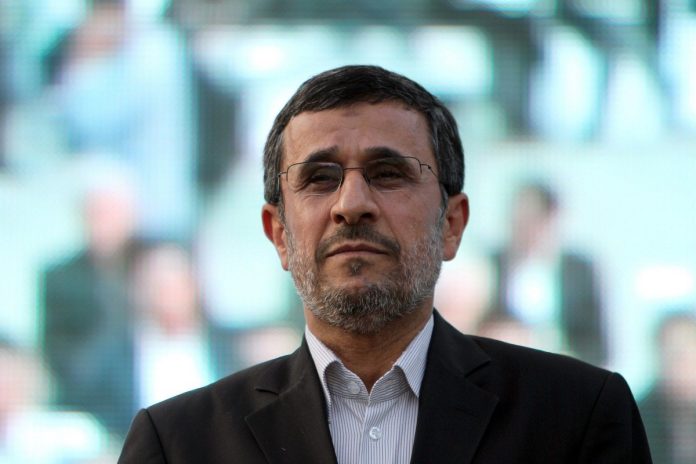
“The process of building a multipolar world order – more democratic, more honest, fair for the majority of mankind – is simply inevitable and historically necessary. This fully applies to the creation of strong economic foundations of such a world order,” Putin stressed on Wednesday.

In addition, the Russian president emphasized that those who seize other people’s assets are apparently not exceptionally intelligent.
During his speech, Putin spoke about a joint project between a number of central banks in Asia and the Middle East that allows them to issue and exchange digital currencies.

“That is, no third party has any possibility for abuse and for interfering with payments. Including blocking, for example, a transaction, arresting accounts, appropriating someone else’s money or assets. And this, unfortunately, happens in the modern world. These are very young people sitting here. But I can tell you that such things are done by self-confident adults, uncles and aunts, who, apparently, are not very clever, if they commit such erroneous actions that ultimately harm themselves,” the president continued.

Moreover, the world is gradually getting rid of the dictatorship of an economic model where entire regions of the world are driven into bondage and loans, Putin said.

“The world is gradually getting rid of the dictatorship of such a financial and economic model, the purpose of which is only to drive into debt, into bondage, turn into economic colonies, deprive entire regions of the world of resources for development,” the president highlighted, adding that “few people will like such a future.”

In addition, Putin emphasized that mutual trust and respect for each other’s interests are extremely important in terms of international economic cooperation.

“You are well aware that the financial sphere is now undergoing rapid development of advanced solutions, advanced technologies. This is digital currency, digital financial assets, new payment services and financial settlement models. This includes the use of blockchain technologies, the so-called distributed ledger. I would like to say once again that in this area, especially when it comes to international economic cooperation, mutual trust and respect for the interests of partners and each other’s interests are extremely important.”