Saturday, April 18, 2026
Home Blog Page 122

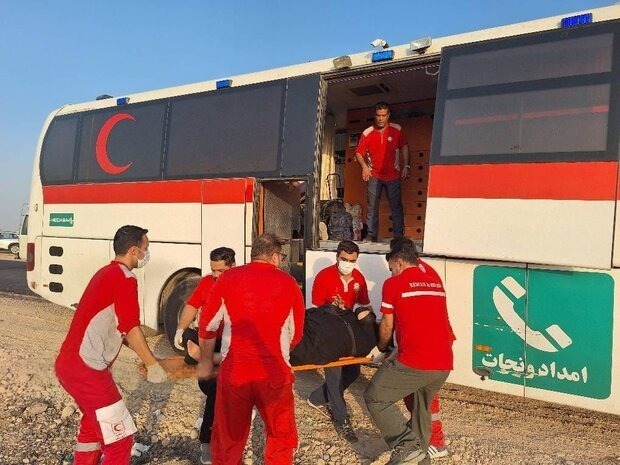
Bus carrying Iranian pilgrims crashes in Iraq, injuring 43 

The incident occurred at around 6:00 a.m. local time, according to the organization. The pilgrims were traveling for the annual Arbaeen pilgrimage when the crash happened inside Iraqi territory.

Rescue operations involved one bus ambulance from the Iranian Red Crescent and 12 regular ambulances from both Iran and Iraq.

A total of 29 Iranian Red Crescent emergency personnel were deployed to the scene.

Of the injured, 13 were taken to Badr Hospital in Iraq for initial treatment and triage before being transferred to the Mehran border crossing. The remaining 30 were transported via Iranian and Iraqi ambulances to Mehran and then admitted to Imam Hussein Hospital in Mehran for further medical care.

Authorities have not reported any fatalities. The cause of the crash has not yet been disclosed, but Red Crescent teams said all injured pilgrims are receiving necessary medical assistance.

First VP: Iran’s Strategy Non-Intervention of Foreign Forces in Region

Mohammad Reza Aref, speaking on Friday morning in a meeting with Russian Prime Minister Mikhail Mishustin on the sidelines of the Eurasian Economic Union (EAEU) summit in Kyrgyzstan, referred to developments in the Caucasus and said that Tehran welcomes any understanding and cooperation aimed at de-escalation and fostering friendly and close relations among regional and neighboring countries.

Aref stressed that, like Russia, the Islamic Republic of Iran opposes US unilateralism in the world, and that the strategy of multilateralism as well as regional security and stability should be pursued with the help of the countries in the region.

Referring to Iran’s nuclear negotiations, he said that Iran has always sought dialogue and confidence-building regarding its peaceful nuclear activities, but Western countries have from the outset turned Iran’s nuclear issue into a political project. He emphasized that Iran has never sought non-peaceful use of technologies, especially nuclear technology.

Condemning the crimes of the Zionist regime in Gaza, the First Vice President stated that the Zionists seek to consolidate their aggression in Gaza and deny the residents their right to live, and that cooperation must be strengthened to prevent these crimes.

He also stressed the need to deepen and expand Tehran–Moscow relations in various fields, including energy, tourism, transport, railways, and corridors.

Mikhail Mishustin, for his part, said that the implementation of the free trade agreement between Iran and the Eurasian Economic Union will have an impact on increasing the scope of Iran’s relations with regional countries in various fields, and that in this regard, establishing the North–South Corridor is of fundamental importance in deepening these relations.

The Russian prime minister, referring to developments in the Caucasus region, emphasized that all countries in the region must have relations based on the principle of good neighborliness, and that together they can build the region’s future.

Iran FM: War with Zionists Not Imminent, Armed Forces Must Be Ready

Seyed Abbas Araqchi, in an interview with Iranian television, also described the positions taken by the Iraqi government, religious scholars, and religious authorities—as well as the Iraqi people—during the recent 12-day war as unprecedented.

Regarding Europe’s threat to trigger the “snapback” mechanism and reinstate UN sanctions against Iran, Araqchi added that, in Iran’s view, due to their non-compliance with the JCPOA and their positions—such as insisting on “zero enrichment” despite the JCPOA’s recognition of Iran’s right to enrichment—they lack the standing to invoke any provision of the agreement, including the snapback mechanism.

The foreign minister said that if the Europeans use the snapback mechanism, Iran has various options and tools to respond.

On remarks made by the Israeli prime minister about Iran, Araqchi stated: “They say they purify water, and yet they are the very ones who cut off water to Gaza… Let them lift the sanctions and see how the energy imbalance—caused by the sanctions—is resolved.”

Speaking on the Zangezur Corridor in the Caucasus—which is to be established following a peace agreement between the Republic of Azerbaijan and Armenia—he said: “The Armenians tell us they will respect Iran’s red lines. Only a private American engineering company is to build this corridor, and no American forces will accompany it.”

He also commented on developments in Lebanon, saying: “Peace in the region, without the weapons of the resistance, will be far less stable. Without the weapons of the resistance, no other power will be able to stand in the way of Israel’s domination and hegemony in the region.”

Russia opposes European plan to trigger Iran sanctions snapback

iran-russia flag

In a note to the Security Council, Russia’s permanent mission to the UN said any attempt to restore the Council’s previous sanctions resolutions would be “illegitimate,” “ineffective,” “without legal basis,” and “harmful” to ongoing diplomatic processes.

The statement stressed that, under Security Council Resolution 2231 and the terms of the 2015 Joint Comprehensive Plan of Action (JCPOA), the snapback mechanism can only be used if the requesting party, as a JCPOA participant, has fully followed the dispute-resolution procedures outlined in Articles 36 and 37 of the deal.

Moscow argued that the three European states have not completed these steps. It also accused them of breaching the JCPOA and Resolution 2231 themselves, particularly after the United States’ unilateral withdrawal from the agreement in May 2018.

Regarding Europe’s threat to trigger the snapback mechanism, Iran’s Foreign Minister Seyed Abbas Araqchi said on Thursday that, in Iran’s view, due to their non-compliance with the JCPOA and their positions—such as insisting on “zero enrichment” despite the JCPOA’s recognition of Iran’s right to enrichment—they lack the standing to invoke any provision of the agreement, including the snapback mechanism.

Iran Security Chief: Tehran ready to give firm response to Israel

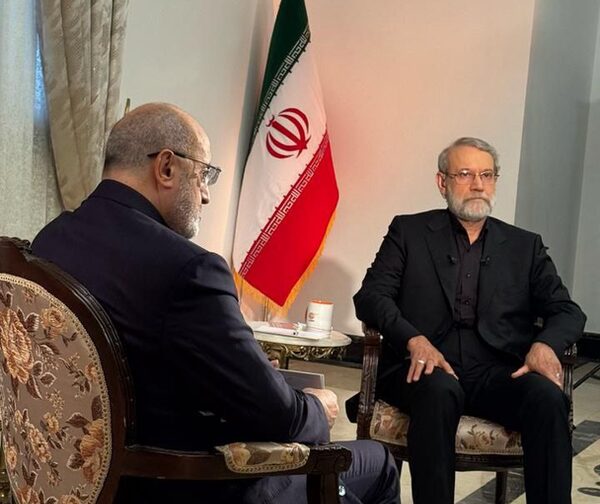
Ali Larijani, who has recently traveled to Lebanon, told Al Mayadeen news network that the Zionist regime seeks to create insecurity throughout the region, and as long as Benjamin Netanyahu, Israel’s prime minister, remains in power, even the residents of Palestine will not have peace.

Larijani said they were aiming to topple the Islamic Republic of Iran, and had planned for it for about fourteen years. They had prepared to drive people into the streets. Netanyahu had mentioned this several times in his speeches, which only showed his ignorance. He thought he was so popular… but he did not realize that the Iranian people hate him.

Referring to talks between Iran and the United States, he stressed that negotiations which serve as a prelude to attacks and a future war are worthless, and as long as the US doctrine is “either surrender or war,” talks will be useless. America must make up its mind, because while it speaks of negotiations, it also speaks of war.

In another part of the interview, regarding the possibility of resuming relations between Iran and Syria, Larijani said this possibility exists, but it depends on the behavior of the current Syrian government. The present situation is not one in which Iran is interested in doing so.

Iranian MP: Activation of snapback leads to Iran’s withdrawal from NPT

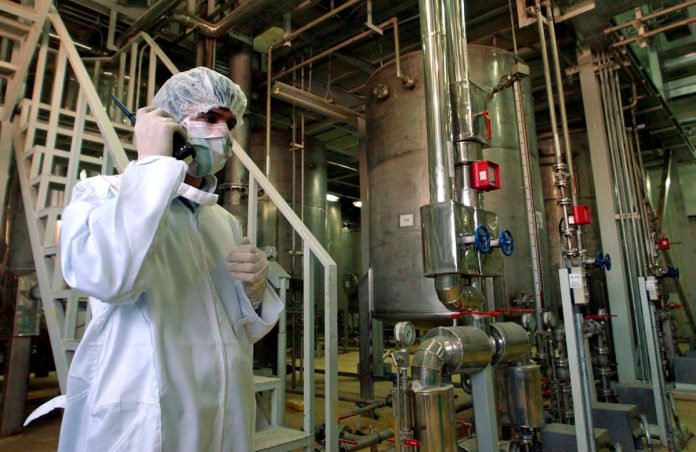
Iran Nuclear Program

Shariati said that both the Rouhani and the late Raisi administrations had officially and in writing notified the International Atomic Energy Agency (IAEA) of Iran’s readiness to leave the NPT under such circumstances.

He stressed that triggering snapback would be “the final nail in the coffin” of negotiations.

Responding to threats by some European states to reinstate UN Security Council sanctions, Shariati asserted that Iran is in a strong position following the recent national mobilization and military achievements.

He added that Parliament has several options, including exiting the JCPOA, which would nullify any related legal processes.

He emphasized that Iran has both preventive and retaliatory measures prepared, and that Western threats to use the snapback are “hollow” given past military attacks on Iran and the continuation of sanctions.

Shariati urged Europe not to pursue this path, warning that any move to activate the mechanism would meet with a firm national response.

Armenian PM: Zangezur corridor to bring tangible benefits to Iran

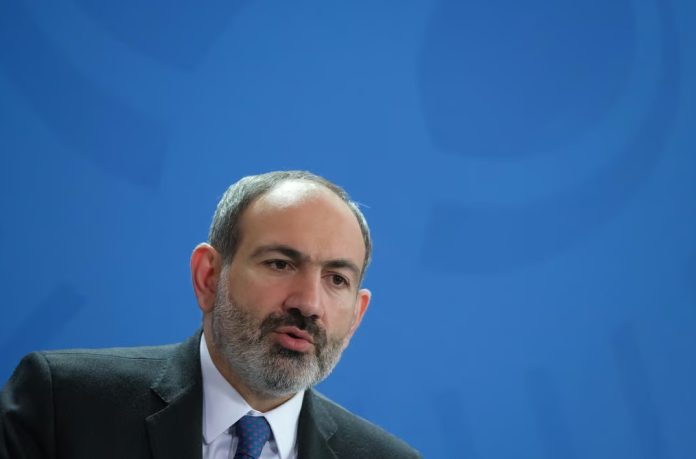
Armenian Prime Minister Nikol Pashinyan

In an interview with Fox News, Pashinyan said the plan would not only be economically advantageous for Armenia, Azerbaijan, and the United States, but also for Turkey, Iran, and Russia.

He explained that, if implemented, the project would allow Iran to connect the Persian Gulf to the Black Sea via rail, while providing Russia and Iran with the opportunity to establish a direct rail link — something unprecedented in the South Caucasus, where no railway currently connects the two countries.

Pashinyan called the agreement “very important” and argued it could yield significant advantages for all regional states as well as the broader international community, contributing to both stability and global security.

While welcoming the signing of the peace deal between Azerbaijan Republic and Armenia, Iran has warned against any change to the international borders due to the implementation of the Zangezur project.

British MPs call on PM to ‘immediately expel’ Israeli ambassador

Gaza War

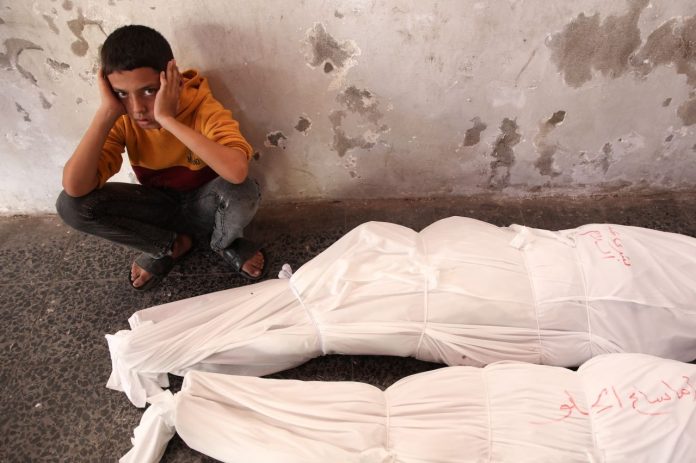
The letter, sent to Starmer on Thursday, describes Israel’s actions in Gaza as genocidal. Lead signatory Adnan Hussain, an independent MP, said the letter requested that the government “act urgently in the face of genocide in Gaza”.

It has been signed by every member of the parliamentary Independent Alliance, as well as some Green Party and Scottish National Party MPs.

The letter is also signed by Labour MP Abtisam Mohamed, who sits on parliament’s Foreign Affairs Committee, which scrutinises foreign policy.

Those behind the letter say that since Britain is a signatory to the Genocide Convention, it “has a clear and binding legal obligation to prevent genocide wherever it occurs”.

The letter calls on the government to “immediately expel the Israeli Ambassador to the United Kingdom as a signal that the UK will not tolerate the continued defiance of international law and the perpetuation of mass atrocities”.

The signatories to Thursday’s letter further urge the government to “enforce and support international sanctions on Israel”, lead an international effort “to deliver immediate and unhindered humanitarian aid to Gaza” and support the International Criminal Court’s investigations.

The letter expresses “horror'” at the Israeli government’s “intentions to carry out a full military occupation of the Gaza Strip”.

‘This declaration is the latest escalation in a campaign that has already led to the near-total destruction of Gaza,” it says.

“The government cannot continue to provide political cover or military support, directly and indirectly, to actions that amount to genocide.”

“We make this statement not only as members of Parliament but as human beings. Our silence or inaction in the face of genocide is not neutrality, it is complicity,” it adds.

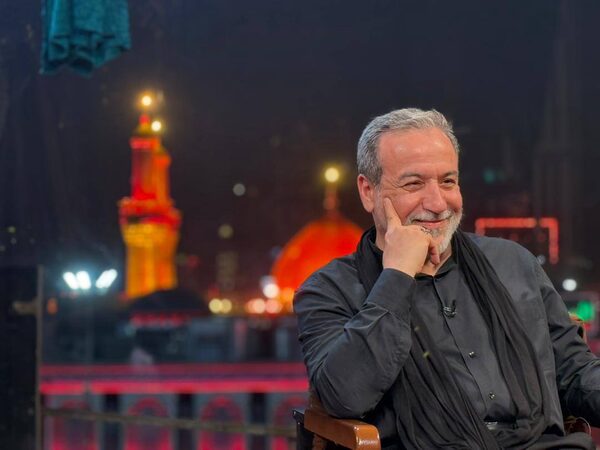
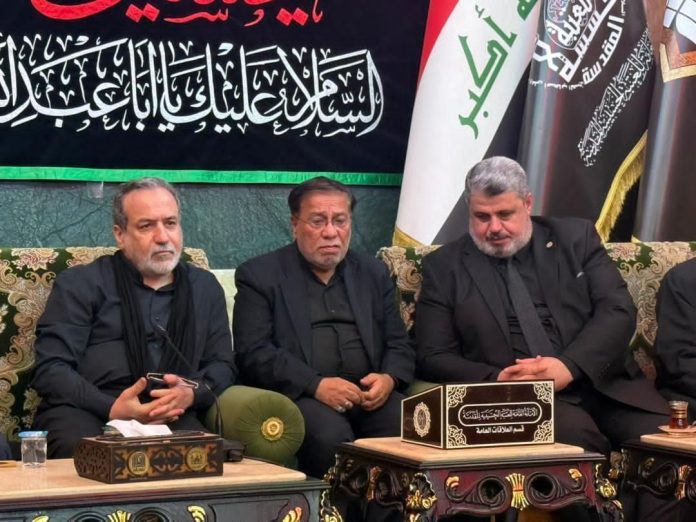
Iran FM Araghchi meets custodians of Imam Hussein Shrine after Arbaeen pilgrimage walk

Along the Najaf–Karbala route, Araghchi visited the joint service desk of Iran’s consulate and Red Crescent relief teams, and stopped at several roadside tents offering services to pilgrims.

Upon reaching Karbala, he met with officials of the custodianship of the holy shrine of Imam Hussein, the third Shia Imam, discussing matters related to the pilgrimage and expressing appreciation for the services provided to millions of Arbaeen pilgrims.

South Sudan denies talks on resettling Gazans

Gaza War

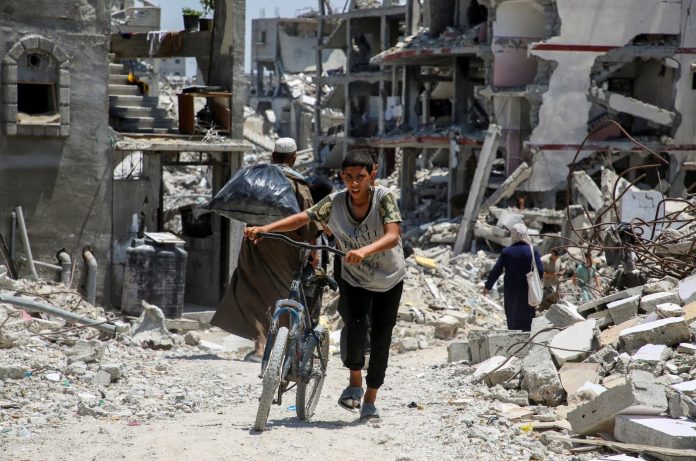
The Associated Press reported on Tuesday, citing sources familiar with the matter, that Israel had engaged South Sudan in discussions as part of a broader push to facilitate mass emigration from the territory, which has been devastated by the 22-month offensive against Gaza.

The South Sudanese Ministry of Foreign Affairs and International Cooperation issued a statement on Wednesday saying the reports are “baseless and do not reflect the official position or policy of the government.”

“South Sudan firmly refutes recent media reports claiming that the government …is engaged in discussion with the State of Israel regarding the resettlement of Palestinian nationals from Gaza in South Sudan,” the ministry stated.

Israeli forces have been carrying out an offensive in Gaza since 2023, when Hamas militants attacked Israel, killing about 1,200 people and taking more than 250 captives. Official estimates put the enclave’s death toll at over 61,000, while the UN warns more than 2 million residents face famine.

Earlier this year, US President Donald Trump proposed moving Gazans to other countries as part of a plan to turn the region into a “Riviera of the Middle East.” Last week, Israeli Prime Minister Benjamin Netanyahu, a supporter of the idea, stated Israel would pursue a full military takeover of Gaza before handing it to a transitional Arab government. Critics say the move would amount to forced displacement, while the UN has called it ethnic cleansing.

Last Thursday, the Financial Times reported that US advisory firm Boston Consulting Group had modeled relocating about a quarter of all Palestinians to other countries, including Somalia. In March, Somalia and its breakaway region, Somaliland, denied receiving any such proposal from the US or Israel.

On Wednesday, South Sudanese President Salva Kiir Mayardit’s office announced he met Israel’s Deputy Foreign Minister Sharren Haskel for “high-level” talks on strengthening ties in energy, agriculture, healthcare, security, and water management.