Saturday, January 17, 2026
Home Blog Page 1185

China says to boost global economy in cooperation with Iran

Iran Trade

In an exclusive memo for IRNA, Chang Hua noted Beijing will keep working to open up more opportunities on the market, give fresh impetus to innovation and learning, and share more, adding china will cooperate with all countries, including Iran, to secure a bigger role in boosting global economy and enhancing the development and welfare of the international community.

The top diplomat also said he visited all of Iran’s pavilions at an international imports exhibit held in Shangahai and talked to Iranian businessmen to learn about the details of their participation, negotiations and deals in the exhibition.

Chang Hua added that Iranian participants regarded the expo as positive and described it as a major platform to showcase Iranian products and potential before the whole world.

The Chinese envoy said Iranian businessmen also got familiar with many potential trade partners at the event.

Top EU official says the bloc may postpone Ukraine membership decision

NATO Ukraine

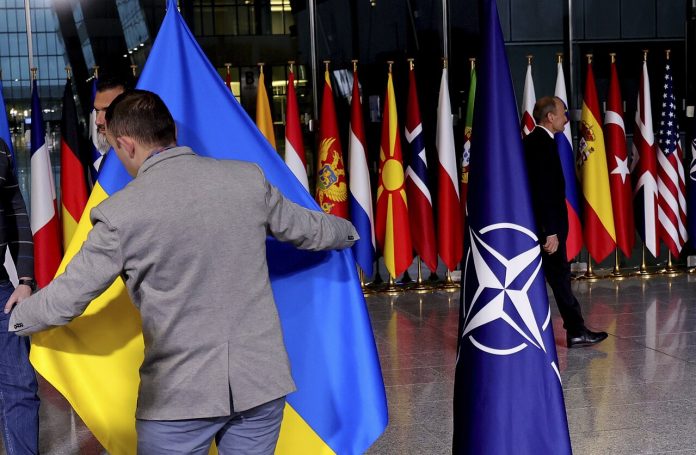
Hungary could potentially block the consensus required for such a move, but the problem goes beyond Budapest, said the official, identified only as someone involved in preparing the December 14-15 summit of the heads of 27 EU member states.

Some EU leaders have proposed to take up the topic at the March summit, after the European Commission has had a chance to assess whether Kiev has met all of the EU conditions.

Hungarian PM Viktor Orban warned earlier this month that Ukraine was “absolutely not ready” for EU membership talks, while Foreign Minister Peter Szijjarto called it “absurd” for the bloc to even try evaluating Kiev’s compliance while a war was ongoing.

While the EU has repeatedly vowed to stand with Ukraine for “as long as it takes”, the unnamed official told Reuters that the latest discussions have been a “reality check” on this policy, with national leaders “realizing it’s quite expensive”.

“We cannot allow Ukraine to go bankrupt, it’s not an option for us. But it’s not easy,” the official stated, adding, “How do we pay for this?”

Foreign policy commissioner Josep Borrell’s proposal to commit an additional 50 billion euros ($54 billion) to Ukraine through 2027 has reportedly been criticized “from several sides,” and not just by Hungary.

Germany is the EU’s biggest financial contributor, but, earlier this week, its constitutional court blocked Chancellor Olaf Scholz’s plan to repurpose 60 billion euros ($65.21 billion) in unused pandemic funds for its “climate and transformation fund”. This has further tied Berlin’s hands when it comes to finding money for Kiev, the official told Reuters.

“Maybe we have had too high expectations,” the person told the agency, adding, “Will we continue to support Ukraine financially, military? Do we have the means to do this? Are we sure that the US will be following us over the coming years?”

Washington has already proposed reducing the amount of economic aid – money used to pay government salaries – to Kiev by $275 million a month, with the expectation that the EU, Canada, and Japan would pick up the slack. Congress has yet to address the White House’s $61.4 billion request, however.

Meanwhile, Ukraine’s former prime minister, Nikolay Azarov, has estimated that 75% of Kiev’s budget comes from Western grants or loans at this point, and that President Vladimir Zelensky’s government would have been unable to pay October salaries without a €1.5 billion remittance from the EU.

“It’s not that people have been calling for peace,” the unnamed official told Reuters.

“Individual members have said very clearly that we at some point need an end to this. The consensus is to continue to provide support to Ukraine, but some of those questions are coming.”

Majority of Palestinians believe they can’t coexist with Israel: Poll

Israel Palestine

The densely-populated Gaza enclave has been subjected to an unprecedented bombardment for more than five weeks as part of Israeli Prime Minister Benjamin Netanyahu’s vow to “eliminate Hamas” in response to the group’s cross-border attack on October 7.

But amid signs of an increasing erosion of international support for Israel’s military response, which aid organizations say is worsening an already alarming humanitarian crisis in the besieged strip of land, a large majority of Palestinians have indicated that they will be unable to “forgive” Israel for its actions.

According to a poll of Palestinians conducted by the Arab World for Research and Development (AWRAD), some 90% of respondents believe that “coexistence [with Israel] is increasingly impossible” given the scale of its military action in Gaza.

The poll, conducted between October 31 and November 7, also found that 98% reported they will “never forget and never forgive” Israel.

At least 12,000 people have died in Gaza since October 7, Palestinian health officials have confirmed, adding that 5,000 of these are children and that 200 medical personnel have also died as a result of Israeli artillery, airstrikes or ground offensives. Around 1.6 million people, or about 70% of Gaza’s 2.3 million residents, have also been displaced, the European Council on Refugees and Exiles announced on Friday.

Elsewhere in the AWRAD poll, 100% of respondents said that there is no “safe space” in Gaza, while 65% view Israel’s offensive as a “war against all Palestinians” and not solely against Hamas.

It also found that almost half of people, 48%, said that their homes had been destroyed or partially damaged and that 90% supported a ceasefire. A total of 91% of respondents said that they had no trust in information provided to them by the Israeli military.

The poll was conducted via face-to-face interviews with 688 Palestinians. AWRAD said its sample included people of varying socioeconomic backgrounds and had an equal representation of men and women.

Tehran: Israeli attacks on Gaza hospitals show regime’s barbaric nature

Israel Army Gaza Hospital

“After Israeli officials failed to prove their false claims about the al-Shifa hospital, the regime’s military resumed its strikes on other hospitals in Gaza,” said Iranian Foreign Ministry Spokesman Nasser Kanaani.

Israel claims Palestinian group Hamas, which runs Gaza, uses the al-Shifa hospital as a command center for military purposes. Palestinians have denied the claim.

“Attacks on the Jordan and Indonesia hospitals were yet another manifestation of the regime’s aggressive and barbaric nature,” the spokesman added.

“Attacking hospitals runs counter to all principles of human rights, international law and the Geneva Conventions, and reveals the criminal nature of this regime before the whole world even more,” the spokesman explained.

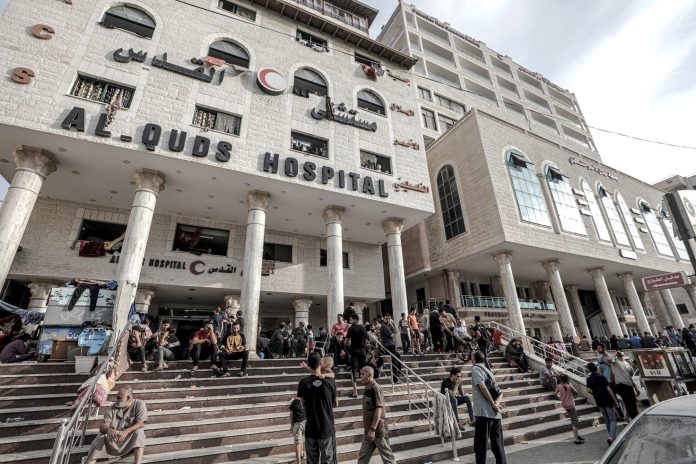
Out of the 35 hospitals in Gaza, 26 have shut down due to damage from bombardment or a lack of fuel, according to a report published by the Palestinian Authority’s Ministry of Health in Ramallah on Friday, citing medical sources from the Hamas-controlled enclave.

Of the 72 primary health care clinics, 52 have also been forced to close, it added.

More than 40 patients, including four premature babies, have died at al-Shifa Hospital in Gaza City, Gaza’s largest hospital, in the last six days, according to the health ministry.

Most of the intensive care unit patients, who were on ventilators due to the lack of fuel and oxygen at the al-Shifa hospital, have died, the doctor who leads the burns department at the hospital told Al-Jazeera over the phone from inside the facility on Friday.

West Bank death toll reaches 212 since start of Israel’s war on Gaza

Israel Palestine

Six Palestinians were killed by Israeli army fire in the occupied West Bank early Saturday, according to a medical source and state media.

It brings the number of Palestinians killed by the Israeli army in the West Bank since Oct. 7 to 212, in addition to 2,800 wounded.

The World Health Organization (WHO) has also confirmed on Friday that health care facilities in the occupied West Bank have faced more than 170 Israeli attacks since Oct. 7.

“WHO is concerned about the continued escalation of attacks on health care in the West Bank,” the UN agency wrote on X.

“Health care is not a target,” the WHO stressed, referring to international rules of war barring hospitals, schools, and other civilian facilities from being attacked.

The WHO called for “the active protection of health workers and health facilities”.

Since Israel started bombarding Gaza following Hamas’s Oct. 7 cross-border attack, at least 12,000 Palestinians have been killed, including more than 8,300 women and children, and 30,000 have been injured, according to the territory’s Health Ministry.

An Israeli blockade has also cut Gaza off from fuel, electricity and water supplies, and reduced aid deliveries to a small trickle.

The Israeli death toll, meanwhile, is around 1,200, according to official figures.

Gaza death toll tops 12,000 amid relentless Israeli attacks

Gaza War

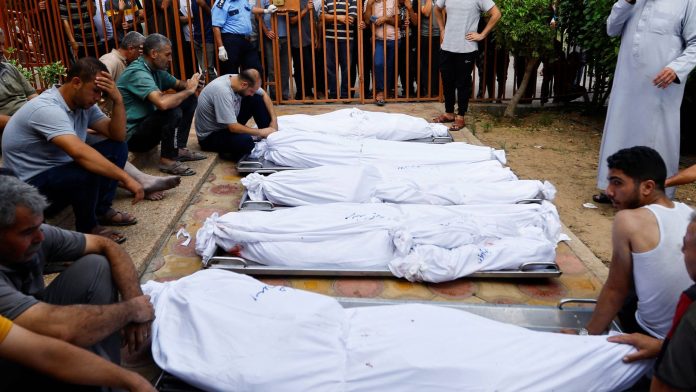
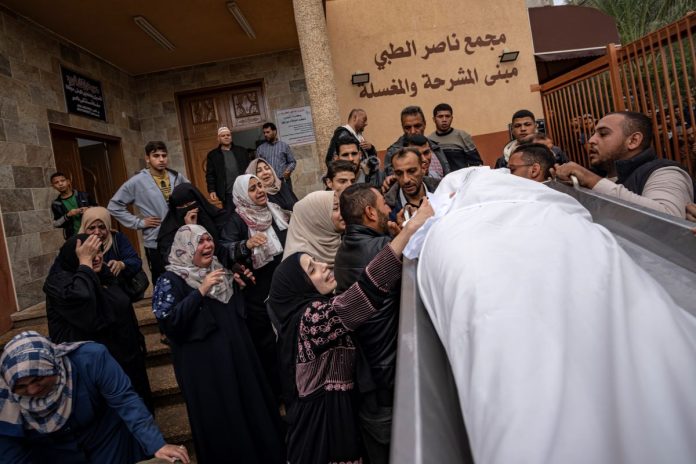
“The victims include more than 5,000 children and 3,300 women, while 30,000 others have been injured,” the media office said in a statement on Friday.

Some 3,750 other people remain unaccounted for, including 1,800 children, according to the statement.

“The Israeli occupation has committed 1,270 massacres,” the media office continued, adding, “A total of 200 medics, 22 civil defense personnel and 51 journalists were also killed in the assaults.”

“The Israeli aggression has forced 25 hospitals and 52 health care centers out of service, while 55 ambulances were targeted by Israeli forces,” the statement read.

Israel has launched relentless air and ground attacks on the Gaza Strip since a cross-border attack by the Palestinian group Hamas on Oct. 7.

Thousands of buildings, including hospitals, mosques and churches, have been damaged or destroyed in the Israeli offensive.

The Israeli death toll, meanwhile, stands at 1,200, according to official figures.

UN official urges Israel to stop using water as “weapon of war” in Gaza

Gaza War

“Every hour that passes with Israel preventing the provision of safe drinking water in the Gaza strip, in brazen breach of international law, puts Gazans at risk of dying of thirst and diseases related to the lack of safe drinking water,” Pedro Arrojo-Agudo, the UN special rapporteur on the human rights to safe drinking water and sanitation, said in a Friday statement.

“These frequently invisible casualties of war are preventable, and Israel must prevent them,” he continued, adding, “Israel must stop using water as a weapon of war.”

Arrojo-Agudo stated he wanted to “remind Israel that consciously preventing supplies needed for safe water from entering the Gaza Strip violates both international humanitarian and human rights law”.

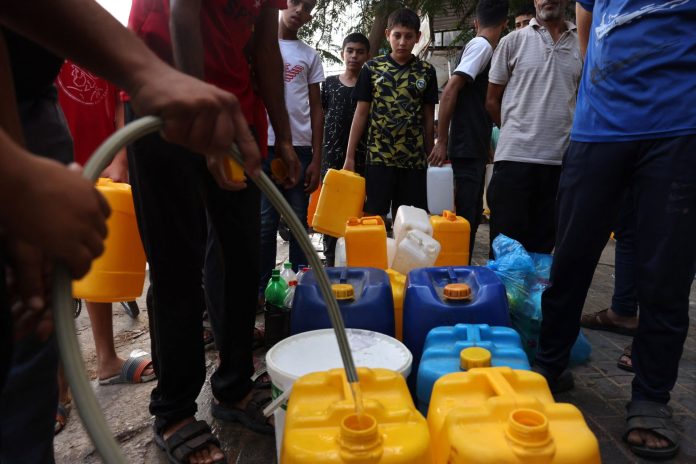
For days, humanitarian organizations including the United Nations Relief and Works Agency for Palestine Refugees in the Near East (UNRWA) have emphasized the necessity of fuel to operate desalination stations and water pumps in Gaza.

According to UNRWA, roughly 70% of people in Gaza are now drinking “salinized and contaminated” water. Raw sewage has also started flowing through the streets in some areas as UN waste disposal systems are also impacted by the fuel shortages.

Dehydration and waterborne diseases are now surging in Gaza due to “salinated and polluted water consumption from unsafe sources”, Arrojo-Agudo warned Friday.

“Coupled with the massive displacement of thousands of people in recent days, this is the perfect scenario for an epidemic that will only punish innocents, once again.”

Majority of Gaza hospitals and clinics shut down: Palestinian health ministry

Gaza War

Of the 72 primary health care clinics, 52 have also been forced to close, it added.

More than 40 patients, including four premature babies, have died at Al-Shifa Hospital in Gaza City, Gaza’s largest hospital, in the last six days, according to the health ministry.

Most of the intensive care unit patients, who were on ventilators due to the lack of fuel and oxygen at the Al-Shifa hospital in Gaza, have died, the doctor who leads the burns department at the hospital told Al-Jazeera over the phone from inside the facility on Friday.

Dr. Ahmad Mofeed Al-Mokhalalati noted a significant decrease in the number of premature babies in their care, with little hope for the survival of the remaining infants under the current conditions.

The hospital, which is Gaza’s largest, is grappling with a severe shortage of basic necessities — no water and no electricity in the main buildings of the compound, the doctor continued.

As a result, surgical operations have come to a halt due to the lack of electricity. This has led to an increase in suffering, especially among children who are now facing severe intestinal infections, a direct consequence of the unavailability of clean water, Al-Mokhalalati added.

And although he noted that Israeli forces promised to provide food, the supply delivered was grossly insufficient, catering to for only 40% of those inside the hospital, he stated.

The situation escalated when the Israeli forces stormed two buildings within the medical compound, with tanks still present in the area, the doctor noted. Snipers have been deployed around the hospital, adding a layer of fear and uncertainty according to Al-Mokhalalati.

Ashraf al-Qudra, the Ministry of Health spokesperson in al-Shifa Hospital, also said that the situation is “catastrophic”, as Israeli soldiers continue to raid the building.

“There is not a drop of water, the situation is catastrophic, doctors are unable to change dressings on wounds or perform surgery,” he said on Friday, in a televised interview with Al Jazeera.

“Children have a number of issues from diarrhoea to high temperatures, we aren’t able to treat them due to the lack of water and fuel in the hospital.”

He added that ambulances have not been able to come to the hospital to collect dead bodies due to the ongoing bombing.

“Israel forces are still carrying out searches across all rooms, even in the maternity ward,” he stated.


Families of Israeli hostages urge government to ensure return of captivates

Israel Hostages

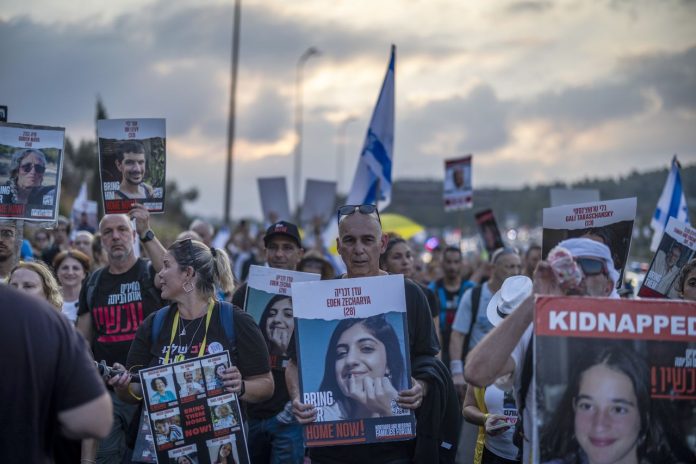
A large crowd walked along a highway toward Jerusalem, according to the Reuters news agency, with some people holding signs of pictures of missing people captioned “Bring them home now”.

One of the participants in the march, Shelly Shem Tov, told CNN that Hamas abducted her son. She said the march had started three days ago in Tel Aviv and that the group was on the way to Jerusalem to demand that the government “bring our families back home safely, alive”.

“This is the situation. We are 42 days from October 7. We don’t know what about our families. I don’t know (anything) about my son, if he is OK,” she continued, stating, “I know that he was kidnapped by Hamas, and from that day I don’t know anything about him.”

“It’s a nightmare. Forty-two days of nightmare,” she added.

Shem Tov said that she has heard “nothing” from the Israeli government since it told her that Hamas had kidnapped her son.

The Israel Defense Forces confirmed on Friday that the military’s official estimate of hostages being held in Gaza is 237. The IDF has previously announced that the number can fluctuate based on updated intelligence.

ABC TV reported on Friday, citing a senior Israeli official, that a deal to release the hostages could be announced in the next two or three days. According to sources of the Reuters news agency, Hamas agreed on the general terms of a deal with Israel, under which it would release about 50 hostages in exchange for a three-day ceasefire in Gaza. However, ABC quoted an Israeli official as saying that the main stumbling block is how many hostages Hamas is ready to release. Israel insists on the release of all the children, their mothers and their families, a total of about 80 hostages while Hamas says it will release only women and small children, or about 50 people.

Israel’s National Security Adviser Tzachi Hanegbi stated on Friday no agreement on the release of at least some of the hostages held by Hamas in the Gaza Strip has been reached so far.

“So far, there is no agreement on prisoner exchange. No decision on this matter has been made at this point. But these matters are being discussed and that is why we believe that if such an agreement is reached, very many families will be able to reunite with their relatives,” he told a news conference.

UN says Gaza casualties ‘likely much higher’ than reported figures

Gaza War

“Casualties continue to mount, with the dead reportedly exceeding 11,000 people – the majority of them children and women. The actual total, however, is likely much higher as figures have not been updated for five days due to a collapse of communication networks in Gaza,” stated Martin Griffiths, under-secretary-general for humanitarian affairs and emergency relief coordinator, at a General Assembly meeting on Gaza’s humanitarian situation.

Israeli Prime Minister Benjamin Netanyahu has confirmed that Tel Aviv’s attempts to minimize casualties in Gaza were “not successful”.

In an interview with CBS News, Netanyahu was asked about Israel’s killing of thousands of Palestinians as it retaliates for the October 7 attack by Hamas.

“The other thing that I can say is that we’ll try to finish that job with minimal civilian casualties. That’s what we’re trying to do: minimal civilian casualties. But unfortunately, we’re not successful,” Netanyahu said, also adding that he blamed Hamas for the large number of civilian deaths in Gaza.

The health ministry in Gaza has reported that 11,500 people had been killed, including 4,700 children. Its figures only include people recorded dead at hospitals and is almost certainly an undercount, not including the deceased who did not pass through a hospital or whose bodies have not been recovered from bombed sites.

The UN Security Council on Wednesday adopted its first resolution since the outbreak of the war, calling for “urgent and extended humanitarian pauses” in Gaza.

The US and UK abstained from the vote because the resolution did not condemn Hamas’ October 7 attack on Israel. Russia also abstained because the resolution did not demand a humanitarian ceasefire.