Saturday, January 17, 2026
Home Blog Page 1186

Israel-Palestine conflict LIVE: Dozens killed as Israel strikes UN-run school in northern Gaza

Gaza War

Israeli air strikes hit UN-run school in Jabalia camp

Israeli air raids have killed dozens people at the al-Fakhoora School, run by the United Nations agency for Palestinian refugees (UNRWA), in Jabalia refugee camp in northern Gaza.

At least 50 people have been killed in the bombing, the Palestinian Ministry of Health confirmed on Saturday.

Many hundreds of people are believed to have taken shelter there, fleeing the non-stop Israeli attacks.

Tamara Alrifai, a spokesperson for UNRWA, told Al Jazeera that she has seen the “devastating” footage coming out of Jabalia in the aftermath of the bombing, but has not been able to directly contact her colleagues on the ground.

“I’m still waiting from reports directly from my colleagues in Gaza but what we’re seeing is another one of these horrific incidents, where civilans, people who sought shelter in a protected UN building are paying the price,” she said.

Alrifai stated over half of the Gaza Strip’s 2.3 million population has been forced on an “exodus” south after an Israeli order to evacuate to make room for its ground operations, something that is reminicent of previous forced displacements.

“Many people who stayed in the north stayed in the UNRWA school because they thought that they would have a bit of safety there, but nowhere is safe in Gaza, not even our schools,” she continued, adding, “Unfortunately, people flee into our buildings with the blue flag looking for protection, but 70 of our buildings have been hit, so we ourselves are not protected.”

Alrifai stated excluding the strike on Saturday, 66 people have been confirmed to be killed while taking shelter in UN-run facilities.

The school had already been bombed days ago, and was previously targeted by Israeli forces during escalations of violence in 2009 and 2014.

The Jabalia refugee camp has been a target for Israeli strikes for weeks


Israel will expand operations in Gaza: Palestinian minister

Israel’s war in Gaza will expand and not be limited to any one area, Ammar Hijazi, assistant minister for multilateral affairs for the Palestinian Ministry of Foreign Affairs, has said.

“We think that they are doing it in stages. The north is just the beginning,” he stated.

“They are going to make sure that Gaza, especially the northern and eastern parts, are unlivable and squeeze the population into a very limited geographical area, pushing them to leave and be forcibly displaced from Palestine,” Hijazi added.

When asked about if the Palestinian Authority (PA) would be willing to rule Gaza after the fighting ceases, he responded by saying that the priority was to end the war.

“The nature of things is that we should have only one government that rules over the occupied Palestinian territories. And that government should be according to what people choose,” he said.

“And the legitimate representative of the Palestinian people is the Palestinian Liberation Oganization … thus the Palestinian government can be determined as such,” Hijazi continued, adding, “But now is not the time to discuss these things.”


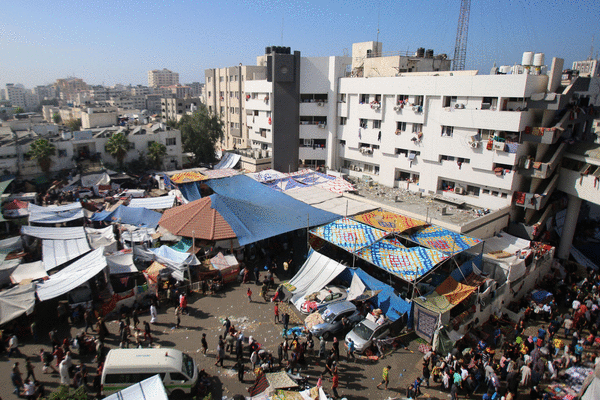
Wounded Palestinians forced to flee al-Shifa ‘are going to die’

Some of the patients forced out of al-Shifa hospital won’t make it to another medical facility, a spokesperson for the Palestinian media office in Gaza said.

“All are going to die simply because they require swift medical attention,” Ismail al-Thawabta told Al Jazeera.

He added that people inside the hospital were forced to leave at gunpoint, and described it as “another war crime”.


Al-Shifa now ‘deserted’: Hospital director

Speaking to Al Jazeera from al-Shifa, Director Mohammed Abu Salmiya said only he and a few others, including staff and patients, were left at Gaza’s largest hospital.

“The hospital is completely deserted. Some of the remaining patients and victims are lying in the corridor,” he stated.

“The centre of the hospital is surrounded by Israeli soldiers. They are in total control. Even we, the very few medical staff that remain, cannot move freely.”

“Many of those in critical conditions, including newborns and kidney patients, will die imminently if they are not evacuated,” he continued, adding, “Food at the hospitals is also running out.”


EU foreign policy chief: Only Palestinian Authority can run post-war Gaza

Josep Borrell has asserted that “Hamas cannot be in control of Gaza any longer”.

“So who will be in control of Gaza? I think only one could do that – the Palestinian Authority,” he stated, speaking at the Manama Dialogue, an annual conference on foreign and security policy in Bahrain.


Palestinian health ministry says Israel removed over 100 bodies from al-Shifa

In an interview with Al Jazeera Arabic, the general manager for the Palestinian Ministry of Health, Munir al-Barsh, said that Israeli forces removed more than 100 bodies from al-Shifa Hospital in northern Gaza.

Barsh told Al Jazeera that Israeli forces removed 15 bodies from a mass grave, with a total of around 130 bodies taken from the hospital. He did not say where the bodies were taken to or provide further details.

Israeli military spokesperson Daniel Hagari was asked about this claim by a reporter, but dodged the question.

“We are working in Shifa Hospital for 48 hours. It’s a complex operation. It’s a large complex,” Hagari added.

Al Jazeera also reported that Israeli forces have given doctors, patients and displaced people at al-Shifa Hospital one hour to evacuate the medical compound located in the northern Gaza Strip.


At least 63 Palestinians dead on arrival at Indonesian Hospital

Sixty-three Palestinians were dead on arrival at the Indonesian Hospital in northern Gaza at dawn on Saturday, a medical source told Al-Jazeera.

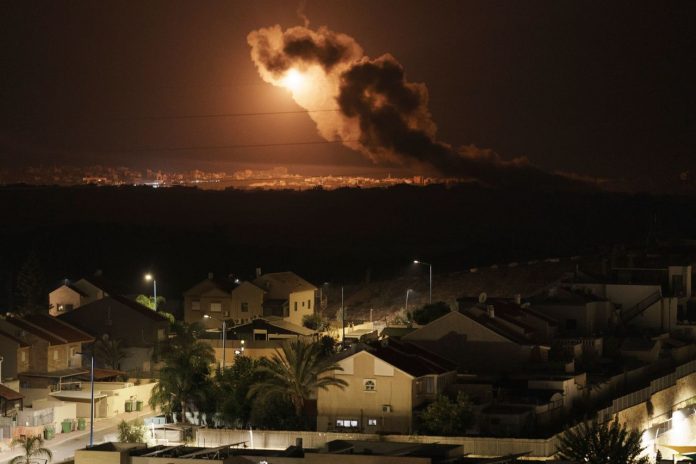
It follows a series of deadly attacks carried out by the Israeli military in the north of the enclave, including in Beit Lahia, Beit Hanoun, Gaza City and Jabalia refugee camp.


At least 28 Palestinians killed in Israeli air strike in Khan Younis

At least 26 Palestinians were killed in an Israeli air raid on Khan Younis during the early hours of Saturday morning, according to Al Jazeera Arabic.

The attack hit a residential neighbourhood in Khan Younis, located in southern Gaza, and among those killed were children.


Internet and phone services partially restored in some parts of Gaza: Telecommunications company

Internet and phone services have been partially restored in some parts of the Gaza Strip, Palestinian telecommunication company PalTel announced on Friday.

“This comes after a limited quantity of fuel was provided through UNRWA to operate our main generators,” the company said, referring to the United Nations Relief and Works Agency for Palestine Refugees in the Near East.

Two fuel tankers entered Gaza through the Rafah crossing on Friday to be used by UN agencies.

PalTel added it would need to receive a regular supply of fuel to avoid more disruption.

NetBlocks, a London-based internet monitoring firm, confirmed that internet connectivity had been partially restored in Gaza.

“Metrics show that internet connectivity is being partially restored in the Gaza Strip as operators report a donation of fuel; service was lost on Thursday as telecom sector generators and backups shut down; service remains significantly below pre-conflict levels,” the firm said in a post on X, the platform formerly known as Twitter.


5 countries ask International Criminal Court to investigate situation in Palestinian territories

Five countries submitted a referral to the International Criminal Court (ICC) to investigate whether crimes may have been committed in Palestinian territories, ICC prosecutor Karim Khan announced.

South Africa, Bangladesh, Bolivia, Comoros and Djibouti submitted the referral of the situation in the region, Khan stated.

“In accordance with the Rome Statute of the International Criminal Court, a State Party may refer to the Prosecutor a situation in which one or more crimes within the jurisdiction of the Court appear to have been committed requesting the Prosecutor to investigate the situation for the purpose of determining whether one or more specific persons should be charged with the commission of such crimes,” Khan said in a statement.

He noted that his office is already conducting an investigation on the situation in the Palestinian territories – which began on March 3, 2021 – over possible crimes that may have been committed since June 2014 in Gaza and the West Bank.

“It is ongoing and extends to the escalation of hostilities and violence since the attacks that took place on 7 October 2023,” Khan continued, adding, “In accordance with the Rome Statute, my Office has jurisdiction over crimes committed on the territory of a State Party and with respect to the nationals of States Parties.”


Israeli army says it will advance “anywhere Hamas is found”, including southern Gaza Strip

Israeli troops will advance to anywhere Hamas is found, including the southern part of the Gaza Strip, an Israeli army spokesperson said.

“This will happen where and when would be convenient for the IDF and when conditions are optimal,” Israel Defence Forces spokesperson Rear Adm. Daniel Hagari stated.

At least 372 IDF soldiers have been killed since October 7, Hagari added. The death toll did not change from Thursday.

In recent days, there are growing indications that a ground offensive into the southern part of the strip could be imminent. Israeli leaders have declared the northern part of Gaza, including Gaza City, is now under Israel’s control.

A leaflet dropped Wednesday on communities to the east of Khan Younis, the largest city in the southern part of Gaza, warning people living there to move and “head toward known shelters.”

Earlier this week, Israel’s Defense Minister Yoav Gallant said Israel’s ground operations “will last for many months — and will include both the north and the south (of the Gaza Strip). We will dismantle Hamas wherever it is.”


Fuel tankers enter Gaza after Israeli government approves regular deliveries

Two fuel tankers entered Gaza through the Rafah crossing Friday, after Israel’s war cabinet approved a measure to allow for regular deliveries to the besieged enclave.

The tankers were carrying 60,000 liters of diesel fuel between them, according to Israel’s Coordinator of Government Activities in the Territories, an agency that liaises with Palestinians on civilian affairs.

“This fuel entered in a limited manner for the use of international organizations, for UNRWA,” Israeli military spokesperson Rear Adm. Daniel Hagari said at a news briefing, referring to the United Nations aid agency operating in Gaza.

“There are desalination facilities that should provide water to the southern strip, so the fuel is used just for these two needs. We monitor this issue, to ensure it’s used for these two needs only. This (process) is led by the US and Egypt.”

Israel’s war cabinet approved a measure on Friday allowing two fuel tankers a day to enter Gaza for water and sewage system support, according to Israel’s national security adviser.

Those systems are “on the verge of collapsing, considering the lack of electricity and ability to operate the sewage and water systems”, the official, Tzachi Hanegbi, said in a Friday briefing.

The deliveries will amount to 140,000 liters of fuel entering Gaza every 48 hours, a US State Department official has confirmed.


UN emergency relief chief: “International humanitarian law appears to have been turned on its head”

The United Nations’ Under-Secretary-General for Humanitarian Affairs and Emergency Relief Coordinator Martin Griffiths outlined what support is needed — including a ceasefire and continuous aid — to respond to the humanitarian crisis in Gaza.

“In many respects, international humanitarian law appears to have been turned on its head. … It is without doubt a humanitarian crisis that, by any measure, is intolerable and cannot continue,” Griffiths said as he addressed the General Assembly on Friday.

“Call it what you will, but the requirement, from a humanitarian point of view, is simple. Stop the fighting to allow civilians to move safely. Do it for as long as possible, to facilitate an unimpeded humanitarian response. Give the people of Gaza a breather from the terrible, terrible things that have been put on them these last few weeks. And, without condition, release all the hostages,” he added.

Griffiths also spoke about the number of hospitals which have ceased operations since the beginning of the conflict on October 7, and how fuel and a “continuous flow of aid” is needed to help as many people as possible in Gaza.

“There is little to no medical care available in northern Gaza,” Griffiths told the General Assembly.

“Eighteen hospitals have shut down and evacuated since the start of hostilities. Another five hospitals, including (Al-Shifa), are providing extremely limited services to patients who have already been admitted. These hospitals are not reliably accessible because of insecurity, do not have electricity or essential supplies, and are not admitting new patients.”

The humanitarian chief also requested that there also be “more crossing points into Gaza,” along with an increase in humanitarian aid and resources to help expand shelters and “establish relief distribution hubs.”

“We are not asking for the moon. We are asking for the basic measures required to meet the essential needs of the civilian population and stem the course of this crisis,” Griffiths continued, adding, “We need the full leverage of the UN membership to achieve these objectives.”


UN human rights chief says access to Gaza is needed to investigate claims on Al-Shifa Hospital

The United Nations human rights chief has called on Israel to grant his team access to Gaza to investigate competing claims about the Al-Shifa Hospital.

“We need to look into this by having access. We cannot rely on one or the other party when it comes to this,” Volker Türk, the UN High Commissioner for Human Rights, told CNN’s Becky Anderson when asked about allegations by the Israeli military that Hamas was hiding weapons at the hospital.

He said the situation needs an “independent international investigation, because we have different narratives.”

Israel is under growing international pressure to uncover proof of what it has described as a Hamas command and control center under the Al-Shifa Hospital, as Israeli forces launched a raid at the facility early Wednesday. The Hamas-run government media office denied it was using the hospital as a command and control center — calling the Israeli claims “baseless lies.”

Türk stated hospitals had special protection at all times under humanitarian law.

“You cannot use civilian, especially hospitals, for any military purposes. But you also cannot attack a hospital in the absence of clear evidence,” Türk added.

Türk said investigators could not go to Gaza “while the bombs are falling or while military operations are taking place”, and so his team was monitoring the situation from afar for now. He added he previously asked the Israeli government for access to Gaza and the occupied West Bank but was “still waiting for the answer.”

The actions of both Israel and Hamas since the group’s massacre of an estimated 1,200 people on October 7 must be investigated, Türk said.

Since Hamas launched its brazen October 7 attacks and Israel responded with intensive air strikes and a ground offensive, both sides have been accused of committing war crimes.

“We have seen … grave breaches of international humanitarian law,” Türk said, speaking broadly of the actions from both sides.

“What Hamas did — the horrific killing of civilians, the fact that they took hostages — are clear violations of the law. The fact that we have seen a collective punishment by Israel of Gaza, by cutting off supplies, of medical necessities, of food, of electricity, of water is also [a] very serious matter under international humanitarian law,” Türk added.

“In fact, we consider it a crime, [just] as Hamas was acting criminally by taking hostages and killing civilians. So, indeed, there are issues that we all have to look into because they are very serious. And they require answers. And they require accountability,” Türk continued.
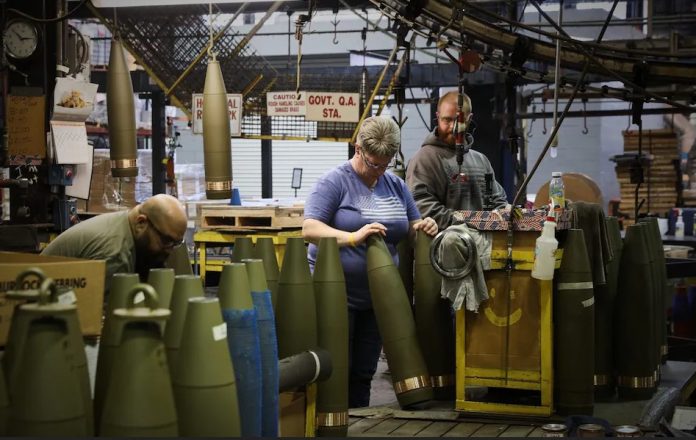
Gaza war creating shell hunger for Ukraine: Zelensky

Russia Ukraine War Weapons Arms

Earlier this week, Bloomberg reported that the Pentagon had ramped up arms deliveries to Israel amid its campaign in Gaza. Elsewhere, EU foreign policy chief Josep Borrell also recently warned Kiev that member states could no longer provide weapons from existing stockpiles.

Speaking to reporters in Kiev on Friday, Zelensky noted that “our deliveries have decreased” and “really slowed down”.

“It’s not like the US said: we don’t give Ukraine any. No. It’s just that everyone is fighting for [stockpiles] themselves,” the Ukrainian leader clarified.

According to Zelensky, the situation has been aggravated because “now the warehouses are empty, or there is a legal minimum that a particular state cannot give you”.

Bloomberg reported on Wednesday, citing an internal Defense Department list dated late October, that Washington had increased defense aid to Israel without publicly announcing the move.

Among the weapons being provided from the Pentagon’s own stocks are 57,000 155mm high explosive artillery shells, the media outlet claimed.

Speaking to reporters ahead of an EU Foreign Affairs Council meeting on Tuesday, Borrell stated the bloc had already supplied more than 300,000 artillery rounds to Ukraine, depleting existing stockpiles. The foreign policy chief added that the bloc would now have to switch to domestically produced munitions to satisfy Kiev’s demands.

With its months-long summer counteroffensive having failed to yield any significant territorial gains, Ukraine has lately doubled down on requests for yet more weapons and ammunition from its Western backers.

Russia has repeatedly stated that no amount of defense aid provided to Kiev can change the course of the conflict, warning that continued weapons supplies only serve to raise the risk of direct confrontation between NATO and Moscow.

Israel undecided on next stages of Gaza war: Report

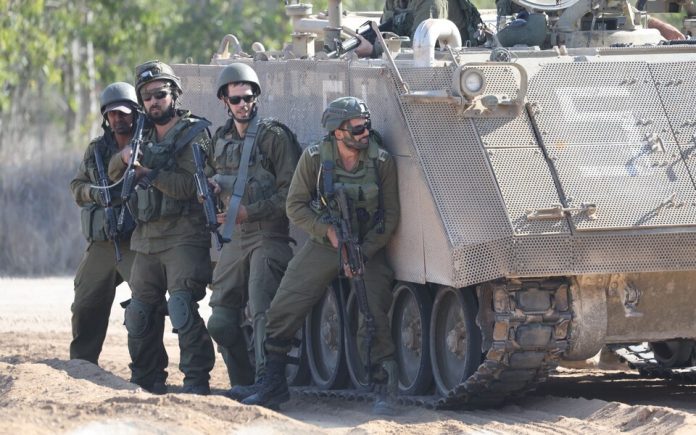
Israeli Army

The options reportedly include expanding the ongoing military operation into the southern part of the Palestinian enclave or reaching an interim deal with the Hamas group, exchanging at least some Israeli hostages for a pause in hostilities or the release of Palestinian prisoners.

According to the Jerusalem Post, even the possibility that Israel and Hamas might be close to some sort of deal “may currently be slowing the push into southern Gaza”.

Both military and civilian leadership in Israel have repeatedly vowed to crush Hamas and secure the release of Israeli hostages captured by the Palestinian group at the beginning of the conflict. Thus far, Israel has not made much progress with the latter goal, the media outlet acknowledged, adding that now might be the moment when a “balancing” of the two proclaimed goals occurs.

The report suggested that the military appears to be eager to continue fighting no matter what. On Thursday, the chief of staff of the Israel Defense Forces (IDF), Lieutenant-General Herzi Halevi, unambiguously said he would be pushing further south “if it were up to [him]”.

At the same time, Israeli Defense Minister Yoav Gallant spoke about moving the war into new “stages” but did not say anything about attacking the southern part of Gaza, the newspaper noted.

The latest escalation between Hamas and Israel began on October 7, when the Palestinian group launched a surprise attack in the south of Israel, breaching the border at multiple locations.

The group took dozens of hostages, military and civilian alike, holding them in Gaza since then. Only a fraction has been released, while some hostages ended up killed by Israeli airstrikes during the operation in Gaza, Hamas has claimed.

Israel responded to the attack with a heavy bombing campaign in Gaza, which has resulted in massive civilian casualties and widespread destruction in the enclave. The IDF also launched a ground operation, splitting the enclave in two and focusing on the north, where the military have managed to seize control of a broad area.

The idea espoused by some is that the IDF’s strategic position in the northern part of Gaza means it could take a “natural pause” while expanding the operation into the south.

However, moving into the south will require the military to commit “large numbers of air, sea, and ground forces” and “maneuver a huge logistics complex” across the country to sustain it, the daily warned.

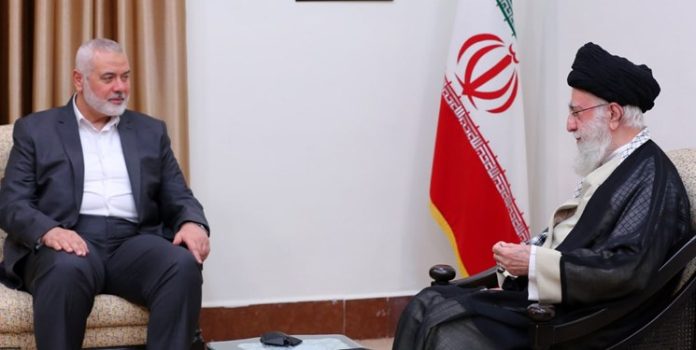
Iran leader office’s newspaper rejects Reuters claim about Hamas official meeting 

The Hezbollah Path described the report as totally untrue.

Earlier, Hamas itself denied the claim as a sheer lie.

Iran has repeatedly supported the October 7 attack but has reiterated that it was not involved in the operation.

Iran also says it gives spiritual support to resistance groups including Hamas but the groups make their own decisions without Iran’s involvement.

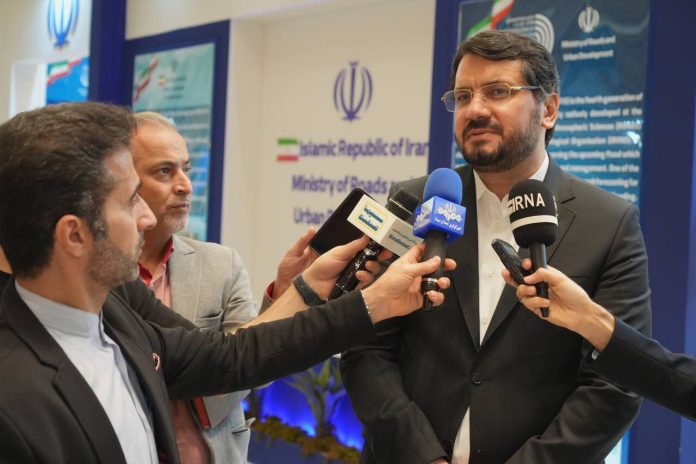
Iranian min. says Tehran determined to give neighbors access to open seas

Mehrdad Bazrpash made the comment during a meeting with Turkmenistan’s president.

While stressing the need for taking genuine steps to realize a synergistic partnership in bilateral relations, Bazrpash explained the “Iran Road” initiative put forth by the current Iranian administration to the Turkmen president.

He also referred to the Persian word for “road”, saying this means that neighboring countries may use Iran as a proper solution and path.

Turkmenistan has a special place in the “Iran Road” initiative and counts as a strategic partner of Iran, Bazrpash underlined, saying the country is the gateway to Central Asia and has access to the east-west and north-south corridors.

  1. He further underscored the necessity of strengthening multilateral cooperation with third parties including Uzbekistan, Turkey, Iraq and Kazakhstan.

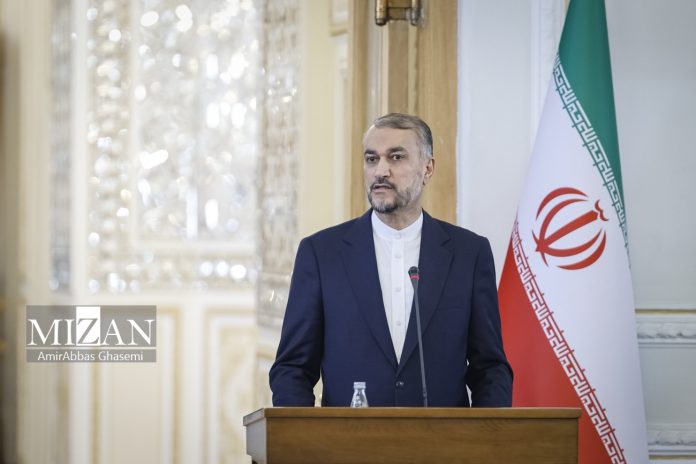
Iranian FM warns of war spillover if Zionist regime’s aggression against Gaza doesn’t stop   

Hossein Amirabdollahian

Speaking during an interview with the British daily The Financial Times, Hossein Amirabdollahian said, “Iran does not want the war to spread, but due to the approach adopted by the US and Israel in the region, if the crimes against the people of Gaza and the West Bank are not stopped, any possibility could be considered, and a wider conflict could prove inevitable”. “The war has already expanded in the region,” he added.

“The fact that the Yemeni army  attacks the occupied territories with missiles and drones means the war has begun to expand”. “Over the past 40 days, messages have been exchanged between Iran and the US, via the US interests section at the Swiss embassy in Tehran,” Amirabdollahian added, while ruling out the possibility of direct talks with Washington. Amirabdollahian further noted that Lebanese resistance movement Hezbollah and other groups in Palestine, Iraq, Syria and Yemen are not Iran’s proxy forces, saying each has an independent political identity.

But he warned that these groups “are not indifferent towards the killing of Muslims in Palestine”.

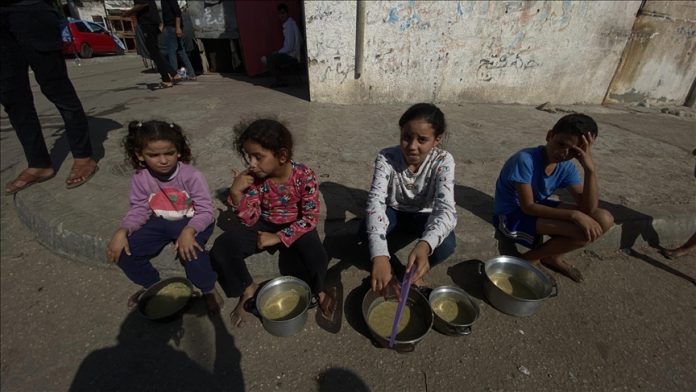
Gazans facing imminent starvation risk: WFP

“With winter fast approaching and the unsafe and overcrowded shelters that lack of clean water, people are facing the immediate possibility of starvation,” Abeer Etefa, WFP spokesperson for the Middle East and North Africa, said Thursday.

Etefa spoke at a virtual UN news conference alongside Juliet Touma, communications director at the UN Relief and Works Agency (UNRWA), about the situation in the Palestinian enclave.

Etefa briefed reporters from Cairo and said Gazans are becoming more desperate every day in their search for bread and essential foods.

“Bread is a way of luxury,” she added.

“We already started to see cases of dehydration and malnutrition, which is increasing rapidly and by the day,” Etefe continued, noting, “With only 10% of necessity food supplies and drink in Gaza since the beginning of this conflict, we’re now facing a massive food gap.”

She stressed that 2.2 million residents, which is nearly the entire population of the Gaza Strip, are now in need of food assistance.

“Food production has come to an almost complete halt,” said Etefa.

She added that for those fortunate enough to find food, “this meal will include maybe a canned food.”

Etefa stressed to meet the growing needs inside Gaza, the number of trucks that are crossing with food assistance needs to be increased.

“There is no way to meet the current hunger needs with the current situation,” she said, adding, “We have to have a different space that allows us to have safe access and to have the flowing of goods inside Gaza.”

The collapse of the food supply chain is “catastrophic” and said the situation before the conflict was difficult but now it is “disastrous,” she stated.

WFP Executive Director Cindy McCain also said in a statement Thursday people in Gaza are facing an “immediate possibility of starvation” as fuel shortages cripple food production and distribution in the enclave.

“Supplies of food and water are practically non-existent in Gaza and only a fraction of what is needed is arriving through the borders,” McCain stated.

According to the WFP, only 10% of necessary food supplies has entered Gaza since the start of the war with fuel shortages severely impacting bread production as well as the distribution of essential humanitarian aid with aid trucks unable to reach their destination.

The head of the UN Relief and Works Agency for Palestine Refugees in the Near East also reiterated these concerns, stressing thousands of people taking shelter at UNRWA facilities in Gaza are “dehydrated, exhausted, hungry and shell-shocked.”

“The children were pleading for a sip of water and a loaf of bread,” Philippe Lazzarini said of his recent visit to Gaza.

The WFP announced it has provided emergency food aid to more than 700,000 displaced Gazans and is planning to reach more than one million people in the next few weeks, but stressed these needs cannot be met with only the Rafah border crossing with Egypt open.

“The only hope is opening another, safe passage for humanitarian access to bring life-saving food into Gaza,” added McCain.

Lazzarini reiterated that if the UNRWA isn’t able to get fuel soon, it runs the risk of having to suspend its “entire humanitarian operation” in the enclave.

Human Rights Watch has also warned that waterborne illnesses such as cholera and typhoid are likely to emerge as Israel continues to prevent clean water from reaching the Strip.

Since the start of Israel’s blockade of the territory, water shortages and contamination have “severely impeded health care access, made people sick, and have already led to the outbreak of diseases”, the rights group said.

The death toll will also likely rise “exponentially” if people continue to drink unsafe water and have no access to medicine when they need it, HRW added.

Since Oct. 7, at least 11,500 Palestinians have been killed, including over 7,800 women and children, and more than 29,200 others have been injured, according to the latest figures from Palestinian authorities.

Thousands of buildings, including hospitals, mosques, and churches, have also been damaged or destroyed in Israel’s relentless air and ground attacks on the besieged enclave.

The UN experts have announced there is “evidence of increasing genocidal incitement” against the Palestinians amid Israel’s relentless assaults on the besieged Gaza Strip.

The group of experts, which included several special rapporteurs, said in a statement on Thursday “grave violations” were being committed by Israel against the people across the blockaded Palestinian territory.

“We are deeply disturbed by the failure of governments to heed our call and to achieve an immediate ceasefire,” the statement read.

“We are also profoundly concerned about the support of certain governments for Israel’s strategy of warfare against the besieged population of Gaza, and the failure of the international system to mobilize to prevent genocide,” they added.

The experts had previously warned that time was running out to “prevent genocide and humanitarian catastrophe” in Gaza.

Hamas says ready for long battle with Israel

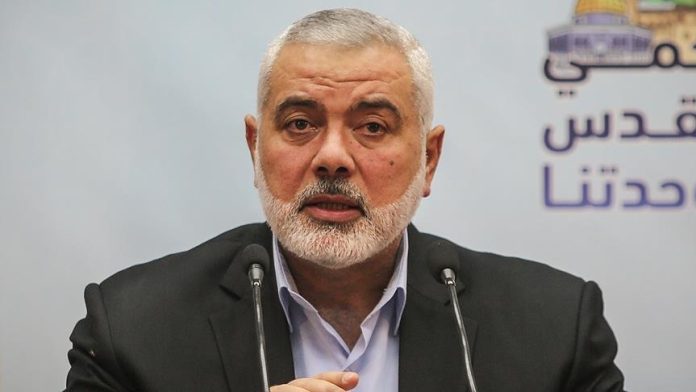
In a recorded speech, Haniyeh praised the resilience of the Palestinian people and the coordination of resistance factions “to disperse the capabilities of the Israeli army and weaken it on multiple fronts.”

“If the enemy desires a long battle, our capacity is longer than our enemy’s, and our resistance will have the decisive word in it,” indicating that “the resistance is engaged in a strategic conflict with the Zionist enemy and will only emerge victorious,” he said.

He highlighted the “victories achieved by the resistance members on the ground in the Gaza Strip”, adding “the heroes of the resistance are writing pages of glory in Gaza, comparable to their counterparts in heroism, courage and daring, delivering painful blows to our enemy’s army and its vehicles”.

“The world will witness the Al-Qassam Brigades and the resistance factions defeating the Israeli occupation in Gaza, as they did 18 years ago,” he continued, referring to the Israeli disengagement from Gaza in 2005.

“They will reap nothing but more failure, disappointment and defeat.”

Haniyeh considered “the residents of Gaza and the resistance to have thwarted the enemy’s goals and plans for displacement or forcibly regaining hostages.”

He also called for the implementation of the resolutions of an emergency Arab-Islamic summit held in the Saudi capital Riyadh days ago, especially those related to “immediately stopping the aggression, lifting the siege on Gaza, protecting the sanctities, and realizing the aspirations of our people for freedom, return and independence”.

The Hamas chif also emphasized the importance of “the swift convening of a committee composed of several countries tasked with monitoring the implementation of the decisions issued by the summit”.

US, EU considering UN force in Gaza: Report

The multinational peacekeeping force would be deployed in Gaza after the end of the war in the besieged enclave, sources told Bloomberg.

The sources said that the officials discussing the idea “concede big questions remain about whether such an operation would be workable in Gaza”, particularly in light of Israeli scepticism.

But the officials believe that raising the prospect of a UN force may encourage Israel to end its assault on Gaza, which has led to more than 14.000 deaths and a humanitarian disaster.

Anonymous Israeli officials told Bloomberg that they were sceptical that the UN force would be effective, and that Israeli forces would expect to be able to enter and exit Gaza “at will”.

One option being considered by US and European officials would involve an expanded role for the UN Truce Supervision Organization, which was first established in 1949 to help implement armistice agreements between Palestinian Arabs and Israel following the war that broke out in 1948 after the creation of Israel.

Similar UN structures across the globe could be used as a template, the people added, pointing to a UN-backed troop deployment to Haiti led by Kenyan soldiers and another force mandated by the UN Security Council in Somalia to fight against the militant group al-Shabab.

IRGC Quds force commander: Iran, allies stay united with Gaza fighters

“Your brothers in the axis of al-Quds and the resistance are united with you, and they will not allow the enemy to reach its dirty goals in Gaza and Palestine,” Brig. Gen. Ismail Qaani said in a message Thursday.

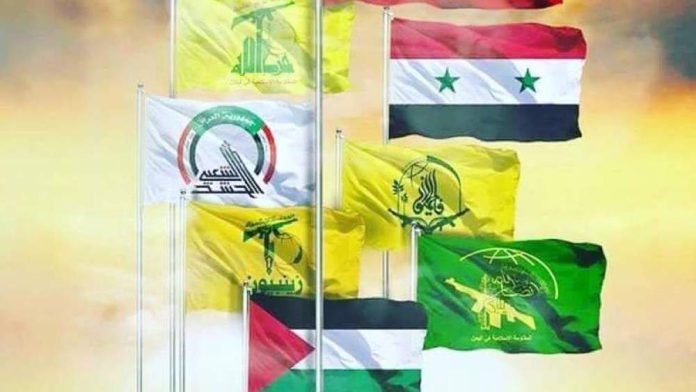
The Axis of Resistance refers to an alliance among Iran, Syria and anti-Israeli groups in Lebanon, Iraq, Yemen and elsewhere which have hit Israeli and US targets in recent weeks in solidarity with Gaza.

Qaani hailed Operation al-Aqsa Storm by Palestinian resistance fighters on Oct. 7 caught Israel off guard and shattered the regime’s myth of superiority in everything from military to intelligence power.

“You created a great epic called the al-Aqsa Storm, which was accomplished with the help of God and by the holy fighters of the al-Qassam Brigades and the resistance in Gaza,” he said.

“Palestine and the region after the al-Aqsa Storm will not be the same as before,” Qaani added.

“You clearly showed the weakness and fragility of the usurping Zionist regime and you showed in a practical and decisive way that the regime is weaker than a spider’s web.”

The message came after Western media claimed that Hamas leader Ismail Haniyeh had got a dressing-down from Leader of the Islamic Revolution Ayatollah Seyyed Ali Khamenei in Tehran.

On Thursday, senior Hamas official Osama Hamdan dismissed claims to this effect as “pure lies and slander”, saying the British news agency Reuters “has published worthless lies instead of news”.

“Everyone knows the nature of the relationship between the Hamas movement and the Islamic Republic of Iran, as well as the position of the country in supporting the Palestinian cause and nation and its resistance, and especially the Hamas movement, and they know the view of Ayatollah Khamenei in supporting the Palestinian resistance,” Hamdan told Iran’s official news agency IRNA.

“Therefore, due to the necessity and nature of the relationship between the two sides, it is impossible to believe such content,” he added.

Reuters had claimed that Haniyeh had been told that since Tehran was not given prior notice of the October 7 operation, it would offer political support to Hamas, but would not “intervene directly” in the fight.

The news agency had also claimed that Haniyeh had been asked to “silence those voices” in Hamas calling for Iran and Hezbollah to directly join the war against Israel “in full force”.

Hamdan stated the publication of such biased news has two main reasons.

“First, the resistance in Gaza has been successful in putting pressure on the Zionist regime and everyone has realized the extent of the regime’s crimes and its attacks on women, children and defenseless civilians. Second, it shows the effectiveness and efficiency of the resistance in targeting the enemy and its army and war machines.”

Hamdan continued, “The publication of such news is also an attempt to destroy the image of resistance and the axis of resistance, since the influence of the resistance in the region is definitely increasing, and this is causing great concern to the Israeli regime and its supporters, forcing them to use all means available to spread fake news.”

Hamdan stressed the only thing he wanted to say about the “positive meeting” between Haniyeh and Ayatollah Khamenei was that it had taken place “in continuation of the good and distinct relationship between Hamas and the Islamic Republic of Iran”.