Water shortages raise concerns of dehydration and related diseases: UN
Hundreds of thousands of residents in Gaza city and the North Gaza governorate are facing severe water shortages, as municipal-run wells are unable to pump water due to a lack of fuel, the UN agency OCHA announced.
This has raised concerns dehydration and waterborne diseases due to water consumption from unsafe sources, the agency said, adding:
- In the south, all municipal wells have stopped operating since 2 November, due to the lack of fuel. Additionally, one of the two desalination plants in the area shut down.
- Six of the trucks that entered on 4 November from Egypt carried a total of 198 cubic metres of bottled water. They were distributed during the day at IDP shelters in the south of Gaza, meeting the drinking needs of about 66,000 IDPs for one day.
- On 4 and 5 November, seven water facilities across the Gaza Strip were directly hit and sustained major damage, including three sewage pipelines in Gaza city, two water reservoirs (in Gaza City, Rafah and Jabalia refugee camp) and two water wells in Rafah. The Gaza municipality warned about the imminent risk of sewage flooding.
Palestinian death toll tops 10,000 in one month of Israeli raids
Israel has killed more than 10,000 Palestinians in a month of relentless bombing in Gaza, the Palestinian health ministry said on Monday.
At least 4,100 are children, 2,500 are women and 500 are elderly people, comprising 70 percent of the total death toll.
Nearly 25,000 more people have been wounded, it added.
192 medical staff were killed and 32 ambulances destroyed since October 7, while 16 hospitals are now out of service, the ministry confirmed.
Israeli air strike kills Palestinians at children’s hospital in Gaza
Israeli air raids on several hospitals in Gaza City on Monday have killed eight Palestinians, according to the health ministry.
Four were killed at the al-Rantisi paediatric hospital, while four others were killed at Gaza’s Eye Hospital. The Israeli military also targeted the enclave’s only psychiatric hospital.
All three hospitals are a short distance away from each other in Gaza City.
South Africa to recall all diplomats from Israel
The South African government said on Monday it would recall all its diplomats from Israel to “signal” its concern over the situation in Gaza, AFP news agency reported.
“The South African government has decided to withdraw all its diplomats in Tel Aviv for consultation,” Khumbudzo Ntshavheni, a minister in the president’s office, told a press briefing.
Israeli air raids target eye and psychiatric hospitals in Gaza City
Israeli air strikes have hit the only psychiatric hospital in Gaza, the Palestinian health ministry said on Monday.
The attack caused severe damage to the building in Gaza City.
Israeli bombs also struck an eye hospital in the city, the ministry added.
EU suggests humanitarian pause
EU’s foreign policy chief Josep Borrell has suggested a plan under which Israel could suspend its military operation in Gaza in return for the Red Cross getting access to captives held by Hamas.
“I think that a humanitarian pause counterbalanced by an access to hostages with the International Committee of the Red Cross (ICRC) as a first step to their release is an initiative in which we should work,” Borrell told EU diplomats in Brussels.
“Call it a truce, window, whatever, but we need that violence recedes and that international humanitarian law is being respected.”
While there have been widespread calls for a ceasefire, Prime Minister Benjamin Netanyahu has ruled out this option until all captives are released.
The European Union will increase humanitarian aid to Gaza by 25 million euros ($26.9m), European Commission President Ursula von der Leyen stated.
“By doing so the European Union would spend a total of 100 million euros in humanitarian aid for the civilians in Gaza,” von der Leyen added.
Following Hamas’s attack on Israel last month, the EU announced it was putting all 691 million euros ($728m) of development aid to Palestinians under review before reversing that decision due to the backlash and widespread criticism the decision received.
Israel’s cabinet minister calls for West Bank ‘sterile zones’ free from Palestinians
An Israeli cabinet minister has called for creating “sterile security zones” in the occupied West Bank that are free from Palestinians.
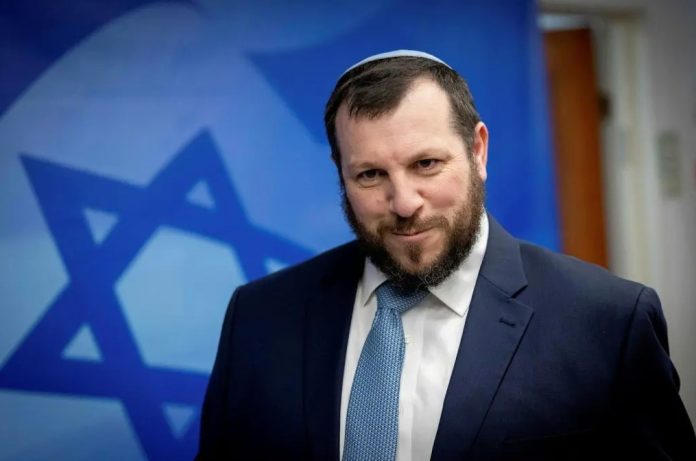
Finance Minister Bezalel Smotrich, who is also the de facto “governor” of the West Bank, stated Palestinians should be prevented from entering these zones – which presumably include lands they own – even to harvest olives.
He made the demand in a letter addressed to Prime Minister Benjamin Netanyahu and Defence Minister Yoav Galant, Israeli media reported on Monday.
The far-right minister, himself a settler, called for a discussion in the cabinet regarding “the continued neglect of the security of the settlers in Judea and Samaria,” referring to the West Bank.
“The concept of security must be shaken, emphasising the need to create sterile security zones around the settlements and roads and to prevent Arabs from entering them, including for harvesting,” Smotrich said in the letter.
“The writing is on the wall and I am not ready to be a part of it. I will not agree to additional blood under my watch due to insistence on maintaining distorted perceptions.”
Blinken meets with Turkish FM on final stop of Middle East trip
US Secretary of State Antony Blinken met with Turkish Foreign Minister Hakan Fidan in Ankara on Monday on the final stop of his whirlwind diplomatic trip across the Middle East amid the escalating war in Gaza.
The top US diplomat will discuss the humanitarian situation in the enclave with Firdan and the need to prevent the conflict from widening, according to a State Department note.
Blinken “will underscore the importance of protecting civilian lives in Israel and the Gaza Strip”, while also stating the “commitment to facilitating the increased, sustained delivery of life-saving humanitarian assistance to civilians in Gaza”, it added.
He is not expected to meet with Turkish President Recep Tayyip Erdogan, who has strongly condemned Israel’s actions in Gaza, calling them “crimes against humanity.”
Erdogan stated Saturday he was cutting off communications with Israeli Prime Minister Benjamin Netanyahu.
Turkey hosts some of Hamas’ leadership and Blinken has repeatedly said that things cannot go back to the “status quo” with the militant group following its October 7 attack on Israel.
Palestinian Health Minister Mai Al-Kaila called on the international community to take measures to allow the entry of medicine and fuel for hospitals in the Gaza Strip.
“The international community and humanitarian organizations must intervene immediately to open the Rafah border crossing with Egypt and allow the entry of medicine and fuel for Gaza hospitals,” the Palestinian news agency WAFA quoted her as saying.
According to Al-Kaila, Israel continues to target hospitals in Gaza.
The minister described the Israeli authorities’ accusations that the hospitals are used by radicals as “Israeli attempts to find excuses for bombing”.
She stated that it is necessary to set up field hospitals in the Gaza Strip due to the growing number of casualties caused by the ongoing Israeli attacks on the enclave.
“The health situation in Gaza is catastrophic as a result of Israel’s ongoing brutal aggression,” she continued.
The health ministry chief pointed to “the need to deploy field hospitals to deal with the significant number of wounded in the Gaza Strip”.
The Palestinian movement Hamas has called on the UN Secretary General to set up an international committee to inspect hospitals in the Gaza Strip, according to a statement published on the group’s Telegram channel.
“We call on the UN Secretary General Antonio Guterres to form an international committee to visit hospitals in the Gaza Strip to verify the occupation authorities’ false version that they are used as shelters,” the movement said.
The group called the Israeli army spokesman’s words about Gaza hospitals a lie.
“He [IDF Spokesman Daniel Hagari] tried to justify his threat to attack an Indonesian hospital and a Qatari hospital in the northern Gaza Strip by saying that Hamas has built tunnels under them and uses them as a cover to launch rockets. This is nothing but a lie to justify their [Israel’s] ongoing crimes against civilians, the wounded and patients in Gaza hospitals,” Hamas pointed out.
Jordan’s FM says Israel has ‘no interest’ in peace
In an interview with Sky News, Jordanian Foreign Minister Ayman Safadi said that the Israeli government has shown “no interest” in peace, noting an Israeli cabinet member’s remarks saying dropping a nuclear bomb on Gaza is a possible option.
Safadi added that there are “statements from the current Israeli government saying very openly that Palestinians should not aspire to have a state”.
Internet and phone connection gradually recovering in Gaza after blackout: Companies
Communication services are slowly returning in some parts of Gaza after they were cut out across the Palestinian enclave, according to local providers.
“We would like to announce the gradual return of communication services (fixed, cellular, and Internet) to work in various areas of the Gaza Strip, after they were disconnected from the Israeli side,” Palestinian telecommunication company PalTel said on Monday.
Other telecoms operators, including JawwaL and Ooredoo Palestine, posted similar updates on Facebook.
Netblocks, an Internet monitoring firm, confirmed in a post on X, formerly known as Twitter, on Monday that internet access was coming back online.
“Metrics show that internet connectivity is being restored in the #Gaza Strip after Sunday’s near-total telecoms blackout, the second-longest observed since the onset of the present conflict with Israel; overall service remains significantly below pre-war levels,” the organization announced.
Communications in Gaza had been disrupted on Sunday for a third time since October 7, with humanitarian organizations saying they were unable to reach employees inside the territory.
Israel says Ahed Tamimi arrested for ‘inciting terrorism’
Prominent Palestinian activist Ahed Tamimi was arrested during overnight raids in the occupied West Bank for “inciting terrorism”, the Israeli army has confirmed.
An army spokesperson told AFP news agency that she was transferred to Israeli security forces for further questioning.
Tamimi became famous in 2012 for confronting and standing up to an Israeli soldier in defence of her brother. She was earlier arrested in 2017 after a video of her slapping and hitting two Israeli soldiers outside her house in the village of Nabi Saleh went viral.
UK temporarily withdraws embassy staff from Lebanon
The UK’s Foreign Office announced it will temporarily withdraw some embassy staff from Lebanon.
Earlier, the UK issued travel advisories, warning Britons against travelling to Lebanon due to Israel’s war on Gaza and the risk of it spreading.
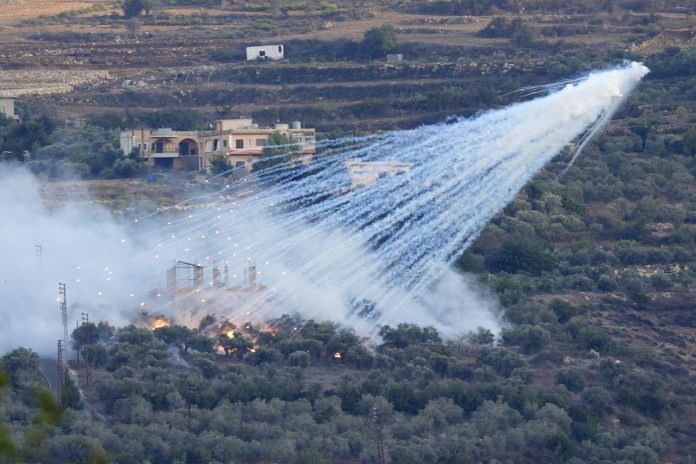
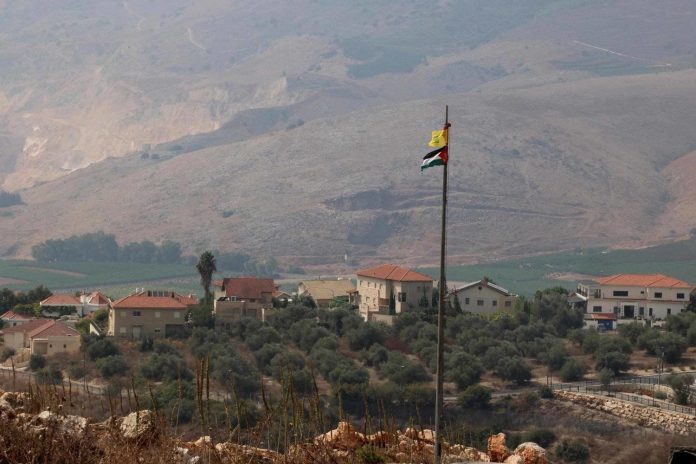
Fighting is also taking place on the Israel-Lebanon border between Hezbollah fighters and the Israeli army.
French death toll from Hamas attacks in Israel rises
French PM Elisabeth Borne stated the number of French citizens who died as a result of Hamas’s attacks on Israel has risen to 40.
Borne also told France Inter radio that there were eight French citizens still missing, with some believed to be held captive in Gaza.
175 medical personnel killed since October 7: Health minister
Palestinian Health Minister Mai al-Kaila stated in the 31 days since the start of the Israeli-Hamas war, a total of 175 medical personnel and 34 civil defence workers have been killed in the Gaza Strip.
The health minister also added during the same period, 16 out of 36 hospitals and 51 out of 72 clinics have gone out of service due to the Israeli bombing, or the lack of fuel and medicine to keep the facilities from operating.
Numerous incidents have been recorded of medical facilities, such as al-Ahli Arab Hospital, and ambulances being hit by Israeli air raids, killing patients as well as medical workers.
Earlier, the UN special rapporteur on human rights in Palestine, Francesca Albanese, described the collapse of the health system in Gaza as a “catastrophe”.
Save the Children warns of population displacement in Gaza
In an interview with Al Jazeera Arabic, the director of Save the Children in Palestine said that the ongoing Israeli bombardment of Gaza is not only an issue of deaths and injuries among Palestinians.
Jason Ian Lee stated that the situation is also “an issue of population displacement” under very difficult humanitarian conditions.
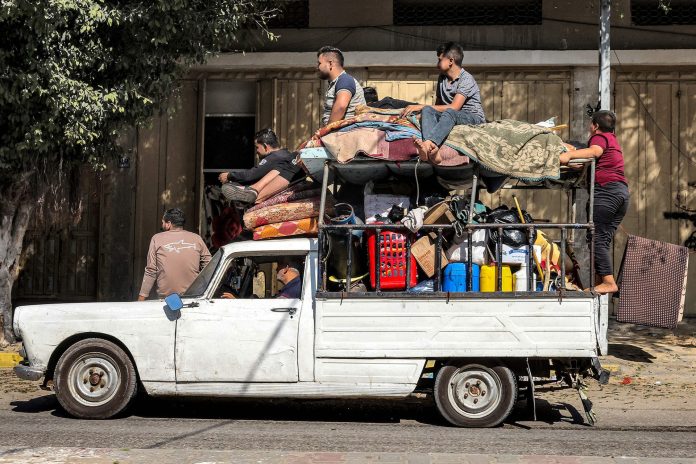
Since October 7, an estimated 1.5 million of the besieged enclaves 2.3 million people, roughly 65 percent, have already been internally displaced, according to the UNRWA.
Seven Gaza water facilities directly hit, damaged: UN
The UN relief agency has confirmed that seven water facilities in the Gaza Strip were “directly hit and sustained major damage” on Saturday and Sunday.
According to UNOCHA’s latest update, the seven facilities included:
- Two water wells in Rafah
- Three sewage pipelines in Gaza City
- Two water reservoirs.
The Gaza municipality has warned of the imminent risk of sewage flooding.
Nearly 90 UNRWA staff killed in Gaza
The UN has confirmed that 88 UNRWA staff members have been killed in Gaza since 7 October, the highest number of such deaths in a single conflict.
The UN made the announcement in a rare joint statement issued together with several non-UN humanitarian organisations.
The statement further added, “We need an immediate humanitarian ceasefire. It’s been 30 days. Enough is enough. This must stop now.”
UN rapporteur for human rights in Palestine decries ‘catastrophe’ in Gaza
In an interview with Al Jazeera, Francesca Albanese, the UN Special Rapporteur for Human Rights in the Palestinian Territories, stated that a total collapse of the health system in Gaza “reveals a catastrophe”.
Albanese said that Israel is not fighting another country, but “a people in an occupied land”.
The comments come as the UN aid agency in the Palestinian territories, UNRWA, reported that it has not been able to contact its team in Gaza after Israel imposed another communication blackout on the besieged enclave.
World Food Programme says five days of food left in Gaza
The director of the World Food Programme (WFP), Cindy McCain, said in an interview with Al Jazeera that the current stockpile of essential food commodities for people in Gaza will only be sufficient for five more days.
“We need to be able to get our trucks in. It’s not just food, it’s water, it’s, as you know, fuel is another one, medical supplies. And yet, we’re getting a dribble in,” McCain added.
US guided missile sub surfaces in Middle East, sending message of deterrence to regional adversaries
In a rare announcement, the US military said a guided missile submarine has arrived in the Middle East, a message of deterrence clearly directed at regional adversaries as the Joe Biden administration tries to avoid a broader regional conflict amid the Israel-Hamas war.
US Central Command said on social media Sunday that an Ohio-class submarine was entering its area of responsibility. A picture posted with the announcement appeared to show the sub in the Suez Canal northeast of Cairo.
The military rarely announces the movements or operations of its fleet of ballistic and guided missile subs. Instead, the nuclear-powered vessels operate in near-complete secrecy as part of the US nuclear triad, along with intercontinental ballistic missile silos and strategic bombers.
The announcement is a clear message of deterrence directed at Iran and its “proxies” in the region. The sub, which is not named, joins a number of other US Navy assets already in area, including two carrier strike groups and an amphibious ready group.
In October 2022, the US made public a ballistic missile submarine in the Middle East, when the commander of US Central Command, Gen. Michael “Erik” Kurilla, boarded the USS West Virginia. Kurilla’s visit occurred at an “undisclosed location at sea in international waters,” Central Command said at the time.
The announcement of a guided missile sub in the region comes as US Secretary of State Antony Blinken has been holding a series of meetings with US partners in the Middle East. In a whirlwind trip, Blinken has visited Turkey, Iraq, Israel, the West Bank, Jordan and Cyprus.
Jordan airdrops medical aid package to field hospital in Gaza
Jordan air-dropped a medical aid package to a Jordanian field hospital in Gaza, King Abdullah II said on social media.
“Our fearless air force personnel air-dropped at midnight urgent medical aid to the Jordanian field hospital in Gaza. This is our duty to aid our brothers and sisters injured in the war on Gaza. We will always be there for our Palestinian brethren,” King Abdullah II wrote.
The king has been critical of Israel’s assault on Gaza and repeatedly called for a ceasefire.
‘Ready to strike’ Lebanon: Israel military chief
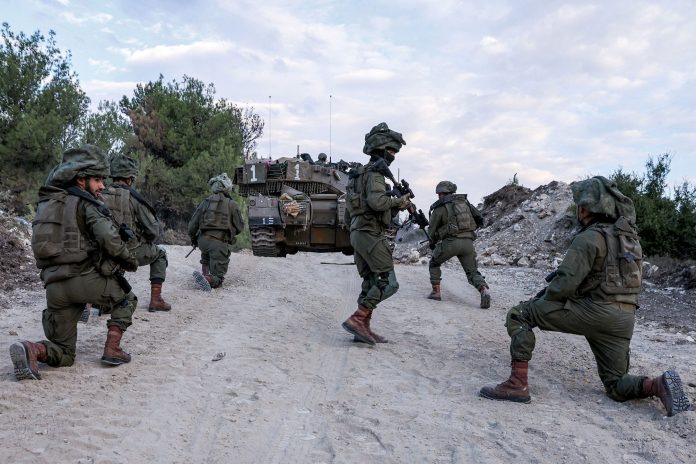
Israeli Chief of General Staff Herzi Halevi says his military is prepared for an attack on southern Lebanon as fighting escalates with Hezbollah.
“We are ready to strike in the north at any time,” stated Halevi during a troop visit to the border.
“We know that it can happen. We have the clear goal of restoring a much better security situation on the borders – not just in the Gaza Strip.”
The Israel-Lebanon border has seen escalating exchanges of fire between the Israeli army and Hezbollah over the past month, stoking fears of a wider war in the region.
WHO is “very concerned” about reports of communications outage in Gaza: Chief
The World Health Organization is “very concerned” about reports of another communications outage in Gaza, the organization’s director-general, Tedros Adhanom Ghebreyesus, wrote in a post on social media Sunday.
“Without connectivity, people who need immediate medical attention cannot contact hospitals and ambulances. All channels of communication must be restored immediately,” the WHO chief said in a post on X, formerly known as Twitter.
The main United Nations agency supporting Palestinians in Gaza has lost contact with the “vast majority” of its team in the territory, it said earlier Sunday.
The WHO has documented 102 attacks on health care establishments in the Gaza Strip since October 7, it said in a separate post Sunday.
The WHO announced these attacks have killed hundreds of people, wounded hundreds more, and caused damage to dozens of health care facilities, while also damaging ambulances that serve the strip.
“Over half of health attacks and over a half of hospitals damaged were in Gaza City,” the WHO added, referring to the main population center in the territory.
Humanitarian agencies have lost contact with aid workers in Gaza, as the Palestinian enclave faces its third communications blackout of the Israel-Hamas war, according to operators.
Israeli military conducting a significant strike on Gaza: IDF spokesperson
The Israeli military is currently conducting a significant strike in the Gaza Strip, spokesperson Rear Adm. Daniel Hagari said Sunday night.
The strike, which Hagari described as very extensive, is targeting Hamas infrastructure above and underground, as well as fighters and senior commanders, he added.
Earlier, the Israel Defense Forces claimed its soldiers had reached positions along the coast of Gaza as part of the expansion of its ground operations.
Lebanon to complain to UN after Israeli strike kills civilians
Lebanon will submit a complaint to the UN over an Israeli strike in south Lebanon which killed four civilians, including three children.
Foreign Minister Abdallah Bou Habib told Reuters on Sunday that Beirut was collecting information and pictures and will likely submit its complaint on Monday.
An Israeli strike on a car near Bint Jbeil, in southern Lebanon, killed three children and their grandmother, according to Lebanese media and lawmakers.
CIA director traveling to Middle East to meet with leaders and intelligence counterparts: Official
US CIA Director Bill Burns is traveling to several countries in the Middle East to meet with “multiple intelligence counterparts and country leaders”, according to a US official.
The visit comes in the midst of the war between Israel and Hamas, as the US seeks to prevent a wider conflict and negotiations over hostages taken from Israel to Gaza continue.
Burns “will discuss issues of mutual concern including the situation in Gaza, support for hostage negotiations, and the US commitment to continuing to deter state and non-state actors from widening the conflict between Israel and Hamas. The Director will reinforce our commitment to intelligence cooperation, especially in areas such as counterterrorism and security”, according to a statement from the official.
US secretary of state arrives in Turkey for another key diplomatic meeting
US Secretary of State Antony Blinken arrived in Turkey just after midnight Monday local time (4 p.m. ET on Sunday) — his last stop in the region before heading to Asia.
Blinken is expected to meet with Turkish officials Monday morning to discuss the Israel-Hamas war.
Turkish President Recep Tayyip Erdogan has been immensely critical of Israel’s offensive in Gaza, calling the actions “crimes against humanity” and saying this weekend he was suspending communications with Israeli Prime Minister Benjamin Netanyahu. Turkey has also recalled its ambassador to Israel for “consultations”.
Blinken has traveled to Israel, Jordan, the West Bank, Cyprus, and Iraq so far as part of a whirlwind diplomatic trip.
Blinken makes unannounced visit to Iraq amid concerns about broader regional conflict
US Secretary of State Antony Blinken made an unannounced visit to Iraq Sunday — a significant stop on his whirlwind trip through the region.
Blinken met with Iraqi Prime Minister Mohammed Shia al-Sudani in Baghdad for more than an hour.
He also visited the US Embassy, where he received a security briefing on the threat to US facilities.
US officials have repeatedly warned against other parties becoming involved in the conflict in Israel. In the wake of the October 7 Hamas attack, armed groups have scaled up attacks aimed at US troops in Iraq and Syria.
“We need to continue to prevent escalation of this conflict, its spread to other areas and other theaters. The United States has and we will continue to respond to attacks by Iran’s proxies to defend our personnel in the region, personnel who are here in Iraq and in Syria to help prevent the resurgence of Daesh. We will do what is necessary to deter and, as I said, respond to any attacks,” Blinken said at a news conference in Tel Aviv Friday.
Ahead of his stop in Iraq, Blinken made stops in Israel, Jordan, the West Bank and Cyprus. From Iraq, he will travel on to Turkey.
Speaking to reporters after the Iraq meeting Sunday, Blinken stated his discussion with the prime minister was “good” and “productive”, and added that he made clear that attacks by “Iranian-backed militias” against US personnel are totally unacceptable.
They also discussed making sure the conflict in Gaza does not spread into the wider region, the top US diplomat added.
Regarding Gaza, Blinken said negotiations on a humanitarian pause in the fighting are a “process,” but that US and Israeli teams are meeting Sunday to “work through the specifics, the practicalities of these pauses.”
“Israel has raised important questions about how humanitarian pauses would work. We’ve got to answer those questions. We’re working on exactly that,” he added.
Palestinian ambassador to UK says Abbas’ meeting with US secretary of state was tense
The Palestinian ambassador to the United Kingdom slammed the United States on Sunday for failing to be an “honest mediator” in the Israel-Hamas war.
“We need to see the US playing the role of an honest mediator, not adopting the Israeli narrative,” the ambassador, Dr. Husam Zomlot, said on CBS shortly after US Secretary of State Antony Blinken met with Palestinian Authority President Mahmoud Abbas.
“We needed a grown-up in the room and that is the US — unfortunately, we haven’t heard that, and we have not come up with a joint statement.”
Zomlot, who also served as the last Palestinian ambassador to the US, added Blinken’s meeting with Abbas was tense.
“Our president demanded an immediate ceasefire to the atrocious, murderous assault by Israel on our civilians and people. This is not a war against Hamas,” Zomlot said, adding, “It’s clear since it started that it’s a war against our people, not only in Gaza, but also in the West Bank.”
The ambassador also slammed the US for refusing to call for a ceasefire and instead opting for the term “humanitarian pause”.
“This whole talk, Margaret, about ‘humanitarian pauses’ is simply irresponsible,” he told CBS’ Margaret Brennan.
“Pauses of crimes against humanity — we’re going to pause for six hours killing our children, and then we resume killing the children? I mean, this doesn’t stand even international laws.”
Zomlot declined to formally condemn the October 7 Hamas attack on Israel and instead called on the US to “empower the state of Palestine that will be able to protect its people.”
Zomlot added he does not consider the conflict to be a war, because “a war does not happen between the occupied and an occupier” and “only happens between two sovereign states.”
He stated the situation in the West Bank is “very volatile and dangerous” and that he is concerned about it escalating into a broader regional war.
“Every minute we wait, there is a risk of spreading over,” he warned.
Abbas stated on Sunday the Palestinian Authority (PA) could return to power in the Gaza Strip only if a “comprehensive political solution” is found to the Israel-Palestine conflict.
Pope Francis issues plea for ceasefire in Israel-Hamas conflict
Pope Francis said on Sunday that he “begs” in God’s name for a ceasefire in the Israel-Hamas war.
“I continue to think about the serious situation in Palestine and in Israel where many, many people have lost their lives. In God’s name, I beg you to stop: cease using weapons!” the pope said on X, formerly Twitter.
“I hope that avenues will be pursued so that an escalation of the conflict might be absolutely avoided,” the pontiff added.