Thursday, January 15, 2026
Home Blog Page 1146

Netanyahu hints new deal underway to release Hamas-held hostages

Israel Hostages

In a televised press conference on Saturday, Netanyahu called the conflict an “existential war” that must be fought until victory, despite pressure and costs, and said Gaza would be demilitarised and under Israeli security control.

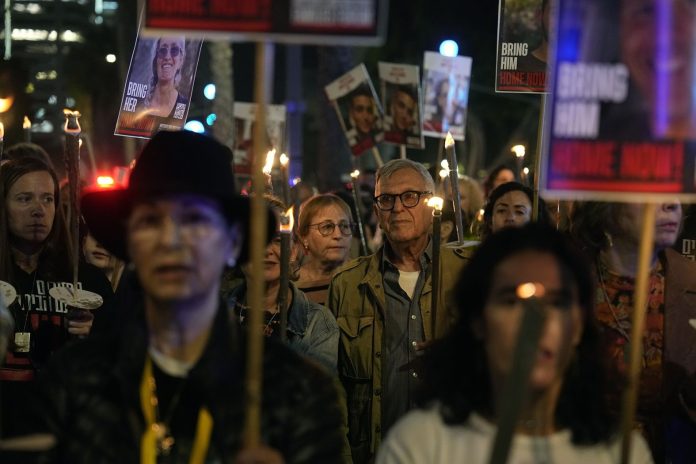
His statements came a day after Israeli forces mistakenly killed three of more than 100 captives.

Netanyahu stated Israel’s offensive in Gaza had helped clinch a partial hostage-release deal in November and promised to maintain intense military pressure on Hamas.

“The instruction I am giving the negotiating team is predicated on this pressure, without which we have nothing,” he added.

Netanyahu’s comments came after the chief of Mossad, the Israeli intelligence agency, met the prime minister of Qatar, a country mediating between Israel and Hamas, and whose efforts resulted in a seven-day truce and exchange of hostages last month.

Earlier on Saturday, Qatar confirmed that talks were under way for a possible new truce.

Netanyahu sidestepped a question about the meeting reportedly held in Europe, but confirmed he had given instructions to the negotiating team.

“We have serious criticisms of Qatar … but right now we are trying to complete the recovery of our hostages,” he added.

A Hamas statement later said the group “affirms its position not to open any negotiations to exchange prisoners unless the aggression against our people stops once and for all”.

“The movement communicated this position to all mediators,” it noted.

On Friday, Israeli forces admitted to mistakenly killing three Hamas-held hostages, all in their 20s, in the Shijaiyah area of Gaza City, where the troops are engaged in fierce fighting with Hamas.

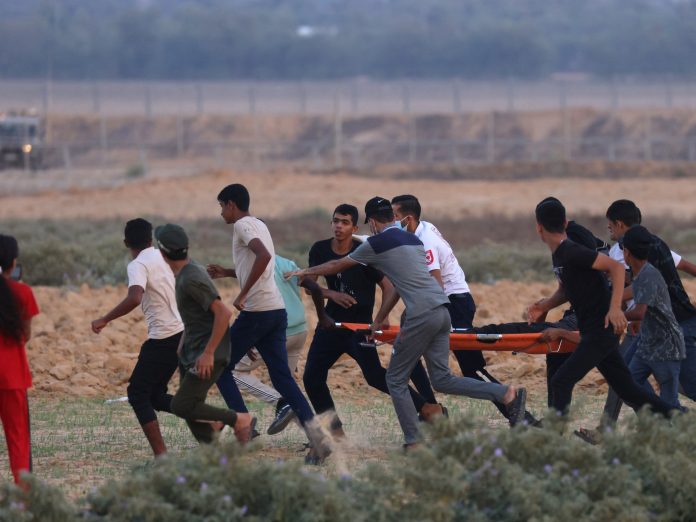
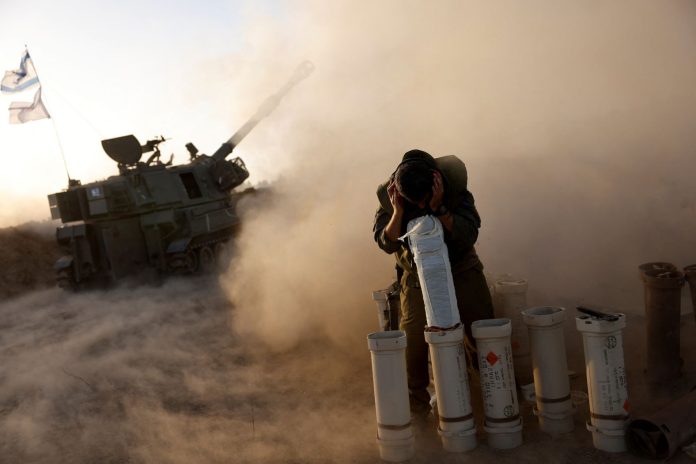
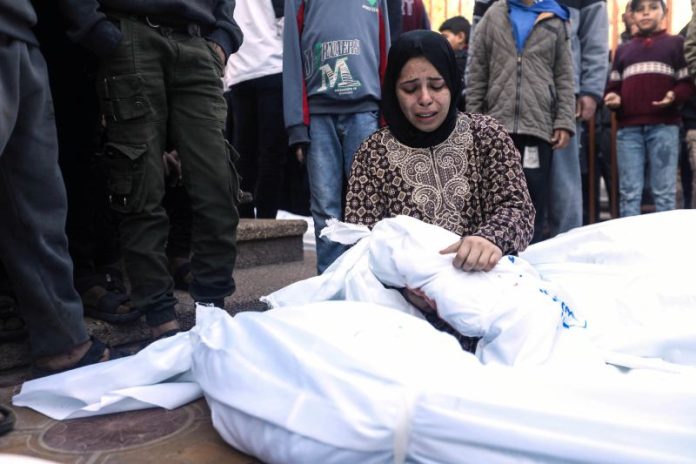
Israel continues to pound Gaza, killing nearly 19,000 Palestinians since October 7. Thousands more are feared buried under rubble.

The 10-week war has flattened much of northern Gaza and displaced 85 percent of the territory’s population of 2.3 million from their homes.

Two more shipping firms suspend Red Sea passage amid Yemen’s attacks

Shipping firms Red Sea passage

The Swiss-headquartered Mediterranean Shipping Company (MCS) and France’s CMA CGM made the announcement on Saturday.

The two companies announced they were halting traffic through the Bab al-Mandab strait, which is a waterway for transit of 40 percent of international trade.

The MSC said one of its container vessels was targeted in the Red Sea on Friday, noting that the attack caused no injuries, but the ship suffered fire damage.

CMA CGM noted it had ordered all its vessels to leave the area and stay there until further notice, adding, “The situation continues to deteriorate and there are increasing concerns about security.”

The new development came after on Friday, two major international shipping lines suspended the transit of goods through the Red Sea.

Danish giant Maersk and German carrier Hapag-Lloyd said they temporarily suspended all journeys through the Red Sea.

Yemen’s Armed Forces have warned that they will target all the vessels that would use the country’s territorial waters in the Red Sea and the Arabian Sea to reach Israeli ports.

Yemeni army says it will continue its operations as long as the Israeli regime keeps up its all-out onslaught on the besieged Gaza Strip, which started on October 7.

Earlier this week, the Yemeni forces’ spokesman Brigadier General Yahya Saree also reaffirmed that the attacks will continue until the occupying regime allows entry of “the food and medicine that our steadfast brothers in the Gaza Strip need”.

As part of the siege of the Gaza Strip, the Israeli regime has cut off the flow of basic supplies, such as water, electricity, medicines, and fuel into Gaza, which is one of the world’s most densely-populated territories housing over two million Palestinians.

The regime has also launched an unrelenting genocidal war on Gaza in response to an operation by the territory’s resistance movements, dubbed Operation al-Aqsa Storm. Nearly 19,000 Palestinians, mostly women and children, have been killed in the war, while thousands more are suspected to be buried under the rubble.

Separately on Saturday, a spokesman for Yemen’s Ansarullah resistance movement, stated the movement is engaged in Oman-mediated talks with “international parties” over its ongoing operations in the Red Sea and the Arabian Sea.

Mohamed Abdel-Salam reiterated that Yemeni Armed Forces will continue to target Israeli vessels heading to occupied territories until the “aggression and siege” on Gaza ends.

“In various meetings, it was emphasized that Yemen’s position on Gaza is not subject to negotiation, and that enemy ships or those heading to its ports will remain vulnerable to targeting until the aggression stops, the siege of Gaza is lifted, and humanitarian aid continues to flow into the [Gaza] Strip,” he wrote in a post on X social media platform.

Abdel-Salam stressed, “…we cannot stand idly by in the face of the aggression and siege that the [Gaza] Strip is being subjected to as there is no food, no medicine, and even drinking water….”

Israel says Hamas-held captives shot while waving white flag

Israel Hostages

In a video statement on Saturday, Herzi Halevi, who is leading Israel’s war in Gaza, said the IDF bears full responsibility for the “painful event” and pledged to “do everything to prevent the recurrence of such cases in the continuation of the fighting”.

“The three hostages who survived seventy hellish days, moved towards the IDF soldiers, and were killed by our forces’ fire,” Halevi continued, adding that “they moved without shirts so that we would not suspect them of carrying a bomb on their bodies, and held a white cloth so that we would understand.”

“We did not succeed in this case. We feel the deep sorrow of the families for the deaths of the hostages,” he continued, stating that “the shooting at the hostages was carried out contrary to the open-fire regulations.”

“It is forbidden to shoot at those who raise a white flag and ask to surrender. But this shooting was carried out during combat and under pressure,” Halevi noted.

Yotam Haim, Samer Al-Talalka, and Alon Shamriz, all in their 20s, were kidnapped from Israeli communities during the Hamas attack on October 7.

An initial investigation has revealed that the three emerged shirtless from a building “tens of meters” away from a group of Israeli troops in the Gaza City neighborhood of Shejaiya, holding up a stick with a white cloth on it. They stood near the building, which had the words ‘help’ and ‘SOS’ spray-painted on the exterior walls.

According to an Israeli military official who spoke to journalists on condition of anonymity, one of the IDF soldiers felt threatened and opened fire, killing two of the men instantly. The third ran back to the building and screamed ‘help’ in Hebrew from inside, at which point the brigade commander ordered the troops to stop shooting, but another burst of fire fatally wounded him and he later died.

Israeli Prime Minister Benjamin Netanyahu called the incident a “terrible tragedy”. In a national address on Saturday, he indicated that there will be no change in Israel’s military campaign.

“We are as committed as ever to continue until the end, until we dismantle Hamas, until we return all our hostages,” he stated.

Critics, however, say the mistaken killing shows that the government is more concerned about eradicating Hamas than freeing the hostages, and some believe that public outrage over the incident may pressure the government into renewing negotiations with the Palestinian group over the remaining captives.

Around 250 Israeli captives were taken by Hamas during the incursion in October. More than 100 hostages were released during a short-lived ceasefire last month, with 129 people remaining in custody.

US troops in Iraq, Syria attacked 100 times since mid-October: Report

US Troops

A correspondent for Fox News television channel wrote in a post published on X that US soldiers have been “attacked for the 100th time” since October 17.

The strikes come amid growing anti-US feelings over Washington’s firm support for Israel’s war against Palestinians in the besieged Gaza Strip, which has killed nearly 19,000 people, including 6,200 women and 8,000 children. Another 51,000 individuals have been wounded as well.

The Israeli regime launched the war after Gaza’s resistance groups conducted Operation Al-Aqsa Storm, their biggest operation against the occupying entity in years.

Since the onset of the war on October 7, the United States has backed Israel’s ferocious attacks on Palestinian territory as a means of “self-defense.”

The US House of Representatives on November 2 passed a standalone $14.3-billion military assistance package for Israel. The legislation, however, is yet to clear the Senate.

Washington has also vetoed United Nations Security Council resolutions that called on the occupying regime to cease its aggression.

2023 deadliest year for Palestinians in West Bank since 2005: UN

Israel Palestine

A total of 477 Palestinians were killed in the West Bank and East Jerusalem from January 1 to December 15, 2023, with more than half killed since October 7, according to OCHA.

The organization added that two-thirds of the Palestinian fatalities in the West Bank since October 7 had occurred during “search-and-arrest” and other operations carried out by Israeli soldiers.

Of the 278 Palestinians, including 70 children, killed in the West Bank including East Jerusalem since October 7, 268 have been killed by Israeli troops, eight by Israeli settlers and another two either by forces or settlers, according to the report.

OCHA also noted an increase in settler attacks against Palestinians in the West Bank following the October 7 Hamas attacks, with the weekly average of incidents since 7 October at 35, compared with 21 incidents per week between 1 January and 6 October 2023.

Iran interior minister warns Pakistan against terror activities along border

Pakistan Border Guard

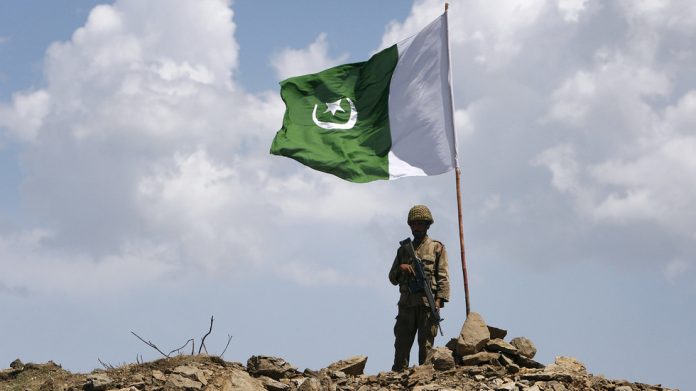
Vahid issued the warning during a visit to those injured in the deadly attack on a police station in the city of Rask, in the southeastern province of Sistan and Baluchestan on Friday morning.

Eleven people were killed and several others were injured in the attack.

While noting that terrorist groups are being supported by the Zionist regime, the interior minister said, “We expect Pakistan to better control the borders because it’s clear that the terrorists [who carried out the attack in Rask] sneaked into Iranian soil from a neighboring country”. Vahidi noted that the terrorists had hatched a bigger plot but their scheme was foiled thanks to resistance from the Iranian security forces.

The Friday attack was claimed by the so-called Jaish al-Adl terror group. This group and other terrorists have carried out a series of deadly attacks inside Iran’s southeast over the past years, and they all did so after sneaking into the Iranian territory from Pakistan.

Tehran has repeatedly criticized Islamabad for failing to contain the terrorists who have found a safe haven in the Pakistani territory.

Kuwait’s emir dies at 86

Emir Kuwait

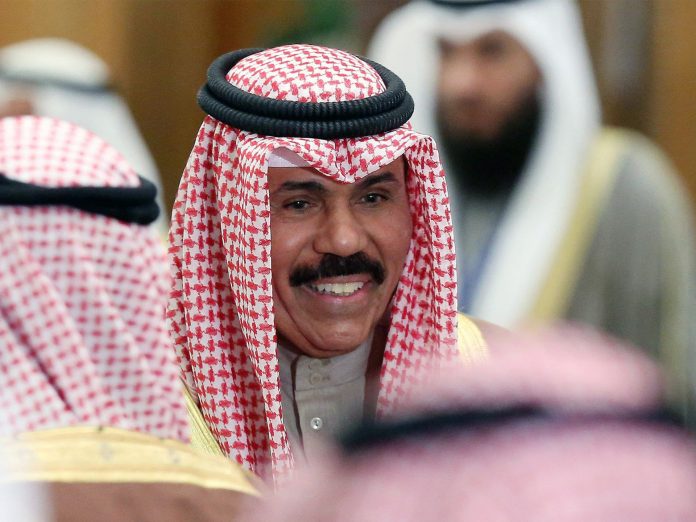
“With great sadness and sorrow, we mourn… the death of Sheikh Nawaf al-Ahmad Al-Sabah, Emir of the State of Kuwait,” said a statement aired on Kuwaiti state television.

In November, Sheikh Nawaf was admitted to the hospital “due to an emergency health problem”, according to the official KUNA news agency, which did not elaborate on his illness. He was later declared in stable condition.

Given his age, his health has commonly been a concern during his term.

Sheikh Nawaf was named crown prince in 2006 by his half-brother Sheikh Sabah al-Ahmad Al-Sabah and took over as emir when Sheikh Sabah died in September 2020 at the age of 91.

He had to steer the economy through a crisis caused by a fall in oil prices in 2020.

The current crown prince, Sheikh Mishal al-Ahmad al-Sabah, another half-brother, is 83 and much attention will now be focused on whether a younger generation ruler is brought in by the family.

Kuwait – a conservative country where sovereign powers remain concentrated in the hands of the ruling Al Sabah family – is home to the most active and powerful parliament in the Persian Gulf.

But repeated standoffs between elected lawmakers and cabinet ministers installed by the ruling family have stymied development efforts and scared off investors.

Following a succession of resigning governments and dissolved parliaments, Kuwait’s current cabinet is its fifth in a year.

The political deadlock has delayed necessary reforms and blocked development projects, leaving infrastructure and education in disrepair and much of the population disgruntled.

Born in 1937, Sheikh Nawaf was the fifth son of Kuwait’s late ruler from 1921 to 1950 Sheikh Ahmad al-Jaber Al-Sabah.

He started his political career at the age of 25 as governor of Hawalli province, where he remained until 1978 when he started a decade as interior minister.

Hezbollah says Israel failed to achieve its goals in war with Hamas

Israel Army

His comments come as Israel continues its relentless assault on the Palestinian enclave in an effort to destroy the Hamas group, which launched a surprise attack on Israeli territories near Gaza on October 7, killing 1,200 people and capturing some 240 hostages.

So far, according to Gaza health officials, the Israeli attacks on the enclave have resulted in the deaths of over 19,000 people, including thousands of children, while more that 50,000 people have been injured.

The Israel Defense Forces (IDF) have yet to claim victory over Hamas and the only thing they have achieved so far is “massive destruction and civilian deaths”, according to the Hezbollah spokesman

“This will seriously impact how the world views Israel,” he said, noting that the only country really supporting Israel at this point is the US, which he said was “practically isolated in this regard.”

The global reaction to Israel’s action is “difficult to ignore”, Mohammad Afif pointed out. The bloodshed in Gaza has even prompted the UN to invoke so-called Article 99 for the first time in decades. This allows the secretary general to bring to the attention of the UN Security Council any matter which he believes may threaten international peace and security.

The head of the UN’s Relief and Works Agency for Palestine Refugees (UNRWA), Philippe Lazzarini, has stated that Israel’s assault on Gaza had left the enclave unfit for human habitation.

“Every time I go back [to Gaza], I always think it cannot get worse, but every time I see more misery, more grief, more sadness, and have the feeling that Gaza is not really a habitable place any more,” the UN official told reporters, calling for the immediate cessation of the Israeli siege.

Gaza is worse than a graveyard for children: UNICEF

Gaza War

“At the start of this war, UNICEF said Gaza was a ‘graveyard for children and a living hell for everyone else.’ It has only gotten worse as the bombing and fighting have continued,” the statement read.

Elder, who just returned from a weeks-long mission in Gaza, warned of the severe repercussions of food, water and medicine shortages on children.

“[C]hildren in Gaza are now in danger from the sky, disease on the ground, and death from hunger and thirst,” Elder continued, adding that had never seen that level of devastation and despair anywhere else.

Elder told CNN’s Isa Soares Thursday that parents he’s been talking to in Gaza have realized hospitals are no longer an option for their children due to the continuous attacks that have made hospitals harder to reach.

“Most crises they impact children terribly because children are the most vulnerable, but most have about a casualty rate of children around 20%, this [Gaza conflict] is 40 [%],” he said.

“This is twice as lethal to children as many conflicts we’ve seen in the last 15 or 20 years.”

According to the latest statement on Friday by the Palestinian Ministry of Health in Ramallah, which draws its numbers from sources in the Hamas-controlled Gaza Strip, Israeli attacks have killed almost 19,000 Palestinians in Gaza since October 7, 70% of whom were children and women.

UN denounces terror attack on Iran police station

United Nations

“The United Nations strongly condemns the attack today on a police headquarters in Sistan and Balouchestan province, the Islamic Republic of Iran, for which the group “Jaish al-Adl” had claimed responsibility, reportedly resulting in at least 11 casualties,” Stephane Dujarric, a spokesman for the UN secretary-general, said in a statement on Friday.

He stressed the need to bring to justice the perpetrators of the attack.

Dujarric added that “the UN expresses deep condolences to the bereaved families and the people and the government of the Islamic Republic of Iran. It wishes a speedy recovery of the injured”.

Alireza Marhamati, deputy governor of Sistan and Baluchestan Province in security and political affairs, said several terrorists staged the attack at around 2:00 a.m. local time on Friday (2230 GMT Thursday) against the headquarters of Rask Police.

He stated that 11 police forces, including officers and conscripts, were killed in the attack.

Some of the injured are in critical condition, Marhamati added.

The Pakistan-based so-called Jaish-ul-Adl terror group claimed responsibility for the assault.

Majid Mirahmadi, deputy interior minister for security and police affairs, said the terrorists attacked the police post from several directions and later ambushed reinforcements deployed to the location.

He added two of the terrorists were killed and one of them was injured and arrested in hours-long clashes, while the rest escaped.

Six police forces were injured during the exchange of fire, he continued.