Thursday, January 15, 2026
Home Blog Page 1140

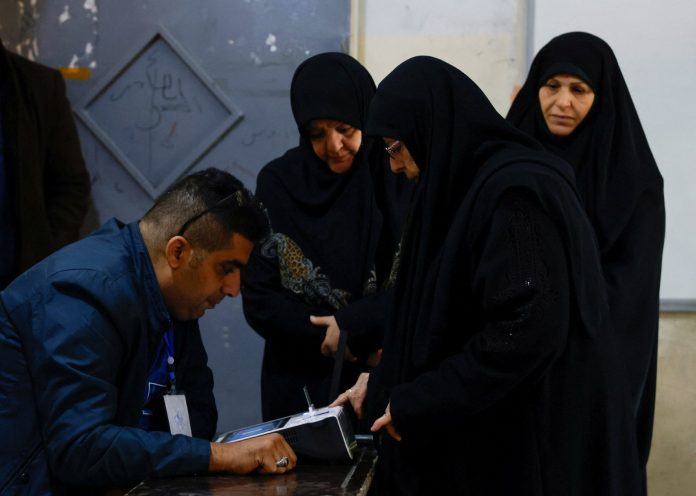
Iraq’s governing Shia alliance leads in provincial elections

Iraq Election

The loose coalition of Shia groups, called the Shia Coalition Framework (CF), took 101 of 285 council seats in the December 18 vote, Iraqi state media reports. The election result is seen as a boon to the Iran-aligned groups, which have been steadily gaining influence, in advance of a parliamentary election scheduled for 2025.

CF already forms the biggest bloc in Iraq’s parliament. The grouping ran three lists in the provincial election, but said they would govern together after the vote, the first such agreement in a decade.

The victory will strengthen the CF’s influence over Iraq’s powerful provincial councils, which are responsible for appointing regional governors and allocating health, transport and education budgets.

The Shia alliance’s top list, which won 43 seats, brings together several of Iraq’s most influential Iran-allied military-political groups, including the Badr Organisation and Asaib Ahl al-Haq.

The second list, which took 35 seats, is headed by former Prime Minister Nouri al-Maliki.

The third, winning 23 seats, includes moderate Shia leader Ammar al-Hakim and former Prime Minister Haidar al-Abadi.

Together, the allied lists will control 101 seats in the provincial assemblies, more than any other bloc.

The CF’s electoral success was aided in part by a boycott from one of its main rivals, the populist Shia leader Moqtada al-Sadr.

Al-Sadr, whose party resigned from parliament in 2022 after failing to form a governing coalition, called on his supporters to stay away from the polls so as not to grant legitimacy to a “corrupt” ruling class.

Other contenders in Monday’s vote included Sunni business mogul Khamees Khanjar, whose list won 14 seats, and deposed Sunni Parliament Speaker Mohammed Halbousi, who took 22 seats, including winning the most votes in Baghdad and Anbar province.

A host of local lists and smaller groups won the remaining seats.

Despite fears of violence, the voting process unfolded largely peacefully, barring a few scattered incidents. In the al-Sadr bastion of Najaf, a stun grenade was hurled at a polling station, although it caused no injuries.

Iraq’s election commission said six million people voted in the polls, with a turnout rate of 41 percent.

The results of the provincial polls, Iraq’s first in a decade, reflected the balance of power in a country where groups close to neighbouring Iran have steadily gained influence.

They are a positive sign for Iraqi Prime Minister Mohammed Shia al-Sudani, who counts on the winning CF alliance as his government’s main backer.

Following the vote count, al-Sudani urged quick action to address the country’s development challenges.

“I congratulate the political forces and successful candidates in the Provincial Council Elections,” said al-Sudani on the social media platform X.

“I hope this trust quickly transforms into tangible public service, contributing to the implementation of government plans for development, reconstruction, and service provision,” he added.
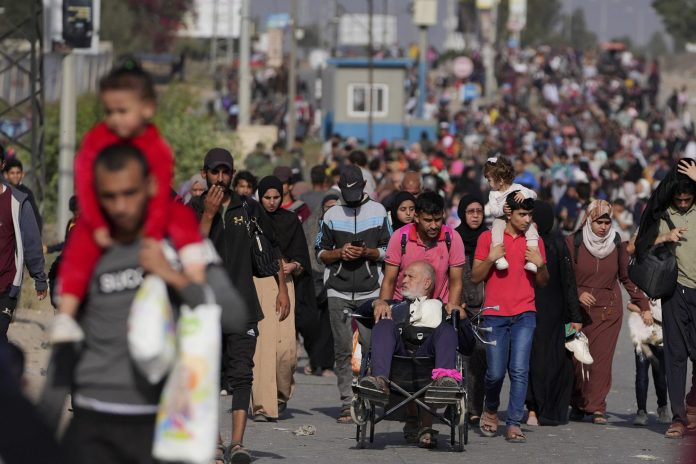
90% of Gaza’s population displaced by Israeli offensive: UN

Gaza War

“Over 60% of the infrastructure in Gaza has been destroyed or damaged,” the United Nations Relief and Works Agency for Palestine Refugees in the Near East (UNRWA) said in a statement.

“This is a staggering and unprecedented level of destruction and forced displacement, taking place in front of our eyes,” it added.

Israel has bombarded the Gaza Strip from the air and land, imposed a siege and mounted a ground offensive in retaliation for a cross-border attack by the Palestinian resistance group, Hamas, on Oct. 7.

The Israeli war on the Gaza Strip has left 26,700 people dead and missing since Oct. 7, the government media office in the enclave announced Wednesday.

“Around 20,000 dead people have been admitted to hospitals, including 8,000 children and 6,200 women,” the media office said in a statement.

The victims included 310 medics, 35 civil defense members and 97 journalists, the statement added.

The relentless Israeli raids also destroyed and damaged around 308,000 housing units across the Gaza Strip, the office said.

“At least 114 mosques were destroyed and 200 partially damaged, while four churches were targeted,” the statement added.

“The Israeli occupation also destroyed 126 government buildings and partially damaged 283 others, while 90 schools and universities were forced out of action,” it noted.

A UN spokesman on Wednesday voiced concern over the surging death toll in the Gaza Strip as fighting between Israel and Palestinian group Hamas continued for the 75th day.

“The number has been unacceptable and huge and sheer and whatever adjective you want to use for quite some time,” Stephane Dujarric told reporters.

“Again, we want to see a humanitarian cease-fire. We want to see the guns fall silent as we can reach the people of Gaza who need the most help right now,” he stated.

Dujarric, who is the spokesman for UN Secretary-General Antonio Guterres, also stressed the importance of re-establishing a political path to a two-state solution between Israel and Palestine.

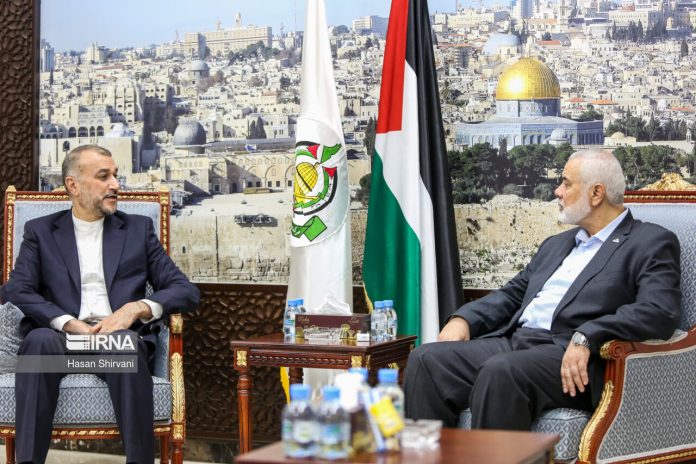
Iran FM meets Hamas chief in Doha as Gaza death toll nears 20,000

Amirabdollahian Haniyeh

“Today, no one has any doubts that the Palestinian nation and resistance front, despite going through a lot of pain and suffering and seeing more than 20,000 Palestinians martyred over the past 75 days, has proved the superiority of its strength and willpower over the Zionist regime’s killing machine,” Amirabdollahian told Haniyeh.

The foreign minister decried the United States’ unflinching and unlimited support for the Zionist regime in the current war on Gaza, and stressed Washington’s international legal responsibility toward the war crimes and genocide against Palestinians, and referred to some attempts and political messages by the US government to find a way out of the current deadlock and military strategic failure.

He added, “The fact that the US has come to the conclusion that war is not the solution, is a major development, and they had better drop their ongoing futile and failed support for the occupying regime’s lunatic military strategy.”

The top diplomat touched upon the White House’s strategic confusion about the Gaza crisis, adding, “All inside the White House believe the Zionist regime should achieve victory in the battlefield, but now, having come to realize the realities on the ground and being sure about the resistance front and Palestinian people’s strong resistance, while offering full-fledged military support to the child-killing Zionist regime, they seek to get out of this war respectably using a political ploy and save the Israeli regime from this strategic failure.”

Haniyeh, for his part, stated that the Israeli regime has not achieved any of its declared strategic objectives despite the countless crimes it has committed,

The regime claimed it had secured its domination over northern Gaza, but now resistance forces are present across the entire regions of the northern Gaza Strip and continue to resist although the Zionist regime, with the United States’ full-fledged support, keeps committing heinous crimes against residents throughout the Gaza Strip and meting out inhumane treatment to detained Palestinian residents, he continued.

The Hamas chief lauded the backing offered by resistance groups in the region as well as the Islamic Republic of Iran’s political, diplomatic and media support for the resistance front and the Palestinian people, adding such support as well as the large-scale popular moves in Islamic and non-Islamic countries in support of Palestine brings numerous spiritual and mental effects for the Palestinian nation and great political pressure on the Zionist regime and the Western governments backing the regime.

Israel’s attacks on the Gaza Strip since the Oct. 7 have killed at least 19,700 Palestinians, mostly women and children, and injured 52,500 others, according to health authorities in the enclave.

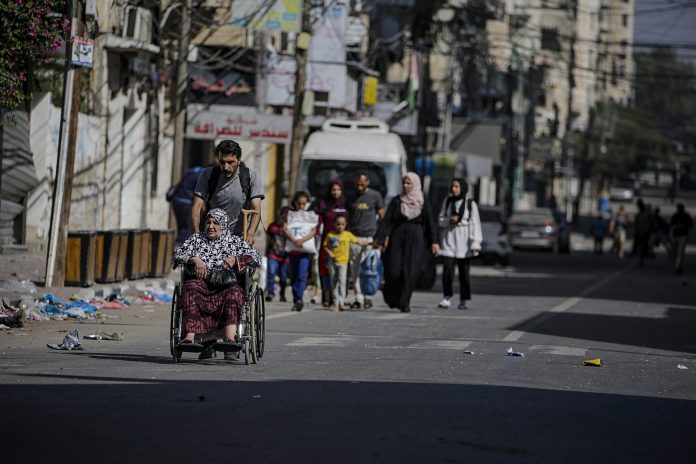
The war has left Gaza in ruins with half of the coastal territory’s housing stock damaged or destroyed, and nearly 2 million people displaced within the densely-populated enclave amid shortages of food and clean water.

Beijing-Moscow $200bn trade goal achieved ahead of schedule: President Xi

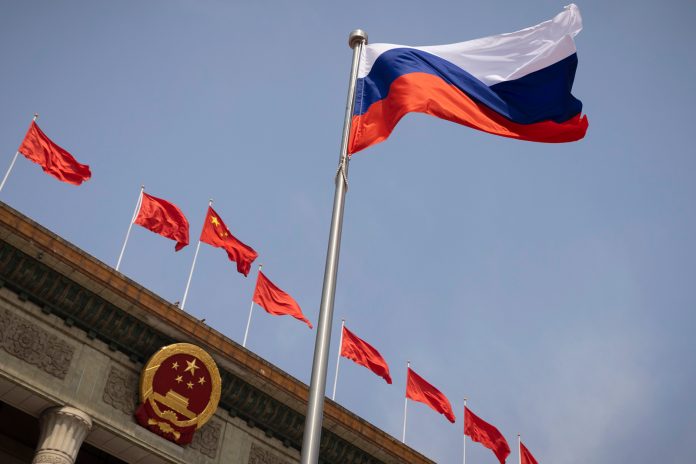
Russia China Flags

“The goal set five years ago by [Russian President Vladimir] Putin and me to bring the volume of bilateral trade to $200 billion has been achieved ahead of schedule,” Xi told a meeting with Russian Prime Minister Mikhail Mishustin in Beijing, adding that this reflects the positive dynamics of bilateral cooperation.

Russia and China have achieved good results in investments, with about 80 joint projects worth nearly 20 trillion rubles ($22 billion) under implementation, Mishustin said at the meeting.

The prime minister added that the countries have fully switched to national currencies in mutual settlements, adding that over 90% of settlements are being made in rubles and yuan.

In February 2022, Putin and Xi set a goal of reaching $200 billion in bilateral trade by 2024, after the previous threshold of $100 billion was reached in 2018.

By the end of 2022, trade between the two countries grew by 29.3% to a record $190.271 billion.

During a meeting on Tuesday with his Chinese counterpart, Li Qiang, Mishustin stated Western currencies have almost been completely phased out in Russia-China trade, as nearly all payments between the countries are now carried out in rubles and yuan.

“We continue to increase the share of national currencies in mutual settlements. If in 2020 this figure was about 20%, then this year we have actually completely gotten rid of the currencies of third countries in mutual settlements,” Mishustin continued.

He also mentioned strengthening business relations, recalling that a joint business forum held in Shanghai in May attracted more than 1,500 entrepreneurs from both countries.

“We are creating comfortable conditions for the work of commercial firms on the Russian and Chinese markets. We have an extensive joint agenda,” Mishustin emphasized.

In turn, Li Qiang noted that cooperation between Moscow and Beijing continues to strengthen and is becoming increasingly important against the backdrop of “global turbulence”.

Russia and its trade partners have started to switch to alternative currencies in mutual trade after sanctions effectively cut Moscow off from the Western financial system. A growing number of nations are turning to national currency settlements in trade.

WHO says Gaza facing ‘massive risk’ of epidemics

Gaza War

“There’s a massive risk of huge epidemics. And we’re already seeing the evidence of that,” WHO spokeswoman Margaret Harris told Anadolu in an interview, saying that fighting has to stop.

“We need a cease-fire,” Harris urged.

“The situation is definitely getting worse, you’ve got the combination of every factor that will harm people’s health,” she added, noting that the weather is cold and wet and 90% of the people are vulnerable to it. They also do not know where to get enough food from, she added.

“People, of course, are not getting any sleep. And this, this harms your immune system,” she said and added: “People are terrified. They don’t know what is going to happen.”

She stressed that there is “no safe place” in Gaza and people cannot even get to a hospital when they are injured.

Palestinian Red Crescent Society has not been able to provide an ambulance service in the north, according to the spokeswoman.

“It’s just not possible. So people being injured there are not getting care.”

Israel’s air and ground attacks on the Gaza Strip since the Oct. 7 attack by Hamas have killed at least 19,667 Palestinians, mostly women and children, and injured 52,586 others, according to health authorities in the enclave.

The war has left Gaza in ruins with half of the coastal territory’s housing stock damaged or destroyed, and nearly 2 million people displaced within the densely-populated enclave amid shortages of food and clean water.

Nearly 1,200 Israelis are believed to have been killed in the Hamas attack, while more than 130 hostages remain in captivity.

Iran refutes UNGA’s human rights resolution

Nasser Kanaani

“The presentation of a resolution on human rights by some Western countries against Iran comes at a time when the very same countries have turned a blind eye to the Zionist regime’s war crimes and genocide in Gaza and Palestine’s West Bank, and some of them keep offering full-fledged and unlimited support for this criminal regime, and what is even more farcical is that this very regime is one of the advocates of the anti-Iran resolution,” Kanaani stressed in a statement on Wednesday.

He said the usurper Zionist regime’s support for the presentation and approval of the resolution on human rights against Iran is nothing but “a major political and moral scandal” for its Western backers and amounts to the denigration of the lofty concept of human rights and making international institutions devoid of their raison d’etre.

The ministry’s spokesman underscored that the resolution lacks any legal foundation and is rejected.

“Countries which have a long history of organized violations of human rights, with people across the globe having bitter and unpleasant experiences of their anti-human moves, are in no position to give recommendations on human rights to the Iranian government and people,” he underlined.

Israel’s attacks on the Gaza Strip since the Oct. 7 have killed at least 19,700 Palestinians, mostly women and children, and injured 52,500 others, according to health authorities in the enclave.

The war has left Gaza in ruins with half of the coastal territory’s housing stock damaged or destroyed, and nearly 2 million people displaced within the densely-populated enclave amid shortages of food and clean water.

Iran stresses committed to NPT, ready to return to JCPOA

Mohammad Eslami

The head of the Atomic Energy Organization of Iran (AEOI), Mohammad Eslami, told reporters on Wednesday that the West has to remove sanctions imposed on Iran and ‘stop bullying’ the country if it wants to revive the nuclear deal, officially known as the Joint Comprehensive Plan of Action (JCPOA).

He stated that Iran’s nuclear case is a national and strategic issue, not a political or factional one, and stated that the landmark deal was signed to remove ambiguities between the two sides and lift the embargoes against Iran.

Reacting to the latest report by the International Atomic Energy Agency (IAEA) which has accused Iran of “non-cooperation to resolve outstanding issues”, Eslami said, “It is obvious that the report by the IAEA is tainted with political issues and some European countries are acting greedily, but the thing is the relations between the agency and Iran are in the format of the NPT and its safeguards, and they supervise Iran’s nuclear program.”

The head of the Atomic Energy Organization of Iran, however, said Tehran continues to take advantage of the nuclear technology in people’s daily lives.

Referring to the inauguration of a clinic in the city of Varamin, south of the capital Tehran, which treats wounds using the nuclear technology, he added more similar projects are underway.

Tehran condemns Swedish court ruling against Iranian citizen

Hamid Nouri

Sweden’s Court of Appeal issued its final ruling on Tuesday, confirming the life sentence for Nouri.

In response to the Swedish court’s ruling against Nouri, Kanaani stated: “The Islamic Republic of Iran considers the verdict issued by the initial and appellate courts against Hamid Nouri, an Iranian citizen, to be fundamentally unacceptable and therefore strongly condemns it.”

“It is regrettable that the Swedish court, without considering the standards of a fair trial, has chosen to pronounce such a destructive judgment.”

The diplomat remarked: “Unfortunately, the Swedish judicial system, by aligning with terrorist groups involved in heinous acts against the people of Iran, Iraq, and even Europe for decades, jeopardizes the interests of both nations and the long-standing, historical relations between the two countries.”

“The Islamic Republic of Iran, in fulfilling its inherent duties to defend the rights of its citizens, has utilized all legal capacities and resources to liberate the citizen in question from injustice and will persist in its efforts until the complete realization of the rights of its citizens,” he emphasized.

The spokesperson of the Ministry of Foreign Affairs stressed that “the Islamic Republic of Iran reserves its right to take appropriate measures.”

More than 70% of Gaza residents facing extreme hunger: Report

Gaza War

According to the study’s findings, which included a sample of 1,200 people in Gaza, 98% of the respondents said they eat insufficient amounts of food, while 64% admitted to eating grass, fruits, immature food and expired materials to satiate their hunger.

The study also found that the rate of access to water in Gaza, including drinking, bathing and cleaning water, is down to 1.5 liters per person per day.

“This is 15 liters less than the minimum amount of water required for survival at the level required by international standards,” it stressed, adding that 66% of the respondents reported having experienced diarrhea, skin rashes or intestinal diseases in the past month.

Israel’s air and ground attacks on the Gaza Strip since an Oct. 7 attack by the Palestinian group Hamas have killed at least 19,667 Palestinians, mostly women and children, and injured 52,586, according to health authorities in the enclave.

The war has left Gaza in ruins, with half of the coastal territory’s housing stock damaged or destroyed and nearly 2 million residents displaced within the densely-populated enclave amid shortages of food and clean water.

Nearly 1,200 Israelis are believed to have been killed in the Hamas attack, while more than 130 hostages remain in captivity.

Israel claims to have located around 1,500 tunnel shafts in Gaza since start of war

Gaza War Hamas Tunnel

The tunnel shafts belonged to Hamas and many of them were located in “civilian areas and inside civilian structures”, the Israel Defense Forces (IDF) claimed in a statement.

“After locating hundreds of tunnels and destroying many of them using various techniques, the ‘Shaldag’ Special Forces Unit are conducting operational activities within the Hamas terrorist organization subterranean tunnel network,” the IDF added.

The tunnels under Gaza are used to smuggle goods from Egypt, launch attacks into Israel, store rockets and ammunition caches and house Hamas command and control centers.

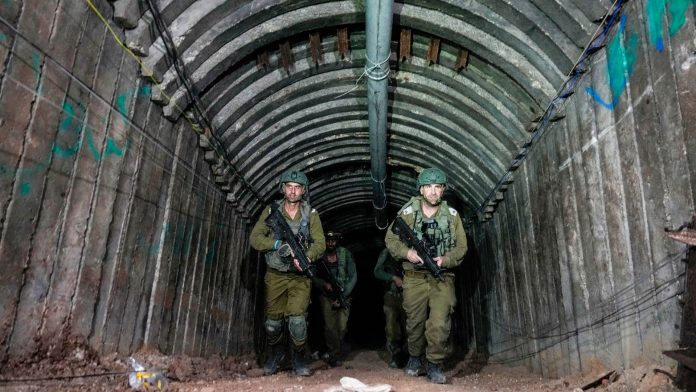
The IDF on Sunday claimed it had uncovered “the biggest Hamas tunnel” in Gaza, spanning a length of four kilometers (2.5 miles).

The Israeli military said the tunnel, secured “a few weeks ago” but revealed to the public Sunday, was wide enough to drive a large vehicle through, reached up to 50 meters underground and was equipped with electricity, ventilation and communication systems.

The tunnel does not cross into Israel but ends 400 meters before the now-shut Erez Crossing on the northern Israeli-Gazan border, according to the IDF.

In 2021, Hamas announced to have built 500 kilometers (311 miles) worth of tunnels under Gaza.