Wednesday, January 14, 2026
Home Blog Page 1139

Iran president says Caucasus must not turn into battleground for outsiders

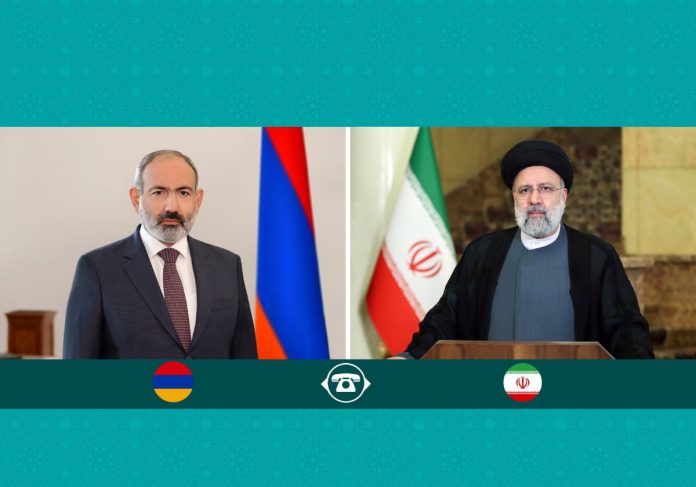
Raisi and Pashinyan

The Iranian chief executive made the remarks on Wednesday night during a phone call with Armenian Prime Minister Nikol Pashinyan.

“The Islamic Republic’s policy toward the Caucasus is fixed,” he said, adding that the region “must not turn into a field of competition between extra-regional countries, and its issues should be resolved by regional countries and away from foreign meddling.”

Commenting on Armenia’s plan to develop road and railway connection routes between the two countries as well as regional states, Raisi stated Iran supports any such plan which he described as an effective step to cement peace and protect the interests of neighboring countries.

The Islamic Republic of Iran supports any measure aimed at opening communication routes and infrastructures in the region while respecting the sovereignty and territorial integrity of countries, he said.

The Iranian president, meanwhile, called Tehran’s successful hosting of the 3+3 meeting in October a “constructive step” to strengthen regional cooperation and improve ties between regional countries.

“Developing relations with neighbors and strengthening relations to ensure mutual interests and the interests of regional countries is the fundamental policy of the Islamic Republic of Iran,” Raesi added.

Pashinyan, for his part, said the increased interactions between the top officials of both countries indicates that the two neighbors are determined to expand their bilateral ties in all fields.

The 3+3 format cooperation mechanism features the three South Caucasus countries of Armenia, Georgia, and Azerbaijan plus Russia, Turkey, and Iran.

Addressing the second 3+3 regional platform meeting, dubbed Time for Peace, Cooperation, and Progress in the South Caucasus, in Tehran on October 23, Iranian Foreign Minister Hossein Amirabdollahian expressed support for the format as an effective mechanism to resolve the disputes in the Caucasus without foreign interference.

He also highlighted the need for regional countries to respect each other’s sovereignty and territorial integrity.

Situated in the South Caucasus, the landlocked region of Nagorno-Karabakh has been at the heart of a long-running dispute between Azerbaijan and Armenia.

Azerbaijan took full control of the breakaway Karabakh region in September following a 24-hour military operation against pro-Armenian forces.

Iran deplores Arab-Russian statement on Persian Gulf islands

Nasser Kanani

The Iranian foreign ministry spokesperson slammed part of the statement of the 6th Arab-Russian Cooperation Forum held in Morocco, dismissing the claims on the three Iranian islands as baseless and unacceptable.

Nasser Kanaani stressed, “The Iranian islands of Abu Musa, the Greater Tunb and the Lesser Tunb, located in the blue waters of the Persian Gulf, eternally belong to Iran and are an inseparable part of the Islamic Republic of Iran’s land.”

Kanaani added, “The Islamic Republic of Iran does not consider its territorial integrity and sovereignty over the three islands negotiable and rejects any claim by any side on the issue and will not back down from its sovereignty and territorial rights in any way.”

The spokesperson stressed the policy of promoting ties with the neighboring countries and the need to respect the principle of good neighborliness.

He said, “The Islamic Republic of Iran asks all its northern and southern neighbors to take the actual and potential capacities at the bilateral and regional levels into account and take steps to boost ties and refrain from making and repeating certain rejected claims.”

Kanaani stated, “The Islamic Republic of Iran will not hesitate a bit to preserve its territorial integrity.”

Support for US military aid to Israel drops amid Gaza war

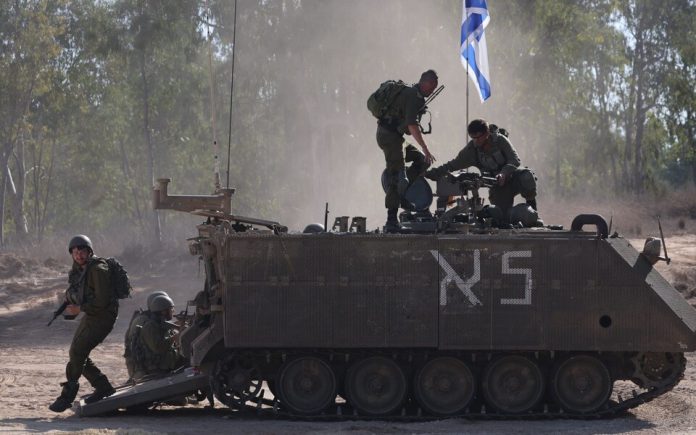
Israeli Army

Forty-five percent of registered voters said they supported the U.S. sending additional “military aid to Israel for their efforts in the war” with Palestinian militant group Hamas in the poll released Wednesday. This is a drop from a previous Quinnipiac poll from November, in which 54 percent of registered voters said they supported additional military aid to Israel.

Support for additional military aid to Israel has also dropped among both Democratic and Republican voters, per the poll.

In November, 71 and 45 percent of Democratic and Republican voters said they were in favor of more military aid to Israel, respectively. In December, those numbers were down, with 65 percent of Republican voters and 36 percent of Democratic voters saying they supported more military aid to Israel.

The poll’s release comes a day after a group of House Democrats sent a letter to President Biden urging him to push harder for efforts to make “an immediate and significant shift” in Israeli military strategy.

“We are deeply concerned by [Israeli Prime Minister Benjamin Netanyahu’s] current military strategy in Gaza. The mounting civilian death toll and humanitarian crisis are unacceptable and not in line with American interests; nor do they advance the cause of security for our ally Israel,” the letter reads.

“We also believe it jeopardizes efforts to destroy the terrorist organization Hamas and secure the release of all hostages,” the lawmakers continued.

At least 20,000 people have been killed in the besieged Gaza Strip since Israel began bombarding the enclave more than 10 weeks ago, according to Palestinian officials.

At least 8,000 children and 6,200 women are among those killed, Gaza’s Government Media Office reported on Wednesday.

Almost 66% of jobs lost in Gaza since start of war: Report

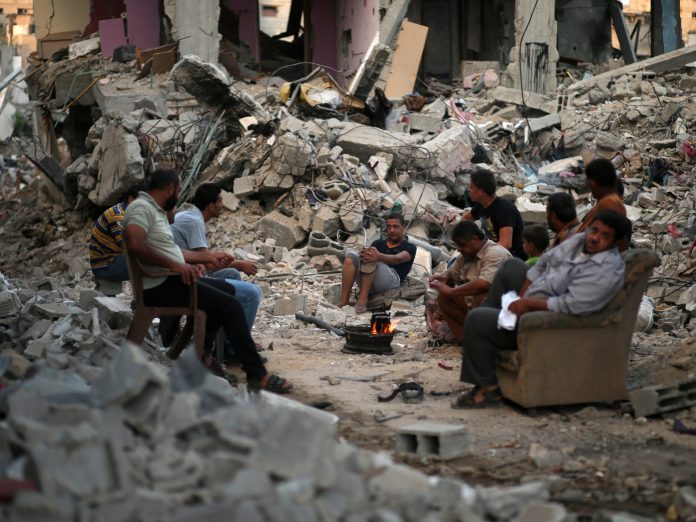
Gaza War

Palestinians have seen their employment reduced by two-thirds in the Gaza Strip – equivalent to 192,000 jobs – since the outbreak of the war, the ILO and Palestinian Central Bureau of Statistics (PCBS) said on Wednesday.

The spillover effect on the economy of the occupied West Bank was also significant, with a one-third reduction in employment – equivalent to 276,000 jobs.

The devastating loss in the job market in Gaza exacerbates the already dire conditions which prevailed in the blockaded territory even before the current conflict, “rendering it essentially uninhabitable”, the report added.

Palestinians in Gaza have long grappled with persistently high rates of poverty, vulnerability and one of the highest unemployment rates in the world, it noted.

“The crisis has caused a huge distortion in the Palestinian economic structure,” said PCBS president Ola Awad.

“The unemployment rate in the Gaza Strip now exceeds three-quarters of the labour force, and around a third of the West Bank’s labour force is unemployed, reaching the highest level of unemployment in decades,” Awad added

This “humanitarian catastrophe of epic proportions” that has wreaked havoc on the labour market will result in life-long hardship for the population and a complete dependency on international aid, the organisations announced.

Peter Rademaker, ILO’s deputy regional director for Arab states, told Al Jazeera from Geneva that Palestinians in Gaza “will be in poverty for many months and years to come” because of Israel’s war on the enclave.

“The labour market was already very depressed in the occupied West Bank and Gaza even before the war,” he said.

“[As the war goes on] many people in Gaza and also West Bank will have no income, no wages. Nobody’s going to pay them any money and they will increasingly have to rely on international assistance,” added the deputy director.

This will leave the people of Palestine in a state of dependency and in competition for a share of global distributions of aid money for many years to come.

“Unfortunately, the authorities have no public financing to provide social assistance, so it’s going to have to come from the outside,” he explained.

“As we all know, many crises are raging globally, and the chances of Palestine receiving the international aid it needs are not necessarily very high.”

Nearly 40,000 buildings, or about 18 percent of all pre-conflict structures have been damaged or destroyed in the Gaza Strip since the conflict started, a UN assessment showed last week.

Iranians, Persian-speaking communities celebrating Yalda or Shab-e Chelleh, welcome winter

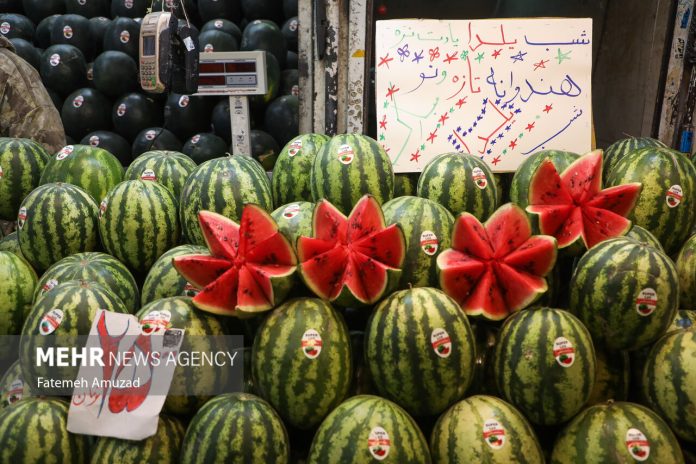
Yalda Night

Iranian families and friends get together to cheer and chatter, eat fruits and nuts and recite poems of great Iranian poet, Hafez.

Watermelon, pomegranate, nuts, and dried fruit are commonly served during Yald celebrations. In some areas it is customary that forty varieties of edibles should be served during the ceremony of the Shab-e Chelleh.

Yalda, meaning ‘birth’ in Persian, is a reminder that every minute counts to share their moments with their loved ones.

According to ancient mythology, the Persian god of light and truth was born the morning after the longest night of the year to rid the world of darkness and unpleasant experiences.

The millennia-old tradition is officially registered by the United Nations Educational, Scientific and Cultural Organization (UNESCO)’s Intangible Cultural Heritage of Humanity.

The event is celebrated in Iran and across the Persian-speaking communities in Afghanistan, Azerbaijan, Iraqi Kurdistan, Tajikistan, Uzbekistan, Turkmenistan, and Turkey.

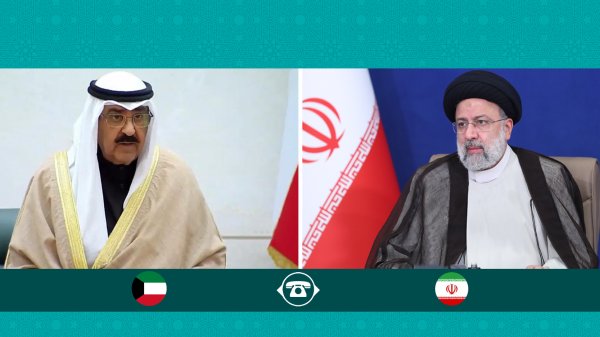
Iran president holds phone call with Kuwait’s new emir

Iran President Kuwait Emir

Amid the Israeli regime’s ongoing war against the Gaza Strip, Raisi considered the issue of Palestine to be the “most essential” issue of the region and the entire world.

“The Islamic Republic is prepared to cooperate with other countries towards restoration of the Palestinian nation’s legitimate rights,” he added.

The Israeli regime began the war on October 7 following an operation staged by Gaza’s resistance movements. More than 20,000 people, most of them women and children, have been killed since the onset of the Israeli military campaign.

The Iranian president expressed gratitude towards the Kuwaiti emir over his country’s support for the Palestinian nation’s rights, and its opposition to normalization of relations with the “bogus and occupying Zionist regime”.

Elsewhere in his remarks, Raisi said the Islamic Republic’s policy revolved around fortification and expansion of relations with the country’s neighbors.

In the same context, the Iranian president stressed that “integrity, cooperation, and synergy” among neighbors was the only means of resolution of the regional issues and provision of collective interests, considering foreign presence in the region to be a source of problem.

For his part, the Kuwaiti official stated his country’s position concerning the need for restoration of Palestinians’ rights was “constant and unchangeable.”

He voiced hope that the regional problems be resolved as soon as possible and peace, stability, and security be established across the region.

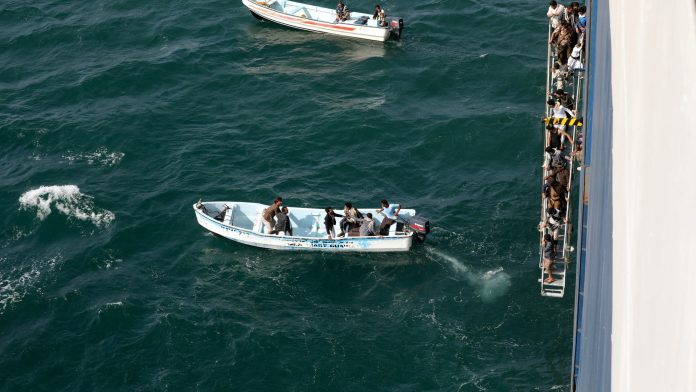
Houthi leader vows to hit US warships in Red Sea in case of strike on Yemen

Yemen Houthis

“We will not stand idly by if the Americans escalate further and commit foolishness by targeting or waging war against us due to our support for the Hamas movement,” Abdulmalik al-Houthi said in a televised speech aired by Houthi-run al-Masirah TV.

“If the United States targets us, we will then retaliate by targeting U.S. battleships and interests in the region with our missiles, drones, and military operations,” he warned.

The threat by the Houthi leader came after the US announced Monday a 10-nation coalition to quell Houthi missile and drone attacks on ships transiting the Red Sea.

Britain, France, and Italy are among the US-led multinational military coalition.

Houthi rebels have escalated and pledged to continue attacks on Israel-linked commercial ships passing through the Red Sea and Arab Sea, demanding an end to Israel’s aggression on the Gaza Strip and the delivery of food and medicine supplies to the besieged enclave.

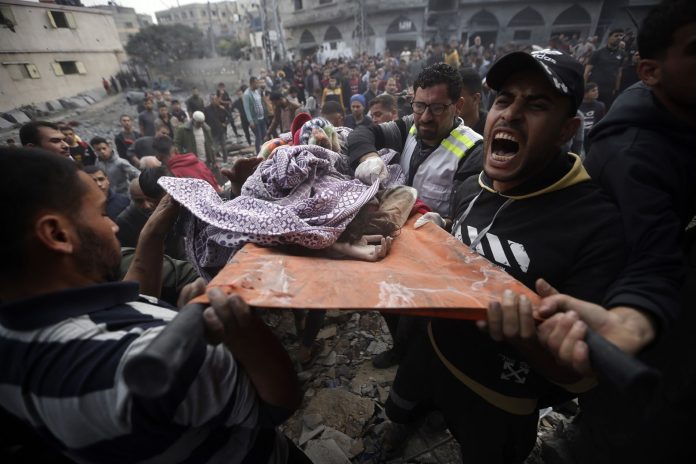
Gaza death toll tops 20,000

Gaza War

At least 8,000 children and 6,200 women are among those killed, Gaza’s Government Media Office reproted on Wednesday.

The grim milestone was passed as the United Nations Security Council postponed a key vote on a bid to boost humanitarian aid for Gaza for the third time to avoid a veto from the United States, which traditionally shields its ally Israel from UN action.

Since a seven-day truce collapsed on December 1, the war has entered a more intensive phase with ground combat previously confined to the northern half of the territory now spread across its length.

When asked about the ever-growing casualty count, US Secretary of State Antony Blinken said it is “clear that the conflict will move and needs to move to a lower intensity phase”.

“We expect to see and want to see a shift to more targeted [Israeli] operations with a smaller number of forces that’s really focused in on dealing with the leadership of Hamas, the tunnel network and a few other critical things,” he stated, adding, “And as that happens, I think you’ll see as well the harm done to civilians also decrease significantly.”

The UN Security Council vote on a bid to boost aid to the Gaza Strip and ask the UN to monitor humanitarian aid deliveries there has been delayed at the request of the US, diplomats said.

According to the United Arab Emirates envoy to the UN, Lana Nusseibeh, the vote will take place on Thursday.

“Everyone wants to see a resolution that has impact and is implementable on the ground, and there are some discussions going on on how to make that possible,” Nusseibeh, whose country drafted the resolution, told reporters in New York.

The text aims to dilute Israel’s control over all humanitarian aid deliveries to the 2.3 million people of Gaza. The initial text has been reportedly modified to soften calls to end the fighting in Gaza to avoid yet another veto from the US.

“We want to make sure that the resolution … doesn’t do anything that could actually hurt the delivery of humanitarian assistance, make it more complicated. That’s what we’re focused on,” Blinken told reporters on Wednesday.

“I hope we can get to a good place.”

Currently, Israel monitors the limited humanitarian aid and fuel deliveries to Gaza via the Rafah crossing from Egypt and the Israel-controlled Karem Abu Salem crossing, known as Kerem Shalom in Hebrew.

On Wednesday, the first aid convoy entered Gaza directly from Jordan with 750 metric tonnes of food. The World Food Programme announced half of Gaza’s population is starving and only 10 percent of the food required has entered Gaza since the war began on October 7.

The US and Israel oppose a ceasefire, believing it would benefit only Hamas. Washington instead supports pauses in fighting to protect civilians and allow the release of captives taken by Hamas.

Separately on Wednesday, Hamas leader Ismail Haniyeh paid his first visit to Egypt for more than a month in a rare personal intervention in diplomacy amid hopes that the Palestinian group and Israel could agree terms for another truce.

Haniyeh arrived in the Egyptian capital to meet with Cairo’s spy chief and other Egyptian officials who are acting as key mediators. Meanwhile, Israeli officials have indicated in talks with US and Qatari representatives that they could be open to a truce.

The Hamas leader last travelled to Egypt in early November before the announcement of the only pause in the fighting so far, a weeklong truce that saw the release of about 110 of 240 captives taken by Hamas into Gaza on October 7.

The Palestinian Islamic Jihad, a smaller armed group that is also holding captives in Gaza, announced its leader would also visit Egypt in the coming days to discuss a possible end to the war.

A source briefed on the negotiations stated envoys were discussing which of the captives still held by Palestinian groups could be freed in a new truce and what prisoners Israel might release in return, the Reuters news agency reported.

But there remains a huge gulf between the two sides’ publicly stated positions on any halt to the fighting. Hamas rejects any further temporary pause and says it will discuss only a permanent ceasefire. Israel has ruled that out and says it will agree only limited humanitarian pauses until Hamas is defeated.

Israeli Prime Minister Benjamin Netanyahu has ruled out the prospect of any ceasefire in the Gaza Strip.

In a statement on Wednesday, Netanyahu stated Israel “won’t stop fighting until we’ve achieved all the objectives we’ve set ourselves”.

He identified one of those goals as “elimination” of the Gaza-based resistance movement of Hamas, which rules the coastal sliver and has been defending the territory in the face of the Israeli onslaught.

The Israeli premier also alleged that the regime would follow through with the military campaign until “the release of our hostages”.

US President Joe Biden stated he did not expect an Israel-Hamas deal for the release of captives held in Gaza to be struck soon.

“We’re pushing,” Biden told reporters during a trip to Milwaukee, Wisconsin.

Putin says western spy agencies supporting Ukraine’s ‘terrorism’

Russia Ukraine War

Putin made the statement on Wednesday as he greeted the employees of Russia’s Federal Security Service (FSB), Foreign Intelligence Service (SVR), Federal Guard Service (FSO) and the Main Directorate for Special Programs as part of Security Agency Worker’s Day.

“We are aware that, with direct support from foreign intelligence agencies, the Kiev regime has openly resorted to terrorist methods, engaging, in fact, in state terrorism,” the president stressed in his address.

Those activities by Ukraine include acts of sabotage on civilian sites, transport and energy infrastructure as well as terrorist attacks against representatives of the Russian authorities and public figures, he said.

The members of the security agencies have acted “skillfully and efficiently” amid the “serious challenges” currently faced by the country, Putin added. However, counter-terrorism-efforts should be strengthened further “in all areas”, he insisted.

According to the president, special attention must be paid to boosting the protection of the Russian borders, especially in areas near the line of contact with Ukraine.

Inside Russia, the focus of the security agencies should be on tackling extremism, corruption and cyberspace threats as well as ensuring that companies, including those involved in the defense sector, can “reliably operate,” he said.

“Of course, we must thwart any attempts by foreign intelligence services to destabilize the social and political situation in Russia… to interfere in our internal affairs, and to violate the sovereign and unshakable right of the Russian people to determine their own future,” Putin stressed, in an apparent reference to the presidential election, which is scheduled to take place in March.

In October, the Washington Post reported that the CIA had invested “tens of millions” of dollars in Ukraine since the 2014 Euromaidan coup to transf the country’s spy agencies into “potent allies against Moscow”. The article, which cited multiple American and Ukrainian sources, claimed that the US foreign intelligence service maintains a “significant presence” in Kiev amid the ongoing conflict with Russia.

According to the paper, the Security Service of Ukraine (SBU) and its military counterpart, the GUR, “have carried out dozens of assassinations against Russian officials in occupied territories, alleged Ukrainian collaborators, military officers behind the front lines and prominent war supporters deep inside Russia,” including the killing of journalist Daria Dugina, the daughter of prominent Russian philosopher Aleksandr Dugin in August 2022.

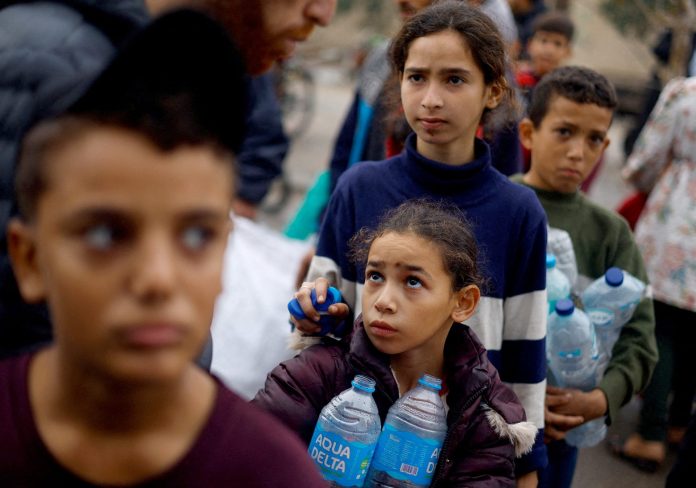
UNICEF warns children in Gaza have “barely a drop to drink”

Gaza War

“Recently displaced children in the southern Gaza Strip are accessing only 1.5 to 2 litres of water each day,” the statement said.

It added that 15 liters are the minimum standard per day for drinking, washing, and cooking, while three liters are the minimum for survival alone.

UNICEF reported water and sanitation services in Gaza are “at the point of collapse,” which could have severe repercussions on children.

“The impact of this on children is particularly dramatic because children are also more susceptible to dehydration, diarrhea, disease and malnutrition, all of which can compound to present a threat to their survival,” UNICEF said.

“Concerns of waterborne diseases such as cholera and chronic diarrhea are particularly heightened given the lack of safe water, especially following this week’s rains and flooding,” added the statement.

Last week, the World Health Organization reported it had recorded about 165,000 cases of diarrhea amongst children under the age of five, which it described as “much more” than normal.

“Without safe water, many more children will die from deprivation and disease in the coming days” UNICEF Executive Director Catherine Russell stated.

Israel has previously said it is “facilitating various humanitarian aid initiatives” in Gaza, including “the supply of water directly from Israel”.

A United Nations agency also said Tuesday half of Gaza’s population is starving and residents are often going entire days without eating under Israel’s bombardment of the enclave of more than 2 million people.

“The amount of aid crossing into Gaza does not meet a fraction of the needs,” the World Food Programme (WFP) said in a post on X, formerly Twitter.

Just 10% of the food required for Gaza has entered the strip over the past 70 days, Corinne Fleischer, WFP Regional Director for the Middle East, North Africa and Eastern Europe, stated in an interview with Canada’s CBC News on Sunday.

Two weeks ago, WFP warned that 97% of Palestinian households in the north of the strip and 83% in the south reported inadequate food consumption.

Since then, tens of thousands of displaced Palestinians have arrived in Gaza’s southernmost governorate of Rafah in search of safety, according to the United Nations Office for the Coordination of Humanitarian Affairs (OCHA)

“Thousands of people [in Rafah] line up before aid distribution centres in need of food, water, shelter, and protection, amid the absence of latrines and adequate water and sanitation facilities in informal displacement sites and makeshift shelters,” OCHA added.

Jagan Chapagain, secretary general and CEO of the International Federation of Red Cross and Red Crescent Societies, also warned the situation in Gaza is “desperate”.

“Aid delivery is becoming increasingly more difficult due to the ongoing shelling and lack of fuel and supplies.”