Wednesday, December 31, 2025
Home Blog Page 1135

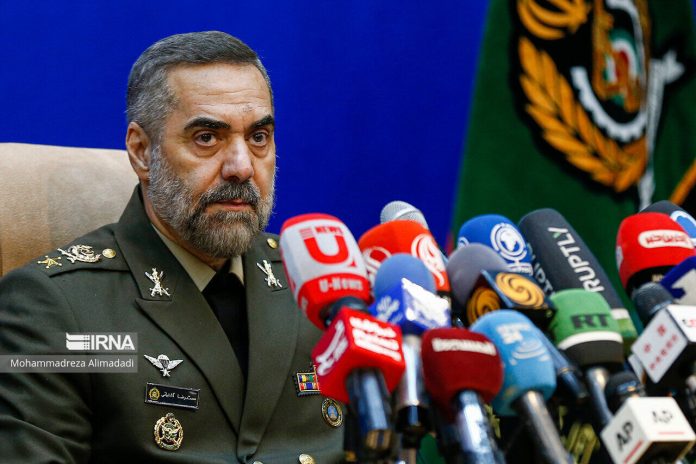
Iran’s defense minister warns US: Red Sea is our region

Iran's Defense Minister Brigadier General Mohammad Reza Ashtiani

Speaking to Iran’s ISNA news agency on Wednesday, Brigadier General Mohammad Reza Ashtiani said the region no longer has the space for such movements and conflict of forces.

He stated, “All countries are present in the region, but this region is ours and we dominate it.”

The remarks came after the US said it is working with allies to create a multinational force to protect ships passing through the Red Sea in an effort to counter a surge in attacks to retaliate the ongoing Israeli carnage in Gaza.

General Ashtiani questioned the seriousness of the claim, saying, “They definitely will not do such a thing, and if they want to do such a foolish thing, they will face tremendous problems.”

As a measure to show solidarity with Palestinians, Yemen’s Ansarullah movement has warned cargo ships in the Red Sea to avoid travelling toward Israeli occupied territories.

Israel cancels Mossad head’s Qatar trip to restart hostage talks

Israel Hostages

Mossad director David Barnea will not travel to the Qatari capital Doha, where previous talks on the release of hostages held by Hamas militants in Gaza have taken place, the source said.

Israel’s Channel 13 first reported Wednesday that the Israeli war cabinet, led by Prime Minister Benjamin Netanyahu, had called off the trip and that senior Israeli officials would not go to Qatar to restart negotiations.

Around 240 people, from infants to octogenarians, were taken hostage during Hamas’ attack on Israel on October 7. Dozens have been freed but many more remain missing, presumed to be held by the Palestinian organization and other groups in Gaza, following the breakdown of a temporary truce last month.

The Israeli prime minister’s office believes 135 hostages remain in Gaza, 116 of whom are alive.

Formal negotiations have not resumed since hostage talks that had been taking place in Doha broke down earlier this month.

But Israel, the United States and Qatar have continued to discuss ways to try to jump start the discussions, multiple sources stated.

“We never stopped,” one source familiar with the talks said.

Families of some of the Israeli hostages were outraged by the decision to cancel Barnea’s trip and demanded answers, stating, “We are fed up with the indifference and deadlock.”

“The families were shocked by the report on the rejection of the Director of Mossad’s request to formulate an agreement for the release of the hostages,” the statement added.

“This announcement comes in addition to the ignoring of the parents’ request to meet with the Prime Minister and the Defense Minister, which have not yet been answered.”

World Bank says Gaza economy operating at 16% of its capacity

Gaza War

The economy of Gaza has come to a “near-complete standstill” due to Israel’s operation, with about 85% of workers left without jobs since its beginning, according to the Bank.

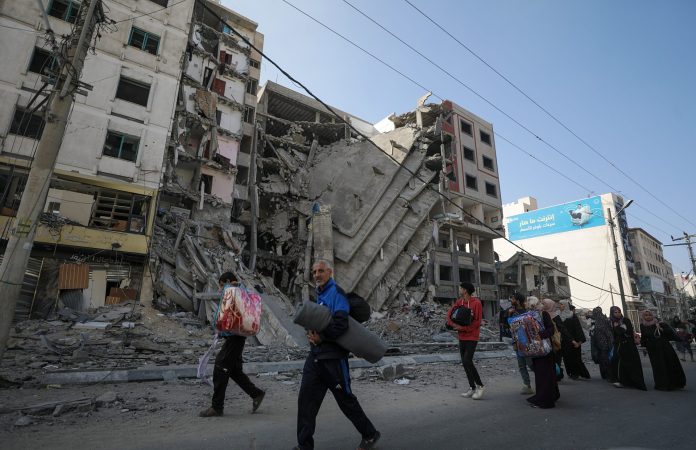
“As of the second half of November, roughly 60% of information and communications technology (ICT) infrastructure, 60% or more of health and education facilities, 70% of commerce-related infrastructure are damaged or destroyed in Gaza,” the report said.

Moreover, nearly half of all roads are damaged or destroyed as a result of the operation, it added.

The International Monetary Fund (IMF) has recently issued a stern warning about the economic impact of Israel’s war on the Gaza Strip on the regional economic outlook, and stressed that the onslaught on the besieged enclave is expected to “severely depress” the Palestinian economy.

“We do expect the conflict to severely depress economic activity in both the West Bank and Gaza, where even before the conflict GDP growth was set to decline over the medium term,” the IMF communications chief, Julie Kozack, told reporters.

She added that while the economies of the occupied West Bank, Gaza will be the hardest hit, “the ultimate impact will depend on the duration and intensity of the conflict.”

The IMF announced last week that it will revise its economic outlook for countries in West Asia and North Africa due to the Israeli genocide in Gaza.

The fund warned that the Israeli aggression on Gaza will have wide-ranging consequences for both people and economies in the region.

Israel launched the war on Gaza on October 7 after the Palestinian Hamas resistance group waged the surprise Operation Al-Aqsa Storm against the occupying entity in response to the Israeli regime’s decades-long suppression and devastation against Palestinians.

Israeli occupation forces are continuing their genocidal war against the Palestinians in the Gaza Strip, and have vowed to flatten the coastal territory.

More than 18,600 Palestinians have been killed, most of them women and children, and over 50,000 others injured since the onset of the current US-backed war.

Vast areas of the besieged Gaza Strip have been reduced to rubble as a result of Israel’s incessant bombardment.

Wartime survey shows a rise in Hamas support, increase in anti-Westernism sentiments

Gaza War

The survey also shows an overwhelming rejection of Western-backed President Mahmoud Abbas, with nearly 90% saying he must resign.

The survey was conducted from Nov. 22 to Dec. 2 among 1,231 people in the occupied West Bank and Gaza and had an error margin of 4 percentage points.

In Gaza, poll workers conducted 481 in-person interviews during a weeklong cease-fire that ended on December 1.

The survey provided insights into Palestinian views of the Oct. 7 al-Aqsa Storm Operation by Hamas and other Gaza resistance groups in Israel.

Despite the devastation, 57% of respondents in Gaza and 82% in the West Bank believe Hamas was correct in launching the October operation, the poll indicated. A large majority believed Hamas’ claims that it acted to defend the al-Aqsa Mosque compound against extremist Israeli settlers and win the release of Palestinian prisoners.

The findings by a Palestinian pollster signal more difficulties ahead for the US President Joe Biden administration’s postwar vision for Gaza and raise questions about Israel’s stated goal of ending Hamas’ military and governing capabilities.

Washington has called for the West Bank-based Palestinian Authority, currently led by unpopular Abbas, to eventually assume control of Gaza and run both territories.

The PA administers pockets of the Israeli-occupied West Bank and has governed Gaza until a takeover by Hamas in 2007. The Palestinians have not held elections since 2006 when Hamas won a parliamentary majority.

Israeli Prime Minister Benjamin Netanyahu, who leads the most right-wing cabinet in Israel’s history, has soundly rejected any role for the PA in Gaza and insists Israel must retain open-ended security control there.

“Israel is stuck in Gaza,” pollster Khalil Shikaki stated ahead of the publication of the survey’s results by his Palestinian Center for Policy and Survey Research, or PSR.

In a two-way presidential race, Ismail Haniyeh, the exiled political leader of Hamas, would trounce Abbas, the pollster said.

Overall, 88% want Abbas to resign, up by 10 percentage points from three months ago. In the West Bank, 92% called for the resignation of the octogenarian who has presided over an administration widely seen as corrupt, autocratic and ineffective.

Support for the PA declined further, with nearly 60% now saying it should be dissolved. In the West Bank, Abbas’ continued security coordination with Israel’s military against Hamas, his bitter political rival, is widely unpopular.

The poll also signaled widespread frustration with the international community, particularly the United States, key European countries and even the United Nations, which has pushed for an immediate humanitarian cease-fire in Gaza.

“The level of anti-Americanism and anti-Westernism is huge among Palestinians because of the positions they have taken regarding international humanitarian law and what is happening in Gaza,” Shikaki, who runs regular polls, added.

The United States and its Western allies have said they were still not drawing any red lines for Israel, which has killed more than 18,600 people during a yet-ongoing war against the Gaza Strip.

Hamas sets conditions for peace talks

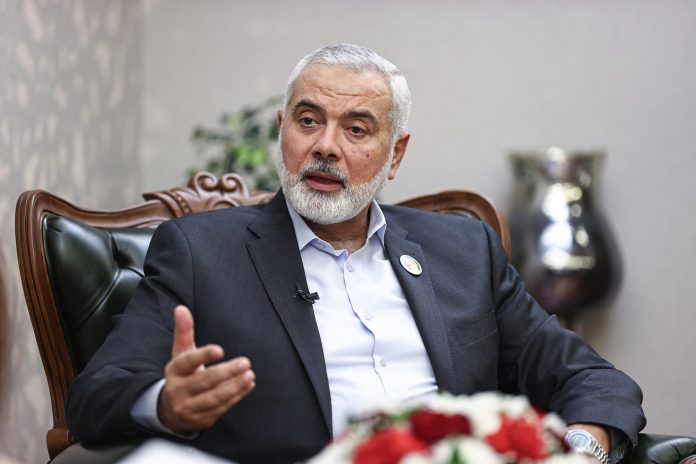
Ismail Haniyeh

In a televised speech on Wednesday, Haniyeh said Hamas is prepared for dialogue with Israel, hoping that future talks could put “the Palestinian house in order both in the West Bank and the Gaza Strip”.

“We are open to discuss any arrangement or initiative that could end the aggression” and lead to a “political path that secures the right of the Palestinian people to their independent state with Jerusalem as its capital”.

However, the official went on to warn that any attempt to exclude Hamas and other armed groups from a post-war settlement would be a “delusion”, stressing the “resistance factions” must be involved in the process.

Haniyeh’s comments came just one day after Israeli Prime Minister Benjamin Netanyahu suggested that a Palestinian state was out of the question, vowing to never “repeat the mistake of Oslo”, a 1993 peace deal which created a roadmap for a sovereign Palestinian nation.

Though Israel previously accepted the idea in principle, the process established by the Oslo Accords has long since broken down, all but freezing the decades-long conflict. More than 30 years later, Israeli troops continue to occupy the West Bank, where Jewish settlement outposts have rapidly grown in recent years, while the government maintains a tight blockade over the Gaza Strip.

On Wednesday, Netanyahu declared that Israel would continue its military operation in Gaza “until Hamas is annihilated,” adding that even in the face of international pressure, “nothing will stop us”.

While an earlier vote calling for a ceasefire failed in the United Nations Security Council thanks to a US veto, despite strong support among other members, the UN General Assembly later passed a similar measure with a large majority in favor. The non-binding resolution demanded an immediate end to the fighting, the unconditional release of all hostages and the provision of humanitarian aid for Gaza.

The United States, which remains Israel’s top military donor, has voiced support for brief “pauses” to the fighting, but continues to oppose a more lengthy truce, arguing it would only help Hamas. However, President Joe Biden has grown increasingly critical of Israel’s approach to the war, recently warning the country could lose international support if it continued its “indiscriminate” bombing campaign.

Israel began its assault on Gaza following a surprise attack by Hamas on October 7, which claimed the lives of some 1,200 Israelis and saw more than 240 people taken hostage. In retaliation, the Israel Defense Forces has pounded the Palestinian enclave with heavy airstrikes and launched a major ground invasion, killing more than 18,600 people so far, according to local officials.

Iran warns about Israeli war crimes aftermath

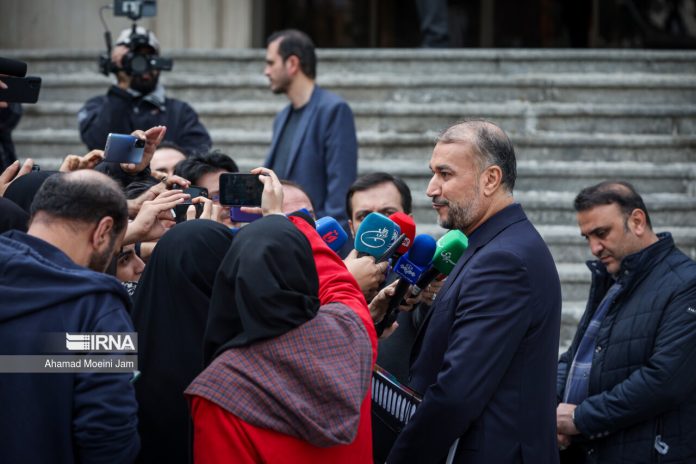
Hossein Amirabdollahian

“The consequences and effects of this genocide and war crimes in Palestine will be imposed on the region and the international community for many years,” the top diplomat told Press TV on Wednesday in Geneva, to which he has travelled to attend the Global Refugee Forum 2023.

The remarks came amid a genocidal war that the Israeli regime has been waging against the Gaza Strip since October 7 following an operation staged by the territory’s resistance groups, dubbed Operation al-Aqsa Storm.

Also on Wednesday, Gaza’s Health Ministry said 18,608 people, mostly women and children, had been killed, and 50,594 others injured in the Israeli strikes so far.

Ever since the onset of the war, the regime has also ramped up its aggression across the West Bank, killing hundreds of people across the occupied territory.

“We hope that these meetings will have practical results and won’t remain only as a venue to simply express positions,” Amirabdollahian added.

“We hope the UN High Commissioner for Refugees will fulfill its duties and pay attention to the welfare, education, and living conditions of the refugees.”

Earlier this week, the chief of the United Nations Relief and Works Agency for Palestine Refugees (UNRWA) described the conditions in Gaza as the worst he had ever seen.

Philippe Lazzarini said his agency was on the verge of collapsing in Gaza, adding that an immediate ceasefire was needed to end “hell on earth” there.

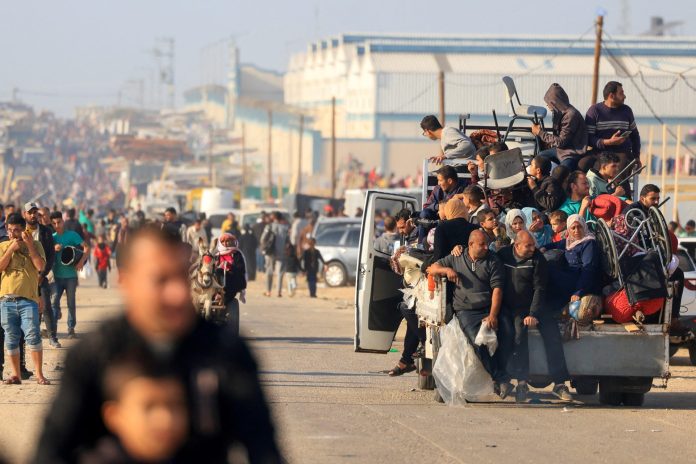
According to the United Nations, at least 1.5 million of Gaza’s 2.3 million residents have fled their homes since the war began.

Palestinian and other regional officials have warned that through its unbridled aggression, the Israeli regime pursues a policy of resettling the people of Gaza in Egypt, and the people of the West Bank in Jordan.

UN refugee agency cautions ‘Gaza catastrophe’ threatens to raise record global displacement

Gaza War

Speaking at the Global Refugee Forum on Wednesday, Filippo Grandi, the UN high commissioner for refugees, said that the fighting between Israel and Hamas threatens to destabilise the entire region and further swell the number of displaced people globally, which already sits at an all-time high of 144 million.

“A major human catastrophe is unfolding in the Gaza Strip,” Grandi warned, lamenting that “so far, the Security Council has failed to stop the violence.”

“We foresee more civilian deaths and suffering and also further displacement that threatens the region,” Grandi added.

According to the United Nations Relief and Works Agency for Palestine Refugees in the Near East (UNWRA), nearly 1.9 million people – more than 85 percent of the population in Gaza – have been displaced since the Israeli bombardments started in early October.

Prior to the UN General Assembly ceasefire resolution, the high commissioner had ardently called for a humanitarian ceasefire “to prevent the ongoing massive displacement from growing more and beyond #Gaza”.

More displacement “would be catastrophic for Palestinians, who know the trauma of exile; and solving it would be impossible, further jeopardizing any chance of peace”, he posted on X.

Warnings about a wider displacement of Palestinians from Gaza have grown as Israel’s forces have pushed across the whole of the enclave, regardless of designating the south as a safe zone.

Philippe Lazzarini, the head of UNRWA, also accused Israel of seeking a mass expulsion of people from Gaza into Egypt.

“The United Nations and several member states, including the United States, have firmly rejected forcibly displacing Gazans out of the Gaza Strip,” he warned on Sunday.

Israeli officials have in recent months suggested “voluntary resettlement of Palestinians, for humanitarian reasons, outside of the Strip”, or resettlement in tent cities in the Sinai Desert in Egypt.

Grandi also urged the UN officials, politicians and aid groups gathered in Geneva “not lose sight of other pressing humanitarian and refugee crises”.

Noting Russia’s war in Ukraine, the civil war in Sudan, and the humanitarian crisis in Afghanistan, he said that conflicts and crises had already generated record displacement even before the Gaza war erupted.

“Every refugee is a symptom of our collective failure to ensure peace and security,” Grandi warned, adding the world must work together to ameliorate such preventable tragedies.

The number of people displaced worldwide passed 114 million by the end of September, an all-time high.

Grandi stated that amounts to “114 million shattered dreams, disrupted lives, interrupted hopes. It is a figure that reflects a crisis – many crises – of humanity”.

Grandi appealed to participants to make the forum “a moment of unity, in which all of us join forces to ensure that those who flee because their life, freedom and security are threatened can find protection, and that everything is done to resolve their exile as soon as possible”.

Israeli opposition leader: Netanyahu lying over Gaza war

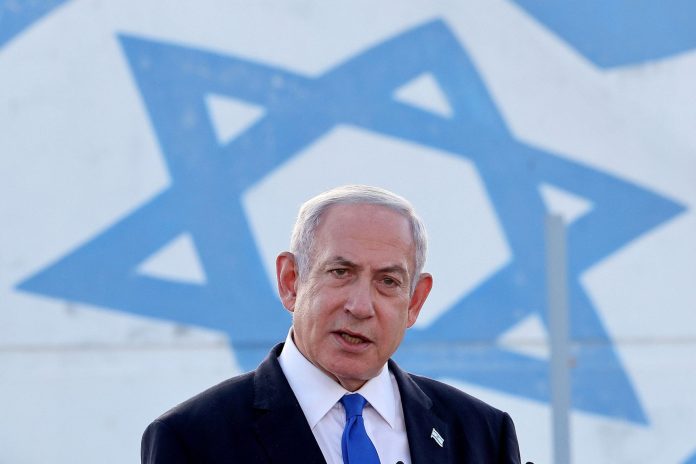
Benjamin Netanyahu

“Netanyahu is doing what he has been doing throughout his life: incitement, lying, and producing hatred,” Lapid said on social media platform X on Wednesday.

“Now, he (Netanyahu) is doing it only amid a bitter war where soldiers are killed every day,” he added.

Lapid stated while Israeli soldiers are being killed in Gaza, “Netanyahu has once again invented disputes with the US, with me, and with [war cabinet ministers] Benny Gantz and Gadi Eisenkot.”

Netanyahu opposes US efforts to allow the Palestinian Authority to govern the Gaza Strip following the end of the ongoing Israeli war on the blockaded territory.

Washington, for its part, argues that there must be a Palestinian authority or government in Gaza in the post-war period.

Israel has bombarded the Gaza Strip from the air and land, imposed a siege and mounted a ground offensive in retaliation for a cross-border attack by Hamas on October 7.

At least 18,600 Palestinians have been killed and 50,600 injured in the Israeli onslaught since then, according to Gaza’s health authorities.

The Israeli death toll in the Hamas attack stood at 1,200, while around 139 hostages remained in captivity, according to official figures.

Israel says to continue Gaza war, 18,600 Palestinians killed so far

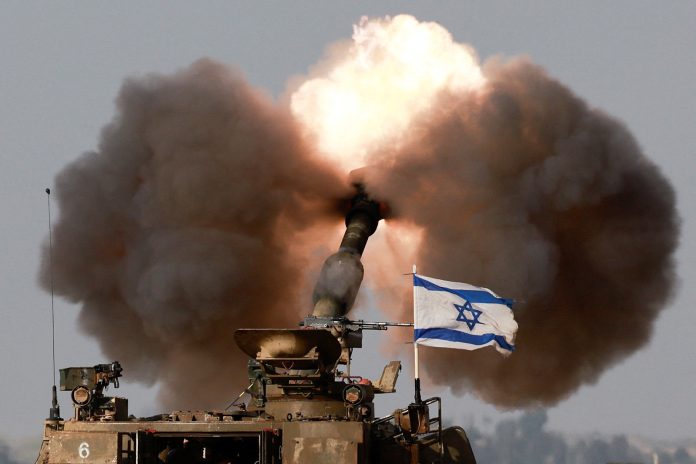
Israeli artillery unit

“Israel will continue the war against Hamas with or without international support,” Cohen stated at a meeting with Australian Assistant Minister for Foreign Affairs Tim Watts.

“The ceasefire at the current stage is a gift to the Hamas terrorist organization and will allow it to return and threaten the people of Israel,” he added.

On October 7, Hamas launched a large-scale rocket attack against Israel from the Gaza Strip and breached the border, killing over 1,200 people and abducting some 240 others.

Israel launched retaliatory strikes, ordered a complete blockade of Gaza and launched a ground incursion into the Palestinian enclave with the declared goal of eliminating Hamas fighters and rescuing the hostages. Over 18,600 people have been killed so far in Gaza as a result of the escalation, the local authorities confirmed.

The Gaza Strip was divided into north and south sections by the Israeli army in November.

British MPs call on UK government to halt arms exports to Israel over war crimes

Gaza War

The lawmakers have questioned what the UK government knows about how British weapons are being used and, consequently, what assessments have been made that the government is following its own arms export laws.

The government is obligated under those laws to suspend arms export licences if it determines that there is a clear risk that British weapons might be used in violations of international law.

According to the Campaign Against the Arms Trade (CAAT), the UK government has licensed at least £472m worth of military exports to Israel since May 2015.

“Do the government know whether British weapons or military equipment are being used in Gaza or not?” said Labour MP John McDonnell, who also asked whether spare parts for F-16 and F-35 aircraft used in bombing had been shipped to Israel.

McDonnell stated he believed arms transfers should be suspended and a “complete review” undertaken, as the government had done during the wars in Gaza in 2009 and 2014, “to see exactly how what we have supplied is being used and whether it is being used in Gaza, because if it is, I am afraid we [have] become complicit in the war crime”.

McDonnell added that many of the questions he posed came from an 8 December letter sent by several UK-based civil society organisation to the government, calling for an immediate end to UK arms transfers to Israel.

McDonnell asked Trade Minister Greg Hands, who was present, if he had seen the letter. Hands said he hadn’t personally seen it, but would find it and see if there was a response.

“As a matter of course, we at DBT [the Department of Business and Trade] respond to letters from non-governmental organisations,” Hands stated.

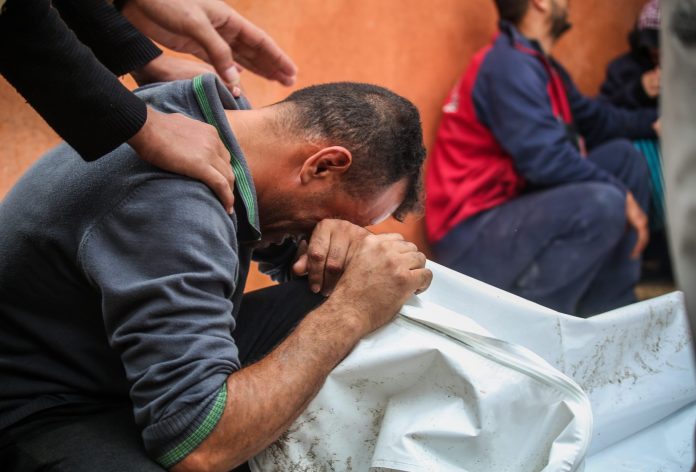
Labour MP Zarah Sultana told the stories of Palestinians who have been killed in Gaza in recent weeks, including a teenager who wanted to be a doctor, a mother and baby killed in their sleep, and a child whose lifeless body was cradled by her grandfather after an air strike.

“I want to remind colleagues and the whole House of the shared humanity of those being slaughtered in Gaza today,” she said, adding, “Whether we like it or not, this place is deeply complicit in the atrocities we see being inflicted on the Palestinian people.”

Sultana, who called the debate, introduced a bill this week which she said would launch an investigation into UK arms sales and suspend them to any state where they might be used in violation of international law, including Israel and Saudi Arabia.

She also noted that the true value of UK arms transfers to Israel is “shrouded in secrecy” because publicly disclosed figures don’t include items sold under opaque open licences which keep the value of arms and their quantities secret.

Independent MP Angus Brendan MacNeil said while MPs and the public might not know the true figure, he wondered if more transparency should be expected from UK companies.

“Should we not be able to expect more of companies in the UK, and that they will not be like immoral drug dealers on the corner, selling to whoever, whenever, regardless of the consequences?” he continued, adding, “We expect companies that live among us in the UK not to be funding or aiding and abetting death in Gaza, as is happening at the moment.”

The Palestinian Ministry of Health announced on Wednesday that the Gaza death toll since the start of the war on 7 October has now reached 18,600, including over 7,000 children.

Last week, the UK abstained from voting on a UN Security Council resolution, submitted by the United Arab Emirates, to halt fighting in Gaza. The US was the sole country to vote against.

The MPs’ comments also came as the UK’s leading arms export monitoring organisations raised concerns that the parliamentary committee tasked with scrutinising arms export policy has not been convened since early this year.

The organisations called on the Committees on Arms Export Controls (CAEC) to hold an inquiry into UK-made weapons used in Israel and Palestine “as a matter of urgency”.

“They have not met since March,” Liberal Democrat MP Richard Foord said, adding, “That is outrageous, and we need to do something about it.

“Frankly, we do not debate arms transfers very often. One reason for that is that we assume that select committees are all over this, but that is not the case.”

Several MPs who spoke defended UK arms transfers to Israel, including Democratic Unionist Party MP Jim Shannon, who said UK aerospace and defence company Thales employs 500 people and contributes £77m to the GDP of Northern Ireland.

Shannon said it is “right and proper” that the government ensure arms export licensing is in line with its international obligations, but that he believes Israel is operating under international law and so arms sales “can and should” continue.

“I know the benefit of arms deals to my local economy, I see the benefit of the product in the war in Ukraine, and I stand with Israel while they legally fight the war on terrorism within the realms of international law,” he added.

Hands, the trade minister, told the MPs that UK military exports to Israel are “relatively small”, representing 0.02 percent of Israel’s military imports overall, and that the situation in Israel and the occupied Palestinian territories “is under constant review”.

“We can, and do, respond quickly and flexibly to change our fluid international circumstances, with all licences kept under careful and continual review as a standard,” he noted.

He also put the onus on Hamas to end the conflict: “The fact remains, however, that Hamas could end this conflict today, stopping the suffering of everybody, including the Palestinian people whom it continues to endanger.”

Conservative MP Jonathan Lord took Hands up on this point, saying he agreed but asking if Hands believed that “if there are war crimes on any scale, arms sales should cease immediately and there should be a full and immediate ceasefire”.

“We have set out in the criteria for the licences what the UK government policy and approach would be,” Hands said, adding, “If [Lord] has information in that regard, I am sure he will share that with the foreign secretary, the secretary of state for defence and us at DBT, and we would be happy to have a look at it.”