Wednesday, December 31, 2025
Home Blog Page 1134

Yemen says struck two Israel-bound ships

Yemen Houthis

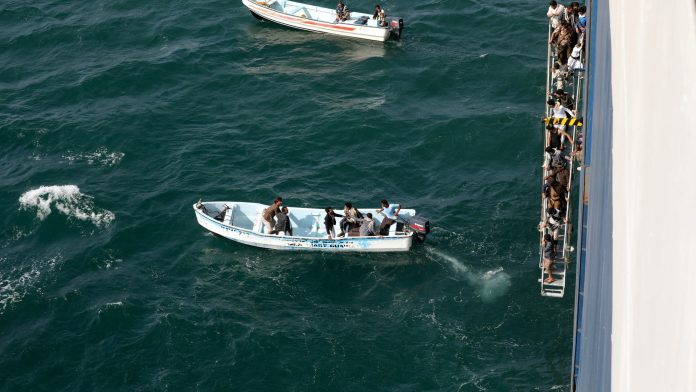
In a statement, the Yemeni Army said it fired two naval missiles at two ships heading to Israel, namely MSC ALANYA and MSC PALATIUM III after they refused to respond to calls from Yemen as well as fire warning messages on Friday.

The statement reiterated Yemen’s position that they will only target ships heading to Israeli ports, and all the other ships bound for other ports can freely move in waters near Yemen.

The Yemeni Army stressed it will continue to target Israel-bound ships in the Arabian and Red Sea until food and medicine is delivered to the Gaza Strip.

Earlier, a US defense official had reported two attacks in the region, saying a US Navy destroyer was on its way to aid one of the vessels hit.

No casualties have been reported.

Yemen’s Army has conducted several such attacks against Israel-bound ships in recent weeks.

Late on Thursday, Yemen claimed to have carried out a military operation against a Maersk container vessel, directly hitting it with a drone.

In November, Yemeni forces seized a vehicle transport ship linked to Israel in the Red Sea off Yemen. They still hold the vessel near the port city of Hodeida.

Some attacks occurred near Bab al-Mandab, the narrow strait between Yemen and northeast Africa through which much of global commerce flows.

Some 40 percent of international trade passes through the area, which leads to the Red Sea.

Western media reports say that insurance costs for ships transiting the area have jumped in recent days, amounting to increases in the tens of thousands of dollars for larger ships like oil tankers.

US officials say they plan to build an international coalition to protect ships in the area, with the US Special Envoy for Yemen, Tim Lenderking, adding on Thursday that Washington wanted the “broadest possible” maritime coalition to signal to the Yemenis that attacks would not be tolerated.

Yemen’s Ansarullah movement has dismissed US plans to establish a maritime task force in the Red Sea to protect the passage of Israel-bound merchant vessels.

Yemen has vowed they will continue with their attacks until Israel stops its onslaught against the Gaza Strip, which has so far killed around 19,000 people, mostly women and children.

The Palestinian resistance movement Hamas has said Yemeni strikes against ships heading to the Israeli-occupied territories send a message to the West that they should stop the ongoing carnage or expect the crisis to expand across the region.
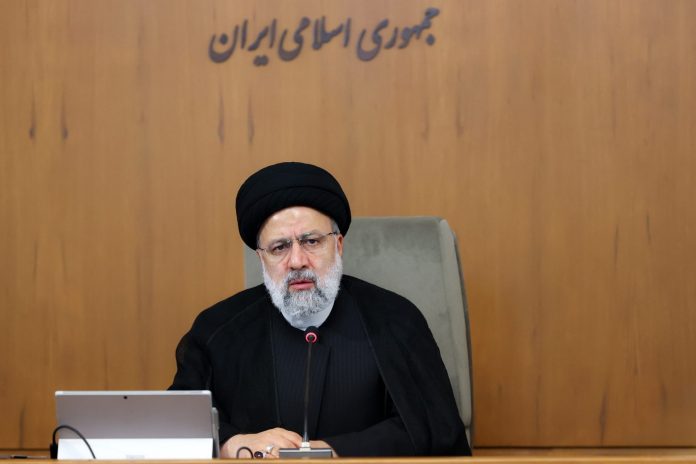
Iran’s president calls for punishment of perpetrators of police station attack

Ebrahim Raisi

Raisi in a statement offered his condolences to the Iranian nation and especially the families of “devoted” police forces who fell victim to the attack in Rask County in Sistan and Baluchistan Province, claimed by the Pakistan-based Jaish ul-Adl terror group.

“The powerful security and law enforcement forces must identify the perpetrators and orderers of this heinous crime as quickly as possible so that they can be punished for their disgraceful act,” the statement read.

The president blamed the “stooges of the world arrogance” for what he called a “cowardly and indiscriminate” terror attack.

A day of mourning has been announced in Sistan and Baluchestan Province to honor the victims.

Interior Minister Ahmad Vahidi promised the attackers would be brought to justice.

“Terrorists and their supporters must know that undoubtedly they will be caught at the hands of the self-sacrificing law enforcement and other intelligence-security forces and will be severely punished,” he stressed.

The attack, which occurred around midnight, was one of the deadliest in years for the region sitting close to Iran’s border with Afghanistan and Pakistan.

Similar attacks have occurred previously, including on July 23 when four policemen were killed while on patrol.

That came two weeks after two policemen and four assailants were killed in a shootout in the province, claimed by Jaish ul-Adl.

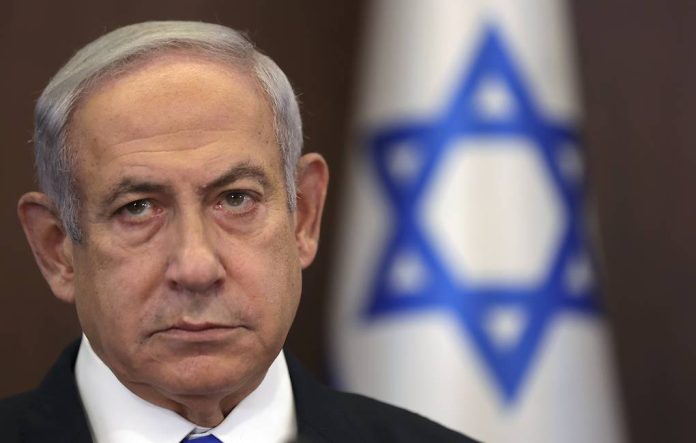
Poll: Half of Israelis disapprove of Netanyahu’s performance as PM

Benjamin Netanyahu

According to the poll published on Friday by the Israeli newspaper Maariv, only 31% of Israelis believe that incumbent Prime Minister Netanyahu is “suitable for his position”.

The daily reported that the poll was conducted by the Lazar Institute and included a random sample of 510 Israelis, with an estimated error rate of 4.3%.

The poll results indicated that 51% of the sample polled believed that “Gantz, leader of the National Unity Party, is suitable for the position of prime minister”.

While 18% of the survey participants declared that they had “no specific opinion” on the subject.

The poll also showed a “decline in popularity” for the Likud Party led by Netanyahu.

According to the poll results, if the elections were held today, Likud and its ally parties, Shas, United Torah Judaism, Otzma Yehudit, and Religious Zionist, would win 43 seats, compared to the 64 seats this coalition currently holds in the parliament or Knesset, according to the 2022 elections.

The results concluded that the Likud party would receive only 17 seats in the 120-seat Knesset, while the National Unity Party led by Gantz would receive 39 seats if general elections were held.

To form a government in Israel, it is necessary to obtain the confidence of at least 61 members of the Knesset.

Given the ongoing conflict in the Gaza Strip for more than two months, there is no possibility of holding elections in Israel anytime soon.

Earlier on Thursday, Gantz in a press conference in Tel Aviv implicitly accused Netanyahu and his coalition in the Knesset of causing internal divisions during wartime.

Gantz criticized Netanyahu and his coalition for insisting on continuing the war without ensuring the army’s ability to carry out its mission.

He also criticized Netanyahu for ignoring some of Washington’s objections to the continuous bombing of Gaza.

Netanyahu is currently under fire in Israel for his government’s failure to predict the Hamas movement’s October 7 attacks, as well as his handling of the Israeli hostage crisis.

Israel has bombarded the Gaza Strip from the air and land, imposed a siege, and mounted a ground offensive in retaliation for a cross-border attack by Hamas on October 7.

At least 19,000 Palestinians have since been killed and 50,000 injured in the Israeli onslaught, according to Gaza’s health authorities.

The Israeli death toll in the Hamas attack stands at 1,200, while 135 hostages are still held by the Palestinian group in Gaza, according to official figures.

UN warns Gaza not fit for human life as around 19k Palestinians killed in Israeli war

Gaza War

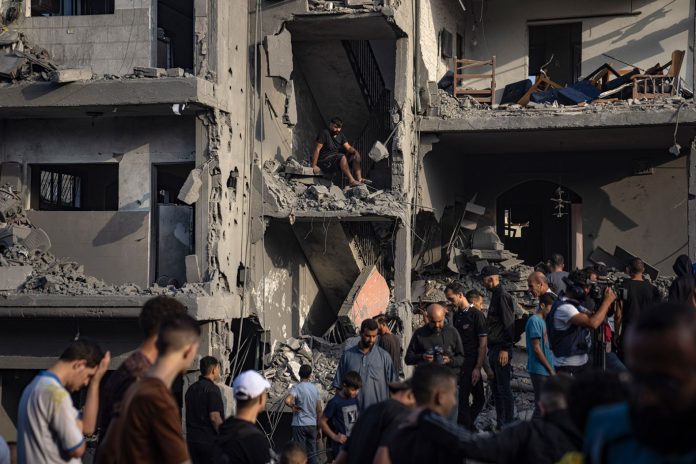
Speaking at a press conference in Geneva, the commissioner-general for the United Nations Relief and Works Agency for Palestine Refugees (UNRWA), Philippe Lazzarini, described how Israel’s ground operation in Gaza has pushed more than a million refugees south to the city of Rafah.

“Rafah is the epicenter of the displacement,” Lazzarini said.

“One [UN] warehouse that became a shelter is home to 30,000 people. The lucky ones have made it inside our premises. The others have absolutely nowhere to go. They live in the open, in the cold, in the mud, and under the rain. Everywhere you look is congested with makeshift shelters. Everywhere you go people are desperate, hungry, and are terrified.”

At the start of its bombing campaign in October, Israel urged residents of Gaza City – located in the north of the enclave – to migrate south for their own safety. Those who complied then had to push further south when Israeli planes began bombing the city of Khan Younis, and with Israeli ground troops now pushing into both cities, Rafah remains the only relatively safe area in the entire strip.

The influx into Rafah has quadrupled the city’s population and strained resources in what was already the poorest sector of Gaza, Lazzarini added. Israel’s near-total siege has caused shortages of food and water, and humanitarian agencies have complained that the convoys of aid trucks allowed through the Egypt-Rafah crossing cannot meet the needs of millions of people.

“Over the last few weeks, we met more and more people who haven’t eaten in one, two, or three days,” Lazzarini noted, describing how trucks carrying food are often unable to make it to UN shelters and distribution points.
“People are stopping aid trucks, taking the food, and eating it right away,” he continued.

“Every time I go back [to Gaza], I always think it cannot get worse, but every time I see more misery, more grief, more sadness, and have the feeling that Gaza is not really a habitable place anymore,” the UN official told reporters.

Hamas operatives attacked Israel on October 7, killing around 1,200 people and taking roughly 240 hostages. In the nine weeks since, Israeli strikes have killed nearly 19,000 people in Gaza and injured more than 50,000, according to figures released by the Gaza Health Ministry.

Some 135 UNRWA staff have been killed, and Israeli strikes on the agency’s schools, clinics, and offices have killed 270 people and wounded more than 1,000, Lazzarini stated. According to a UN report, almost a fifth of Gaza’s buildings have been damaged or destroyed during the Israeli campaign.

“What is happening in Gaza should outrage anyone,” Lazzarini stated, insisting that only an immediate lifting of the Israeli siege followed by the “uninterrupted, unconditional flow of commodities” into the strip will reverse the declining humanitarian situation.

Iran says mercenaries of foreign enemies behind terror attack on police in Siastan and Baluchestan 

Nasser Kanaani

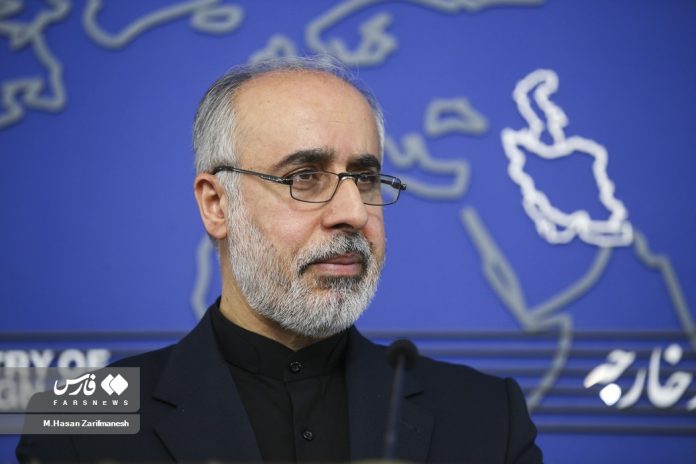
Kanaani said the crime was committed by “separatist terrorists and mercenaries of foreign adversaries of Iran.”

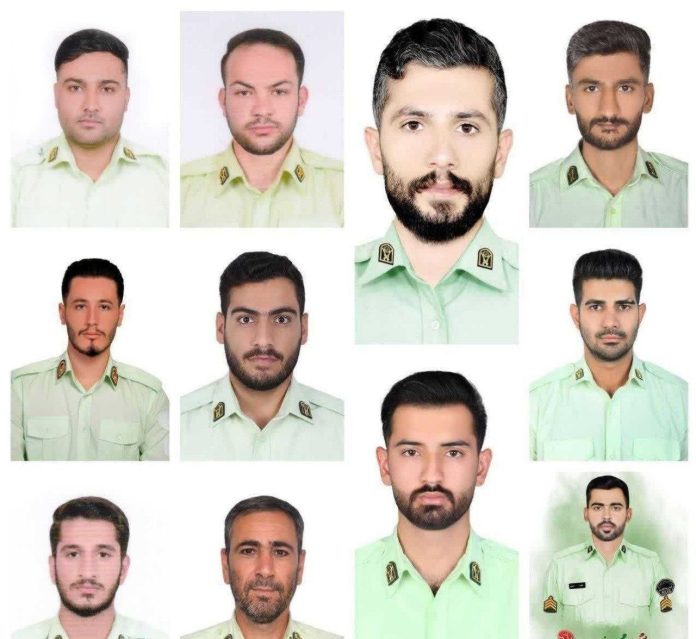
Armed militants staged an attack in Iran’s southeastern province of Sistan and Baluchestan which left at least 12 security forces dead early on Friday.

General Saeed Montazer al-Mahdi the spokesman of the Iranian police confirmed on Friday errorists attacked a police station in the city of Rask at midnight.

The deputy governor of the province Alireza Marhamati said a number of assailants were also killed in the attack at 2 am, local time.

The so-called Jaish al-Adl separatist group is blamed for the attack.

Iran says the seperatist terror group is supported by the US and Israel. The group has been behind several deadly bombings, ambushes and other attacks on Iranian security forces and civilians in the  region, as well as abductions.

Kanaani offered condolences to the bereaved families of the fallen soldiers.

He said that undoubtedly, the Foreign Ministry and other relevant bodies in Iran will act in concert to go after the murderous terrorists and bring them to justice.

Iranian ‘ambassador of SMA patients’ hospitalized 

Sina Alikhani, 14, was rushed to the hospital on Thursday for a surgery on his spinal cord, and is reportedly in a critical condition

as the post-surgery medicines were not available.

Sina became known as the ‘ambassador of SMA patients’ after he was seen in a video that went viral, showing him in a rally outside Iran’s parliament demanding better care for the patients.

His father said an increasing number of the patients succumb to the complications of the disorder due to lack of medicine in the country.

The US claims the bans do not target the imports of humanitarian supplies in Iran, but the sanctions on Tehran’s foreign banking transactions have made it impossible for the country to access critically needed medicine and medical equipment over the past years.

Iranian officials have slammed the relentless sanctions which affect millions of patients in the country as a “crime against humanity”, saying the restrictions on importing medicine sharply increase the death rate among the patients.

Huge fire engulfs hotel in Iran’s Bandar Anzali 

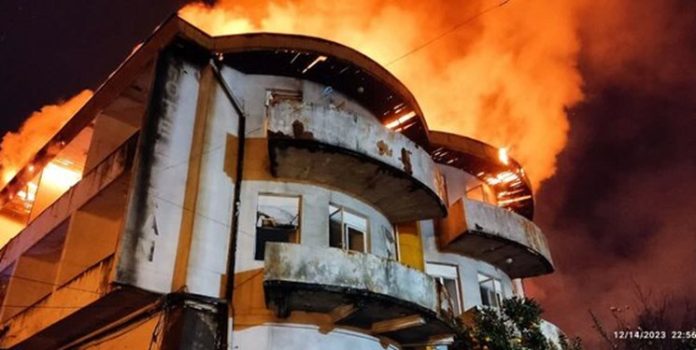
Vahid Pourhazrat, the mayor of the city on the southern shores of the Caspian Sea, said the blaze started in Hotel Iran in the early hours of Friday.

Firefighters and rescue teams were present at the scene and managed to put out the huge fire after over 2 hours.

The cause of the incident is under investigation and there are still no reports on the damage or casualties.

Gunmen kill at least 12 security forces in southeast Iran

Crime Scene

General Saeed Montazer al-Mahdi said terrorists attacked a police station in the city of Rask at midnight.

Some of the injured are in critical condition, officials say.

The deputy governor of the province Alireza Marhamati said a number of assailants were also killed in the attack at 2 am, local time.

Iran blamed the so-called Jaish al-Adl separatist group for the attack.

Iran says the seperatist teetor group is supported by the US and Israel.
The group has been behind several deadly bombings, ambushes and other attacks on Iranian security forces and civilians in the  region, as well as abductions.

In one case, the terrorist group killed 27 members of Iran’s Islamic Revolution Guard Corps (IRGC) in a suicide bombing on a bus in 2019.

The so-called Jaish al-Adl operates from bases in neighbouring Pakistan.

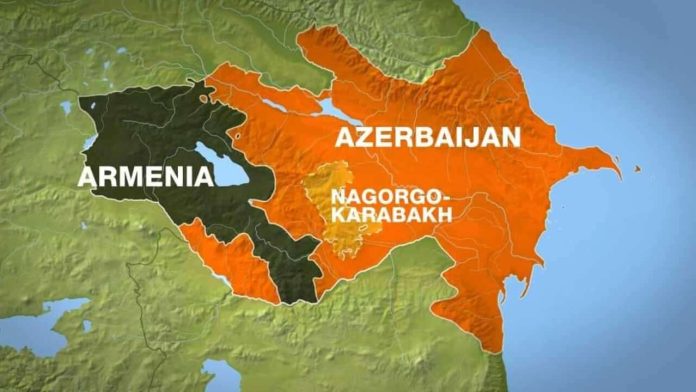
Turkey says Azerbaijan, Armenia close to historic peace deal

Armenia Azerbaijan

“After the 44-day war that took place three years ago, there is a historic opportunity to achieve peace in the region,” he stated on Thursday.

“We believe that today, more than ever, such an opportunity to reach a peace agreement has become much more real, and it should no longer be avoided. We welcome the positive progress towards reaching a permanent peace agreement and defining the borders between Azerbaijan and Armenia,” the minister added.

According to Fidan, “The Armenian diaspora in the West exploits the difficult situation of the Armenian people and tries to incite some countries to take a stand against Azerbaijan.”

“Instead, it would be better for them to direct their efforts to create conditions where the Armenian people can establish normal relations with their neighbors,” he continued.

He suggested that “players outside the region should pursue a policy aimed at maintaining balance and normalization.”

“The progress achieved between Azerbaijan and Armenia will have a positive impact on the process of normalizing relations between Turkey and Armenia,” Fidan stated.

He sees no obstacles in the path of normalizing relations between Ankara and Yerevan. According to him, Turkey remains fully on the side of Azerbaijan and is ready to fulfill any task within the framework of the settlement.

On September 19, tensions flared up again in Nagorno-Karabakh. Baku announced it was launching what it described as “local anti-terrorist measures” and demanded the withdrawal of Armenian troops from the region. Yerevan, in turn, said there were no Armenian forces in Karabakh, calling what was happening “an act of large-scale aggression”.

On September 20, an agreement on the cessation of hostilities was reached. On September 21, representatives of Baku and the Armenian population of Karabakh met in the Azerbaijani city of Yevlakh “to discuss reintegration issues”.

On September 28, Nagorno-Karabakh Republic President Samvel Shahramanyan signed a decree officially dissolving the unrecognized state effective January 1, 2024. The local ethnic Armenian population has been advised to consider the reintegration proposals being put forward by Baku and decide for themselves whether to remain or to relocate, most likely to nearby Armenia.

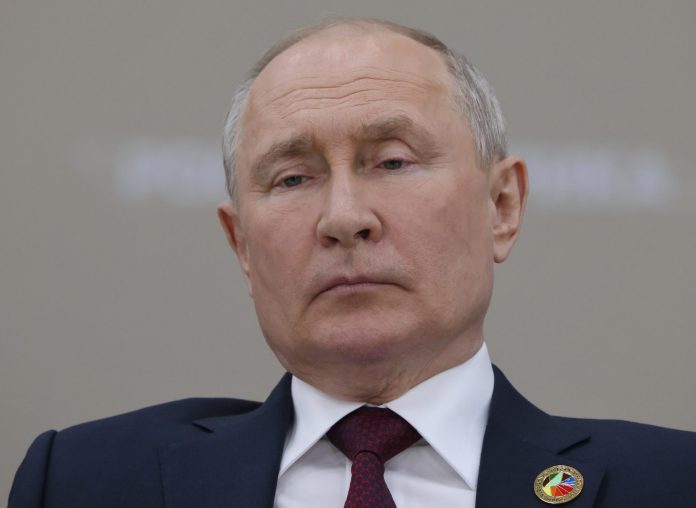
Putin says west ‘shooing itself in foot’ with sanctions

Vladimir Putin

According to Putin, the use of the dollar and euro in servicing Russian exports decreased from 87% in 2021 to 24% as of September 2023 amid Western restrictions. At the same time, the share of the Russian ruble and the Chinese yuan reached 40% and 33%, respectively.

“They [the West] shot themselves in the foot. Is this bad for us? Not really. The more we use our national currency, the better. This increases our sovereignty,” the president insisted, adding “We are not giving up [the dollar and the euro], they just started causing problems for us with settlements in foreign currencies.”

Speaking about the ruble, the president pointed out that the exchange rate is floating and depends on economic factors, such as prices for export goods and growing demand within the country. Most of the factors affecting the currency are manageable, according to Putin, who insisted that the situation “is normalizing”.

The Russian economy has shown strength and stability in the face of outside pressure, with GDP expected to reach 3.5% this year, Putin stated.

According to Putin, who is holding his annual press conference in Moscow, the economy has recovered from last year’s decline and is moving forward.

There are challenges still facing the Russian economy, according to the president, with inflation expected to accelerate to 8% by the end of the year.

“But the central bank and the government are taking measures to return it to target levels,” Putin continued.

The president noted the confident growth of industrial production, at 3.6%, saying, “What is particularly pleasing is that the manufacturing industry is growing.”

According to Putin, Russia’s external public debt has decreased from $46 billion to $32 billion. Private companies are also paying off their debts on time, he added.

The Russian leader also noted that unemployment in Russia dropped to a historic low of 2.9%. “This has never happened in the history of Russia. This a very good indicator of the state of the economy.”

Real wages in Russia will continue to grow to the end of 2023, increasing approximately 8%, while the growth of real incomes of the population will be at around 5% by the end of the year, according to Putin.

The president also spoke about the increase in the minimum wage in Russia from the beginning of 2024.

“When I talked about increasing real incomes, I must mention, of course, that from January 1, we will have the minimum wage increased by 18%,” he stated, noting that such indexations don’t happen often enough.

The Russian president is hosting his annual press conference on live TV, during which both journalists and the general public can ask him questions. The two-in-one event, called ‘Results of the Year’, combines Putin’s annual press conference and his Q&A session with the people, which are usually held separately.