Friday, December 26, 2025
Home Blog Page 1107

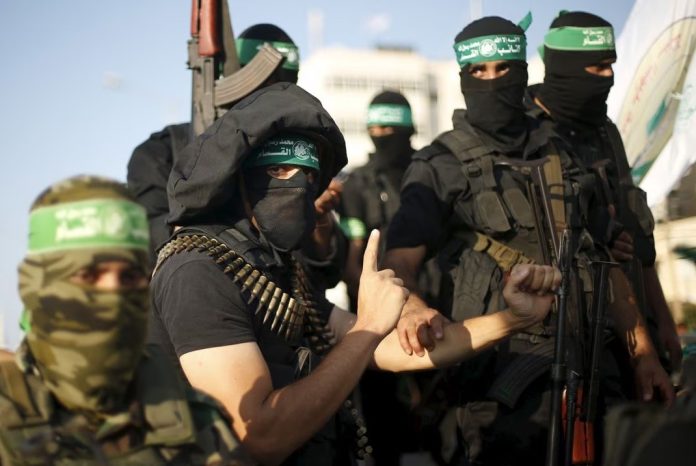
Israel says Gaza war to drag on for ‘many more months’

Israeli Army

“There are no magic solutions,” Israel Defense Forces (IDF) Chief of Staff Herzi Halevi told reporters on Tuesday.

He added, “There are no shortcuts when it comes to thoroughly dismantling a terrorist organization, except being stubborn and determined in the fighting.”

Halevi’s comments came after Israeli Prime Minister Benjamin Netanyahu said on Monday that the war with Hamas was “not close to being over”. Netanyahu reiterated that Hamas must be destroyed before the fighting can stop, adding that Gaza must be “demilitarized” and Palestinian society “deradicalized” to create conditions for a lasting peace.

Nearly 21,000 people have been killed in Gaza since the war began on October 7, according to local health officials. Hamas triggered the conflict by launching surprise attacks on southern Israel, killing more than 1,100 people including almost 700 Israeli civilians and 71 foreigners, as well as taking hundreds of hostages.

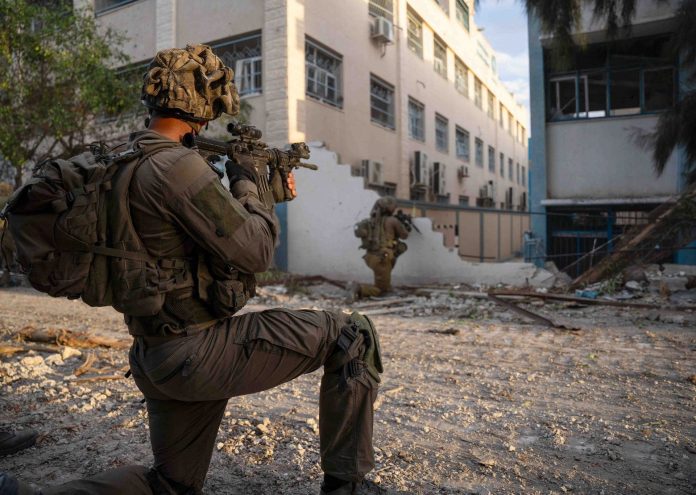
Halevi said the IDF is expanding its operations in central and southern Gaza after dismantling most of the Hamas battalions in the northern part of the Palestinian enclave.

“We eliminated many terrorists and commanders,” he continued, adding, “Some of them surrendered to our forces, and we took hundreds of prisoners. We destroyed many underground infrastructures and weapons.”

The IDF chief acknowledged that given that the area is dense and urban, there are probably more Hamas fighters hidden in northern Gaza. He vowed that the Israeli military would not allow security conditions to slide back to pre-October 7 levels, putting citizens at risk of a repeat of the Hamas attacks.

“This war has necessary and not easy goals to achieve,” he stated.

“It takes place in complex territory. That’s why the war will continue for many more months, and we will work with different methods, so that the achievement will be maintained for a long time.”

Multiple countries as well as UN Secretary General Antonio Guterres, have called for an immediate ceasefire. Israel and its primary ally the US, however, argue that a ceasefire right now would only benefit Hamas.

Hamas says Biden has blood of Gaza children on hands

Biden Netanyahu

Speaking at a press conference in Beirut on Tuesday, Hamas’s representative in Lebanon Osama Hamdan said Washington was “orchestrating the aggression” against the besieged Palestinian territory.

“The hands of US President Joe Biden are stained with the blood of Gaza’s children,” he added.

He reaffirmed the resistance movement’s position on the “necessity of stopping the aggression against our people” by the Israeli occupation forces in Gaza.

“Our people are not awaiting temporary pauses that the occupation would violate with additional atrocities against civilians; rather, they are after a comprehensive halt to the aggression,” the Hamas official continued.

He stressed that Israeli prime minister Netanyahu moves from failure to failure and “only succeeds in killing civilians”.

Hamdan further added that Netanyahu his cabinet and his occupation army are “aimless and have no specific goals and approach” in Gaza.

“Netanyahu has only one option and that is to admit defeat and face his own fate accordingly,” he said.

Backed by the United States, Israel waged the war on Gaza on October 7 after Hamas-led Palestinian resistance groups carried out Operation Al-Aqsa Storm against the occupying entity in response to the Israeli regime’s decades-long campaign of death and destruction in Palestine.

The Israeli aggression has so far killed nearly 21,000 Palestinians, most of them women and children. Nearly 55,000 people have also been wounded while many bodies remain trapped under rubble.

The senior Hamas official also praised the position of Yemen’s Ansarullah resistance movement “in their support for their brothers in Gaza, and the continuation of a global mass movement in solidarity with Gaza”.

Hamdan described the US escalation in the Red Sea as an “overt effort from Washington to shield the occupation and allow it to persist in its genocide war”, and said the US escalation was a “comprehensive plan” aimed at “expanding the circle of fire”.

Moreover, Hamdan called on the international community to continue their solidarity with Palestinians in Gaza.

The Hamas official appreciated the support of certain European nations in condemnation of the actions of the Israeli occupation, calling on them to take a unified stance under the European Union to stop the aggression.

Hamdan also warned European countries against complying with Israeli prime minister Benjamin Netanyahu’s plot of “voluntary migration” of Palestinian people in Gaza.

IRGC: Revenge awaiting Israel for assassination of military advisor

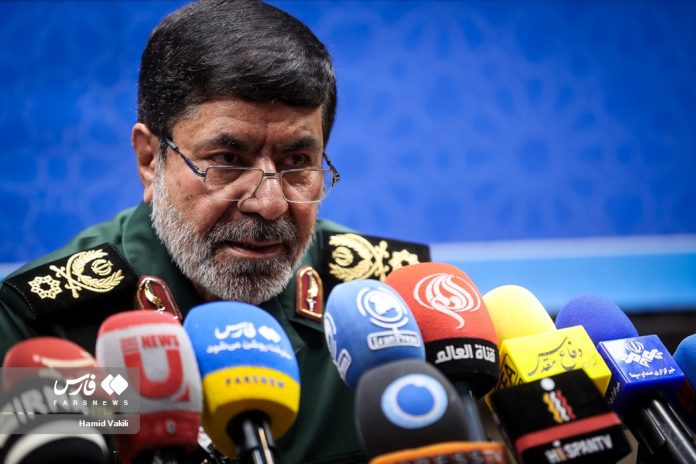
Ramezan Sharif

Brigadier General Ramezan Sharif made the remarks at a news conference on Wednesday, after senior IRGC commander, Seyyed Razi Mousavi was killed in an Israeli airstrike in the Sayyeda Zeinab neighborhood of the Syrian capital of Damascus.

“Definitely, with the martyrdom of Mousavi, there will be no disruption in our missions to confront the Zionist regime,” the IRGC’s spokesman said.

He noted that the assassination of Mousavi is a continuation of the violation of international laws by the Israeli regime, calling on the international community to stop the crimes of the occupying regime which endanger international peace and security.

Seyyed Razi Mousavi was martyred by the Israeli regime on Monday, while on an advisory mission in Syria.

He was one of the companions of Iran’s top anti-terror commander, General Qassem Soleimani, who was assassinated by the US in Iraq four years ago.

Sharif further noted that the martyrdom of Mousavi is a great loss but stressed that Iran will continue the path of resistance with strength.

The IRGC’s spokesman also stated that one of the main reasons that the Israeli regime assassinated Mousavi at this point was due to its failure on October 7, when Palestinian resistance movements launched the surprise attack, dubbed Operation Al-Aqsa Storm, into the occupied territories.

He also added Operation Al-Aqsa Storm against the Israel regime was one of the acts of revenge for the assassination of Lieutenant General Soleimani, warning that these acts of revenge will continue.

The Israeli regime has for years targeted what it calls Iran-linked positions in Syria.

Iran maintains an advisory mission in Syria at the request of Damascus with the aim of helping the war-torn Arab country get rid of the foreign-backed militants who have been fighting the democratically-elected Syrian government since 2011.

Earlier in December, Israel killed two IRGC military advisors — Mohammad Ali Ataee Shoorcheh and Panah Taqizadeh — in an attack in Syria.

The IRGC announced in a statement that the two officers were martyred against the backdrop of the relentless savagery of the “fake and child-killing” Israeli regime in Gaza.

Hamas remains ‘resilient’ on battlefield despite Israeli war: US think tanks

Hamas

In a report published on Tuesday, the Institute for the Study of War (ISW) and the Critical Threats Project (CTP) highlighted Hamas’s ability to reconstitute amid the occupying regime’s failure to eliminate it.

“Hamas remains resilient and able to reconstitute its military capabilities, despite its military losses in the war thus far,” the report said.

It noted that any deal that keeps Hamas in Gaza would be “tantamount to Israel’s defeat” because it would preserve the group as a governing body and military force in the besieged Palestinian territory and enable it to threaten the usurping regime.

Israel waged the genocidal war on Gaza on October 7 after Hamas carried out a historic operation against the occupying entity in retaliation for its intensified atrocities against the Palestinian people.

However, 82 days into the offensive, Tel Aviv has failed to achieve its objectives of destroying Hamas and finding Israeli captives in Gaza.

On Tuesday, Israel’s minister of military affairs Yoav Gallant said the regime is in a “multi-arena war”, warning of a long fight ahead.

Gallant’s comments followed Israeli Prime Minister Benjamin Netanyahu’s remarks Monday that the Gaza war is far from over.

The Tuesday report by the US war monitors stressed that Israeli officials have stressed the need for a “prolonged” war to achieve their declared objectives in Gaza.

It added that Hamas continues to engage in battles in the northern Gaza cities of Beit Hanoun and Jabalia.

Hamas and the Palestinian Islamic Jihad resistance movement “conducted a combined complex ambush using standard and thermobaric rockets against Israeli forces sheltering in a home in Jabalia city”, according to the report.

Palestinian fighters are also engaged in “heavy fighting” against Israeli troops in southern Gaza using mortars and rockets.

The US report further referred to clashes between Israeli forces and Palestinian fighters across the occupied West Bank and attacks by the Lebanese Hezbollah resistance movement on the occupied territories.

Since the start of the Israeli aggression, the regime has killed at least 20,915 Palestinians, mostly women and children, and injured 54,918 others.

Thousands more are also missing and presumed dead under the rubble in the Gaza Strip, which is under “complete siege” by Israel.

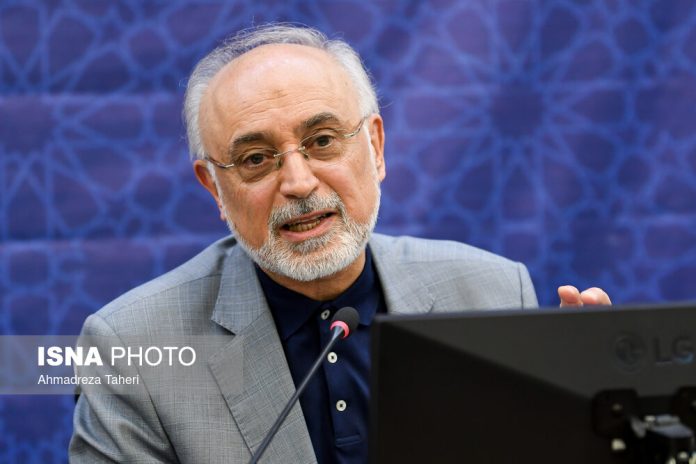
Iran’s ex-FM urges Tehran not to get too close to U.S., China or Russia

Ali Akbar Salehi

“Where does Iran want to stand in this triangle? If Iran goes and sticks to one of the vertexes of this triangle, it will be disastrous. I think Iran should stand in the middle of this triangle and make the most of opportunities and weak points,” said Aliakbar Salehi in and interview with media.

“The United States wants to preserve its so-called grandeur in a unipolar world, but it has two rivals: One economic rival called China and a military one called Russia,” he explained.

Salehi said the U.S. can go to the top, but, on the way up, is facing threats from Russia and China.

“The United States cannot deal with these two rivals with war because, in that case, the U.S. itself will be a loser, too. How should the U.S. do that? Through clever methods,” said Salehi.

“The United States got Russia bogged down in Ukraine. But how can it handle China? Through Energy,” he explained.

Iran denies IAEA’s claim Tehran speeding up uranium enrichment work

Iran nuclear programe

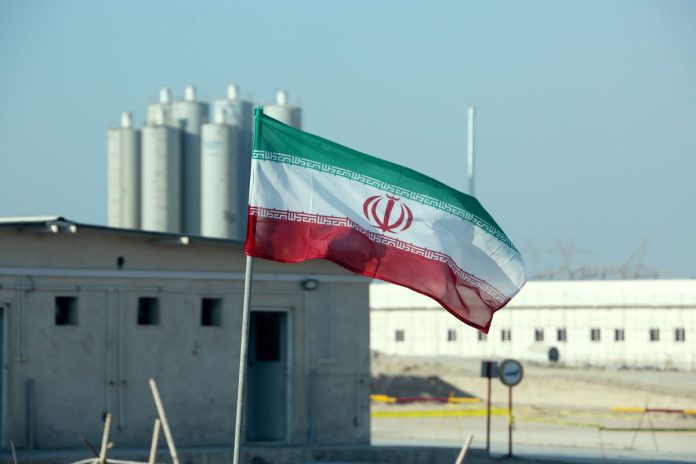
“We haven’t conducted any new activity and we are just continuing our current work, which is being done in accordance with protocols and regulations,” said AEOI Director Mohammad Eslami.

“What the other side has said is nothing new and is mostly media hype,” he noted.

“Given the political situation and the condition which have emerged for the other side in Gaza, they seek to create another atmosphere and divert public attention from Gaza to Iran,” he explained.

“In fact, it is clear what objectives they pursue by making such moves,” added the Iranian nuclear chief.

Eslami made the comments in reaction to a claim by the International Atomic Energy Agency (IAEA) that Iran had expedited its uranium enrichment work.

Turkish parliament body approves Sweden’s NATO bid

NATO

The decision, taken on Tuesday, is a key step towards enlarging the military alliance after 19 months of delays in which Ankara demanded security-related concessions from Stockholm.

The commission, controlled by President Recep Tayyip Erdogan’s ruling Justice and Development Party (AK Party), voted to back the bid made by Sweden last year after Russia’s invasion of Ukraine.

The next step is a vote by the full parliament, in which the AK Party and its allies hold a majority. Sweden’s NATO membership is expected to pass, and then the measure would go to Erdogan. If he signs it into law, he would conclude a process that has taken nearly two years and frustrated some of Ankara’s allies in the West.

Commission head Fuat Oktay, however, played down expectations for a speedy vote in the full Grand National Assembly, telling reporters that the speaker would decide on a timing for the vote. Parliament also has a two-week recess in early January.

“The decision to submit it to the general assembly has been made now, but this should not be interpreted as [a sign] that it will pass the general assembly with the same speed. There is no such thing,” Oktay said.

In a statement after the commission’s approval, Swedish Foreign Minister Tobias Billstrom stated Sweden welcomed the move and looked forward to joining NATO.

NATO chief Jens Stoltenberg also hailed the approval by the Turkish parliamentary commission.

“I welcome the vote by the Turkish parliament’s Foreign Affairs Committee to ratify Sweden’s NATO membership,” Stoltenberg said, urging Turkey and fellow holdout Hungary to complete their ratifications “as soon as possible”.

All NATO members, which now number 31, are required to approve new memberships.

Erdogan raised objections in May last year to both Swedish and Finnish requests to join the alliance over what he said was their protection of people whom Turkey accuses of being “terrorists” and over their defence of trade embargoes.

Turkey ratified Finland’s bid in April but kept Sweden waiting until it took more steps to crack down on local members of the Kurdistan Workers’ Party (PKK), which Turkey, the European Union and the United States list as a terrorist group.

In response, Stockholm introduced a bill that makes being a member of a “terrorist organisation” illegal.

Sweden and NATO members Finland, Canada and the Netherlands also took steps to relax arms-export policies affecting Turkey.

While NATO member Hungary has also not ratified Sweden’s membership, Turkey is seen as the main roadblock to adding the Scandinavian nation to the military alliance and bolstering its defences in the Baltic Sea region.

Erdogan had also linked Turkey’s ratification of Sweden’s membership with the US approval of sales of F-16 fighter jets to Ankara.

After a call with US President Joe Biden this month, he said Washington was considering the ratification to move on the request.

Yemen’s Houthis hit Israel-bound ship, other targets

Shipping Firm

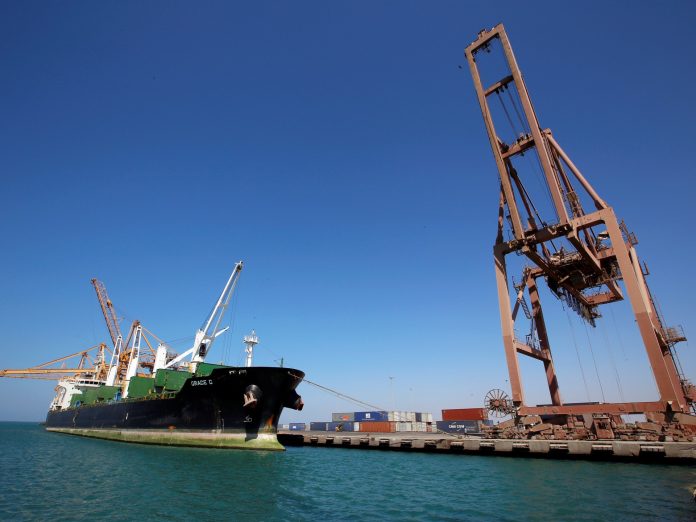
The Yemeni Navy conducted a missile strike against the vessel, which it identified as “commercial ship MSC United”, the forces said in a statement on Tuesday.

“The targeting of the ship came after the crew, for the third time, ignored calls from the naval forces, as well as repeated fiery warning messages,” the statement added.

The armed forces also reported striking the port of Eilat in the southernmost part of the occupied territories as well as “other areas in occupied Palestine”.

The attacks, the statement said, were carried out “in solidarity with the oppressed Palestinian people who continue to face killing, destruction, siege, and starvation.”

The Yemeni forces say they would stop targeting the vessels only if the Israeli regime ended its ongoing war on Gaza and siege of the Palestinian coastal sliver.

Nearly 21,000 people, most of them women and children, have been killed since the onset of the military campaign that the regime started to wage following an operation staged by Gaza’s resistance movements.

The Yemeni attacks have reportedly inflicted three billion dollars in damage on the Israeli economy by increasing the price of the goods that are imported to the occupied territories three times.

Several international shipping giants have cancelled sending their ships through the Bab al-Mandab Strait in the Red Sea since Yemen’s Armed Forces vowed to target the ships that could use the strait to reach the occupied territories.

Iran, Russia FMs talk peace in Caucasus, bilateral ties

Amirabdollahian and Lavrov

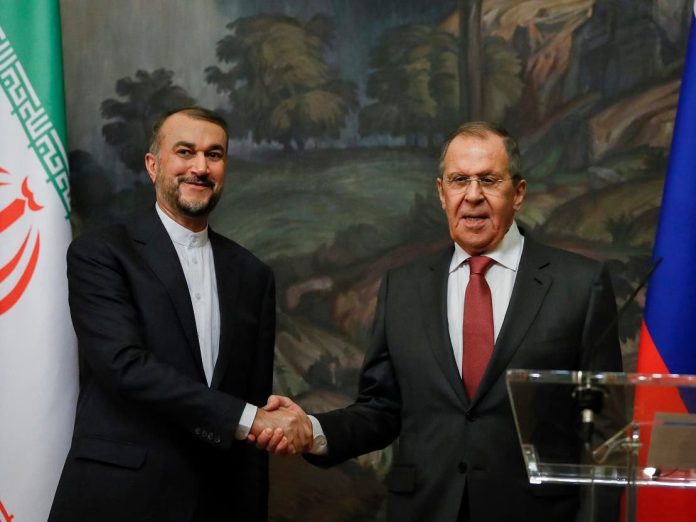
Foreign Minister Hossein Amirabdollahian of Iran and his Russian counterpart Sergey Lavrov have, in a telephone conversation, exchanged views on the developments in the South Caucasus, the latest status of bilateral cooperation and relations along with some regional and international questions.

Amirabdollahian referred to the current developments in the Caucasus, welcoming the process of negotiations between the Azerbaijan Republic and Armenia in order to achieve lasting peace.

He further highlighted the Islamic Republic of Iran’s backing for lasting peace and stability in the region.

Lavrov, for his part, congratulated the Islamic Republic of Iran on the conclusion of a free trade agreement with the Eurasian Economic Union, hailing it as a very important step toward the development of the Islamic Republic of Iran’s economic relations with Russia and other members of the union.

The top Russian diplomat reiterated that his country sincerely and unconditionally respects Iran’s territorial integrity, describing it as Moscow’s unchangeable stance.

At the close of their talk, the pair underscored the need to respect one another’s territorial sovereignty and

Amirabdollahian also had a telephone conversation with his counterpart from the Azerbaijan Republic Jeyhun Bayramov, during which he welcomed the headway made peace talks between the Azerbaijan Republic and Armenia. He touched upon his upcoming trip to Armenia, once again highlighting that Iran will continue its constructive efforts to help achieve lasting peace between Baku and Yerevan.

Bayramov, in turn, expressed his gratitude to the Islamic Republic of Iran for its constructive stances, and assessed the trend of negotiations between the Azerbaijan Republic and Armenia as positive.

He expressed hope a final peace deal will be signed between the two countries in the near future.

Israel seeking to ramp up military spending: Report

Israel Army

According to a Finance Ministry document presented to parliament, Israel’s overall 2024 budget will amount to 562 billion shekels ($155 billion), compared to 513 billion shekels in a previously approved spending plan.

Defense expenses will reportedly increase by at least 30 billion shekels next year. The estimates highlight the high price of war, which is costing Israel at least $269 million a day and is expected to hit the economy harder than previous conflicts, according to recent estimates by ratings agency Moody’s.

Along with the military spending, an additional 10 billion shekels will be needed to cover the evacuation of around 120,000 people from Israel’s northern and southern border areas, increased budgets for police and other security services, and the reconstruction of settlements destroyed during Hamas’ attack on October 7.

The financial cost of hostilities includes spending on hundreds of thousands of reservists, which Israel has mobilized for fighting Hamas and Hezbollah, the outlet said, citing the ministry.

Israel is “using huge numbers of costly missiles for its airstrikes in Gaza and to intercept rockets and drones fired into Israeli territory”, Bloomberg noted.

Meanwhile, government revenues are expected to slump by 35 billion shekels due to shrinking corporate and real estate taxes, as well as plummeting private consumption.

Without changes to taxation, the country’s fiscal deficit would swell to nearly 6% of gross domestic product, well above the 2.25% ceiling set by the government, the ministry’s document said.

Israeli lawmakers are planning to discuss possible fiscal changes and an increase in the deficit limit, which the Finance Ministry recommends should not exceed 4.5%-5% of GDP next year.