Tuesday, December 30, 2025
Home Blog Page 1049

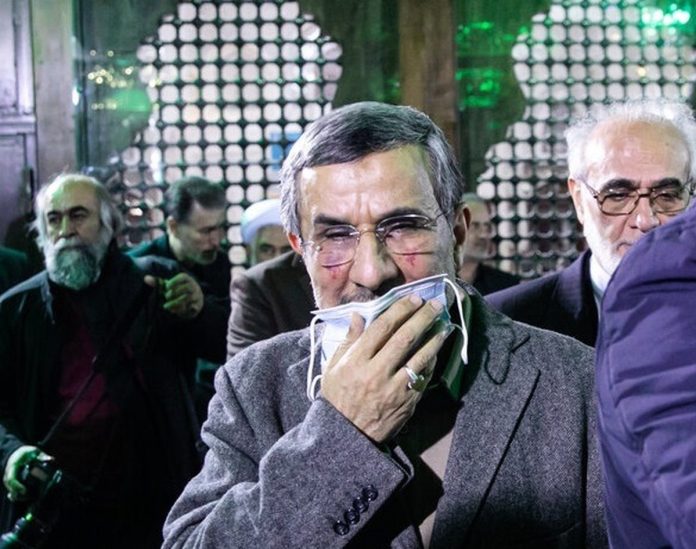
Source close to ex-president: Eyelid surgery cause of Ahmadinejad’s swollen face

Mahmoud Ahmadinejad

This raised questions about the cause of the swelling and pictures of the former president quickly ricocheted around social media.

But a source close to Ahmadinejad dismissed concerns over the matter, saying the former president underwent a surgical operation on his eyelids.

Many Iranians on social media platforms had speculated that the former president might have had a cheek botox operation.

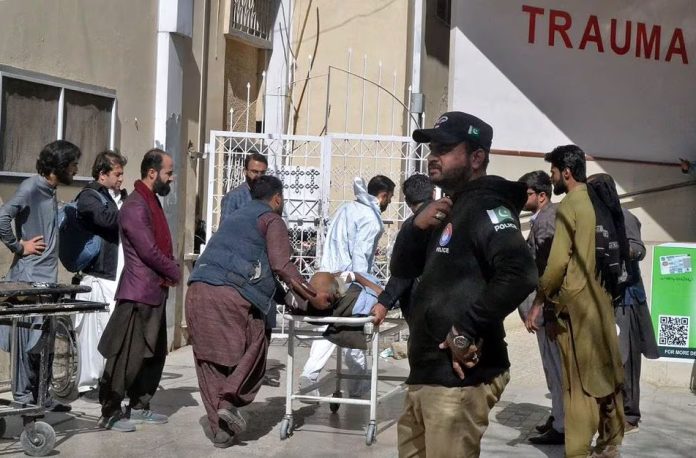
Explosions near Pakistan candidates’ offices kill several on election eve

Pakistan Bombing

Pakistan goes to the polls on Thursday amid rising militant attacks and the jailing of Imran Khan, the winner of the last national election, who has been dominating the headlines despite an economic crisis and other woes threatening the nuclear-armed country.

Authorities have said they are boosting security at polling booths.

The first attack, which killed 14 people, took place at the office of an independent election candidate in Pishin district.

The second explosion in Qilla Saifullah, near the Afghan border, detonated near an office of Jamiat Ulema Islam (JUI), a religious party that has previously been the target of militant attacks, according to the province’s information minister.

The deputy commissioner of Qilla Saifullah, Yasir Bazai, stated that 12 people were killed and 25 wounded by a device planted on motorcycle parked near the office.

It was not immediately clear who was behind the attacks. Several groups, including the militant Pakistani Taliban (TTP) and separatist groups from Balochistan, oppose the Pakistani state and have carried out attacks in recent months.

A TTP spokesman claimed an attack on Monday that killed 10 people at a police station in northwest Pakistan. The TTP has added it was targeting police and security officials rather than electoral candidates.

Pakistan’s foreign office said in a statement its western border crossings with Iran and Afghanistan would close and re-open on Friday to ensure security during the election.

Khanzai hospital, close to the site of the explosion in Pishin on Wednesday, put the death toll at 14 and stated more than two dozen were wounded.

The deputy commissioner of Pishin district, Jumma Dad Khan, added that the blast had wounded many people.

Iraqi PM: US-led military coalition will ultimately wind down its presence in the country

Iraqi Prime Minister Mohammed S. Al-Sudani

Speaking in an interview with the al-Arabiya television news network, Sudani stated that the Western alliance’s mission will end at the Baghdad government’s official request.

“The main purpose of winding down the US-led military coalition’s mission is to eliminate all possible pretexts for attacks on its advisors,” he said.

Sudani also censured the US military’s latest airstrikes against positions manned by anti-terror resistance groups in the western part of the country close to the border with Syria, asserting, “Any kind of military attack on the Iraqi territory is unacceptable”.

He added Iraq has not had any contact with the United States following the aerial assaults.

The Iraqi prime minister also noted that the withdrawal of US-led foreign forces from the semi-autonomous Kurdistan region is among the issues raised in the course of negotiations between Baghdad and Washington to remove the troops from the country.

“The Iraqi government has come up with a formula, under which the [resistance] groups will stop their [retaliatory] attacks in exchange for the cessation of American offensives,” Sudani explained.

Iraq adopted the law to expel foreign forces after Washington assassinated top Iraqi and Iranian anti-terror commanders four years ago.

General Qassem Soleimani, commander of the Quds Force of Iran’s Islamic Revolution Guards Corps (IRGC), and Abu Mahdi al-Muhandis, the second-in-command of Iraq’s Popular Mobilization Units (PMU), were martyred along with their comrades in a US drone strike that was authorized by then-president Donald Trump near Baghdad International Airport on January 3, 2020.

Meanwhile, Iraqi Foreign Minister Fuad Hussein stressed the need to return to the negotiating table over the future of US-led forces in Iraq.

Hussein, in a phone call with US Secretary of State Antony Blinken on Tuesday, stressed the Iraqi government’s rejection of the latest US airstrikes and such attacks.

He said that “Iraq is not an arena for settling scores between rival countries.”

Hussein also formally demanded the US Treasury Department reconsider the sanctions it had imposed on several Iraqi banks, raising doubts about whether those sanctions were put in place over compliance issues or “other political reasons”.

US Central Command (CENTCOM) announced in a statement on Friday that its military forces struck more than 85 targets in Iraq and Syria “with numerous aircraft to include long-range bombers flown from the United States.”

“The air strikes employed more than 125 precision munitions,” it added in a statement.

US President Joe Biden stated that the strikes were the first in a series of actions by Washington in response to a drone attack that killed a number of soldiers at a remote US base in Jordan.

“Our response began today,” Biden said.

“It will continue at times and places of our choosing,” he added.

Three US soldiers were killed and about 40 others injured in the assault on the military base known as Tower 22 near the Jordan-Syria border on Sunday.

The Islamic Resistance in Iraq, an umbrella group of anti-terror fighters, in a statement published on its Telegram channel claimed responsibility for the drone strike.

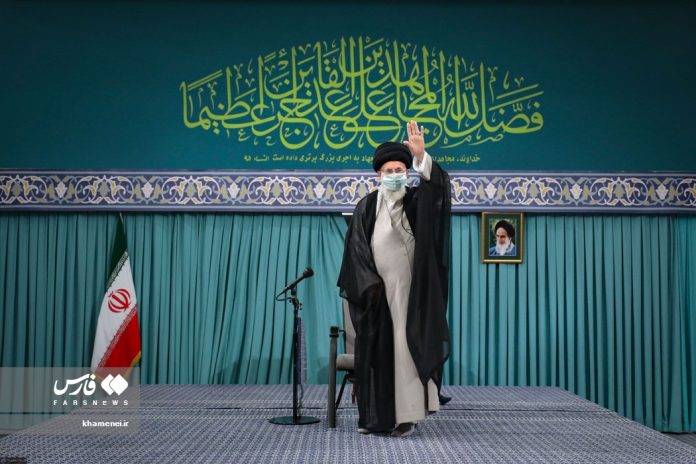
Iran Leader grants clemency to more than 2,800 inmates

Ayatollah Khamenei

Ayatollah Khamenei agreed on Wednesday to pardon or commute the sentences of the Iranian convicts upon a proposal from Judiciary Chief Gholam Hossein Mohseni Ejei who had requested the Leader’s clemency for prisoners with specific conditions.

The amnesty was granted in honor of the 45th anniversary of the victory of the Islamic Revolution, which toppled the Pahvali dynasty on February 11, 1979, and also in honor of the anniversary of Eid al-Mab’ath, the day on which Prophet Muhammad (PBUH) was appointed to prophethood.

Article 110 of the Constitution grants the Leader the right to pardon or reduce the sentences of convicts upon a recommendation from the head of the Judiciary.

The clemency, however, does not apply to certain types of convicts, including those who have been sentenced for their role in the armed smuggling of narcotics, arms trafficking, kidnapping, acid attacks, rape, armed robbery, bribery, embezzlement, counterfeit money forgery, money laundering, disruption of economy, smuggling of alcoholic drinks, and organized smuggling of commodities.

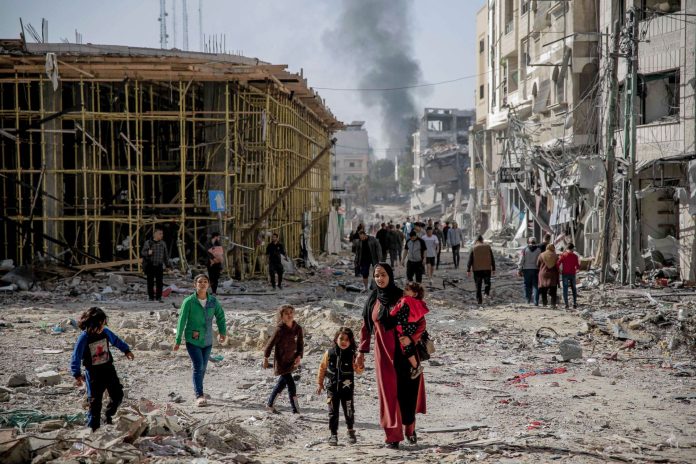
Hamas outlines three-phase ceasefire for Gaza Strip: Report

Gaza War

The first stage of the plan involves negotiating a ceasefire with Israel through mediators. It also provides for the reconstruction of hospitals and refugee camps in the Gaza Strip, as well as the withdrawal of Israeli troops from populated areas of the enclave.

In addition, an exchange of prisoners for Palestinian prisoners in Israel, as well as the delivery of humanitarian aid should take place within 45 days.

The second stage involves the exchange of all Israeli male captives for an unspecified number of Palestinian prisoners and the complete withdrawal of Israeli troops from the Gaza Strip.

As part of the last stage, the sides should exchange the remains of the victims.

The war began after the Oct. 7 cross-border offensive by Hamas, in which some 1,200 people were killed, and around 250 taken as hostages. About half of the hostages were released during a weeklong November cease-fire in exchange for 240 Palestinian prisoners.

Israel’s attacks since then have killed more than 27,000 Palestinians, and about 85% of Gaza’s population of 2.3 million has been displaced, according to the UN.

On November 24, Qatar mediated a deal between Israel and Hamas on a temporary truce and the exchange of some of the prisoners and hostages, as well as the delivery of humanitarian aid into the Gaza Strip. The ceasefire was extended several times and expired on December 1. More than 100 hostages are still believed to be held by Hamas in Gaza.

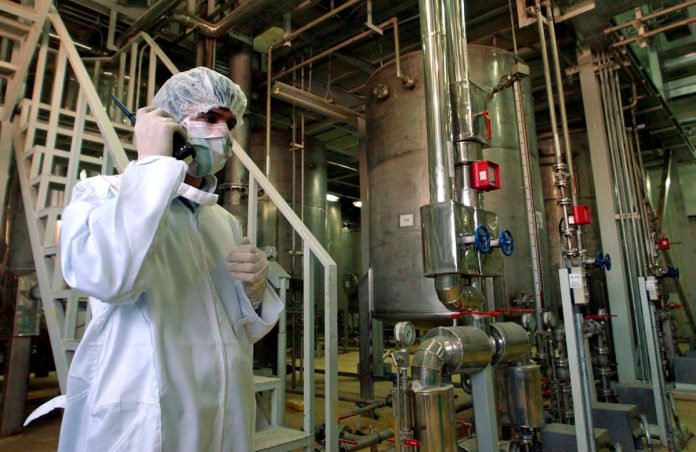
Iran says interactions with IAEA underway ahead of the Agency chief’s upcoming visit to Tehran

Iran Nuclear Program

“Interactions with the IAEA are underway,” Mohammad Eslami told reporters on Wednesday.

“Coordination with the agency is on track, and we hope the same trend will continue, so that we will be able to counter the propaganda campaign launched by enemies against our nuclear industry and not allow them to disrupt the process any further,” he said.

Elsewhere in his remarks, Eslami said Iran has broken the monopoly on the development of a type of spectrometer essential to nuclear activities.

“The production of this apparatus had been monopolized by three countries: The United States, Britain and Germany,” he explained.

“Our scientists conducted an arduous research project and developed this apparatus, which is one of the strategic devices in the nuclear industry,” he said.

Eslami made the comments ahead of a visit to Iran by IAEA Director General Rafael Grossi.

Iranian VP says Iran manufactured world’s largest ozone reactor used in drinking water treatment

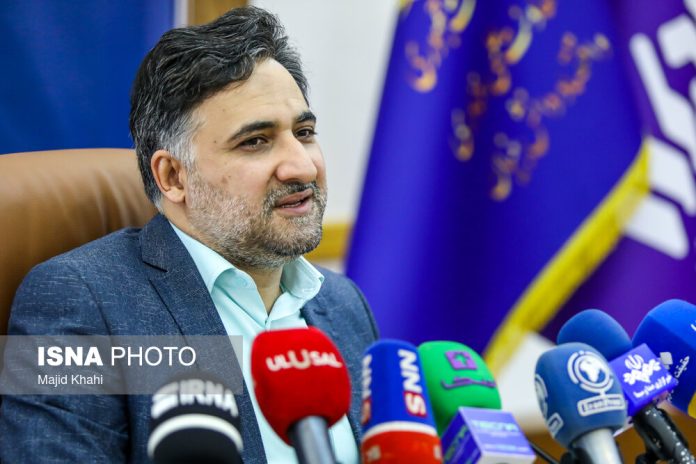
Rouhollah Dehghani Firouz Abadi

Dehqani Firouzabadi said local experts have succeeded to build the high-tech homegrown device, which would provide services for 320,000 people.

The term ozone reactor is actually a collective name for all the products that are used to mix ozone, which can remove taste and odor problems, into water.

Ozone water treatment begins with the creation of ozone in an ozone generator. Then, ozone is injected into water, and immediately starts oxidizing and eliminating contaminants, such as bacteria, viruses, and metals.

Since the ozone nanobubbles have a large surface area, the ozone gas is more efficiently dissolved in liquids and improves effectiveness in applications such as water treatment and disinfection.

Iran faces a race against time to tackle its serious water shortage challenge as water depletion in the country is one of the highest in the world, with studies expecting a 25 percent decline in surface water runoff by 2030.

The Iranian authorities have been toiling away at various projects to resolve the crisis, including projects that economize on water consumption in the industrial field and state-of-the-art seawater desalination plans.

In August 2023, a report found out that Iran had launched 12 new water treatment facilities and 24 wastewater treatment plants over the two years to the end of July 2023.

The number of desalination plants in Iran had increased by 6 units with a capacity of 54,000 cubic meters per day over the past two years, it said, adding that wastewater recycling capacity in the country had risen by 324 million cubic meters per year over the same period.

UN envoy in Iraq to resign within weeks, says country ‘on a knife edge’

UN envoy in Iraq

The former Dutch defence minister was appointed by UN Secretary-General Antonio Guterres in late 2018. The UN Assistance Mission for Iraq aims to advance inclusive political dialogue and helps coordinate humanitarian and development aid.

“For Iraq to further continue on its path of stability and progress, an enabling environment will prove essential. And, such an environment requires restraint from all sides,” Hennis-Plasschaert told the 15-member Security Council on Tuesday.

Iran-aligned groups, known collectively as the “Axis of Resistance”, have been waging attacks against Israeli and US targets from Lebanon, Yemen, Iraq and Syria, since Israel began its war in Gaza following the Hamas attack on October 7.

Washington responded with attacks in a cycle of escalating violence that Iraqi officials said threatened to undo progress towards stabilising the country after decades of conflict.

“While we are, of course, aware that many authorities and actors seek to limit further escalation, it is clear that the situation remains volatile. Iraq – indeed, the wider region – remain on a knife-edge, with the tiniest miscalculation threatening a major conflagration,” Hennis-Plasschaert stated.

There was an “urgent need to cease attacks, be they originating from within or outside” of Iraq, she continued, adding, “And, as stated many times in past years, this must include reining in armed actors operating outside state control.”

Security Council permanent members Russia and China have criticsed the US for its recent air raids on targets in Iraq and Syria. The two countries accused Washington of raising the risk of regional escalation at a meeting of the Security Council late on Monday.

The United States invaded Iraq and toppled leader Saddam Hussein in 2003, precipitating years of rebellion and fighting among Iraq’s ethnic and religious groups.

It withdrew its troops in 2011, but sent thousands back after Daesh’s surge into the country three years later.

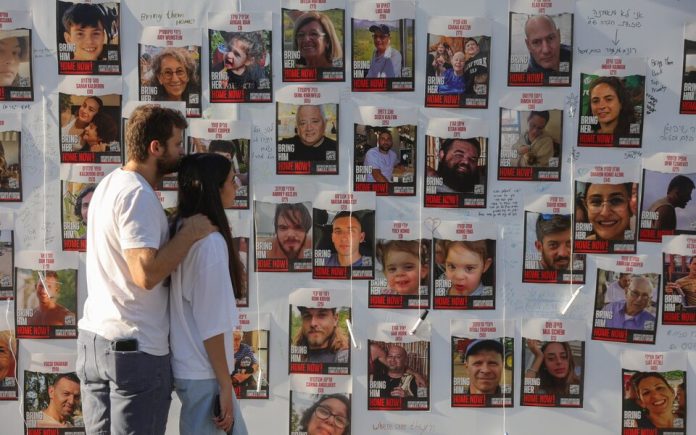
20% of Israeli captives in Gaza ‘are dead’: Report

Israel Hostages

At least 32 of 136 captives in the besieged enclave have died since the war began on 7 October, the report stated, citing a confidential internal assessment by Israeli intelligence officers.

The families of the 32 confirmed dead Israeli captives have been informed, according to several military sources who spoke to the newspaper.

Officers are also reviewing unconfirmed intelligence reports that 20 others may also have been killed.

Around half of 240 captives taken on 7 October were released as part of a prisoner exchange deal in November.

Several families of remaining captives have protested against Israel’s war on Gaza, claiming that it has put the lives of their loved ones in danger.

The issue of how far Israel should go to ensure the safe release of hostages remains a divisive one in Israel.

Many hardliners believe that the war should go on irrespective of what happens to those captured, while families of those being held in Gaza argue that the Benjamin Netanyahu government should agree to a full prisoner exchange with Palestinian groups.

This would involve the release of all Palestinians being held by Israel and all Israeli hostages being held by Hamas and other groups.

Additionally, Palestinian groups want a permanent ceasefire to follow any release of the hostages and the withdrawal of Israeli forces from Gaza.

Meanwhile, Netanyahu has insisted that Israeli military operations will not stop until Hamas is eliminated – a goal military observers say it is still far from achieving.

Negotiations, with Qatar and Egypt acting as mediators, have been taking place to end the impasse although no concrete agreement has been made.

In December, Israeli soldiers shot and killed three Israeli captives in Gaza who at the time were shirtless and held white flags, an initial probe by the military found.

Saudi Arabia pours cold water on claims of normalizing ties with Israel without Gaza ceasefire

Gaza War

“The kingdom has communicated its firm position to the US administration that there will be no diplomatic relations with Israel unless an independent Palestinian state is recognized on the 1967 borders with East Jerusalem as its capital, and that the Israeli aggression on the Gaza Strip stops and all Israeli occupation forces withdraw from the Gaza Strip,” the foreign ministry said in a statement issued early on Wednesday.

“The kingdom has communicated its firm position to the US administration that there will be no diplomatic relations with Israel unless an independent Palestinian state is recognized on the 1967 borders with East Jerusalem as its capital, and that the Israeli aggression on the Gaza Strip stops and all Israeli occupation forces withdraw from the Gaza Strip,” it added.

The statement came hours after US National Security Council spokesman John Kirby stated the Joe Biden administration had received positive feedback that Riyadh and Israel were willing to continue discussions around normalisation.

The idea of Israel and Saudi Arabia formally cementing ties has been under discussion since the Saudis gave their quiet assent to Persian Gulf neighbours United Arab Emirates and Bahrain establishing ties with Israel in 2020.

Several Saudi officials, including powerful Crown Prince Mohammed bin Salman, have publicly acknowledged their willingness to normalise relations with Israel, even after Israel went to war on Gaza after the 7 October attacks, but they’ve stressed that no deal can be reached until there is a ceasefire in Gaza and that it must include the creation of an irreversible pathway toward a Palestinian state.

While Prime Minister Benjamin Netanyahu has all but rejected a two-state solution and a large percentage of Israelis would oppose a framework based on the pre-1967 lines, the Saudi statement notably refrains from specifically demanding that Israel be the one to recognise an independent Palestinian state, instead placing the onus on members of the UN Security Council.

“The kingdom reiterates its call to the permanent members of the UN Security Council that have not yet recognized the Palestinian state, to expedite the recognition of the Palestinian state on the 1967 borders, with East Jerusalem as its capital, so that the Palestinian people can obtain their legitimate rights and so that a comprehensive and just peace is achieved for all,” the statement read.

In late December, a poll conducted by the Washington Institute for Near Eastern Affairs, a pro-Israel think tank based in Washington, found that a staggering 96 percent of Saudis believed that Arab countries should cut ties with Israel in response to the war on Gaza.

While the kingdom has a monarchial system, public opinion plays a factor in the decision-making of Arab leaders, according to analysts.