Tuesday, December 30, 2025
Home Blog Page 1048

UN chief warns world facing ‘age of chaos’, citing Gaza war

Gaza War

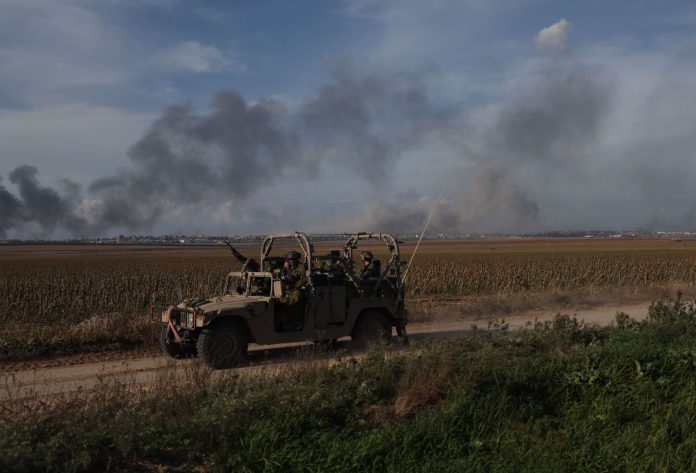
Guterres said he was “especially alarmed” after Israel announced last week that it intends to focus its military assault in Gaza on the southern city of Rafah, where more than a million people have sought shelter.

“Such an action would exponentially increase what is already a humanitarian nightmare with untold regional consequences,” he told the UN General Assembly on Wednesday.

“It is time for an immediate humanitarian ceasefire and the unconditional release of all hostages,” he added.

Israeli forces launched a devastating assault on Gaza with the aim to “destroy” Hamas in response to the Palestinian group’s attack on southern Israel on October 7. At least 1,139 people were killed in the Hamas attack.

Israel has since bombarded the territory relentlessly and launched a ground invasion, leaving much of Gaza in ruins. At least 27,700 people have been killed in the Israeli assault, according to Palestinian authorities in Gaza, and more than 80 percent of the population has been displaced.

In his address on Wednesday, Guterres also called for reforms to the Security Council, which has been unable to agree on a joint position on the war in Gaza despite calls from multiple UN agencies for an urgent ceasefire.

“The United Nations Security Council – the primary platform for questions of global peace – is deadlocked by geopolitical fissures,” he stressed.

“This is not the first time the Council has been divided – but it is the worst. Today’s dysfunction is deeper and more dangerous.”

Guterres added that unlike during the Cold War, when “well-established mechanisms helped manage superpower relations”, those mechanisms are gone “in today’s multipolar world”.

“Our world is entering an age of chaos … a dangerous and unpredictable free-for-all with total impunity,” he warned.

The UN chief urged world leaders to seize the “Summit of the Future” opportunity, which will be held in September in New York on the sidelines of the annual General Assembly, to “shape multilateralism for years to come”.

He also mentioned that as conflict grows worldwide and humanitarian needs are “at an all-time high,” funding was not “keeping pace”.
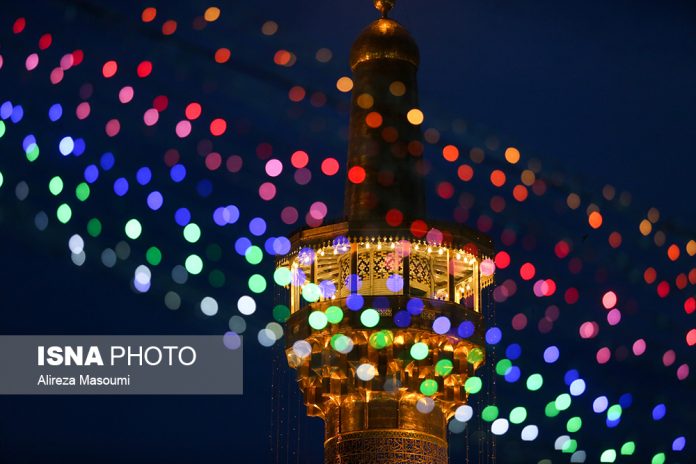
Iranians alongside Muslims worldwide celebrating Eid al-Mab’ath

Iran Celebration

The occasion, which falls on the 27th day of the lunar month of Rajab, is a national holiday in Iran, where people hold celebrations and distribute sweets and drinks on the streets.

In 610, when Prophet Muhammad was 40,  Angel Gabriel descended on him and, upon God’s order, declared his prophethood and tasked him with delivering the message of peace to humanity and declared His Oneness to the world.

Prophet Muhammad was sent to confirm monotheism as preached by the earlier divine prophets.

Netanyahu rejects Hamas ceasefire proposal, vows ‘total victory’

Benjamin Netanyahu

The Hamas-authored document proposes a three-stage, 135-day ceasefire during which Israeli hostages would be swapped for Palestinian prisoners, reconstruction work would begin in Gaza, and talks aimed at a permanent truce would be held while Israeli troops withdraw from the strip.

The text of the plan was leaked to Reuters on Tuesday, and rejected by Netanyahu a day later.

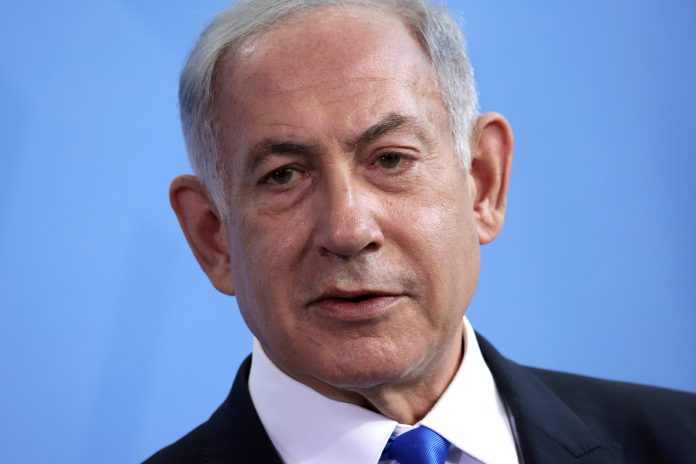
“Surrender to Hamas’s delusional demands, that we’ve just heard, not only would not bring about the freedom of the hostages, it would only invite an additional slaughter; it would invite disaster for Israel that no Israeli citizens want,” Netanyahu said at a press conference on Wednesday.

Crucially, Hamas’ proposal would leave the group in place as Gaza’s governing authority, while an earlier proposal put forward by Qatari and Egyptian negotiators made no mention of who would govern the enclave after the conflict.

Netanyahu insisted that “the day after” in Gaza “is the day after Hamas”. The Israeli premier added that Israel would “ensure that Gaza is demilitarized forever”, and “will act in Gaza wherever and whenever it needs to, to ensure that terror does not again raise its head”.

“We are on the way to total victory,” Netanyahu claimed, adding that “victory is achievable; it’s not a matter of years or decades, it’s a matter of months”.

Netanyahu’s insistence on “total victory” has strained relations between Tel Aviv and Washington, as has his rejection of a two-state solution to the decades-long conflict with the Palestinians.

While the US has not endorsed any particular ceasefire proposal, Secretary of State Antony Blinken met with both Netanyahu and Palestinian Authority President Mahmoud Abbas on Wednesday, telling the Israeli leader that the US views “the establishment of a Palestinian state as the best way to ensure lasting peace and security” in the region, according to a State Department readout.

Israeli forces have been waging war against Hamas for more than 120 days and according to Netanyahu, have made “unprecedented” gains against the fighters. However, while the prime minister claimed that Israeli forces have killed 20,000 Hamas fighters, the Gaza Health Ministry states that around two thirds of the 27,000 people killed in the enclave have been women and children. As of late last month, US intelligence officials believed that Israel had killed as few as 5,000 militants, according to the Wall Street Journal.

The Israeli PM denied reports that Hamas was reestablishing itself in northern Gaza, but told reporters on Wednesday that fully eliminating the group was “a process that takes time”.

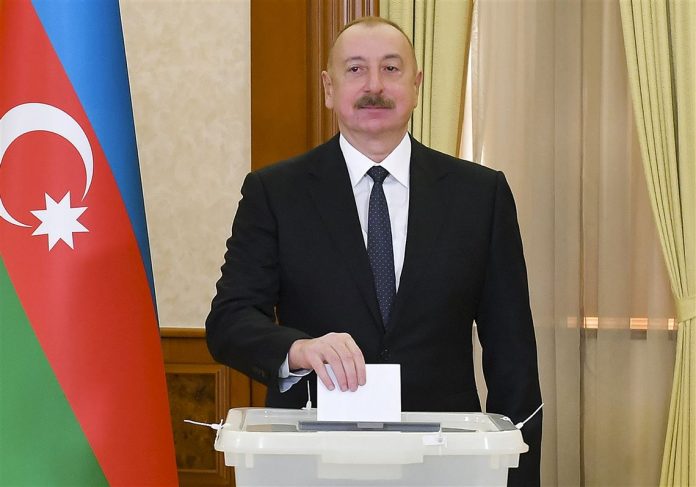
Aliyev re-elected as Azerbaijan’s president for a fifth consecutive term

Ilham Aliyev

Tallies showed that Aliyev won the election with 92 percent of the vote after nearly all electoral precincts declared results, in a ballot held during a crackdown on independent media and in the absence of any real opposition.

“The Azerbaijani people have elected Ilham Aliyev as the country’s president,” Central Election Commission chief Mazahir Panahov told a press conference.

Turnout was 67.7 percent, he added.

Aliyev was heralded at home after his troops recaptured in September the breakaway Nagorno-Karabakh region from Armenian separatists who had controlled it for decades.

But the oil-rich nation’s main opposition parties boycotted the vote, which one opposition leader, Ali Kerimli of the Popular Front party, called an “imitation of democracy”.

“There are no conditions in the country for the conduct of free and fair elections,” he stated.

The six other candidates who were running were little-known and had praised Aliyev as a great statesman and commander-in-chief since he announced the election in December, a year ahead of schedule.

Singing patriotic songs, several thousand Aliyev supporters gathered on Wednesday evening in the streets of central Baku to celebrate his re-election.

Some demonstrators held signs that read “Karabakh’s liberator” and “We are proud of you!”

The president and first lady Mehriban Aliyeva went to Karabakh on Wednesday to cast their ballots in the region’s main city of Khankendi.

For the first time in Azerbaijan’s post-Soviet history, 26 polling stations opened in Karabakh.

The enclave has been largely deserted after its entire ethnic-Armenian population — more than 100,000 people — fled to Armenia after Baku’s takeover.

Last month, Aliyev called the Karabakh victory “an epochal event unparallelled in Azerbaijan’s history”.

“The election will mark the beginning of a new era,” he said, with the country holding the presidential vote on all its territory for the first time.

Supporters have praised Aliyev for turning a country once thought of as a Soviet backwater into a flourishing energy supplier to Europe.

But critics say he has crushed opposition groups and suffocated independent media.

In recent months, Azerbaijani authorities have intensified pressure on independent media outlets, arresting several critical journalists who had exposed high-level graft.

Aliyev, 62, was first elected president in 2003 after the death of his father, Heydar Aliyev, a former KGB officer who had ruled Azerbaijan since 1993.

He was re-elected in 2008, 2013 and in 2018, with 86 percent of the votes.

All the elections were denounced by opposition parties as rigged.

In 2009, Aliyev amended the country’s constitution so he could run for an unlimited number of presidential terms, a move criticised by rights advocates who said he could become president for life.

In 2016, Azerbaijan adopted controversial constitutional amendments that extended the president’s term in office to seven years from five.

He then appointed his wife as first vice president.

Around six million voters were registered for the election, which was being monitored by observers from the Organisation for Security and Cooperation in Europe (OSCE).

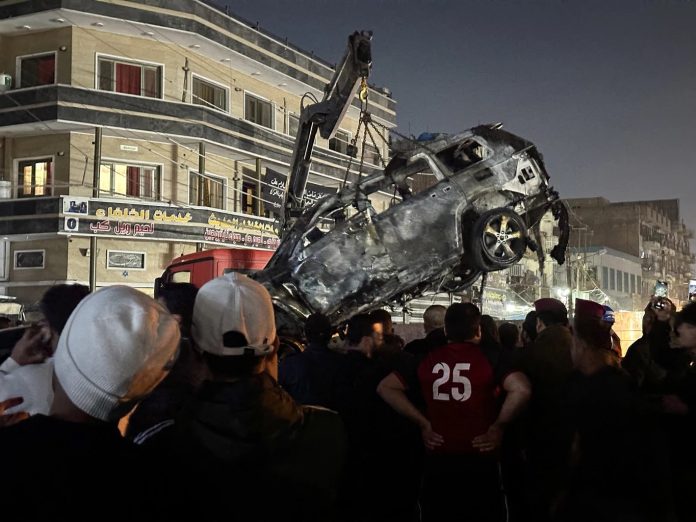
US drone attack kills Iraq-based militia leaders: CENTCOM

US Attack Iraq

A car in which the trio was traveling was struck in the Mashtal neighborhood of Baghdad, at around 9:30pm local time.

Photos and videos circulating on social media showed the remnants of what seems to have been a Hellfire missile, commonly used by US attack drones.

Two of the dead have since been identified as Haj Arkhan Al-Alawi and Wissam Mohammed ‘Abu Bakr’ al-Saadi, who was in charge of Kataib Hezbollah’s operations in Syria.

In a statement posted on X, (formetly Twitter), CENTCOM said it had carried out “a unilateral strike in Iraq in response to the attacks on US service members, killing a Kataib Hezbollah commander responsible for directly planning and participating in attacks on US forces in the region”.

The US has blamed Kataib Hezbollah for last month’s attack that killed three US soldiers at a base on the Syria-Jordan-Iraq border. Following a series of retaliatory US airstrikes, the group announced it would “suspend” attacks.

Local media in Baghdad have reported that crowds of protesters gathered at the strike site chanting slogans branding the US “Greater Satan”.

Al-Saadi is the most senior Kataib Hezbollah member to have been killed in Iraq since the January 2020 drone strike that killed Abu Mahdi al-Muhandis and Iranian General Qassem Soleimani. Tehran had responded to that assassination by bombarding US bases with ballistic missiles.

Armed groups have attacked US bases in the region with rockets and drones at least 160 times since last October, following Israel’s declaration of war on Hamas in the aftermath of the militant group’s deadly raids from Gaza.

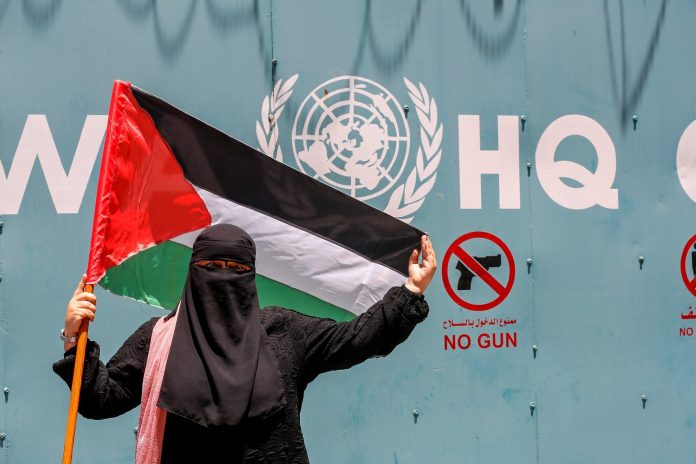
US lawmakers urge White House to demand resignation of UN secretary general, UNRWA chief

UNRWA

In a letter to Blinken sent Wednesday, the lawmakers called for the resignation of Secretary-General António Guterres and UNRWA Commissioner-General Philippe Lazzarini.

The lawmakers also raised concerns over reports of Israeli intelligence assessments that 10 percent of UNRWA’s 13,000 staff in Gaza — the majority of whom are locally employed — have ties to Hamas.

“They can no longer be entrusted to maintain international peace and security, protect all nations, and uphold international law,” the lawmakers wrote.

“We have lost all confidence in Secretary-General António Guterres’ ability to ensure that the U.N. is not actively supporting terrorism or giving refuge to known terrorists.”

The signatories include Reps. Josh Gottheimer (D-N.J.), Don Bacon (R-Neb.), Anthony D’Esposito (R-N.Y.), Don Davis (D-N.C.), Brian Mast (R-Fla.), Max Miller (R-Ohio), Jared Moskowitz (D-Fla.), Brad Schneider (D-Ill.), Michelle Steel (R-Calif.), Haley Stevens (D-Mich.), Claudia Tenney (R-N.Y.), and Ritchie Torres (D-N.Y.).

The Joe Biden administration paused funding for UNRWA in the wake of the organization saying it was launching an investigation into the accusations.

Nearly a dozen other countries have also paused funding for the agency, triggering dire warnings that UNRWA — which also serves Palestinian refugee populations across Lebanon, Syria, Jordan and the West Bank — will run out of funds for operations by March 1.

Sen. Bernie Sanders (I-Vt.) is among the members of Congress who have decried the pause in US funding for UNRWA, arguing it could worsen a humanitarian crisis and that the people of Gaza should not be punished for allegations against a small number of the organization’s employees.

But UNRWA has long been a lightning rod for controversy among Israel’s supporters, who criticize the aid agency’s work in the Gaza Strip as, at least, operating under the influence of Hamas, the de-facto authorities of the territory.

UNRWA stressed it maintains a strict policy of “neutrality”, but acknowledges challenging circumstances in Gaza because of Hamas’s rule. The United Nations has launched an independent review of how the agency ensures its policy of “neutrality” and what processes are in place to respond to instances of policy violations.

While Republicans are united in opposition to UNRWA’s continued operations, some Democrats have called for resuming funding to the aid organization as Israel’s war in Gaza against Hamas goes into its fifth month.

They say the aid organization is best placed to respond to immediate needs to help provide shelter, food, water and medicine to the nearly 2 million people in need.

Israeli soldiers filmed ‘cheering Gaza destruction’: Report

Israeli Army

The Times said it has reviewed “hundreds” of videos, including more than 50 clips of Israel’s engineering troops using bulldozers, excavators and explosives to destroy homes, schools and other civilian structures. Some footage reportedly shows soldiers “vandalizing local shops and school classrooms” and “making derogatory comments about Palestinians”.

In one video posted to TikTok, a soldier is seen giving a thumbs-up while driving a bulldozer in northern Gaza. The caption accompanying the clip reportedly said, “I stopped counting how many neighborhoods I’ve erased.”

Another clip shows an IDF soldier declaring that Gaza’s Shujaiyya neighborhood was “gone” as his camera passed over rubble in the distance. The man is also heard saying “Nahal Oz, with God’s help you will have this”, apparently dedicating the destruction to an Israeli kibbutz nearby. Some soldiers shared videos of themselves dancing with destroyed buildings in the background, while others posted memes and music videos that featured the demolition of homes and other structures in Gaza.

The Shujaiyya video and other footage filmed by IDF troops was cited in South Africa’s ongoing genocide case against Israel before the International Court of Justice (ICJ), which accuses Tel Aviv of violating the Genocide Convention. In its 85-page legal filing, Pretoria described the clips as “a form of ‘snuff’ video” and “genocidal speech,” noting that soldiers are heard celebrating the demolition of over 50 Gazan homes in one clip, as well as singing the words “We will destroy all of Khan Younis”.

Some of the videos appear to run afoul of IDF regulations governing social media posts by personnel, which expressly prohibit behavior that “harms human dignity” or that could impact the “image of the IDF and its perceptions in the eyes of the public”.

Israel’s military has condemned the footage in a written statement to the Times, saying it was investigating the “circumstances” of the videos while noting they were not in line with army orders.

”The conduct of the force that emerges from the footage is deplorable,” the IDF added.

The devastation to residential areas seen in the videos is reflected in United Nations statistics on the war, with the agency estimating that over 60% of all housing units in Gaza had been destroyed or damaged in Israeli operations. That amounts to around 300,000 houses and apartments, while some 85% of the enclave’s 2.2 million residents have been forced to flee their homes.

The IDF launched its military operation following a Hamas attack last October which claimed some 1,200 lives in Israel, and saw more than 250 people taken hostage by Palestinian fighters. To date, over 27,000 Gazans have been killed in the Israeli response, with thousands more wounded or thought to be trapped under rubble, according to local health officials.

US Senate blocks foreign aid, immigration reform bill

US Capitol

Senators blocked a motion to invoke cloture on a motion to proceed to the legislative vehicle for the bill in a vote of 49-50, with 60 votes required to pass. US Senate Majority Leader Chuck Schumer voted against the bill in a procedural move to allow for reconsideration of the bill.

On Sunday, Senate negotiators released a bill text for the $118 billion supplemental funding legislation, following months of bipartisan talks on the matter. The Joe Biden administration initially requested supplemental funding from the US Congress in October.

The Senate is now set to consider a revised version of the legislation, which includes Ukraine and Israel aid but not immigration reforms. The revised bill provides $95.34 billion in funding, including more than $60 billion for Ukraine and $14 billion for Israel.

However, US Senator Mike Lee stated on Wednesday that Republican members of Congress should oppose further Ukraine aid unless it is attached to border security measures.

“We shouldn’t send more [money] to Ukraine. But if Congress is bent on doing that, Republicans shouldn’t support it without HR2 and language conditioning any Ukraine funds on the achievement of border-security benchmarks,” Lee said in a statement via social media platform X.

US Senator J.D. Vance added that the “Ukraine first” package gives away all leverage to achieve border security. Vance also criticized Senate leadership for not granting lawmakers more time to review the legislation.

Ex-US Secretary of Defense secretly involved in Yemen war: Report

James Mattis

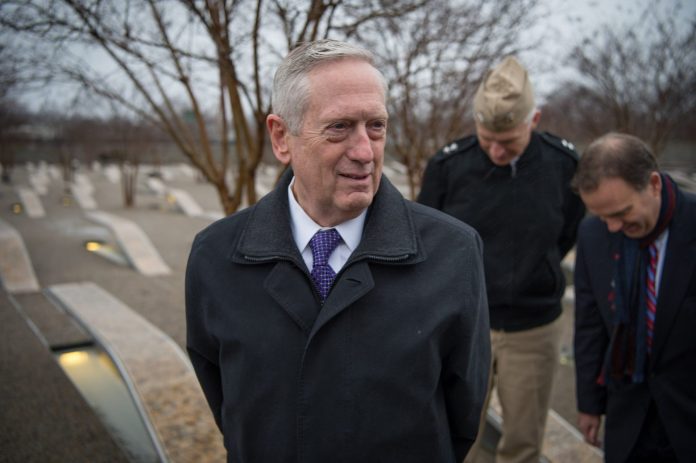
The Post looked into Mattis as part of an investigation into the Persian Gulf state hiring retired US military officers and obtained previously undisclosed documents through a Freedom of Information Act (FOIA) lawsuit.

Sheikh Mohamed bin Zayed al-Nahyan, the crown prince of Abu Dhabi at the time, had struck up a friendship with Mattis in 2011, when the Marine general was head of the US Central Command. When Saudi Arabia launched its campaign against the Houthis in Yemen, Mohamed reached out to Mattis, who had recently retired from the US military.

In June 2015, Mattis applied for permission from the State Department and the Marines to advise the UAE on “the operational, tactical, informational and ethical aspects” of the campaign against Yemen.

“I will be compensated,” he wrote by hand on the form submitted to the US Marine Corps on June 4, 2015, with the amount to be determined after US government approval.

Robert Tyrer, a senior executive at the Cohen Group – which currently employs Mattis – told the WaPo that Mattis never accepted money from foreign governments, except the standard travel expenses. According to Tyrer, Mattis put in the compensation claim so his paperwork would receive “the most rigorous level of review”.

Documents reviewed by the Washington Post show that his application was approved by the USMC after just 15 days, while the State Department gave its blessing on August 5. The process that usually takes “several months, and sometimes years”, lasted just two months, the outlet added. By contrast, the US government took two and a half years to disclose the general’s paperwork to the Post.

In 2017, when Mattis was nominated by then-President Donald Trump to head the Pentagon, he did not publicly reveal his UAE consulting job in his work history and financial disclosure forms. He did not mention it in his 2019 memoir, either. Several Democrats on the Senate Armed Services Committee told the Post they did not recall the disclosure coming up during his confirmation hearings, though a committee staffer said it was included in a confidential memo.

In his application, Mattis stated he wanted to “bring American military experience in warfighting and campaigning to bear in terms of strengthening UAE’s efforts”. The Saudi-led coalition spent almost eight years trying to beat the Houthis – with intelligence and aerial refueling support from the US – before admitting defeat and suing for peace.

Qatar defeats Iran to reach Asian Cup final

Iran Football Team

In an end-to-end game, Almoez Ali grabbed the winner for Qatar in the 82nd minute while Iran lost Shojae Khalilzadeh to a late red card in stoppage time as Iran coach Amir Ghalenoei lost for the first time since he took charge last year.

Iran wasted no time in getting on the board when Qatar failed to deal with a long throw-in and Sardar Azmoun scored with an overhead kick to give Ghalenoei’s side a third-minute lead.

Iran constantly got in behind Qatar’s defence but it was the hosts who equalised against the run of play when Jassem Gaber’s shot from range took a deflection and looped over goalkeeper Alireza Beiranvand into the net.

Qatar’s Akram Afif nearly made it 2-1 when the ball fell to him and he raced away with Iran’s defenders giving chase but his shot was well saved while his effort from the rebound went over the bar.

But Afif got his fifth goal of the tournament on the stroke of halftime when he waltzed into the box from the left channel and pulled the trigger to beat Beiranvand with a shot that arrowed past his outstretched hand into the top corner.

However, Iran came out with renewed vigour for the second half and won a penalty for a handball after a VAR check when Saeid Ezatolahi shot straight at Ahmed Fathy, who was trying to protect his face and turn away.

Having scored a late winner from the spot against Japan in the quarter-final, Alireza Jahanbakhsh stepped up once again and fired his spot kick straight down the middle to make it 2-2.

Iran had their chances to score a third through some chaotic moments in the box but it was Qatar who took the lead again when Ali controlled a pass, turned and fired into the bottom corner.

With 13 minutes added on for stoppages, Iran were then reduced to 10 men when Khalilzadeh barged into Afif during a counter-attack, with the referee upgrading his yellow card after a VAR check.

Jahanbakhsh nearly equalised right at the death but saw his shot come off the post as Qatar managed to hold on and advance to the final.