Monday, December 29, 2025
Home Blog Page 1042

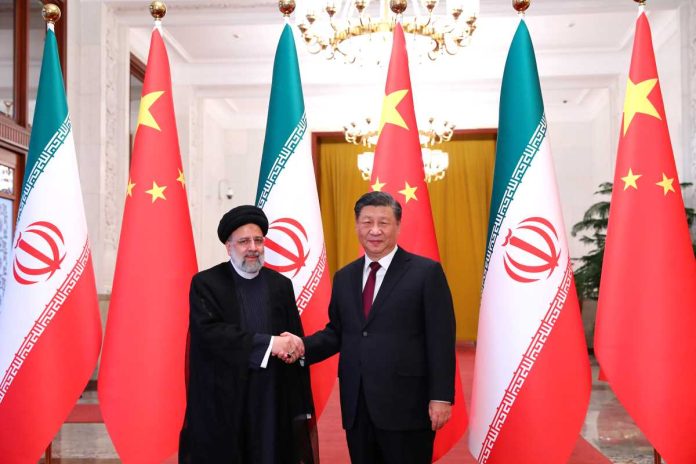
Iran president wishes for further development of bilateral relations in New Year message to China

Raisi and Xi

Raisi’s message was issued through a late Sunday post on X social media platform.

“I sincerely congratulate the People’s Republic of China on the occasion of the New Year and Lunar New Year and wish Iran and China, as two ancient civilizations, would be full of vitality in the New Year at all levels, especially for the development of bilateral relations.”

The Iranian president also hoped that “with the advent of the New Year, the world would be filled with justice for all people, especially for the oppressed Palestinian nation”.

The Spring Festival marks the beginning of Chinese New Year, which is also known as Lunar New Year. It marks the end of winter and the beginning of spring. The first day of Chinese New Year begins on the new moon that appears between January 21 and February 20.

UNRWA rejects Israeli implications of Hamas tunnel below Gaza HQ

UNRWA

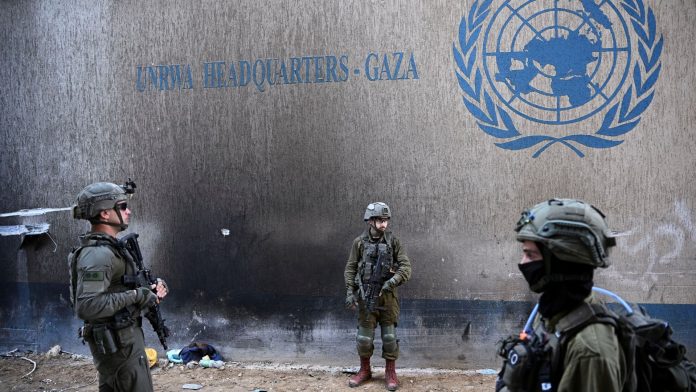
Philippe Lazzarini of the United Nations Relief and Works Agency for Palestine Refugees (UNRWA) said on X late on Saturday that the agency “did not know what is under its headquarters in Gaza”. Israel has previously accused UNRWA of colluding with Hamas’s military operations, prompting several donors to withdraw funding.

The UNRWA chief’s comments came after the Israeli army invited journalists to visit the tunnel. The Israeli military did not provide definitive proof that Hamas fighters operated at the location, but showed that at least a portion of the tunnel system ran underneath the courtyard of the aid agency’s headquarters.

Inside one of the buildings journalists saw a room full of computers with wires stretching down into the ground. Soldiers then showed them a room in an underground tunnel complex where they claimed the wires connected.

That underground room bore a wall of electrical cabinets with multicoloured buttons and was lined with dozens of cables. The military claimed the room served as a hub powering tunnel infrastructure in the area.

Israel has repeatedly announced that one of the main objectives of its war in Gaza is to destroy the underground network that it says is used by Hamas to move its fighters, weapons and supplies.

While few know the full extent of what some Israeli officials call the “metro”, the tunnels are believed to cross the entire enclave for hundreds of kilometres. Experts estimate a depth of 15 to 60 metres (50 to 200 feet).

Israel’s claims over the tunnel appear part of a pattern intended to implicate UNRWA in Hamas’s military operations.

The main humanitarian agency in Gaza, UNRWA, has been facing an unprecedented funding crisis after its main international donors led by the United States cut its funding over “terror” allegations.

Lazzarini insisted that UNRWA had no knowledge if anything was below the headquarters, which it vacated shortly after Israel launched its bombardment of the Gaza Strip in early October.

“UNRWA is made aware of reports through the media regarding a tunnel under the UNRWA Headquarters in Gaza.”

He added that while the reports merit an independent inquiry, “that is currently not possible to undertake given Gaza is an active war zone”.

Lazzarini stated that UNRWA staff left the headquarters on October 12, following an Israeli evacuation order, and that they were not aware of any activity that may have taken place there since.

In times of no active conflict, he added, the agency inspects its premises every quarter.

“UNRWA is a human development and humanitarian organisation that does not have the military and security expertise nor the capacity to undertake military inspections of what is or might be under its premises,” he said.

In the past, Lazzarini noted, “protest letters” were filed to Hamas officials and Israeli authorities “whenever suspicious cavity was found close to or under UNRWA premises” and that the matter was “consistently reported” to the UN General Assembly.

The UN agency, the only lifeline to the more than two million people in Gaza, has come under intense scrutiny after Israel alleged that 11 of its employees took part in Hamas’s deadly assault into southern Israel on October 7.

Hamas fighters launched an unprecedented attack killing more than 1,100 people and took about 250 captives. Israel has responded with a ferocious bombing campaign killing more than 28,000 people and displacing nearly 85 percent of the population.

Despite UNRWA terminating the contracts of those accused by Israel of joining the attack and launching an investigation, major donors suspended their funding, plunging the agency into a financial crisis.

The agency announced that Israel has also frozen its bank account, embargoed aid shipments and cancelled its tax benefits.

NATO chief condemns Trump remarks over alliance security

Trump

“Any suggestion that allies will not defend each other undermines all of our security, including that of the US, and puts American and European soldiers at increased risk,” he said, reiterating that the bloc remained “ready and able to defend all allies”.

Any attack on a NATO member country would trigger a “united and forceful response”, Stoltenberg pledged.

“I expect that regardless of who wins the presidential election, the US will remain a strong and committed NATO ally,” he added.

Speaking to a rally crowd in South Carolina on Saturday, Trump had suggested Washington might leave a NATO member that hadn’t paid its membership dues to fend for itself in the event of an attack, in order to teach a lesson about fiscal responsibility.

“‘You didn’t pay? You’re delinquent?’” the former president recalled addressing the unnamed nation.

“‘No, I would not protect you. In fact, I would encourage [Russia] to do whatever the hell they want. You gotta pay. You gotta pay your bills.’”

NATO members pledged in 2014 to spend 2% of their GDP on defense by 2025. Just 10 of the bloc’s 30 members had met those obligations and 13 were spending 1.5% of GDP or less as of last year, according to its own estimates.

While much of the media discussion of Trump’s supposed threat framed it as a challenge to the Baltic states and Poland, Warsaw actually led the bloc in defense contributions by percentage last year, tithing 3.9% of its GDP – more than Washington’s 3.49% donation. Estonia, Lithuania and Latvia all gave over 2% last year as well, placing all of them well out of reach of any threatened lapse in mutual defense under another Trump presidency.

Polish Prime Minister Donald Tusk nevertheless expressed concern about the “hot war” at his country’s border with Ukraine, questioning whether the US would show “full solidarity with other NATO countries in this confrontation that promises to last for a long time with Russia.”

His words echoed Stoltenberg’s own in an interview with Germany’s Die Welt on Sunday, in which the NATO chief urged members to ramp up arms production to wartime levels in order to prepare for a “confrontation” with Moscow “that could last decades”.

Russian President Vladimir Putin has repeatedly denied his country is interested in attacking any NATO country, even Poland or the Baltics. Last week, he told journalist Tucker Carlson it was instead western governments “trying to intimidate their own population with an imaginary Russian threat”.

Israel attacks Rafah, claims two Hamas-held captives freed

Gaza War

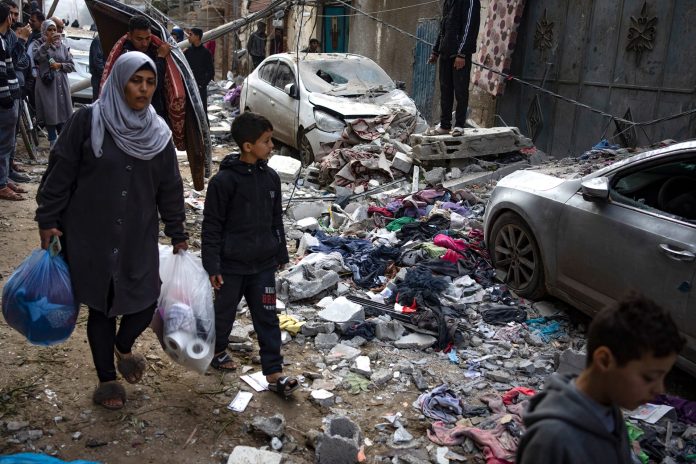
There were conflicting reports of the death toll following the pre-dawn raids on Monday.

The AFP news agency reported that the strikes killed 52 people, while Reuters reported that 37 had been killed. Both outlets cited health officials in the besieged enclave.

The Palestine Red Crescent Society said early Monday more than 60 people have been killed in Israeli airstrikes on Rafah.

The Israeli strikes hit 14 houses and three mosques in Rafah, according to Palestinian officials.

Israel’s military announced it had struck a number of “terror targets” in the Shaboura district of Rafah and the strikes had concluded.

Tel Aviv added it had rescued two captives taken by Hamas in an overnight operation in Rafah. Military officials said the captives, named as Fernando Simon Marman and Louis Har, were in good condition.

Hamas has warned that an Israeli ground assault in Rafah would “blow up” negotiations to release the group’s remaining captives in Gaza.

The strikes on Rafah come as Israel is preparing to launch a major offensive that aid agencies fear will result in massive civilian casualties in the last relatively safe area of Gaza.

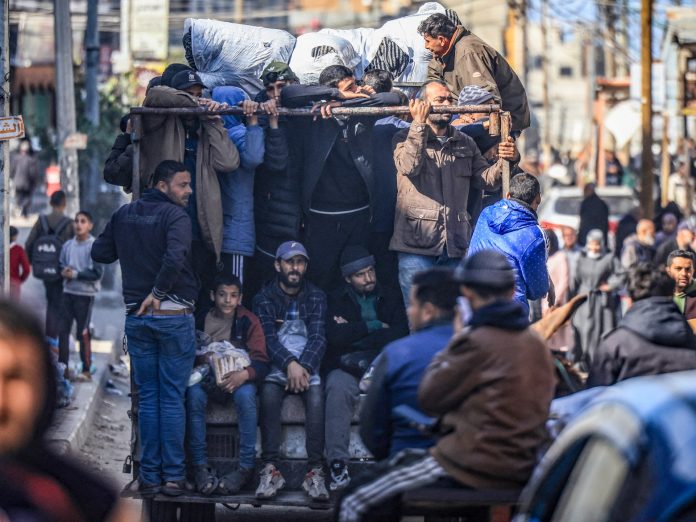
About 1.4 million Palestinians, or more than half the population of Gaza, have crowded into Rafah to escape Israeli bombardment, which has reduced much of the rest of the enclave to ruins.

United States President Joe Biden on Sunday warned Israeli Prime Minister Benjamin Netanyahu not to launch an offensive on Rafah without a “credible and executable plan” to ensure the safety of people sheltering in the city.

Netanyahu has promised “safe passage” for Palestinians in Rafah, but the lack of clarity about evacuation plans has prompted fears that they may be pushed into Egypt’s Sinai Peninsula, stoking tensions with Cairo.

Netanyahu on Sunday told Fox News that “there’s plenty of room” north of Rafah and that is “where we’re going to direct them”, without specifying which part of Gaza would be safe to evacuate to.

Josep Borrell told reporters on Monday the European Union is “extremely concerned” about the situation in Rafah.

“The situation with Egypt is very tense and we are extraordinarily concerned about what can happen there,” the bloc’s most senior diplomat stated.

Elon Musk denies providing Starlink internet to Russia

Starlink

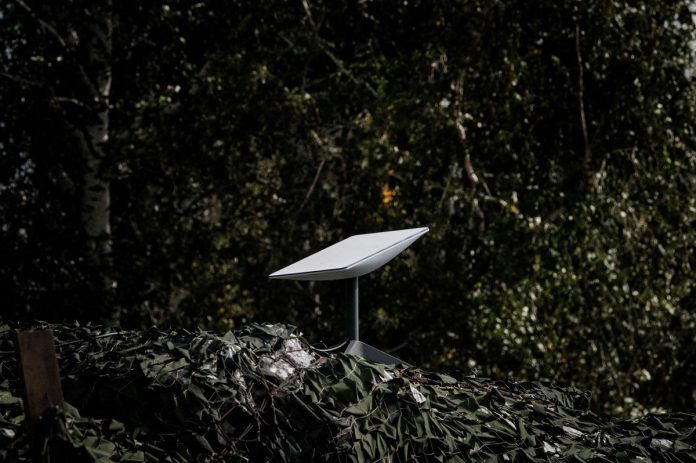
“A number of false news reports claim that SpaceX is selling Starlink terminals to Russia,” Musk said on his platform X (formerly Twitter) on Sunday.

“To the best of our knowledge, no Starlinks have been sold directly or indirectly to Russia.”

Asked if Starlink terminals can be somehow activated from Russia, Musk replied that “Starlink satellites will not close the link in Russia”.

Musk’s comments come in response to Kiev’s claims that Russian forces are using Starlink satellite service on the battlefield. Ukraine’s Main Directorate of Intelligence of the Ministry of Defense (GUR) said on Sunday that it had intercepted a conversation between Russian soldiers. It released a 15-second recording, in which a person can be heard saying in Russian “Starlink is working, we have internet [access]”.

GUR spokesman Andrey Yusov claimed that Russian troops are “systematically” using Starlink terminals. The military-themed news website Defense One cited Ukrainian sources this week as saying that Kiev’s forces first detected the use of Starlink by Russia “several months ago.”

Moscow has not commented on the allegations. SpaceX released a separate statement on Thursday, saying that the company “does not do business of any kind with the Russian government or its military” and has “never sold or marketed Starlink in Russia, nor has it shipped equipment to locations in Russia”.

Musk donated some 20,000 Starlink terminals to Kiev shortly after Russia launched its military operation in the neighboring state in February 2022.

The billionaire, however, stated that he had refused Ukraine’s request to activate Starlink service in Crimea, explaining that Kiev’s attacks on the Russian Black Sea Fleet would lead to more escalation. While pledging support for Ukraine, Musk has repeatedly said that he favors a peaceful resolution of the conflict.

Iran’s Amirabdollahian affirms solidarity with Damascus, says Iranian military advisors to stay in Syria

Hossein Amirabdollahian and Faisal Mekdad

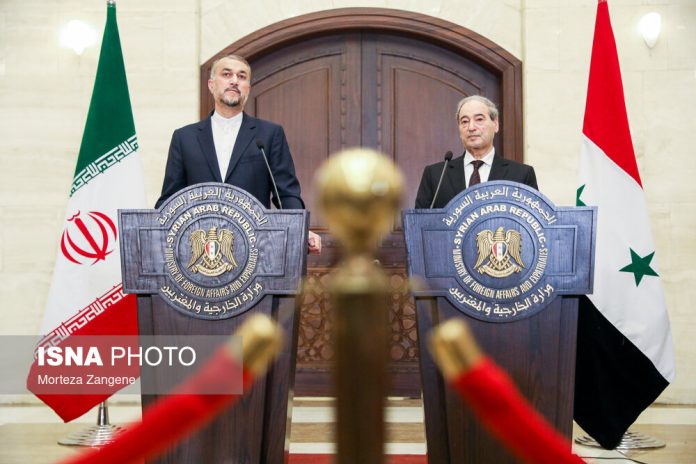
Amirabdollahian was speaking to in a presser in Damascus on Sunday, adding Iranian military advisors will keep staying in Syria.

Emphasizing the commitment to combat terrorism, Amirabdollahian affirmed Iran’s dedication to standing by Syria in the fight against terrorism.

Strongly condemning the presence of American military forces in a part of Syria, Amirabdollahian emphasized that the security of regional countries is a common concern for both Iran and Syria.

He reiterated Iran’s commitment to supporting Syria in the fight against terrorism, echoing the strong stance taken during years of collaboration in countering terrorism.

Amirabdollahian paid tribute to the martyrs of Iran and Syria, specifically mentioning recent attacks by the Zionist regime in Syria.

He declared that no action of the Zionist regime has gone unanswered in the region, highlighting the current challenges faced by Israel in Gaza.

Also addressing the Israeli regime’s war on Gaza, Amirabdollahian stressed the necessity of a political solution to avoid war and halt the ongoing genocide committed by the Zionists.

Ukraine’s security chief says west’s ‘image, authority and unity’ at stake

Russia Ukraine War

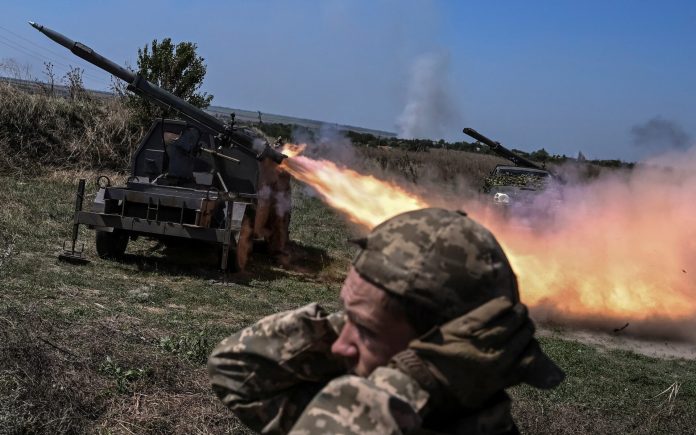
The security chief made the remarks in an interview with the Portuguese news agency Lusa, published on Sunday. While the frontline situation has never been actually easy for Kiev, it has become even more “difficult” as of late, Danilov claimed.

“If anyone thinks that the situation is easy, then these are people who do not understand war,” the official asserted.

Should Kiev not receive enough weaponry from the collective West, the situation is bound to become even more complicated, Danilov added, urging the country’s backers to urgently allocate more funds and hardware.

“We need weapons, weapons, weapons,” he stressed.

Ukraine will continue fighting Russia no matter what, the official claimed, even if it does not receive enough weaponry from the West. In such a scenario, any further setbacks suffered by Kiev are bound to affect its backers too, he warned.

“We hope that our partners will understand that our independence is under threat, as well as the image, authority and unity of the entire West,” Danilov claimed.

In recent months, the Ukrainian military has suffered various frontline setbacks, reportedly sustaining heavy casualties in the process. While Kiev has never disclosed its losses, it has greatly intensified its mobilization efforts to fill the military’s ranks, with the country’s leadership claiming up to 500,000 more soldiers were needed. The mobilization has, however, grown increasingly violent and lawless, with numerous videos circulating online showing enlistment offices chasing would-be-soldiers in the streets, forcibly pulling them from public transport and so on.

According to the latest Russian estimates, Ukraine lost more than 23,000 troops in January, Russian Defense Minister Sergey Shoigu said last week. Total casualties suffered by Ukraine since February 2022 had reached 383,000, the minister claimed, with around a half of them sustained during the botched counteroffensive Kiev launched last June.

The Ukrainian military also lost hundreds of pieces of heavy military equipment, including assorted systems supplied by the West, including German-made Leopard 2 tanks, US-made Bradley infantry fighting vehicles and other hardware.

Talks resume on US-led coalition withdrawal: Iraq

US Troops

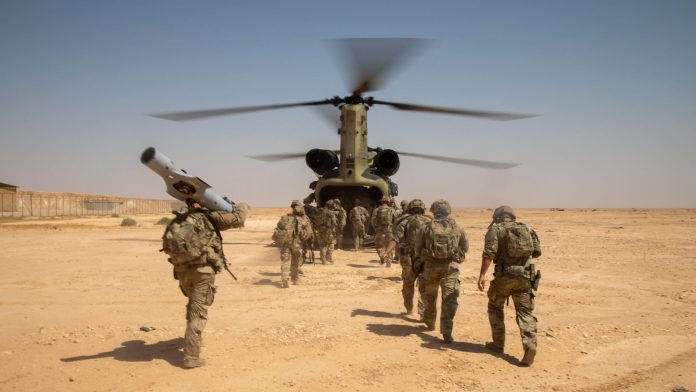
A first round of talks opened on 27 January but was swiftly suspended after a drone attack killed three US military personnel at a base in Jordan the following day. The attack was claimed by the Islamic Resistance, an Iraq-based militia group, and led to US reprisal strikes.

“The supreme Iraqi military commission resumed on Sunday its meetings with international coalition forces in Baghdad,” General Yehia Rasool, military spokesman for Iraq’s prime minister, said in a statement.

“As long as nothing disrupts the serenity of these talks, the meetings will take place on a regular basis in order to achieve the commission’s works as soon as possible,” he added.

Rasool stated the meetings were aimed at setting up a “timeline” for a “progressive pullout” of coalition forces from Iraq, leading to the end of its mission.

The US-led military coalition was formed in 2014 to fight the Islamic State (IS) group – the year the terror group overran nearly a third of Iraq’s territory and swathes of neighbouring Syria.

US and allied troops have been targeted more than 165 times in the Middle East since mid-October, in attacks linked to Israel’s assault on Gaza.

The majority of the attacks have been claimed by the Islamic Resistance in Iraq, a loose alliance of Iran-backed groups angered by US support for Israel.

The United States has retaliated with several deadly strikes targeting these groups.

Washington has 2,500 soldiers in Iraq and some 900 troops in Syria as part of the coalition against IS.

Its troops in Iraq are deployed at the invitation of Baghdad, but those in Syria are stationed in areas outside Syrian government control.

Currently, US troops in Iraq provide assistance to government forces to prevent a re-emergence of the IS militants.

In Sunday’s statement, Rasool said discussions were now focusing on evaluating the threat posed by IS, which has been defeated in Iraq and Syria but still has sleeper cells that carry attacks.

The talks were also centring on “the capabilities of the Iraqi armed forces”, he added.

In order to replace the international coalition, Iraqi authorities want to engage in bilateral military cooperation with the member states contributing to the force.

But the process is likely to be long. A statement on Thursday from the coalition said the objective now was “to assess” the progress made in defeating the militants, and to “discuss the future transition” of the coalition’s mission.

Palestinians have plans for post-war era in Gaza and West Bank: Iran FM

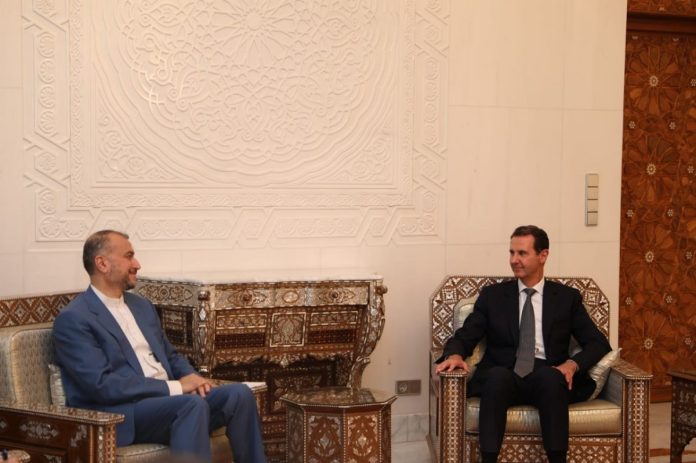
Iran FM Amirabdollahian Syrian President Assad

Amirabdollahian deemed the Gaza issue as the most crucial at both regional and international levels, adding Tehran and Damascus share a common position and a practical approach in supporting the Palestinian cause. He considered Syria to be in the front lines of the axis of resistance.

Referring to the extensive diplomatic efforts of Iran in the past four months to support the Palestinian nation and halt the war against Gaza, Amirabdollahian emphasized: “We have consistently declared our firm position regarding Palestine and the current crisis in Gaza. In response to messages and positions from the U.S. and in the course of negotiations with the British foreign secretary, we have emphasized that the war in Gaza is not the solution, and the genocide of Palestinians must cease immediately.”

“If the U.S. is sincere in its claims that it does not seek to expand the scope of the war in the region, it should cease supporting the Zionist regime. If America stops supporting the Zionist regime, this regime will not be able to continue the war against Gaza even for a single day.”

He emphasized that the resistance in Palestine is strong and powerful, and added: “Those who initially sought to destroy Hamas have now included Hamas as a reality in their political strategies and as a negotiating party in the ceasefire talks.”

Amirabdollahian considered the Palestinian resistance strong in the field and having constructive initiatives in the political field as well.

“Our assessment is that the Palestinian nation and resistance groups will not succumb to the pressures and excessive demands of the Israeli regime or any other parties. The Palestinians have ideas for the post-war Gaza and West Bank, and are able to determine their own future,” the top diplomat said.

Al-Assad, for his part, thanked Iran for supporting Damascus and its stability and security.

He added: “What the Islamic Republic of Iran has done in the past four months in support of Palestine has once again proved to the world that Iran does not just talk, but does act.”

He further stated: “What happened in Palestine in these few months, strengthened the spirit of resistance in the Arab world.”

The president emphasized that Damascus’s support for the resistance and Palestine is a historical position, and that the resistance has taken root in Syria, and this policy will not change.

Israeli ground offensive in Rafah would destroy hostage talks: Hamas

Gaza War

According to Al-Aqsa TV, a Hamas leadership source said that an aggression against Rafah would mean the “destruction” of negotiations that have been ongoing for weeks.

“Netanyahu is trying to evade the obligations of the exchange deal by committing a genocide and a new humanitarian catastrophe in Rafah,” Al-Aqsa quoted the Hamas source as saying.

In a statement on Friday, Israeli Prime Minister Benjamin Netanyahu’s office announced it had directed the military to plan for the “evacuation of the population” from Rafah in anticipation of a ground assault on the southern Gaza city.

In an interview with ABC releasing Sunday, Netanyahu called Rafah the “last bastion” of Hamas and said Israel was “working out a detailed plan” to secure “safe passage” for civilians but offered few details.

More than one million people live in Rafah, which is the last major area of Gaza the Israeli military is yet to enter.

On Oct. 7, Hamas attacked Israeli settlements near the Gaza Strip, resulting in the death of 1,200 Israelis, injury to 5,500 and the capture of at least 250 hostages.

On November 24, Qatar mediated a deal between Israel and Hamas on a temporary truce and the exchange of some of the prisoners and hostages, as well as the delivery of humanitarian aid into the Gaza Strip. The ceasefire was extended several times and expired on December 1.

Israel estimates the presence of “137 hostages still held in the Gaza Strip”, according to media reports and statements from Israeli officials.