Saturday, December 27, 2025
Home Blog Page 1010

US spent $12mn to protect Bolton, O’Brien in fear after Iran’s top commander assassination: Report

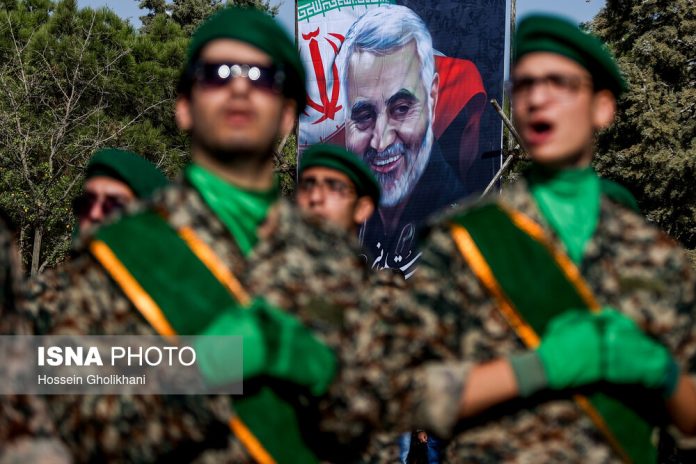
Qassem Soleimani

John Bolton and Robert O’Brien were receiving protection for almost one year after they left their posts, the CBS television network reported Tuesday.

The total cost of protection for both individuals was $12,280,324, according to a series of reports by the Department of Homeland Security (DHS) obtained by CBS.

The DHS reports do not mention Iran by name, but the CBS report says “Bolton and O’Brien were receiving protection due to possible threats” from Iran.

According to the DHS documents, the protection involves “dedicated special agents, 24 hours a day, covering their homes and offices, as well as domestic and foreign travel.”

Officials like Bolton and O’Brien do not typically receive this level of protection once they leave office, CBS reported.

Bolton received no protection initially after he left the White House.

According to the documents, he started getting protection in December 2021, after Trump — upon his departure from office — directed the Secret Service to provide protection for O’Brien.

For the period ending September 30, 2021, that cost $1,928,922. The current President Joe Biden later directed the Secret Service to extend both men’s protection, according to the DHS reports.

The reports cover only one-year span ending in 2022. Some officials continued to receive protection and do so to this day.

The Associated Press revealed a congressional memo in March 2022 that the State Department had been spending $2 million a month to provide round-the-clock security to Trump’s Secretary of State Mike Pompeo and Brian Hook, the former US envoy for Iran.

When leaving office, Trump also directed the US Secret Service to provide protection to chief of staff Mark Meadows and Treasury Secretary Steven Mnuchin for six months, ending July 20, 2021, costing a total of $6,194,121 for those two men and O’Brien.

Trump was president of the United States when he ordered the airstrike that assassinated Gen. Soleimani, the commander of the Quds Force of Iran’s Islamic Revolution Guards Corps (IRGC), on January 3, 2020.

When the US Ain Al-Asad base in Iraq was pounded by Iranian missiles in the wake of the assassination, Washington was certain that Iran’s revenge is serious.
Bushehr nuclear power plant 2nd and 3rd phase will soon start generating electricity 

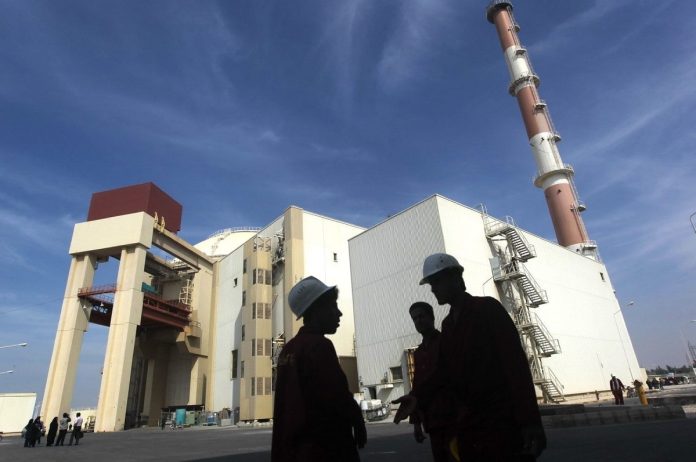
Iran's Bushehr nuclear plant

Pejman Shirmardi said the power plant has had a turnover 2 times the investment used to build it.

Shirmardi noted that for the time being, Iran focuses on its indigenous nuclear know-how to make reactors but works with Russia as well.

He added that Iran will however welcome cooperation with other countries in generating electricity at desalinators.

Russia handed over the first of the Bushehr Nuclear Power Plant with a capacity of 1,000 MW to Iran in 2013.

Hamas says Israel, US won’t make gains in Gaza via political deals

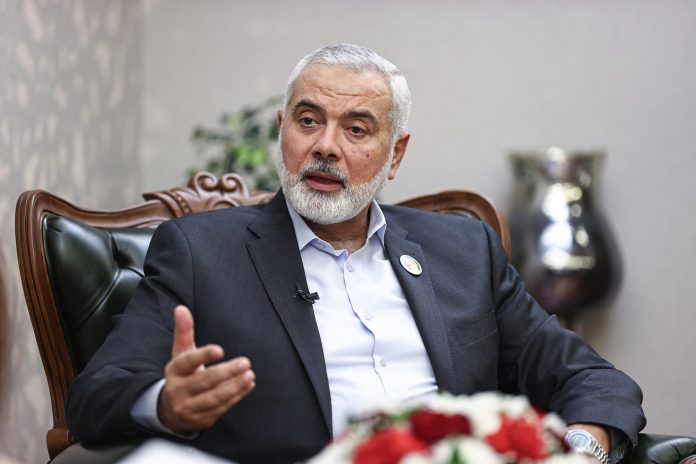
Ismail Haniyeh

His statements came amid talks for a Gaza cease-fire and hostage-prisoner swap between Hamas and Israel.

“We tell Israel and the US that what they failed to impose in Gaza will not be achieved through political plots,” Haniyeh said at an event in the Lebanese capital, Beirut, on Wednesday.

He hinted that his resistance group is ready to continue its fighting against Israeli forces during the Muslim fasting month of Ramadan, due to start next week.

The Hamas leader added Israeli threats to launch a ground attack in Rafah in the southern Gaza Strip “reflect the Nazi nature of the Israeli army”.

Israel has launched a deadly offensive on the Gaza Strip following a Hamas attack on Oct. 7. The ensuing Israeli bombardment has killed nearly 30,000 and injured over 70,000 with mass destruction and shortages of necessities.

Hamas, which is believed to be holding more than 130 Israeli hostages, demands an end to Israel’s deadly offensive in return for any hostage deal with Tel Aviv.

The Israeli war has pushed 85% of Gaza’s population into internal displacement amid acute shortages of food, clean water, and medicine, while 60% of the enclave’s infrastructure has been damaged or destroyed, according to the UN.

Israel stands accused of genocide at the International Court of Justice. An interim ruling in January ordered Tel Aviv to stop genocidal acts and take measures to guarantee that humanitarian assistance is provided to civilians in Gaza.

Western special forces already in Ukraine: Report

Russia Ukraine War

The comment came in response to French President Emmanuel Macron’s suggestion of potential NATO deployments in Ukraine.

Speaking to the media after a gathering of European leaders in Paris on Monday, Macron said there was “no consensus [at the meeting] to send, in an official manner, troops on the ground, but in terms of dynamics, we cannot exclude anything”. He also promised to stop at nothing to prevent Russia from winning the conflict.

A senior European defense official explained to the Financial Times that Macron’s statement about sending in troops was an attempt to put pressure on Russia.

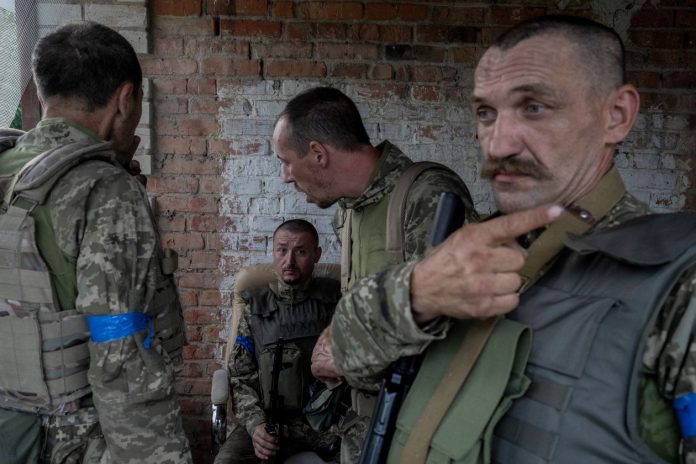
“Everyone knows there are western special forces in Ukraine – they’ve just not acknowledged it officially.”

Russia has repeatedly reported strikes against what it described as “foreign mercenaries” fighting in Ukraine. Last month, Russia’s Defense Ministry announced it had killed over 60 foreign fighters in a missile strike, of which the majority, according to local sources, were French speakers. The head of the local Ukrainian administration later confirmed that two of the dead and three of the wounded were French “volunteers”. France subsequently denied the presence of any of its soldiers in Ukraine, although the French defense minister admitted that some French nationals were fighting in Kiev’s army as “volunteers”.

British, French and US special force operatives have also been active in the conflict zone, according to a set of classified Pentagon documents leaked last year. Washington did not confirm or deny any information in the leaked files, but launched a probe and stated it would review who would have access to such information.

In late 2022, a British military publication acknowledged that more than 300 Royal Marines were involved in “discreet operations in a hugely sensitive environment and with a high level of political and military risk”, in Ukraine.

Russian Defense Minister Sergey Shoigu stated that as of December, more than 5,800 foreign mercenaries had been killed in the Russia-Ukraine conflict since its onset in February 2022, with most of them coming from Poland, the US and the UK.

The official act of sending NATO troops to fight the Russian army in Ukraine would make a direct clash between the US-led bloc and Moscow “inevitable,” Kremlin spokesman Dmitry Peskov has said.

Iran Leader calls for high turnout in Friday elections

Ayatollah Khamenei

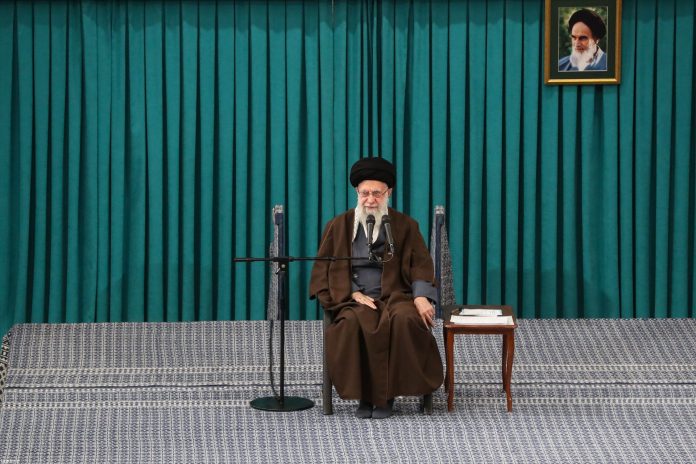
Ayatollah Khamenei made the remarks in a meeting on Wednesday with a visiting group of the families of Iranian martyrs as well as first-time voters ahead of the country’s elections for Iranian Parliament (Majlis) and the Assembly of Experts on March 1.

“Strong and fervent elections constitute one of the pillars of running the country properly,” the Leader said.

“If we can show the world that the nation is present in the country’s critical and decisive scenes, we have saved and moved the country forward.”

Pointing to some people’s indifference to the vote, Ayatollah Khamenei added, “I am not accusing anyone, but I remind all that we should look at the elections from the perspective of national interests, not from the view points of factions and groups.”

The Leader stressed, “Anyone who loves Iran, their nation and security should know that if the elections are poorly held, no one will benefit and everyone will be hurt.”

Ayatollah Khamenei stressed that the presence of Iranian voters at the polls bespeaks “national power,” noting that the country’s adversaries are closely watching the event.

“National power supports national security. If the enemy feels that you are not capable, [and] the Iranian nation has no power, they will threaten your security in every way,” the Leader said

He added, “National security is all that matters. If there is no security, there remains nothing [else]. The enemy is opposed to our national power. Therefore, they oppose everything that is a manifestation of national power, including elections.”

Ayatollah Khamenei hailed elections as an “opportunity” that should be seized, saying the vote not only benefits the country but also disappoints the country’s enemies.

“Whoever loves Iran, loves the Islamic Republic, loves the Islamic Revolution, anyone who loves national power, anyone who loves progress should be active in the elections and enthusiastically participate in the vote,” the Leader said.

Elsewhere in his remarks, the Leader touched on Israel’s months-long aggression on Palestinians in the besieged Gaza Strip and stated the issue of Gaza introduced both Islam to the world as well as Western culture and civilization.

Pointing to the recent self-immolation of Aaron Bushnell, an active-duty member of the US Air Force, in protest at Israel’s genocidal campaign in Gaza, Ayatollah Khamenei underscored, “An Air Force officer sets himself on fire; which means that even a young person who was brought up in that culture finds it burdensome, and even his conscience is offended.”

He underlined, “Of course, instead of one person, a thousand people should have set themselves on fire.”

Iranian daily slams govt. for permitting Taliban to invest in Iran

Taliban’s unofficial envoy Iran

“They refuse to give us the right of water in the Hirmand river; now you are giving them concessions?” wrote the paper.

“Afghanistan’s $35billion plan for investment in Chabahr in trade, housing and administrative areas has raised many questions,” the daily added.

“At a time when the self-styled Taliban rule does not abide by any of Afghanistan’s commitments regarding Iran and even refuses to give Iran’s water right in the Hirmand river, why are you giving concessions to this illegal government?” wrote the newspaper.

The Taliban administration in Afghanistan has invested 35 million dollars in Iran’s southeastern port city of Chabahar on commercial, residential and administrative projects, the Iranian envoy to Kabul announced.

Iran’s special representative in Afghanistan Hassan Kazemi Qomi said the investment was made during a visit by an Afghan delegation to Iran.

The Taliban refusal to provide Iran’s water right has led to  widespread drought in the Iran’s Sistan and Baluchestan province neighboring Afghanistan. This has had devastating impacts on the region’s agriculture sector among others.

US officials grilled over lack of congressional approval for military operation against Yemen

US UK Houthi Yemen

“There is no existing law that would permit military action against the Houthis,” Democratic Senator Chris Murphy said at Tuesday’s Senate hearing in Washington DC.

“For the military campaign to continue, I believe that a tailored, time-bound congressional authorisation isn’t just nice to have. It is required,” he added.

Yemenis have declared their open support for Palestine’s struggle against the Israeli occupation since Tel Aviv launched hostilities in Gaza on October 7, 2023, after Palestinian movements in the territory carried out the surprise Operation Al-Aqsa Storm.

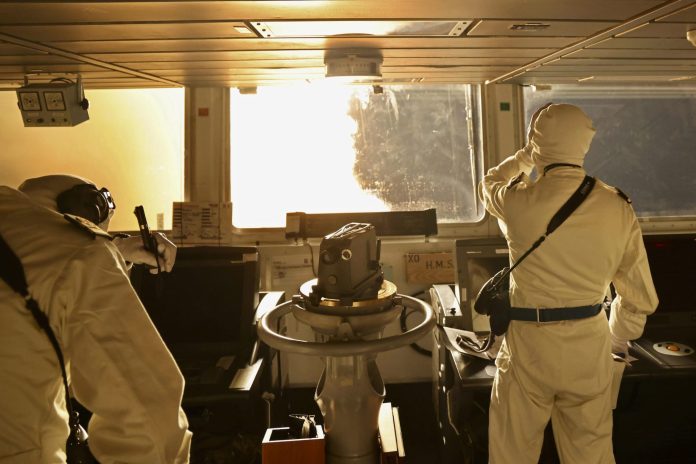
Since 11 January, the US and UK have hit over 230 Houthi targets in Yemen – including attack boats, helicopters, air defence systems, and missile storage facilities. The US is also leading Operation Prosperity Guardian, a naval task force designed to step up policing in the Red Sea.

President Biden himself has stated the strikes have failed to deter the Houthis and that he expects them to continue targeting vessels in the Red Sea. He has vowed to press ahead with the military campaign without providing an end date.

The White House has justified its right to launch the strikes based on Article II of the US Constitution, which gives the president authority to use military force without congressional approval for defensive purposes.

But in January, four senators – Democrats Tim Kaine and Chris Murphy, and Republicans Mike Lee and Todd Young – sent a letter to Biden asking him to define the military campaign, including how the right to self-defence justified protecting the commercial vessels of foreign nations.

On Tuesday, Young pressed Daniel Shapiro, the deputy assistant secretary of defence for Middle East Policy, on the topic.

When Shapiro deferred to Defence Department lawyers, a frustrated Young asked, “Did you not anticipate questions about the legal rationale before you came before the sub-committee?”

Senator Tim Kaine said he had “grave scepticism” about the president’s legal authority to conduct the strikes and that it was “laughable” to call them self-defence.

“Article II self-defence means you can defend US personnel, you can defend US military assets, you probably can defend US commercial ships, but the defence of other nations’ commercial ships in no way, and its not even close, that’s not self-defence.”

“While it might strategically be a good idea, there is no constitutional authorisation that would allow the president to do that unilaterally. And taking offensive actions…to degrade Houthi capacity, while it might strategically be a smart thing to do, that’s not self-defence,” he added.

The hearing comes as the Biden administration looks to address another potential obstacle to the strikes stemming from the Vietnam-era War Powers Resolution, which was passed by Congress to rein in the military power of the executive branch. The law says the president must stop military action after sixty days unless it is authorised by Congress.

Counting down from 11 January, when Biden notified Congress, that would give the administration barely two weeks to continue military action. Kaine raised concerns about reports of the potential legal justifications the Biden administration was weighing to continue the strikes.

One example that has been cited are loopholes used by the Reagan administration during the 187-1988 Persian Gulf tanker wars to justify deploying military force without congressional approval to protect commercial shipping.

UN warns hundreds of thousands of Gazans one step away from famine

Gaza

The warnings on Tuesday came as footage from northern Gaza showed Israeli soldiers again opening fire on Palestinians gathering to collect food in the area.

It was not immediately clear if the shooting led to deaths or injuries.

Israel’s war on Gaza, now in its fifth month, has killed nearly 30,000 Palestinians, most of them women and children.

Israel’s subsequent military campaign – which has included daily air attacks, a ground offensive into north and central Gaza and the closing of all but one crossing point into the territory – has laid much of the Palestinian enclave to waste and triggered a worsening humanitarian crisis.

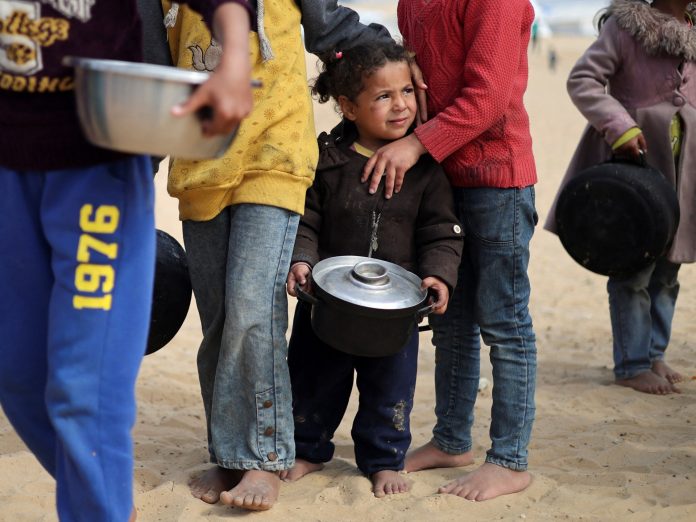
“Here we are, at the end of February, with at least 576,000 people in Gaza – one-quarter of the population – one step away from famine,” Ramesh Rajasingham, the deputy chief of the UN humanitarian agency (OCHA), told the UN Security Council (UNSC).

One in six children under the age of two in northern Gaza suffers from acute malnutrition and wasting and practically all the 2.3 million people in the Palestinian enclave rely on “woefully inadequate” food aid to survive, he told the meeting on food security in Gaza.

“If nothing is done, we fear widespread famine in Gaza is almost inevitable and the conflict will have many more victims,” he stated.

Rajasingham added that the UN and aid groups face “overwhelming obstacles just to get a bare minimum of supplies into Gaza”. These include crossing closures, restrictions on movement and communication, onerous vetting procedures, unrest, damaged roads and unexploded ordnance, he continued.

In Geneva, Jens Laerke, another OCHA spokesman, told reporters Israel’s actions made it almost impossible to deliver aid to Gaza.

“Aid convoys have come under fire and are systematically denied access to people in need. Humanitarian workers have been harassed, intimidated or detained by Israeli forces, and humanitarian infrastructure has been hit,” he said.

The World Food Programme (WFP) announced it was “ready to swiftly expand and scale up our operations if there is a ceasefire agreement”.

In the meantime, “the risk of famine is being fuelled by the inability to bring critical food supplies into Gaza in sufficient quantities and the almost impossible operating conditions faced by our staff on the ground”, Carl Skau, the WFP’s deputy executive director, told the UNSC.

“If nothing changes, a famine is imminent in northern Gaza,” he added.

The WFP earlier this month suspended delivering food aid to northern Gaza, which has almost been completely cut off from aid since late October, after its convoys came under Israeli gunfire and were looted by desperate and hungry Palestinians.

UN agencies say all planned aid convoys into the north of the territory have been denied by Israeli authorities in recent weeks. The last allowed in was on January 23, according to the World Health Organization (WHO).

A spokesman for the UN Secretary-General Antonio Guterres said hundreds of trucks carrying aid were ready and waiting at the border between Gaza and Egypt.

“WFP colleagues tell us that they have food supplies at the border with Gaza and, with certain conditions, they would be able to scale up feeding up to 2.2 million people” across the Strip, Stephane Dujarric told reporters.

“Almost 1,000 trucks carrying 15,000 metric tonnes of food are in Egypt ready to move,” he added.

Israel, however, denied blocking aid.

Speaking at the UNSC, Israel’s Deputy Ambassador to the UN Jonathan Miller countered that “it is not Israel who is holding up these trucks”, instead placing the blame on the UN, which he said must distribute aid “more effectively”.

“There is no limit to the amount of humanitarian aid that can be sent to the civilian population of Gaza,” he said, adding that since the beginning of 2024, Israel had only denied 16 percent of requests to deliver aid and those were due to risks the shipments could end up in Hamas’s hands.

The desperate situation in Gaza prompted a rebuke from the United States.

Robert Wood, the deputy US ambassador to the UN, urged its ally Israel to keep border crossings open for humanitarian aid deliveries to Gaza and to facilitate [the] opening of more crossings.

“Simply put, Israel must do more,” he said, adding “We continue to call on Israel to improve deconfliction procedures to ensure aid can move safely and securely.”

A terrorist killed while planting roadside bomb in southeast Iran

Crime Scene

He had entered the country along with another terrorist in order to carry out a roadside bombing operation to target a patrol car belonging to a local police station in Sistan and Baluchestan province, said the provincial prosecutor, Mahdi Shamsabadi.

“While conducting the bomb-planting operation, one of them was killed as soon as the detonator was ignited, and the second one escaped,” the prosecutor added.

Judicial orders have been issued to apprehend the second terrorist, who is on the run.

Iran: Germany covering up human rights violations in Palestine

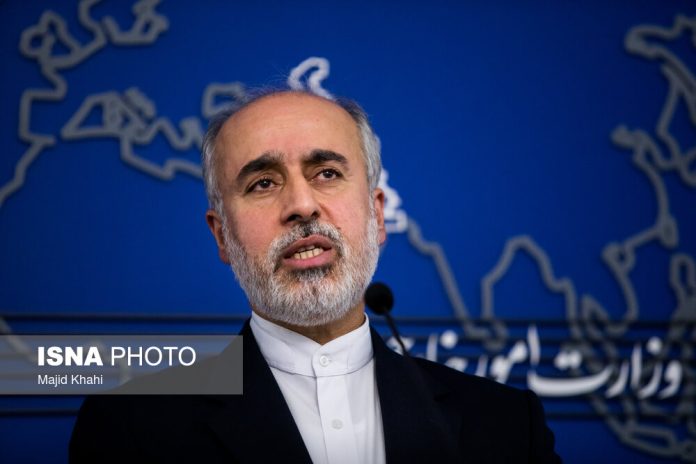
Nasser Kanaani

“It is painfully funny that some Western governments claim to be advocates of human rights while they have a history of offering all-out support to violators of human rights and playing a direct role in providing and equipping Saddam’s regime with chemical weapons during the imposed war on Iran as well as offering unflinching support to the Zionist regime’s genocide in Gaza,” the spokesman explained.

“Under the pretext of advocating human rights and, of course, by politicizing the issue, German officials interfere in the internal affairs of other countries and, at the same time, step up the activities of arms manufacturing companies to boost their country’s economy,” he noted.

“We recommend Germany not bring original and invaluable words ‘human rights’ into political games any further by offering ostensibly humanitarian, but untrue advice,” he said.

“The disastrous situation in Gaza and the West Bank along with the worrying condition of residents and Palestinian refugees in the Rafah region is further embarrassing, and remains a clear testament to the failure of the so-called advocates of human rights.”

“Accordingly, if Germany and its allies are really seeking to protect human rights, they should form a special fact-finding team on the Zionist regime for its merciless killing of over 30,000 humans and defenseless citizens, more than 70% of whom are women and children, in order to prove the sincerity of their claim to the world,” Kanaani concluded.