Monday, January 12, 2026
Home Blog Page 983

Iranian daily: Government’s economic reports in conflict with people’s daily life

Iran Economy

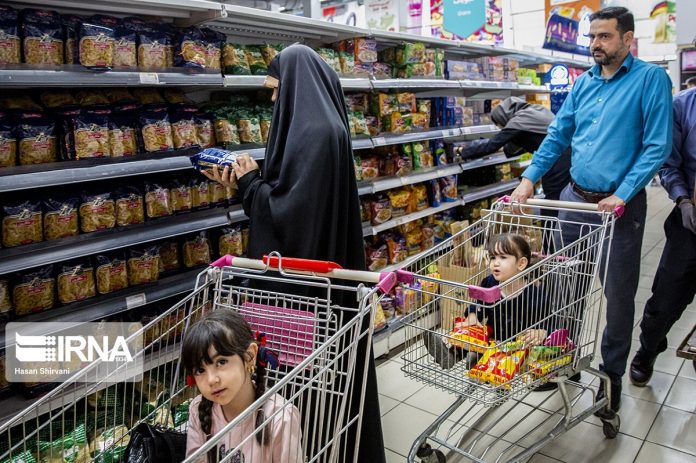
In an article on Thursday, Jomhouri-e Eslami slammed the government for creating “worrying economic situation,” and “releasing statistics that are in contrast with the people’s livelihood.”

The scathing article comes just days after Iranian minister of economy told a press conference that Iran’s economic growth last year was higher than the previous years.

Ehsan Khandouzi also said Iran’s economy is going through a positive trend and the indicators point to a ‘serious boom’.

However, two weeks into the new the Persian New Year, Jomhouri-e Eslami painted a conflicting picture with the official report, writing, “This year, like the previous year, from the first days of Farvardin (the first month on the Iranian calendar), prices have started to increase and the value of the national currency plunged.”

The rial’s parity rates with the dollar have sharply plummeted since the past weeks and many people prefer to keep gold instead of the national currency.

“People, especially the poor and middle class, look at the economic situation with concern, but unfortunately, what is observed in practice is that the officials continue to give statistics that are in contrast with the people’s livelihood,” the daily wrote.

US says sent message to Iran following Israel’s Syria attack

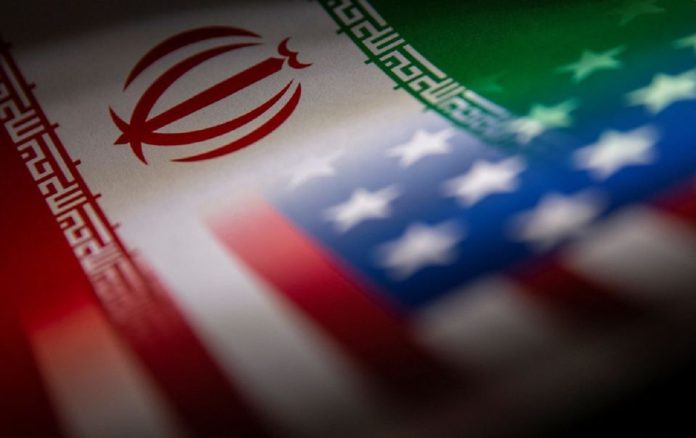
Iran US Flags

Speaking at a press briefing on Wednesday, Miller noted that the message said the United States “was not involved” in Monday’s deadly airstrikes on the consular annex of Iran’s embassy in Damascus.

“I will just say that we made very clear to the Iranians that we had no involvement in this strike, we didn’t know about it at the time, and we warned them not to use this attack as a pretext to attack US facilities or personnel,” he added.

Asked whether messages were conveyed to Iran through an intermediary, he replied, “We have the ability to send messages, very clear messages, to Iran both directly and indirectly, and we do so when it’s in our interest.”

On Monday afternoon, Israeli warplanes bombed the Iranian consulate, situated next to the embassy building in Damascus’s Mezzeh district.

The air raid killed 13 people, including seven members of the Islamic Revolution Guards Corps (IRGC) who were on an advisory mission to Syria.

Iranian officials have emphasized the country’s right to deliver a firm response to the Israeli crime.

Iran’s Foreign Minister Hossein Amirabdollahian stressed Israel’s biggest supporter, the United States, should be “answerable” over the terrorist attack that violated all international obligations and conventions.

Israeli opposition leader urges early elections amid “domestic turmoil”

Israel Hostages

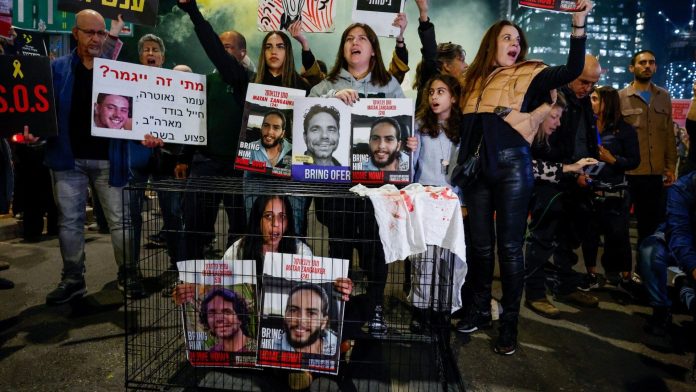
In a video address, Gantz said Israel is facing “tremendous challenges” but that it must strive for unity, including with allies in the U.S., while criticizing Israeli Prime Minister Benjamin Netanyahu for not prioritizing the families of the roughly 100 hostages still held alive in Gaza by Hamas.

“They deserve to know that Israeli society is not against them but behind them,” Gantz stated, pledging to stand by the families of the hostages.

Gantz added Israel must agree to hold an election in September, presenting the first major call to action that will challenge the power of Netanyahu’s government.

The opposition leader said he talked to political leaders in Israel about a possible date for the new elections and added that he expected to continue dialogue with Netanyahu on the issue.

Gantz added elections will “increase trust and unity” in Israel and “give us a huge international backing that is needed”.

Israel is expected to not hold elections until 2026, but under a parliamentary system a snap election can be called to form a new government.

Gantz’s calls come just days after protests erupted in Israel, marking the largest demonstrations since the war began.

Israeli protesters expressed anger that the government has not reached a cease-fire deal with Hamas to free the hostages still left in Gaza.

The protests were a major show of force against the government of Netanyahu, who has worked to free the hostages but also remains committed to the elusive goal of destroying Hamas after fighters invaded southern Israel on Oct. 7, killing some 1,200 people and taking 250 hostages.

Netanyahu’s hard-line policies on Gaza have also angered the Joe Biden administration, which is trying to manage growing Democratic outrage in the U.S. after the war has killed more than 33,000 Palestinians.

In Israel, the remaining hostages in Gaza remain the biggest concern for the moment.

A cease-fire and hostage release deal has been out of reach since the last temporary one in November. Israel remains committed to destroying Hamas, while the Palestinian group is pushing for an end to the war.

Gantz stressed that Israel will “not ignore the disaster of the seventh of October and what preceded it” as he called for new elections.

Russia warns France sending soldiers to Ukraine to have “catastrophic” consequences for Paris

The one-hour call was the first conversation between the defense chiefs since October 2022.

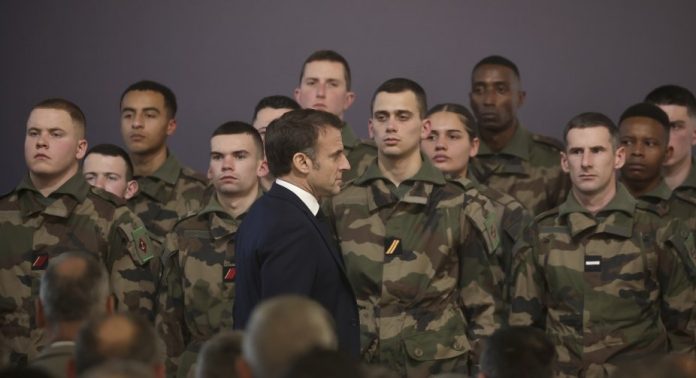
According to the readout provided by the Russian Defense Ministry, Shoigu warned that France “will create problems for itself” if it sends troops to Ukraine.

French President Emmanuel Macron has repeatedly floated the idea of having NATO boots on the ground, suggesting that “all options are possible”. He stressed, however, that Paris has no such plans at the moment. Foreign Minister Stephane Sejourne said in February that France could at some point send demining and other non-combat personnel.

Moscow has stated that it will treat Western troops and foreign-supplied weapons systems on Ukrainian soil as legitimate targets. The deployment of foreign forces would be a major escalation, leading to “irreparable consequences”, Kremlin spokesman Dmitry Peskov warned last month.

The Russian MOD also announced that Shoigu and his French counterpart discussed the potential restart of peace negotiations between Russia and Ukraine.

“Readiness for dialogue on Ukraine was noted. The starting points could be based on the Istanbul peace initiative,” it said in a statement, adding that the proposed Swiss-hosted summit would be “useless without Russia’s participation”.

Lecornu reiterated during the call that “France will continue to support Ukraine as long and as intensely as necessary in its fight for freedom and sovereignty, in order to bring peace and security to the European continent,” according to the French Defense Ministry.

A source close to Lecornu denied to AFP that the minister had discussed potential Ukraine peace negotiations.

“France neither accepted nor proposed anything of the sort,” the source added.

Meaningful peace talks between Russia and Ukraine broke down in the spring of 2022, with both sides accusing each other of making unrealistic demands.

NATO members agree to work on long-term military support for Ukraine

NATO

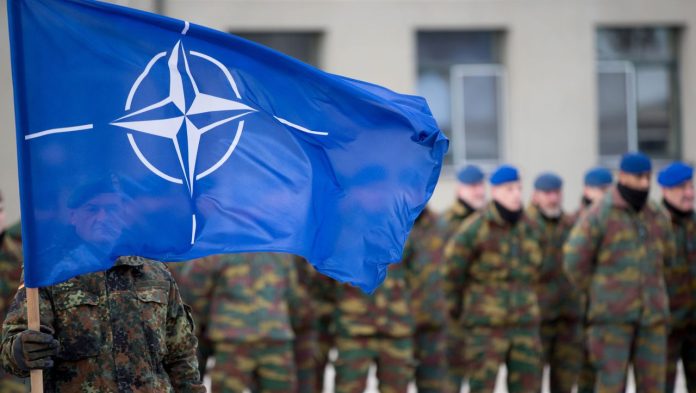
Urged by Secretary-General Jens Stoltenberg, a meeting of NATO foreign ministers agreed on Wednesday to move towards guaranteeing long-term weapon deliveries to Kyiv. However, proposals to establish a $107bn, five-year fund, met resistance from some quarters.

The alliance chief said allies “agreed to move forward with planning for a greater NATO role in coordinating security assistance and training”.

The move would give NATO a more direct role in coordinating the supply of arms, ammunition and equipment to Ukraine as it fights Russia’s invasion.

Speaking before the meeting Stoltenberg stated Kyiv had “urgent needs,” adding that “any delay in providing support has consequences on the battlefield as we speak”.

“We must ensure reliable and predictable security assistance to Ukraine for the long haul so that we rely less on the voluntary contributions and more on NATO commitments, less on short-term offers and more on multiyear pledges,” he added.

“The reason why we do this is the situation on the battlefield in Ukraine. It is serious … We see how Russia is pushing, and we see how they try to win this war by just waiting us out.”

While the move would not see NATO directly providing weapons to Ukraine – as an organisation with 32 members that functions by consensus, the allies only agree to send non-lethal aid like demining equipment, fuel and medical supplies – it would mark a new phase in its involvement in the war.

The move is also seen as influenced by the possibility that Donald Trump could return to the US presidency following elections in November.

Under the plan, NATO would take over some coordination work from a US-led ad hoc coalition known as the Ramstein group.

Ministers, however, suggested that agreeing upon the 100-billion-euro ($107bn) fund could prove tricky.

Stoltenberg said the aim is for a decision on the proposals to be taken at a July summit of NATO member state leaders. NATO decisions require consensus among its 32 members.

Initial reactions from across the alliance signalled a decision may not be easy.

Hungary signalled scepticism about at least some elements of Stoltenberg’s proposal.

Foreign Minister Peter Szijjarto “announced Hungary’s opposition to increasing NATO’s coordination role in arms deliveries and training Ukrainian forces, refusing to participate in planning, operations, or funding. This stance was outlined during a news briefing at the NATO foreign ministers meeting” government spokesperson Zoltan Kovacs wrote on X.

Stoltenberg stressed he had spoken to Hungarian Prime Minister Viktor Orban to address his concerns and that he was confident those issues would be addressed in the coming weeks.

“What we are discussing is not a NATO combat presence in Ukraine. We are discussing how we can coordinate and deliver support from outside Ukraine to Ukraine as NATO allies do,” Stoltenberg added.

“And now when we initiate planning, I’m certain we can also address the concerns that Hungary has raised and find a way where we can have consensus.”

The plan is to have NATO coordinate the work of the Ukraine Defense Contact Group – a forum of about 50 countries that has regularly gathered during the war to drum up weapons and ammunition for Ukraine – rather than the US European Command.

US General Christopher Cavoli is NATO’s top military commander, as well as the head of US European Command, so the person in charge would not change. But Stoltenberg said a formal “institutional framework” is needed as the war drags on and that NATO can provide it.

While NATO is desperate to do more for Ukraine, particularly while Russia holds a military advantage, its members are not ready to offer the country their ultimate security guarantee: membership.

Nor do they want to be dragged into a wider war with a nuclear-armed military power like Russia.

Commander: 18 terrorists, several Iranian security forces killed in armed conflict in Sistan and Baluchestan

Iran Police

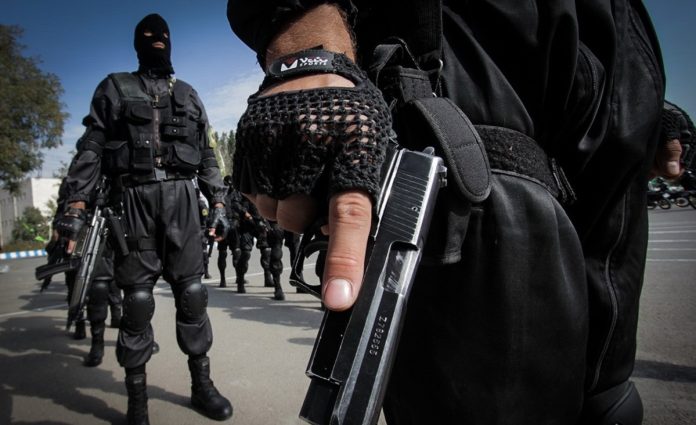
Commander of Islamic Revolution Guards Corps (IRGC) Ground Force Brigadier General Mohammad Pakpour said the terrorists targeted IRGC and police forces in Chabahar and Rask in the early hours of Thursday in coordinated attacks.

General Pakpour said the terrorists in both cities have been chased away, without identifying the terrorist group that perpetrated the attacks.

He added the bodies of fifteen terrorists have so far been discovered.

Earlier, the Iranian Interior Minister’s Deputy for Security Affairs Majid Mir Ahmadi said security forces released a hostage taken by the terrorists in Chabahar.

Mir Ahmadi confirmed the situation in Rask and Chabahar is back to normal.

According to reports, the terrorists were affiliated with separatist Jaish al-Adl terror group, which is responsible for several terrorist attacks in the region bordering Pakistan.

Al-Aqsa Storm put Israel on verge of extinction: Hezbollah

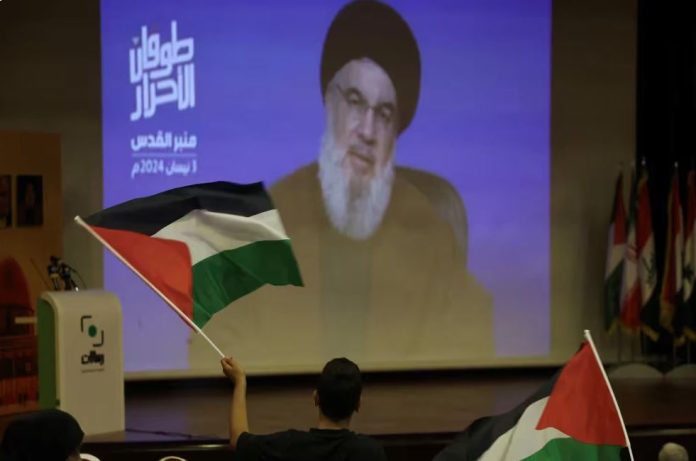
Sayyed Hassan Nasrallah made the remarks during a Wednesday televised address to a virtual gathering of resistance leaders ahead of the International Al-Quds Day, the last Friday of the holy month of Ramadan.

He stressed the operation shook the foundations of the regime.

What is happening today in Palestine, the region, and the world, Nasrallah said, is a flood in every sense of the word.

Nasrallah stressed nobody in the occupied territories talks of a “greater Israel” project anymore. This is one of the achievements of the October 7 operation, he added, as well as previous anti-Israel operations in Lebanon and Gaza that led to the withdrawal of Israel from southern Lebanon and Gaza in the 2000s.

Nasrallah praised the courage and creativity of the Palestinian resistance. The people of Gaza created, with their steadfastness, a historical epic whose parallels are rare, he said.

The Hezbollah chief also hailed anti-Israel operations by the resistance in Yemen, Iraq, and Lebanon and their perseverance despite threats and pressures.

Nasrallah underscored Iran’s support for the Axis of Resistance in Gaza, the occupied West Bank, Lebanon, Yemen, and Iraq.

Syria was another highlight of Nasrallah’s remarks. The Hezbollah leader said all the bombings, threats, and intimidation attempts over the past few months had not changed Syria’s standing with the resistance groups in the region.

The leader of Yemen’s Ansarullah movement stated during the ceremony that Yemen is committed to enhancing its missile and naval capabilities to offer greater support to the Palestinian cause.

Abdul-Malik al-Houthi said the Yemeni nation is united in supporting the Palestinian people, and their sacred sites, not least the Al-Aqsa Mosque.

Houthi stated since early October, Yemen has provided unwavering support for the battle against Israel and continues to do so.

The Palestinian people have been suffering from injustice, oppression, and the confiscation of their rights and land since the British occupation of their land, he continued.

Houthi censured the United States for its complicity in the crimes of Israel against the Palestinians. He said the so-called peace and normalization talks and agreements with the regime are doomed to failure.

The Yemeni leader added the only viable option for the Palestinians and the Muslim Ummah is to engage in jihad to liberate the Palestinian land. Houthi said jihad is the centerpiece of resistance.

“We say to the Palestinian people in all parts of Palestine, both inside and outside, that our people and our country will not spare any effort in supporting you. Your cause is our people’s foremost cause.”

“Our stance in supporting the Palestinian people is an inseparable part of our faith; it is our religious, humanitarian, and moral duty.”

Ismail Haniyeh, the political bureau chief of the Palestinian resistance movement Hamas, was another resistance figure to address the event.

He said the Palestinian resistance remains steadfast on all fronts. Haniyeh said the self-perceptions of Israel regarding its military capabilities have now been shattered.

“I salute the efforts of our nation’s sons in supporting Gaza, and to our people, I say, ‘You are our support and depth.’”

Haniyeh underscored unity among the Palestinians, saying the current battle has also brought together resistance groups across Lebanon, Yemen, and Iraq, with backing from Iran.

“The forces of Resistance have spoken their word: We are a nation that does not remain silent in the face of oppression, does not accept injustice, does not tolerate the violation of our rights, and will not allow the enemy to monopolize the pride of Gaza,” he added.

Haniyeh also stated Israel was stalling ceasefire talks, ignoring Palestinian demands for ending hostilities.

He underlined the Israeli regime, led by Prime Minister Benjamin Netanyahu, is perpetuating aggression to maintain political power.

Haniyeh reiterated the Palestinian call for a lasting ceasefire, which encompasses a total Israeli withdrawal from Gaza, the return of all displaced individuals, the provision of essential aid, the reconstruction of affected areas, the lifting of the blockade, and the establishment of a respectful captive exchange agreement.

The secretary-general of the Palestinian Islamic Jihad movement told the ceremony that the fighters of Gaza are steadfast against the US-supported Israeli war apparatus.

Ziyad Al-Nakhaleh said Gaza, with its populace and fighters, will continue to fight the Israeli occupation.

The Palestinian leader lamented that certain Arab and Muslim governments have failed to support Gaza in any manner.

“We demand that our Arab brothers treat us as they treat Israel because everything the regime needs comes from the countries that ignore the Palestinians.”

He commended Iran for its support of the resistance and for bolstering the capabilities of resistance fighters in Palestine and elsewhere. Nakhaleh added the forthcoming International Quds Day should serve as a significant moment for the resistance to fortify the unity of its people, fighters, and objectives.

Gaza ceasefire negotiations stall as Israel and Hamas dig in

Israeli objections to the return of displaced residents to their homes in Gaza is a key issue holding up the negotiations, Qatari officials said on Wednesday. Meanwhile, Hamas announced that it will not budge on its conditions to release captives it holds in the besieged and bombarded territory.

Alongside the United States and Egypt, Qatar has been running behind-the-scenes talks in a bid to secure a truce and the release of Israeli captives in exchange for Palestinian prisoners held in Israeli jails after nearly six months of war.

“The return of the IDPs [internally displaced people] to their homes, which the Israelis didn’t agree to yet … is the main point we are stuck on,” Qatar’s Prime Minister and Foreign Minister Sheikh Mohammed bin Abdulrahman bin Jassim Al Thani told a news conference in Doha.

Another outstanding issue is the number of Palestinian prisoners to be released by Israel in exchange for each hostage freed by Hamas, Sheikh Mohammed added, noting however that he believed this “can be bridged”.

However, Hamas’s senior political leader Ismail Haniyeh stated on Wednesday that his movement will stick to its conditions for a ceasefire in Gaza. The Palestinian group insists that an Israeli military withdrawal must happen before it releases the remaining captives.

“We are committed to our demands: the permanent ceasefire, comprehensive and complete withdrawal of the enemy out of the Gaza Strip, the return of all displaced people to their homes, allowing all aid needed for our people in Gaza, rebuilding the Strip, lifting the blockade and achieving an honourable prisoner exchange deal,” Haniyeh said in a televised speech marking al-Quds Day.

Israel has said it is interested only in a temporary truce to free the captives, while Hamas has stressed it will let them go only as part of a deal to permanently end the war.

Sheikh Mohammed added the major sticking points remained the same as those that stymied a deal during negotiations in Paris in February.

Talks were set to resume in Cairo last Sunday, Egyptian TV channel Al-Qahera reported, two days after Israeli Prime Minister Benjamin Netanyahu gave approval for fresh negotiations.

Israel and Hamas have traded blame for the failure in achieving a deal.

In recorded comments shown at a Hezbollah meeting on Wednesday, Haniyeh said Israel “continues to procrastinate stubbornly, and does not respond to our fair demands for an end to the war and aggression”.

The day before, Netanyahu’s office claimed, after an Israeli negotiating team had returned from another round of discussions in Cairo, that Hamas has hardened its stance.

“In the framework of the talks, under useful Egyptian mediation, the mediators formulated an updated proposal for Hamas,” the premier’s office announced.

However, senior Hamas official Basem Naim stressed on Tuesday that the group had not been sent any new proposals.

The US announced on Wednesday that it did not expect the Israeli strike that killed seven World Central Kitchen workers in Gaza to affect ceasefire talks.

“The ceasefire and hostage negotiations are ongoing,” White House national security spokesman John Kirby told reporters in a briefing.

“I wouldn’t anticipate any particular impact on those discussions as a result of the strike yesterday.”

He added the incident was not a standalone in the conflict, in which too many aid workers have been killed.

“It’s not the first time that this has happened and so yes, we’re frustrated by this,” Kirby continued.

United Nations spokesperson Stephane Dujarric on Wednesday said the intergovernmental organisation had suspended movements at night in Gaza for at least 48 hours to evaluate security issues following the incident.

The UN’s World Food Programme is continuing operations during the day, including daily efforts to send convoys to the north of Gaza “where people are dying”, Dujarric added.

“As famine closes in we need humanitarian staff and supplies to be able to move freely and safely across the Gaza Strip,” he told reporters.

Russia says Moscow and Tehran close to a new treaty

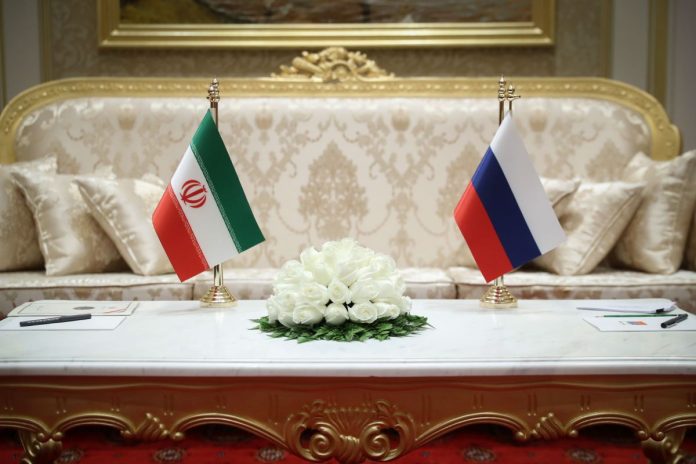
Iran and Russia Flags

The official gave no explicit timeline for when the agreement would be ready for signing, but noted that the project had already been at “a high level of readiness” at the start of the year, but has since been delayed for an uncertain period due to some revisions by the Iranian side.

The bilateral treaty is being prepared on the orders of Russian President Vladimir Putin and Iranian President Ebrahim Raisi, who agreed to develop it in January 2022 in order to achieve a long-term strategic partnership.

Meanwhile, cooperation between Moscow and Tehran has continued to grow in other fields in recent years, as both sides have actively supported each other on the international stage. Following this week’s Israeli attack on the Iranian diplomatic mission in Damascus, Russia called for an emergency United Nations Security Council meeting.

Russia’s Foreign Ministry condemned the airstrike, which left several Iranian diplomats and officers dead, including two generals, as “completely unacceptable” and has urged Israel to abandon all provocative military actions in Syria and other neighboring countries, warning of potentially dire consequences for the region.

The head of Russia’s Foreign Intelligence service, Sergey Naryshkin, has described the attack as an act of terrorism, condemning it as an “ugly and criminal step” by Israel.

Tehran, in turn, has harshly condemned last month’s Crocus City Hall terrorist attack near Moscow, which led to the death of over 140 people. Iran has vowed to cooperate more actively with Russia in the fight against terrorism. Raisi had personally expressed his sympathies to Putin and called for “serious measures by the international community for punishing the architects and perpetrators of this [act]”.

Previously, during their meeting in Moscow in December 2023, Putin and Raisi spent a total of five hours discussing bilateral ties, global challenges such as the Gaza conflict, as well as trade and cooperation in energy and education.

The Russian president had stated at the time that Moscow and Tehran were actively engaging in cooperation “across the entire spectrum of our bilateral relations”.

Hamas military operation against Israel turning point in Palestinian cause: Iran president

Ebrahim Raisi

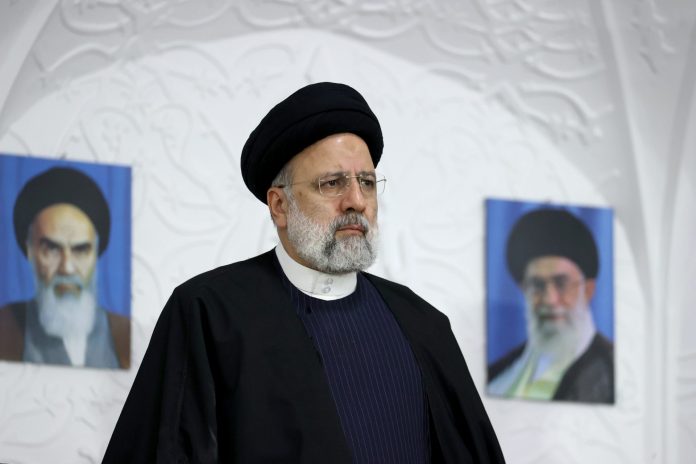
Raisi made the remarks in an address to the virtual Al-Quds Pulpit ceremony, which was held simultaneously in Tehran, Damascus, Sana’a, Beirut, and Baghdad on Wednesday ahead of the International Al-Quds Day.

Operation Al-Aqsa Storm was a reaction to years of Israeli devastation, oppression, and savagery amid the indifference and silence of human rights organizations, the president said.

“Al-Aqsa Storm is a turning point in the history of the fight against the occupation, and the course of the Palestinian battle is divided into before and after the operation,” he added.

“The world and the region will not return to the conditions before this operation, and the insane perpetration of war crimes and the massacre of women and children by the Zionists will not cover up their irreparable defeats,” the president continued.

The Iranian president said the Zionist army has turned to war crimes and genocide against women and children to compensate for the strategic blow dealt by Operation Al-Aqsa Storm.

“Thanks to the valor, faith, and courage of the Palestinians in Operation Al-Aqsa Storm, it has become clear to everyone today that the Zionist regime’s abode is more fragile than a spider web, and the world is witnessing the fulfillment of this divine promise.”

Raisi added the Israeli regime faces a wide array of challenges in the political and military fields.

“In the military field, the dominance of the Palestinian will over the multi-layered defense systems of the Zionists has further proven the illusion of the regime’s invincibility and revealed its high level of vulnerability to the world.”

“This hollow regime is also, more than ever, on the verge of internal collapse in the political arena.”

Raisi said the exemplary resilience of Gaza throughout the past months has rendered the Israeli regime unable to achieve any of its declared goals in Gaza.

“If a nation relies on the power of faith, it will be able to overcome temporal powers and will undoubtedly taste the pleasure of victory. This is a divine promise, and divine traditions are infallible.”

The Iranian president added the Palestinian operation has sidelined the humiliating peace plans to settle the conflict, and showed that anybody counting on these plans is “playing a dead horse.”

He stated the Palestinian fighters have proved that no plan for the future of Palestinian land can be implemented without the consent of the owners of the land.

Raisi said Israel’s atrocities have also awakened the global public opinion, and even those allied with the Israeli regime, as evidenced by massive pro-Palestine protests in many countries.

“The nations of the world, more than ever, have realized the importance of standing up to this ugly monster.”

The Iranian president censured the West for its “shameful silence” on Israel’s atrocities.

“Without any doubt, the US is a definite accomplice in the Israeli crimes in Gaza.”

The Iranian president also touched on the recent Israeli attack on the consular section of Iran’s embassy in Damascus.

Raisi vowed that the “brave men of the resistance front” will punish the regime.

“[The attack] shows the peak of this regime’s frustration and helplessness and that, in a crazed effort to cover up its failures, it does not hesitate to commit any act in its crimes against humanity,” he added.

On the International Quds Day, the Iranian president said the occasion has united the Muslim world behind the Palestinian cause and revitalized their support for Palestinians to push out the aggressors.

Raisi stated Iran will keep supporting the Palestinian cause.

“The Islamic Republic of Iran, as it has previously stated, continues to be a supporter of resistance and emphasizes the legitimacy of the Palestinian people in their struggle against the occupying enemy.”