Friday, January 2, 2026
Home Blog Page 959

Report: Iran ahead of other OPEC members in terms of rise in crude output in March

Iran Oil

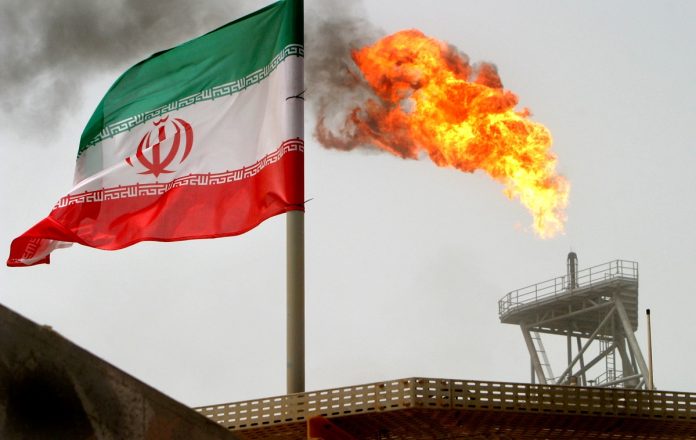
A report by OPEC’s Secretariat indicates that overall output by the 133 member states hovered around 26 million 604 thousand bpd in March, 3 thousand bpd more than the figure in February.

Based on the report, Iran maintained its third place among OPEC producers after Saudi Arabia with an output of 9 million 37 thousand bpd and Iraq with a crude production of 4 million 194 thousand.

The production rise comes as Iran is under draconian US sanctions.

Persian Gulf states warn US not to conduct attacks against Iran from their territory or airspace

US Aircraft Carrier

The US’s Persian Gulf allies are working overtime to shut down avenues that could link them to a US reprisal against Tehran or its “proxies” from bases inside their kingdoms, according to a senior US official who spoke with MEE on condition of anonymity.

As tensions flare, Saudi Arabia, the UAE, Oman and Kuwait have raised questions about the intricate details of basing agreements that permit tens of thousands of US troops to be stationed across the oil-rich peninsula.

They are also moving to prevent US warplanes from flying over their airspace in the event the US conducts a retaliatory strike on Iran.

The US has spent decades investing in military bases in the Persian Gulf. Given their close proximity to Iran, those airbases would be the most convenient launching pads for Washington against Tehran, current and former US officials tell MEE.

The Persian Gulf monarchies’ reluctance is complicating the Joe Biden administration’s preparation as it war games how to respond to a potential Iranian attack on Israel. Current and former US officials told MEE they believe an attack is imminent, as has been previously reported elsewhere.

“It’s a mess,” a senior US official told MEE.

The official, along with two former senior US officials, who spoke with MEE, outlined three scenarios the White House is planning for Iran’s expected retaliation for a strike on its consulate in Damascus, Syria, earlier this month that was blamed on Israel.

Iran could strike Israel directly from its territory. A second option would be a coordinated attack by “Iran’s proxies” on Israel, using the paramilitaries in Iraq, Yemen’s Houthis, and Lebanon’s Hezbollah.

A third option could combine the two. The Houthis struggled to breach Israel’s US-supplied Iron Dome defence system immediately after 7 October, but the Biden administration is concerned a multi-faceted attack could overwhelm those defences.

Iran could also strike Israeli embassies – including those in the Middle East – or Israeli troops in the occupied West Bank and Gaza.

President Biden stated he informed Prime Minister Benjamin Netanyahu that the US’s commitment to Israel’s security was “ironclad”.

But the Biden administration is divided over what level of support to give Israel, current and former US officials told MEE.

The president’s highest-ranking national security officials have staked out different positions, with some like Maher Bitar, the director of intelligence at the National Security Council, urging restraint while Brett McGurk, Biden’s top Middle East envoy, is advocating for a tougher response, sources tell MEE.

The Biden administration’s fear of becoming embroiled in a wider Middle East war ahead of US elections is also weighing on those discussions.

The Persian Gulf states’ cold feet amid the crisis comes after years of complaining that the US has not done enough to protect them from attacks by “Iran’s proxies”, particularly the UAE and Saudi Arabia. Riyadh and Abu Dhabi viewed the Biden administration’s response to Houthi drone and missile attacks as tepid, and have moved to patch up ties with Tehran.

Persian Gulf leaders are now walking a tightrope between their US ally, Iran, and their populations, who are seething with anger at Israel over its offensive on Gaza that has killed more than 33,000 Palestinians, mainly women and children.

The US has at least 40,000 troops in the Middle East. The majority are located in the oil-rich Persian Gulf states, where they are based at a string of strategic air and naval bases.

Saudi Arabia’s Prince Sultan Airbase is home to the US’s 378th Air Expeditionary Wing which operates F-16 and F-35 jet fighters. The US operates MQ-9 Reaper drones and jet fighters out of the UAE’s Al Dhafra Air Base. Kuwait’s Ali al-Salem Air Base is home to the 386th Air Expeditionary Wing.

Qatar’s Al Udeid Air Base hosts the regional headquarters for US Central Command. It has also hosted some Israeli military officials, MEE has previously reported, but it’s not clear if those officials are still in the country.

The island kingdom of Bahrain is home to around 9,000 US troops who belong to the headquarters of the US Naval Forces Central Command and the US Fifth Fleet.

Oman also allows the US military overflights and port calls.

The Middle East has been on alert since the Hamas-led 7 October attacks on southern Israel killed around 1,200 people. Israel responded by launching a ferocious offensive on the Gaza Strip.

The immediate spark putting the region on the brink of a wider war was a strike blamed on Israel on Iran’s consulate in Damascus that killed several top commanders in the Islamic Revolutionary Guard Corps, including General Mohammad Reza Zahedi, the head of IRGC operations in Syria and Lebanon.

On Wednesday, the Leader of Iran’s Islamic Revolution Ayatollah Seyyed Ali Khamenei said that Israel “must be punished” for the consulate attack, which he equated to a strike on Iranian “soil”.

Western countries have told their citizens in the region to be on high alert. Israel has indicated that it will strike back if Iran does attack.

Russia says tested top secret nuclear-capable missile

Russia Nuclear Weapons

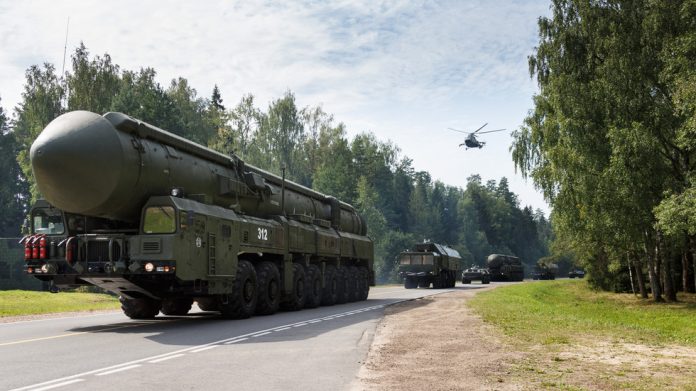
According to the Russian military, the Strategic Missile Forces “successfully launched ICBM of a mobile ground-based missile system” from the interservice test facility near Volgograd. The test was successful and indicated “the high reliability of domestic missiles, ensuring the strategic security of the country”.

The type of system tested was not specified. Russia currently uses the RS-24 Yars (known by NATO as the SS-29) missiles as its mobile nuclear deterrent, but has reportedly been developing a successor for this system as well.

The Yars – a Russian acronym for “atomic deterrence rocket” – entered service just a few years ago, fully replacing the RT-2PM2 Topol-M (SS-27) system. The solid-fueled missile is intended to carry multiple thermonuclear warheads and can be deployed from mobile vehicles or silos.

US moving more assets to West Asia to enhance deterrence ahead of Iran retaliation

US Aircraft Carrier

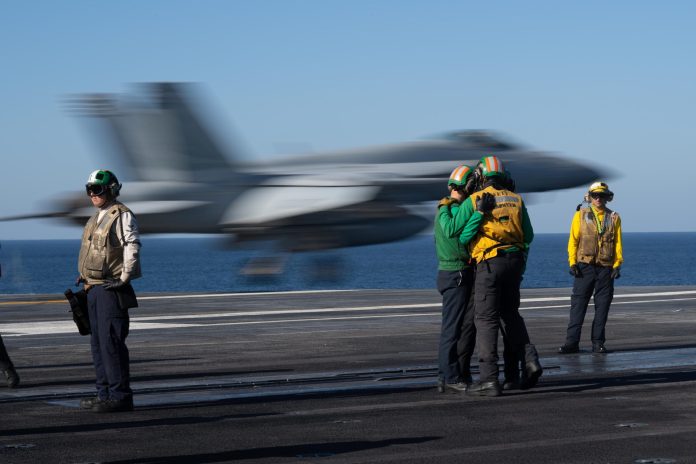
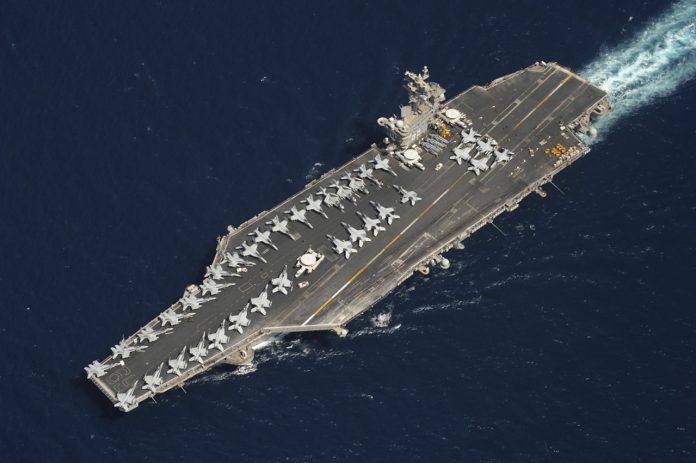
“We are moving additional assets to the region to bolster regional deterrence efforts and increase force protection for US forces. We have no other information to add at this time,” the official stated when asked about reports the USS Dwight Eisenhower aircraft carrier is sailing north through the Red Sea in a show of deterrence.

Israeli media reported that the US aircraft carrier’s movement toward Israel is meant to be a show of deterrence against Iran.

According to an earlier Axios report, Tehran warned Washington that it will attack US forces in the Middle East if the US gets involved in a military confrontation between Iran and Israel.

However, a US official told Axios that it’s unclear if Iran is threatening to attack US forces in the region if they help Israel intercept Iranian missiles or only if they participate in an Israeli counteroffensive.

Last week, Israeli warplanes bombed the Iranian consulate in Damascus, located next to the embassy building in Damascus’s Mezzeh district. The attack killed two senior Iranian military personnel who were on an advisory mission to Syria as well as five of their accompanying officers.

The Islamic Revolution Guards Corps announced Brigadier General Mohammad Reza Zahedi, a commander of the IRGC’s Quds Force, and his deputy General Mohammad Hadi Haji Rahimi were among the seven martyrs of the terrorist attack.

Leader of the Islamic Revolution Ayatollah Seyyed Ali Khamenei has vowed that Iran will “punish” Israel and make the evil regime “regret” its crime of assassinating the country’s military advisors in Syria.

Iran’s President Ebrahim Raisi has also stated Israel had resorted to indiscriminate assassinations after back-to-back failures in the face of the resistance, warning that the regime’s latest crime against Iranian military advisers in Syria “will not go unanswered”.

Biden warns Iran strike against Israel may be ‘sooner than later’

Joe Biden

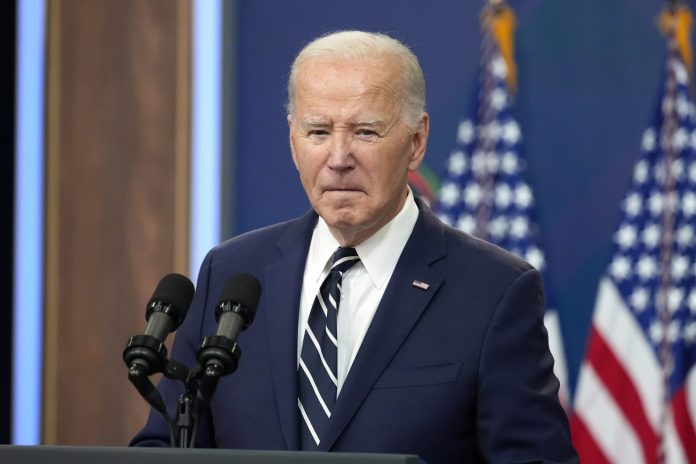
When asked about how imminent the attack on Israel may be, Biden said he didn’t want to get into classified information and added his “expectation is sooner than later.”

He also replied “don’t” when asked for his message to Iran.

“We are devoted to the defense of Israel,” the president continued, stating, “We will support Israel and help defend Israel, and Iran will not succeed.”

US officials have sounded the alarm this week that Iran is expected to launch a retaliatory attack on Israel in response to an April 1 attack on its embassy in Syria. The Israeli raid killed seven Iranian military advisers, including three senior members of the Islamic Revolutionary Guard Corps.

White House national security communications adviser John Kirby told reporters earlier Friday that the Iranian threat is “viable”.

“We’re watching it very, very closely,” he said, adding that the US will “continue to stay in close touch with our Israeli counterparts about preparations for this threat.”

The State Department also issued updated security warnings for US government employees in Israel, restricting them and their families from personal travel outside of the greater Tel Aviv area, Jerusalem and the southern city of Be’er Sheva.

3 European countries moving closer to recognising a Palestinian state

Israel Palestine

Ireland wants to recognise Palestine soon, but in a coordinated action with Spain and more European nations, the country’s Prime Minister Simon Harris stated after meeting Sanchez in Dublin on Friday.

Earlier in the day, Sanchez travelled to Oslo, where Norwegian Prime Minister Jonas Gahr Store said his country also “stands ready” to recognise Palestine together with “like-minded countries”.

Sanchez noted Spain wants to recognise Palestine “as soon as possible”, leveraging the move as a way to gain momentum for a definitive peace process.

The current efforts come as the mounting deaths, starvation and infrastructure damage in the besieged Gaza Strip due to Israel’s war have resulted in growing international criticism.

Within Europe, the concerns about Israel’s war on Gaza have also led to shifting positions – including more nations considering the possibility of recognising Palestine.

Last month, Spain and Ireland, long champions of Palestinian rights, announced alongside Malta and Slovenia that they would jointly work towards the recognition of a Palestinian state. They said they were “ready to recognise Palestine” in a move that would happen when “the circumstances are right”.

On Friday, after meeting Sanchez, Harris stated, “Let me this evening say our assessment is that that point is coming much closer and we would like to move together in doing so.”

“The people of Palestine have long sought the dignity of their own country and sovereignty – a home that like Ireland and Spain can take its place amongst the nations of the Earth.”

Sanchez added that willing countries would make their declarations “when the conditions are appropriate” and that they would support the new Palestinian state becoming “a full member of the United Nations”.

The Spanish leader has repeatedly angered Israel with his outspoken comments since the start of Israel’s war on Gaza, while Harris has already drawn a rebuke from the Israeli government this week.

Israel told the four European Union countries that committed to moving towards Palestinian recognition that their initiative would amount to a “prize for terrorism” that would reduce the chances of a negotiated resolution to the generations-old conflict.

“Norway stands ready to recognise the state of Palestine,” Norwegian Prime Minister Store, whose country is a part of the Schengen zone but not the EU, told a joint news conference with Sanchez earlier on Friday.

“We have not set a firm timetable,” he added, saying a decision on Palestine’s recognition would need to be taken in close coordination with “like-minded countries”.

In November, Norway’s parliament adopted a government proposal for the country to be prepared to recognise an independent Palestinian state.

Norway also hosted Israeli-Palestinian peace talks at the beginning of the 1990s, which led to the Oslo Accords.

Israel’s war on Gaza has killed more than 33,600 Palestinians and injured more than 76,000 others since October 7. A Hamas attack on southern Israel before the war killed about 1,200 people there.

In all, 139 out of 193 UN member states recognise Palestine as a state.

Wrestling: Iran wins 2024 Asian Championships

Amir Hossein Abbas Zare

The Iranian wrestlers bagged five gold and three bronze medals.

Iran was crowned at the championship with 190 points, followed by Japan (130 points) and Kyrgyzstan (121 points).

Hundreds of rights organizations demand end to Israel arms transfers

Gaza War

A statement demanding these actions, which was initially issued in January with a signee list that included sixteen major humanitarian and human rights organizations, has in recent months grown substantially as the Israeli military has intensified its attacks in Gaza.

The joint statement described itself as “an open call to all UN member states to stop fueling the crisis in Gaza and avert further humanitarian catastrophe and loss of civilian life”.

“We, the undersigned organizations, call on all states to immediately halt the transfer of weapons, parts, and ammunition to Israel,” it said, pointing to the “risk they are used to commit or facilitate serious violations of international humanitarian or human rights law.”

“Israel’s bombardment and siege are depriving the civilian population of the basics to survive and rendering Gaza uninhabitable. Today, the civilian population in Gaza faces a humanitarian crisis of unprecedented severity and scale.”

The statement highlighted the fact that more than 153 UN member states have called for an immediate ceasefire in Gaza, warning that “Israel continues to use explosive weapons and munitions in densely populated areas with massive humanitarian consequences for the people of Gaza.

“Member states have a legal responsibility to use all possible tools to leverage better protection of civilians and adherence to international humanitarian law.”

Among the statement’s signatories are Save the Children, Oxfam, the Jewish Network for Palestine, Medico International and Christian Aid.

“Gaza today is the most dangerous place to be a child, a journalist and an aid worker. Hospitals and schools should never become battlegrounds,” the statement read.

It also warned against recent calls by top Israeli officials for the deportation of Palestinian civilians from Gaza.

“The forcible transfer within Gaza and deportation of a portion of the population across borders, lacking any guarantees of return, would constitute a serious violation of international law, amounting to an atrocity crime,” the statement added.

Israel unleashed the bloody war on Gaza on October 7 after Hamas launched Operation al-Aqsa Storm in the occupied territories in retaliation for the Tel Aviv regime’s incessant crimes against Palestinians in the occupied West Bank.

Since the start of the aggression, the Tel Aviv regime has killed at least 33,600 people in Gaza, mostly women and children, according to the health ministry in the territory.

The campaign has devastated large swathes of Gaza, destroyed hospitals and displaced most of its population of 2.4 million.

Israel declares record amount of occupied West Bank as state-owned land this year

Israeli settlements

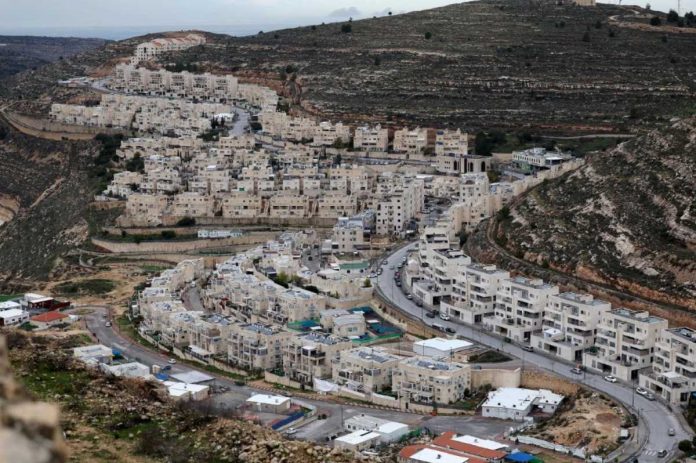
According to data obtained by NGO Kerem Navot, 2,743 acres in the West Bank have been declared state-owned land, with the biggest bloc consisting of nearly 2,000 acres in the Jordan Valley.

A further 650 acres were designated state property near Abu Dis, as well as 42 acres near the Herodion National Park.

The previous record was in 1999, when just 1,285 acres were designated, according to data from the Peace Now NGO.

The data showed that between 2018 to 2023 the Civil Administration, which runs Israeli civilian affairs in the West Bank, also remapped approximately 24,000 dunams (5,900 acres) of state-owned land.

The remapping of land already categorised as state-owned often paves the way for settlement construction.

“As can be expected from this government, there has been a sharp increase in the past year in the public resources invested in the looting of thousands more dunams scattered in several areas deep in the West Bank, as well as promoting the possibility of construction on the thousands of dunams that previous governments looted for the past decades, although most of them have not yet been used,” stated Dror Etkes of Kerem Navot, according to Haaretz.

Around 700,000 Israeli settlers live in roughly 300 illegal settlements in the West Bank and occupied East Jerusalem, which have been constructed since they were captured by Israel in the 1967 war.

Under international law, settlement construction in an occupied territory is illegal.

In February, Peace Now reported that in 2023, settlers established at least 26 new illegal outposts in the West Bank. Ten of them were established following the outbreak of war in Gaza on 7 October.

It added that 21 Palestinian communities were forcibly displaced from their homes due to the establishment of illegal outposts, of which 16 communities were uprooted since the war broke out.

The UN’s human rights chief Volker Turk said in March that settlements had expanded by a record amount and risked eliminating any possibility of a Palestinian state.

His comments were accompanied by a 16-page report that documented 24,300 new illegal Israeli housing units in the West Bank during a one-year period through to the end of October 2023. It marked the highest on record since monitoring began in 2017.

Since 7 October there has been a major increase in Israeli settler violence and army raids across the West Bank.

According to official Palestinian sources, at least 461 Palestinians have been killed by Israeli forces or settlers since then.

Heavy snow blankets Khalkhal, northwestern Iran, during spring

Iran Kouhrang Snow

Reports say the snow is 50 centimeters high and local authorities tried to open the routes after the heavy snowfall.

As a result of the snowfall, temperatures fell in northwestern Iran and even in distant areas.

The region is considered one of the agricultural hubs of the country and the sudden cold snap has caused concern among local farmers during the spring season.