Wednesday, December 31, 2025
Home Blog Page 940

Poll: Ukrainians’ approval of US leadership significantly dropped

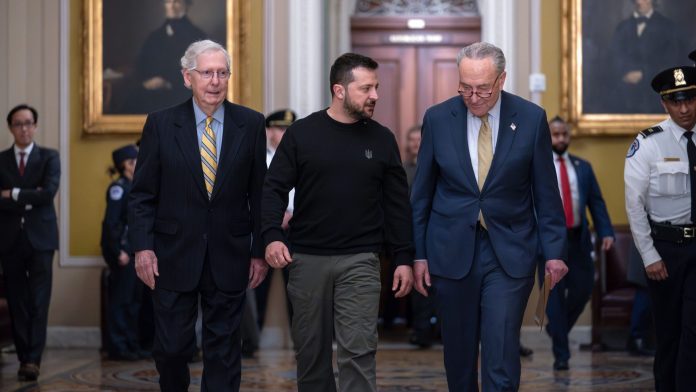
Zelensky in US

Fifty-three percent of those surveyed in Ukraine approved of U.S. leadership in 2023, down 13 percentage points from the record-high 66 percent approval rating in 2022. That’s according to Gallup’s Rating World Leaders 2024 report, published Tuesday.

The poll found that 22 percent of respondents in Ukraine disapproved of U.S. leadership, while another 25 percent said they were unsure or declined to answer the question.

The survey of world leadership approval ratings was conducted throughout 2023 — about one year after Russia first invaded Ukraine in February 2022. Many U.S. lawmakers, especially conservatives, grew more opposed to approving additional aid to Ukraine in its war against Russia last year. Congress has not passed additional aid to Ukraine since the end of 2022, and available aid has completely dried up.

The survey found that the median global approval of U.S. leadership stood at 41 percent in 2023, remaining unchanged from the 2022 approval rating. The median global approval of U.S. leadership over the past two years has been down from the 45 percent approval rating during the first year of the Joe Biden administration.

While the median global approval rating remained stable last year, U.S. leadership also saw downticks in approval ratings across other countries. Finland’s approval rating of U.S. leadership dropped 13 percentage points in 2023 from 2022, while India’s dropped 11 percentage points.

However, Israel’s approval of U.S. leadership increased in 2023. Eighty-one percent of respondents in the country said they approved of the leadership, up 16 percentage points from the previous year.

The survey results come as the House approved a massive foreign aid package over the weekend. The package — which was broken down into four separate votes — includes roughly $61 billion for Ukraine, $26 billion for Israel and global humanitarian aid, and $8 billion for Taiwan and other U.S. allies in the Indo-Pacific.

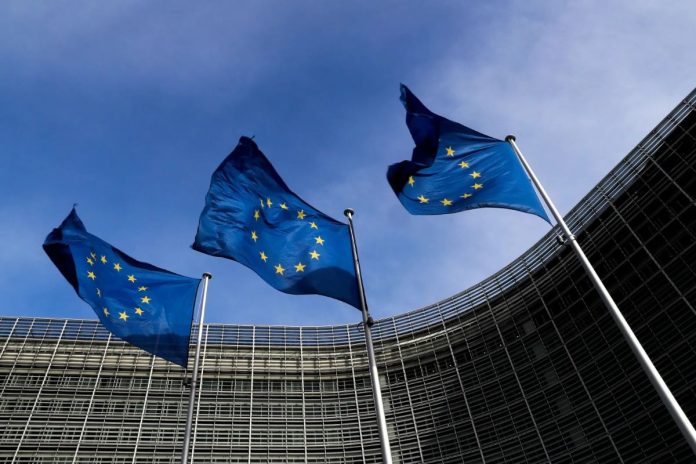
EU sanctions on Iran “regrettable, unlawful”: Top diplomat

The European Union

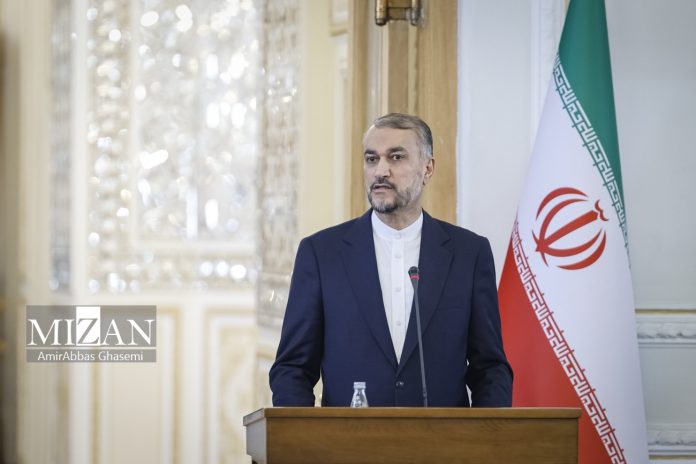
Amirabdollahian censured the EU over tightening sanctions on Iran in reprisal for the recent aerial strikes against the Zionist regime.

“It is unfortunate that the European Union is quick to decide on further illegal restrictions against Iran just because Iran has exercised its right to defend itself against the brazen aggression of the Israeli regime,” the minister wrote on X on Tuesday.

“The EU should not follow Washington’s advice to appease the criminal Israeli regime.”

Amirabdollahian also slammed the EU’s reaction in the face of the regime’s military onslaught against the besieged Gaza Strip.

“While the Israeli regime continues to commit genocide against Palestinians by engaging in combined war crimes, rocket attacks, and famine, the EU’s response to it is little more than empty words,” he added.

The foreign minister advised the bloc to impose sanctions on the Israeli regime.

The EU’s decision came after Tehran targeted the occupied territories with a barrage of drones and missiles in retaliation for Israel’s assassination of several Iranian military advisors in Syria.

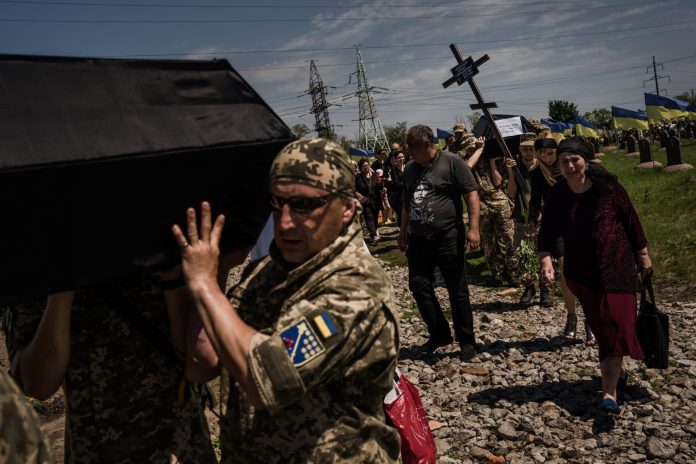
Russia claims Ukraine has lost almost half a million troops since start of war

Russia Ukraine War

Russian forces have the initiative on the front line and are pushing back their opponents, Shoigu told a ministerial meeting. The pressure prevents Kiev’s troops from holding on to their defensive positions, he added.

The defense minister also addressed America’s expected allocation of over $60 billion in military assistance for Kiev. He noted that the move is intended to “prevent the collapse” of Ukrainian forces, but predicted that the money will not significantly impact the situation on the battlefield, since “most of the funding will go to US military production”.

“The American authorities cynically state that Ukrainians will be dying in the fight with Russia for their interests,” Shoigu stated.

Officials in both Washington and Kiev have argued that paying Ukraine to fight Russia is preferable to the US having to fight Russia directly.

Shoigu hailed Russia’s defense production capacity and flexibility in adapting its military tactics to the combat situation. He said the Defense Ministry will continue long-range attacks on logistics hubs and depots used for supplying Western weapons to Ukraine.

Earlier this month, Ukrainian President Volodymyr Zelensky signed into law a radical reform of the mobilization system, meant to boost conscription numbers, which introduces harsh punishments for draft avoidance.

Zelensky stated he considers a proposed mobilization target of 500,000, tabled by Ukraine’s former top general, Valery Zaluzhny, who he dismissed in February, as excessive.

The multi-billion-dollar US aid package was requested by the White House months ago but was only passed by the House of Representatives on Saturday, after Speaker Mike Johnson agreed to it.

Satellite images show Israeli soldiers gathered for Gaza escalation

Israeli Army

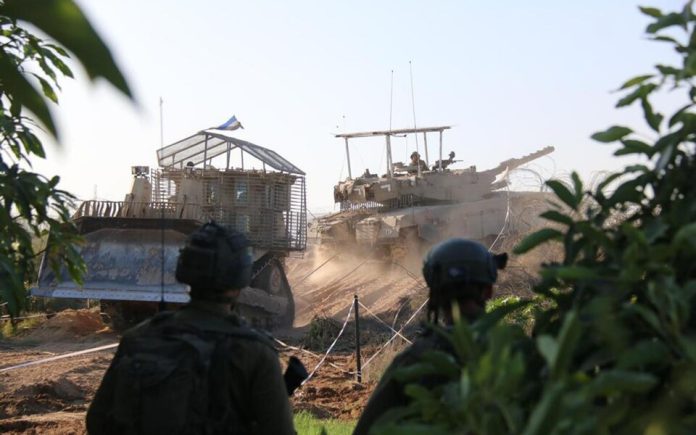
The analysis indicates that Israel has deployed more than 800 military vehicles to two bases. At least 120 vehicles are stationed at the northern border of the Gaza Strip and 700 are in the Negev desert, to the south.

The satellite imagery also reveals that Israel has established nine military outposts just outside the enclave. Three were erected in November and December 2023 and six were set up between January and March of this year. The outposts house soldiers, operational command centres and military vehicles.

The findings indicate that Israel plans to continue its war on Gaza, which was launched after Hamas’s surprise attack on Israeli communities and military outposts on October 7, despite global condemnation.

Israel’s war has killed nearly 35,000 Palestinians in Gaza, displaced most of the population and destroyed 62 percent of all homes.

According to Israeli officials, about 1,200 people were killed in Hamas’s October 7 attack and about 250 were taken captive.

Al Jazeera’s satellite analysis supports the view of several experts who say Israel will dedicate most of its military resources to its campaign in Gaza, despite having withdrawn the majority of its forces from the enclave in recent weeks.

“My general sense is that the [Israeli] security establishment would be more likely to prioritise finishing off Gaza, then shifting to other threats – whether that be [the Lebanese group] Hezbollah or Iran,” said Hugh Lovatt, an expert on Israel-Palestine with the European Council of Foreign Relations (ECFR).

On April 18, US and Israeli officials met to discuss a possible operation in Rafah, a town on the border with Egypt currently providing relative safety to more than 1.4 million Palestinians displaced within the enclave.

The meeting followed rumours that the United States would support a full-scale invasion of Rafah – having previously expressed public reservations – in return for assurances that Israel would not escalate its tit-for-tat attacks with Iran.

US officials have denied those reports, but Israel does have more leverage to attack Rafah by dangling the spectre of regional escalation, according to Omar Rahman, an expert on Israel-Palestine at the Qatar-based Middle East Council for Global Affairs.

“The Israelis have made an art form out of extracting a price for doing something or not doing something, whether they actually intended to do it or not,” he told Al Jazeera.

Israeli Prime Minister Benjamin Netanyahu will also attempt to leverage Iran’s attack on Israel to consolidate his domestic position, experts say.

On April 14, Iran fired hundreds of drones and missiles at Israel in retaliation for an Israeli strike on its consulate in the Syrian capital, Damascus.

Israel’s recent attacks and warnings in Gaza have raised fears of a larger offensive on Rafah.

Over the weekend, Israeli air attacks killed at least 24 people, including 16 children, in the southern city, Palestinian health officials said.

Mairav Zonszein, an expert on Israel-Palestine for the Belgium-based International Crisis Group, told Al Jazeera that Israel had always planned to invade Rafah, irrespective of US backing for its operations.

She added that Netanyahu has a habit of drumming up a false belief that he will not do something to secure leverage or support on other issues, citing the prime minister’s previous agreement to pause the de-facto annexation of the occupied West Bank in exchange for signing peace deals with various Arab governments.

“Israel was still annexing [the West Bank] and it is still doing it, but it got the accords,” Zonszein continued, stating, “For the most part, Israel just does what it wants and [US President] Biden has either fallen for it or just isn’t up to the task to [pressure Israel] not to do things.”

Eyal Lurie-Pardes, an Israel-Palestine expert with the US-based Middle East Institute, believes that Netanyahu will not be deterred from invading Rafah and that the operation is coming sooner rather than later, corresponding with Al Jazeera’s satellite analysis.

“Netanyahu won’t give up this position – or leverage – which he has right now [to go into Rafah].”

More bodies found in mass grave at hospital in Gaza

Gaza War

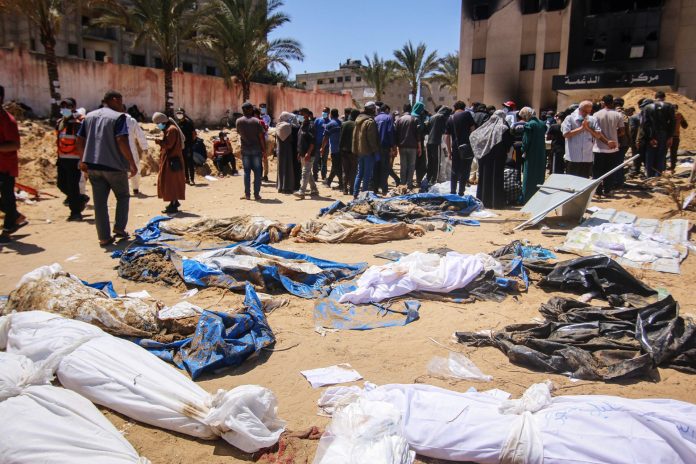
The total number of bodies found increased to 310, Colonel Yamen Abu Suleiman, the director of Civil Defense in Khan Younis, told CNN, adding that operations are ongoing.

Suleiman previously said some of the bodies were found with hands and feet tied, “and there were signs of field executions. We do not know if they were buried alive or executed. Most of the bodies are decomposed.”

Hamas spokesman Abdul Latif al-Qanou stressed the uncovering of mass graves in the courtyard of the Nasser Medical Complex in southern Gaza’s Khan Younis is “new additional evidence … of the genocide” being carried out against Palestinians.

“The mass graves and daily genocide being committed against our people requires international and political pressure,” al-Qanou said in a statement.

He called on the international community to “activate relevant resolutions as well as provisional measures issued by the International Court of Justice to save our people from this genocidal war”.

Israel has waged a brutal offensive on the Gaza Strip since a cross-border attack by the Palestinian group Hamas on Oct. 7 last year, which Tel Aviv says killed nearly 1,200 people.

At least 34,151 Palestinians have since been killed, mostly women and children, and 77,000 others injured amid mass destruction and severe shortages of necessities.

The Israeli war has pushed 85% of Gaza’s population into internal displacement amid acute shortages of food, clean water and medicine, while 60% of the enclave’s infrastructure has been damaged or destroyed, according to the UN.

Israel stands accused of genocide at the International Court of Justice. An interim ruling in January ordered Tel Aviv to stop genocidal acts and take measures to guarantee that humanitarian assistance is provided to civilians in Gaza.

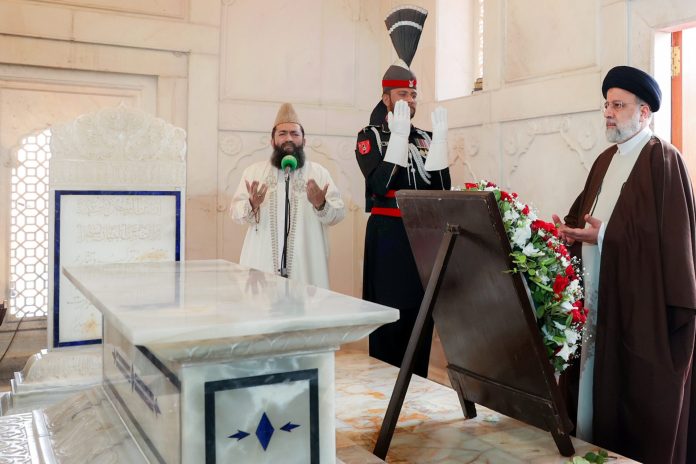
Visiting Iranian president pays homage to Allama Iqbal in Pakistan’s Lahore

Iranian president pays homage to Allama Iqbal in Pakistan’s Lahore

Upon arrival in the provincial capital, he was greeted by Punjab Chief Minister Maryam Nawaz and a host of government officials.

President Raisi put a wreath in the tomb of Allama Iqbal, known as Iqbal Lahori in Iran, and offered prayers to the Pakistani intellectual, who passed away in 1938.

During his itinerary in the city, he also visited the Badshahi Mosque as well as educational institutions for meetings with scientific and cultural elites.

The Iranian president, leading a ranking delegation of ministers, arrived in Pakistan on Monday for talks and agreements on expansion of bilateral ties with the neighboring country in several areas.

Below are some of the pictures of the Iranian president’s visit to Lahore, in Punjab province.

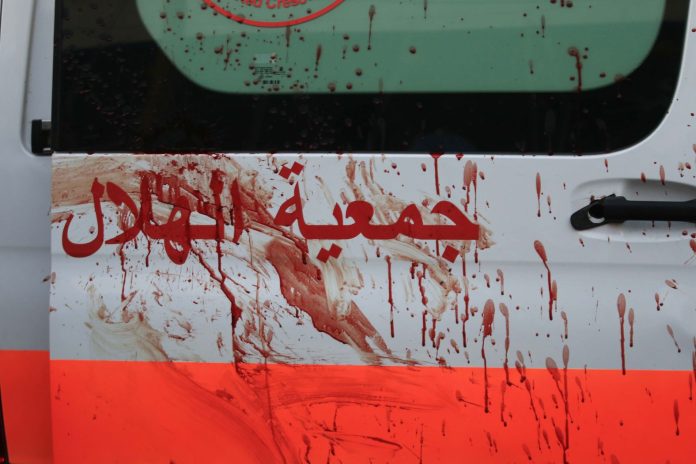
At least 350 healthcare workers killed in Gaza since start of war: UN Special Rapporteur

Gaza War

“We know that 520 healthcare professionals have been injured, and we know that 350 healthcare professionals, including allied healthcare workers, have been killed,” Mofokeng told a press briefing on Monday.

A number of teenagers used to assist medical workers in Gazan hospitals to help them deal with the growing number of those injured and killed, but the adolescents have not been enlisted among the casualties as they were not officially registered as medical workers, the UN special rapporteur added.

“The health system in Gaza has been completely obliterated and the right to health has been decimated at every level. The conditions are incompatible with the realization of everyone to the highest attainable state of physical and mental health. The attacks, the harassment, the killings of many of my own colleagues, healthcare workers, the destruction of health facilities and the destruction of humanitarian aid organizations continue to catapult to proportions yet to be fully quantified if at all possible,” Mofokeng said.

Israel has waged a brutal offensive on the Gaza Strip since a cross-border attack by the Palestinian group Hamas on Oct. 7 last year, which Tel Aviv says killed nearly 1,200 people.

Nearly 34,200 Palestinians have since been killed, mostly women and children, and 77,150 others injured amid mass destruction and severe shortages of necessities.

The Israeli war has pushed 85% of Gaza’s population into internal displacement amid acute shortages of food, clean water and medicine, while 60% of the enclave’s infrastructure has been damaged or destroyed, according to the UN.

Israel stands accused of genocide at the International Court of Justice. An interim ruling in January ordered Tel Aviv to stop genocidal acts and take measures to guarantee that humanitarian assistance is provided to civilians in Gaza.

Russia warns New US aid package will just kill more Ukrainians

Russia Ukraine War Weapons Arms

The US House of Representatives approved a $95 billion foreign aid package, almost two thirds of which would be spent on Ukraine-related programs. The Kremlin, however, doesn’t appear the slightest bit alarmed.

“Fundamentally, this will not change the situation on the battlefield,” Peskov told reporters on Monday.

Pointing to the steady Russian advances along the front, Peskov said the dynamics of the conflict are now “absolutely clear to everyone,” and that the money and weapons the US will allocate to Ukraine “will not lead to a change in this dynamic.”

“They will lead to new casualties among Ukrainians, more Ukrainians will die, Ukraine will suffer major losses,” the presidential spokesman added.

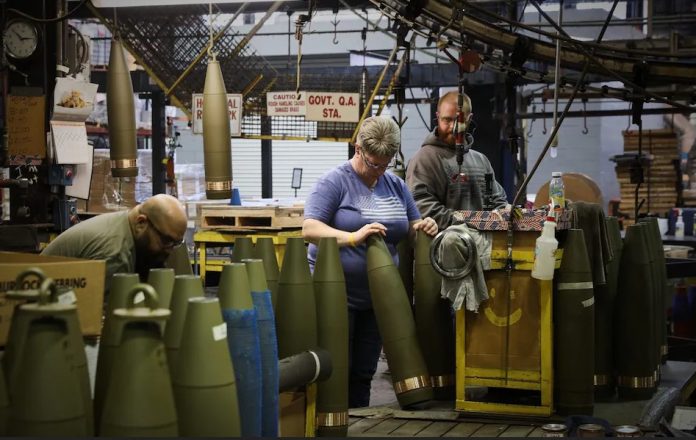
Moreover, he noted, the bulk of the aid money is supposed to stay in the US, one way or another. The White House itself argued this to Congress as one of the selling points, saying that the package was a stimulus for the US military-industrial complex and manufacturing base.

“In principle, nothing has changed,” Peskov added, noting that Russian President Vladimir Putin fully expected the US lawmakers to vote the way they did.

Reacting to the vote on Saturday, Russian Foreign Ministry spokeswoman Maria Zakharova said the US was using Ukrainians as “cannon fodder” and hoping to keep Kiev on life support until after the November presidential election. In the end, she said, the US will end up facing a “loud and humiliating fiasco on a par with Vietnam or Afghanistan.”

The newest batch of US aid might help slow down the Russians but won’t stop them, several Ukrainian officers have told Financial Times. No amount of weapons and ammunition from the West can solve Kiev’s biggest problem: the lack of manpower, the outlet noted.

Kirill Budanov, the head of Ukraine’s military intelligence, also predicted “a rather difficult situation” on the battlefield for the Kiev government in the coming months.

Iranian FM says EU sanctions ‘regrettable’

Hossein Amirabdollahian

Hossein Amirabdollahian took on Tuesday to his account on X social media platform to react to the sanctions, writing “It is regrettable that the EU quickly decided to create more illegal restrictions for Iran just because Iran exercised its right to self-defense in the face of Israel’s reckless aggression.”

The Iranian foreign minister advised the EU not to follow in the footsteps of the US to take measures in order to appease the Israeli regime.

The 27-member European bloc on Monday introduced new sanctions against Iran after it launched more than 300 drones and missiles at Israeli-occupied territories in retaliation for an Israeli strike on its embassy compound in Damascus on April 1. Seven Iranian military advisors were killed in the Israeli attack.

The sanctions extend restrictions on Iran’s weapons exports of drones and missiles.

UK announces largest-ever aid package for Ukraine

Rishi Sunak

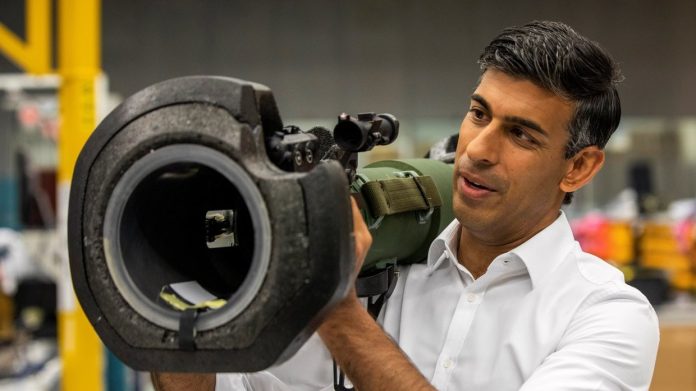
UK Prime Minister Rishi Sunak will officially announce the new aid plan when he travels to Warsaw on Tuesday for talks with his Polish counterpart, Donald Tusk. The package is valued at £500 million ($617 million) and will include more than 400 vehicles, 60 boats and an undisclosed number of long-range Storm Shadow missiles, Sunak’s office said in a statement, calling it the “largest-ever provision of vital munitions”.

“Defending Ukraine against Russia’s brutal ambitions is vital for our security and for all of Europe,” Sunak claimed.

“If [Vladimir] Putin is allowed to succeed in this war of aggression, he will not stop at the Polish border.”

The latest round of weaponry will bring London’s military aid to Kiev to £3 billion this year alone. It will also include 1,600 strike and air defense missiles and nearly 4 million rounds of small arms ammunition.

“Today’s package will help ensure Ukraine has what they need to take the fight to Russia,” Sunak said, adding, “The United Kingdom will always play its part at the forefront of European security, defending our national interest and standing by our NATO allies.”

The statement comes two days after the US House of Representatives approved a long-stalled emergency spending bill that includes $61 billion in additional Ukraine aid. US President Joe Biden pledged on Monday to quickly ramp up weapons shipments to Kiev once the spending legislation is approved by the Senate, which could happen as soon as Tuesday.

Joe Biden’s administration ran out of Ukraine funding earlier this year, after using up $113 billion in congressionally approved aid packages. Disruptions in support from Washington, by far Kiev’s biggest benefactor, led to ammunition shortages that were blamed for battlefield setbacks in recent months. Other NATO members and the EU responded by boosting their aid commitments, such as a €500 million ($533 million) package given by Germany last month.

UK defense chief Grant Shapps hailed the fact that London was the first ally to give Ukraine long-range missiles and “modern” tanks.

“Now, we are going even further,” he said in the statement.

“We will never let the world forget the existential battle Ukraine is fighting, and with our enduring support, they will win.”

He added that the latest round of aid will give Ukraine what it needs to push back Russian forces and “restore peace and stability in Europe”.

Ukrainian leaders are reportedly less sanguine about the potential impact of additional Western weaponry. The $61 billion US aid bill – nearly 100 times the scale of the UK’s latest gift – is unlikely to “dramatically alter Kiev’s situation on the frontline”, the Financial Times reported on Monday, citing unidentified Ukrainian officials and military analysts.