Saturday, December 27, 2025
Home Blog Page 924

EU says Europeans won’t die for Ukraine’s Donbass

Russia Ukraine War
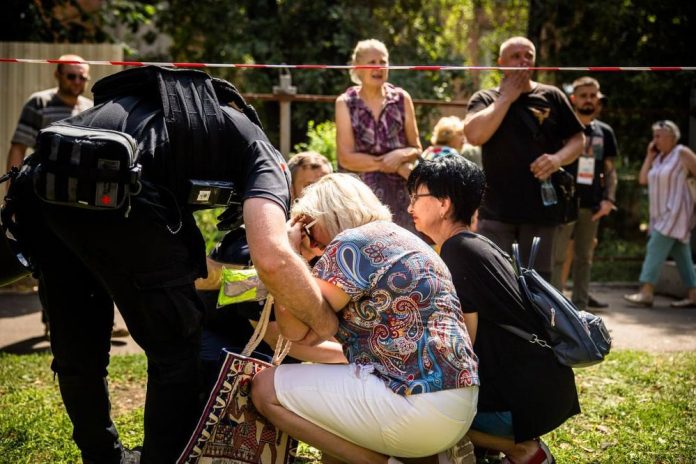
Local residents react at a site of an apartment building heavily damaged by a Russian missile strike in Kryvyi Rih.

Since the beginning of the conflict, the EU has provided Kiev with as much as €100 billion ($107 billion) in financial, military, humanitarian and refugee assistance. Brussels has also mulled the idea of tapping income generated by Russia’s frozen central bank reserves for Kiev, but no consensus within the EU or with allies has so far been reached on the issue.

“Europeans will not go to die for the Donbass, but we could avoid that Ukrainians have to die for the Donbass longer,” Borrell said while speaking at a panel session of a two-day meeting of the World Economic Forum in Riyadh.

The bloc’s top diplomat admitted that the issue of allocating funds for Kiev is “difficult”, but stressed that Brussels pledged to help the nation in its war effort against Russia.

“Many people could say ‘well how long do we have to spend so much money’ but we committed to support Ukraine […] We have to continue supporting Ukraine and Ukrainians, enable [them] to resist,” he added.

In March, Russian President Vladimir Putin stated that Western militaries have long had boots on the ground in Ukraine and that they have grown in numbers since the Western-backed coup in Kiev in 2014. These comments came shortly after French President Emmanuel Macron said that he “cannot exclude” the possibility of soldiers from the US-led military bloc being sent to aid Kiev. However, this sparked a wave of denials from senior officials of NATO member states.

Putin also said last year that the West is prepared to fight Russia to “the last Ukrainian”.

Meanwhile, controversy about Ukraine aid spending has been mounting within the EU. In February, the bloc approved another package of €50 billion ($54 billion) to support the Ukrainian economy after Hungarian Prime Minister Viktor Orban dropped his veto threat due to warnings of economic retribution from other EU heads of state. Budapest argued that Ukraine is not able defeat Russian forces and that the sanctions imposed on Russia over the conflict have caused more harm to the bloc’s members than to Moscow.

In November, Slovakia overturned plans to donate rockets and ammunition to Ukraine approved by the previous government as the country’s newly appointed Prime Minister Robert Fico sharply criticized military support for Ukraine along with sanctions on Russia. He has advocated for immediate peace talks.
Ukraine admits ‘tactical’ retreat from 3 villages

Russia Ukraine War

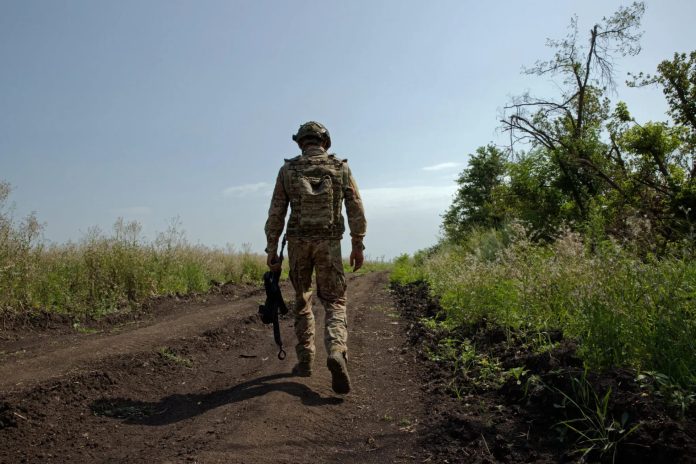
Ukrainian troops retreated from the villages of Berdychi and Semyonovka, to the northwest of Avdeevka, and from Novomikhailovka, to the southwest of Donetsk, commander-in-chief General Aleksandr Syrsky said on Sunday in a Telegram post.

The outnumbered Ukrainians gave ground to preserve “the lives and health of our defenders”, he added.

“The most difficult situation is in the Pokrovsk and Kurakhovo directions, where fierce battles continue,” Syrsky said.

“The enemy has engaged up to four brigades in these directions, and is trying to develop an offensive west of Avdeevka and Maryinka, making its way to Pokrovsk and Kurakhovo.”

After capturing the Ukrainian stronghold of Avdeevka in February, Russian units have made steady battlefield gains. They are now firmly in control of the battlefield situation and are steadily pushing back Ukrainian forces, Russian Defense Minister Sergey Shoigu said last Monday. According to Moscow, Kiev’s forces had lost more than 8,000 soldiers in just the past week.

In recent days, Russian forces also liberated the town of Bogdanovka, located near the strategic town of Chasov Yar in the north of the Donetsk People’s Republic (DPR). Chasov Yar sits on high ground, and taking it would give Russian units a strong vantage point from which to attack other key cities held by the Ukrainians.

The Ukrainian general acknowledged on Sunday that Russian forces are attacking along “the entire front line”, spanning more than 1,000 kilometers (620 miles). On Friday he told Western backers that Kiev’s forces face a “difficult operational and strategic situation, which has a tendency to get worse”.

The administration of US President Joe Biden blamed Ukraine’s battlefield setbacks, including the fall of Avdeevka, on opposition from Republican lawmakers, saying their “inaction” led to crippling ammunition shortages. Biden vowed to rush more aid to Kiev after Congress approved $61 billion in additional funding last week.

However, Moscow said that no Western weapons can change the dynamics on the front lines. Some US officials told Politico that the White House is also not convinced that the latest American assistance will be enough for Ukraine to prevail in the conflict against Russia.

Kremlin Spokesman Dmitry Peskov has stated Russia must support the current dynamics in the special military operation zone while the panic on the enemy side is growing.

“On the Ukrainian side, the panic is growing on the frontline,” the Kremlin official said in an appearance on the “Moscow.Kremlin.Putin” television program, according to an excerpt posted on journalist Pavel Zarubin’s Telegram channel.

“And this is first-hand information that there, on that side, the panic is growing. It is very important for us now to maintain this dynamics. It is very important not to stop and continue fulfilling [the tasks of the special military operation],” Peskov stressed.

The collective West and Ukraine will try to “play chicken” with Russia but it is important not to succumb, he added.

“It goes without saying that the other side, I mean, ‘the collective West plus one,’ that’s how I would call them, will try to ‘play chicken’ with us. The important thing is for us not to give in,” the Kremlin official continued, commenting on Western missile supplies to Kiev.

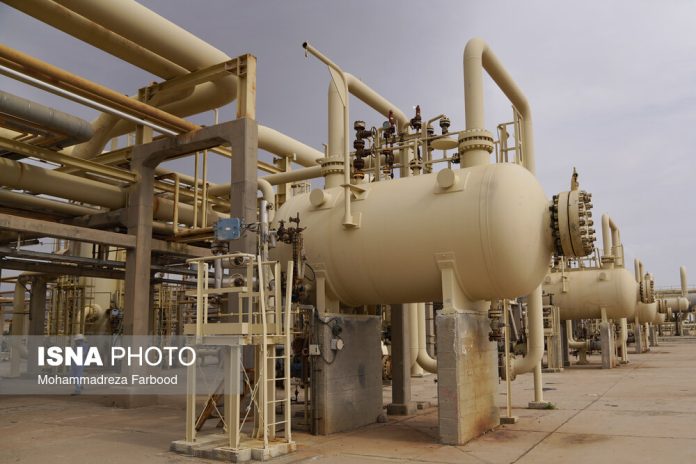
Iranian engineer makes oil, gas pipeline leak detector, shatters US, British monopoly

Iran Oil Gas

Mechanical engineer Mahmoud Kavousi, in an interview with Fars news agency on Sunday said that the hydrostatic test device, which tests pressure vessels for strength and leaks, is designed and produced to be used in power plants and for oil and gas pipelines and even water industries to cushion the effects of the decades-old embargoes.

Highlighting the achievement, he said leakage test is very important in oil and gas pipelines as even the smallest leaks can lead to heavy financial losses and fatalities.

Kavousi noted the previous method to detect and seal leakages was time-consuming and expensive.

“This device can be exported. There are no companies in West Asia, or even Iran, that designs and manufactures this device,” he said and added, “Presently, only the US and Britain have made a product similar to this one which we can confidently say has flaws and our device is more complete.”

US police arrest at least 900 during pro-Gaza rallies

Protest US Universities

The Washington Post newspaper reported the tally on Sunday, the 10th straight day of the protests that began after Columbia University set up an encampment to demand cessation of the war and press the school to divest from Israeli financial interests.

The crackdown then started when university authorities called in the police, a move that sparked more than 100 arrests on the university’s Manhattan campus.

Two other highlights in the crackdown saw police forces rounding up roughly the same number of people at New York University and Emerson College in Boston.

Protests have also erupted across numerous other seats of learning, including Brown University in Providence, Rhode Island, the University of Michigan in Ann Arbor, Massachusetts Institute of Technology in Cambridge, and California State Polytechnic in Humboldt.

The ensuing countrywide counter-campaign of suppression has seen law enforcement resorting to riot control methods against the protesters.

The methods have featured “the same tools and tactics” that were deployed to confront the thousands-strong protests that sparked across the country after a Minneapolis police officer killed George Floyd four years ago, the daily reported.

“At Emory University last week, Atlanta police said officers used ‘chemical irritants’ to clear an encampment, and a Georgia State Patrol officer was captured on video using a stun gun to subdue a man on the ground,” it said.

At Joe Biden’s behest, the United States has been providing the Israeli war with unreserved military and intelligence support.

The US has also vetoed several United Nations Security Council resolutions calling for an immediate ceasefire in the brutal military onslaught that has so far claimed the lives of at least 34,454 Gazans, mostly women and children.

Zelensky says working on getting long-term assistance package from US

Biden Zelensky

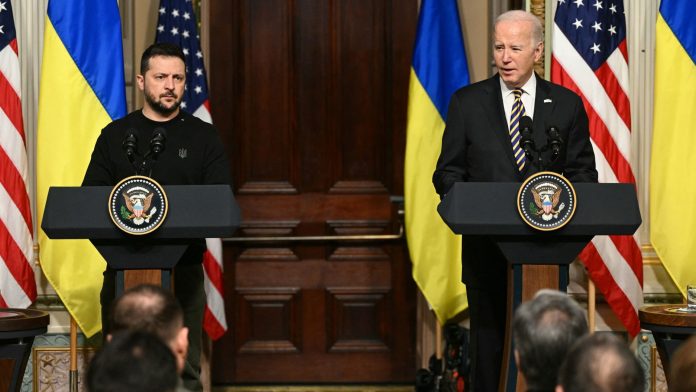
Kiev is negotiating with the administration of US President Joe Biden on a long-term agreement that would put Washington on the hook to provide Ukraine with military, economic, and political support for the next decade, Zelensky said on Sunday in his daily video address.

Such commitments are needed to ensure Ukraine has the “efficiency in assistance” it needs to stem recent battlefield advances by Russian forces and gain the upper hand, he added.

“We are working to commit to paper concrete levels of support for this year and for the next ten years,” Zelensky stated.

“It will include military, financial, and political support, as well as what concerns joint production of weapons.”

Ukraine has already signed bilateral security agreements with several NATO members, including the UK, Germany, and France. Zelensky said he wants the long-term deal under negotiation with Washington to be the strongest pact yet.

However, Ukraine’s bilateral agreements with Western countries so far have stopped short of mutual-defense commitments. The deals merely pledge long-term aid, including support in the event of a future attack, and they are not legally binding. The agreement with Berlin, for instance, can be terminated with six months’ notice.

Zelensky added he wants Ukraine’s bilateral pact with Washington to include specific levels of aid.

“The agreement should be truly exemplary and reflect the strength of American leadership,” he continued.

US lawmakers approved $61 billion in additional aid for Ukraine earlier this month, after House Speaker Mike Johnson (R-Louisiana) overrode opposition in his own party to pass the bill with unanimous Democrat support. The Biden administration ran out of funding for Ukraine aid earlier this year, after using up $113 billion in previously approved assistance packages.

Republican lawmakers have argued that Biden is merely prolonging the bloodshed in Ukraine without offering a clear strategy for victory or a peace deal with Russia. A poll released in February showed that nearly 70% of Americans want Biden to push for a negotiated settlement with Moscow, involving compromises on both sides, rather than continuing to fund the conflict.

Zelensky also said Kiev has fulfilled every requirement the EU has set out for it, and is ready to begin accession talks, demanding that the bloc now follows through.

Kiev made a formal request to join the EU in February 2022 and was granted candidate status in June of the same year. In December 2023, EU officials agreed to open accession negotiations, setting out a number of steps for Kiev to take first in preparation.

All these steps have been completed, Zelensky claimed, promising that this is the year to achieve “results with the European Union.”

“Ukraine has fulfilled all the necessary conditions for the real start of the accession negotiations, and now the EU side must fulfill its obligations,” Zelensky insisted.

The EU’s accession criteria include stable democratic institutions, the rule of law, protection of human rights and minorities, along with a robust market economy and the institutional capacity to cope with the responsibilities of being an EU member state.

One of the key issues is widespread corruption in Ukraine. Amid a string of high-level scandals, lawmakers from the country’s biggest backer – the US – have expressed concerns about their aid being misused. Last month, the Ukrainian Defense Ministry announced plans to introduce a new logistics planning department, after several high-ranking military officials were arrested for embezzlement in the months before.

Kiev is currently preparing for a so-called peace conference set to take place in Switzerland this June, Zelensky added.

“The world majority must force Russia into peace – and it can do this.”

Moscow has not been invited to participate, and has dismissed the conference as “nonsense”. President Vladimir Putin reiterated earlier this month that Russia has not rejected a peaceful solution to the conflict, but would not accept a deal that ignore the country’s interests.

Kiev is also gearing up for aNATO summit scheduled for this summer, according to the Ukrainian president. The US-led military bloc “should not be afraid of its own strength or shy away from its own foundations,” he said, calling for a “strong political signal”.

Ukraine’s ambition to join NATO – a goal enshrined in its constitution – was one of the key reasons for Russia’s military operation against Kiev, Moscow has stated. One of Russia’s major goals in the conflict is Ukrainian neutrality, Putin has said.

Egypt says Suez Canal revenue drops by 50% amid Red Sea tension

Shipping firms Red Sea passage

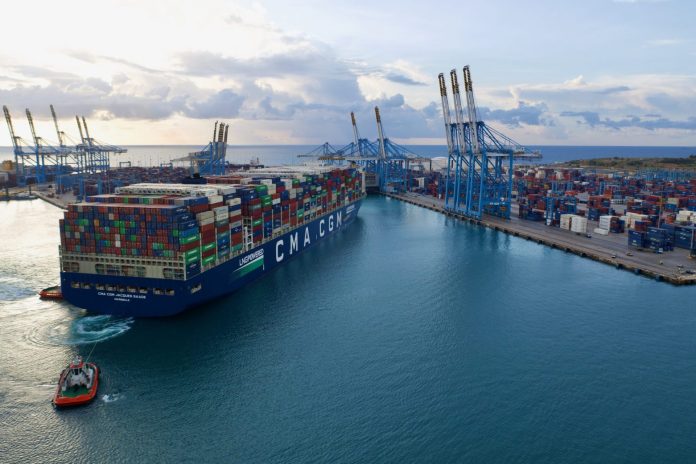
“The decline was caused by a disruption in shipping due to tension in the Red Sea,” Hala El-Saeed said in a speech on the sidelines of the World Economic Forum in Riyadh, Saudi Arabia.

The Suez Canal, a critical maritime route for global trade, is the shortest shipping route between Europe and Asia. It is one of the main sources of foreign currency for Egypt.

Transits through the international waterway were affected by tensions in the Red Sea amid Yemen’s Houthi attacks on Israeli-linked commercial ships and US retaliatory airstrikes.

Tensions have escalated across the Middle East region amid a deadly Israeli offensive on the Gaza Strip, which has killed more than 34,400 people and injured thousands since an Oct. 7 Hamas attack, which killed nearly 1,200 people.

More than six months into the Israeli war, vast swathes of Gaza lay in ruins, pushing 85% of the enclave’s population into internal displacement amid a crippling blockade of food, clean water and medicine, according to the UN.

Israel stands accused of genocide at the International Court of Justice. An interim ruling in January ordered Tel Aviv to stop genocidal acts and take measures to guarantee that humanitarian assistance is provided to civilians in Gaza.

Children face shattered lives in Gaza: UNRWA

Gaza War

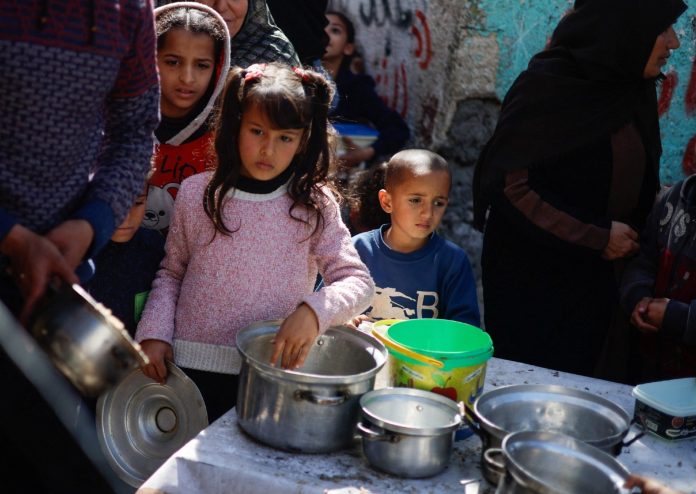
“With [more than] 70 percent of houses damaged or destroyed, most [children] have also lost their homes,” UNRWA said in a post on X.

“Schools have become shelters for surviving, not for education. Their future needs protecting,” it added.

Children are paying the highest toll in the ongoing Israeli war, now nearing its seventh month, UNRWA warned.

“What more to endure? Death, hunger, disease, displacement, [and] now living in greenhouses-like structures under scorching heat,” UNRWA chief Philippe Lazzarini stated.

More than 14,000 children have been killed in the Gaza Strip since the start of the war in early October 2023, United Nations Children’s Fund (UNICEF) Executive Director Catherine Russell has recently stated.

“Thousands have been injured and thousands more are on the brink of famine,” she said during a news conference in New York in mid-April.

In a separate statement, the United Nations Entity for Gender Equality and the Empowerment of Women announced that “one child is injured or dies every 10 minutes” in Gaza. The statement added that more than 10,000 women have been killed in Gaza since the war began, and 6,000 of them left 19,000 orphaned children behind.

Israel has waged a military offensive on Gaza since a cross-border attack by the Palestinian group Hamas last October which killed nearly 1,200 people.

Nearly 34,500 Palestinians have since been killed and 77,500 others injured amid mass destruction and shortages of necessities.

Israel has also imposed a crippling blockade on the seaside enclave, leaving its population, particularly residents of northern Gaza, on the verge of starvation.

The war has pushed 85% of Gaza’s population into internal displacement amid acute shortages of food, clean water and medicine, while much of the enclave’s infrastructure has been damaged or destroyed.

Israel is accused of genocide at the International Court of Justice. An interim ruling in January ordered it to ensure its forces do not commit acts of genocide and guarantee that humanitarian assistance is provided to civilians in Gaza.

Majority of Americans disapprove of Biden policy on Gaza

President Joe Biden

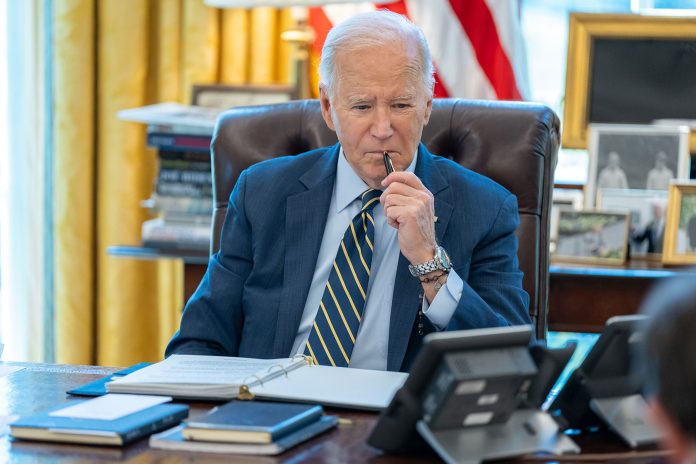
Sixty percent of Americans disapprove of Joe Biden’s job as US president, a poll conducted by CNN showed.

The poll added that 71% of respondents do not approve of Biden’s policy on the Gaza conflict, and only 28% support it.

At the same time, 49% of US citizens support former US President Donald Trump in the upcoming presidential election in the United States, with Biden gaining 43% of support, the report read on Sunday.

The poll was conducted on April 18-23 and surveyed 1,212 people.

On October 7, 2023, Hamas launched a large-scale rocket attack against Israel from Gaza and breached the border, killing 1,200 people and abducting around 240 others.

Israel launched retaliatory strikes, ordered a complete blockade of Gaza, and started a ground incursion into the Palestinian enclave with the declared goal of eliminating Hamas fighters and rescuing the hostages. Over 34,400 people have been killed in the Gaza Strip so far, local authorities said.

On November 24, Qatar mediated a deal between Israel and Hamas on a temporary truce and the exchange of some of the prisoners and hostages, as well as the delivery of humanitarian aid into the Gaza Strip. The ceasefire was extended several times and expired on December 1. More than 100 hostages are still believed to be held by Hamas in Gaza.

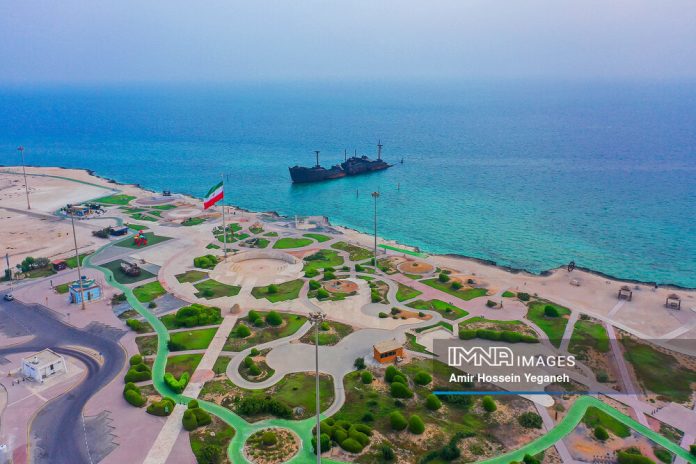
Iran celebrates National Persian Gulf Day

Persian Gulf

In 2010, Iran designated Ordibehesht 10 on the Iranian calendar, which falls on April 29 or 30, as the National Persian Gulf Day to commemorate the expulsion of Portuguese forces from the region in 1622 after over 115 years of occupation.

The day has been added to the country’s national heritage to celebrate the history, name, and significance of the Persian Gulf.

In a ceremony marking the day, the chief commander of the Islamic Revolution Guards Corps (IRGC)’s Navy Rear Admiral Alireza Tangsiri said Iran’s strategy in the Persian Gulf is “peace, security and friendship,” adding foreigners are disturbing the security in the region.

Highlighting the strategic importance of the region, Rear Admiral Tangsiri said 40 percent of gas and 62 percent of oil reserves in the region lie in the Persian Gulf and Iran establishes the security of the Strait of Hormuz for the ships that take the route.

The Persian Gulf, the third largest in the world, runs along the Sea of Oman between Iran and the Arabian Peninsula.

Russia says its response to West’s seizure of frozen assets to be tough

Kremlin

She drew attention to The Wall Street Journal’s report that Germany allegedly wants to leave Russia’s frozen assets intact to used them as a tool during the conflict settlement talks to force Russia cede part of the Ukrainian territory it has taken control of.

“Russian assets must stay intact. Otherwise, a tough response will follow the West’s robbery. Many in the West understand this. I wish everyone does,” Zakharova wrote on her Telegram channel.

“I don’t know who is saying what but we don’t swap assets for territories. We never bargain our motherland,” she emphasized.

The European Union, Canada, the United States, and Japan have frozen some $300 billion worth of Russian assets since the beginning of its special military operation in Ukraine. The United States accounts for around $5-6 billion of this sum.

On April 24, the US Senate approved a package of bills to provide military aid to Ukraine, Israel and Taiwan, to confiscate Russia’s frozen assets for their transfer them to Kiev, and to impose additional sanctions on China.

Kremlin Spokesman Dmitry Peskov has also said confiscating Russian assets would be a nail in the coffin of the entire Western economic system.

“If this happens, if such a dangerous precedent is created, it will be such a solid nail in the future coffin of the entire Western economic system of coordinates,” Peskov said in an interview with Pavel Zarubin, a journalist from the program ‘Moscow. Kremlin. Putin’ on Rossiya 1 TV channel.

Peskov, Russian President Vladimir Putin’s press secretary, also stated that foreign investors and countries around the globe will reconsider investing their money in the West if it goes ahead with the asset seizure sanctioned by the US Congress this week.

“Of course, foreign investors, foreign states that keep their reserves in the assets of these countries, from now on will think ten times before investing their money,” Peskov continued, adding, “Reliability disappears overnight, because of one thoughtless decision. It is restored [only after] decades, or even more.”

He said it was to soon to talk about Russia’s response in the event of the West seizing Russian assets, but noted that there was also Western property in Russia.

“It is premature to talk about this,” Peskov stated, adding, “Of course, there is Western money here. We have Western money of various structures. Now is not the time to specify.”

However, he stressed that in the event of the seizure of frozen Russian assets in the West, Russia would take legal action and other steps.

“Of course, such decisions will have very broad judicial perspectives. And, of course, Russia will use these judicial perspectives and will endlessly defend its interests in this field,” the spokesperson continued.