Wednesday, December 24, 2025
Home Blog Page 911

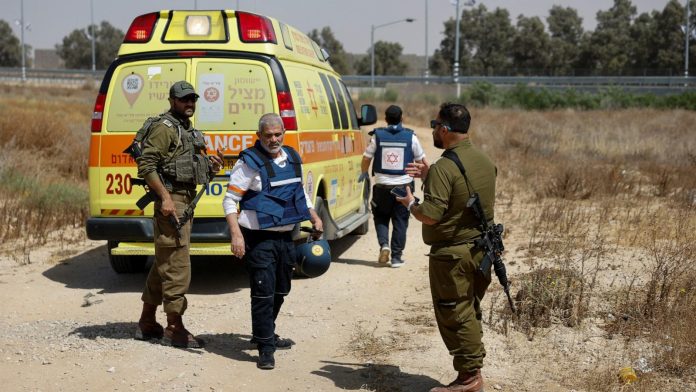
Hamas attack kills three Israeli soldiers, injures 11 others

Hamas Attack Israel

Military spokesman Daniel Hagari announced in a statement that three staff sergeants, namely 19-year-old Ruben Marc Mordechai Assouline, 19-year-old Ido Testa and 21-year-old Tal Shavit, were killed.

The 11 soldiers who were wounded include two soldiers from the 931st Battalion and a soldier from the Shaked Battalion who are listed as in serious condition.

Issuing a statement on Sunday, al-Qassam Brigades said its fighters bombarded gatherings of Israeli forces at the Kerem Shalom crossing and its surroundings with the 114 mm short-range Rajoom rocket system.

Following the attack, the Israeli military announced that it had closed the Karem Abu Salem crossing. The crossing was one of the key passages for aid entering the besieged Gaza Strip. Israeli authorities announced its reopening in mid-December following mounting pressure from the United States amid a dire humanitarian situation in Gaza.

Despite its reopening, Israeli authorities have allowed only a trickle of assistance needed to address the needs inside the Palestinian territory.

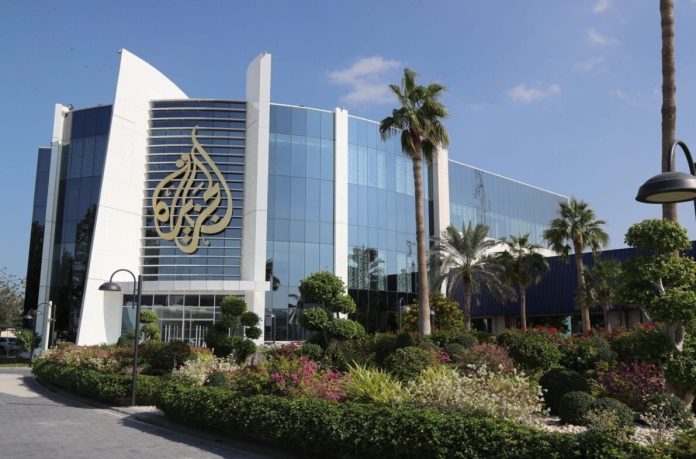
Al Jazeera condemns Israel’s decision to shut down local offices

Al Jazeera

“Al Jazeera Media Network strongly condemns and denounces this criminal act that violates human rights and the basic right to access of information. Al Jazeera affirms its right to continue to provide news and information to its global audiences,” the network said in a statement on Sunday.

“Israel’s ongoing suppression of the free press, seen as an effort to conceal its actions in the Gaza Strip, stands in contravention of international and humanitarian law. Israel’s direct targeting and killing of journalists, arrests, intimidation and threats will not deter Al Jazeera from its commitment to cover, whilst more than 140 Palestinian journalists have been killed since the beginning of the war on Gaza.”

“The Network vehemently rejects the allegations presented by Israeli authorities suggesting professional media standards have been violated. It reaffirms its unwavering commitment to the values embodied by its Code of Ethics,” it added.

The statement comes after Israeli Prime Minister Benjamin Netanyahu’s cabinet voted unanimously to close Al Jazeera’s operations in Israel, weeks after Israel’s parliament passed a law allowing the temporary closure of foreign broadcasters considered to be a threat to national security during the months-long war in Gaza.

Netanyahu announced the decision on X, formerly Twitter.

“The government headed by me unanimously decided: the incitement channel Al Jazeera will be closed in Israel,” he posted in Hebrew.

Israel’s Communications Minister Shlomo Karhi wrote on X that he had signed the orders against Al Jazeera, which would be effective immediately.

Karhi stated he ordered the seizure of Al Jazeera’s broadcasting equipment “used to deliver the channel’s content”, including editing and routing equipment, cameras, microphones, servers and laptops, as well as wireless transmission equipment and some mobile phones.

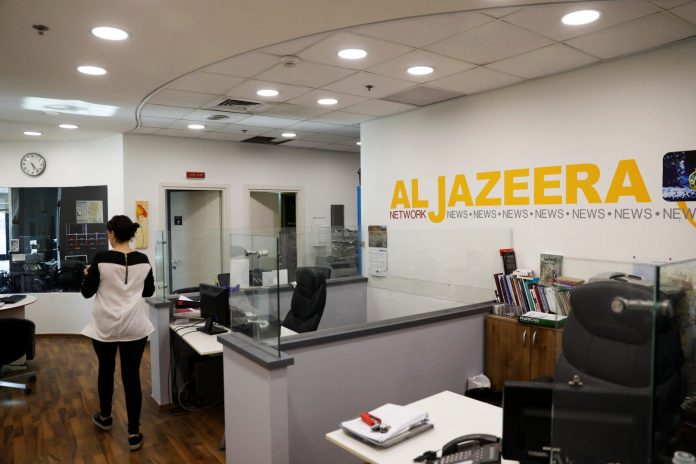
Later on Sunday, police raided Al Jazeera’s premises in occupied East Jerusalem and satellite and cable providers took Al Jazeera off air.

Messages have appeared instead of Al Jazeera’s broadcast on a number of satellite providers, including messages with the words “Yes” and “Hot”.

The message flagged with “Yes” reads: “In accordance with the government decision, the Al Jazeera station’s broadcasts have been stopped in Israel.”

Israel’s decision escalates its long-running feud against Al Jazeera. It also threatens to heighten tensions with Qatar, which funds the media network, at a time when Doha is playing a key role in mediation efforts to halt the war in Gaza.

Israel has long had a rocky relationship with Al Jazeera, accusing it of bias against it and collaboration with Hamas. The Qatar-based network has repeatedly rejected the accusations.

Al Jazeera is one of the few international media outlets to remain in Gaza throughout the war, broadcasting bloody scenes of air attacks and overcrowded hospitals, and accusing Israel of massacres.

Last month, Netanyahu had warned he would “act immediately to stop” Al Jazeera’s operations in Israel after its parliament approved a law that grants senior ministers powers to shut down foreign news networks deemed a security risk.

“Al Jazeera harmed Israel’s security, actively participated in the October 7 massacre, and incited against Israeli soldiers,” Netanyahu had posted on X.

The network accused Netanyahu of “incitement”, holding the Israeli leader “responsible for the safety of its staff and network premises around the world, following his incitement and this false accusation in a disgraceful manner”.

US says no Saudi defense pact without Israel agreement

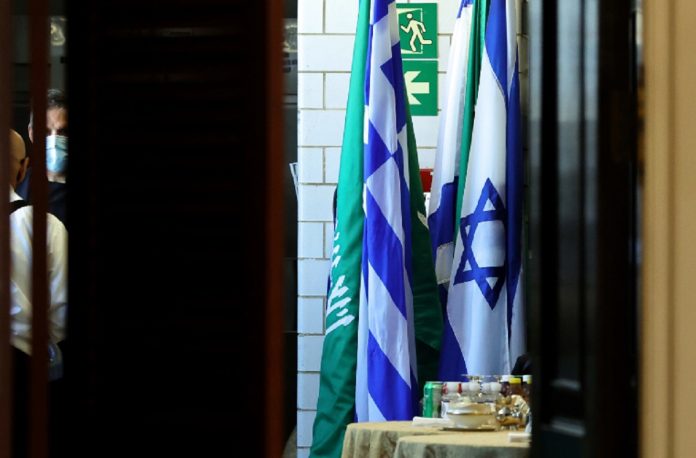
Israel Saudi Arabia Flags

Media reports last week suggested that Washington and Riyadh were drawing closer to signing a bilateral security pact, even as progress toward a Saudi-Israel normalization deal remained stalled. According to Reuters, the pact would see the US enter into a formal alliance with Saudi Arabia and help with its civilian nuclear program in exchange for Riyadh cutting some economic ties with China.

Speaking at a Financial Times event in London on Saturday, Sullivan insisted that no agreement will be possible without Saudi Arabia recognizing Israel.

“The integrated vision is a bilateral understanding between the US and Saudi Arabia combined with normalization between Israel and Saudi Arabia, combined with meaningful steps on behalf of the Palestinian people,” he told attendees.

“All of that has to come together…you can’t disentangle one piece from the others.”

Brokering a Saudi-Israeli normalization deal was a key foreign policy goal of former US President Donald Trump, whose 2020 ‘Abraham Accords’ saw Bahrain, Morocco, Sudan, and the United Arab Emirates open diplomatic and trade links with Israel. US President Joe Biden has continued to push for such a deal, but the war in Gaza has frozen negotiations since last October.

The Saudi Foreign Ministry stated in February that the kingdom would not establish formal relations with Israel “unless an independent Palestinian state is recognized on the 1967 borders with East Jerusalem as its capital, and that the Israeli aggression on the Gaza Strip stops and all Israeli occupation forces withdraw from the Gaza Strip”.

Riyadh’s conditions are non-starters in Tel Aviv, where Israeli Prime Minister Benjamin Netanyahu has vowed to continue waging war in Gaza until Israel achieves “total victory” over Hamas. Netanyahu has also insisted on “full Israeli security control over the entire area west of the Jordan” when the conflict eventually ends, a description that includes the West Bank and Gaza.

Saudi Foreign Minister Prince Faisal bin Farhan stated last week that Riyadh and Washington were indeed “very close” to a defense pact, but reiterated that there also “needs to be truly a pathway to a Palestinian state” that is “credible and irreversible”.

1st concrete pouring for Karun nuclear island set for fall: Iran revives dormant power plant

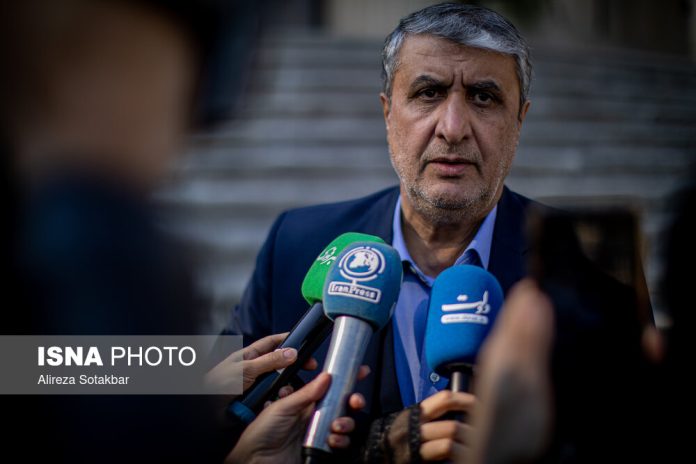
Mohammad Eslami

The Karun power plant, once contracted with France, fell dormant after the Ialamic revolution of 1979 and subsequent abandonment by the foreign partner.

Eslami said in line with Iran’s strategic plan to generate 20,000 megawatts of electricity by 2022, the project has been resurrected.

He added that land ownership issues have been addressed, site preparation is in progress, and the necessary equipment for construction is being set up.

The head of the Atomic Energy Organization noted that the pouring of concrete for the first nuclear island is scheduled for this autumn.

This endeavor not only marks a significant step towards energy independence but also aims to bridge Iran’s five-decade gap in nuclear power production, he added.

Israeli Cabinet votes to close Al Jazeera offices

Al Jazeera

The cabinet vote on Sunday came after Israel’s parliament passed a law allowing the temporary closure in Israel of foreign broadcasters considered to be a threat to national security during the months-long war in Gaza.

Netanyahu announced the decision on X, formerly Twitter. “The government headed by me unanimously decided: the incitement channel Al Jazeera will be closed in Israel,” he posted in Hebrew.

In another X post, Israel’s Communications Minister Shlomo Karhi said he had signed the orders against Al Jazeera, which would be effective immediately.

Karhi also ordered the seizure of Al Jazeera’s broadcasting equipment “used to deliver the channel’s content”, including editing and routing equipment, cameras, microphones, servers and laptops, as well as wireless transmission equipment and some mobile phones.

The decision escalates Israel’s long-running feud against Al Jazeera. It also threatens to heighten tensions with Qatar, which funds the media network, at a time when Doha is playing a key role in mediation efforts to halt the war in Gaza.

Israel has long had a rocky relationship with Al Jazeera, accusing it of bias against it and collaborating with Hamas. The Qatar-based network has repeatedly rejected the accusations.

Al Jazeera is one of the few international media outlets to remain in Gaza throughout the war, broadcasting bloody scenes of air attacks and overcrowded hospitals, and accusing Israel of massacres.

Last month, Netanyahu had said he would “act immediately to stop” Al Jazeera’s operations in Israel after its parliament approved a law that grants senior ministers powers to shut down foreign news networks deemed a security risk.

“Al Jazeera harmed Israel’s security, actively participated in the October 7 massacre, and incited against Israeli soldiers,” Netanyahu had posted on X.

The network accused Netanyahu of “incitement”, holding the Israeli leader “responsible for the safety of its staff and network premises around the world, following his incitement and this false accusation in a disgraceful manner”.

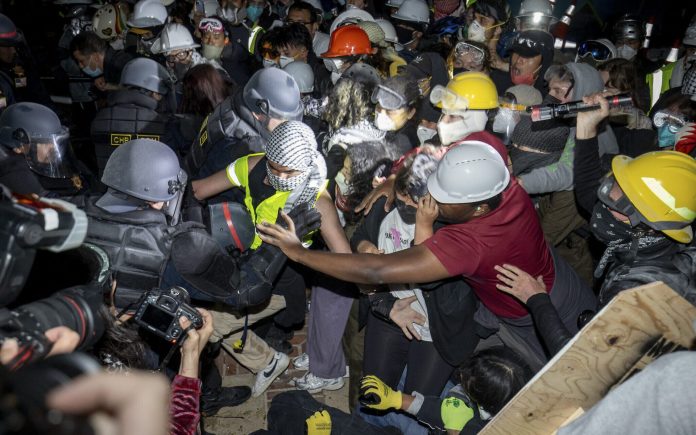
Over 2,300 arrested in US in pro-Palestinian campus demos

US University Protest

Now, as many students face legal and disciplinary action and universities are reassessing commencement plans, school communities are expressing frustration with administrators’ management of campus protests.

On Wednesday, a group of pro-Palestinian protesters formed an encampment at Fordham University’s Lincoln Center campus in New York City. The school called on the New York Police Department to assist, and police arrested 15 protesters.

In a statement addressed to the school community released later that evening, Fordham President Tania Tetlow characterized the encampment inside the Leon Lowenstein academic building and the protest directly outside as “different” from previously held events on the college campus, and added that “hundreds of protesters came from elsewhere”.

“We draw the line at intrusions into a classroom building, especially by people who are not members of our community. (There is a difference between free speech and people barging into your home to shout.),” she wrote.

In a letter shared exclusively with NBC News, two Fordham faculty members presented an analysis of what they consider to be Tetlow’s “inaccurate and misleading statements” to the Fordham community.

Assistant professor Leo Guardado and associate professor Carey Kasten provided an in-depth timeline of the May 1 events to the Fordham Faculty Senate on Friday. They also presented a compilation of photos and videos taken by faculty members who elected to serve as observers of the encampment.

The evidence was used to dispute almost 10 claims Tetlow made in her letter.

One of those contentions includes an exaggeration of the size of the indoor encampment. The professors claim that, based on eyewitness accounts and video evidence, about 20 people were a part of the encampment, when Tetlow said “several dozen people pushed inside the lobby”.

Guardado and Kasten also claimed the language in Tetlow’s letter suggested that the majority of individuals involved in the encampment and protest were not affiliated with Fordham.

“The arrested protesters were students and alums. Many of the people outside were students, faculty and alums,” Kasten stated, adding, “This is our community.”

Tetlow said the university remains committed to allowing peaceful protests, but the professors’ letter to the Fordham Faculty Senate argued that the encampment was nonviolent and that “all participants remained peaceful in their protest throughout the day”.

Danie Taylor, a professor in the Fordham theater program, stated he was disheartened by the university’s failure to “uphold its own mission statement,” which includes the “promotion of justice” and the “protection of human rights”.

“We must hold our institution accountable to its stated values of social responsibility and ethical conduct,” he added.

University administrators are experiencing pushback and fielding criticism for their decisions to use police to crack down on encampments and protests.

Last week, after a pro-Palestinian encampment began on Emory University’s campus, police arrested 28 individuals — 20 of whom were Emory community members.

After the incident, the Faculty Senate of the Emory College of Arts and Sciences, one of the university’s nine schools, passed a vote of no confidence in President Gregory Fenves, with 75% of members voting in favor of its passage, according to Laura Diamond, assistant vice president of university communications.

In response to the vote, the university announced in a statement: “While we take any concerns expressed by members of our community seriously, there are a wide range of perspectives being shared.”

On Friday, the NYPD arrested 43 individuals while the New School’s encampment was cleared. Later that afternoon, more than 200 faculty and staff members from all five colleges within the university convened an emergency meeting.

The meeting, hosted by the New School chapter of the American Association of University Professors, held three votes, including a vote of no confidence in President Donna Shalala and the board of trustees. More than 90% of members voted in favor.

A vast majority of the group also voted for all charges and disciplinary actions against students to be dropped.

“The results of this emergency meeting are simply a first step, initiated by workers at The New School profoundly angered and distressed by the administration’s treatment of our students,” the group said in a statement on Friday.

“President Donna Shalala’s decision to invite police onto campus under the flimsiest of premises, to arrest students involved in nonviolent protest, at a time when no faculty support was on hand, is intolerable.”

At University of Texas at Austin, where police arrested 57 pro-Palestinian protesters on April 24, more than 600 members of the university’s teaching staff signed an open letter claiming no confidence in President Jay Hartzell.

“The President has shown himself to be unresponsive to urgent faculty, staff, and student concerns. He has violated our trust. The University is no longer a safe and welcoming place for the diverse community of students and scholars who until now have called this campus home,” the letter stated.

It was sent to Hartzell on April 29, after some faculty members declined to hold class or grade assignments earlier in the week to protest the university’s response to the encampment.

The faculty members of the Columbia University history department condemned the use of police force against students and referred to the similar anti-war protests that took place on campus in 1968.

“Since the last time the police were called on this campus in large numbers, in 1968, Columbia has worked hard to restore community, build shared governance, deal peacefully with protest, and maintain a culture of respectful debate. We must hold on to this legacy,” the department noted in a statement.

Students are also taking action against university administration after the crackdown on pro-Palestinian activism.

At the University of Southern California, the undergraduate student government sent a letter to President Carol Folt expressing disappointment in the administration’s use of force, after the Los Angeles Police Department arrested nearly 100 people on April 24.

“The escalation of police violence on our campus is an experience we never imagined — much less one being fronted by our university,” the letter, released on April 28, stated.

The USC students called for no further “retaliatory action” against them for participating in peaceful assemblies.

“We expect the university’s disproportionate response to the demonstration on April 24th to never recur on this campus,” the letter continued, adding, “To the administration, we expect better.”

At Columbia University, students filed a complaint with the U.S. Department of Education’s Office for Civil Rights to investigate discrimination against Palestinian students and their allies.

In addition to faculty and student efforts to demand accountability from administrators, organizations such as Palestine Legal are stepping in.

In Florida, a coalition of seven organizations — including the state’s chapters of the ACLU and NAACP — delivered a letter to Florida college and university presidents on Friday to express concern over “unnecessary use of force by law enforcement and encroachments on First Amendment rights,” citing university responses to the peaceful protests as “troubling and dangerous”.

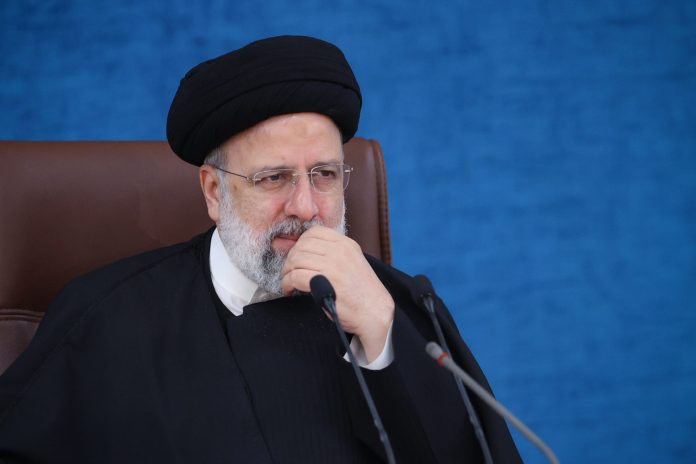
President Raisi: Iran among top regional, world powers after reprisal against Israel

Ebrahim Raisi

Addressing a joint cabinet meeting with the Iranian governors on Sunday, President Raisi said Operation True Promise which was carried out on April 13 for the first time from Iran against Israeli targets inside the occupied territories was a ‘turning point’ in the Iranian history.

The Iranian armed forces hit several Israeli military and intelligence sites with missiles and drones following the Israeli attack on Iran’s diplomat mission in the Syrian capital Damascus two weeks earlier. Seven Iranian military personnel were killed in the attack.

President Raisi said the operation “placed Iran in the club of regional and world powers in the highest ranks and among the prominent powers.”

Following the operation, officials in Iran said True Promise was restrained to show only a glimpse of the country’s military capabilities, warning Israel will get a crushing response in case of any attack on Iranian targets.

38% of Americans say US doing too much to support Israel: Poll

Biden Netanyahu

An April 25 – 30 survey of 2,260 adults by US News Ipsos revealed that Americans are divided on the US’ Israel policies.

The survey revealed that 38% said the US was doing too much to support Israel, 20% saw too little US support for Israel and 40% said Washington’s backing is about right.

It showed that 37% trust former President Donald Trump more than President Joe Biden to handle the issue; 29% trust Biden more, an eight-point gap.

While 33% of respondents said they did not trust either, 1% did not express an opinion.

The survey was conducted with English and Spanish-speaking adults who were randomly selected from the internet at the national level.

Israel has killed more than 34,600 Palestinians since an Oct. 7 cross-border attack by Hamas in which less than 1,200 Israelis were killed and around 250 hostages taken.

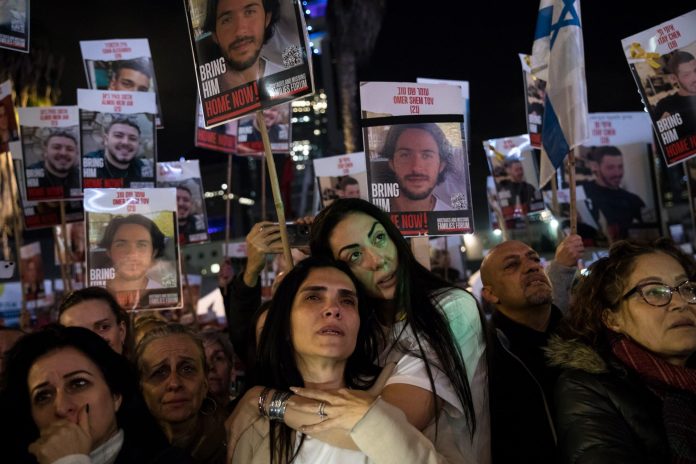
Israelis protest to demand captive swap deal

Israel Hostages

The protest occurred near Rehovot Science Park and also demanded early elections, according to the Yedioth Ahronoth daily newspaper. It added some families of the hostages in Gaza participated in the demonstration.

It is expected that the intensity of protests will increase, encompassing all of Israel.

Tel Aviv believes 134 Israelis are being held in Gaza, while Israel is holding 9,000 Palestinians in its jails.

Israel has killed more than 34,600 Palestinians since an Oct. 7 cross-border attack by Hamas in which less than 1,200 Israelis were killed and around 250 hostages taken.

A deal in November saw the release of 81 Israelis and 24 foreigners in exchange for 240 Palestinians, including 71 women and 169 children.

The US, Qatar and Egypt have tried to broker an agreement to release the remaining Israeli captives.

The conflict has pushed 85% of Gaza’s population into internal displacement amid acute shortages of food, clean water and medicine, while 60% of the enclave’s infrastructure has been damaged or destroyed.

Israel is accused of genocide at the International Court of Justice, which in January issued an interim ruling that ordered Tel Aviv to stop genocidal acts and take measures to guarantee that humanitarian assistance is provided to civilians in Gaza.

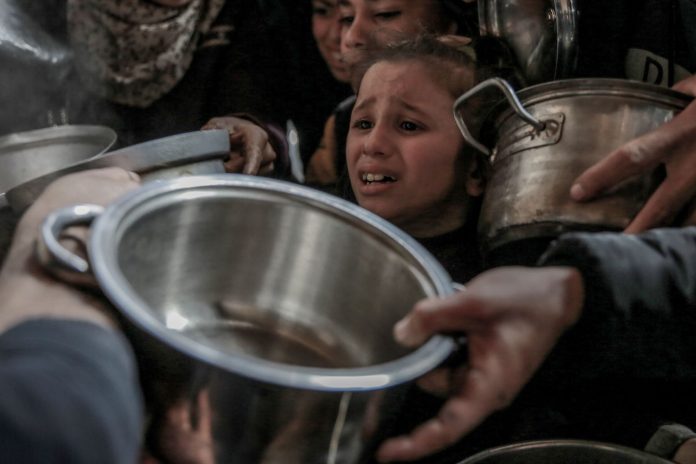
UN warns northern Gaza in ‘full-blown famine’

Gaza War

In an interview with NBC News set to air on Sunday, Cindy McCain said that her remarks are based on what the WFP has seen and experienced on the ground. UN officials and aid agencies have for months warned of such a scenario.

“It’s horror. It’s so hard to look at and it’s so hard to hear,” McCain told the US broadcaster’s Meet the Press programme.

“What we are asking for and what we continually ask for is a ceasefire and the ability to have unfettered access, to get in safe through the various ports and gate crossings,” she added, according to a video clip of the interview.

On Saturday, a delegation from Palestinian group Hamas was in Egypt to continue negotiations on a ceasefire amid an uptick in international pressure for a deal to be reached.

Hamas’s spokesman Osama Hamdan said there had been “some forward steps”.

Yet Israel has threatened to launch its ground invasion of Rafah in the southernmost tip of the enclave, which is home to more than 1.4 million displaced Palestinians who have fled the Israeli military’s relentless bombardment in other parts of the Gaza Strip.

Israel has severely restricted the entry of critical humanitarian supplies into Gaza despite warnings from its allies and the United Nations of a looming famine in parts of the Palestinian territory. Its military has also repeatedly attacked and killed Palestinian civilians waiting to collect aid in the Strip.

This week it reopened the Beit Hanoon (Erez) crossing into northern Gaza, but Israeli settlers attacked two aid convoys sent by Jordan. The UN has announced the amounts remain insufficient to meet the vast and growing needs of Gaza’s starving population.

The UN-backed Integrated Food Security Phase Classification has previously warned that more than 70 percent of Gaza’s 2.3 million population is facing “catastrophic hunger” any time between mid-March and May.

On Saturday, Gaza’s Ministry of Health said at least 34,650 Palestinians have been killed and 77,900 wounded in Israeli attacks on Gaza since October 7.