Monday, December 29, 2025
Home Blog Page 902

India downplays US sanction threat over Iran’s port contract

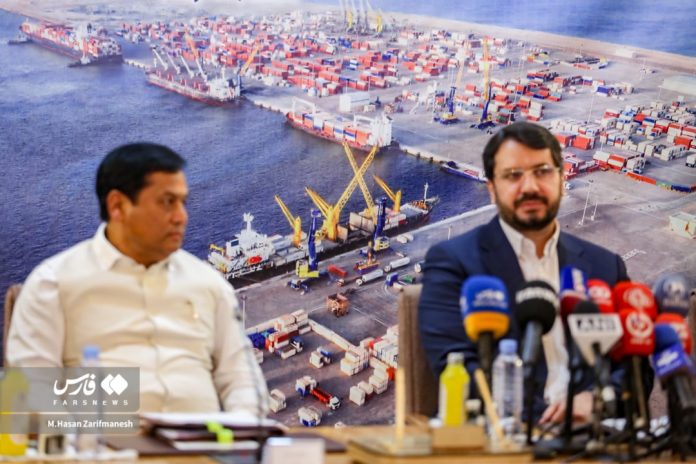
Hours after India and Iran inked a 10-year deal to develop and operate the strategic Iranian port of Chabahar, the US warned any entity considering business deals with Iran of potential sanctions.

“Any entity, anyone considering business deals with Iran, they need to be aware of the potential risk they are opening themselves up to, potential risk of sanctions,” the US State Department Principal deputy spokesperson, Vedant Patel, said at a press briefing on Monday.

In reaction to the US threat, Jaishankar stated on Tuesday that people should not take a “narrow view” of the initiative, noting that the US has been appreciative of the larger relevance of the port and is well aware of the significance of the agreement.

“I did see some of the remarks that were made, but I think it’s a question of communicating, convincing, and getting people to understand that this is actually for everyone’s benefit. I don’t think people should take a narrow view of it,” Jaishankar said while speaking at a book launch in Kolkata, India.

“They (US) have not done so in the past. So, if you look at the US’s own attitude towards the port in Chabahar, the US has been appreciative of the fact that Chabahar has a larger relevance …we will work at it,” he added.

He emphasized India’s longstanding involvement in the project, but said a long-term agreement could not previously be concluded due to a number of issues. He said that successful resolution of issues led to the signing of a beneficial long-term pact for the region.

“We have had a long association with the Chabahar Port, but we could never sign a long-term agreement. The reason was …there were various problems … the joint-venture partner changes, the condition changed.”

“Finally, we were able to sort this out and we were able to get the long-term agreement done. The long-term agreement is necessary, because without it you cannot really improve the port operation. And the port operation we believe will benefit the entire region,” he continued.

Back in 2016, India agreed to finance the development of the Iranian port but the process was stalled two years later due to the US sanctions reimposed after Washington’s unilateral withdrawal from the 2015 nuclear deal with Iran.

The agreement for the Long-Term Bilateral Contract regarding the operation of Chabahar Port, Iran’s sole ocean port, was officially executed on Monday between Indian Ports Global Limited (IPGL) from India and the Ports and Maritime Organization (PMO) of Iran.

For India, the Chabahar Port is considered a significant transit port for trade with landlocked Afghanistan and Central Asian countries.

The Indian government has made significant investments in the port’s infrastructure and has actively participated in enhancing its facilities to establish it as a feasible transit route for Indian goods destined for Afghanistan and Central Asia.

Iran conducts first non-invasive treatment of skin cancer with radioactive Rhenium particles

Professor Majid Assadi, the head of the Persian Gulf Nuclear Medicine Research Center of Bushehr University of Medical Sciences told reporters on Wednesday that the new method of treatment has a 95 percent rate of success for patients with non-melanoma skin cancer.

He said the treatment process got underway last year with the cooperation of dermatologists at the Bushehr Nuclear Medicine Research Center for patients with basal cell carcinoma, using radiopharmaceuticals provided by the Pars Isotope Company.

Professor Assadi said the new method can be helpful for patients that cannot undergo invasive surgery, including those who have tumors in the face, or older patients who have underlying medical conditions.

Professor Assadi explained, “The treatment known as Rhenium-SCT is often a one-session process in which doctors apply a pasty substance to the skin lesion from a few minutes to up to three hours, and then it is removed.”

“The person will receive no radiation after that and this short period is enough for the cancer cells to disappear,” he noted.

Poll shows almost 70% of British public want end to Gaza war

Gaza War

Researchers found 69 percent of respondents wanted a ceasefire and an end to Israel’s military campaign, while just 13 percent wanted it to continue.

The figures represent a 10 percent increase in those wanting an end to the conflict compared to November, 2023 – a month after the war started. Meanwhile, support for the war has come down from 20 percent during the same period.

British people were also significantly more likely to sympathise with the Palestinian side compared to the Israelis.

Polls showed 29 percent of those asked felt more sympathy with the Palestinians than Israelis on 8 May, the day the survey was carried out, while 16 percent sympathise more with the Israelis.

Close to a third of respondents said they didn’t know who they sympathised with more, at 31 percent, and another 23 percent said they sympathise equally with both sides.

Sympathy for Palestinians was lowest immediately after the Hamas-led attacks on 7 October, with just 15 percent sympathising more with the Palestinians on 9 October.

The number sympathising with Israelis also peaked around that period at 21 percent.

As the UK government refuses to pause or end arms sales to Israel, YouGov researchers also found that a majority of people in the country want a ban on the sale of weapons to Israel.

A total of 56 percent either strongly support or somewhat support a ban, with 36 percent saying strongly.

Just 20 percent oppose a ban, with 11 percent saying they felt strongly.

The figures reveal a big disparity between sentiment amongst the British public and the leaders of the UK’s ruling parties.

Both the UK opposition Labour party and the ruling Conservatives backed Israel’s war on Gaza, although Labour has since called for a humanitarian ceasefire.

Labour has also called for a pause on arms sales to Israel while the Conservative British Foreign Secretary David Cameron has argued that doing so is “not wise”.

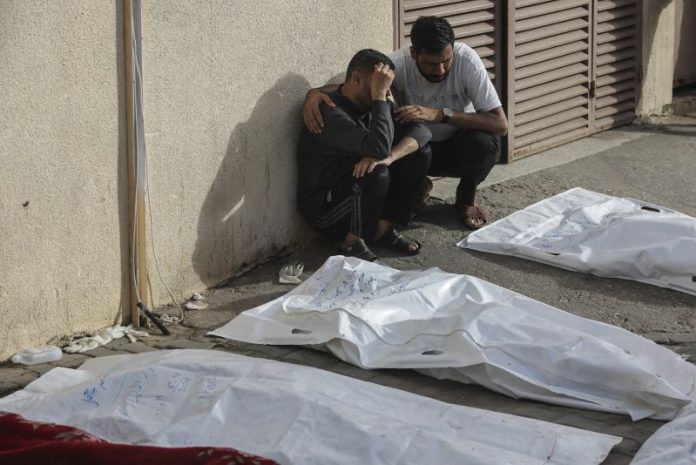
Israel has killed at least 35,000 Palestinians since the start of the war on 7 October, when Hamas-led fighters attacked southern Israel, killing around 1,200 people and taking around 250 hostage.

Around 133 Israelis and other nationals remain in captivity in Gaza but the number of those still living is believed to be significantly lower as Hamas says dozens have been killed in Israeli bombardment.

Ukraine urges Washington to lift ban on using US-made weapons to attack Russian territory

Russia Ukraine War

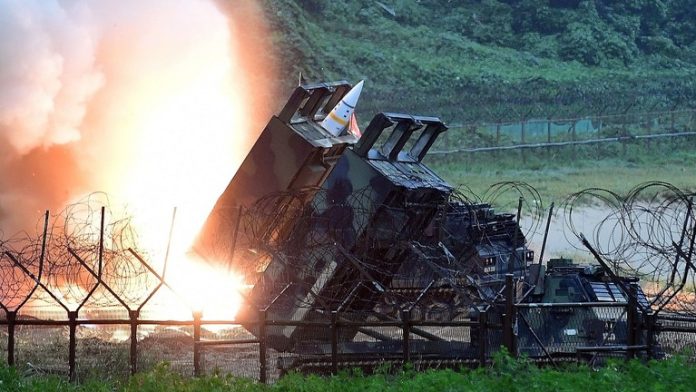
The US’s ban on using its arms to attack Russian territory has reportedly deterred Kiev from attacking Moscow’s positions, but Ukraine is allegedly seeking to hit Russian military supply depots across the border, Politico reported.

A group of Ukrainian lawmakers is reportedly meeting with US Congress officials this week in an attempt to influence Washington in removing its restrictions.

The US has been supplying arms to Ukraine on the condition that they must not be used against targets located inside what Washington acknowledges as Russian territory. The restriction is intended to demonstrate the supposedly defensive nature of the arms supplies.

The Ukrainian MPs claim that the policy has facilitated a Russian offensive, which Moscow launched last Friday in Kharkov Region.

Two undisclosed US officials confirmed to Politico that the position of Joe Biden’s office had not changed.

“The assistance is for the defense and not for offensive operations in Russian territory,” one of the officials told Politico.

Last week, the Russian Defense Ministry said that Russia’s northern grouping of forces had taken control over the villages of Gatyshche, Krasnoe, Morokhovets, Oleenykovoe, Borysovka, Ogurtsovo, Pletenevka, Pilna and Strilechya in the Kharkov region.

Iran condemns Australian sanctions on senior officials

The Iranian Foreign Ministry

Australia’s sanctions against Iran came on Tuesday a month after Tehran launched missile and drone attacks on the Israeli regime to punish it for an airstrike that killed Iranian generals in a diplomatic mission in Syria

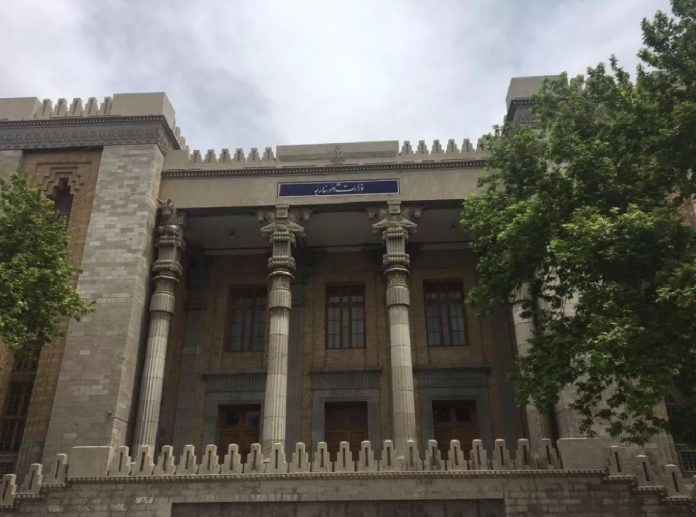
Iran’s Foreign Ministry spokesman Nasser Kanaani slammed the silence of Australia and its allies in the face of Israel’s violations of international law and its recent attack on the Iranian embassy premises in Syria.

Kanaani said this silence proves the double-standard approach adopted by Australia and its allies to developments in West Asia.

He added that Australia and its partners remained silent “regarding the aggressive action and violation of international laws and human rights by the Zionist regime in attacking the diplomatic headquarters of the Islamic Republic of Iran.”

The spokesman stated such an approach only encourages Israelis to further violate the rules of international law and commit more war crimes.

“The double-standard approach of Australia and its partners in the selective selection of international norms, not only does not help to reduce instability in the region, but by keeping silent against the Zionist regime’s attack on diplomatic places, its provision of weapons in the brutal killing of the defenseless people of Gaza, the Israeli regime is violating international rules encourage more war crimes and lead the region to instability.”

“The main cause of tension and insecurity in the region is the occupation (Palestinian lands) and the criminal approach of the Zionist regime in killing the Palestinian people and the relentless support of the evil coalition, including Australia, to this regime,” he continued.

Kanaani added that Iran reserves the right to take reciprocal action in response to Canberra’s latest sanctions.

Tehran has stressed that its mid-April military operation against Israel was a legitimate response to the Israeli regime’s attack on Iran’s consulate in Syria’s Damascus on April 1.

Iran nuclear chief: Half of outstanding issues with IAEA settled

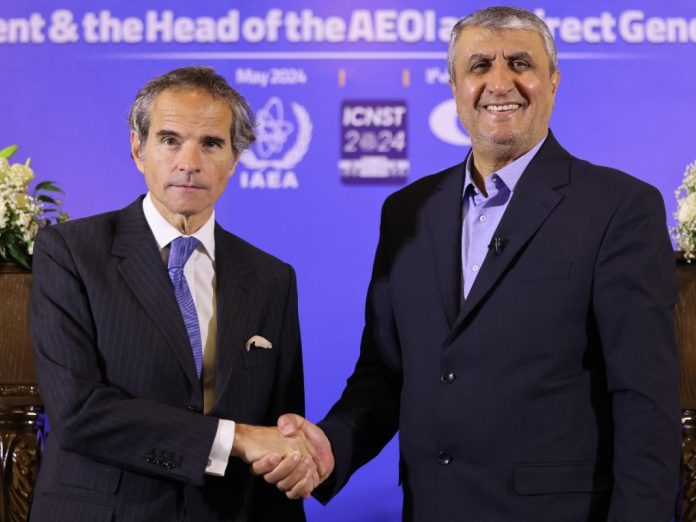
Addressing reports after a weekly cabinet meeting on Wednesday, the head of the Atomic Energy Organization of Iran (AEOI) Mohammad Eslami said the issues were resolved in the IAEA Director General Rafael Grossi’s recent visit to Iran.

The UN’s atomic agency is suspicious of existence of undeclared nuclear material in Iran’s nuclear sites, an issue Iran has dismissed on several occasions.

As recently pointed out by Grossi, Eslami said the joint statement signed by Iran and the IAEA on March 4, 2023 is still a valid basis and framework for talks on the remaining issues.

The IAEA chief took a trip to Iran earlier this month to hold talks with Iranian officials and take part in Iran’s first international conference on nuclear sciences and technologies held in the central city of Isfahan.

Also in other comments, Eslami hailed the conference, which hosted participants from 22 countries with hundreds of papers, as a success, saying, “For the first time, we managed to convey Iran’s voice in the nuclear field to all parts of the world.”

Iranian parliament votes to add Saturday as second official weekend day

Iranian Parliament

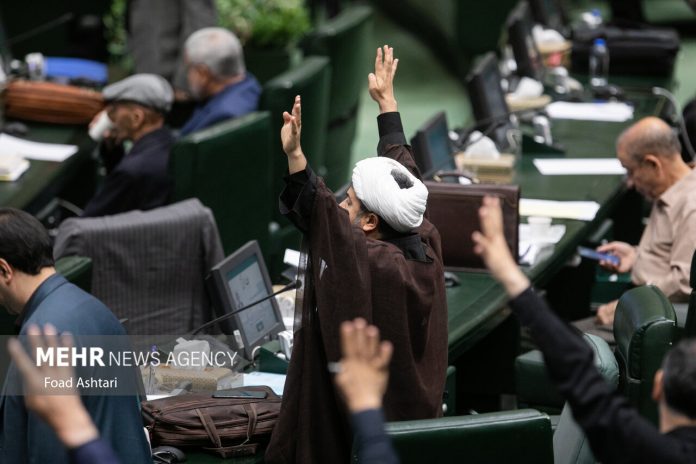
136 lawmakers voted in favor of the bill, 66 voted against and 3 abstained. But it needs to be approved by the Guardian Council which has the veto power over legislations passed by the legislative body.

The bill was submitted to the parliament last year to shorten the work hours from 44 to 40 in a week and increase the official weekend days to two.

Currently, Friday is the only official weekend day in Iran, but many offices and private firms also have part-time or complete closures on Thursdays.

Those in favor of Friday and Saturday as the weekend days, mostly from the private sector, say with the Fridays and Saturday as official weekend days, Iran will be matched with the rest of the world in terms of wok days.

However, proponents of Thursday as the second official weekend day raise religious arguments.

UK says Ukraine can use British weapons to strike Crimea

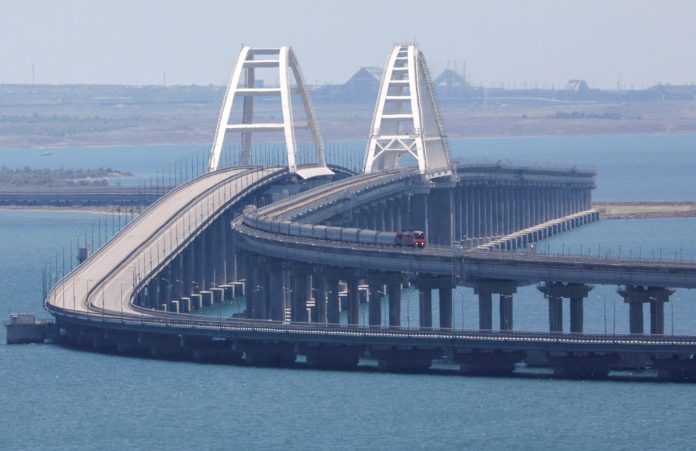
Crimean Bridge

Russia has already warned that it could retaliate to any strikes by attacking British military targets in Ukraine and beyond.

Speaking at a Royal Navy conference in the British capital, Shapps maintained that a victory for Russia would be “unimaginable and unacceptable” for the UK, and called for intensified arms deliveries to Kiev.

When asked specifically about the weapons the UK has supplied to Ukraine, the defense secretary replied that “we have provided munitions for weapons to be used in the territory of Ukraine, including Crimea”. He refused to reveal further details about the exact agreements reached by London and Kiev, saying he would “not go beyond that in talking about tactics”.

Earlier in May, British Foreign Secretary David Cameron told Reuters that Ukraine had the right to use long-range missiles sent by the UK to strike deep inside Russia. Moscow condemned the remarks, summoning London’s ambassador to warn him about possible retaliation, should British weapons be used in Ukrainian strikes on Russian territory.

A potential response could involve strikes against “any British military facilities and equipment on the territory of Ukraine and beyond”, the Russian Foreign Ministry announced. Cameron’s words de-facto “recognized his country as a party to the conflict”, it added.

Last week, the ministry also stated British weapons are being actively used by Kiev in “terrorist attacks on civilian infrastructure and the civilian population of Donbass and other Russian regions”. Russian diplomats further accused London of using arms supplies to Ukraine to gain a more prominent position within NATO.

The UK remains one of the largest donors of weaponry to Kiev, providing £7.1 billion ($8.9 billion) in assistance since the start of the Russia-Ukraine conflict in February 2022, according to Sergey Belyaev, head of the Russian Foreign Ministry’s Second European Department.

UN launches investigation into attack that killed staff member in Gaza’s Rafah

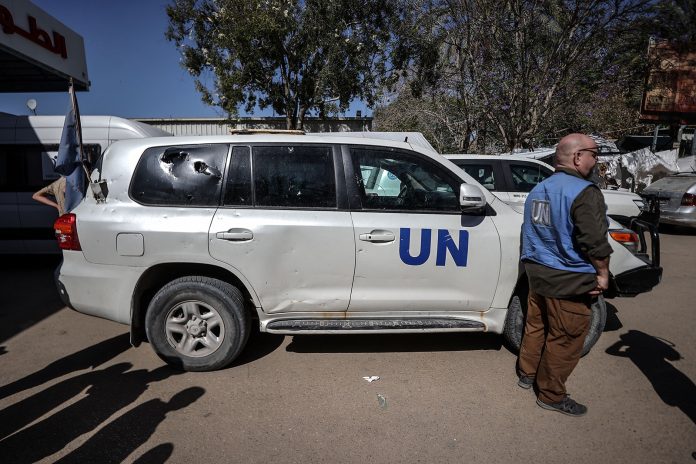
GAZA - MAY 13: A view of a damaged UN vehicle in front of a hospital as a United Nations (UN) employee was killed in an attack on a vehicle in the Gaza Strip, according to Israeli media, in Gaza on May 13, 2024. It is not yet known who carried out the attack on the vehicle, according to Israeli media reports. (Photo by Ali Jadallah/Anadolu via Getty Images)

A vehicle branded with UN insignia was targeted on Monday, prompting swift condemnation from international leaders.

Initial assessments suggest the fatal shot was fired from a tank in the neighborhood, striking the back of the UN vehicle, according to deputy UN spokesman Farhan Haq.

Discussions are underway with Israeli authorities to determine the circumstances of the attack and the nature of the explosion.

The deceased UN staffer was from India. His death marked the first time an international UN worker was killed during Israel’s military campaign in Gaza. The injured colleague, from Jordan, is hospitalized. Both were employed by the UN Department for Safety and Security.

With 71 international staff members stationed in Gaza, the attack stresses the dangers faced by humanitarian workers in war zones.

At least 254 UN aid workers have been killed since October, according to the agency.

Israeli forces have struck known locations of aid workers in Gaza at least eight times since October 7 despite agencies providing their coordinates “to ensure their protection”, Human Rights Watch (HRW) announced.

At least 15 people, including two children, were killed in the eight attacks, HRW said in a report on Tuesday. Israeli authorities did not issue advance warning to any of the relief organizations before the strikes, HRW alleged.

The strike in one of the reported attacks — on January 18 — was most likely carried out with a US-made munition that included British-made components, the UK-based NGO Medical Aid for Palestinians said, citing UN inspectors. The bomb was delivered by an F-16 aircraft.

“The governments that continue to provide arms to the Israeli government risk complicity in war crimes,” HRW added.

The eight attacks “reveal fundamental flaws with the so-called deconfliction system, meant to protect aid workers”, according to the report.

Staff from 11 humanitarian organizations and UN agencies in Gaza told HRW that Israeli attacks on aid workers “forced them to take various measures”, including suspending or “severely restricting” operations, and reducing employees in the enclave.

“Israeli authorities are deliberately blocking the delivery of water, food, and fuel, wilfully impeding humanitarian assistance, apparently razing agricultural areas, and depriving the civilian population of objects indispensable to its survival.”

Iran president: Blood of 15,000 children killed in Gaza will put an end to Zionist regime

Ebrahim Raisi

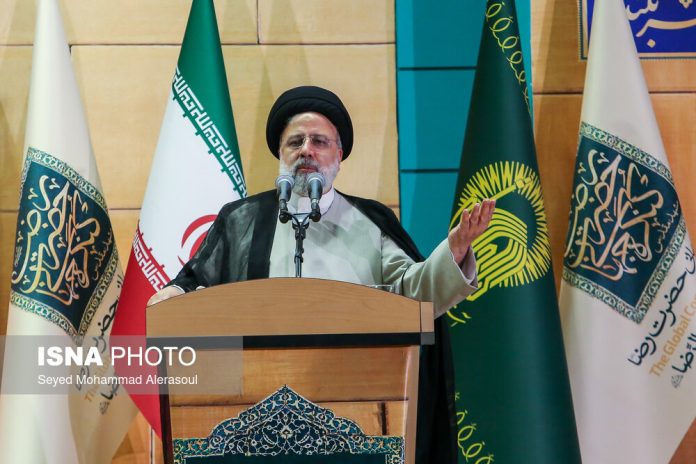
Addressing the closing ceremony of the 5th International Congress of Imam Reza in the northeastern Iranian city of Mashhad on Tuesday, Ebrahim Raisi said, “The blood of martyred Gazan children is so powerful that it would not only end the regime but will also lead to an end to global injustices.”

He said the Zionist regime is a cancerous tumor whose eradication can bring peace and security in the world.

The Iranian president lauded pro-Palestine protests in the West, saying that the people of the world have realized that the current system ruling the world is not fair and has to change.

He said the sole goal of the protests is to defend the oppressed people of Palestine and rise up against the oppressors.

“Today, the universities of the West and East of the world and all the freedom-loving nations have a single song of freedom for Palestine and the holy Al-Quds,” Raisi said.