Sunday, December 28, 2025
Home Blog Page 898

Ukraine calls on US to help locate targets in Russia

Russia Ukraine War

In addition, members of Ukraine’s parliament have approached lawmakers in Washington, requesting the green light to use US-provided weapons in strikes on Russia, the paper wrote, citing US and Ukrainian officials.

The Russian offensive in Kharkov Region was facilitated by the US restrictions, which are “handcuffing the Ukrainian war effort,” Kiev’s delegation told Congress, according to news website Politico.

Despite such requests being turned down in the past, administration officials are now reviewing the latest requests, according to the report.

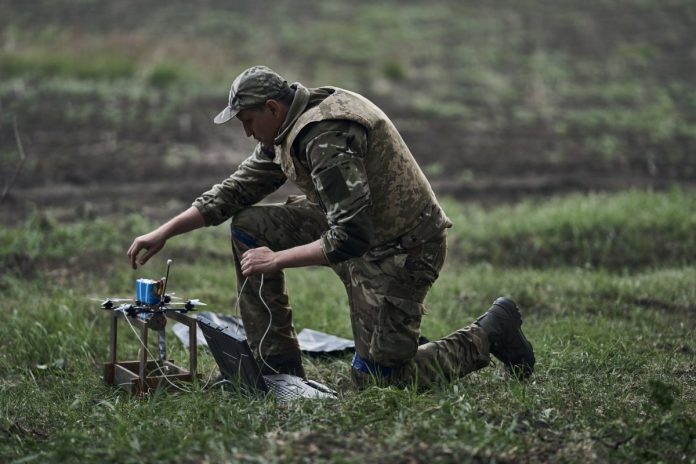
Intelligence from the US and other allies on military targets on Russian soil would allow Ukraine to better plot approach routes for its drones and missiles, the newspaper said. With detailed terrain mapping, it would allow them to fly low and avoid radar detection, increasing their effectiveness. While Kiev already has access to commercial satellite imaging data, US intelligence would provide more detailed and timely information, they wrote.

General Charles Q. Brown Jr., chairman of the Joint Chiefs of Staff, confirmed that Kiev has been seeking to ramp up strikes inside Russia. The Ukrainians have been “asking us for help to be able to strike into Russia,” the US general told reporters on Thursday, while flying to Brussels for NATO meetings.

The day before, State Secretary Antony Blinken stated that the US has left it up to Ukraine whether or not it uses US-supplied armaments to attack Russian territories. “We have not encouraged or enabled strikes outside of Ukraine, but ultimately Ukraine has to make decisions for itself about how it’s going to conduct this war,” he told reporters in Kiev.

In early May, British Foreign Secretary David Cameron said Kiev had the right to use UK-provided weaponry to for cross-border strikes on Russian targets. Moscow condemned the remarks and summoned London’s ambassador. Any use of British weapons against Russian territory could prompt Moscow to strike “any British military facilities and equipment on the territory of Ukraine and beyond,” the Russian Foreign Ministry warned.

Russian President Vladimir Putin stressed on Friday that it is Kiev’s repeated strikes against residential districts in Russia that is forcing Moscow into creating a buffer zone on the border, as Russian forces push Ukrainian troops further back into Kharkov Region.

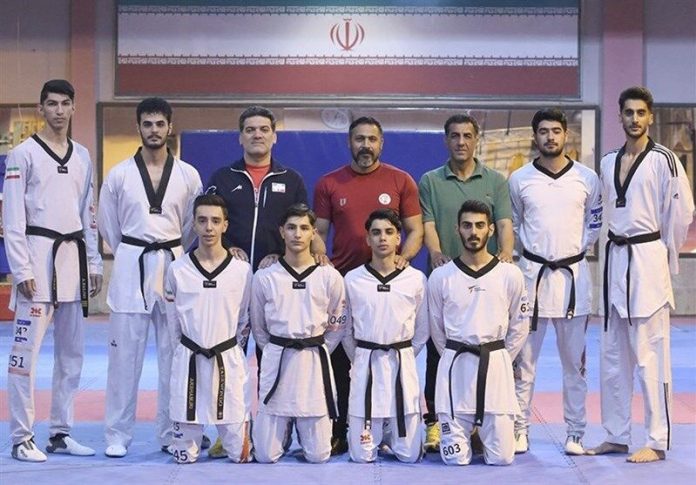
Iran’s national Taekwondo team stand on top of Asia

The glory in the 26th edition of the games, held in Vietnam, comes to Iran after eight years.

Mehdi Haj Moussaei in -58 kg, Mohammad Hossein Yazdani in -87 kg and Arian Salimi in +87 kg won gold medals, Ali Khosh Ravesh in -80 kg and Mehran Barkhodari in -87 kg bagged silver medals and Abolfazl Zandi in -58 kg and Matin Rezaei in -63 kg won bronze medals in the bout.

South Korea, Uzbekistan, and Saudi Arabia were ranked second to fourth.

In Iran’s women’s team, Melika Mirhosseini and Saeedeh Nasiri won a bronze medal each.

French report slams Turkey for interference in New Caledonia unrest

“Both Azerbaijan and Turkey are suspected of exploiting the Caledonian separatists,” Europe 1 reported, adding, “It is no longer a secret for the DGSI [French intelligence], which sees the hand of Baku or Ankara behind the Caledonian separatists.”

Unrest erupted on the islands on Monday after French lawmakers pushed forward plans to allow citizens who have lived in New Caledonia for at least 10 years to vote in the territory’s elections.

Separatists argue that the constitutional amendment would undermine the indigenous Kanak vote, which constitutes about 40 percent of the population.

Unrest in Noumea, the capital city, left five dead, including two gendarmes.

Hundreds were injured, and a state of emergency was declared on Thursday. As of Friday, hundreds had been arrested, and the French government deployed an additional 1,000 security officers to the city.

Paris has already publicly accused Azerbaijan of interfering in New Caledonia, but media allegations against Turkey surprised and amused officials in Ankara.

Gerald Darmanin, French minister of the interior and overseas territories, pointed the finger at Baku in an interview with broadcaster France 2.

“Azerbaijan is not a fantasy; it is a reality,” he said on Thursday, adding, “I regret that some of the Caledonian independence leaders made a deal with Azerbaijan, which is indisputable.”

Baku publicly rejected the allegation as “baseless”.

In April, Azerbaijan signed a memorandum of understanding with an elected official from the local Caledonian parliament, establishing parliamentary relations between the two.

New Caledonian lawmaker Omayra Naisseline then thanked the Azerbaijani state “for being our site on our path towards independence”.

Azerbaijani flags were present at a demonstration by Kanak separatists in March, likely at the initiative of the Baku Initiative Group.

Created just under a year ago, the group’s goal is to “support the fight against colonialism and neocolonialism” in France.

At its inaugural conference in July, it welcomed representatives of independence movements from Martinique, Guyana, Corsica, New Caledonia, and French Polynesia.

Its president, Abbas Abbasov, has denied any involvement in the March protests by Kanak separatists. T-shirts bearing his organisation’s logo were worn by demonstrators at the demonstration.

According to the report in Europe 1, which is owned by a right-wing French businessman, “representatives of the indigenous people attended an international conference on decolonisation in the Turkish capital”.

The report cited a French domestic intelligence source, who said that the Kanak delegation’s transportation was paid for by Azerbaijan’s secret services.

The Baku Initiative Group in fact held the conference titled “Decolonisation: Awakening of the Renaissance” in Istanbul, not Ankara, as claimed by Europe 1.

The French radio station also misreported the date as 1 March, but the event took place on 24 February.

It featured representatives from 13 different territories, including New Caledonia, French Polynesia, French Guiana, Martinique, and Guadeloupe, as well as four international bodies.

While Ankara is not expected to formally repudiate the report, the claims were met by amusement in the Turkish capital.

“It is funny to think that Ankara has an intention to stir unrest somewhere thousands of kilometers away from Turkey,” a Turkish source based in Ankara told Middle East Eye.

“Turkey is a busy country.”

Europe 1 also accused Turkey of “launching a disinformation campaign targeting France” last autumn when the French minister of the armed forces wanted to visit Noumea. It did not provide a source or evidence of the claim.

The radio broadcaster claimed the “campaign” was a sign that “alliances between secret services are being put in place to designate a common enemy, France”.

The report added: “According to another source, Baku and Ankara are in fact controlled by Moscow and Beijing in order to open peripheral fronts, such as in New Caledonia, or to weaken the French state.”

Analysts speaking to French media have alleged that Azerbaijan has backed separatists in New Caledonia to punish French President Emmanual Macron’s support to Armenia in the disputed Nagorno-Karabakh region, which Baku took control of last year after three decades.

Most Britons support immediate ceasefire in Gaza, Israeli arms embargo: Poll

Among those who voted for the governing Conservative Party in 2019, 67 percent backed an immediate ceasefire in the besieged enclave, according to the poll released on Friday and commissioned by Medical Aid for Palestinians (MAP) and the Council for Arab-British Understanding (CAABU).

Eighty-six percent of Labour voters backed the call, while only 8 percent of respondents said there should not be a ceasefire.

The United Kingdom has refused to call for an immediate ceasefire.

In December, UK Foreign Secretary David Cameron and his German counterpart Annalena Baerbock wrote in The Times, “We do not believe that calling right now for a general and immediate ceasefire, hoping it somehow becomes permanent, is the way forward.”

Such a call “ignores why Israel is forced to defend itself”, they wrote, adding, “Hamas barbarically attacked Israel and still fires rockets to kill Israeli citizens every day. Hamas must lay down its arms.”

But as the war rages on and bodies pile up across Gaza, a large section of society finds the government’s stance untenable.

The survey has come more than seven months into Israel’s latest and deadliest war on Gaza, which has killed, to date, more than 35,000 people, mostly women and children.

The poll reflects a sample of 2,053 people, who were surveyed between May 1 and 2.

“The government and the Labour leadership continue to lag sluggishly behind British public opinion by failing to take the decisive actions needed to help bring the horrors we see in Gaza to a swift end – a trend also highlighted in polls across Europe,” stated Caabu director Chris Doyle.

“There is little confidence in the leadership of both the main parties in the handling of this major international crisis.”

With Israel expanding its military incursion into Rafah, a densely populated area in southern Gaza, calls for the UK to halt its military ties to Israel have grown louder.

The poll suggested that 55 percent of people support the UK ending the arms sales to Israel for the duration of the war, while 13 percent said they wanted to see a continuation.

Along political lines, 40 percent of Conservative voters believed the UK should stop selling weapons, while just 24 percent were opposed. As for Labour Party voters, 74 percent favour the UK halting deals, compared with only 7 percent who opposed the call.

Cameron said on Sunday that the UK does not directly sell weapons to Israel but grants licences to weapons companies.

“Just to simply announce today that we will change our approach on arms exports, it would make Hamas stronger and it would make a hostage deal less likely,” Cameron told the BBC.

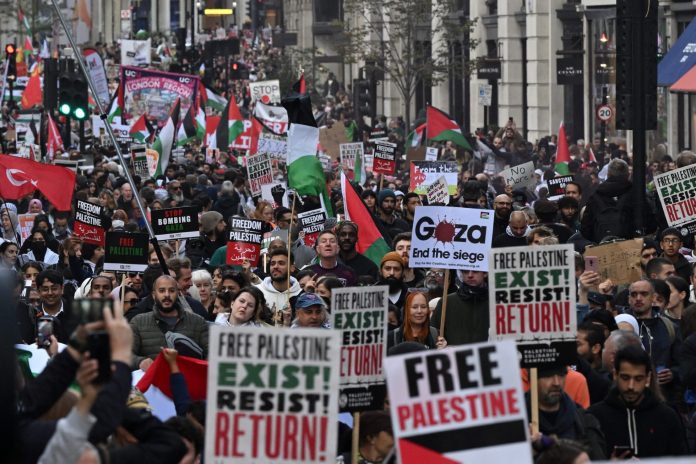
Since the war began, tens of thousands of people have protested in London and other major cities calling for an end to the war.

Iranian, Azerbaijani presidents to inaugurate dam on Aras River on Sunday

President Raisi will travel to Parsabad in northwestern Iran near the border with the Republic of Azerbaijan for the opening ceremony of the Qiz Qalasi embankment dam, jointly constructed by the two countries.

President Aliyev and a high ranking Azerbaijani delegation will attend the ceremony.

The dam, which showcases the engineering expertise and knowledge, is planned to provide water for downstream lands and boost agriculture. It will also contribute to regional economic development.

The dam can annually regulate two billion cubic meters of water through the Khodaafarin Dam in Iran for both countries and has a reservoir capacity of 62 million cubic meters.

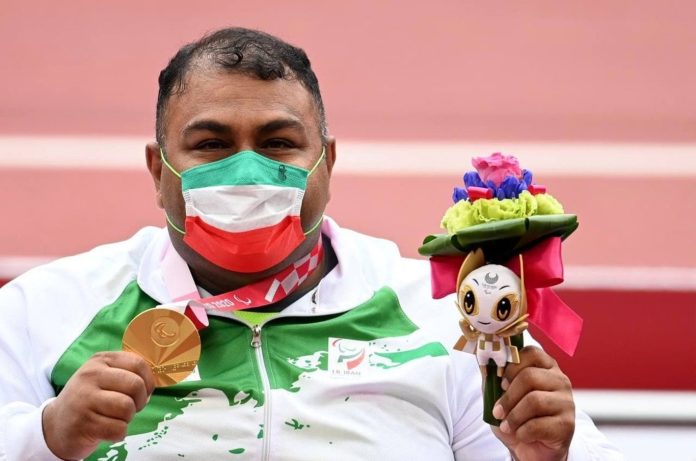
Iranian discus thrower Amiri stripped of silver medal at Tokyo world championship games

Amiri, a gold medalist in Javelin throw F54 category in 2020 Tokyo Paralympic Games and a world champion in 2019, participated in the F55 category in Tokyo on Friday.

The Iranian athlete outthrew other athletes with a record of 12.56 meters, but lost his title due to protests by his rivals and was initially demoted to a silver medal.

However, the continued protests on the second day deprived him of the silver medal for the technical issues, despite the initial white votes by all of the five referees.

In an interview with ISNA, Amiri blamed the referees for ‘weak judgement’, saying, “If my throws were faulty, why did all five referees and the main referee give white votes? It shows the weakness of the referees.”

Hamas: US floating pier for Gaza aid publicity stunt

“The floating water dock off the coast of Gaza does not meet the needs of our Palestinian people for food. We demand the opening of land crossings and the immediate and urgent entry of aid and goods through them,” the Gaza government media office said in a statement issued on Friday night.

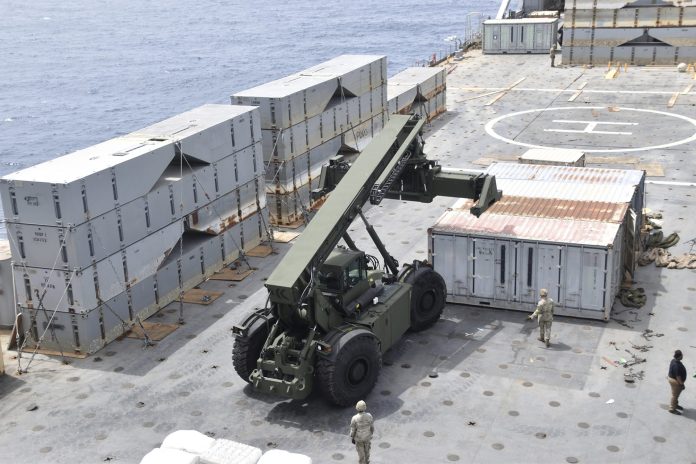
US President Joe Biden ordered the construction of the pier in March. Shortly afterward, the US deployed naval ships to the Eastern Mediterranean to construct the “floating pier” that will reportedly receive aid from Cyprus, and send it onward to Gaza.

The US announcement came amid mounting pressure on Israel to allow aid into Gaza as the UN and other aid agencies have warned of imminent famine due to Israel’s prevention of the land-based delivery of life-saving aid to Gaza.

The US military announced on Friday that trucks carrying humanitarian assistance will soon begin moving ashore “in the coming days.”

USAID response director Dan Dieckhaus stated on Wednesday the construction of the pier – known as a Joint Logistics Over-the-Shore (JLOTS) system – is complete.

Hundreds of tons of aid have arrived in Cyprus, where screening takes place before being loaded onto ships for delivery to the pier, reports added.

The US military said commercial ships would collect pallets from Cyprus and deliver them to a floating platform anchored several kilometers off the coast of Gaza.

The Gaza government announced in the statement that the “American administration is trying to beautify its ugly face and appear civilized by establishing a floating water dock off the coast of Gaza City, claiming its purpose is to deliver humanitarian aid and food to our Palestinian people in the Gaza Strip, who are subjected to policies of starvation, forced displacement, and genocide carried out by the ‘Israeli’ occupation army, with active participation, full involvement, and real endorsement from the American administration”.

“Since the start of this genocidal war, the US has continued to supply the occupation with over 200,000 rockets and bombs, some weighing 2,000 pounds of explosives, used by the occupation to annihilate entire residential neighborhoods. This has resulted in over 35,000 martyrs, more than 79,000 wounded, and 10,000 missing,” the statement read.

“We question the intentions of the American administration, which is managing and perpetuating the genocide war, forming a protective wall for the ‘Israeli’ occupation, and continuing its absolute support for the war against civilians,” it added.

The Gaza government said the United States “has opposed the cessation of this war against civilians, children, and women, against the housing sector, infrastructure, and humanitarian services sectors in the Security Council multiple times.”

“Additionally, it has not exerted real pressure on the occupation to open the crossings and allow aid to enter, but has instead been an obstacle to any solutions for the catastrophic humanitarian situation in the Gaza Strip.”

“Amidst the policy of starving 2.4 million people in the Gaza Strip, including 2 million displaced persons who live on daily aid and require more than 7 million meals daily, what it will provide will not break the famine or cover this immense need for our people in the Gaza Strip. Instead, it will give the occupation a chance to prolong this war that has consumed everything,” it noted.

“We demand the immediate and urgent opening of the land crossings and the entry of various aids and fuel through them. We also express our deep astonishment at the introduction of patchwork and partial solutions, circumventing real solutions to the deep humanitarian crisis in the Gaza Strip that continues to affect civilians with all harshness,” the statement read.

The Gaza government stressed that it holds Israel and the American administration “fully responsible for the deliberate and premeditated policy of starvation and blockade against our defenseless Palestinian people in the Gaza Strip.”

“We also hold them responsible for the continuation of the genocide war and the commission of crimes against humanity, international law, and global human rights principles,” it stated.

In March, experts said Israel backed the US plan to construct the pier in order to retain control over the aid deliveries and as a way to displace Palestinians from the besieged strip via the Mediterranean Sea, ahead of an expected invasion of the southern town of Rafah, where nearly more than half of Gaza’s population of 2.4 have sought shelter from Israeli strikes elsewhere in Gaza.

Israel unleashed the Gaza onslaught on October 7 after Hamas-led Palestinian resistance groups carried out Operation al-Aqsa Storm against the occupying entity in retaliation for its intensified atrocities against the Palestinian people.

The Tel Aviv regime has so far killed at least 35,300 Palestinians, mostly women and children, and injured 79,300 others, according to the Gaza-based health ministry update on Friday.

The occupying entity has also imposed a “complete siege” on the territory, cutting off fuel, electricity, food, and water to the more than two million Palestinians living there.

Egypt has destroyed over 2,000 Gaza tunnels: Report

Gaza War Hamas Tunnel

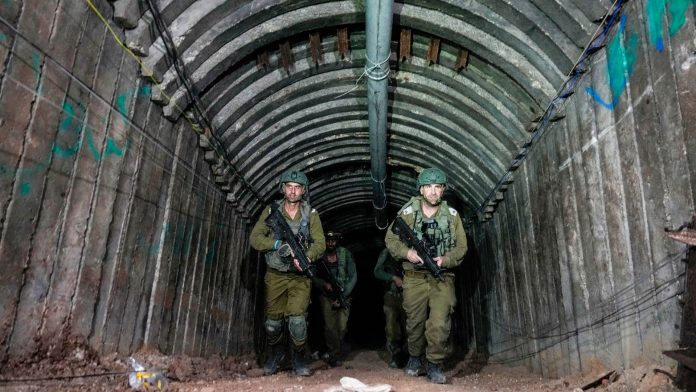
According to the documents that MEE is publishing in full, more than 2,000 tunnels were destroyed by military engineers in the border city of Rafah between 2011 and 2015.

They also reveal that senior members of the armed forces ordered a feasibility study into a proposal to dig a canal along the entire border with Gaza as an alternative to destroying the tunnels.

The documents, leaked by an army insider, offer a rare insight into the military’s extensive operations in the North Sinai governorate.

The government of President Abdel Fattah el-Sisi is highly secretive about its activities in Rafah and has imposed a media blackout in the region since 2013 where it has waged a brutal and destructive operation against local militants aligned with the Islamic State (IS) group.

It has never released official details about the destruction of tunnels.

According to the documents, all the tunnels destroyed during the period they covered were designated as commercial or transport tunnels.

The revelations come to light following the closure of the Rafah crossing in southern Gaza after an Israeli operation on 7 May and raise questions about Israeli criticism of Egypt’s alleged failure to eliminate smuggling tunnels used by Palestinian armed groups.

Israeli officials have claimed weapons used in Hamas’s attack in southern Israel on 7 October were smuggled into Gaza via tunnels from Egypt.

In December, Israeli Prime Minister Benjamin Netanyahu said Israeli forces would seek to gain control of the entire 14km border strip, known as the Philadelphi Corridor, to ensure the demilitarisation of the area.

Egypt has denied Israeli allegations, saying it has wiped out more than 1,500 tunnels over the past decade.

Diaa Rashwan, a government spokesperson, stated Egypt had also built a concrete wall along the entire border, six metres overground and six metres underground, which he said made it “impossible to smuggle weapons”.

Egyptian army spokesmen have previously put the number of tunnels destroyed at about 3,000. In 2018, a military spokesperson noted some of the tunnels destroyed reached a depth of 30 metres underground.

For the first time, however, the documents obtained by MEE reveal specific details about Egyptian operations to destroy the tunnels.

A document dated 5 February 2015, signed by Lieutenant-Colonel Ahmed Fawzy Abdelaziz, puts the number of tunnels destroyed between August 2011 and February 2015 at 2,121.

These included 813 that were flooded; 1,181 that were destroyed using engineering tools; and 127 that were collapsed with explosives.

The documents also include communications regarding a proposed idea to construct a canal that would serve as a buffer zone to block the creation of tunnels and loosen up the soil around them.

The proposal was overseen by Mohamed Farid Hegazi, then secretary general of the defence ministry.

The canal proposal was highly secretive and there is no evidence it was successfully implemented.

In 2015, when the idea was under consideration, bulldozers were seen digging along parts of the border in a leaked video of what was reported to be a project to build a canal to flood the tunnels with seawater.

This prompted condemnation by Palestinian officials including Hamas chief Ismail Haniyeh. Sobhy Radwan, then Rafah’s mayor in Gaza, warned that the canal would cause landslides and a collapse of Gaza’s infrastructure.

The documents show that Hegazi in December 2014 commissioned the Water Authority of the armed forces to conduct studies in collaboration with the Technical Military College to test the soil along the border and determine the feasibility of a canal.

The water authority and the military college conducted 40 probes to measure the depth of soil layers and determine moisture levels.

The study concluded that the soil along the path of the proposed canal was highly impermeable to water and that “soil saturation will not occur until a period of up to several years”.

Commenting on the findings, Hegazi stated in a letter dated 17 January 2015 that the army chief of staff and defence minister ordered the engineering authority and the military college to “conduct a study for specific alternatives to deal with the tunnels west of the eastern borders at depths of more than 20 metres”.

Hegazi also included experts from the National Research Institute of Astronomy and Geophysics (NRIAG), who recommended a scientific method for locating tunnels deeper than 20 metres.

The documents reveal a marked increase in efforts to locate and destroy tunnels after Sisi came to power in July 2013 when the then-defence minister staged a coup against his democratically elected predecessor, Mohamed Morsi.

One document dated 2 May 2013 reported that the total number of tunnels destroyed by flooding to that date was 124 out of a total of 276 tunnels discovered, indicating that more tunnels were discovered in the period after 2013.

Egyptian forces have almost completely razed the city of Rafah in North Sinai over the past decade to create a five-kilometre buffer zone during its war against local insurgents affiliated with IS.

Between July 2013 and August 2015, Human Rights Watch documented the army’s destruction of 3,255 civilian buildings in Rafah, including homes and community buildings.

The campaign has displaced thousands of Bedouin residents and eliminated around 685 hectares of farmland.

Egypt announced it aimed to destroy cross-border tunnels that used civilian structures as their overground points of entry and exit.

At the time, officials said they sought to defend Egypt against “terrorism”. HRW, however, said the campaign was indiscriminate and violated international humanitarian law.

Prior to Sisi, the governments of Hosni Mubarak and Mohamed Morsi had also taken action to deal with some cross-border tunnels.

An Egyptian court in February 2013 ordered Morsi’s government to take all measures necessary to destroy smuggling tunnels between Gaza and Sinai, estimated at the time to number about 1,200.

Essam El-Haddad, Morsi’s national security adviser, told Reuters that month that a number of tunnels had been flooded earlier in February to prevent the two-way flow of arms between Gaza and Sinai.

El-Haddad explained that the government had eased restrictions imposed by previous governments on the movement of people and goods via the Rafah crossing, and therefore the tunnels were no longer as necessary as they had been.

“Now we can say that the borders are open to a good extent – it could still be improved – and the needs of the Gazan people are allowed in,” Haddad added.

At the time, several media outlets including the New York Times and Al Jazeera reported that the Egyptian army had flooded the tunnels with sewage water.

A senior Morsi aide told MEE on condition of anonymity: “President Morsi aimed to strike a balance between multiple competing interests. He understood that tunnels posed a threat to the national security of Egypt. But conversely, he refused to be complicit in the starvation and blockade of Palestinians.”

Mubarak’s government, after Hamas gained control of Gaza in 2007, contributed to the Gaza blockade by severely restricting movement via the Rafah crossing. It also destroyed “thousands of tunnels”, according to Mubarak’s testimony before a court in 2019.

However, Mubarak also rejected a security agreement between the US and Israel in 2009 to stop the smuggling of weapons to Gaza.

In a 2009 speech, he suggested the tunnels were primarily commercial and that they were an inevitable result of Israel’s siege policy.

Mubarak told the court during his 2019 trial that tunnels had existed before his rule, which started in 1981, and that his government had destroyed tunnels in the years before the 2011 revolution that toppled him. He described tunnels with one opening but up to 30 sub-tunnels, with entry and exit points in homes and farms. He said the tunnels were constructed without the knowledge of the authorities.

“We destroyed thousands of tunnels,” he said, adding that he had asked the defence ministry for “a radical solution” to the tunnels.

“We agreed with the Ministry of Defence to carry out a certain measure to get rid of the tunnels.”

He refused to elaborate on the methods agreed, which he said were classified information.

He stated any operation to shut or destroy tunnels was very risky, and often attacked by gunmen from Gaza.

Israel has blockaded Gaza by land, air and sea since Hamas gained control of the enclave in 2007.

The siege has turned the Palestinian enclave into what some call an “open-air prison”.

Rights groups, including Human Rights Watch and the Israeli human rights group B’tselem have denounced Egypt as a partner in Israel’s siege policy.

The Rafah crossing was the only entry point to Gaza not directly controlled by Israel between September 2005 and 7 May 2024. It had been jointly controlled by Egypt and Hamas since 2007.

Egypt closed the terminal for 333 days in 2015 and 207 days in 2014.

Under Morsi, access to Gaza had become easier, with the crossing open for 311 days in 2012, and 263 days in 2013, according to UN data.

Tunnels have been the main source of imports to the strip during the blockade, with Palestinians estimating that 80 percent of food supplies and 30 percent of commercial goods were transported through tunnels prior to Egypt’s campaign to demolish them.

The destruction of the tunnels has been an Israeli goal since the 1980s, when the first tunnels were discovered three years after the 1979 peace treaty, which split Rafah into Egyptian and Palestinian sides, roughly along the British-Ottoman colonial borders of 1906.

The Philadelphi Accord signed between Egypt and Israel in 2005 ahead of Israel’s withdrawal from Gaza aimed at establishing a buffer zone between Sinai and Gaza to prevent the smuggling of weapons.

Israeli post-war plans reportedly include the construction of a wall along the Gaza-Egypt border to prevent the operation of tunnels allegedly used for smuggling weapons, according to Israeli media outlets Channel 12 and Ynet.

The Washington Post last week, days after Israel’s Rafah crossing operation, reported that US officials were working with Cairo to find and destroy Rafah tunnels that they believe Hamas has used to smuggle weapons.

During the current war, the crossing has been the main entry point for food, medical aid and other essential supplies as Israel has closed all other land crossings since the Hamas-led attack on 7 October.

The crossing has been opened intermittently by Egypt, which has accused Israel of bombing it several times and imposing restrictive measures by requiring prior screenings of aid trucks at a distant Israeli crossing.

Israel’s military invasion of the Rafah crossing and its surrounding area – in apparent breach of its bilateral agreements with Egypt – has led to speculation about an end to 45 years of peace since Egyptian President Anwar Sadat and Israeli Prime Minister Menachem Begin signed the Camp David Accords in 1978.

Egypt has refused to work with Israel to operate the crossing since last week, with President Sisi saying Israel wants to use control of Rafah “to tighten the siege of the enclave”.

Netanyahu stressed on Wednesday that Cairo was holding Gaza “hostage” by refusing to work with Israel to reopen the crossing.

Official: Some 12% of US aid to Ukraine ‘delinquent or unaccounted for’

Western Weapons Russia Ukraine War

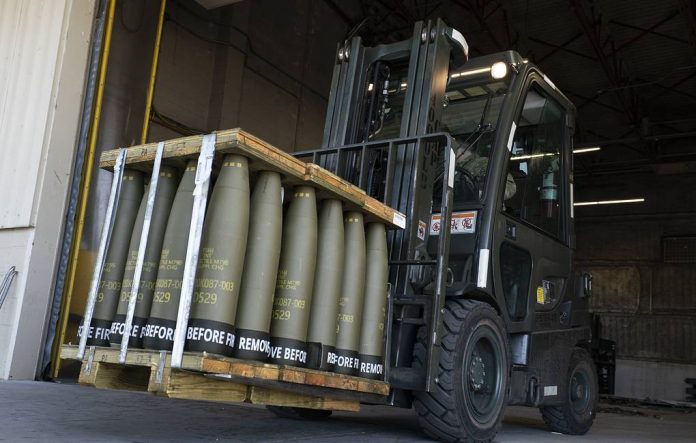
“Based on information provided by the ODC-Kyiv [US Office of Defense Cooperation], at the end of the quarter, 88 percent of defense articles were compliant and 12 percent were ‘delinquent’ or unaccounted for,” the report said.

However, the latest data represents a 13% increase in the compliance rate compared to the previous quarter, the report added.

The Defense Department Inspector General noted it continues to conduct an ongoing series of evaluations regarding compliance with the requirements for tracking end-use monitoring of US-supplied equipment in Ukraine.

Western countries have provided hundreds of billions of dollars worth of military and other aid to Ukraine since the start of Russia’s special military operation in February 2022. Aid shipments have included artillery; tanks and other armored vehicles; air-defense systems; missiles; cluster and other munitions, among others.

Russia has consistently warned against the collective West’s continued arms deliveries to Ukraine, stressing that they only prolong the conflict.

Israeli military says bodies of three hostages found in Gaza

Israel Hostages

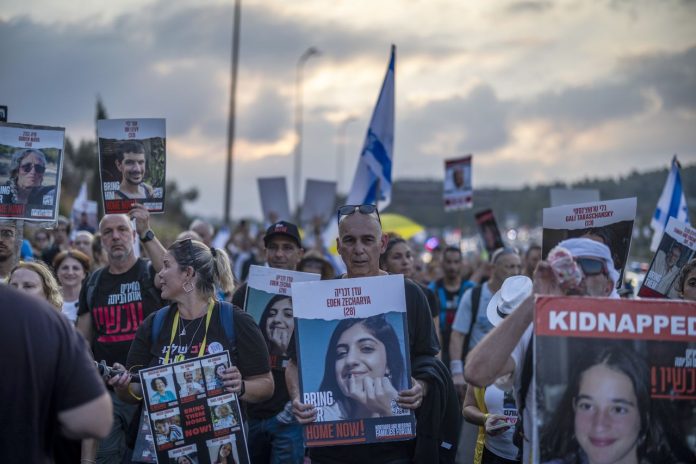
The military identified the bodies as 22-year-old German Israeli Shani Louk, 28-year-old Amit Buskila and 56-year-old Itzhak Gelerenter.

Military spokesman Rear Adm. Daniel Hagari has claimed that Hamas killed the three individuals as they attempted to flee the Nova music festival, which was occurring when Hamas attacked near the Gaza border.

The bodies were found overnight somewhere in Gaza, but the military did not elaborate or give other details about where they were located.

Israeli Prime Minister Benjamin Netanyahu has vowed to continue the war until all of the more than 200 hostages taken that day have are returned. He stressedd all the hostages will be returned, “both the living and the dead”.

Hamas killed nearly 1,200 people in the Oct. 7 attack. About half of the approximately 250 hostages taken by Hamas that day have since been freed, many in prisoner swaps, but Israel still says 100 hostages are captive in Gaza and 30 more bodies are there.

Israel’s counteroffensive against Hamas has killed upward of 35,000 people, Gaza health officials say. Tel Aviv has stressed it must operate in the southern Gaza city of Rafah because it’s the last Hamas stronghold.

International leaders, like President Joe Biden, have warned Israel that it must evacuate the hundreds of thousands of Palestinian civilians who are taking refuge in the city before it continues its attack.

Israel’s lawyers have told the United Nations top court that Tel Aviv has the right to move ahead with a full-scale offensive on Rafah to defend itself against Palestinian group Hamas after South Africa filed an urgent request to order a ceasefire as part of a wider case accusing Israel of genocide.

South Africa asked the ICJ to order Israel to stop its offensive on Rafah, from where the UN says at least 630,000 displaced civilians have been forced to flee after seeking refuge from bombardment across the besieged enclave.