Saturday, December 27, 2025
Home Blog Page 878

Iranians join ‘All Eyes on Rafah’ campaign

The worldwide campaign kicked off to voice support for the Palestinians, especially amid the ongoing Israeli genocide in the Gazan city of Rafah with over 1.4 million population.

Like many other countries, a large number of Iranian artists, political activists and lay people, regardless of their political affiliations have expressed unanimous support for the Palestinians.

The campaign calls on the international community to take measures in order to stop Israel’s carnage that has so far killed over 36,000 Palestinians since October 7 last year, a vast majority of them women and children.

Trump claims he ‘would have bombed’ Moscow and Beijing

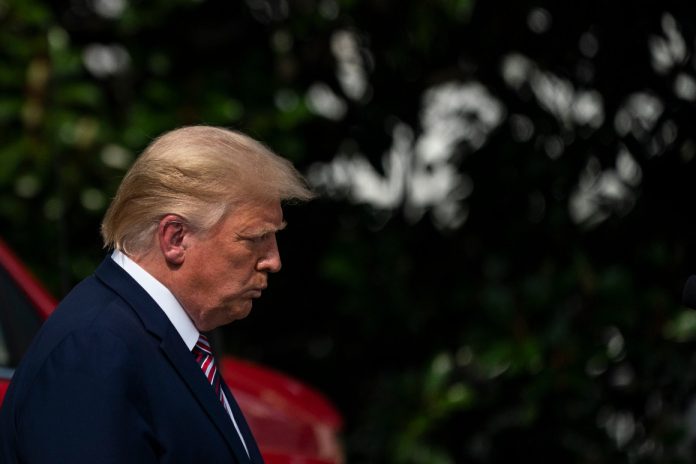
Donald Trump

According to numerous donors, advisers and other people close to him, the former president has ramped up his fundraising campaign rhetoric ahead of his likely rematch with incumbent Joe Biden in the upcoming November election.

Trump, who regularly addresses foreign policy topics at such events, reportedly claimed that he would have bombed the Russian capital in response to its Ukraine campaign, and prescribed the same response to a hypothetical Chinese move to assert its sovereignty over Taiwan. These remarks “surprised” his donors, according to the Washington Post.

Former President Trump is also said to have made a “series of audacious requests” to solicit significant campaign contributions at funding events, as he has reportedly promised tax cuts, approvals for oil infrastructure projects, and other policies that his donors might appreciate.

Some legal experts interviewed by the Washington Post noted that such promises and requests are “testing the boundaries of federal campaign finance laws.”

Trump is no stranger to hardline rhetoric, famously threatening North Korea with “fire and fury” when tensions over Pyongyang’s nuclear and missile programs flared in 2017. On the Ukraine conflict, however, he had earlier promised to settle hostilities within just 24 hours if reelected by sitting down with both Ukrainian leader Volodymyr Zelensky and Russian President Vladimir Putin.

An earlier Washington Post report suggested that Trump hoped to end the conflict by pressuring Ukraine to agree to recognize at least some of its territorial losses to Russia. In the fall of 2022, four former Ukrainian regions voted to join Russia, following in the footsteps of Crimea, which did so in 2014.

The Trump campaign, however, has dismissed the WaPo report as “fake news.”

In February, Bloomberg also reported, citing an adviser to the ex-president, that if Trump wins the election, he could pressure Ukraine to negotiate peace with Russia by threatening to cut massive US military assistance to the country.

Russia maintains that it is open to talks over Ukraine; however, in the fall of 2022, Vladimir Zelensky signed a decree banning all negotiations with the current leadership in Moscow.

US, Germany warn against offering Ukraine firm timeframe for joining alliance: Report

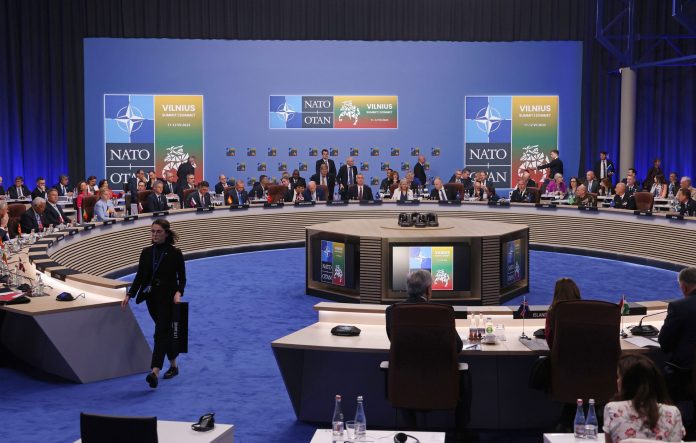
NATO

A source told the newspaper that US administration officials were “very skeptical about bringing Ukraine any further along the path to full Nato membership this year.”

“The US is perhaps not as concerned as Germany, but there is a worry about the threat of Russia to the rest of the alliance,” he added.

According to the Daily Telegraph, “while NATO leaders will refuse to provide a timeline for Ukraine’s membership, they will offer what is being described as a ‘bridge’ or ‘path’ to accession as a show of support for the process.”

A package of support will “demonstrate that the path to membership is getting shorter.”

“The package will focus on bolstering Ukraine’s armed forces to ensure Ukraine is ready to immediately join NATO when alliance leaders agree the time is right,” the paper writes.

“It’s not an invitation, but it’s the next closest thing,” a diplomat added.

Ukraine formally applied to join the Trans-Atlantic defense bloc in September 2022. While NATO Secretary General Jens Stoltenberg and individual members agree that Ukraine should someday become part of NATO, Kiev has not been presented with a specific timetable. It is widely understood that the country will not be admitted until the conflict with Russia is resolved.

Iran acting FM: Saudi Crown Prince to visit Tehran

Mohammad bin Salman

Addressing reporters after a weekly cabinet meeting on Wednesday, Ali Bagheri, however, added the timing for the visit of the Saudi crown prince to Tehran is not definite yet.

Bagheri also said the conduit for the transfer of messages between Iran and the US has not been blocked, adding Tehran is pursuing active diplomacy after the demise of the president and foreign minister in a helicopter crash earlier this month.

He added late President Ebrahim Raisi’s active policy regarding the neighbors and the region will continue.

Bagheri said negotiations are ongoing to unfreeze Iran’s assets in the West.

The top Iranian diplomat also noted that Iran’s peaceful nuclear activities continue within the provision of the government under the supervision of the Supreme National Security Council.

As for regional topics and the developments in the Gaza Strip, Bagheri said he would pick up where his demised predecessor Hossein Amirabdollahian left off and would take trips to several countries for talks on a ceasefire in Gaza and stopping the Israeli regime’s carnage in Rafah.

CNN analysis finds US-made munitions were used in Israel’s deadly attack on Rafah tent camp

Gaza War

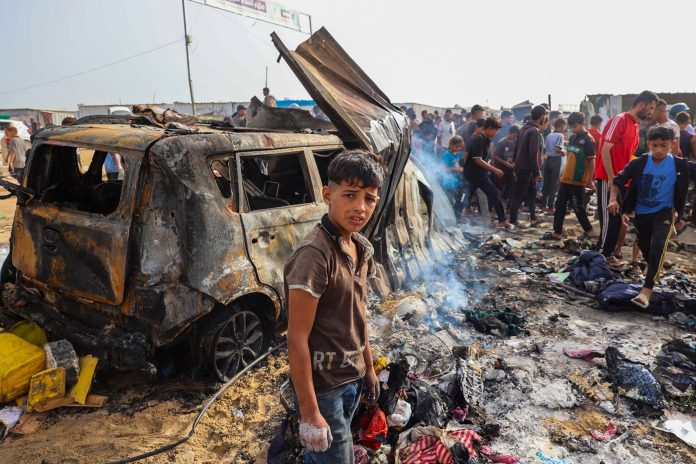
CNN geolocated videos showing tents in flames in the aftermath of the strike on the camp for internally displaced people (IDPs) known as “Kuwait Peace Camp 1.”

In video shared on social media, which CNN geolocated to the same scene by matching details including the camp’s entrance sign and the tiles on the ground, the tail of a US-made GBU-39 small-diameter bomb (SDB) is visible, according to four explosive weapons experts who reviewed the video for CNN.

The GBU-39, manufactured by Boeing, is a high-precision munition “designed to attack strategically important point targets,” and result in low collateral damage, explosive weapons expert Chris Cobb-Smith told CNN.

However, “using any munition, even of this size, will always incur risks in a densely populated area,” said Cobb-Smith, a former British Army artillery officer.

Trevor Ball, a former US Army senior explosive ordnance disposal team member who also identified the fragment as being from a GBU-39, explained to CNN how he drew his conclusion.

“The warhead portion [of the munition] is distinct, and the guidance and wing section is extremely unique compared to other munitions. Guidance and wing sections of munitions are often the remnants left over even after a munition detonates. I saw the tail actuation section and instantly knew it was one of the SDB/GBU-39 variants.”

CNN’s identification of the munition is consistent with a claim made by Israel Defense Forces spokesperson Rear Admiral Daniel Hagari in a briefing about the tragedy on Tuesday. Hagari stated the strike – which he claimed targeted senior Hamas commanders – used two munitions with small warheads containing 17 kilos of explosives, adding these bombs were “the smallest munitions that our jets could use.”

The traditional GBU-39 warhead has an explosive payload of 17 kilos.

Additionally, serial numbers on the remnants match those for a manufacturer of GBU-39 parts based in California – more evidence the bombs were made in the US.

Gaza officials say the death toll from Israeli air strikes on a camp housing displaced Palestinians near Rafah in southern part of the strip has risen to 45.

The enclave’s health ministry on Monday reported 45 people, including 23 women, children and elderly, were killed in the attack and 249 others wounded.

Saudi Arabia expels six Iranian reporters from Hajj coverage

Hajj

The detained reporters were questioned for several hours at the Medina Central Police Detention Center, but were not informed of any accusation.

The group was not allowed to perform Hajj rituals and were deported to Iran on Tuesday.

The president of the Islamic Republic of Iran Broadcast (IRIB) Peyman Jebeli said on Wednesday that the Iranian officials and the media have not been notified of any misdemeanor and that they are pursing the matter.

Iran dispatches reporters to Saudi Arabia every year to cover the Hajj pilgrimage, which is set to start on June 14 and climax on June 19.

The arrest and expulsion come as Tehran and Riyadh have managed to put behind a period of rocky ties over several issues.

Putin: Western instructors in Ukraine sustaining losses

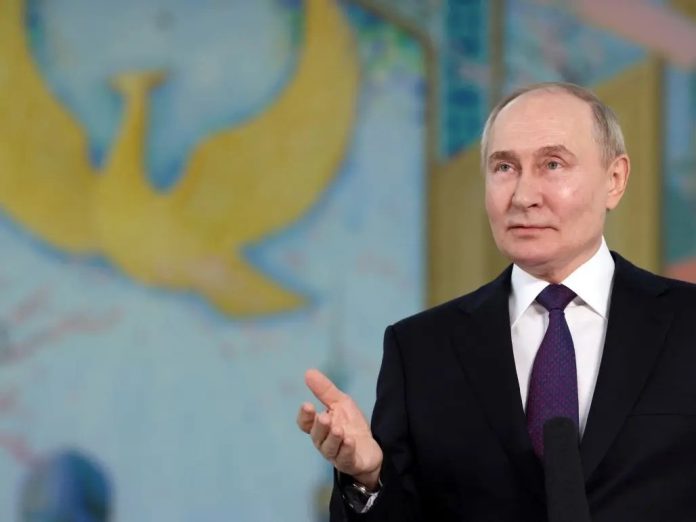
Vladimir Putin

“Specialists are staying there under the guise of mercenaries,” he said at a news conference as he wrapped up his visit to Uzbekistan, commenting on documents legalizing the presence of French instructors at Ukrainian army training centers that were signed by Ukraine’s Commander in Chief Alexander Syrsky.

“There was a question about long-range precision weapons,” Putin went on to say.

“Who runs these weapons, who services them? Of course, it is these instructors that are disguised as mercenaries.”

“They are there and are sustaining losses,” Putin continued, adding, “And it is becoming more and more difficult for them to conceal these losses.”

“Maybe it’s time to say that they are officially present there to show actual losses officially.”

Russia is well aware of the fact that there are Western mercenaries in Ukraine, there is nothing new about that, Putin stated.

“As far as mercenaries being or possibly being in Ukraine, we are well aware of that, there is nothing new about that,” he said.

Russia constantly hears foreign speech, including English, French and Polish, in radio intercepts in Ukraine.

Kiev’s Western backers need to understand that long-range strikes on Russian territory using weaponry they have supplied would represent a conflict escalation and lead to “serious consequences”, the president outlined.

Speaking to reporters at the end of a two-day visit to Uzbekistan, Putin addressed recent Ukrainian demands for NATO to permit the use of its weapons to attack deep inside Russia as well as comments by the US-led bloc’s head, Jens Stoltenberg, appearing to endorse the tactic.

“To be honest, I don’t know what the NATO secretary-general is saying,” Putin told reporters, adding that Stoltenberg “did not suffer from any dementia” when he worked constructively with Russia as the prime minister of Norway (2005-2013).

“This constant escalation can lead to serious consequences. If these serious consequences occur in Europe, how will the US behave, bearing in mind our parity in the field of strategic weapons? Hard to say. Do they want global conflict?”

Putin explained that long-range precision strikes require space reconnaissance assets – which Kiev does not have, but the US does – and that this targeting is already done by “highly qualified specialists” from the West, without Ukrainian participation.

“So, these representatives of NATO countries, especially in Europe, especially in small countries, must be aware of what they are playing with,” the Russian president continued, noting that a lot of these countries have “a small territory and a very dense population”.

Putin told reporters that their colleagues in the West are ignoring Ukrainian attacks on Belgorod and other Russian regions along the border, and only focusing on the Russian advance on Kharkov.

“What caused this? They did, with their own hands. Well, then, they will reap what they have sown. The same thing can happen if long-range precision weapons are used,” the Russian president added.

Asked if Russia was refusing to negotiate with Ukraine, Putin told reporters that such claims by the West were baffling.

“We don’t refuse!” he stressed.

“I’ve said it a thousand times, it’s like they don’t have ears!”

The Ukrainian side initialed an agreement with Russia in March 2022, then publicly reneged and refused to negotiate any further, Putin explained. He described Kiev’s current “peace conference” effort in Switzerland as an attempt to get some kind of international buy-in for its entirely unrealistic “peace platform,” which isn’t working out.

Another senior US State Department official resigns over Gaza war

The outgoing official, Stacy Gilbert, served in the State Department’s Bureau of Population, Refugees and Migration.

Gilbert sent an email to staff Tuesday explaining her view that the State Department was wrong to conclude that Israel had not obstructed humanitarian assistance to Gaza, officials who read the letter said.

The cause for resignation is unusual in that it speaks to internal dissent over a hotly disputed report that the Biden administration relied on to justify continuing to send billions of dollars of weapons to Israel.

The report Gilbert objected to was published this month in response to a presidential memo known as NSM-20.

President Biden issued the memo in February after coming under pressure from congressional Democrats concerned about the rising death toll in Gaza. It required the State Department to assess whether Israel’s use of U.S. weapons in Gaza violated U.S. or international humanitarian law and included an examination of whether humanitarian aid had been deliberately obstructed.

The report — the product of weeks of discussion within the State and Defense departments — found that while “aid remains insufficient,” the United States does not “currently assess that the Israeli government is prohibiting or otherwise restricting the transport or delivery of U.S. humanitarian assistance”.

Gilbert, whose views were echoed by the vast majority of aid and humanitarian organizations, said Israel was impeding the aid from reaching civilians in Gaza. Aid flows have continued to be constricted in the weeks since the report was issued. But the report found insufficient grounds to halt aid to Israel.

Along with Paul, a handful of Biden administration officials have resigned since the conflict began in October, including Annelle Sheline, who worked on human rights issues, and Hala Rharrit, one of the department’s Arabic-language spokespeople. Still more have expressed unhappiness with administration policy by sending cables via the internal dissent channel, a process intended to allow diplomats to articulate disagreement without fear of retribution.

After Rharrit resigned, she said that as the months of the conflict progressed, it became more clear that internal discussion about U.S.-Israel policy was unwelcome, unlike almost every other subject during her 18-year career at the State Department.

The Biden administration paused the transfer of some bombs and precision guidance kits to register its concerns over a potential large-scale invasion of Rafah. But it has left most weapons flows untouched and has said Israel’s actions in the crowded border city do not yet cross the president’s “red line” despite the rising death toll and increasing military operations.

Hamas ends truce talks until Israel ceases Rafah operation

Gaza War

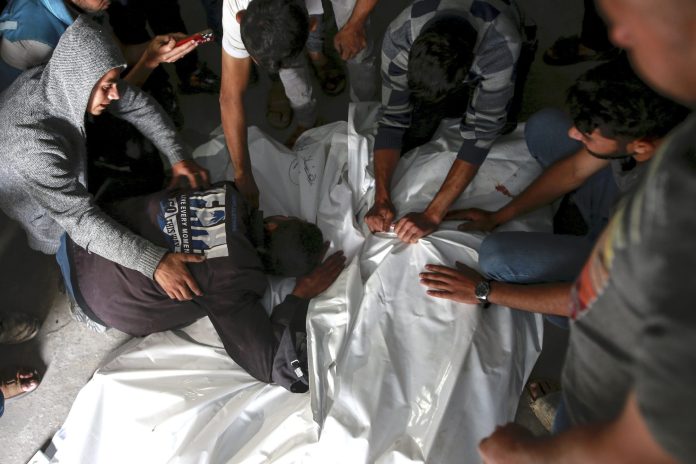
At least 45 people were killed and dozens more wounded, most of them women and children, when Israel struck a camp housing displaced Palestinians in the Tel al-Sultan neighbourhood of western Rafah.

The air strikes, which resulted in some Palestinians being burned alive, came just two days after the International Court of Justice (ICJ) ordered Israel to “immediately halt its military offensive in Rafah”.

A source close to Hamas told MEE on Tuesday that the Palestinian organisation had informed mediators it was ending its participation in negotiations until Israel ends its offensive on Rafah, withdraws its troops, and that the Rafah crossing, a critical entry point for food, medicine and other supplies for Gaza’s 2.3 million people, is reopened under its previous administration.

“The Rafah crossing must return to its previous administration, and no one is allowed to return to the crossing, neither Majid Faraj nor his authority, and there will be no return to negotiations unless the crossing is reopened and under its previous administration.”

The source made the remarks hours after Israeli forces struck a group of tents in western Rafah, killing at least 21 people.

The source added that future negotiations would take place in the form of “one stage” and with “one set of procedures”.

“After eight months of futile negotiations, and with continued massacres… there will be no negotiations or a review of the signed paper or discussions around its details,” the source stated.

“They (Israel) must first stop the massacres, leave the Rafah crossing, and stop the aggression – then we can talk. Until that happens, there will be no discussions.”

The Israeli paper Haaretz was the first to report on Hamas’s decision to withdraw from the talks.

Earlier this month, Hamas publicly declared its acceptance of a ceasefire deal put forward by mediators Qatar and Egypt, but Israel said the proposal fell way short of its demands.

The proposal was made up of three six-week stages and would lead to a permanent ceasefire, the full withdrawal of Israeli forces from the Gaza Strip, and an end to the siege.

It also included the release of all Israeli captives held in Gaza in exchange for a number of Palestinian prisoners to be agreed upon at a later stage.

The source added that Egypt was scapegoated for a breakdown of talks even though the Americans had “agreed to the two amendments by Hamas, and then because they were unable to oblige Prime Minister Benjamin Netanyahu, they accused Egypt.”

“Hamas does not have to sit down for negotiations while the Israelis continue killing, as continuing gives cover for the massacres and even led to the killing of the Egyptian soldier.”

On Monday, Axios reported that Mossad director David Barnea had agreed to a new framework for the stalled negotiations, following talks in Paris on Friday with CIA director Bill Burns and Qatar’s Prime Minister Mohammed bin Abdulrahman al-Thani.

It reported that the new framework was handed to key mediators Qatar and Egypt, and included “a willingness to be flexible” regarding the number of living captives that would be released in the first phase of the deal, as well as a willingness to discuss Hamas’s demand for “sustainable calm” in the Gaza Strip.

On Tuesday, a senior Al Jazeera journalist reported that Israel had expressed its readiness to discuss Hamas’s demand for a “sustainable calm” in Gaza and that Hamas had received the proposal that Israel submitted to the mediators.

However, Hamas has repeatedly insisted it is not willing to accept a temporary ceasefire, and that an end to the fighting has to be permanent.

Later on Tuesday, Egypt’s state-affiliated Al-Qahera News TV channel reported, citing a senior official, that an Egyptian security delegation was trying to reactivate the talks.

The official was quoted as saying Egypt had told all concerned parties that efforts to revive the talks had been undermined by Israel’s ongoing ground operation on Rafah in southern Gaza, which had brought “dire consequences”.

Netanyahu, under pressure from far-right members of his ruling coalition, has repeatedly rejected Hamas’s demands for a ceasefire deal.

On Tuesday, despite admitting the killing of 45 Palestinians had been a “tragic mishap”, he remained undeterred over the war effort in Rafah and showed little sign of changing course.

“I don’t intend to end the war before every goal has been achieved,” he added.

Since the events of 7 October, when a Hamas-led attack on southern Israel killed 1,200 people and resulted in 250 people being taken back to Gaza as captives, the enclave has been under total siege and deprived of basic necessities, while facing a devastating bombing campaign by Israel.

More than 36,000 Palestinians have been killed and nearly the entire population has been displaced. Nearly 80,000 people have also been wounded, according to health officials.

The figures exclude tens of thousands of dead who are believed to be buried in the bombed-out ruins of homes, shops, shelters, and other buildings.


US signals Rafah strike doesn’t cross ‘red line’

Gaza War

Multiple administration officials in press briefings Tuesday described the images out of Rafah as “heartbreaking”, “tragic” and “horrific”. But there was no sign of an impending policy change as a result, because it was an air raid and not a major ground operation.

“We still don’t believe that a major ground operation in Rafah is warranted. We still don’t want to see the Israelis, as we say, smash into Rafah with large units over large pieces of territory. We still believe that, and we haven’t seen that at this point,” White House spokesperson John Kirby told reporters.

“As a result of this strike on Sunday, I have no policy changes to speak to,” he added.

“It just happened. The Israelis are going to investigate it. We’re going to be taking great interest in what they find in that investigation. And we’ll see where it goes from there.”

President Joe Biden earlier this month warned he would stop supplying Israel with offensive weapons such as bombs and artillery shells if it launched a long-promised invasion of Rafah.

The White House has urged Israel against sending forces into Rafah without a clear plan to evacuate civilians safely, because the war has already left tens of thousands of Palestinians dead, and about a million refugees have settled in Rafah after fleeing fighting in northern Gaza.

National security adviser Jake Sullivan last week told reporters there was “no mathematical formula” for assessing Israel’s conduct in Rafah, but officials would look at “whether there is a lot of death and destruction from this operation or if it is more precise and proportional”.

But administration officials stated Tuesday that Sunday’s airstrike, which was the deadliest incident in Rafah since Israel launched an offensive there, did not amount to what the White House has warned against.

“It is still our assessment that what is happening in Rafah and what the [Israeli military] are doing, it is limited in scope,” Pentagon deputy press secretary Sabrina Singh told reporters.

Israel Prime Minister Benjamin Netanyahu described the Rafah fire as tragic and stated Israel is “investigating it thoroughly and will learn from it, as is our policy and longstanding conduct”.

The White House has for weeks urged Israel to do all it can to prevent the deaths of innocent civilians and humanitarian workers in Gaza, where scores of Palestinians are without access to adequate food, water and medicine.

Biden has grown increasingly frustrated with Netanyahu, saying in an interview earlier this year that his handling of the war in Gaza was hurting Israel more than it was helping.

Kirby stated Tuesday that “no civilian casualties is the right number of civilian casualties”, but he acknowledged innocent people are often killed in war.

“There’s not like a measuring stick here or a quota,” he added, when asked if there were a number of civilian deaths that would prompt action from the U.S.

“As we’ve said many times, the right number of civilian casualties is zero.”