Thursday, January 1, 2026
Home Blog Page 840

Iran FM warns Israel not to take one-way path to ‘hell’ in Lebanon

Israel Army

Talking to reporters at the end of the weekly cabinet meeting on Wednesday, Ali Bagheri noted Hezbollah is an active military and diplomatic actor in Lebanon and a deterrent power in the region.

The remarks came after the Israeli regime escalated its threats in recent weeks that it is planning to start a full-scale war with the Lebanese resistance movement.

Bagheri also reiterated that Iran seeks to open a new chapter in its relations with Saudi Arabia and improve ties with Riyadh. He said a visit by the Saudi king to Iran is on the agenda of the two countries.

Also reacting to the possibility that former US President Donald Trump would assume power while a new administration is taking hold in Iran, Bagheri said, “The changing of a person (in the US) will not affect our strategic policies thanks to the strongly-built components of power and capacities of the country.”

Minister: Iran preparing for presidential runoff elections

Iran Presidential Election

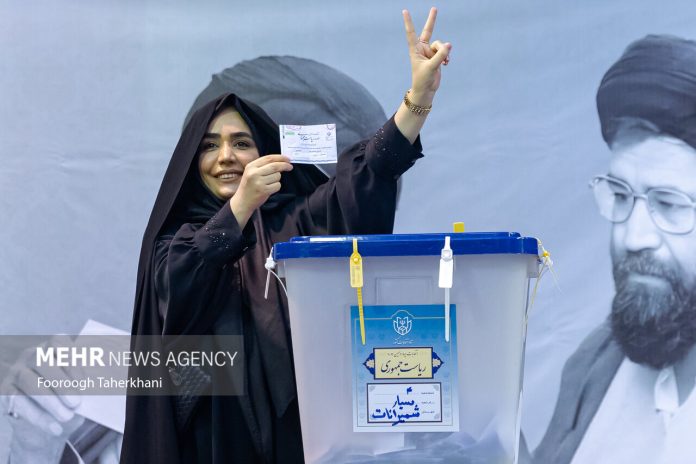
Ahmad Vahidi told reporters on Wednesday that the security arrangements have been made across the country for the election day.

He rejected accusations by reformist candidate Massoud Pezeshkian that the governors appointed by the current administration are campaigning for their allegedly favorite candidate Saeed Jalili.

He echoed remarks by Iran’s Leader that people’s ballots should be protected and said the priority for officials is a high turnout in a healthy election environment.

Pezeshkian and Jalili failed to win an outright victory in the first round of the election on July 28 and have to race for office in the runoff, to be held on Friday.

The turnout in the first round was 40 percent. Analysts believe in case the voter apathy drags into the runoff, Jalili will emerge as the winner.

Pezeshkian runs on a platform of improving the sanctions-hit economy and staying away from confrontational policies in the international arena.

He is in favor of revitalizing the Iran nuclear deal, JCPOA, and Iran joining the Financial Action Task Force (FATF), aimed at tackling money laundering, terrorism, and proliferation financing.

This is while Jalili says Iran has suffered much from the JCPOA, making more than enough concessions to the Western parties to the deal. He is also against Iran joining the FATA, saying it will give the West access to Iran’s financial system.

Iran censures US support for Israel’s crimes in Gaza, sanction regime as rights violation

Gaza War

In a statement issued on the 36th anniversary of the US downing of an Iranian passenger plane over the Persian Gulf, the Iranian Foreign Ministry said American officials, under the pretext of supporting human rights, have placed comprehensive pressure on and sanctioned countries that are not politically willing to act within the framework of US interests and desires.

All 290 passengers and crew on board the Iran Air Flight 655 were killed after it was shot by the US Navy ship Vincennes on July 3, 1988, in the Persian Gulf. 66 children under the age of 13 as well as 46 non-Iranians were among those killed in the terror incident which later saw the US government awarding the Vincennes’ commander a medal.

The Iranian Foreign Ministry said that the US use of economic sanctions as a tool of pressure on countries that are politically independent and opposed to US international practices has continued for decades and is a clear violation of human rights at various levels while being contrary to international regulations and norms.

The statement also highlighted the U.S. all-out support for the Israeli regime’s genocidal war on Gaza, which has so far killed nearly 38,000 Palestinians.

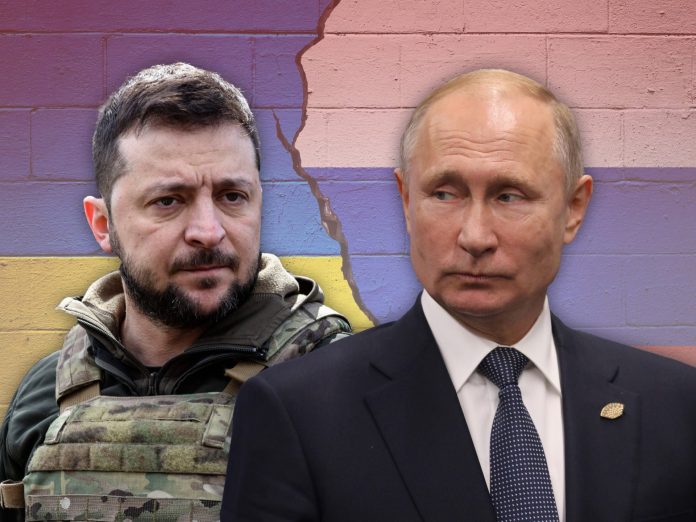
Confidence in Ukraine’s Zelensky drops in Europe, ‘warms’ for Russia’s Putin in some places: Poll

Zelensky Putin

The findings contrast with a slight improvement in global opinion toward Russian President Vladimir Putin, in particular among young people, although overall confidence in the Russian leader remains low.

The Pew survey underscores how support for Ukraine is straining among its Western allies and that efforts to isolate Putin are faltering two years into the war.

And the survey comes shortly before President Joe Biden hosts the NATO summit in Washington that will mark the alliance’s 75th anniversary, during which ongoing support for Ukraine will be at the top of the agenda.

Survey respondents were also asked their opinion of NATO, of which the median viewed the alliance favorably, but has ticked down in the U.S., Spain, the United Kingdom and Sweden — which only became a member in March.

More than 44,000 people in 36 countries were surveyed across North and South America, Europe, Asia, the Middle East and Africa.

Overall, an average of 46 percent of respondents said they do not have confidence in Zelensky to do the right thing, compared to 40 percent who said they do.

“We’ve only started asking about him since the war broke out in 2022, and then he received quite high favorability or confidence,” said Moira Fagan, research associate at Pew Research Center specializing in international survey research.

“But since then, it has declined and in many European-allies cases, the confidence in Zelensky has declined significantly over the past year.”

Poland showed the most drastic decline in its opinion toward Zelensky and Ukraine, a reflection of tensions that have played out between Warsaw and Kyiv over trade and border disputes. Poland also hosts between 1 million and 2 million Ukrainian refugees.

The Pew survey found that smaller, but significant decreases of confidence in Zelensky have also occurred in Australia, France, Germany, the Netherlands, Spain, South Africa, South Korea, Sweden and the U.S.

Fagan stated that one possible explanation is fatigue in some of these countries, linked to some respondents’ answers that they view their countries’ support for Ukraine as “enough” or “too much”.

These answers also reflect growing partisan gaps on views toward support for Ukraine, with conservatives and those who identify as right-wing more critical of assistance for Kyiv.

“We also know that people who are right-wing populist party supporters are less likely to have expressed confidence in Zelensky than people who do not support right-wing populist parties in Europe,” Fagan continued, pointing to the growing success of these parties in the recent European parliamentary elections as linked to the attitudes reflected in the survey.

Previous findings from Pew found that among American respondents, there is a stark divide between Republicans and Democrats over support for Ukraine, mirroring criticisms from Republican-lawmakers opposing U.S. military and economic support for Ukraine.

Among respondents in survey results published in May, 49 percent of Republicans and those who lean-Republican said the U.S. provides too much support to Ukraine, compared to 16 percent of Democrats or those who lean-Democrat.

“This is something that we see just huge partisan divides on in the United States and those partisan divides getting larger as well, particularly on the support for Ukraine,” Fagan added.

On the other side, while a median of 65 percent of respondents hold a negative view of Putin since Russia invaded Ukraine in February 2022, opinions have “warmed slightly” in several countries, the survey authors wrote.

In most of the surveyed countries, younger adults are more likely than older people to have a favorable opinion of Russia, the authors wrote. In Peru, for example, 63 percent of adults under 35 said they have a positive opinion of Russia, compared to 31 percent of adults ages 50 and older.

In Germany, confidence in Putin is up 9 points and favorable views toward Russia have increased 5 points since 2023, they wrote. Argentines have also recorded a more favorable view toward Russia, an 11-point increase, and 9 points more confidence in Putin over the past year.

“Rising shares of right-wing populists are confident in Putin in several countries, including France, Germany, Hungary, the Netherlands, Sweden and the UK,” the survey authors wrote.

Still, much of the world remains largely negative toward Russia and Putin, Fagan explained, and categorized the changes as “modest overall.”

“Views of Putin and Russia, sort of as a pair, are both still far more negative than positive around the world. There’s some regional variation there as well, where you get more negativity in Europe, a little bit more favorability in parts of the Asia Pacific, Latin America, for example.”

Attitudes toward NATO are overall positive in much of the world, the survey found, with surprising increases recorded in Turkey and Hungary, Fagan underscored.

“Turkey in particular, which is a country that has historically not been quite favorable towards NATO, favorability has doubled since we last surveyed in Turkey in 2019.”

Forty-two percent in Turkey approve of NATO, up from 21 percent in 2019. (The survey was suspended during the pandemic).

And Hungary also has shown an increasingly positive view toward NATO, with more than 8 in 10 adults saying the alliance is important for their country’s security. This could appear at odds with Hungarian Prime Minister Viktor Orbán’s antagonism toward Europe and Ukraine, and support for Putin and former President Trump, who has threatened to exit NATO.

“What is striking there is that they’ve [Hungary] grown statistically, significantly more favorable toward NATO over the past year,” Fagan said, adding, “Looking at the context of contributions to the war, Hungary ranked last among all 13 of these NATO member countries that we survey in terms of relative contribution to the Ukrainian war effort, but they do not see the organization very unfavorably. So it’s an interesting balance.”

Iran imposes sanctions on American individuals over rights violation in US pro-Palestine protest

Protest US Universities

In a statement, the Iranian Foreign Ministry said in accordance with the Iranian Law dubbed “Countering the Violation of Human Rights and Adventurous and Terrorist Activities of the United States in the Region”, the following American individuals are sanctioned for their involvement in violation of human rights by suppressing peaceful protest of university students and professors in the United States who were supporting the oppressed Palestinian nation against the Zionist regime’s crimes in Gaza:

1.William Billy Hitchens, Commissioner of the Department of Public Safety of Georgia,

2.Eddie Grier, Commanding Officer over Field Operations of Georgia,

3.Linda J. Stump-Kurnick, Chief of the University of Florida Police Department,

4.Pamela A. Smith, Chief of the Metropolitan Police Department of the District of Columbia,

5.Jeffery Carroll, Executive Assistant Chief, Metropolitan Police Department,

6.Karl Jacobson, Chief of New Haven Police Department,

7.Shane Streepy, Assistant Chief of University of Texas Police Department (UTPD),

8.Michael Cox, Commissioner of the Boston Police Department,

9.Scott Dunning, The Indiana University Police Department Central Division Chief ,

10.Michael Thompson, The Arizona State University Police Chief,

11.John Brockie, Chief of Police at CAL State Long Beach Police Department.

The statement reads the above-mentioned persons will be subject to sanctions stipulated in the Law including the blocking of accounts and transactions in the Iranian financial and banking systems, blocking of assets within the jurisdiction of the Islamic Republic of Iran as well as prohibition of visa issuance and entry to the territory of the Islamic Republic of Iran.

Hundreds arrested during anti-Syria riots in Turkey

Anti-Syria riots in Turkey

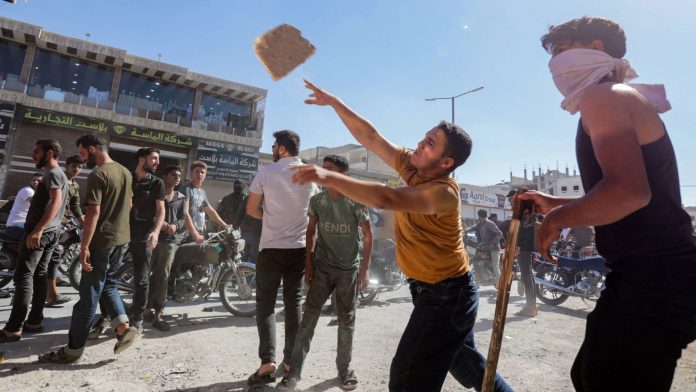
Riots erupted after Turkish authorities arrested a Syrian man for allegedly sexually abusing a seven-year-old Syrian girl in the central city of Kayseri.

Turkish residents, infuriated by online reports of the crime, flipped over cars in Kayseri and set Syrian-run shops alight on Sunday night, demanding that Syrians be kicked out of the country.

The violence spread to the southern province of Hatay, where protesters set a Syrian grocery store ablaze.

The riots “damaged houses, workplaces, and vehicles belonging to Syrian nationals”, said Turkey’s Interior Minister Ali Yerlikaya, who accused those responsible of acting “illegally in an attitude that does not suit our human values”.

On Tuesday, Yerlikaya stated “474 people were detained after the provocative actions” carried out against Syrians, in a post on X.

Turkish President Recep Tayyip Erdogan condemned the violence, which he blamed opposition parties for stoking.

“It is unacceptable to burn houses, vandalise and set streets on fire,” he said on Monday of the violence, adding, “Nothing can be achieved by fuelling xenophobia and hatred of refugees in society.”

More than 3.5 million Syrians live in Turkey, the highest number in the region, who were initially welcomed as refugees when the war erupted in Syria in 2011.

Most Syrians live under “temporary protection” status and many subsequently became Turkish citizens. But anti-refugee sentiment has been rising in Turkey, particularly against Syrians, for several years because of a deep economic crisis that has seen soaring inflation.

Umit Ozdag, the leader of Turkey’s anti-migration Victory Party, blamed the violence on the government’s allegedly “privileged” treatment of Syrian refugees.

Anti-Syrian riots broke out in Turkey in 2021, after a Turkish teenager was stabbed to death in a fight with a group of young Syrians in the capital, Ankara.

Hundreds of people chanting anti-immigrant slogans took to the streets, vandalised Syrian-run shops and hurled rocks at refugees’ homes.

The recent violence sparked retaliatory riots in opposition-held areas of northwestern Syria, across the border, including those controlled by Turkish-backed forces.

Hundreds of Syrian demonstrators, some armed, took to the streets in protest. Some tore down Turkish flags, hurled rocks and objects at Turkish trucks and attempted to storm the Jarablus crossing, said the Syrian Observatory of Human Rights, a war monitor.

Four people were killed in “exchanges of fire” with Turkish guards, while 20 more were injured, added the Syrian Observatory.

Protester Adel al-Faraj stated he took to the streets in solidarity with “our Syrian brothers in Turkey”.

“Our people fled from [Syrian President] Bashar al-Assad only to be oppressed in Turkey,” he told the AFP news agency, urging Turkey to do more to stop violence against Syrians.

Tensions have been rising in Syrian opposition-held areas over moves towards rapprochement between the two countries, including plans to open a crossing between government-held areas and those held by Turkish-backed opposition forces in Aleppo.

12 US officials resign in protest at Biden’s Gaza policy

Gaza War

“America’s diplomatic cover for, and continuous flow of arms to, Israel has ensured our undeniable complicity in the killings and forced starvation of a besieged Palestinian population in Gaza,” they announced in a joint statement released Tuesday.

“This is not only morally reprehensible and in clear violation of international humanitarian law and US laws, but it has also put a target on America’s back,” they added.

The statement, signed by four former officials from the State Department, one from the US Agency for International Development (USAID), three from the US military and four political staff, addresses the Biden administration with policy proposals regarding Israel’s war on Gaza.

The signatories are former State Department officials Josh Paul, Annelle Sheline, Stacy Gilbert and Hala Rharrit, former policy advisor and political appointee at the US Department of Education Tariq Habash, former officials from the US Department of the Air Force Mohammed Abu Hashem and Riley Livermore, Deputy Director at the White House’s Office of Management and Budget Anna Del Castillo, former political appointee at the US Department of Interior Lily Greenberg Call, former special assistant at the US Department of the Interior Maryam Hassanein, former army officer from the Defense Intelligence Agency Harrison Mann, and former senior advisor at USAID Alexander Smith.

“This intransigent policy risks US national security and the lives of our service members and diplomats as has already been made evident with the killing of three US service members in Jordan in January and the evacuations of diplomatic facilities in the Middle East, and also poses a security risk for American citizens at home and abroad,” they said.

Accusing the administration’s policy of threatening US interests throughout the region, they stated that US credibility has been “deeply undermined worldwide at a time we need it most, when the world is characterized by a new era of strategic competition”.

According to the former US officials, who described the current Gaza policy as “failed”, the policy has not made Israelis “any safer” and has “emboldened extremists” while being devastating for the Palestinian people.

“As a group of dedicated Americans in service of our country, we insist that there is another way,” the statement noted, outlining steps to ensure that a “catastrophic policy failure like this can never happen again”.

It also urges the US government to ensure expansion of humanitarian assistance to the people of Gaza and the reconstruction of the territory as well as supporting self-determination for the Palestinian people.

“There is an urgent need for change in the organizational cultures and structures that have enabled the current US approach.”

“This includes the strengthening of oversight and accountability mechanisms within the Executive Branch, greater transparency regarding arms transfers and legal deliberations, an end to the silencing and sidelining of critical voices, and statutory change via the legislative process,” the statement read.

Calling on their former colleagues, they stressed, “We urge you to not be complicit.”

The unprecedented wave of resignations since the outbreak of the war on Oct. 7 last year has yet to lead to a significant shift in the US policy on Gaza as the flow of American-made arms to Israel continues despite massive civilian deaths, the risk of regional escalation and damage to America’s global standing.

President Biden has defended his support for Israel, but has criticized the government of Prime Minister Benjamin Netanyahu for carrying out a punishing campaign in Gaza to rout Hamas.

Critics of Biden’s policy toward Israel have called for the president to halt US weapons supplies as leverage against Israel to stop its military operations.

Israel, flouting a United Nations Security Council resolution demanding an immediate cease-fire, has faced international condemnation amid its continued brutal offensive on Gaza since an Oct. 7, 2023 attack by the Palestinian group Hamas.

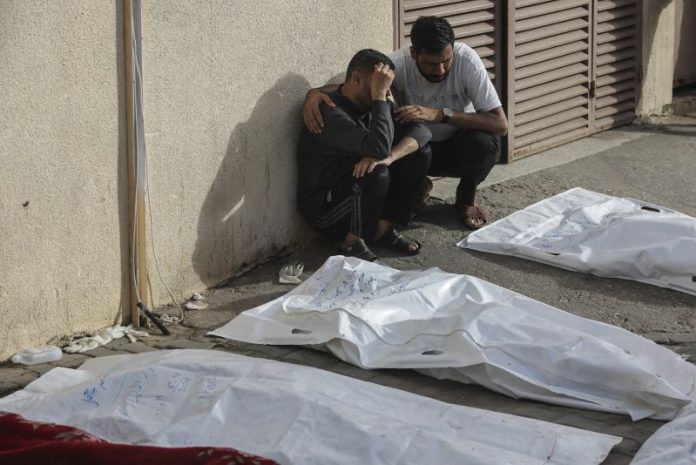
At least 37,900 Palestinians have since been killed, mostly women and children, and over 87,000 others injured, according to local health authorities.

Over eight months into the Israeli war, vast tracts of Gaza lie in ruins amid a crippling blockade of food, clean water and medicine.

Human rights organizations have warned that thousands of people in the besieged enclave are facing the risk of famine amid ongoing Israeli devastating onslaught.

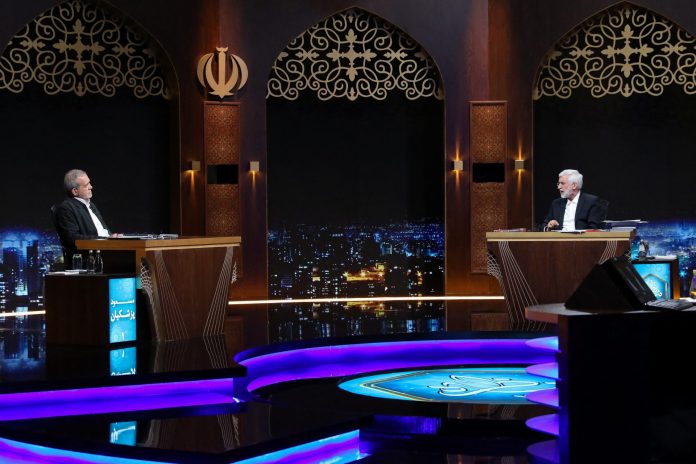
Iranian presidential candidates square off in last debate before runoff vote

Pezeshkian Jalili

Reformist Massoud Pezeskhian and principlist Saeed Jalili, who garnered the highest number of votes in the first round but failed to secure the absolute majority, highlighted their economic plans in the debate.

Their discussions centered mainly on sanctions and strategies to lift or ease them, economic growth, subsidies, housing, stock market, and employment among others.

During the debate, which at times got heated, Pezeshkian repeated his view that sanctions have negatively affected Iran’s economy and that the upcoming administration should sit at the negotiating table to ease the punitive measures.

Jalili, however, believes that the West has proven an unreliable negotiating party and said he would rather find a way to sidestep the sanctions, instead of catering to the Western demands.

The former top nuclear negotiator also rejected widespread accusations that his “failed strategies” were the main reason that the West unleashed the torrent of sanctions on Iran.

Both candidates accused each other of lacking a vision and plan for the problems that plague the country’s ailing economy. People’s livelihood amid the economic hardships came up several times during the show.

Pezeshkian promised to do his utmost to tackle the issues but admitted that without the required resources, no government could solve the problems.

Iranians at home and abroad will go to the runoff polls on Friday to elect a successor to the late Iranian president Ebrahim Raisi who died in a helicopter crash on May 19.

More than 9,600 Palestinians held in Israeli jails: Rights group

Israel Palestine

Some 3,379 Palestinians are held without trial or charge under Israel’s administrative detention policy and 1,402 are classified as unlawful combatant, Israeli human rights group HaMoked said, citing figures by the Israeli Prison Service.

The term “unlawful combatants” is used by Israel to describe Palestinians from the Gaza Strip who have been detained during its ongoing offensive on the enclave since Oct. 7, 2023.

“Israel’s treatment of security inmates violates their rights to equality, dignity, family life, education, and more, contravenes international law,” HaMoked added.

It said holding detainees from the occupied Palestinian territories inside Israel “constitutes a blatant violation of the Fourth Geneva Convention” and “violates basic human rights enshrined, inter alia, in Israeli law.”

Israel, flouting a UN Security Council resolution demanding an immediate cease-fire, has faced international condemnation amid its continued brutal offensive on Gaza since an Oct. 7, 2023 attack by the Palestinian group Hamas.

At least 37,900 Palestinians have since been killed, mostly women and children, and over 87,000 others injured, according to local health authorities.

Over eight months into the Israeli war, vast tracts of Gaza lie in ruins amid a crippling blockade of food, clean water and medicine.

Human rights organizations have warned that thousands of people in the besieged enclave are facing the risk of famine amid ongoing Israeli devastating onslaught.

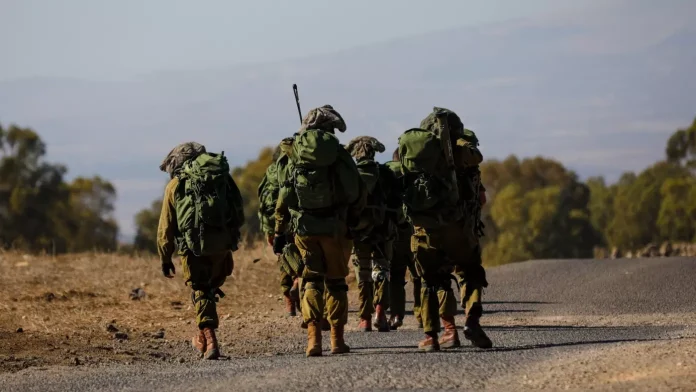
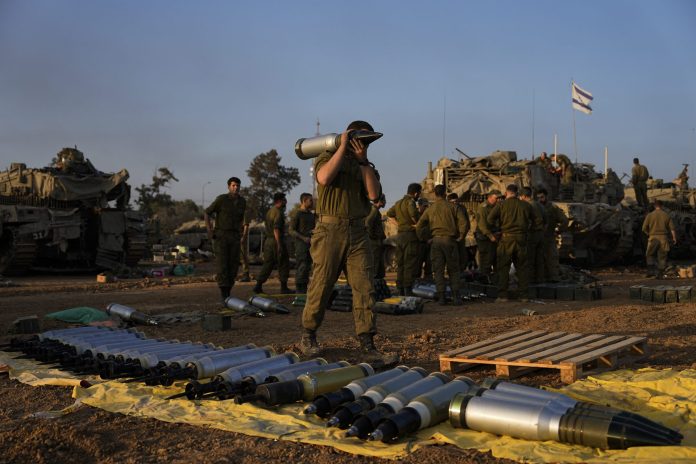
Israel’s army says needs 10,000 soldiers ‘immediately’

Israeli Army

“The [Israeli] army needs 10,000 more soldiers immediately,” Gallant said in statements carried by Army Radio during a session of the Knesset’s Foreign Affairs and Defense Committee.

He said the army can recruit 4,800 soldiers from ultra-Orthodox males.

Last week, Israel’s Supreme Court unanimously ruled that ultra-Orthodox Jews must be subject to the military draft, after decades of being exempted from military service.

Israel, flouting a UN Security Council resolution demanding an immediate cease-fire, has faced international condemnation amid its continued brutal offensive on Gaza since an Oct. 7, 2023 attack by the Palestinian group Hamas.

At least 37,900 Palestinians have since been killed, mostly women and children, and over 87,000 others injured, according to local health authorities.

Over eight months into the Israeli war, vast tracts of Gaza lie in ruins amid a crippling blockade of food, clean water and medicine.

Human rights organizations have warned that thousands of people in the besieged enclave are facing the risk of famine amid ongoing Israeli devastating onslaught.