Thursday, January 1, 2026
Home Blog Page 839

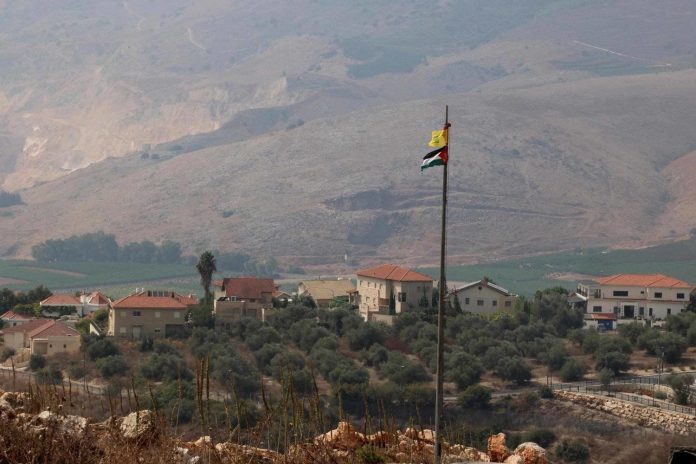
Hezbollah showers Israeli sites after top commander killed

Israel Hezbollah Tension

The Lebanese armed group on Wednesday said that Muhammad Nimah Nasser, also known as “Hajj Abu Naameh”, had been killed. The Iran-aligned group later added it had launched 100 katyusha rockets targeting Israeli military positions.

The announcement of Nasser’s death on the group’s Telegram did not provide the location, but a source previously told Al Jazeera that a commander had been killed in the Hosh area in Tyre in southern Lebanon.

Nasser had the same rank as Taleb Abdallah, another top commander who was killed by an Israeli attack in June. At the time, Abdallah was the highest-ranking Hezbollah military official killed since the group began fighting Israel on October 8 in response to bombardment of Gaza. Following Abdallah’s killing, Hezbollah launched one of its largest rocket barrages on northern Israel.

The Israeli military confirmed it targeted Nasser, and noted he was a “counterpart” of Abdallah and in charge of Hezbollah’s “antitank and rocket fire from southwest Lebanon”. In January, an Israeli strike also killed Wissam al-Tawil, another top commander from the group.

On Thursday, Hezbollah announced it launched more than 200 rockets and drones targeting Israeli military positions.

The attack on Thursday was one of the largest so far along the Lebanon-Israel border as tensions skyrocket with the group sending exploding drones at several military bases in northern Israel and the occupied Syrian Golan Heights.

The latest attacks come amid an uptick in fighting and charged rhetoric between Hezbollah and Israeli officials that has sent US, European, and Arab mediators scrambling to prevent a wider regional escalation.

Israeli Prime Minister Benjamin Netanyahu said in late June that Israeli forces must shift their focus to northern Israel, while far-right Israeli ministers called for a full-scale invasion of territory controlled by Hezbollah in Lebanon.

Defense Minister Yoav Gallant has said Israel is seeking to prevent a wider war, but warned that its military has the capacity to take “Lebanon back to the Stone Age”.

Hezbollah leader Hassan Nasrallah said the group was ready for war with “no restraint and no rules and no ceilings” in the event of a major Israeli attack.

For its part, Iran has warned that “all Resistance Fronts” would confront Israel if it attacks Lebanon, referring to the armed groups it supports throughout the region.

At least 543 people, including 88 civilians, have been killed by Israeli attacks in Lebanon, while at least 21 Israelis, including 10 civilians, have been killed in attacks by Hezbollah and other armed groups in Lebanon since the beginning of the war.

At least 37,953 people have been killed in Israel’s war on Gaza since October, according to Palestinian health authorities.
Israel says studying Hamas response to ceasefire deal

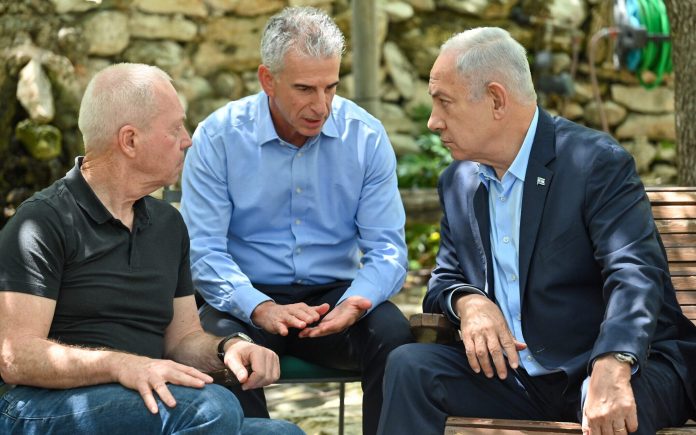
Prime Minister Benjamin Netanyahu consults with Defense Minister Yoav Gallant (L) and Mossad chief David Barnea (C).

“The mediators of the hostage deal have given the negotiating team Hamas’ response to the hostage deal outline. Israel is examining the response and will respond to the mediators,” Prime Minister Benjamin Netanyahu’s office said in a statement released on behalf of Mossad.

The proposal would include a deal to release the remaining hostages in the besieged enclave, which are believed to be around 120, and also would include a ceasefire in the besieged enclave.

Hamas has stressed on multiple occasions that any deal it agrees to would have to include a full end to the war, including the complete withdrawal of Israel’s military from Gaza.

Israel’s government, led by Netanyahu, however, has stated it would only accept a deal that would include temporary pauses in the fighting and has vowed to continue the war until Hamas is eliminated.

Axios reporter Barak Ravid posted on X, citing a senior Israeli official, that Hamas’s response “makes it possible to move forward to individual negotiations on the issues that remain in dispute”, but that even if this were to happen those individual negotiations could take another several weeks.

In May, US President Joe Biden made the current ceasefire deal on the table public, which is a multi-stage deal that would see the release of hostages in exchange for the pullback of troops.

While Biden has blamed Hamas for not accepting the deal, the one outlined by Biden appears identical to the agreement Hamas had accepted at the beginning of May. That deal was later rejected by Israel, which launched an invasion of southern Gaza’s Rafah as a response.

Hamas’ Political Bureau chief has also contacted Qatari and Egyptian mediators as means of keeping up discussion about underway efforts at reaching a potential truce deal that could end the Israeli war on the besieged territory.

The movement announced the information in a statement on Thursday.

“In recent hours, the fighter brother Ismail Haniyeh conducted phone calls with the mediator brothers in Qatar and Egypt,” the statement said.

The conversations addressed “the ideas that the movement is discussing with them (the mediators), with the aim of reaching an agreement that puts an end to the brutal aggression to which our proud people are being subjected in Gaza”.

The regime has been waging the war since October 7 following Al-Aqsa Storm, a retaliatory operation by Gaza’s resistance movements, during which hundreds were taken captive.

The war has so far claimed the lives of nearly 38,000 Palestinians, most of them women, children, and adolescents.

Dozens of US House lawmakers call on Biden to address Turkey’s human rights abuses during NATO summit

Erdogan

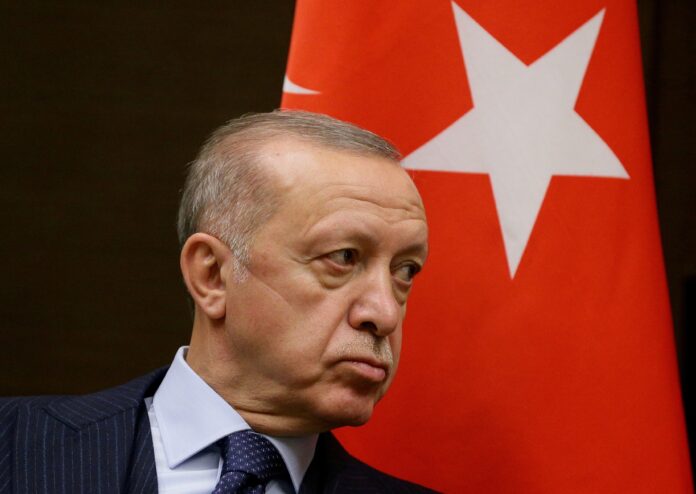
Reps. Chris Smith (R-N.J.) and Lloyd Doggett (D-Texas) led a group of 142 House members in a letter to Biden.

“We urge you, President Biden, to prioritize human rights and press the Turkish government to cease its transnational repression campaign, unconditionally release political prisoners, and restore the rule of law,” the lawmakers wrote.

“Your intervention is crucial to upholding the values of democracy and human rights on the global stage.”

The Biden administration says that it raises its concerns about human rights wherever it observes violations. The State Department’s 2023 country reports on human rights practices noted that Turkey had “significant human rights issues” and that the government “took limited steps to identify and punish some officials who may have committed human rights abuses”.

Still, the Biden administration has sought to keep close ties with Ankara, a NATO ally that controls the main passageway between the Black Sea and Mediterranean Sea, and has acknowledged the strain of Turkey hosting more than 3 million Syrian refugees stemming from the 2011 war in that country.

The lawmakers, in their letter, call for Biden to exercise “urgent intervention to address Turkey’s non-compliance with international law and its systematic human rights abuses”, and highlight specific instances of transnational repression, stating the Turkish government has sought to “silence” critics like Enes Kanter Freedom, a former NBA player and outspoken critic of Erdoğan.

The Turkish government has gone after Freedom’s “family in Turkey and placing an Interpol red notice and bounty on him and on many others”, the lawmakers added.

The lawmakers also accuse Turkey of “Interpol abuses”, including the forcible transfer of more than 100 Turkish nationals with allegations of involvement in the 2016 coup, “with reports of torture, denial of legal rights, and coerced confessions”, they wrote.

“The UN Special Rapporteur’s letter in 2020 condemned the systematic practice of state sponsored extraterritorial abduction and forcible return of Turkish citizens from multiple countries. Victims face torture, pressure, and humiliation before being deported, with the Turkish government neither denying nor hiding these actions,” the lawmakers underline.

“This further underscores the need for urgent intervention to address Turkey’s non-compliance with international law and its systematic human rights abuses.”

Iran confirms release of citizen detained in France

Nasser Kanaani

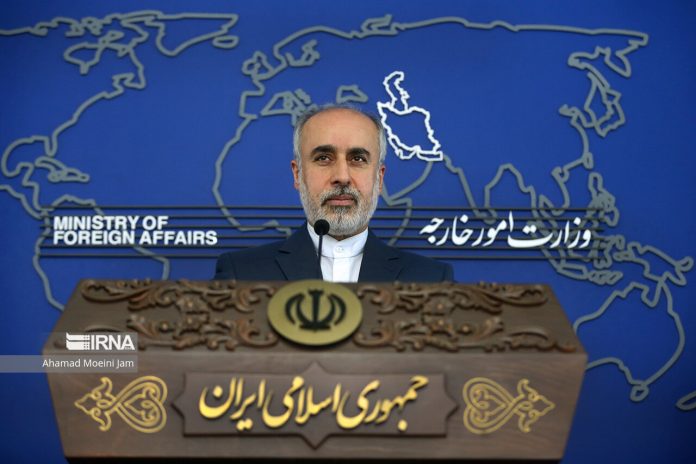
Foreign Ministry Spokesperson Nasser Kanaani expressed satisfaction with the release of Bashir Biazar, saying his release happened after political and consular endeavors.

Kanaani said protecting the rights of Iranian citizens abroad is an important priority for the government of the Islamic Republic of Iran.

Biazar, an independent Iranian musician and filmmaker,
spent almost a month in a French jail after his arrest and imprisonment in the European country over charges that were widely described as politically motivated.

Biazar was summoned by French police without explanation or warrant on June 4 and was arrested upon his arrival at the police station, after which he was sent to a jail meant for illegal migrants.
.
Biazar was reportedly accused of involvement in “Iranian propaganda,” “anti-Zionism and anti-Americanism,” “hateful social media posts,” being a “vector of hatred,” and posing a “threat to public order in France.”

Iranian officials and Biazar’s family had categorically rejected the charges as baseless.

Russia claims Western talk of Ukraine peace just for show

Russian Foreign Ministry spokeswoman Maria Zakharova

Hungarian Prime Minister Viktor Orban visited Kiev on Tuesday, where he urged President Volodymyr Zelensky to seek a ceasefire with Russia to facilitate peace talks. The Ukrainian leader rejected the proposal, saying he has a different way to end the conflict.

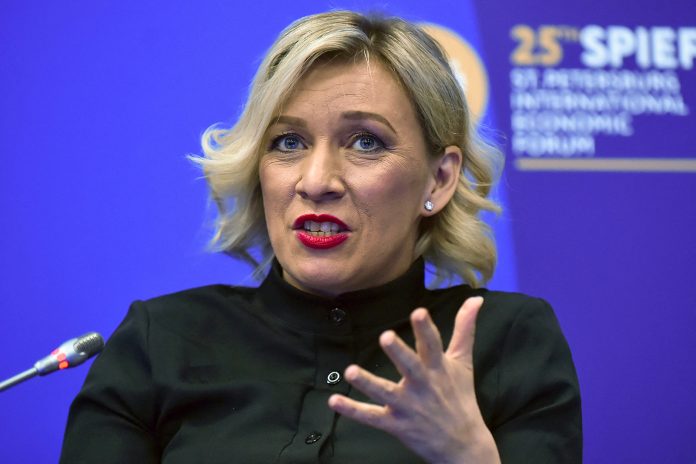
Whatever discussions Ukraine and Western nations have about peace are mere “decoys, screens, tropes and memes”, said purely for their own sake, Zakharova said on her weekly radio show on Wednesday.

The Ukraine conflict is dominated by the goal of inflicting a strategic defeat on Russia, which the US and its allies have declared “absolutely clearly and specifically,” the official explained. In practical terms, the West seeks to dismantle Russia and to end its existence, she claimed.

“What did you expect from the people chosen by the US as their tools? Tools don’t have a say in what they do.”

Clear-eyed politicians in the EU can see the place allocated to their nations in the US grand plan, which is that of a sacrificial animal on the altar of victory against Russia, Zakharova added. Europe’s grim future is evident in the state of its economy, she continued.

”What is happening to Europe is not just a crisis, or collapse, or loss of position. It truly is a disaster,” she argued.

Western officials such as Hungary’s Orban, who publicly object to the course of action chosen in Washington, probably want to set the record straight for the future generations of Europeans, who will blame the leaders of today for their inaction, Zakharova stressed.

The Hungarian prime minister has repeatedly argued that Western sanctions imposed on Russia as punishment for the Ukraine conflict have failed to end hostilities and ended up hurting EU members more than they did Russia.

Budapest has used its veto power in the bloc to stop proposed restrictions that would have undermined core Hungarian national interests, such as its cooperation with Russia on nuclear energy.

Russian President Vladimir Putin has pledged to order a ceasefire with Ukraine as soon as Kiev renounces its bid to join NATO and pulls its troops out of all territory which Moscow claims under its sovereignty.

Iran and Turkmenistan sign gas swap deal to supply Turkmen gas to Iraq

Iran Gas

This contract was signed during a ceremony attended by Ali Mojtaba Rozbahani, Iran’s Ambassador to Turkmenistan, and Maksat Babayev, head of Turkmenistan’s state-run gas company “Turkmen Gas”.

The two sides issued a statement on the deal. The statement said Turkmenistan and the Islamic Republic of Iran, based on the principles of friendship, good neighborliness, mutual respect, and equal participation, have been expanding their relations in the gas field for many years.

It added that the positive experience of joint efforts to export Turkmenistan’s gas to Iran and through that country’s territory to other nations is a solid basis for increasing the capacity of bilateral cooperation.

The statement noted that negotiations between the two sides were held in Ashgabat on July 1-3, during which a wide range of issues were discussed and an agreement was reached.

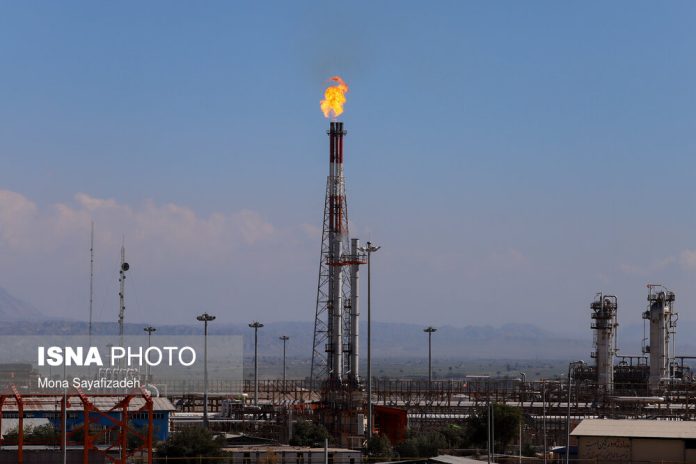
Under the swap agreement, up to 10 billion cubic meters of Turkmen gas will be supplied to the Republic of Iraq through the Iranian territory.

Meanwhile, Iranian companies will build a new gas transmission pipeline of 125 kilometers along with three gas pressure boosting stations in Turkmenistan, which can increase the capacity of the country’s gas exports to Iran to 40 billion cubic meters per year.

Iran and Turkmenistan also entered into a swap deal in 2022 and 2023 that took Turkmen gas through Iran to the Republic of Azerbaijan.

NATO member states pledge 40bn euros in military aid for Ukraine

Russia Ukraine War

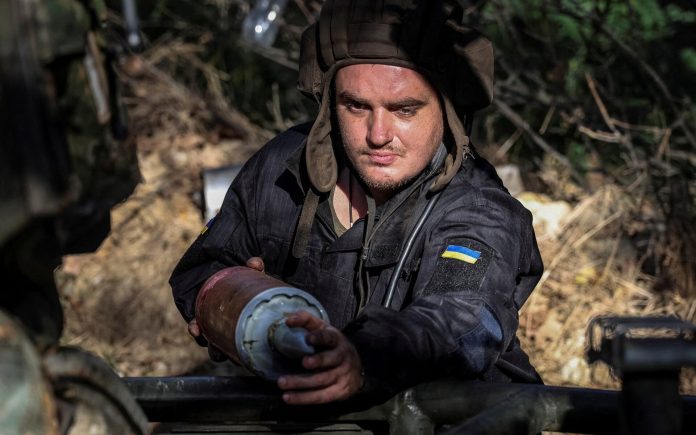
NATO Secretary-General Jens Stoltenberg had asked allies to make a multi-year commitment to keep military aid for Kyiv at the same level as that since Russia’s full-scale invasion of Ukraine in 2022, adding up to about 40 billion euros a year.

While the member states did not back Stoltenberg’s original request for such a multi-year pledge, the pact includes a provision to re-evaluate allied contributions at future NATO summits, according to a diplomat.

Allies also decided to have two reports over the next year to establish which country supplies what to Ukraine, the diplomat said, to meet demands for more transparency over the burden sharing in the alliance.

Member states “will aim to meet this pledge through proportionate contributions”, the agreement said.

The financial pledge is part of a broader Ukraine package that NATO leaders will agree when they gather for the Washington summit from July 9 to 11.

In June, allies decided that NATO would assume a greater role in co-ordinating arms supplies to Ukraine, taking over from the United States in a bid to safeguard the process as NATO-sceptic Donald Trump seeks a second term as U.S. president.

After Russia’s invasion in 2022, the United States gathered like-minded nations at the Ramstein air base in Germany, forming a group of nations that now numbers about 50, which meets regularly to match Kyiv’s arms requests with pledges of donors.

This so-called Ramstein group will continue to exist as a U.S.-led political forum but NATO will take over the military working level below that co-ordinates arms deliveries and training for Ukrainian troops.

The move is widely seen as a way to provide a degree of “Trump-proofing” by putting co-ordination under a NATO umbrella, giving the alliance a more direct role in the war against Russia, while stopping well short of committing its own forces.

But diplomats acknowledge such a move may have limited effect, as the United States is NATO’s dominant power and provides the majority of weaponry to Ukraine.

So if Washington wanted to slash Western aid to Kyiv, it would still be able to do so.

However, allies are still at odds in the run-up to the Washington summit over whether, and how, to strengthen NATO’s wording on Ukraine’s future membership in the alliance.

NATO’s official line is that Ukraine will join one day, but not while the country is at war. “Ukraine’s future is in NATO”, its leaders declared at last year’s Vilnius summit.

Some allies want this language to be strengthened, suggesting the summit declare that Ukraine’s path to membership is “irreversible”, according to diplomats.

US lawmakers introduce bill attacking Gaza solidarity encampments at universities

Protest US Universities

If it passes, the legislation will change some language within the Higher Education Act of 1965 to mandate that universities receiving federal funds disclose the measures it takes to “respond to incidents of civil disturbance occurring on the campus”.

The legislation, introduced by Elise Stefanik and Jim Banks, joins a chorus of other bills and attempts by Republicans in Congress to stifle pro-Palestinian activism on college campuses, which has spiked since Israel’s war on Gaza began last October.

“This legislation would prevent the disgraceful mob riots we saw overtake campuses across the country including Columbia University and make sure school leaders are enforcing policies against hostile campus takeovers,” Stefanik said in a statement announcing the legislation.

The lawmakers have framed student encampments, which comprise Palestinian, Jewish, Muslim, and students of many other religions and identities, as being antisemitic for their criticisms of Israel.

Student encampments in solidarity with Palestine began earlier this year, with several tent sites set up at institutions including Columbia and Harvard University. Since then, the movement swept across universities throughout the country before making it to countries worldwide.

The movement has been seen as one of the largest mobilisations against war and the US military-industrial complex since the Vietnam War.

The main demands of the protesters have been for their universities to divest financial interests in companies that are profiting from Israel’s war on Gaza, which has now been going on for nine months and has killed nearly 40,000 Palestinians.

In response to these protests, some universities, such as Columbia in New York and Emory in Georgia, have responded by ordering the police to sweep these encampments, leading to the violent arrests and injuries of student and faculty protesters.

For example, on 30 April, university administrators ordered police to conduct a sweep of the campuses of Columbia and City College of New York. Police arrested around 300 protesters, with police assaulting a number of demonstrators and blocking them from receiving medical assistance.

Since then, prosecutors in the city of New York dropped all charges against most of the students and activists, citing “prosecutorial discretion and lack of evidence”.

Republicans have meanwhile attacked the leadership of several top universities for not doing enough to crack down on these protests.

In December, a congressional hearing was held by lawmakers in which the presidents of Harvard, the Massachusetts Institute of Technology, and the University of Pennsylvania were called in to testify about their responses to the student protest movement.

Republicans used this hearing to bash these presidents and accuse them of allowing antisemitism to be expressed on campus, referring to the pro-Palestine demonstrations.

Several days after the hearing, the president of the University of Pennsylvania, Liz Magill, resigned from her post. And the next month in January, Harvard president, Claudine Gay, also resigned.

Iran Leader stresses on participation in presidential runoff vote

Ayatollah Khamenei

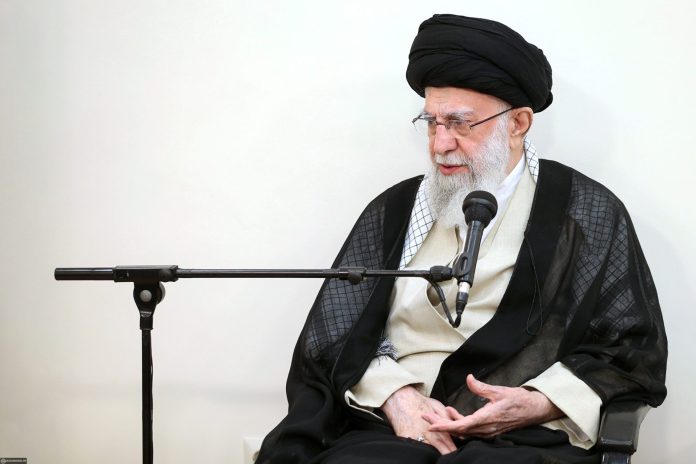
In a meeting with scholars from Shahid Motahari University in the capital Tehran on Wednesday, Ayatollah Khamenei underlined the importance of the runoff phase when voters will choose between reformist Massoud Pezeshkian and principlist Saeed Jalili to replace the late president Ebrahim Raisi whose tenure was cut short after he died in a helicopter crash last May.

The Leader said people are the backbone of the Islamic Republic and can help it achieve its goals, adding taking part in the election is tied to the country’s progress and is a “very big opportunity for strategic strengthening of Iran.”

He said, “This election is very important and anyone who loves Islam, the Islamic Republic, the progress of the country, the improvement of the situation, and bridging the gaps should show this interest by participating in the election on Friday.”

Ayatollah Khamenei said it is completely wrong to think that those who did not vote in the first round of election are against the ruling establishment in Iran.

More than 24 million out of the 61 million eligible voters cast their votes in Friday’s election, putting the turnout at 40 percent, according to the Iranian Interior Ministry.

Israel’s top generals want ceasefire in Gaza for war with Hezbollah: Report

Lebanon Hezbollah

With Israel’s war on Hamas about to enter its ninth month, the Israel Defense Forces (IDF) has lost at least 670 troops, supplies of artillery shells are low, and around 120 Israelis – dead and alive – remain held as hostages in Gaza.

Hamas fighters have popped up in areas of the enclave previously cleared by the IDF, and Netanyahu has still refused to publicly state whether Israel intends to occupy post-war Gaza or turn the territory over to a Palestinian government.

Against this background, the 30 senior generals who make up Israel’s General Staff Forum want Netanyahu to reach a ceasefire with Hamas, even if this means leaving the Hamas fighters in power in Gaza, the New York Times daily reported.

According to six current and former security officials, five of whom requested anonymity, the generals want time to rest their troops and stockpile ammunition in case a land war with Hezbollah breaks out.

Additionally, the generals also view a truce as the best means of freeing the remaining hostages, contradicting Netanyahu’s insistence that only “total victory” over Hamas would bring the captives home.

“The military is in full support of a hostage deal and a ceasefire,” former Israeli National Security Adviser Eyal Hulata told the newspaper.

“They believe that they can always go back and engage Hamas militarily in the future,” he continued.

“They understand that a pause in Gaza makes de-escalation more likely in Lebanon. And they have less munitions, less spare parts, less energy than they did before – so they also think a pause in Gaza gives us more time to prepare in case a bigger war does break out with Hezbollah.”

Hezbollah entered the Israel-Hamas conflict last October. However, the group waged a limited campaign of tit-for-tat drone and missile strikes on northern Israel, which leader Seyyed Hassan Nasrallah said in November was aimed at tying up Israeli soldiers near the border to prevent their deployment to the besieged enclave.

Netanyahu announced last month that he would pull some IDF units out of Gaza and move them to the Lebanese border, stoking fears of an imminent invasion of Lebanon.

Tension was further heightened last week when Israeli Defense Minister Yoav Gallant warned that the IDF was “preparing for every scenario” and could take “Lebanon back to the Stone Age”.

Nasrallah has issued a stern warning to Israel, threatening a war with “no restraint and no rules and no ceilings” in case of a major offensive against Lebanon. He stated the number of Hezbollah’s operatives who are ready to fight against the Zionist regime has exceeded 100,000.

The US has reportedly warned against starting even a “limited war” in Lebanon, while Iran has declared that it would “support Hezbollah by all means” in such a conflict.

The Israeli military has not publicly endorsed a ceasefire in Gaza.