Friday, January 2, 2026
Home Blog Page 833

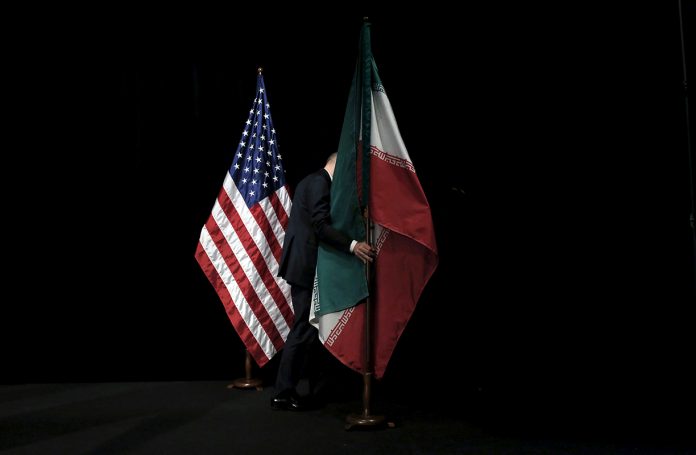
Iran says diplomatic channels with US still open

Iran US Flags

“The diplomatic channels between Iran and the US are open and the process of negotiations is in progress. Its details will be published in due time,” the spokesperson said on Monday.

He stated that the Foreign Ministry has been doing its utmost to protect the Iranian nation’s rights.

Kanaani added that the outgoing administration of President Ebrahim Raisi, who passed away in a helicopter crash on May 19, will act within the framework of the determined mechanisms until the last day of its term.

Asked about Iranian President-Elect Masoud Pezeshkian’s campaign pledge of removal of sanctions, Kanaani said every deal has two sides, but in any case, Iran will employ its full capacities to safeguard the national interests.

Highlighting Iran’s rational foreign policy and its interaction with other states on the basis of prudence and dignity, he stated Iran’s accession to multilateral mechanisms and cooperation with various countries will strengthen the country’s bargaining power in diplomatic negotiations.

The next administration will also utilize all elements to fulfill the national interests of Iran and take advantage of its achievements, Kanaani added.

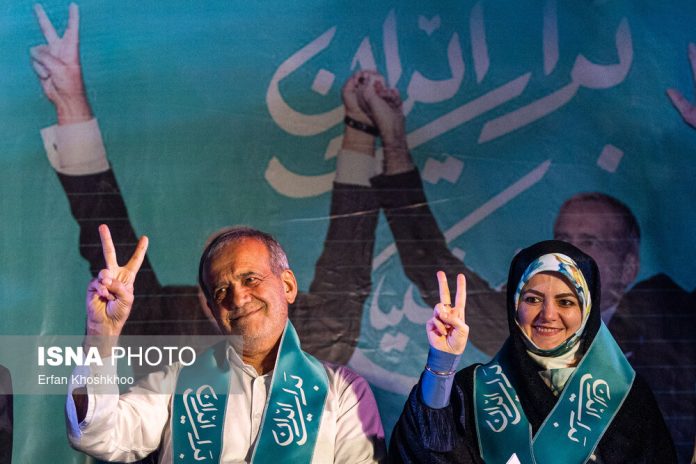
After the death of President Raisi in May, Pezeshkian became one of six final candidates singled out by the Constitutional Council from 80 applicants seeking the presidency.

He won the highest number of votes in the first round of the presidential election on June 28 and faced off the runner-up, Saeed Jalili, in the runoff election on July 5.

The physician-turned-politician won the runoff by garnering 53.66% of the votes.

His new administration, the 14th one after the victory of the Islamic Revolution in 1979, will hold office for four years.

186k may have been killed during Gaza war: Report

Gaza War

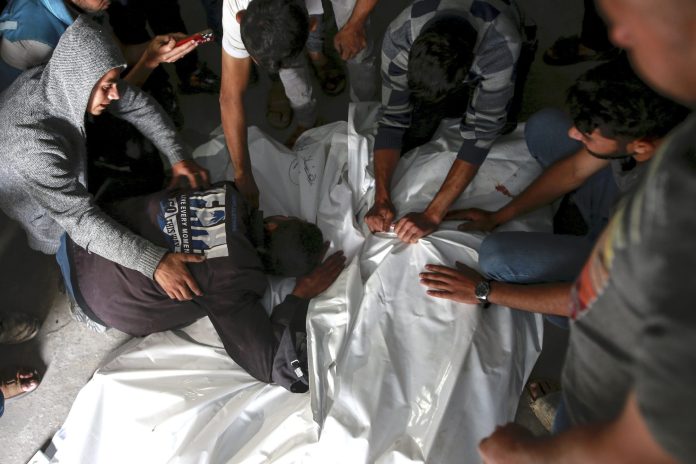
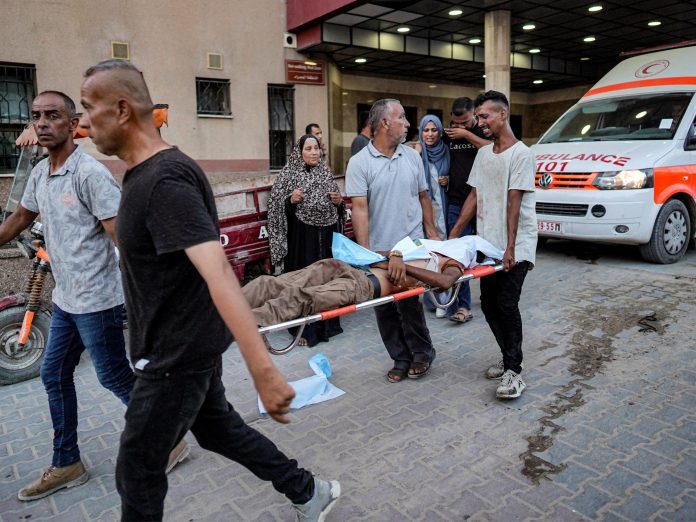
The Lancet said in a report the figure includes both direct and indirect deaths from the Israeli onslaught and those still buried under the rubble in the blockaded territory.

The journal added that it had applied a conservative estimate of four indirect deaths per one direct death reported by the Gaza Health Ministry.

“It is not implausible to estimate that up to 186,000 or even more deaths could be attributable to the current conflict in Gaza.”

Israel unleashed its brutal Gaza offensive on October 7 after the Palestinian Hamas resistance group carried out its historic operation against the occupying entity in retaliation for the regime’s intensified atrocities against the Palestinian people.

According to the Gaza Health Ministry, the Tel Aviv regime has so far killed at least 38,000 Palestinians, mostly women and children, in Gaza.

The figure provided by the ministry is “likely an underestimate”, The Lancet said.

“The total death toll is expected to be large given the intensity of this conflict; destroyed health-care infrastructure; severe shortages of food, water, and shelter; the population’s inability to flee to safe places; and the loss of funding to UNRWA, one of the very few humanitarian organizations still active in the Gaza Strip,” it added.

It also called for an immediate and urgent ceasefire in Gaza accompanied by measures to enable the distribution of medical supplies, food, clean water, and other resources for basic human needs.

Israel used Hannibal Directive during October 7 attack: Report

Israeli Army

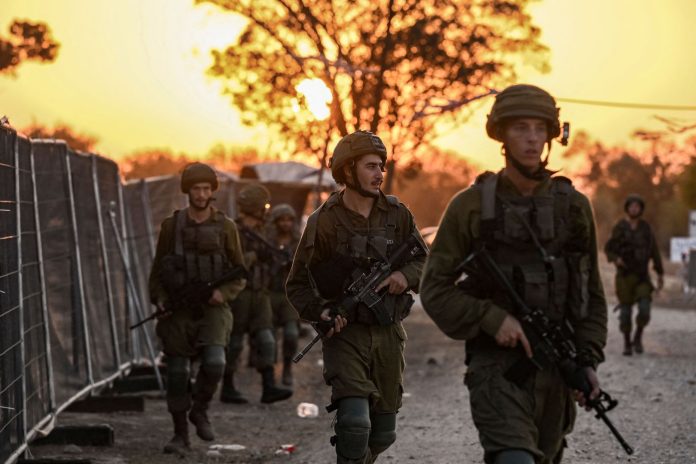
In a report on Sunday, the newspaper, based on testimonies of Israeli soldiers and senior army officers, said that during Hamas’s unprecedented attack last October, the Israeli army started making decisions with limited and unverified information, and issued an order that “not a single vehicle can return to Gaza”.

“At this point, the [Israeli army] was not aware of the extent of kidnapping along the Gaza border, but it did know that many people were involved. Thus, it was entirely clear what that message meant, and what the fate of some of the kidnapped people would be,” the report said.

On October 7, Hamas captured dozens of Israelis, many of whom are still in captivity or have been killed in Israeli air strikes on Gaza, according to the Palestinian armed group. But many of those captured were civilians and not soldiers, to whom the Hannibal Directive does not apply.

The death toll in Israel from the Hamas-led attacks is estimated to be 1,200, while nearly 250 others were taken as captives, Israeli authorities say. Meanwhile, more than 38,000 Palestinians have been killed in Israeli attacks on Gaza since October 7, according to an Al Jazeera tally based on official statistics.

While Haaertz noted it was not aware how many soldiers and civilians were hit due to the Hannibal military procedure, it added that “the cumulative data indicates that many of the kidnapped people were at risk, exposed to Israeli gunfire, even if they were not the target”.

The report added the Hannibal protocol “was employed at three army facilities infiltrated by Hamas” and “this did not prevent the kidnapping of seven of them [soldiers] or the killing of 15 other spotters, as well as 38 other soldiers”.

The Hannibal Directive, also known as the Hannibal Procedure or Hannibal Protocol, is an Israeli military policy that stipulates the use of maximum force in the event of a soldier being kidnapped, Yehuda Shaul, a former Israeli army soldier, had told Al Jazeera in November of last year.

“You will open fire without constraints, in order to prevent the abduction,” he stated, adding that the use of force is carried out even at the risk of killing a captive soldier.

In addition to firing at the abductors, soldiers can fire at junctions, roads, highways and other pathways opponents may take a kidnapped soldier through, Shaul continued.

Israel last invoked the Hannibal Directive in 2014 during its war on Gaza that year, according to leaked military audio recordings, though the Israeli army denied it had used the doctrine.

Dozens of Palestinians were killed in the Israeli bombardment that followed, sparking accusations of war crimes against the Israeli army.

The directive is believed to have been revoked in 2016, though it is unclear what led to its annulment. A report by Israel’s state comptroller also recommended the army abolish the directive because of the criticism it received as well as because of its various interpretations by those in the army, Haaretz said.

According to Haaretz’s investigation, a senior Israeli army source also confirmed the Hannibal procedure was “employed on October 7”. The source said post-war investigations would reveal who gave the order.

Meanwhile, an Israeli army spokesperson told the newspaper that the army “has begun conducting internal investigations of what transpired on October 7 and the preceding period”.

“The aim of these investigations is to learn and to draw lessons which could be used in continuing the battle. When these investigations are concluded, the results will be presented to the public with transparency,” the spokesperson added, according to the Israeli newspaper.

Iranian Daily: Complying with FATF most daunting challenge for President-Elect Pezeshkian

Masoud Pezeshkian

In an article titled “The President of Consensus”, reformist Sharq newspaper wrote on Monday that holding a successful election should be the first step to forging much-needed unity within the nation on various issues, including the FATF, that keep the country from moving on.

Iran’s relationship with the FATF has been complex and politically sensitive. Adopting FATF standards, that develop policies to combat “money laundering” and “terrorist financing”, has been a contentious issue in Iran.

Some argue that complying with the FATF requirements is necessary for Iran’s economic health and international integration, while others contend that the measures could undermine Iran’s national sovereignty and expose the country to external pressures.

Sharq noted that experts who can provide officials with accurate information on the subjects are key to facilitating the consensus on pressing issues, most significantly the FATF which has created major setbacks for the country’s financial interactions with the world.

It called on the opponents of the financial watchdog to refrain from provocative interviews and incitement of public opinion on the issue, reminding that failing to get the FATF’s approval will put the country’s international business on a back burner.

Hamas says thousands of new fighters recruited during Gaza war

Hamas Group

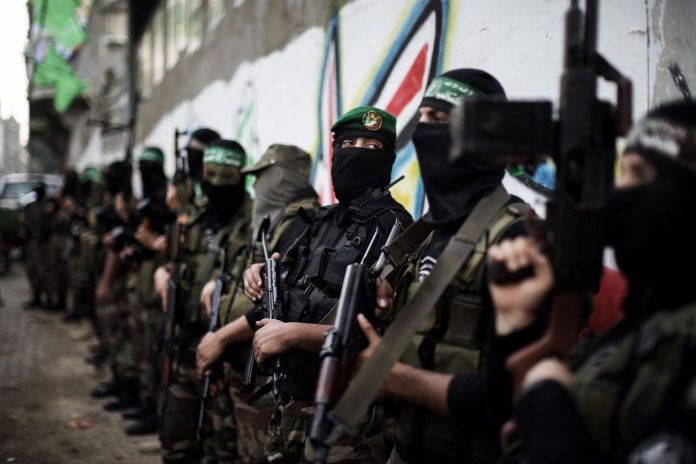
In a recorded video statement, Abu Obaida, spokesperson for Al-Qassam, said the brigades managed to “recruit thousands of new fighters from the support ranks during the war, and thousands more are prepared to join when needed”.

“The human capabilities of the Al-Qassam Brigades are in excellent shape, and our fighters’ ability to fight and endure has become stronger and greater.”

The Palestinian resistance factions in Gaza have enhanced their defensive capabilities and recycled Israeli army munitions and rockets, he added.

On Sunday, the Israel Defense Forces said in a statement that operational activities continue throughout the Gaza Strip.

Qatari and Egyptian mediators, along with the United States, are working to achieve a prisoner exchange deal and a second truce between Israel and Hamas, following the first truce that lasted a week until early December.

Israel has been launching a large-scale offensive against the Gaza Strip to retaliate against a Hamas rampage through the southern Israeli border on Oct. 7, 2023, during which about 1,200 people were killed and more than 250 were taken hostage.

More than 38,000 Palestinians have since been killed, mostly women and children, and over 87,700 others injured, according to local health authorities.

Nearly nine months into the Israeli war, vast tracts of Gaza lie in ruins amid a crippling blockade of food, clean water and medicine.

Human rights organizations have warned that thousands of people in the besieged enclave are facing the risk of famine amid ongoing Israeli devastating onslaught.

Mahsa Ghorbani, first Iranian woman referees men’s football match

Mahsa Ghorbani

Ms. Ghorbani, a FIFA international referee since 2017, umpired on Sunday the U20 CAFA Championship match between Tajikistan and Afghanistan in the Kyrgyz city of Jalal-Abad.

Another female referee, Veronika Bernatskaya, officiated the match between Iran and Turkmenistan in the Championship series.

CAFA wrote on its Instagram page, “We are very excited to announce a major moment in the CAFA 2024 Championship. For the first time in history, two female referees judged men’s matches on the second day.”

“CAFAF is proud to promote women’s development and gender equality in all areas of football. This historic achievement emphasizes our commitment to empowering women in sports and breaking barriers,” it added.

Earlier this year, Ms. Ghorbani was appointed as a video assistant referee (VAR) official to monitor a match between Persepolis and Esteghlal on March 13 in Tehran’s derby.

She has previously officiated in the AFC Women’s Asian Cup and 2023 FIFA Women’s World Cup.

Smog haunts major Iranian cities as temperatures go up

Iran Air Pollution

The scourge caused by ozone pollutants has hit news headlines in Iran in recent days.

Cities in the Khuzestan and Isfahan provinces, Arak, Qom, and the capital Tehran have been the hardest hit during the past few days, with education centers and offices in some of them closed down.

Ozone pollution is created in countries with intense sunlight and heavy traffic, which has adverse health effects and causes chest pain, coughing, throat irritation, and lung congestion.

But that is not the end of the story, as for the past several years, the air pollution index in major metropolises across Iran has been touching dangerously high levels with thick layers of smog enveloping the cities during the winter as well due to a phenomenon called ‘inversion’.

The government has been blamed for failing to find a solution for the issue that been plaguing the country for years.

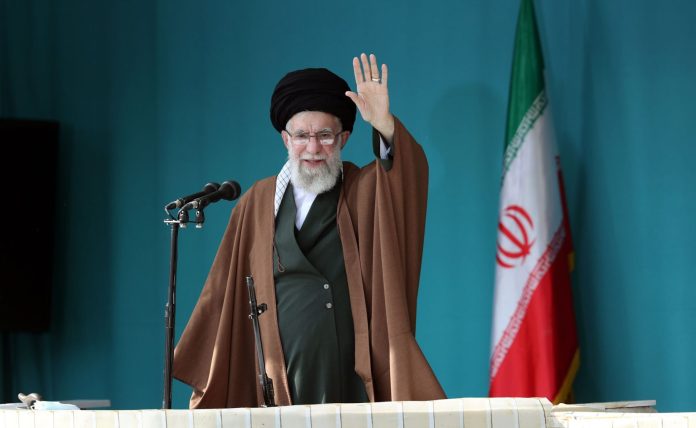
Iran’s Guardian Council member dismisses letter on alleged ‘successor to Leader’

Ayatollah Khamenei

Ahmad Khatami said the letter that has recently surfaced in cyberspace by the election headquarters of defeated presidential candidate Saeed Jalili lacks any validity or truth.

The letter, which bears the signature of the election headquarters’ controversial head Mohsen Mansouri, alleges that Khatami has clarified the reasons behind the approval of now President-Elect Massoud Pezeshkian by the Guardian Council to run for president as the sole candidate of the disgruntled reformist camp, a decision which did not sit well with the conservatives who fielded four candidates.

It further claims that the Leader had given the Guardian Council the go-ahead to ratify Pezeshkian’s qualifications as a candidate to woo a large section of disillusioned voters to the ballot box.

The letter also alleges that the government needs to win back a strong popular base it lost in economic and social turmoil, as the country is going through a sensitive juncture of electing the Leader’s successor before the month of Azar on the Iranian calendar (November 21).

Khatami, however, said the “desperate behavior is one of the attempts by the enemy that seeks to fish in troubled waters of the elections, in their false imagination.”

NATO says to set up new command, establish financial pledges to support Ukraine

Russia Ukraine War

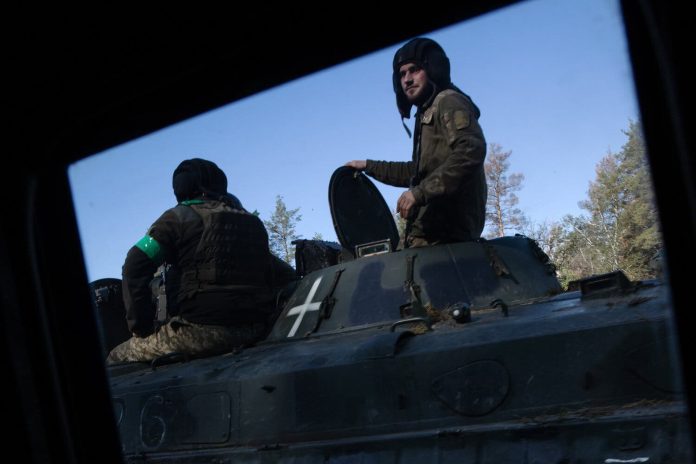
Stoltenberg told reporters during a roundtable in Washington, D.C. on Sunday, ahead of a major annual NATO summit in the U.S. capital this week, that the alliance will create a command post in Germany with 700 personnel and headed by a three-star NATO general.

The command will take over most of the international support for Ukraine, which is currently managed by a roughly 50-member alliance, the Ukraine Defense Contact Group. The base will also oversee training and logistics for Ukraine support.

NATO will also establish pledges among the 32-member alliance to sustain the level of current Ukraine support among allies for at least one more year. Stoltenberg said that allies will ultimately establish a minimum baseline of future financial support.

While the agreements fall short of including Ukraine into the alliance, as Kyiv has long asked for, Stoltenberg said both plans will move Ukraine closer to NATO membership.

“These are complete actions that actually move [Ukraine] closer to NATO, makes Ukraine ready for NATO,” he continued, adding, “I strongly believe that, of course, language matters, but as important, perhaps even more important, is what we do.”

The other parts of the agreement that NATO members are expected to agree to at the summit include announcements from allies of more weapons, including advanced systems, and deepening the Ukrainian military’s interoperability with NATO forces.

By the start of the summit, about 20 allies will also have signed bilateral security agreements with Ukraine. President Biden signed an agreement last month with Ukrainian President Volodymyr Zelensky committing to supporting Kyiv and its defenses over the next 10 years.

The NATO summit beginning Tuesday comes as Russian forces are applying pressure across the 600-mile front in Ukraine, which is fighting fiercely to defend against the advances.

The U.S. and NATO have argued that Ukraine will become a member of the alliance one day but have stopped short of establishing a concrete timeline for inclusion. Ratifying Ukraine into the alliance now during a major war would would technically trigger Article 5, which stipulates that countries must defend allies that are attacked.

Stoltenberg argued that allies have agreed on “ambitious” action to back Ukraine that will smooth over alliance support.

“These are agreed NATO commitments to deliver on something which is more accountable and more capable.”

Stoltenberg also said that the summit will address issues with defense spending across the alliance, a thorny point as some nations have struggled to pay the 2 percent of economic output target.

The NATO chief added he expects there will be a message from the summit to do more on defense spending than the 2 percent target.

Hamas says ready to discuss Gaza deal without ‘permanent’ ceasefire

Gaza War

“This step was by-passed as the [Qatari] mediators pledged that as long as the prisoner negotiations continued, the ceasefire would continue,” the top Hamas official told AFP.

The group is reportedly willing to drop its demand that any cease-fire deal be permanent in nature, according to The Associated Press.

Hamas has previously put a permanent ceasefire as a requirement to start talks on a hostage swap.

Two officials from the Palestinian group also told Reuters on Sunday Hamas is waiting for a response from Israel on a ceasefire proposal.

“We have left our response with the mediators and are waiting to hear the occupation’s response,” one of the officials said, five days after Hamas accepted key parts of a US truce plan.

The three-phase plan was put forward by US President Joe Biden, and is being mediated by Qatar and Egypt. It seeks to end the war and free around 120 Israeli captives being held in Gaza.

Another Palestinian official, with knowledge of the truce talks, said Israel was in talks with the Qataris.

“They have discussed with them Hamas’ response and they promised to give them Israel’s response within days,” the official told Reuters.

Citing an unnamed source, the newspaper Haaretz reported that Israel had presented new demands in the ongoing ceasefire talks after Hamas agreed to the latest terms. The new Israeli demands could delay the agreement, the daily added.

Israeli Prime Minister Benjamin Netanyahu has said that any ceasefire deal reached must allow his country to continue its fighting on Gaza until war objectives are attained.

Netanyahu listed – in a statement – Israel’s five conditions that he says are non-negotiable when reaching a deal with Hamas.

He stated the deal must ban weapon smuggling to Hamas through the Gaza-Egypt border, and should not allow thousands of fighters to go back to the north of the Strip.

Israel will also “maximise” the number of live captives returned, the statement added.

Months of on-again off-again cease-fire talks have stumbled over Hamas’ demand that any deal include a complete end to the war. Netanyahu has offered to pause the fighting but not end it until Israel reaches its goals of destroying Hamas’ military and governing capabilities and returning all hostages held by the group.

Israel, flouting a United Nations Security Council resolution demanding an immediate cease-fire, has faced international condemnation amid its continued brutal offensive on Gaza since an Oct. 7 attack by Hamas.

More than 38,000 Palestinians have since been killed, mostly women and children, and over 87,700 others injured, according to local health authorities.

Nearly nine months into the Israeli war, vast tracts of Gaza lie in ruins amid a crippling blockade of food, clean water and medicine.

Human rights organizations have warned that thousands of people in the besieged enclave are facing the risk of famine amid ongoing Israeli devastating onslaught.