Tuesday, January 13, 2026
Home Blog Page 782

MKO terrorists, their supporters will fail to achieve objectives: Iran

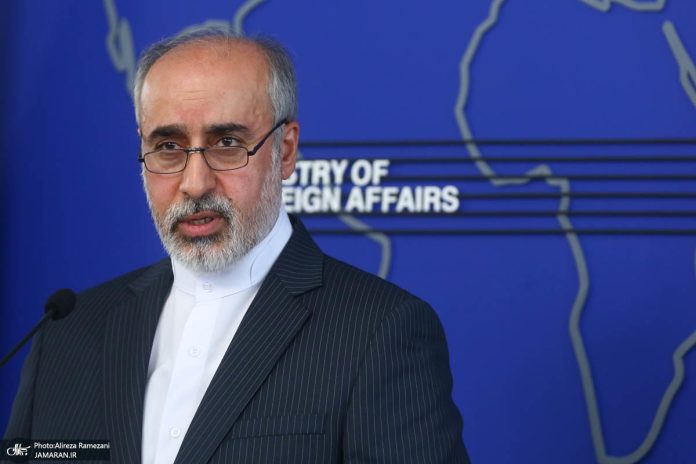
Nasser Kanaani

Kanaani wrote on X on Thursday, “After the victory of the Islamic Revolution, within the framework of a foreign mission to debilitate and fail the Revolution of the Iranian nation, the MKO first started blind assassinations of the people and organized assassination of the country’s officials, and later their terrorist heads fled to France with the material and spiritual support of some Western governments claiming to be advocates of human rights and followed their criminal actions against the Islamic Republic, and the Iranian government and nation. ”

He added that the leaders of the terrorist organization of the Hypocrites took refuge in the Iraqi Baath regime under the leadership of Saddam Hussein and participated in the war against their own country and fellow citizens along with the regime.

“Their wretchedness did not stop there as they perpetrated the assassination of Iran’s nuclear scientists as mercenaries for the Zionist regime, which was and is the inventor and promoter of state terrorism.”

The spokesman stated that 17,000 martyrs of terrorism are the outcome of the disgraceful existence of the Hypocrites supported by certain Western governments who claim be advocates of human rights and even now they do not hesitate to give political and financial aid to these terrorists.

“Undoubtedly, the absurd and evil dream of the terrorist Hypocrites’ organization and their hypocritical supporters will never come true,” he stressed.

August 29 is the anniversary of the martyrdom of Mohammad-Ali Rajai and Mohammad-Javad Bahonar, the then president and prime minister of the Islamic Republic of Iran, by the Western-backed terrorist organization, the Hypocrites (MKO).

On Iran’s official calendar, the day is designated as the Day of Fight Against Terrorism.

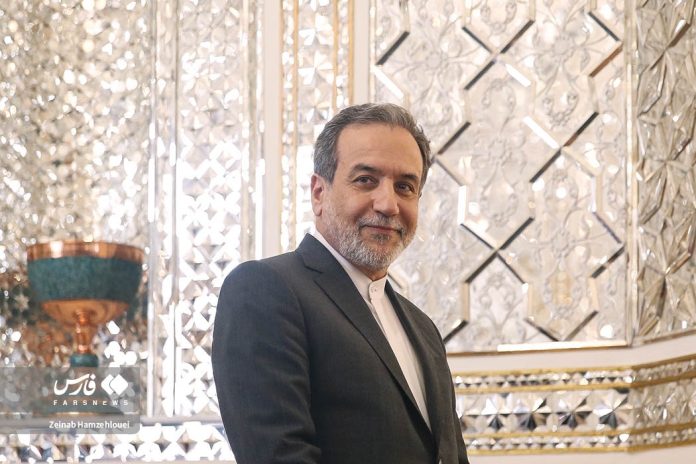
Araghchi officially begins mission as Iran’s foreign minister

Noting that the new administration of President Massoud Pezeshkian began its terms concurrent with Arbaeen, Araghchi expressed hope that the Master of Martyrs, Imam Hussein, would help it take the path successfully.

The foreign minister commemorated the Founder of the Islamic Republic Imam Khomeini, may God’s mercy be upon him, the martyrs of the Islamic Revolution and the Iraqi-imposed war, the martyrs of the Iranian Ministry of Foreign Affairs, the Martyr of Hearts Lieutenant General Hajj Qassem Soleimani, as well as the martyrs of the service, including former president Ayatollah Seyyed Ebrahim Raisi and the martyred foreign minister Hossein Amirabdollahian.

He said, “Martyr Amirabdollahian was a very good colleague and friend of mine who made efforts on this path and his tenure was successful and full of efforts, honest service and hard work in the path of achieving the goals of the Islamic Republic of Iran’s holy system.”

Araghchi thanked the head of the Strategic Council on Foreign Relations Kamal Kharrazi, former Foreign Minsters Ali Akbar Salehi, Manouchehr Mottaki, and Mohammad Javad Zarif, and veteran lawmaker Alaeddin Boroujerdi for their participation in the ceremony.

He also wished good health for former Foreign Minister Ali Akbar Velayati, who congratulated him in a phone call, and expressed gratitude to General Yahya Rahim Safavi, a member of the Strategic Council on Foreign Relations, Ebrahim Azizi, the head of the Iranian Parliament’s National Security and Foreign Policy Committee, and a number of parliamentarians who attended the ceremony, saying, “We are indebted to our veterans in the foreign ministry.”

Citing remarks by the Leader of the Islamic Revolution Ayatollah Seyyed Ali Khamenei in his maiden meeting with the new administration, Araghchi highlighted the Leader’s emphasis on taking advantage of opportunities and said, “We have a short time at our disposal, but as the Leader of the Islamic Revolution put it, great things can be done in a short time.”

Referring to the complicated situation in the region and the world, Araghchi further added, “There are many threats, but our country has also very large capacities, and our skill should be to be able to take advantage of the opportunities, and it obligates that we put in all our efforts and move towards the interests of the country.”

The top Iranian diplomat also asserted, “I have not come for the ministerial post, but rather to work. I am sure that I have good colleagues and, God willing, we will move hand in hand in the direction of the missions entrusted to us.”

Pointing to the highlights of his speech in his own defense at the parliament as a nominee for the post in front of the members of the parliament, the foreign minister emphasized that he has three missions for the foreign ministry, enumerating them as “securing national interests, consolidation of national security, and enhancing national honor.”

“Each of these three missions requires a lot of work and planning. In order to secure national interests, our most important work is economic diplomacy,” he explained.

Araghchi elaborated that foreign policy should be able to help the country’s economy, create opportunities and remove obstacles, saying “We consider it our duty to remove the obstacles to the prosperity of the country’s economy and to open up new spaces, and provide solutions to the economic sectors of the country, both in the state and foreign sectors.”

Military chief warns Israel of Iran’s calculated response to assassination of Haniyeh

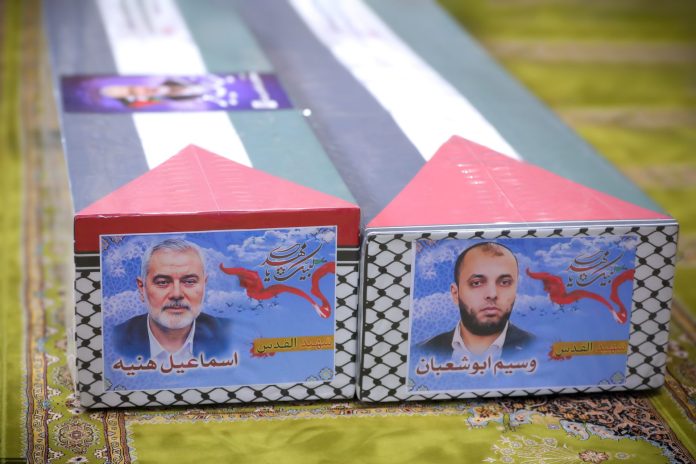
Hamas Ismail Haniyeh

The Islamic Republic of Iran will definitely give a calculated response to the Zionist regime’s crime, Major General Baqeri said on Wednesday, referring to the revenge for the Israeli assassination of Hamas political bureau chief Ismail Haniyeh in Tehran.

He noted that the Zionist regime is under threat of collapse and is experiencing perilous conditions, so it resorts to every possible criminal act to survive.

The Zionist regime’s situation is so dire that even the Americans have become hesitant about supporting Israel, the top Iranian commander added.

The general also stated that Iran has managed to revive resistance against the occupiers in the Islamic community.

Haniyeh, who was in Tehran to attend the Iranian president’s swearing-in ceremony, was martyred in an Israeli operation in the early hours of July 31.

Leader of the Islamic Revolution Ayatollah Seyyed Ali Khamenei has warned the Israeli regime of a “harsh response” for Haniyeh’s assassination, calling it the Islamic Republic’s duty to avenge the Palestinian resistance leader’s blood.

Israel’s West Bank military operation must not constitute premises of war extension from Gaza: EU

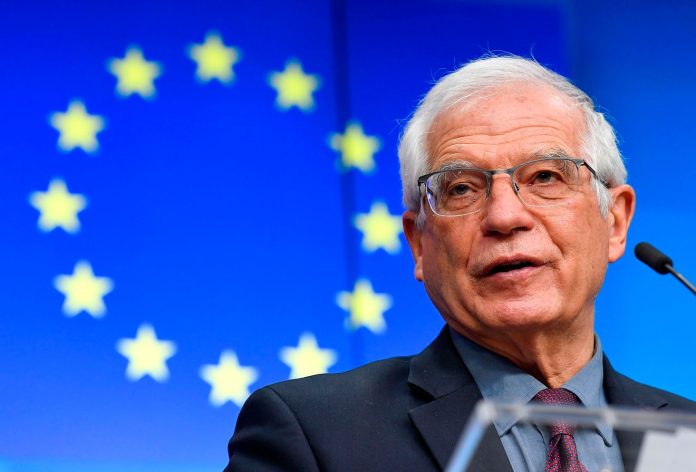
Josep Borrell

“The Israeli major military operation in the occupied West Bank must not constitute the premises of a war extension from Gaza, incl. full-scale destruction,” Borrell said on X on Wednesday.

“The parallel drew by (Israeli Foreign) Minister Katz, especially on evacuating Palestinian residents, threatens to fuel further instability,” he added.

Earlier, the Israeli army launched a major military operation in the northern West Bank, the largest in two decades.

Israeli Foreign Minister Israel Katz said the army operation includes the “temporary evacuation of Palestinian residents” from areas in the northern West Bank.

At least ten Palestinians have been killed since the start of the operation, according to the latest figures released by the Health Ministry.

Tension has been running high across the occupied West Bank amid a brutal Israeli offensive on the Gaza Strip, which has killed more than 40,500, mostly women and children, since Oct. 7, 2023.

At least 660 Palestinians have since been killed and nearly 5,500 others injured in the occupied territory, according to Palestinian figures.

In a landmark opinion on July 19, the International Court of Justice declared Israel’s decades-long occupation of Palestinian land unlawful and demanded the evacuation of all existing settlements in the West Bank and East Jerusalem.

Borrell has also stated he has started the process of asking member states if they want to impose sanctions on “some Israeli ministers”.

“I initiated the procedure to ask the member states if they consider [it] appropriate to include in our list of sanctions some Israeli ministers [who] have been launching unacceptable hate messages against the Palestinians, and proposing things that clearly go against international law,” he told reporters ahead of a meeting with EU foreign affairs ministers in Brussels.

He does not name any of the Israeli ministers to whom he is referring, but multiple reports have named Finance Minister Bezalel Smotrich and National Security Minister Itamar Ben Gvir as among them.

US puts sanctions on Israeli settlers over violence in West Bank

The sanctions on Wednesday targeted Hashomer Yosh, which describes itself as a volunteer organisation that aims to “protect” Israeli farmers in the West Bank, and Yitzhak Levi Filant, the civilian security coordinator of the Yitzhar settlement, south of Nablus.

“Extremist settler violence in the West Bank causes intense human suffering, harms Israel’s security, and undermines the prospect for peace and stability in the region,” the US Department of State said in a statement.

“It is critical that the Government of Israel hold accountable any individuals and entities responsible for violence against civilians in the West Bank.”

It added Hashomer Yosh fenced off the Palestinian village of Khirbet Zanuta earlier this year, preventing its displaced residents from returning to their homes.

Several Israeli media outlets have reported that Hashomer Yosh has received financial support from the Israeli government.

Washington also accused Filant of engaging in malign activities, including setting up roadblocks and conducting patrols earlier this year “to pursue and attack Palestinians in their lands and forcefully expel them”.

The sanctions freeze the assets of Filant and Hashomer Yosh in the US and bar American citizens from engaging in financial transactions with them.

For years, Hashomer Yosh was able to raise funds in the US, including through JGive, a website that gathers donations for groups the Israeli government certifies as charities.

Wednesday’s measures come one day after a settler attack killed one Palestinian and injured three others near Bethlehem. Earlier in August, violent settlers also ravaged the village of Jit in the northern West Bank, killing a 23-year-old man.

The ransacking of Jit sparked international outrage and even verbal condemnation from Israeli officials. But Israel rarely ever criminally charges settlers for violence against Palestinians.

Moreover, Palestinian rights advocates say settler assaults happen under the watch – if not cooperation – of Israeli soldiers in the area.

Democracy for the Arab World Now (DAWN), a US-based rights group that previously called for sanctions against Filant, welcomed Wednesday’s measures and urged penalties against Israeli officials involved in settler violence.

“Targeting the notorious Yitzhar security officer, Filant, is an important step in recognizing the institutional and state-backed nature of settler violence,” Michael Schaeffer Omer-Man, director of research for Israel-Palestine at DAWN, said in a statement.

“The sanctions will never put an end to settler violence unless they start targeting the state institutions and politicians who treat settlers as a tool of their expansionist policies.”

Israeli political analyst Akiva Eldar said the US sanctions are “too little and maybe even too late”.

Eldar blamed far-right elements in the Israeli government, which he compared to ISIL (ISIS), for enabling settler violence.

“There are Jewish supremacists sitting in the cabinet meetings, and what they want is chaos. They are not afraid of the international community,” he told Al Jazeera.

This year, the US and some of its Western allies have sanctioned several violent settlers whom they describe as “extremists”.

But the administration of President Joe Biden has maintained its staunch support for Israel. Washington, which backs the Israeli army’s war in Gaza and deadly raids in the West Bank, authorised a $20bn arms deal with Israel earlier this month.

Earlier on Wednesday, the Israeli military launched a large-scale offensive in the West Bank that has killed at least 10 people.

Israel’s Foreign Minister Israel Katz called on Wednesday for the “temporary evacuation of Palestinian civilians” in the West Bank to allow for the military operation, prompting fears that Israel may be planning for mass displacement orders in the territory.

The vast majority of the international community considers Israeli settlements in the West Bank illegal. The settlement enterprise in the area captured by Israel in 1967 breaches the Fourth Geneva Convention, which prohibits the occupying power from transferring “parts of its own civilian population into the territory it occupies”.

The Biden administration says the settlements are “inconsistent with international law”.

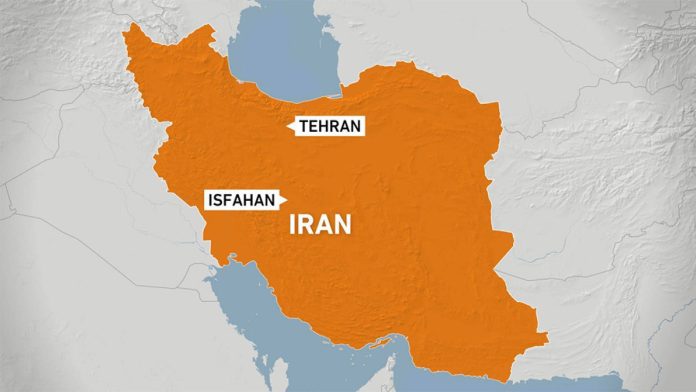
2 killed, several wounded due to gas leak at IRGC facility in Isfahan: PR

The incident was reported in early Thursday by the Public Relations Office of the Saheb al-Zaman Corps, a subsidiary of the IRGC, which oversees the force’s units that are based in the province.

“Follow-up reports concerning the incident will be announced subsequently,” the office added, without providing further information.

In April, explosions rang out in the province’s capital of the same name after local air defenses fired at “suspicious objects”.

Clarifying the issue at the time, Second Brigadier General Siavash Mihandoust of the Iranian Army said, “The sound was related to Isfahan’s air defense systems firing at the objects and we have not had any damage or accident.”

Space agency spokesman Hossein Dalirian also stated the incident had involved the air defenses’ shooting down several microdrones, noting that “no foreign aerial attack has been carried out so far against Isfahan or other areas of the country”.

Moscow bans dozens of US citizens, including journalists, from entering Russia

Russian Foreign Ministry

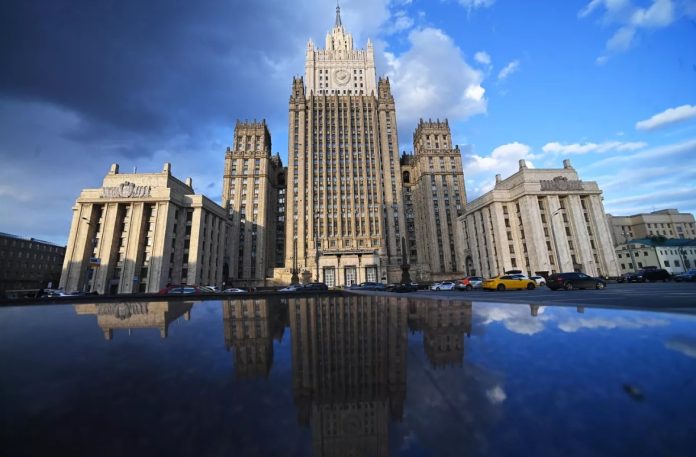
The nearly 100 people listed “shall be permanently denied” entry into Russia, according to the foreign ministry, which said the sanctions come in “response to the Joe Biden administration’s Russophobic policy with a stated goal of ‘inflicting a strategic defeat on Moscow’”.

The ministry added the announcement is also a response to the US “blanket sanctions” on Russian politicians and elite members of society with ties to the government.

The list of US citizens includes members of the US government, pro-democracy activists, academics, and leaders of defense contracting firms and financial institutions that supply weapons to Ukraine to respond to Russia’s war.

Referencing the journalists on the list, the statement said the roster “includes employees of editorial offices and reporters from leading liberal globalist media outlets involved in manufacturing and spreading fake claims about Russia and its armed forces, and engaged in using propaganda to cover Washington’s hybrid war”.

Among the journalists listed is Wall Street Journal Editor-in-Chief Emma Tucker, who became a vocal critic of Moscow as she advocated for the return of reporter Evan Gershkovich, who was finally released earlier this month in a prisoner swap.

Another 13 current or former employees at the Journal were on the list, including the outlet’s deputy editor-in-chief, its head of the world news division, its Kyiv bureau chief, its former Moscow bureau chief and a member of its editorial board.

Five New York Times journalists, four Washington Post journalists and a handful of reporters for British papers were also listed.

The sanctions add to the list of more than 2,000 Americans who have already been barred entry to the country, including many US politicians.

A State Department spokesperson condemned the list, in a statement to the New York Times, and expressed concern about Russia’s “escalating attempts to restrict freedom of expression and media freedom in Russia”.

“In the strongest possible terms, we condemn the Kremlin’s continued attempts to intimidate, repress and punish independent journalists and civil society voices, including through the use of censorship laws to punish criticism of Russia’s brutal war” in Ukraine, the spokesperson said.

FBI identifies no foreign links in Trump assassination case

Donald Trump

Officials also released some photos from their investigation, including of the gunman’s rifle and backpack, and homemade bombs found in his car trunk.

Federal investigators sifted through five years’ worth of online activity by 20-year-old Thomas Matthew Crooks and said they found no credible evidence that a foreign entity directed him to carry out the attack. Nor did they find credible material indicating that he worked with a co-conspirator.

The shooter did not display a consistent political focus in his online searches, officials said, with more than 60 queries about Trump and President Joe Biden in the month before the attack.

Crooks’s online activity indicates “a mixture of ideologies”, said Kevin P. Rojek, the FBI special agent in charge of the Pittsburgh field office.

“We see no definitive ideology associated with our subject, either left-leaning or right-leaning.”

The gunman’s online history shows he sought information about both the Democratic National Convention and the Republican National Convention and researched logistics about Trump’s rally in Pennsylvania, officials said. They stressed that the investigation is ongoing and that they continue to pursue leads regarding the gunman and any possible associates.

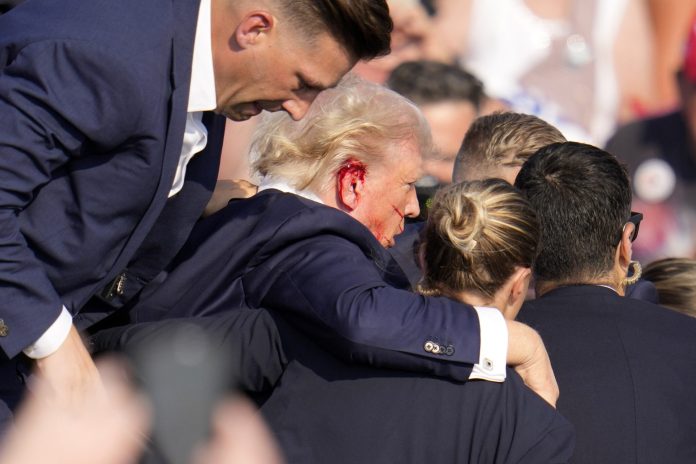
Crooks shot at Trump while the Republican presidential candidate was speaking at an outdoor rally in Butler, Pa., on July 13.

He opened fire from a rooftop just outside the security perimeter of the campaign rally. The gunman fired at least eight shots, killing one person in the crowd, critically injuring two others and wounding Trump’s ear, before being killed by a Secret Service sniper.

Officials stated Crooks died of a single shot to his head. An autopsy determined that he had no alcohol or illegal drugs in his system at the time of the shooting, officials added.

The FBI officials said they conducted a “productive interview” with Trump as part of the investigation. They characterized the former president as cooperative. They also noted Crooks’s parents have been cooperative throughout the investigation, handing over all the information they could to law enforcement.

Law enforcement officials previously said they were focused on Crooks’s online activity as they searched for his motive. They revealed in an earlier briefing that Crooks had searched online “how far away was Oswald from Kennedy”, referring to the 1963 assassination of President John F. Kennedy.

While many expect political motives behind attacks on politicians, a 1997 Secret Service study of American assassins and would-be assassins of public figures found that “attackers and near-lethal approachers of public officials rarely had ‘political’ motives”.

There are multiple investigations into the apparent security lapses that allowed the gunman to shoot at Trump from relatively close range, including how he managed to use HVAC equipment to clamber atop an unsecured roof, traverse multiple rooftops and then fire shots during the campaign rally.

Zelensky claims Ukraine used F-16 fighter jets for first time against Russia

President Of Ukraine Volodymyr Zelensky

A number of NATO states, including the US, France, Bulgaria, Denmark, the Netherlands, Belgium, Canada, Luxembourg, Norway, Poland, Portugal, Romania, and Sweden, pledged to donate the aircraft to Kiev last year. The countries established an ‘F-16 coalition’ to streamline deliveries and arrange pilot training.

While there is no set deadline, with the aircraft expected to arrive in multiple batches over several years, Ukraine can expect around 85 fighter jets, according to media estimates.

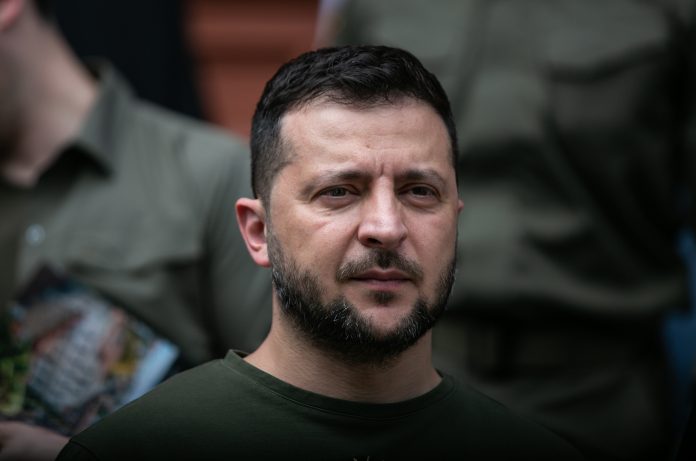
Speaking to reporters at a press conference, Zelensky said: “The F-16 [had] a good result… As part of this enormous [Russian] missile attack [on Monday] we shot down some of the rockets with the help of F-16s.”

While the Ukrainian leader expressed gratitude to the country’s Western backers for supplying the warplanes, he called for more deliveries and broader training programs for Ukrainian pilots.

On Monday, Russia unleashed what the authorities in Kiev described as “one of the largest combined strikes” since the start of the conflict in February 2022.

According to the Russian Defense Ministry, the “massive high-precision attack” against the neighboring country was carried out using long-range air- and sea-based weapons, as well as drones. It targeted energy facilities supporting Ukraine’s defense industrial complex in particular, as well as several airfields storing Western-supplied air munitions, officials said.

“All the designated targets have been hit,” the statement read.

Earlier this month, Zelensky confirmed on his Telegram channel the arrival of the first US-made F-16s, but did not reveal the numbers. He touted the aircraft as being capable of delivering “exactly such combat results that will bring our victory closer – our just peace for Ukraine”.

Moscow has warned that the F-16s, as has been the case with other Western weapons provided to Kiev, will not change the outcome of the conflict, and will only serve to prolong the bloodshed. Kremlin spokesman Dmitry Peskov has stated that the fighter jets are not a “magic pill” and will gradually be “shot down and destroyed”. He predicted that the arrival of F-16s “will not be able to significantly influence the dynamics of events at the front”.

Ayatollah Khamenei: Iran-Turkmenistan energy, development projects important

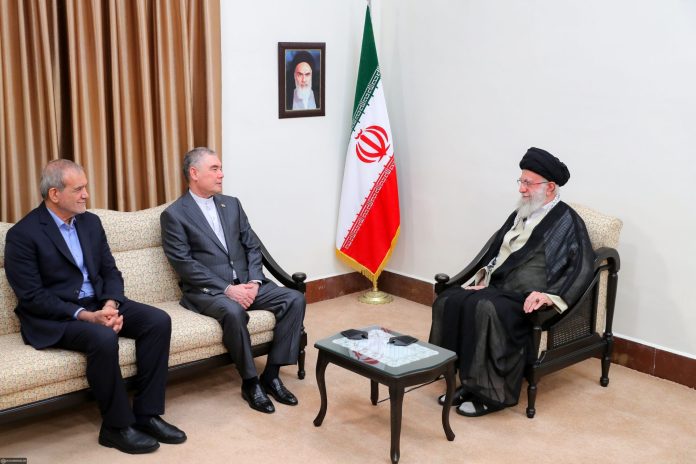
During the Wednesday meeting, Ayatollah Khamenei stressed the importance of utilizing the vast cooperation opportunities between Iran and Turkmenistan.

Iran’s Leader, emphasizing the importance of safeguarding the national interests of both Iran and Turkmenistan, expressed hope that the newly inaugurated government of Massoud Pezeshkian, President of the Islamic Republic of Iran, would continue efforts to expand bilateral relations with greater intensity and strength.

He also highlighted the importance of joint projects between Iran and Turkmenistan, including the South-to-North highway project and the Turkmenistan gas pipeline expansion project.

Berdimuhamedow also described his negotiations and those of his delegation in Tehran as constructive and significant.

The National Leader of Turkmenistan also mentioned that the long-shared border between Turkmenistan and Iran has always been, and will continue to be, a border of peace and friendship.

On Wednesday, President Pezeshkian, in a meeting with Berdimuhamedow, described the gas agreements between Iran and Turkmenistan as a strategic step towards transforming Iran into the region’s gas hub and within the framework of securing the interests of both countries.

President Pezeshkian added that he would personally oversee the implementation of the agreements and commitments signed between the two countries.