Friday, December 26, 2025
Home Blog Page 769

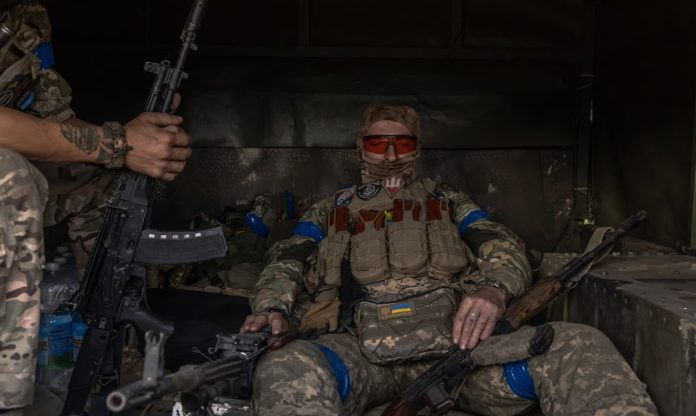
UN says seeking access to Russia’s Kursk Region

Russian Human Rights Commissioner Tatyana Moskalkova had called on the UN to condemn Ukrainian “terrorism” and take measures to prevent human rights violations.

“We are trying to gather information about the situation in Kursk Region, but without access it is very difficult,” OHCHR spokesperson Ravina Shamdasani said on Tuesday, adding, “We have requested access to Russia to be able to obtain additional information.”

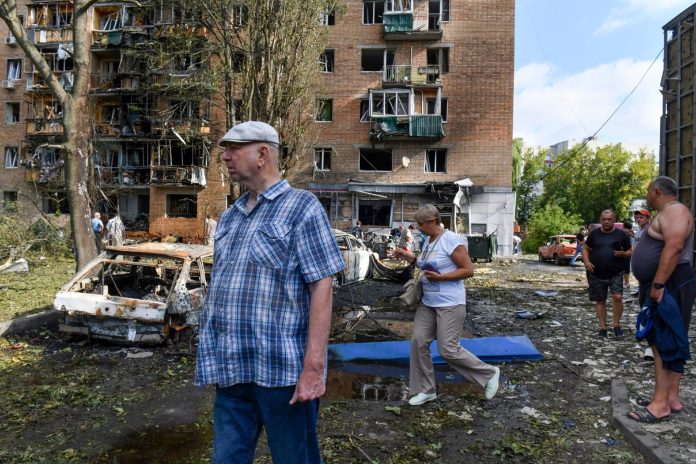
The OHCHR has acknowledged that at least four Russian civilians have been killed as a result of the “Ukrainian military operation”.

According to acting Kursk Region Governor Aleksey Smirnov, at least 12 Russian civilians have been killed and another 121 injured, including ten children. He also stated that over 120,000 residents have been evacuated from the border area.

Elements of six Ukrainian brigades invaded Kursk Region in the morning of August 6, taking over several border villages. Moscow has introduced a state of emergency and launched a counter-terrorist operation in the region, which borders Ukraine’s Sumy.

Ukrainian troops interviewed by Western outlets have admitted that the goal of the incursion was to capture some territory that could be traded with Russia in possible peace talks and to relieve pressure on the Donbass front. Moscow has since ruled out any negotiations with Kiev, while Russian troops have accelerated their advance.

Kiev has the “full support” of the European Union in its incursion into Russia’s Kursk Region, the bloc’s top diplomat, Josep Borrell, has said. The remarks mark his first comments addressing the Ukrainian cross-border attack.

“Discussed with [Ukrainian Foreign Minister] Dmitry Kuleba the last developments on the frontline and the Kursk counteroffensive [sic],” Borrell stated on Tuesday.

“I reiterated the EU’s full support to the [Ukrainian] people’s fight.”

He also claimed that Russia “hasn’t managed to break [Ukrainian] resistance” and ended up being “pushed now to withdraw inside [Russian] territory”.

Until now, both the US and the EU have sidestepped inquiries about their role in Kiev’s offensive, stating that it was up to Ukraine how to use the weapons, equipment, and ammunition the West has provided.

US President Joe Biden believes that Ukraine’s attack on the borderline Russian region of Kursk presents “a real dilemma” for Moscow.

“I’ve spoken with my staff on a regular basis probably every four or five hours for the last six or eight days. And it’s creating a real dilemma for [Russian President Vladimir] Putin. And we’ve been in direct contact – constant contact with – with the Ukrainians. That’s all I’m going to say about it while it’s active,” the White House press service quoted him as saying upon arrival in the state of Louisiana.

Russian President Vladimir Putin stated on Monday that the Kursk incursion has only sped up the advances in the Donbass, while driving up military enlistments. He also ruled out any negotiations with “terrorists” who target civilians.
Israel added new conditions to Gaza ceasefire proposal: Report

Netanyahu

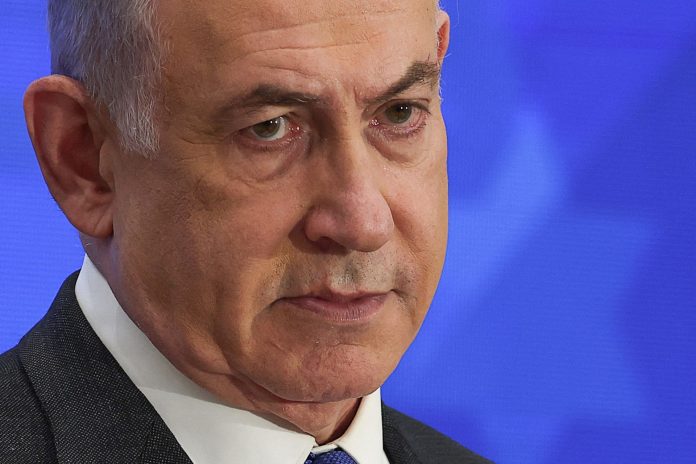
Netanyahu has repeatedly denied that his government was shifting goalposts during negotiations, but the documents suggest Israeli forces now want to keep control of the southern border with Egypt and are showing “less flexibility” in allowing Palestinians to return to their homes in northern Gaza after fighting ends.

Israel and the US have repeatedly blamed Hamas for a lack of headway in negotiations.

Neither of the two stipulations reported were in the “comprehensive” ceasefire proposal that US President Joe Biden announced Israel had put forward in late May.

At the time, Biden said Qatar had presented Hamas with the three-phase deal that includes a “full and complete ceasefire” in Gaza, as he publicly threw the weight of the US behind the proposal.

The proposal Biden outlined appeared nearly identical to the one Hamas agreed to in early May.

In the proposal, Palestinians would also be able to return to “all areas of Gaza”, Biden pledged, and 600 aid trucks would enter the enclave each day. This has been a key sticking point for Hamas and matches the text of the agreement.

Biden on Monday spoke to European leaders to discuss a ceasefire in Gaza and de-escalating tensions in the Middle East, as Washington and Israel have been bracing for an Iranian response to last month’s killing of Hamas leader Ismail Haniyeh in Tehran.

The White House released a joint statement of the call with the leaders of Germany, France, Italy, and the UK, in which they endorsed a call for a renewal of talks for a ceasefire between Hamas and Israel.

They “stressed there is no further time to lose”, the statement added.

The US, Egypt, and Qatar are scheduled to mediate a new round of ceasefire negotiations on Thursday, but The New York Times report says “the behind-the-scenes maneuvering by the Netanyahu government has been extensive – and suggest that agreement may be elusive at a new round of negotiations”.

The report added the documents’ authenticity has been confirmed by Israeli officials and other parties involved in negotiations. Netanyahu’s office denied to the Times that they had added new conditions but said they had “sought to clarify ambiguities in Israel’s May proposal”.

In May, Israel proposed that its troops would leave the border area between Gaza and Egypt, known as the Philadelphi Corridor, but the latest map shows that those troops would remain.

Another point of contention in the new stipulations is that Israel is insisting on an agreed-upon enforcement to screen Palestinians returning to their homes in the north for weapons – a demand they had “softened” in May to just stipulating that returnees should not be carrying weapons.

The Biden administration has also consistently laid the blame for the ceasefire delay on Hamas, but the group’s former leader, Haniyeh, had for months blamed Israel for the delay in the negotiations. Haniyeh was assassinated last month while visiting Tehran, in what Hamas said was an Israeli strike.

Critics of the Netanyahu government, and Biden himself, have stated that the prime minister is stalling negotiations and is not interested in a ceasefire or bringing a close to the war because it would end the deeply unpopular leader’s political career as he faces accountability for the 7 October Hamas-led attacks on southern Israel as well as a major corruption trial.

Netanyahu formed an alliance with several far-right politicians to secure a sixth term in 2022 and the extremist elements in his government are staunchly opposed to any ceasefire and want to permanently occupy Gaza.

“I’ve urged the leadership in Israel to stand behind this deal despite whatever pressure comes,” Biden said in late May, adding there are those in Israel’s government who will oppose the deal.

“They’ve made it clear they want to occupy Gaza. They want to keep fighting for years and the hostages are not a priority to them,” he added.

The end of the Gaza war and a more comprehensive peace process could also invite greater scrutiny over illegal Israeli settlement activity and a move towards a two-state solution – all issues that the extremists within Netanyahu’s cabinet are publicly opposed to bringing to the negotiating table.

Security Service says more than 100 terror attacks foiled in Russia in 2024

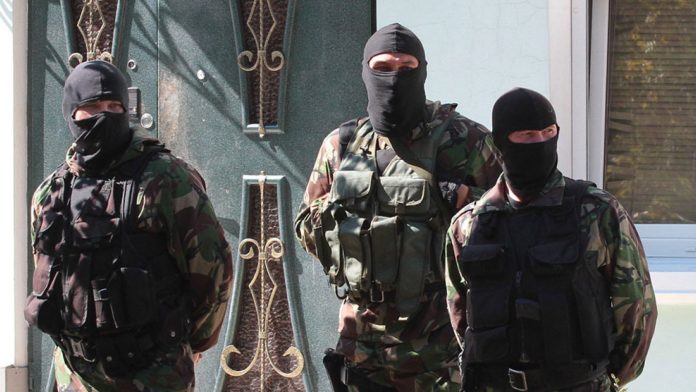
In a statement on Tuesday, the NAC reaffirmed its determination to prevent terrorist attacks in Russia, especially after Ukraine launched its large-scale cross-border offensive in Kursk Region.

As the fighting on the border continues, Ukraine, backed by Western intelligence services, has unleashed an “unprecedented anti-Russian information campaign” to foment division and social strife in the country, the agency said, adding that foreign special services have stepped up efforts to recruit Russian citizens – especially young people – to take part in terrorist activities.

A total of 110 terrorist attacks involving Russian citizens recruited by “the enemy” have been prevented, the NAC said, adding that more than 1,050 people have been detained for preparing and committing terrorist crimes, or justifying, financing, or propagating terrorism.

The agency warned that the threat posed by international terrorist organizations, many of which profess radical versions of Islam, continues to loom over Russia, noting that law enforcement agencies have disrupted the activities of as many as 45 clandestine terrorist cells this year alone.

The NAC statement comes after Foreign Ministry spokeswoman Maria Zakharova claimed last week that the Ukrainian government had essentially become a terrorist organization acting on behalf of Western nations as it conducted attacks on peaceful people in Kursk Region.

She also claimed that Kiev is “spreading… terrorism across the planet,” referring to the move by Ukrainian officials to initially claim credit for helping Tuareg militants in Mali stage an ambush on Russian military contractors. Kiev’s intelligence services later denied any involvement after facing backlash from Mali and neighboring Niger.

Russian President Vladimir Putin stated on Monday that one of the goals of Kiev’s attack on Kursk Region was to undermine the morale of the population, but that it failed to do so. On the contrary, he added, the attack has led to a surge in recruiting.

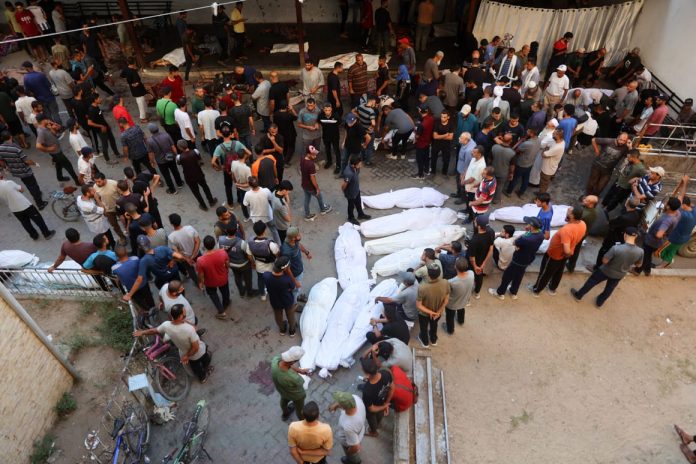
UN Security Council deplores Israeli strike on Gaza school, blames US for weapons supply

Netanyahu has repeatedly denied that his government was shifting goalposts during negotiations, but the documents suggest Israeli forces now want to keep control of the southern border with Egypt and are showing “less flexibility” in allowing Palestinians to return to their homes in northern Gaza after fighting ends.

Israel and the US have repeatedly blamed Hamas for a lack of headway in negotiations.

Neither of the two stipulations reported were in the “comprehensive” ceasefire proposal that US President Joe Biden announced Israel had put forward in late May.

At the time, Biden said Qatar had presented Hamas with the three-phase deal that includes a “full and complete ceasefire” in Gaza, as he publicly threw the weight of the US behind the proposal.

The proposal Biden outlined appeared nearly identical to the one Hamas agreed to in early May.

In the proposal, Palestinians would also be able to return to “all areas of Gaza”, Biden pledged, and 600 aid trucks would enter the enclave each day. This has been a key sticking point for Hamas and matches the text of the agreement.

Biden on Monday spoke to European leaders to discuss a ceasefire in Gaza and de-escalating tensions in the Middle East, as Washington and Israel have been bracing for an Iranian response to last month’s killing of Hamas leader Ismail Haniyeh in Tehran.

The White House released a joint statement of the call with the leaders of Germany, France, Italy, and the UK, in which they endorsed a call for a renewal of talks for a ceasefire between Hamas and Israel.

They “stressed there is no further time to lose”, the statement added.

The US, Egypt, and Qatar are scheduled to mediate a new round of ceasefire negotiations on Thursday, but The New York Times report says “the behind-the-scenes maneuvering by the Netanyahu government has been extensive – and suggest that agreement may be elusive at a new round of negotiations”.

The report added the documents’ authenticity has been confirmed by Israeli officials and other parties involved in negotiations. Netanyahu’s office denied to the Times that they had added new conditions but said they had “sought to clarify ambiguities in Israel’s May proposal”.

In May, Israel proposed that its troops would leave the border area between Gaza and Egypt, known as the Philadelphi Corridor, but the latest map shows that those troops would remain.

Another point of contention in the new stipulations is that Israel is insisting on an agreed-upon enforcement to screen Palestinians returning to their homes in the north for weapons – a demand they had “softened” in May to just stipulating that returnees should not be carrying weapons.

The Biden administration has also consistently laid the blame for the ceasefire delay on Hamas, but the group’s former leader, Haniyeh, had for months blamed Israel for the delay in the negotiations. Haniyeh was assassinated last month while visiting Tehran, in what Hamas said was an Israeli strike.

Critics of the Netanyahu government, and Biden himself, have stated that the prime minister is stalling negotiations and is not interested in a ceasefire or bringing a close to the war because it would end the deeply unpopular leader’s political career as he faces accountability for the 7 October Hamas-led attacks on southern Israel as well as a major corruption trial.

Netanyahu formed an alliance with several far-right politicians to secure a sixth term in 2022 and the extremist elements in his government are staunchly opposed to any ceasefire and want to permanently occupy Gaza.

“I’ve urged the leadership in Israel to stand behind this deal despite whatever pressure comes,” Biden said in late May, adding there are those in Israel’s government who will oppose the deal.

“They’ve made it clear they want to occupy Gaza. They want to keep fighting for years and the hostages are not a priority to them,” he added.

The end of the Gaza war and a more comprehensive peace process could also invite greater scrutiny over illegal Israeli settlement activity and a move towards a two-state solution – all issues that the extremists within Netanyahu’s cabinet are publicly opposed to bringing to the negotiating table.

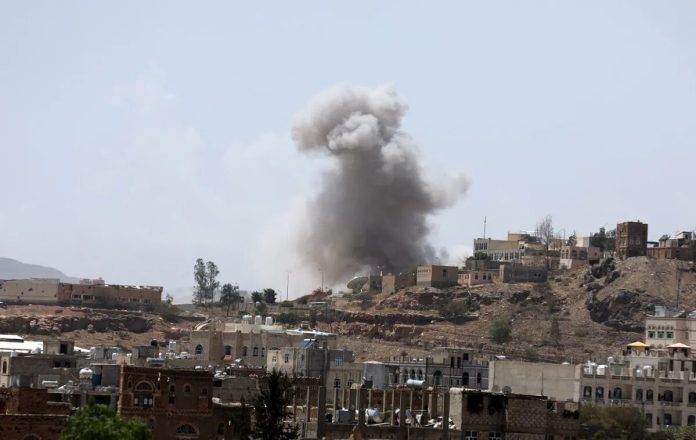
US lifts ban on bombs sale to Saudi Arabia

Yemen War Saudi Air Stike

President Joe Biden imposed the ban in 2022 amid fears that Saudi forces were using US-made munitions to kill civilians in Yemen.

The arms embargo had strained relations between the two countries and hindered Saudi Arabia’s military capabilities against Yemen’s Houthi movement, officially known as Ansarallah.

Riyadh and the Houthis have been at war since 2015, when a Saudi-led coalition of Arab states intervened in Yemen after the Houthis seized control of much of the country, including most of the major population centres.

The Yemeni movement continues to control the capital, Sanaa, and other important cities, operating an administration that remains largely unrecognised internationally.

The WSJ report said the munitions shipment will include 3,000 small diameter bombs and 7,500 Paveway IV bombs.

According to the WSJ, a conservative-leaning paper with close ties to the US military and political establishment, Washington is trying to curry favour with Saudi Arabia in an attempt to reassert its influence in the Middle East.

As Washington explores options for Gaza after Israel’s war on the Palestinian enclave is over, including assembling an international Arab-led force, American officials are eyeing Saudi Arabia’s cooperation. They also hope to reignite efforts to build official ties between Saudi Arabia and Israel.

Saudi Arabia and Israel were on the brink of announcing formal relations until the Hamas-led attack on 7 October and Israel’s subsequent war on Gaza disrupted those plans.

As Israel has waged an onslaught on Gaza, which has killed more than 39,000 Palestinians, Riyadh has grown more critical and described Israel’s actions as “mass genocide” this week.

Saudi Arabia hopes that by normalising with Israel, it will get access to more US weaponry and the clearance to develop a civil nuclear programme.

Tensions between the US and Saudi Arabia peaked after Biden took office in 2021, promising to make Riyadh a “pariah” in large part due to the murder of Middle East Eye and Washington Post journalist Jamal Khashoggi in 2018.

The CIA said that Saudi Crown Prince Mohammed bin Salman likely signed off on the killing, an accusation he denies.

The ongoing war in Gaza has also brought the Houthis into direct conflict with the US, with the Yemeni movement targeting vessels in the Red Sea linked to Israel in solidarity with Hamas and the Palestinians under Israeli bombardment.

In response, the US and the UK have launched several air strikes on Houthi military sites.

US approves $20bn arms sales to Israel amid Gaza war

In a statement, the Pentagon said, “The United States is committed to the security of Israel, and it is vital to US national interests to assist Israel in developing and maintaining a strong and ready self-defense capability. This proposed sale is consistent with those objectives.”

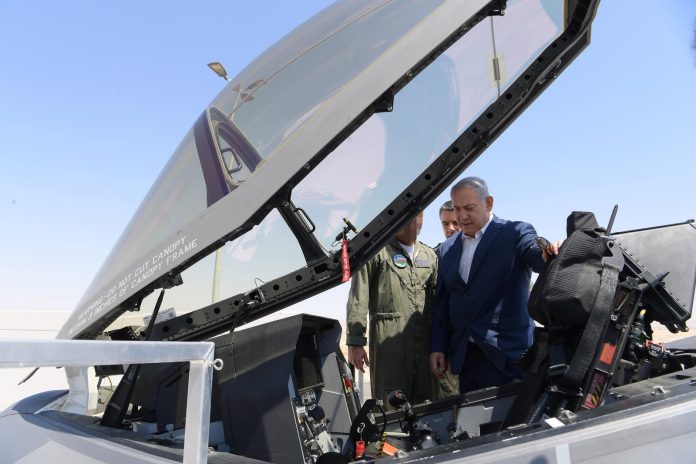
The Pentagon confirmed that Blinken approved the potential sale of F-15 jets and related equipment worth nearly $19 billion. Additionally, he approved the possible sale of tank cartridges valued at approximately $774m and army vehicles worth $583m.

The tank rounds would be almost immediately available for delivery.

This multibillion-dollar package is the latest in a series of arms deals that Israel is set to receive from the US, adding to the $14bn in additional military aid approved earlier this year.

The sale comes amid mounting criticism of the Joe Biden administration for continuing to authorise arms transfers to Israel despite the death toll in Gaza approaching more than 40,000 Palestinians, most of them women and children.

Since Israel’s war on Gaza began last October, Israeli forces have destroyed much of Gaza’s civilian infrastructure, including schools, hospitals, mosques, and UN shelters.

Over the past ten months, the Biden administration has transferred hundreds of millions of dollars worth of arms and munitions to Israel.

The weapons sales to Israel come despite the International Criminal Court (ICC) seeking arrest warrants for Israeli Prime Minister Benjamin Netanyahu and Defence Minister Yoav Gallant on the grounds of war crimes and crimes against humanity.

Gallant and Netanyahu face war crimes and crimes against humanity charges over the starvation of civilians as a method of warfare; wilfully causing great suffering; wilful killing; intentional attacks on a civilian population and extermination, alongside several other charges.

Even as the US continues to pump billions worth of weapons to Israel, Tel Aviv increasingly boasts record sales from its weapons industry internationally.

Israel’s defence ministry announced in June that its arms exports for 2023 hit a record in sales.

The report by the defence ministry said that the total exports of Israeli arms reached $13.1bn in 2022, an increase of $500m from the previous year and double the amount of exports from five years ago.

More than a third of the sales comprised missiles, rockets and air-defence systems, with one of the biggest contracts of 2023 being with Germany, which signed a deal to purchase the Arrow 3 long-range air defence system for around $4bn.

“While our industries are primarily focused on providing the defence establishment with the capabilities to support our troops and defend our citizens, they are also continuing to pursue areas of cooperation and exports to international partners,” Israeli Defence Minister Gallant stated in a statement.

Roughly half, 48 percent, of all sales, went to the Asia and Pacific region, while Europe accounted for 35 percent of sales, and North America accounted for nine percent.

Biden says Iran could hold off on Israel attack if Gaza ceasefire agreement reached

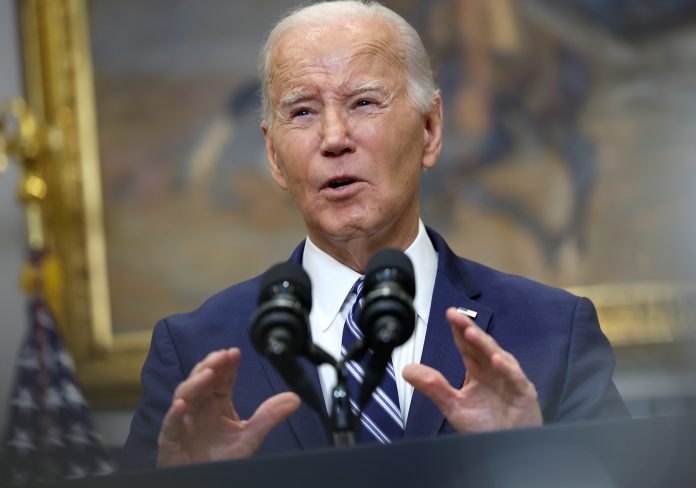
Joe Biden

The US, Egypt and Qatar called on Israel and Hamas to participate in a final and decisive round of negotiations on Thursday in Doha for a deal to release hostages held by Hamas and establish a ceasefire in the besieged strip.

The White House is extremely concerned that if Iran and Hezbollah attack Israel in the next few days it will sabotage the negotiations and kill any possible agreement.

Global concern that Israel’s war in the Gaza Strip will escalate into an all-out regional conflict multiplied after the assassination last month of Hamas political chief Ismail Haniyeh in Tehran, and of Fuad Shukr, a top commander from the Lebanese group Hezbollah, in Beirut.

Biden stressed he was concerned about a possible Iranian attack on Israel and its implications for the hostage and ceasefire deal.

He said “it’s getting harder” to reach a deal but he is not giving up, adding, “We’ll see what Iran does. We’ll see what happens.”

When asked if he expected Iran to hold off on a retaliatory strike if a ceasefire agreement was reached, Biden stated, “that’s my expectation.”

Leader of the Islamic Revolution Ayatollah Seyyed Ali Khamenei has warned the Zionist regime of a “harsh response” for Haniyeh’s assassination, saying it is Iran’s duty to avenge the Palestinian resistance leader’s blood.

President Biden’s top Middle East adviser Brett McGurk arrived in Cairo on Tuesday for talks with Egyptian officials on the hostage deal and security arrangements for the Egypt-Gaza border, US officials said.

McGurk is expected to travel to Doha on Wednesday.

Biden senior adviser Amos Hochstein travelled to Lebanon on Tuesday and is expected to hold talks with Lebanese officials on Wednesday to try to de-escalate tensions with Hezbollah, which has threatened to respond to Israel’s assassination of its top military commander in Beirut.

Zelensky claims Ukraine controls 74 Russian settlements in Kursk region

Russia Ukraine War

The Ukrainian military currently controls 74 settlements in Russia’s Kursk Oblast, Zelensky said on Aug. 13.

Ukraine’s cross-border incursion into neighboring Kursk Oblast began on Aug. 6, and by Aug. 12, Ukraine claimed it had control over 1,000 square kilometers of Russian territory.

Kursk Oblast covers just under 30,000 square kilometers, a similar size to the US state of Maryland or the German state of Brandenburg.

Russia’s regional authorities claimed on Aug. 12 that Ukraine is in control of 28 settlements in Kursk Oblast, and alleged that the incursion was up to 12 kilometers deep along a 40-kilometer front.

Commander-in-Chief Oleksandr Syrskyi said on Aug. 13 that Ukraine’s Armed Forces advanced 3 kilometers and took control over another 40 square kilometers of Russian territory.

Zelensky stated he is “constantly in touch” with Syrskyi about the situation in Kursk.

“Despite the difficult, intense battles, the advance of our forces in Kursk Oblast continues,” Zelensky continued, adding, “Humanitarian solutions for these territories” are being established.

Ukraine’s Foreign Ministry spokesperson Heorhii Tykhyi told reporters on Aug. 13 that “unlike Russia, Ukraine does not seek to seize territory,” but wants to “protect the lives of our people”.

Ukraine’s incursion into Russia’s Kursk Oblast aims to prevent Moscow from sending additional reinforcements to the front in Donbas and stop Russian cross-border strikes, Tykhyi said.

“Since the beginning of this summer, Ukraine’s Sumy Oblast has been targeted with over 2,000 strikes using multiple launch rocket systems, mortars, drones, 255 guided bombs, and more than a hundred missiles, launched from Kursk Oblast,” Tykhyi said.

“Unfortunately, Ukraine does not have sufficient capabilities to carry out long-range strikes with the weapons it has to defend itself against this terror,” Tykhyi added.

Tiglon dies of lymphoma complications at Mashhad Zoo, northeastern Iran

The tiglon, a rare hybrid species born from the mating of a male tiger and a female lion, began showing signs of anorexia and weight loss earlier in July. The animal was sedated and underwent extensive medical examinations and tests.

Despite receiving supportive care, the tiglon succumbed to its condition. Preliminary tests conducted during sedation indicated a high probability of lymphoma, a type of cancer affecting the lymphatic system.

This diagnosis was later confirmed by laboratory analysis of samples taken from the animal’s body post-mortem.

The Iranian tiglon (Tiglon) is a unique wild feline species resulting from the crossbreeding of a male tiger and a female lion.

With partially white-tipped ears, a body color that blends characteristics of both lions and tigers, and facial markings resembling those of a tiger, the tiglon is a strikingly large and distinctive big cat.

Hamas says Gallant’s admission Netanyahu hindering ceasefire deal confirms PM’s ‘lies’

Netanyahu Gallant

In a statement, Hamas political bureau member Izzat al-Rishq said what Gallant said “confirms what we have always said: that Netanyahu is lying to the world and the families of the (Israeli) prisoners (in Gaza).”

He added that Netanyahu “does not want to reach an agreement and that all he cares about is the continuation and expansion of the war.”

Al-Rishq noted that Hamas’s flexibility and positive response to cease-fire proposals, including US President Joe Biden’s call for a cease-fire last May, “collided with Netanyahu’s intransigence and his evasion of the obligation to reach a cease-fire agreement and a prisoner exchange deal.”

He urged the international community to “exert pressure on Netanyahu and his government to stop the aggression and the war of genocide and reach an exchange deal.”

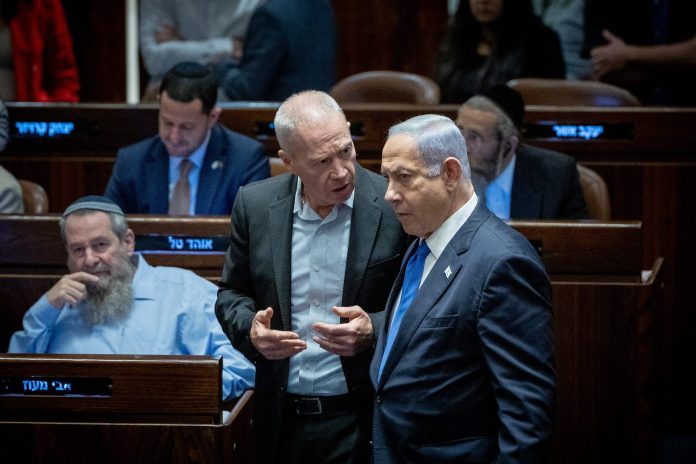
Earlier on Monday, Netanyahu and Gallant traded barbs over the ongoing war in the Gaza Strip, with the latter accusing the former of obstructing a prisoner swap deal with Palestinians.

Last week, Egyptian, Qatari and US mediators urged Israel and Hamas to finalize the details of a Gaza cease-fire and hostage release deal with no further delays or excuses.

While Israel said it will send a delegation to the talks, Hamas demanded that mediators present a plan to implement the cease-fire proposal supported by Biden that it had agreed to on July 2.

Indirect talks mediated by the US, Qatar and Egypt have failed to agree on a permanent cease-fire deal over Netanyahu’s rejection of Hamas’s call for ending the war and allowing the return of displaced Palestinians to northern Gaza.

Israel, flouting a UN Security Council resolution demanding an immediate cease-fire, has faced international condemnation amid its continued brutal offensive on Gaza since an Oct. 7, 2023 attack by Hamas.

The Israeli onslaught has since killed nearly 40,000 people, mostly women and children, and injured over 92,000 others, according to local health authorities.

More than 10 months into the Israeli onslaught, vast tracts of Gaza lie in ruins amid a crippling blockade of food, clean water and medicine.

Israel is accused of genocide at the International Court of Justice for its actions in the coastal enclave.