Wednesday, January 14, 2026
Home Blog Page 687

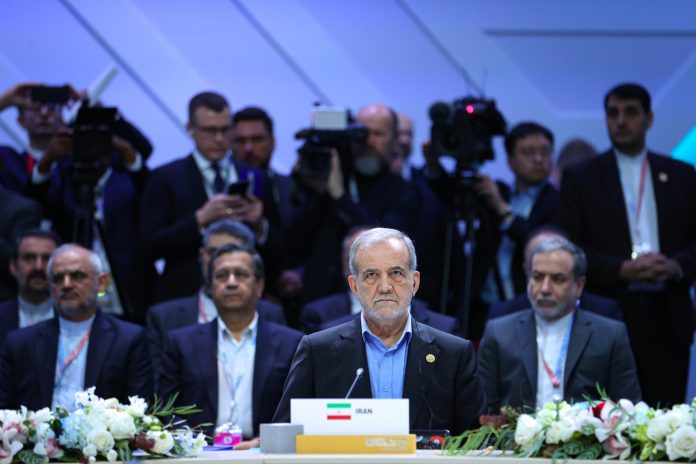
President Pezeshkian urges BRICS economic synergy, resistance against dominance of US dollar

In his speech at the BRICS summit in Kazan, Russia, on Wednesday, Pezeshkian highlighted the need for collective efforts among BRICS countries to confront illegal and anti-human rights sanctions.

He noted that millions of people in dozens of countries worldwide are subjected to sanctions, and combating these sanctions requires group action and the creation of joint mechanisms within BRICS.

The Iranian president also advocated for trade and economic exchanges between BRICS members using national currencies, viewing this as an effective way to counter the US dollar, which Washington uses as a weapon and a tool of control over other countries.

President Pezeshkian pointed out that BRICS members are the largest producers and consumers of energy, food, and other goods, emphasizing that launching and using digital currencies, and creating a foundation for new financial technologies, align with BRICS’ primary goals.

He further stressed the importance of joint efforts by BRICS members, including through information exchange and joint investments, to help Global South countries gain access to modern technologies.

Iran’s president also called for strengthening the New Development Bank, a key institution born out of BRICS, and reiterated Tehran’s readiness for close cooperation with the bank.

Highlighting Iran’s strategic position in the region, Pezeshkian said that the Islamic Republic serves as a transit hub for several international transportation corridors, including the North-South and East-West corridors.

He emphasized that through constructive cooperation, BRICS could establish a new network of transit relations for the transfer of energy and trade goods.

Elsewhere, Pezeshkian called for an immediate and permanent ceasefire, the complete withdrawal of Zionist regime forces from occupied territories, and urgent humanitarian aid to the people of Gaza and Lebanon.

BRICS is an intergovernmental organization initially comprising Brazil, Russia, India, China and South Africa. Iran, Egypt, Ethiopia, the United Arab Emirates and Saudi Arabia have also joined BRICS, with Türkiye, Azerbaijan Republic and Malaysia having formally applied to become members.
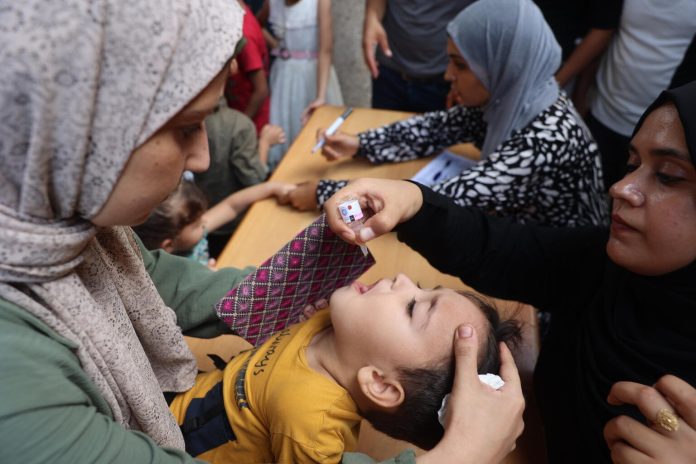
WHO says Israeli bombardment stopped Gaza polio vaccinations

Gaza War

The necessary second round of vaccinations has been completed in central and southern Gaza, and was to begin on Wednesday in the north.

But the WHO said it had been “compelled to postpone” the bid to give 119,279 children in northern Gaza a second vaccine dose.

Israel launched a major air and ground assault in northern Gaza this month, vowing to stop Hamas militants from regrouping in the area.

The vaccination campaign was called off “due to the escalating violence, intense bombardment, mass displacement orders, and lack of assured humanitarian pauses across most of northern Gaza”, the UN health agency announced.

“The current conditions, including ongoing attacks on civilian infrastructure, continue to jeopardise people’s safety and movement in northern Gaza, making it impossible for families to safely bring their children for vaccination,” and for health workers to operate, it added.

The vaccination drive began after the Gaza Strip confirmed its first case of polio in 25 years.

The war has left most medical facilities and Gaza’s sewage system in ruins.

Typically spread through sewage and contaminated water, poliovirus is highly infectious.

It can cause deformities and paralysis, and is potentially fatal, mainly affecting children under the age of five.

The WHO says a minimum of two separate doses of oral vaccine are needed to interrupt poliovirus transmission, requiring 90 percent of all children aged under 10 to be vaccinated in a given community.

As in the initial round of vaccinations last month, the second round was divided into three phases, helped by localised “humanitarian pauses” in the fighting: first in central Gaza, then in the south and finally the north.

Each phase was to take up to four days.

The WHO warns that immunity levels are lower if the second dose is given more than six weeks after the first.

The UN agency said the approved area for humanitarian pauses in the north had been cut down to Gaza City alone, meaning many children would have missed the second dose.

This would “seriously jeopardise efforts to stop the transmission of poliovirus in Gaza”, it noted.

Since the second round of the campaign began on October 14, some 442,855 children under 10 have been vaccinated in central and southern Gaza, with coverage at 94 percent.

“It is imperative to stop the polio outbreak as soon as possible, before more children are paralysed and poliovirus spreads further,” the UN health agency said, adding, “It is crucial therefore that the vaccination campaign in northern Gaza is facilitated through the implementation of the humanitarian pauses.”

More than 560,000 children below the age of 10 in Gaza received their first doses of the vaccine in September, according to the WHO.

The war in Gaza began with Hamas’s October 7, 2023 attack on Israel, which resulted in the deaths of 1,200 people, mostly civilians.

Israel’s retaliatory offensive has killed more than 42,700 people in Gaza, also mostly civilians, according to figures from the Hamas-run territory’s health ministry which the UN considers reliable.

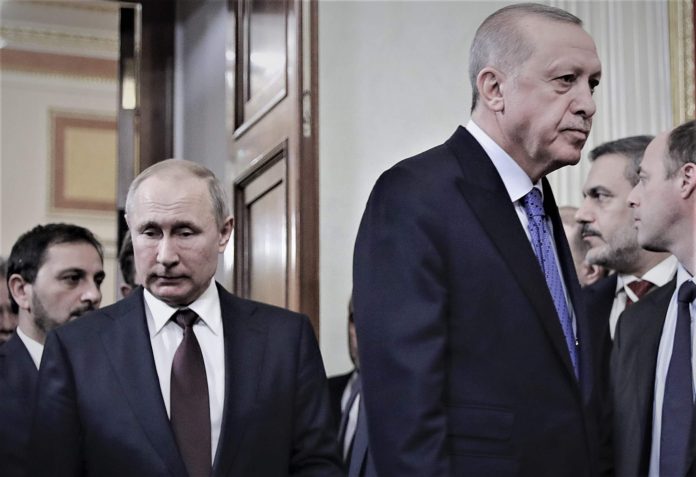
Turkey quietly curbs military goods exports to Russia following US warning: Report

In recent weeks, Ankara updated its customs systems to stop the export of over 40 categories of US-made items deemed critical to Russia’s war in Ukraine, according to FT sources.

The new restrictions target goods such as microchips, processors, and control systems, believed to be used in weapons.

According to the report, Turkish banks have also reduced dealings with Russian entities over the past year, following US threats of sanctions.

The updated policy regarding Russian exports was not publicly announced due to political sensitivities.

While Turkey is a NATO member, Turkish President Recep Tayyip Erdogan has aimed to maintain positive relations with both Russia and Ukraine.

Turkey has also facilitated the flow of Russian oil to the European Union since Russia’s full-scale invasion of Ukraine, enabling the Kremlin to circumvent the bloc’s sanctions.

In 2023, Turkey became the world’s biggest buyer of Russian fossil fuels, importing around 42.2 billion euros ($45.9 billion) in oil, natural gas, and coal from the country – a fivefold increase over the past decade.

At the same time, Erdogan has publicly supported Ukrainian sovereignty, and his administration has given significant aid to Ukraine since the start of Russia’s full-scale invasion.

“We support Ukraine’s territorial integrity, together with Ukrainian Crimea,” Erdogan said in early February.

Turkey also brokered a grain deal in 2022, along with the UN, that was essential in mitigating a global surge in food prices partially caused by the war. It allowed Ukraine to export its agricultural products via the Black Sea, despite the ongoing invasion.

President Pezeshkian warns Israel of firm response to any attack against Iran

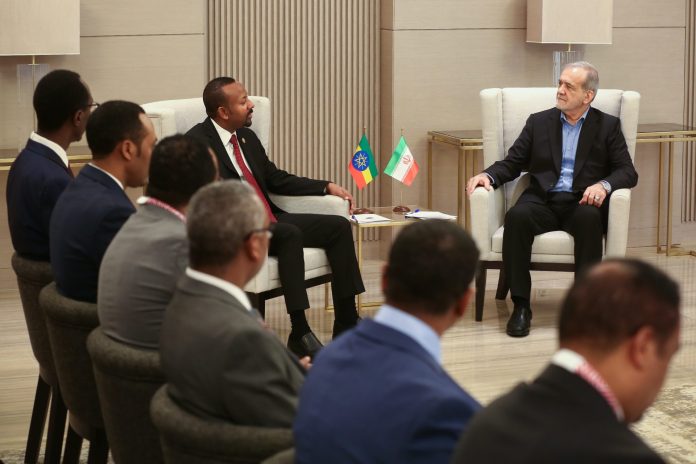
President Pezeshkian made these remarks during a meeting with Ethiopian Prime Minister Abiy Mohamed on the sidelines of the BRICS summit in the Russian city of Kazan.

The Iranian president referred to the Israeli regime’s assassination of former Hamas political leader Ismail Haniyeh in Tehran, which took place during Pezeshkian’s inauguration ceremony.

He stated that Iran had shown restraint in response to the Israeli regime’s crime, hoping for a ceasefire in Gaza. However, the continuation of the Zionist regime’s crimes in Gaza and their expansion into Lebanon prompted the Islamic Republic to respond.

President Pezeshkian also emphasized that the West’s support for the Israeli regime has significantly contributed to its ongoing crimes.

The Iranian president stressed that Tehran does not seek an escalation of tensions and conflicts, adding that Iran welcomes any effort aimed at peace and stability.

During the meeting, the Ethiopian prime minister described Iran as a powerful and independent country, stating that current global and regional systems need to change as they are unequal.

Blinken meets Israeli leaders amid regional tensions

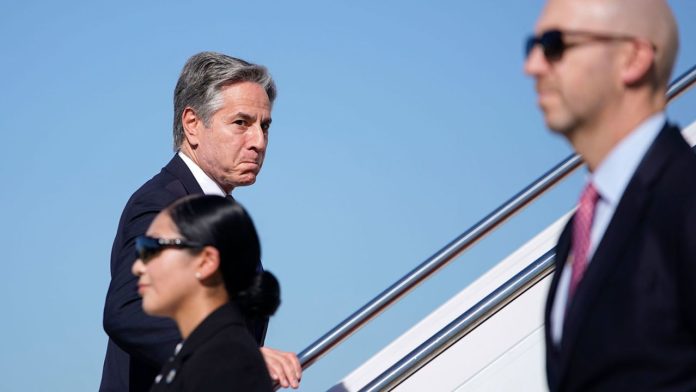
Blinken arrived in Israel on Tuesday on his 11th visit to the Middle East since the war in Gaza began more than a year ago. It is his first trip to the region since Israel escalated its conflict with Hezbollah in Lebanon late last month.

The visit got off to an inauspicious start as Hezbollah launched medium-range missiles towards Tel Aviv, temporarily shutting down Ben Gurion Airport, where Blinken landed, according to Israeli media.

At the meeting in Jerusalem, the US official pressed Netanyahu to “capitalise” on Israel’s killing of Hamas leader Yahya Sinwar last week in order to bring the war in Gaza to an end.

Blinken “stressed the need to capitalise on Israel’s successful action to bring Yahya Sinwar to justice by securing the release of all hostages and ending the conflict in Gaza in a way that provides lasting security for Israelis and Palestinians alike”, US State Department spokesman Matthew Miller said after the talks.

Blinken also “emphasised the need for Israel to take additional steps to increase and sustain the flow of humanitarian assistance into Gaza and ensure that assistance reaches civilians throughout Gaza”, Miller added.

Netanyahu’s office announced Sinwar’s killing “may have a positive effect on the return of the hostages, the achievement of all the goals of the war, and the day after the war”.

But there was no mention of a possible ceasefire after a year of war in which Hamas’s military capabilities have been greatly degraded and Gaza largely reduced to rubble, with the vast majority of its 2.3 million Palestinian residents displaced.

One topic of discussion was the so-called Generals’ Plan. Put forward in September by retired General Giora Eiland, the Generals’ Plan – which calls for the expulsion of Palestinians from Northern Gaza and the forced starvation and targeting of whoever stays behind – has been labelled a roadmap to ethnic cleansing by critics.

An American official has stated that Netanyahu and his top aides sidestepped Blinken’s request during the meeting to publicly clarify that Israel is not seeking to lay siege to northern Gaza.

Netanyahu and Strategic Affairs Minister Ron Dermer insisted during the meeting that Israel is not implementing the so-called General’s Plan aimed at isolating northern Gaza and argued that claims to the contrary have been detrimental to Israel’s public image, the US official said.

Blinken urged Netanyahu to clarify this publicly, but he and his aides demurred, the official added.

The US State Department noted Blinken and Netanyahu also discussed ways of implementing a long stagnant 2006 United Nations resolution passed after the last Israel-Hezbollah war that would restore security and calm along the Israel-Lebanon border and allow civilians on both sides to return home.

But as Blinken met Israeli leaders, Hezbollah ruled out entering negotiations with Israel while fighting continues, and it claimed responsibility for a drone attack targeting Netanyahu’s holiday home on Saturday.

In his statement, Netanyahu also stated a need for change in the security and political situation in Lebanon that would allow Israelis to return safely to their homes that had come under Hezbollah rocket fire.

Israel’s conflict with the Iran-linked armed group Hezbollah in Lebanon has intensified in recent weeks after a year of cross-border fighting.

Early on Tuesday, Hezbollah said it had launched volleys of rockets at two Israeli military bases near Tel Aviv as well as a naval base in Haifa.

The backdrop of violence to Blinken’s visit serves to illustrate the sparse hope that his visit will result in a breakthrough.

Speaking to reporters on his way from Tel Aviv to Saudi Arabia’s Riyadh on the next stage of his Middle East visit, Blinken stated that the US fully rejects the idea of Israel permanently occupying Gaza, and said that Netanyahu’s government have an opportunity to turn its military campaign against Hamas into “an enduring strategic success”.

“Now is the time to turn those successes into an enduring strategic success. And there are really two things left to do, get the hostages home and bring the war to an end with an understanding of what will follow,” he added.

Israel has achieved most of its strategic objectives in Gaza by destroying much of Hamas’ military capacity there, opening the door to a lasting end to the conflict, Blinken continued.

Iran hangs four in Alborz province for selling deadly alcoholic drinks

Iran Prison

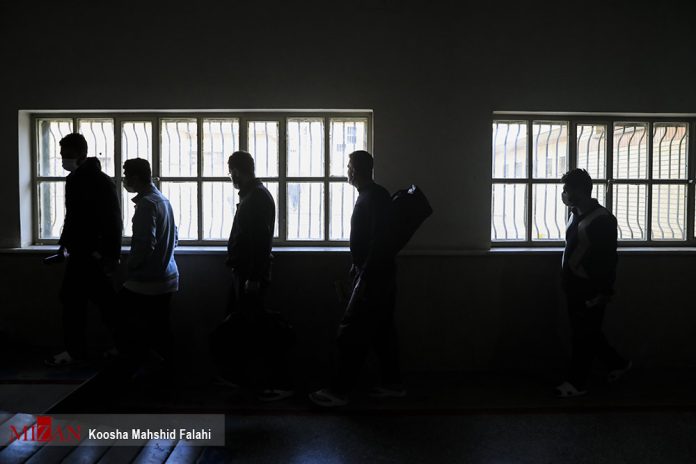
According to the media center of the Judiciary, the four were charged with large-scale production and distribution of alcoholic drinks which resulted in the deaths of 17 people and the poisoning and physical injuries of 191 others.

According to Iranian Constitution, production, selling and consumption of alcoholic drinks are illegal in the country.

Hossein Fazeli Harikandi, the Chief Justice of Alborz Province, said six suspects related to the case and accused of producing and supplying methanol and alcoholic beverages were identified by the Alborz Provincial Intelligence Police in less than 24 hours from the filing of the case, and five other suspects were arrested shortly after that.

A trade unit, that ostensibly sold cosmetics and health products and medical equipment in the provincial capital of Karaj, was used as a front and the main distributor of industrial methanol alcohol in Alborz province, instead of ethanol alcohol for beverages, Fazeli Harikandi explained.

Ukraine’s population dropped by 10 million after Russia’s 2014 attack: UN

Russia Ukraine War
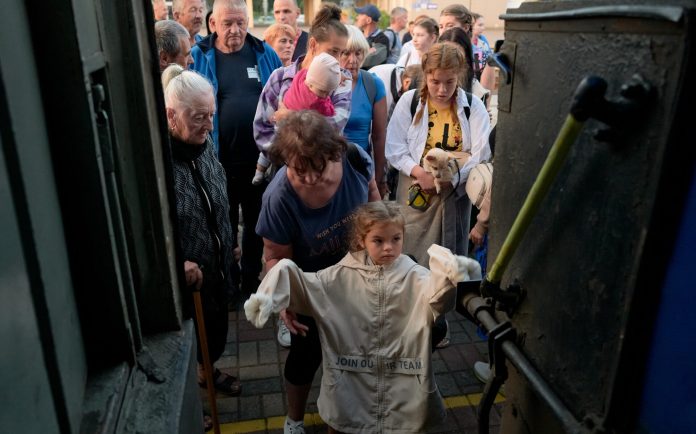
Dozens of evacuees have arrived in the Ukraine-controlled Sumy region.

Russia first invaded Ukraine in 2014, occupying parts of the eastern Donbas region and illegally annexing the Crimean peninsula.

Since then, Ukraine’s population has fallen by over 10 million and the number of refugees has surged to 6.7 million, with the full-scale invasion of 2022 exacerbating an already dire decline.

“The birth rate plummeted and is currently at around one child per woman, which is one of the lowest in the world,” Bauer said at a briefing in Geneva.

Ukraine’s birth rate is now the lowest in Europe, according to the UN.

Refugees account for a major portion of Ukraine’s population loss, with casualties of Russia’s war another contributing factor.

“It’s difficult to have exact numbers, but estimates range around tens of thousands of casualties,” Bauer added.

The population of Ukraine totaled 37.441 million as of Jan. 1, 2024, but more declines are expected in the coming years. A UN forecast in July predicted that the population might drop to as low as 15.3 million people by 2100.

Ukraine and the UNFPA have partnered in developing a national demographic strategy, Bauer said. The strategy focuses on human capital rather than simply trying to increase the birth rate.

The path to population stability also depends on an end to the war, Bauer acknowledged.

Russia is facing its own demographic crisis, with a projected decline of about 7 million over the next two decades.

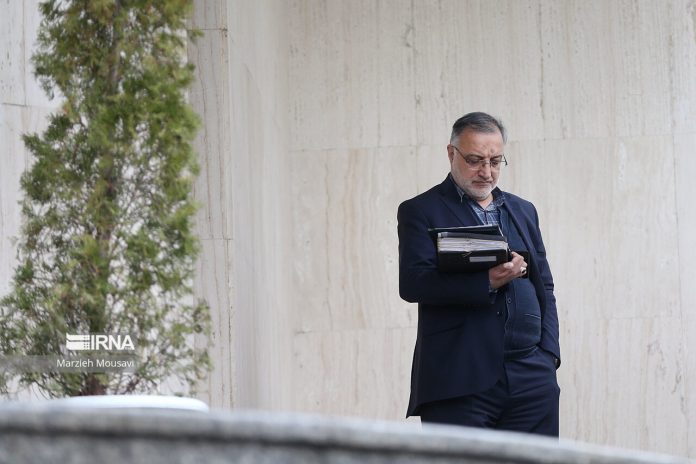
Tehran City Council chairman vetoes mayor’s questioning for second time

Zakani

This decision was made just before the Wednesday council session, with Chamran citing the “current state of the country” as the reason.

There are tensions between the Tehran City Council and the mayor’s office, with council members seeking accountability and transparency in municipal operations.

Before the session, Chamran stated that Zakani was ready to respond to questions from council member Jafar Tashakkori Hashemi regarding the allocation of municipal funds and facilities but postponed it due to the country’s “special conditions.”

Tashakkori Hashemi emphasized that the primary demand is for the mayor to address and rectify the issues within the municipality.

The city council member insisted that Zakani must answer the council’s questions, warning if his explanations are unsatisfactory, the council may consider impeachment.

According to the law, the mayor must appear before the council within ten days of a question being raised.

This is not the first time Chamran has used his veto to shield Zakani from council questioning. Previously, council member Soudabeh Najafi raised a question about the construction of 200,000 housing units, which Chamran vetoed, claiming it had not followed legal procedures.

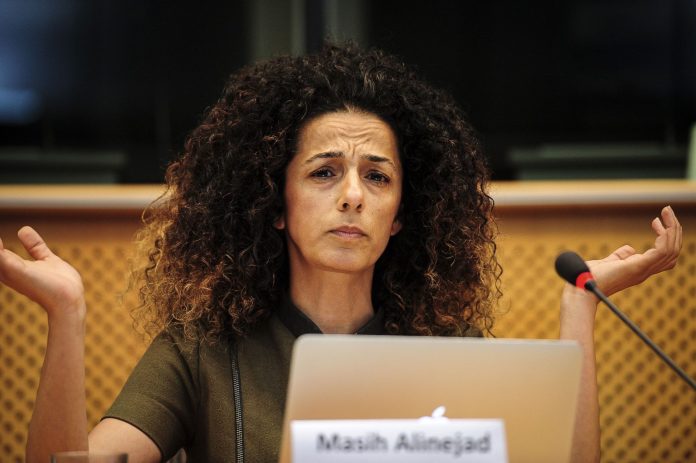
US charges IRGC official in alleged plot to kill Iranian dissident Masih Alinejad

The murder-for-hire and money laundering charges against Ruhollah Bazghandi and three other Iranian citizens were revealed on Tuesday as part of a revised indictment laying out the alleged scheme.

The Justice Department did not name the target of the purported plot, but Iranian American journalist and activist Masih Alinejad confirmed that she was the potential victim.

Last year, the Justice Department charged several people with trying to kill Alinejad. One of the suspects – Khalid Mehdiyev – had been arrested outside her house with a rifle.

According to the indictment, Bazghandi and other Iranian officials contracted members of an Eastern European criminal organisation to kill Alinejad.

Bazghandi and the three other Iranian citizens, who are based in Iran, remain at large, US authorities claimed.

The Justice Department added Bazghandi is “an IRGC Brigadier General and has previously served as chief of an IRGC Intelligence Organization (IRGC-IO)”.

In a statement on Tuesday, US Attorney General Merrick Garland stated: “We will not tolerate efforts by an authoritarian regime like Iran to undermine the fundamental rights guaranteed to every American.”

Alinejad has been an outspoken critic of the Iranian government.

In 2021, US prosecutors also charged four Iranians, alleged to be intelligence officers, with plotting to abduct Alinejad.

Tehran dismissed allegations of involvement in the kidnapping plot at that time as “ridiculous and baseless”.

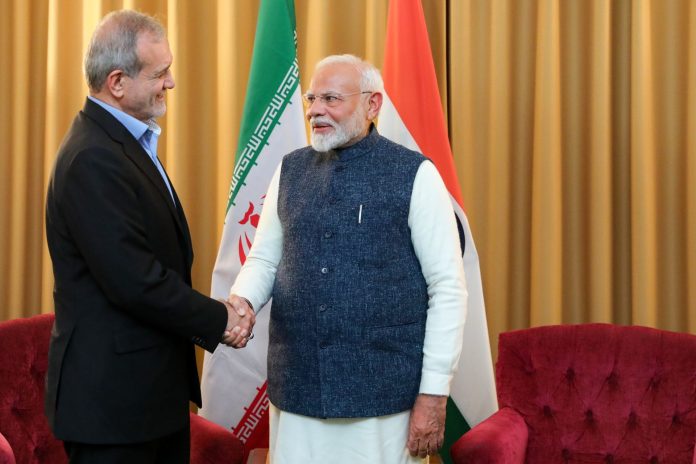
Iran seeking to prevent expansion of regional conflict: President Pezeshkian to India’s Modi

Pezeshkian made the remarks during a meeting with Indian Prime Minister Narendra Modi on Tuesday in the western Russian city of Kazan, as they attend the summit of the BRICS group of nations.

“We believe that warfare prevents countries’ development, and have, therefore, decisively pursued and continue to pursue preventing expansion of tension and conflict in the region,” the Iranian chief executive asserted.

He contrasted Iran’s message and performance that was directed towards development of peace and friendship with those of the Israeli regime, which was “pursuing crimes, massacres, and warmongering.”

Pezeshkian cited the regime’s assassination of the Palestinian resistance movement Hamas’s former Political Bureau chief, Ismail Haniyeh, in the Iranian capital Tehran on July 31, only a day after his presidential inauguration, as an instance of the regime’s attempts at obstructing the Islamic Republic’s pursuit of its peaceful goals.

“The Zionist regime has shown that it only seeks warfare and conflict,” the Iranian president said, hoping that the regime’s supporters, which laid claim to defending human rights, revisit their approach and support for Tel Aviv, to help cessation of its atrocities.

For his part, Modi denounced Israel’s atrocities in the Gaza Strip and Lebanon, where it has killed tens of thousands of people since last October, saying India was taking part in consultations that were aimed at helping establishment of peace and calm in the region.

The officials, meanwhile, condemned the existing double standards regarding the issue of human rights, which has seen the regime’s supporters defending its atrocities in the region in the name of “self-defense,” while denouncing regional resistance groups’ retaliatory operations.

Elsewhere in his remarks, Pezeshkian considered expansion of economic relations and cooperation among the regional countries to be a source of enhancement of the nations’ welfare and security.

He said he had proposed formation of a regional communication network among the countries towards realization of the purpose, noting that BRICS’ structure serves as a proper model and platform for realization of the idea.

Modi concurred with Pezeshkian on the need for development of the regional economic ties, saying the prospect served the interests of the entire region.

The officials also expressed their respective countries’ interest in development of their bilateral relations, stressing the need for expedient implementation of the agreement that the two sides signed in May on development of the southern Iranian port city of Chabahar.

The Indian prime minister pointed to his trip to the Islamic Republic in 2016, during which he met with Leader of the Islamic Revolution Ayatollah Seyyed Ali Khamenei, describing his visit as memorable and asking Pezeshkian to convey his regards to Ayatollah Khamenei.