Thursday, December 25, 2025
Home Blog Page 61

Mohammed Shia al-Sudani’s coalition comes first in Iraqi parliamentary election

The Independent High Electoral Commission said on Wednesday that al-Sudani’s Reconstruction and Change coalition received 1.3 million votes in Tuesday’s election, about 370,000 more than the next closest competitor.

Speaking after the initial results were announced, al-Sudani hailed the voter turnout of 56 percent, saying it was “clear evidence of another success” that reflected the “restoration of confidence in the political system”.

However, while al-Sudani, who first came to power in 2022, had cast himself as a leader who could turn around Iraq’s fortunes after decades of instability, the poll was marked by disillusionment among weary voters who saw it as a vehicle for established parties to divide Iraq’s oil wealth.

Turnout was lower in areas like Baghdad and Najaf after populist Shia leader Muqtada al-Sadr, leader of the Sadrist Movement, called on his vast numbers of supporters to boycott the “flawed election”.

As expected, Shia candidates won seats in Shia-majority provinces, while Sunni candidates secured victories in Sunni-majority provinces and Kurdish candidates prevailed in Kurdish-majority provinces.

But there were some surprises, notably in Nineveh, a predominantly Sunni Arab province, where the Kurdistan Democratic Party (KDP) secured the highest number of seats.

Meanwhile, in Diyala province, which has a significant Kurdish minority, no Kurdish candidates won seats for the first time since 2005.

No party can form a government on its own in Iraq’s 329-member legislature, so parties build alliances with other groups to become an administration, a fraught process that often takes many months.

Back in 2021, al-Sadr secured the largest bloc before withdrawing from parliament following a dispute with Shia parties that refused to support his bid to form a government.

The poll marked the sixth election held in Iraq since a United States-led invasion in 2003 toppled longtime ruler Saddam Hussein and unleashed a sectarian civil war, the emergence of the Daesh group and the general collapse of infrastructure in the country.

The next premier must answer to Iraqis seeking jobs and improved education and health systems in a country plagued by corruption and mismanagement.

He will also have to maintain the delicate balance between Iraq’s allies, Iran and the US, a task made all the more delicate by recent seismic changes in the Middle East.


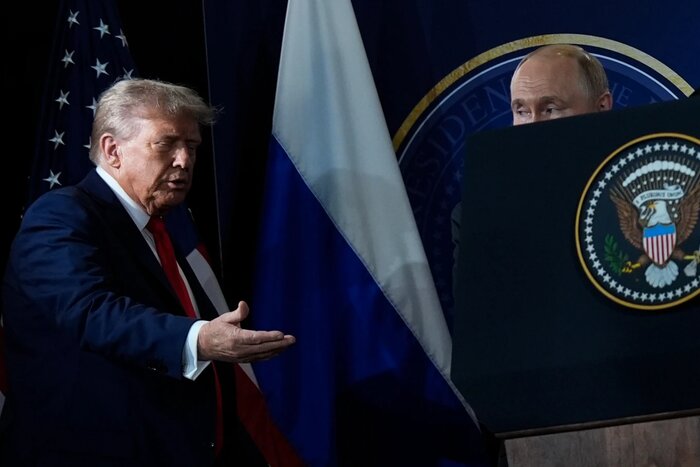
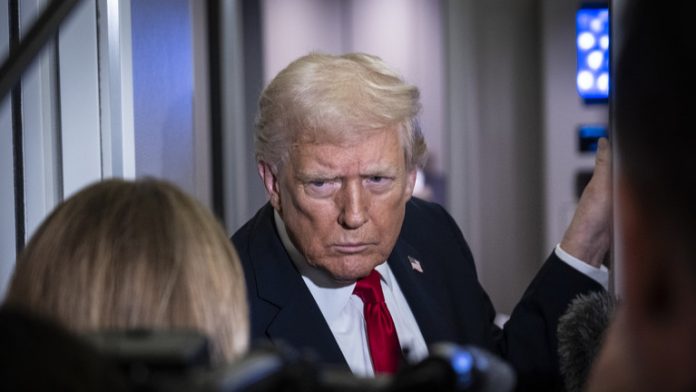
Trump formally asks Israel’s president to pardon Netanyahu after Gaza ceasefire

Trump Netanyahu

Trump’s letter on Wednesday comes a month after the US-brokered ceasefire came into effect in Gaza, ushering in a fragile truce amid daily Israeli attacks and aid restrictions.

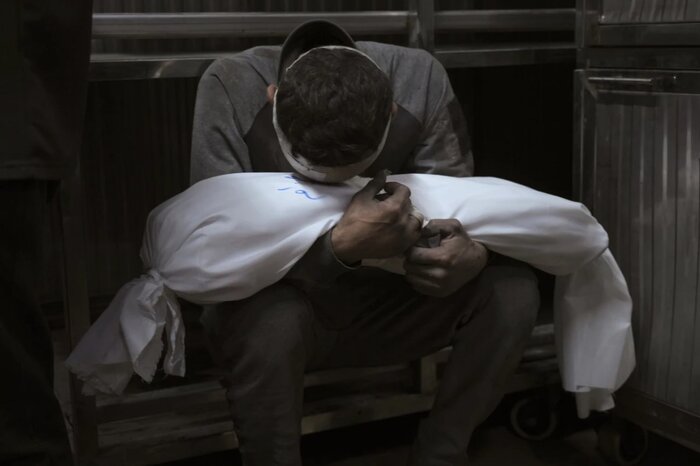
In his letter, the US president cited Netanyahu’s leadership in the war, an assault that killed more than 69,000 Palestinians, including at least 20,000 children, and which United Nations investigators have described as a genocide.

“I hereby call on you to fully pardon Benjamin Netanyahu, who has been a formidable and decisive War Time Prime Minister, and is now leading Israel into a time of peace, which includes my continued work with key Middle East leaders to add many additional countries to the world changing Abraham Accords,” Trump wrote.

Several Israeli media outlets posted a copy of the letter on Wednesday.

With the letter, Trump inserts himself further into domestic Israeli politics, appearing to push to reward the Israeli prime minister for agreeing to the ceasefire.

The call also highlights Trump’s growing support for fellow right-wing leaders internationally. Earlier this year, the US bailed out the Argentinian economy under President Javier Milei with $40bn.

In Wednesday’s letter, Trump reiterated the false notion that he secured peace in the region for “at least 3,000 years”.

The US president made a similar call for ending the corruption case against Netanyahu when he spoke to the Israeli parliament, the Knesset, last month.

But he was more direct in addressing the Israeli president in the letter.

“Isaac, we have established a great relationship, one that I am very thankful for and honoured by, and we agreed as soon as I was inaugurated in January that the focus had to be centred on finally bringing the hostages home and getting the peace agreement done,” Trump wrote.

“Now that we have achieved these unprecedented successes, and are keeping Hamas in check, it is time to let Bibi unite Israel by pardoning him, and ending that lawfare once and for all.”

The Israeli presidency is mostly a ceremonial post, but the president retains the power to grant pardons.

However, with Netanyahu’s trial ongoing, Herzog cannot issue a pardon until a verdict is reached.

Herzog responded to Trump’s letter on Wednesday, saying that a pardon must be requested through a designated process.

“The president holds great respect for President Trump and repeatedly expresses his appreciation for Trump’s unwavering support of Israel and his tremendous contribution to the return of the hostages, the reshaping of the Middle East and Gaza, and the safeguarding of Israel’s security,” the Israeli president’s office announced.

“Without detracting from the above, as the president has made clear on multiple occasions, anyone seeking a pardon must submit a formal request in accordance with the established procedures.”

Trump himself has faced criminal charges, including over election interference, after his first presidency, which he has described as a “witch hunt”.

Israel-backed militia to oversee ‘rehabilitation’ of Rafah city in Gaza: Report

Gaza War

Kan News reports that the Popular Forces – a militia led by former smuggler Yasser Abu Shabab – have been given the go-ahead by Israel to facilitate the work in areas it controls.

Two Israeli sources, speaking to the outlet, confirmed the plan while adding that the Israeli government did not have a wider plan for the anti-Hamas militias operating in Gaza following the army’s long-mooted withdrawal from the enclave.

Abu Shahab has characterised the Popular Forces as a group of Palestinians opposed to Hamas’s rule in the Gaza Strip.

However, there have been numerous reports of the group engaging in extortion, looting of humanitarian aid and coordinating with the US-backed Gaza Humanitarian Fund (GHF), which has been accused of overseeing the deaths of hundreds of Palestinians at aid sites.

Some members of the group also reportedly have links to the Islamic State group.

Israel has provided support for the Popular Forces alongside a range of other militias that have increasingly sprung up across Gaza as part of an attempt to undermine Hamas’s hegemony over the enclave.

A Palestinian source familiar with the matter told Kan that associates of Abu Shabab also took part in meetings with senior American officials.

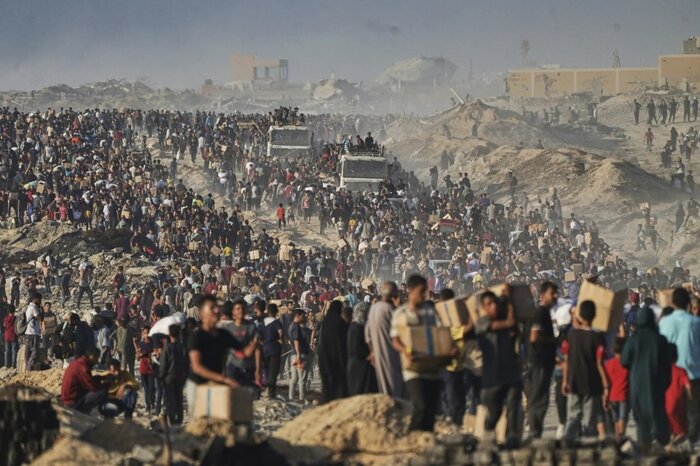
Areas of Gaza controlled by the Popular Forces have enjoyed access to aid and resources that have been otherwise denied to the starvation-stricken enclave.

This is largely due to theft of aid, with an internal 2024 UN report identifying the group as “the most influential stakeholders behind the systematic and massive looting of convoys”.

Despite the announcement of a ceasefire in October, Israel has carried out repeated attacks in Gaza, leaving at least 242 dead, according to the Palestinian health ministry.

Since October 2023, Israel has killed more than 69,179 people, including over 20,000 children, in the Gaza Strip, in a military campaign that has been widely characterised as a genocide.


Afghanistan economic recovery buckles as 9 in 10 families go hungry or into debt: UNDP

A United Nations Development Programme report said nearly one in 10 overseas Afghans has been forced back home, with more than 4.5 million returnees since 2023, mainly from Iran and Pakistan, swelling the population by 10%. On top of that, earthquakes, floods and drought have destroyed 8,000 homes and strained public services “beyond their limits.”

A survey of more than 48,000 households found that more than half of Afghanistan’s returnees have skipped medical care to buy food and 45% rely on open springs or unprotected wells for water.

Nearly 90% of returning Afghan families are in debt, owing $373 to $900, up to five times the average monthly income of $100 and nearly half of annual per-capita gross domestic product, the UNDP added.

In areas with high numbers of returnees, one teacher serves 70 to 100 students, 30% of children work and joblessness among returnees reaches 95%. The average monthly income is 6,623 Afghanis ($99.76), while rents have tripled.The UNDP warned that without urgent support to strengthen livelihoods and services in high-return areas, overlapping crises of poverty, exclusion and migration will deepen.

It said sustaining aid is critical as donor pledges have plunged since 2021, covering only a fraction of the $3.1 billion that the UN sought for Afghanistan this year.

The Taliban government appealed for international humanitarian assistance after a deadly quake struck eastern Afghanistan in September and it has formally protested Pakistan’s mass expulsion of Afghan nationals, saying it is “deeply concerned” about their treatment.

Participation by women in Afghanistan’s labour force has fallen to 6%, one of the lowest globally, and restrictions on movement have made it nearly impossible for women who head households to access jobs, education or healthcare.

Kanni Wignaraja, UN assistant secretary-general and UNDP regional director for Asia and the Pacific, stated, “In some provinces one in four households depend on women as the main breadwinner, so when women are prevented from working, families, communities, the country lose out.”

Households headed by women, accounting for as many as 26% of returnee families in some districts, face the highest risk of food insecurity and secondary displacement.

The UNDP urged Taliban authorities to allocate more resources and called on donors to lift restrictions on female aid staff.

“Cutting women out of frontline aid work means cutting off vital services for those who need them most,” Wignaraja added.


India and Pakistan spar after explosion rocks Islamabad

A day earlier, an explosion had left more than a dozen dead in Delhi.

Pakistani Prime Minister Shehbaz Sharif linked the Islamabad blast to other recent attacks in the country, saying on Tuesday that they were the worst examples of “Indian state terrorism” in the region.

He also called on the world to “condemn such nefarious conspiracies of India.”

Reacting to Sharif’s allegations, Indian Foreign Ministry spokesman Randhir Jaiswal called the charges “baseless and unfounded,” and described the Pakistani leadership as “obviously delirious.”

“It is a predictable tactic to concoct false narratives against India in order to deflect attention of its own public,” Jaiswal stated on Tuesday.

“The international community is well aware of the reality and will not be misled by Pakistan’s desperate diversionary ploys.”

The Islamabad blast occurred while the Sri Lankan cricket team, the target of an armed attack in March 2009 by gunmen in Pakistan, was playing a match in Rawalpindi, barely 10 miles from the court complex.

Pakistani Defense Minister Khawaja Asif claimed the Islamabad attack was orchestrated from Afghanistan.

”We are in a state of war,” Asif said on Tuesday.

“Bringing this war to Islamabad is a message from Kabul, to which Pakistan has the full power to respond.”

India has not blamed Pakistan for the Monday attack in Delhi, where an explosion in a car near the historic Red Fort left 13 people dead and injured over 20 others. Indian Home Minister Amit Shah has said security agencies were probing “all angles” and would “hunt down each and every culprit behind this incident.”


Ahvaz Mayor resigns amid public outrage over self-Immolation incident

They include the deputy for urban services, the mayor and deputy mayor
of district 3 of Ahvaz, and the head of the municipal enforcement office.
Reza Amini had been serving as the mayor of Ahvaz since September 2021.

Last week, a young man from Ahvaz set himself on fire in protest after municipal enforcement officers confiscated his business premises in the Zeytoun neighborhood.

The man, identified as Ahmad Baledi, later died in hospital.
The tragic incident sparked widespread public anger and reactions from citizens including social activists.

In the aftermath of the incident, the mayor of district 3 of Ahvaz and the head of enforcement office in that district were arrested.

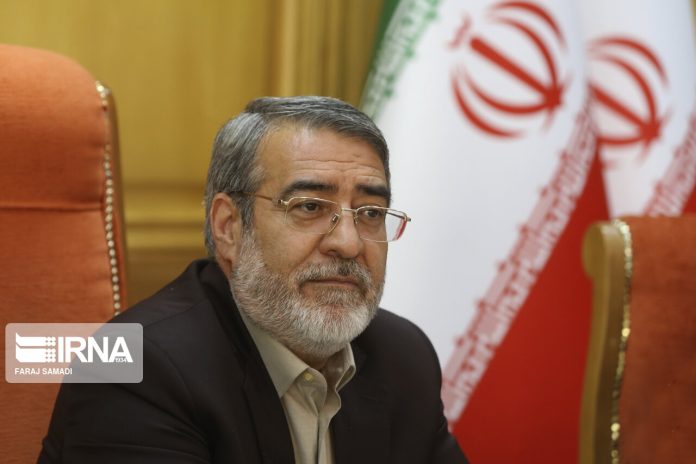
On Tuesday, President Masoud Pezeshkian ordered the minister of interior to establish a special committee to thoroughly investigate the case and ensure that those responsible are held accountable.

Ukrainian soldiers pull back under fierce Russian pressure in Zaporizhia

Russia Ukraine War

News of the setback in Zaporizhia in southeastern Ukraine comes as Russia said earlier on Tuesday that its forces had pushed deeper into the eastern Ukrainian cities of Pokrovsk and Kupiansk.

Video footage published by Russian war bloggers shows Moscow’s troops riding motorcycles, travelling in battered cars and sitting on top of military vehicles as they poured into Pokrovsk, which Russian media has dubbed “the gateway to Donetsk” due to its strategic location.

“Using its numerical superiority in personnel and materiel, the enemy advanced in fierce fighting and captured three settlements,” the commander-in-chief of the Ukrainian Armed Forces, Oleksandr Syrskii, said of the fighting in Zaporizhia on Tuesday.

“The situation has significantly worsened in the Oleksandrivka and Huliapole directions,” Syrskii added in a statement.

The Ukrainian Army said earlier that orders to withdraw from five villages in Zaporizhia were given after the “de facto destruction of all shelters and fortifications” following intensive Russian artillery strikes. An estimated 2,000 shells were launched at the Ukrainian positions.

Control of three other villages is also being hotly contested between Russian and Ukrainian forces northeast of the town of Huliapole in Zaporizhia, according to the Ukrainian Army.

Syrskii said that Russian forces in Zaporizhia had used poor weather conditions to their advantage, advancing under heavy fog to infiltrate between Ukrainian positions in the region. But he added that Russian forces suffered heavy losses during their attacks.

“Every metre of our land costs Russia hundreds of military lives,” he added.

Ukrainian President Volodymyr Zelenskyy, who was visiting the parts of the southern Kherson region not occupied by Russia on Tuesday, described the situation in Pokrovsk and Zaporizhia as “difficult, in part because of weather conditions that favour the attacks”.

The battlefield situation in Kupiansk was “somewhat easier”, he said, adding that Ukrainian forces had “achieved results there”.

Russia has been threatening Pokrovsk for more than a year, using a pincer movement to attempt to encircle it and threaten supply lines.

Syrskii told US media that Russia has concentrated an estimated 150,000 troops in a drive to take Pokrovsk.

Russia and Ukraine have given conflicting accounts of the battle in recent days, with Moscow claiming for days that it had encircled Pokrovsk, while Kyiv has denied the claims and asserted that it still had supply lines to neighbouring Myrnohrad.

Russia also said its forces have taken full control of the eastern part of Kupiansk in Ukraine’s Kharkiv region, located to the northeast of Zaporizhia and Pokrovsk.

Military observers have noted a thinning of Ukraine’s front lines due to a severe shortage of soldiers and massive Russian drone superiority, which has led to advances in several locations along the front line in the more than three and a half years of war.

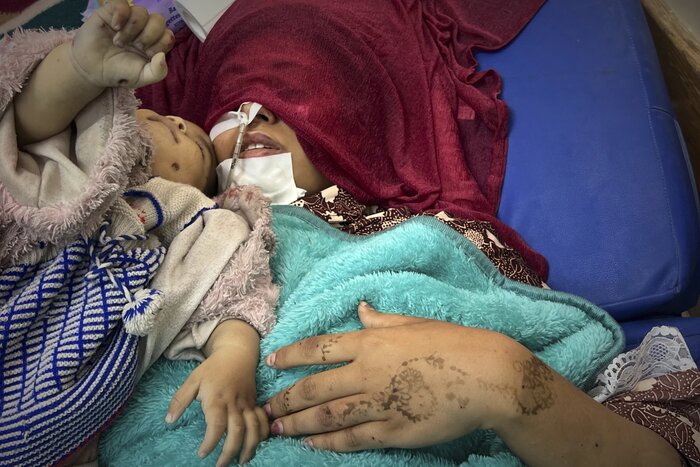
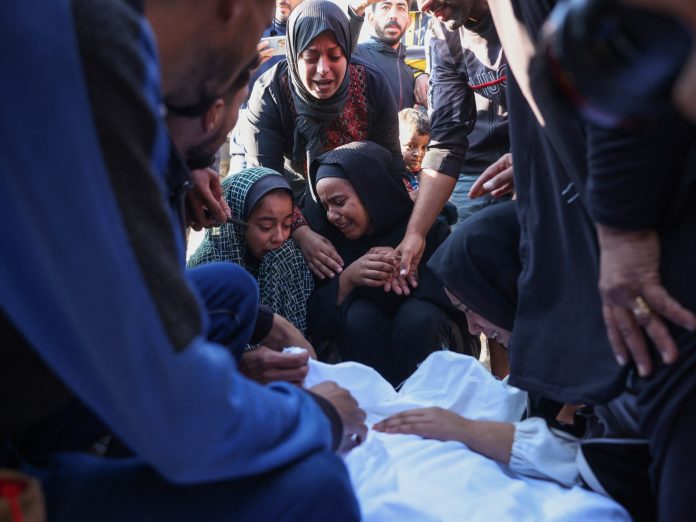
6,000 Gazans amputated since onset of Israeli war: Health Ministry

A ministry statement said that children account for 25% of the total amputations, and women make up 12.7%.

“The shortage of medical supplies and assistive devices exacerbates the suffering of the wounded and amputees,” it added.

“These figures reflect the profound humanitarian suffering experienced by thousands of the wounded and their families,” the ministry noted, calling for urgent rehabilitation and psychological and social support services, especially for children who now face permanent disabilities at an early age.

In attacks in Gaza since October 2023, Israel has killed more than 69,000 people, most of them women and children, injured over 170,600 others, and left about 9,500 missing – many believed to be trapped under destroyed homes or still unaccounted for.

The brutal Israeli war came to a halt under a ceasefire agreement that took effect on Oct. 10 under a 20-point plan by US President Donald Trump.

Iran’s Army chief inspects construction of border wall in northeast

Iranian Border Guards

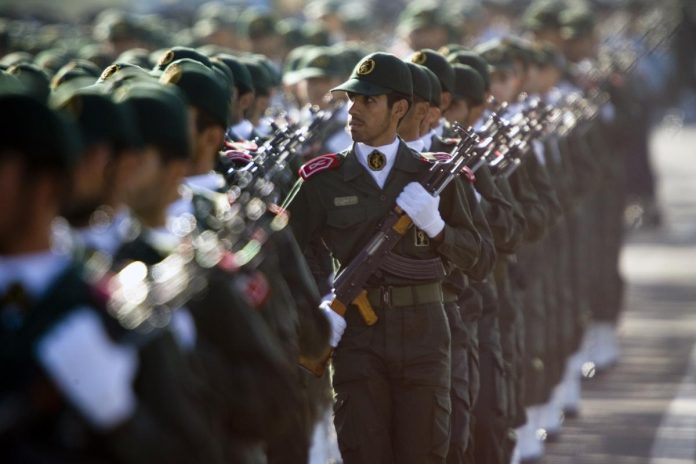
During the visit, General Hatami toured several military installations, including combat battalions, mobile assault brigades, engineering workshops, and operational headquarters of the Army.

He evaluated the preparedness and operational capabilities of the deployed units and reviewed the ongoing construction of reinforced concrete structures forming the new border wall.

General Hatami praised the continuous efforts of army personnel to safeguard Iran’s borders, emphasizing that the Army’s primary mission remains the defense of national sovereignty and territorial integrity.

He described the wall as a “significant measure” to enhance security along Iran’s eastern frontier, particularly with Afghanistan, addressing longstanding border management challenges.

The commander also commended the high morale and dedication of the soldiers deployed in these remote areas, noting their determination to ensure the safety and peace of Iranian citizens through constant vigilance and readiness.

Iran releases first Hebrew-language documentary highlighting 12-day conflict

The film presents a fresh perspective on the 12-day conflict between Iran and Israel in June, marking a notable step in Iranian media efforts directed at Israeli audiences.

The documentary explores the hidden confrontation between Iran and Israel in the oil and gas infrastructure sector, an episode that reportedly influenced the course of the conflict and shifted regional power dynamics.

Through analytical storytelling, expert interviews, intelligence data, and visual reconstructions, the film aims to provide a realistic portrayal of Iran’s strategic decision-making and military capabilities, countering narratives commonly presented by Western and Israeli media.

“Missiles Over Bazan” is intended to communicate directly with the Israeli public from a position of strength, revealing aspects of the conflict that have remained largely unknown to Hebrew-speaking audiences.

Iran’s Supreme Council of the Cultural Revolution has instructed the Islamic Republic of Iran Broadcasting (IRIB) to establish an international Hebrew-language television channel.

The network will serve as a platform to respond to Israeli media campaigns and promote Iran’s perspective in the region, according to an official resolution under the country’s national cultural, social, media, scientific, and technological policies.