Thursday, January 1, 2026
Home Blog Page 608

Gaza ceasefire talks resumed: Hamas

Gaza War

The official with Hamas’s political bureau said on Friday efforts have been reactivated to end the genocide and free Palestinian prisoners held by Israel.

Basem Naim told the Associated Press in Turkey that a deal to end the 14-month Israeli genocide was hopefully within reach.

He stated that no “solid, well-formed” new ceasefire proposal has yet been presented to Hamas.

“I think it is not a big challenge to reach a deal… if there are intentions on the other side,” he added.

Naim said Hamas is sticking to the core demands it has held to during previous rounds of negotiations, including a permanent ceasefire, total withdrawal of Israeli forces from the Gaza Strip, and the right of internally displaced Palestinians in Gaza to return to their homes.

But he also added the Palestinian resistance group is “ready to show flexibility” on implementation, including on the timeline for withdrawal of Israeli troops from key parts of Gaza.

During the previous round of talks in August, Israel demanded that after any ceasefire, it maintain a military presence in the Philadelphi corridor, a strategic strip along the enclave’s border with Egypt, and in the Netzarim corridor, which cuts from east to west across the territory’s midsection.

“There can be a discussion about these points, but at the end, Israel has to withdraw totally from the Philadelphi corridor, and the Rafah border (with Egypt) has to be opened immediately,” Naim said.

Naim added the incoming US administration could “affect the situation positively” given that Donald Trump had made halting wars in the region part of his campaign platform.

The comments come after ceasefire negotiations were halted last month amid frustration over lack of progress in the talks.

Hamas has stressed that any agreement with Israel must ensure a comprehensive ceasefire in Gaza, the complete withdrawal of Israeli forces and a prisoner exchange deal.

WHO condemns Israeli massacre in Gaza hospital

Israeli Army

“There was no official warning or evacuation order before the bombing of … the hospital, only rumors that spread panic,” Richard Peeperkorn, WHO representative for the occupied Palestinian territory, said on Friday.

The director of Kamal Adwan Hospital earlier stated Israel conducted several attacks on Friday that hit the facility, one of the last functioning health centers in the northern area.

Four hospital staff were among “a large number of” wounded and dead, according to the statement.

The hospital was surrounded and stormed by Israeli military forces under heavy fire, forcing patients and the wounded to evacuate.

The Israeli forces stormed the medical facility and conducted a widespread arrest campaign among civilians and even wounded people alongside caregivers.

The director of the Kamal Adwan Hospital has reiterated that the situation in the hospital is absolutely catastrophic and has reach a critical inflection point.

The hospital is now working under the pressure of relentless Israeli bombardment and dwindling supplies.

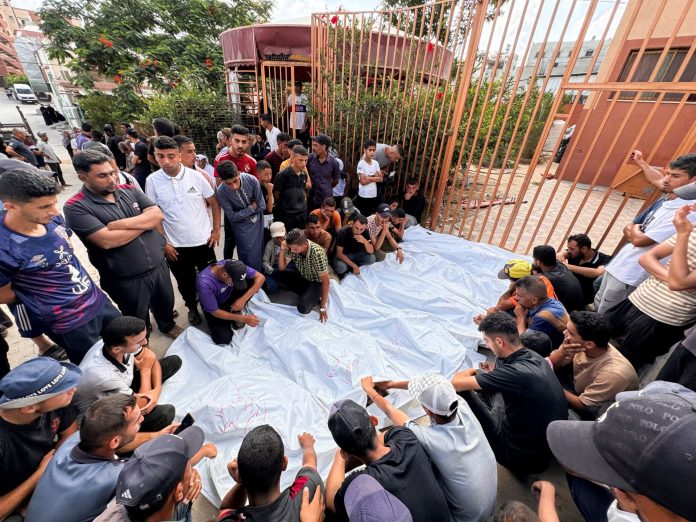
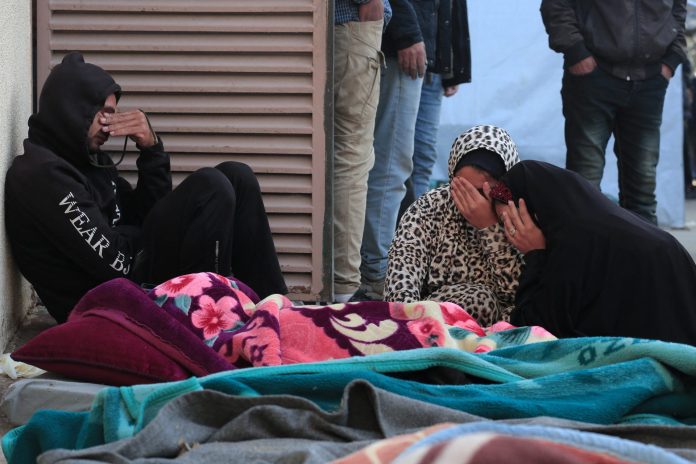
It has been overwhelmed by bodies, which have been lined up on the ground, and they are unable to even provide those bodies with a proper burial due to the security conditions.

The official Palestinian news agency WAFA reported that Israeli forces blew up a residential block near the Kamal Adwan Hospital, resulting in the killing of several civilians and the injury of others.

The WHO has also warned that the pace of medical evacuations of sick and wounded Palestinians out of Gaza, including several thousand children, is so slow that it will take five to 10 years to clear the backlog at the current rate.

Elsewhere in his remarks, the WHO official also noted only 78 out of 12,000 patients requiring evacuation had managed to leave recently.

“Some 12,000 patients across Gaza still need medical evacuation, only 78 have been evacuated,” Peeperkorn added.

The Israeli military often takes months to respond to medical evacuation requests, and the number of evacuations has plunged in recent months.

Among the 12,000, according to UNICEF, are 2,500 children some of whom have died during an often months long wait to leave for hospitals outside.

Amnesty chief calls on UK to revise Gaza stance

Gaza War

The world’s leading human rights group has declared that Israel has committed and continues to commit genocide against Palestinians in Gaza, based on extensive legal and field research covering the period between 7 October 2023 and early July 2024.

“I hope that Prime Minister Keir Starmer and his foreign minister will read through the 300 pages of evidence that we have provided,” Agnes Callamard told Middle East Eye following the release of Amnesty’s report

“Genocide is not a matter of belief. Genocide is not a matter of desire. Genocide is a matter of law. Genocide is a matter of fact.”

Callamard also added the UK, US and German governments may be found complicit in genocide, as a result of their support for the Israeli army.

Complicity in genocide is a substantive crime under Article III of the 1948 Genocide Convention.

“For the last 14 months, we’ve had a few governments that have supported Israel: the United States, Germany, and the UK,” she continued, noting, “They have supported them and they have sold weapons. Therefore, they are facing the real risk of being complicit in the crime of genocide.”

A spokesperson of Foreign Secretary David Lammy told MEE that the position of the British government has not changed. They quoted Starmer as saying in parliament recently: “I am well aware of the definition of genocide, and that is why I have never described this or referred to it as genocide.”

Amnesty has found sufficient evidence to conclude that Israel has committed three of the prohibited acts under the Genocide Convention against Palestinians in Gaza as a protected group.

The crimes are killing; causing serious bodily or mental harm; and deliberately inflicting conditions of life calculated to bring about the group’s physical destruction in whole or in part.

The group has also reached the conclusion that the acts were committed with the specific intent to destroy Palestinians in Gaza as a protected group under the Genocide Convention, an essential step in the legal conclusion that genocide was committed.

“What distinguishes a genocide from other crimes is the notion of genocidal intent. That is, the fact that we need to demonstrate that Israel intended to destroy, in part or in full, the Palestinians of Gaza,” said Callamard.

“This is a difficult threshold, and it has taken many months of research and investigation to reach the conclusion that, indeed, Israel had genocidal intent.”

The group’s legal team looked at direct evidence of intent, including over 100 statements by members of Israel’s War Cabinet.

It also examined indirect evidence by analysing the pattern of conduct by the Israeli army breaching international law, the scale and severity of the casualties and the continued destruction inflicted on the enclave and its population despite multiple binding orders by the World Court to halt genocidal acts.

Israel’s declared military objective of defeating Hamas in Gaza does not justify such genocidal intent, Callamard continued, adding, “Genocidal intent can coexist with military objectives.”

“Palestinians are dying… They are being starved. They cannot fish, they cannot farm, they cannot have a home. They cannot have a life. They cannot work. They live without dignity. They have to fight to get a piece of bread. There is genocide happening.”

The report is the first such effort by Amnesty and any international rights group to conduct legal analysis during a conflict and conclude that a genocide is being committed.

The International Court of Justice (ICJ) is currently hearing a case brought by South Africa in December accusing Israel of breaching the Genocide Convention during the course of its military onslaught on Gaza since October last year.

It may take years for the ICJ to reach a judgement in the case, as is the nature of international legal proceedings. But the court has recognised the plausibility of South Africa’s application and issued three interim orders for Israel to prevent and punish actions that violate the convention.

Callamard hopes the Amnesty report will assist the court in its current deliberations.

“We have absolutely no doubt that the judges and all those involved in the case will consider the evidence that we have provided,” she said.

She added that the International Criminal Court (ICC) should add genocide to the list of charges against Israeli leaders.

On 21 November, the ICC issued arrest warrants for Israel’s Prime Minister Benjamin Netanyahu and former Defence Minister Yoav Gallant after finding reasonable grounds for charging them with the war crime of starvation as a method of warfare along with the crimes against humanity of murder and persecution.

The court has yet to add genocide to the charges.

“We are calling on the prosecutor and then on the judges to consider adding the crime of genocide to the arrest warrants that have already been issued and to determine who may be guilty individually of committing the crime of genocide,” Callamard said.

All 124 member states of the Rome Statute, the ICC’s founding treaty, are now under a legal obligation to arrest and surrender Netanyahu and Gallant to the court in The Hague.

But France, a state party to the Rome Statute, has signalled that Netanyahu may benefit from immunity as a sitting head of government.

Callamard, who is a French human rights lawyer, stated she is “shocked” by France’s stance, declared by the foreign ministry days after the warrants were issued.

“International jurisprudence has clearly argued that when it comes to the International Criminal Court, [immunity] is not applicable,” she added, denouncing “the double standard” of the US and France in supporting the ICC’s arrest warrants for Russian President Vladimir Putin but not for Israeli leaders.

“Governments must come together. They must create a strong political platform demanding an end to the genocide and demanding accountability. They must be looking at all possible means, including sanctioning the government of Israel.”

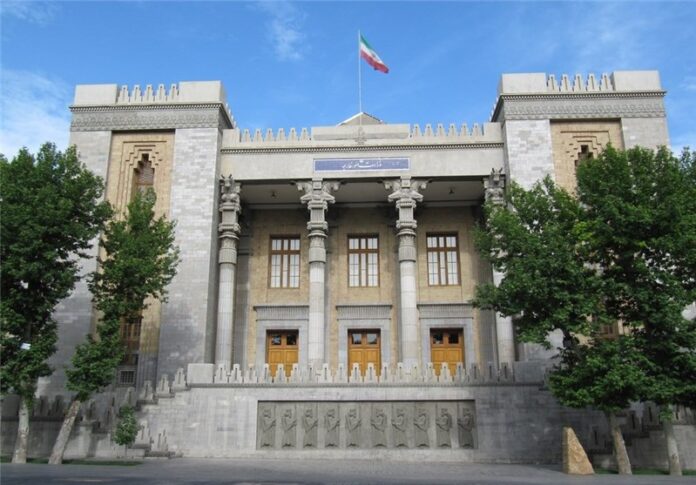
Iran warns Syria’s neighbors at risk amid resurgence of terrorism

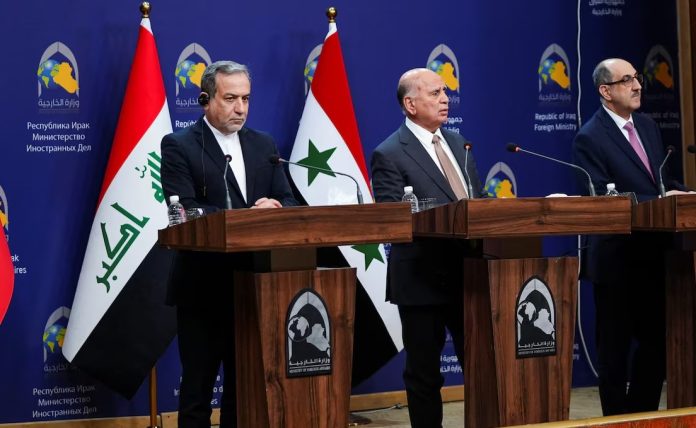
Araghchi was speaking in a joint press conference with his Iraqi and Syrian counterparts Fuad Hussein and Bassam Sabbagh in Baghdad on Friday.

If Syria becomes a safe haven for terrorists and the ground is prepared for the return of terrorist groups, including Daesh, this will pose a major threat to the entire region, he warned.

Pointing to three messages of the tripartite meeting in Baghdad, he said, “The first message is to support the Syrian government and people in the fight against Takfiri terrorist groups.”

He expressed confidence that Takfiri terrorist groups are carrying out their attacks as part of an American-Zionist plot, emphasizing, “The role of the Zionists in designing this conspiracy should not be overlooked.”

“Iran has always supported the Syrian government and people in their fight against terrorist groups and will continue to do so with all its might and with whatever is needed and requested by the Syrian government,” Araghchi pointed out.

The top Iranian diplomat once again warned that terrorism knows no bounds, saying the fight against the scourge should not be limited to borders.

“In order to protect our own security, we must support the security of our neighbors in the fight against terrorism,” he pointed out.

He urged a non-discriminatory fight against terrorism, saying the Hayat Tahrir al-Sham (HTS) and the Nusra Front have been designated as a terrorist group by the United Nations.

Syria has been gripped by foreign-sponsored militancy since March 2011, with Damascus saying the Western states and their regional allies are aiding terrorist groups to wreak havoc in the Arab country.

The Hayat Tahrir al-Sham armed group launched a large-scale attack in Aleppo and Idlib provinces in the northwest of Syria on November 27, seizing several areas. Since then, the Syrian government forces have been engaged in fierce clashes to regain ground.

The Iraqi foreign minister condemned the ongoing attacks in Syria by terrorists who are listed as a terrorist group by the UN.

Hussein said his country has been a victim of terrorism and will continue to fight it.

He added that security of Iraq links to security in Syria and other neighboring countries.

Hussein underscored the importance of preventing the spread of war and terrorist attacks to his country, saying the Iraqi armed and security forces as well as fighters of the resistance movement Hashd al-Shaabi and Kurdish Peshmerga are fully prepared to protect the country’s territory and people.

Sabbagh said the Syrian army is conducting its duties to fight terrorist groups, adding that the moves by terrorist groups have displaced a portion of his country’s people.

The Syrian foreign minister added that supporters of the terrorist groups have violated resolutions of the United Nations and Security Council as well as the agreements of the Astana peace process.

He emphasized that dangerous terrorist threats are not threatening only Syrian security but endanger security of the entire region,

He called for regional and international efforts to combat terrorist groups.

Paris concerns over Iran’s missile, nuclear program have ‘no logical basis: Tehran

Esmael baghaei

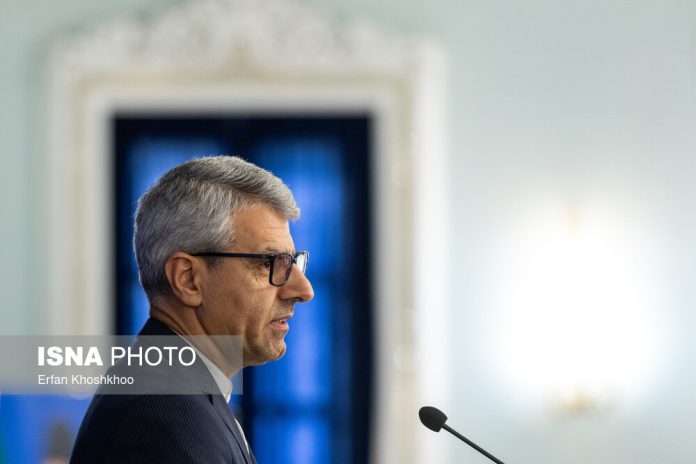
Baqaei on Friday emphasized that Iran’s missile programs are a crucial component of its defense strategy, vital for protecting national security and maintaining regional stability.

Addressing inquiries regarding President Macron’s comments in a regional publication, Baqaei affirmed that Iran’s missile strength aligns with its sovereign right to defend against aggression.

He also rejected persistent, baseless concerns regarding Iran’s peaceful nuclear program, especially those voiced by France, a country that holds a significant stockpile of weapons of mass destruction.

Baqaei encouraged France to pursue a more independent and constructive role, leveraging its global influence to advance peace and stability.

He warned against biased stances that contradict international law and support occupation, genocide, and racism.

Reaffirming Iran’s dedication to transparency in its nuclear activities, Baqaei reminded that France, a participant in the Joint Comprehensive Plan of Action (JCPOA), needs to fulfill its commitments and address its confrontational stance at the IAEA.

Established in 2015, the JCPOA was an agreement between Iran and the P5+1 nations—comprising the United States, United Kingdom, France, Russia, China, and Germany. The accord aimed to limit Iran’s nuclear program while recognizing its right to peaceful nuclear energy and lifting economic sanctions.

However, the US unilateral withdrawal from the JCPOA in 2018 and the reinstatement of sanctions have led Iran to gradually retract some of the limitations it had accepted under the accord.

The Iranian diplomat also criticized France’s inaction regarding the persistent Israeli occupation and apartheid policies affecting Palestinians, stressing that the cause of regional instability stems from Western support of such policies.

Elsewhere in his remarks, the spokesman urged French leaders to reconsider their strategies and work towards a more balanced and constructive participation in global affairs, aiming to achieve true peace and stability.

Severe air pollution forces school closures across Iran

Iran Air Pollution

The decision follows a meeting of the Emergency and Air Pollution Task Force on Friday night, which found air quality to be unhealthy for sensitive groups during the period.

Tehran’s Emergency Management Director issued an orange-level air quality alert, advising residents, especially those with respiratory conditions, to minimize outdoor activities from Saturday through Monday due to expected poor air quality.

In West Azarbaijan province, schools in four counties are closed on Saturday due to air quality concerns.

In-person education for preschool, elementary, and middle school students in the provincial capital Urmia have been halted, with online classes in place.

Similarly, in Mahabad, Oshnavieh, and Shahindezh, preschool and elementary education shifted to remote learning.

In Isfahan, no school or office closures are in place, but vehicle restrictions are enforced to reduce pollution.

Authorities say they continue monitoring polluting entities to enforce compliance with environmental regulations.

Syrian forces withdraw from areas in Daraa and Deir Ezzor as rebels advance on Homs

Syria War

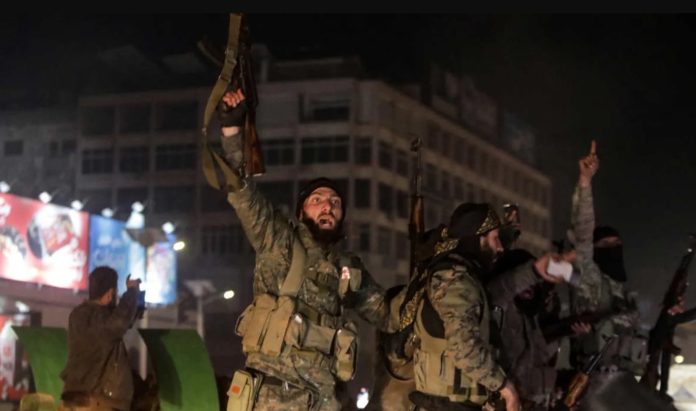
Elsewhere, President Bashar al-Assad’s forces withdrew from areas in southern Daraa province and Deir Ezzor in the east as he scrambled to respond to the opposition’s stunning advances.

The Syrian Observatory of Human Rights (SOHR), a UK-based activist group monitoring the war, said that government forces “withdrew from the city of Homs to its outskirts” on Friday.

Shortly after, the Syrian defence ministry announced these reports were “false” and the army was still in place.

Rebel fighters, led by Hay’at Tahrir al-Sham (HTS), have seized large swathes of territory, including Syria’s second city Aleppo, since launching a surprise offensive last week.

On Thursday the rebels took Hama, a city 45km north of Homs.

Homs is the last major government-held stronghold before the capital Damascus and its fall would leave the Assad government vulnerable.

Abu Mohammed al-Jolani, leader of HTS, told CNN in an interview published on Friday that his ultimate goal was the “overthrow of this regime”.

The possibility of Homs’ capture by the rebels has been greeted with jubilation by many Syrian opposition figures, particularly natives of the city living in exile.

Zaher Sahloul, a doctor and activist who grew up in Homs, stated it was a “monumental day” for the city.

“I feel elated but also filled with anxiety and uncertainty. People are happy to be closing the chapter of the Assad regime, but they are afraid of its revenge,” he told Middle East Eye.

“Everyone I spoke with is happy after they saw what is happening in Aleppo and Hama. I hope that better days will come after a long nightmare.”

He added that it looked like HTS, which grew out of a former al-Qaeda affiliate, had “changed to a more pragmatic movement” who had been spreading “good messages” to minority groups concerned about their takeover.

According to the SOHR, 727 people – mostly combatants but also 111 civilians – have been killed in Syria since the offensive began.

Despite promises to protect Syria’s diversity, religious minorities have expressed concerns about HTS’s record of hard-line and sectarian rule, while Kurdish communities fear the Turkey-backed Syrian National Army (SNA), a rebel coalition that has also participated in the advance.

Russia has launched air strikes on rebel forces in an attempt to bolster Assad’s troops, who have struggled to halt the rebels’ progress.

Jihad Yazigi, editor-in-chief of the Syria Report, told MEE that the fall of Homs would be a disaster for the Assad government and may push his main backers Russia and Iran to act so as not to lose their main ally in the region.

“Losing Homs would not necessarily mean the regime falling, but it would surely mean that the Russians and the Iranians are going to push for a regime change, or a meaningful policy change,” he explained.

“Because they would be afraid to lose everything.”

As Assad’s forces redeployed to confront the rebel offensive, other factions moved in to fill the vacuum.

According to the observatory, Syrian troops and aligned forces “suddenly” pulled out of eastern Deir Ezzor city and its surroundings on Friday, with the Kurdish-dominated Syrian Democratic Forces (SDF) moving in.

“Syrian forces and their Iran-backed allies have completely withdrawn from the areas they control in Deir Ezzor province, and Kurdish forces are advancing toward these areas,” said SOHR director Rami Abdel Rahman.

Deir Ezzor, an oil-rich province on the border with Iraq, was split between the SDF to the east of the Euphrates and pro-Assad forces to the west.

With the crumbling of the pro-Assad forces in recent days, however, the SDF has reportedly reinforced its troops and taken control of more areas in Deir Ezzor.

Footage released on social media on Friday appeared to show SDF fighters and vehicles in the centre of Deir Ezzor city.

Meanwhile, the SOHR reported in Syria’s southern Daraa province local fighters took control of at least two checkpoints after government forces pulled out, as well as a police station and an air force intelligence branch.

“Local fighters managed to control several positions” in Nawa, north of Daraa city, including some administrative buildings “after a broad attack targeting the military intelligence department”, the SOHR added.

“In retaliation, regime forces… shelled residential areas in Nawa with artillery.”

Images have also been shared on social media of people chanting anti-Assad slogans in the town of Busra al-Sham, in Daraa where the protests began in 2011, and waving the three-starred rebel flag at the historic Omari mosque in the Daraa al-Balad neighbourhood.

UN Syria envoy Geir Pedersen on Wednesday said the latest developments had provoked “different reactions among the Syrian people, a grave threat for some, a sign of hope for others”, and stressed the need to protect civilians.

Images released on social media showed rebel supporters celebrating in Hama, while members of the exiled opposition praised the capture of the city as a possible stepping stone to Assad’s eventual overthrow.

On Friday, Russia urged its citizens to leave Syria over the “difficult military and political situation” in the country.

The Russian embassy in Damascus advised citizens “to leave the country on commercial flights through airports in operation”.

The warning came a day after the Chinese embassy in Syria made a similar announcement that its citizens should leave the country as soon as possible.

China has been one of the few members of the international community that has supported Assad since the outbreak of war and one of the only countries the Syrian president has visited abroad since 2011.

China’s foreign ministry announced on Monday that it “supports Syria’s efforts to maintain national security and stability”.

Syria’s war, which broke out after government forces opened fire on pro-democracy protesters, has killed more than half a million people. Around 12 million people remain displaced by fighting and repression, half outside the country.

UN Secretary-General Antonio Guterres on Thursday said the ongoing “carnage” in Syria was the result of a “chronic collective failure” to initiate a political process in the country since 2011.

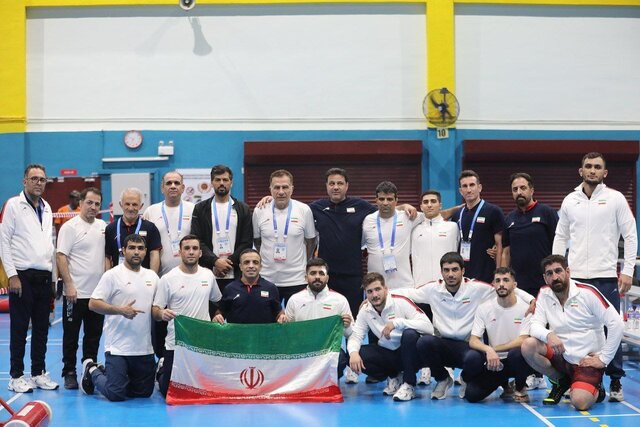
Iran’s deaf Greco-Roman wrestling team snatch Asian championship

In the ongoing 10th Deaf Asian Games in Malaysia, Iran’s Greco-Roman wrestling team emerged as champions on Friday after winning 5 gold, 2 silver, and 2 bronze medals.

The 10th Asian Deaf Games began on November 30 and will continue until December 8 in Malaysia.

Persian festival Mehregan added to UNESCO list of intangible heritage 

Esmaeil Baqaei wrote on his X social media account on Friday, “After Nowruz and Sadeh, Mehregan has been registered as the third Iranian ritual by UNESCO’s Intergovernmental Committee for the Safeguarding of the Intangible Cultural Heritage.”

Baqaei expressed his congratulations, stating that the Mehregan Festival symbolizes the kindness and tolerance of the Iranian people.

He highlighted the importance of reviving and preserving the cultural, civilizational, and human connections among the region’s nations.

Baqaei also hailed the inscription as a symbol of cooperation between Tajikistan and Iran to preserve and promote their shared historical, civilizational, and cultural heritage.

Mehregan, rooted in Zoroastrian traditions, is held every year from October 2 to November 2 that symbolizes the end of the harvest season and the start of autumn to express gratitude to God for granting livelihood.

Iran warns Ukraine against supporting terrorists in West Asia 

Demirchi-Lou cited reports of illegal arms trade involving weapons received from the US by some Ukrainian officials and their support for well-known terrorist groups in Syria.

He described the move as a clear violation of international commitments to prevent and combat terrorism.

The Iranian diplomat highlighted the dangerous nature of the terrorist-Takfiri elements in Syria, which have long been listed as terrorist groups by the UN Security Council.

He stressed that alliance with terrorism will only lead to increased insecurity and violence globally and will eventually harm their supporters.

Demirchi-Lou also slammed the repeated and baseless accusations by Ukrainian officials about Iran’s role in the Ukraine conflict.

The official stated that the claims, aimed at aligning with the genocidal Zionist regime and the US to gain financial and military support from America and some European countries, are unfounded.