Saturday, December 27, 2025
Home Blog Page 540

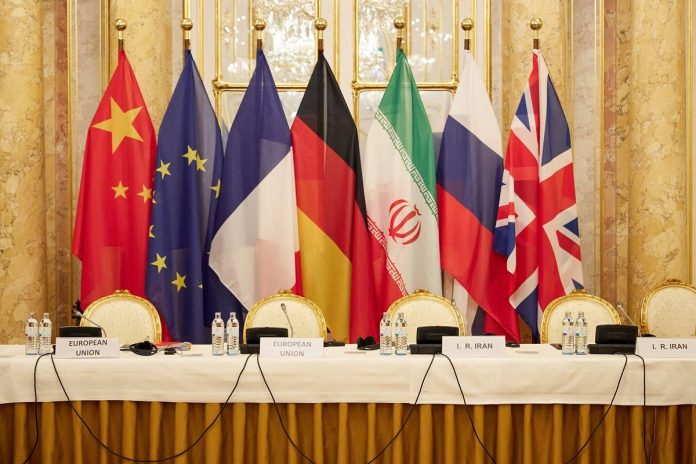
Third round of Iran-E3 talks to begin in Geneva on Monday

Nuclear Negotiations in Vienna

The two-day discussions will also include the European Union’s Deputy Foreign Policy Chief, Enrique Mora.

Previous rounds were held on the sidelines of the UN General Assembly meeting in New York in October and in Geneva on December 9.

Iranian Foreign Ministry Spokesman Esmail Baqaei has stated that a wide range of topics, including regional issues, bilateral relations with the EU, and nuclear matters, will be discussed.

He added that the talks are part of an ongoing process agreed upon earlier, aiming to advance dialogues between Iran and the European trio. The nuclear issue and sanctions relief are among the key topics.

China and Russia are also being kept informed about the discussions.

Iranian Deputy Foreign Minister Majid Takht-Ravanchi clarified that Iran is willing to negotiate within the JCPOA framework, “which means commitments in exchange for lifting sanctions, but will not engage in talks with the US due to its withdrawal from the nuclear agreement.”

Foreign Minister Abbas Araghchi has also reiterated Iran’s readiness for constructive and prompt negotiations on its nuclear program, aiming for an agreement based on trust-building and sanctions relief, as outlined in the original JCPOA framework.

Iran says planning to invest $120bn in petroleum projects

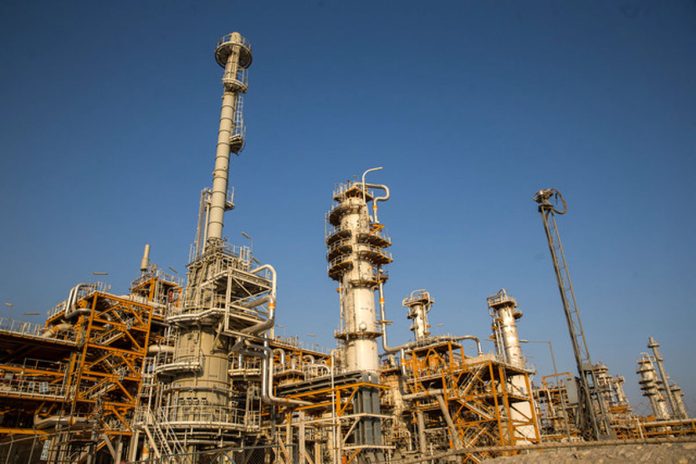
petrochemical factory in the southern Iranian port city of Mahshahr

Paknejad said on Saturday that Iran will invest some $50 billion to increase its oil production to 4.6 million barrels per day (bpd) by 2028, from a current output of 3.3 million bpd.

He added that Iran’s natural gas production should also increase from 1 billion cubic meters (bcm) per day to 1.35 bcm per day in the next four years, adding that the country will need to invest more than $70 billion to hit the target.

He said investment in gas fields will also cover projects to boost pressure at South Pars, the world’s largest gas field which straddles the maritime border between Iran and Qatar in the Persian Gulf.

The minister stated seven pressure-boosting projects with a total investment of $18 billion will be executed in South Pars to help stabilize the output from the giant reserve.

Paknejad added Iran also seeks to increase its refining capacity by 0.5 million bpd per day until 2028 while trying to raise the output capacity of its petrochemical sector.

He said the development projects will be funded partly through finances provided by Iran’s sovereign wealth fund and partly through investment from foreign companies.

Iran’s plans to expand its petroleum sector come as the country is still subject to an extensive regime of US sanctions that bans the provision of technology and investment from abroad.

Since the sanctions were imposed in 2018, the Iranian Oil Ministry has mostly relied on domestic resources to develop the oil and gas fields in the country.

Israel approves plan to withdraw soldiers from Gaza: Report

Israel Army

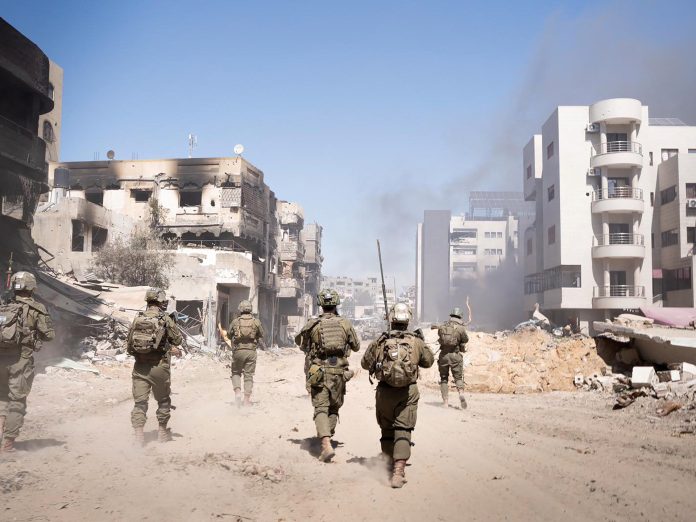
The Haaretz newspaper said the military authorized several plans for the swift withdrawal of forces from Gaza in response to progress in the talks.

It examined options, including withdrawing troops through the Netzarim Corridor, which divides Gaza into two.

Despite having established extensive infrastructure and positions in the region, the military announced it could “evacuate” forces, emphasizing its readiness to implement any agreement reached by the government and the Palestinian resistance group, including a rapid troop pullback from Gaza.

The Israeli Prime Minister’s Office revealed earlier that a delegation, led by Mossad chief David Barnea and Ronen Bar, chief of the Shin Bet internal security service, will travel to Qatar to continue negotiations.

Prime Minister Benjamin Netanyahu met before the announcement with Steve Witkoff — US President-elect Donald Trump’s special envoy for the Middle East.

Yedioth Ahronoth daily also reported that 90% of the details of a prisoner exchange agreement between Israel and Hamas have been finalized, citing political sources.

The sources claimed that the main sticking point between the two parties is that Hamas wants “guarantees” that Israel implements the second phase of the deal and links it with the first phase.

The newspaper added that Hamas is concerned that Netanyahu may resume war after completion of the deal’s first phase.

Hamas has also announced the completion of a draft agreement for a Gaza Strip cease-fire deal, pending approval from Israel, signaling potential progress in efforts to end hostilities.

A spokesperson for the Palestinian resistance group, Jihad Taha, told the London-based pan-Arab news outlet, Al-Araby Al-Jadeed TV, that mediators finalized a draft outlining the terms for a cease-fire and a prisoner exchange.

He noted they were awaiting Netanyahu’s representative in Doha to approve the arrangements and sign the deal.

Cease-fire talks have reportedly advanced positively, with Qatar-based Al Araby TV citing Hamas officials who said negotiations are nearing conclusion. The next few hours are described as pivotal for finalizing the agreement.

Al Araby TV added under the draft’s initial phase, Israel would withdraw from specific points, including the Rafah border crossing in southern Gaza and parts of the Philadelphi Corridor — a buffer zone on the border of Gaza and Egypt. A week after the cease-fire begins, prisoners would be released, and Israel would retreat from the agreed areas.

Qatar, Egypt and the US are expected to hold a news conference to reveal the details, implementation schedule and start date, it noted.

US President Joe Biden confirmed Thursday that progress had been made on an agreement.

The Israeli army has continued a genocidal war on Gaza that has killed more than 46,500 victims, most of them women and children, since Oct. 7, 2023, despite a UN Security Council resolution calling for an immediate cease-fire.

The International Criminal Court issued arrest warrants in November for Netanyahu and his former Defense Minister Yoav Gallant for war crimes and crimes against humanity in Gaza.

Israel also faces a genocide case at the International Court of Justice for its war on the enclave.

Gaza war costs Israel $67bn: Report

Israel Hostages

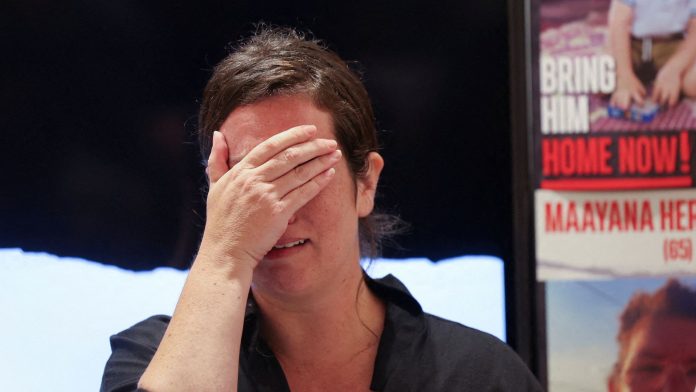
Israeli business newspaper Calcalist released the figure that reflects estimates by the Bank of Israel and includes direct military expenses, civilian expenditures, and revenue losses, but not the full extent of financial repercussions.

The report described the costs as a “heavy burden” and criticized the “failure” of the war effort, highlighting the need for substantial increases in Israel’s defense budget over the next decade.

The budgetary strain has sparked discussions within Israel, particularly on the reallocation of revenue from natural gas resources in the Mediterranean, which were originally intended for health care and education but now appears to be earmarked for defense spending.

The report also mentioned a recent recommendation from the Nagel Committee, which suggested an additional 275 billion shekels ($74 billion) for defense over the next decade with annual increases of 27.5 billion shekels ($7 billion).

The committee proposed bolstering Israel’s multi-layered air defense systems, including the Iron Dome and newly operational laser systems alongside fortifying the Jordan Valley border with a heavily secured barrier.

The Israeli army has killed over 46,000 people, mostly women and children, in Gaza since a cross-border incursion by Hamas in October 2023. The offensive has left the enclave in ruins and risk of famine is widespread.

Lebanon, Syria seeking to secure borders: PM Mikati

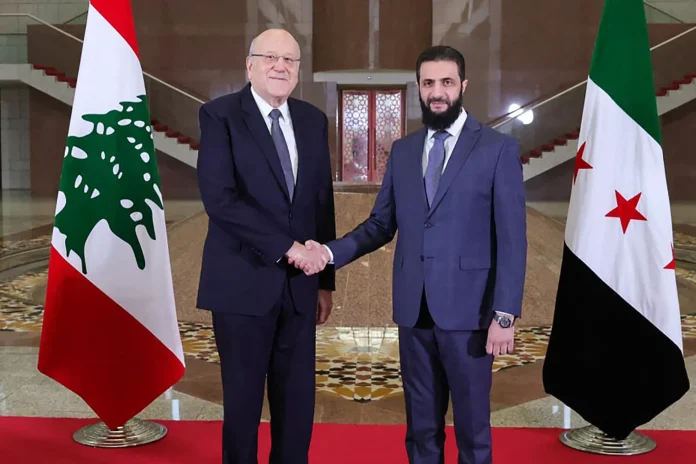
In the first trip by a Lebanese prime minister to neighbouring Syria in 15 years, Mikati addressed a joint news conference with Syria’s de facto leader Ahmed al-Sharaa in the capital Damascus on Saturday.

Al-Sharaa said they had discussed issues including smuggling between the two countries, border challenges, and Syrian deposits in Lebanese banks.

He said he expected “long-term strategic relations” with neighbouring Lebanon after the crisis-hit country elected a much-needed president.

“We and Lebanon have great shared interests,” al-Sharaa added.

Both sides agreed to establish committees to address these matters and provide support.

The two leaders have also agreed to work to prevent smuggling between the two countries. Smugglers used to send weapons and drugs from Syria into Lebanon.

Lebanon’s eastern border is porous and known for smuggling.

Lebanese armed group Hezbollah supported al-Assad with fighters during Syria’s civil war.

However, the Iran-aligned movement has been weakened after a war with Israel killed its longtime leader and damaged the group’s firepower, a factor helping the Syrian rebels to seize Damascus last month.

Lebanon is estimated to host about 1.5 million Syrian refugees, who fled the war in the country that started in 2011.

About 13 years of conflict have killed more than half a million people, ravaged the economy, and pushed millions to flee their homes as they were displaced internally and externally.

Lebanon’s newly elected President Joseph Aoun said on Thursday that there was a historic opportunity for “serious and equitable dialogue” with Syria.

For much of the al-Assad family’s five decades in power, Syria held significant influence over Lebanon, maintaining a military presence for 29 years in the face of widespread opposition from many Lebanese.

Syria eventually withdrew its troops in 2005 under international pressure after the assassination of Lebanese former Prime Minister Rafik Hariri.

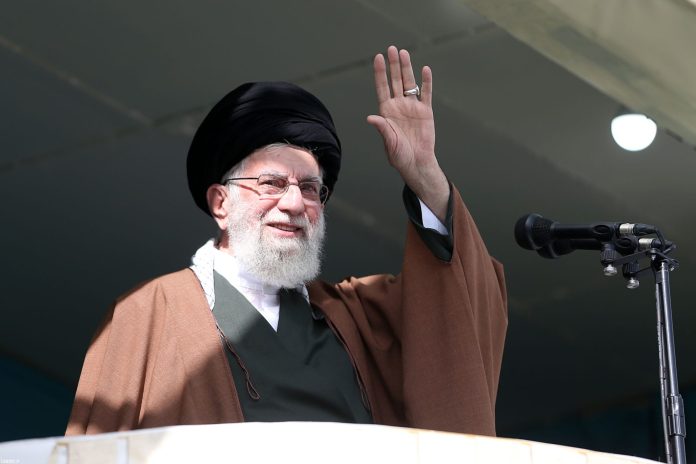
Iranian daily Tehran Times refutes claims about Ayatollah Khamenei’s successor

Ayatollah Khamenei

The Washington Post article alleged that Ayatollah Khamenei is ill and that his son, Mojtaba Khamenei, has been chosen as his successor by “elder clerics.”

Tehran Times dismissed the claims as “baseless,” noting that The Washington Post cited Iran International, an anti-Iranian TV channel “funded by Israel, which has a history of fabricating information about Iran and its officials.”

Tehran Times emphasized that the Iranian constitution stipulates that the next Leader is chosen by Assembly of Experts, whose members are elected by the people every eight years, not by “elder clerics.”

The daily has stressed that past statements and actions of Ayatollah Khamenei also indicate his opposition to his children entering politics, let alone succeeding him.

Ayatollah Mahmoud Mohammadi Araghi, a member of the Assembly of Experts, has confirmed that Ayatollah Khamenei has rejected requests from some assembly members to consider one of his children for future leadership roles.

Tehran Times further confirmed through its sources that Ayatollah Khamenei remains steadfast in his opposition to any of his children succeeding him, and that the Assembly of Experts respects the decision.

Over 30,000 deaths in Iran attributed to air pollution in 2023

Iran Air Pollution

Abbas Shahsavani told IRNA news agency that air pollution is the second leading cause of death globally after hypertension.

In 2023, the cleanest cities in Iran were Shahroud, Sanandaj, and Urmia.

Zabol and Iranshahr were the most polluted cities, with major cities like Tehran, Isfahan, and Mashhad also facing high levels of air pollutants. The capital Tehran only had 12 clean days.

The Health Ministry’s study found 30,692 deaths attributed to air pollution in 2023, with 6,939 of them in Tehran. PM 2.5 accounted for 12.6% of these deaths.

Chronic obstructive pulmonary disease (COPD) related to PM 2.5 accounted for 819 deaths in the 57 monitored cities in Iran, according to Shahsavani.

Despite this, Iran’s air pollution-related death rate is lower than the global average.

The WHO reports that over 99% of the global population lives in areas with PM 2.5 levels exceeding guidelines.

Syrian intelligence says thwarted Daesh attempt to blow up Shia shrine

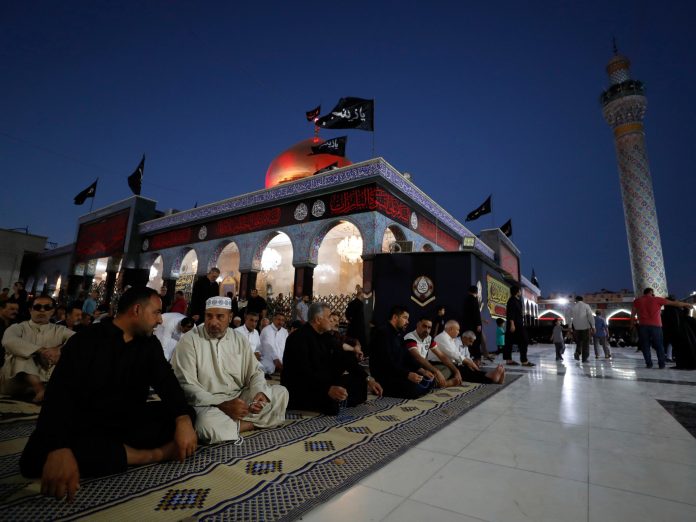
Intelligence and security forces “succeeded in thwarting an attempt by Daesh (ISIL or ISIS) to carry out a bombing inside the Sayyida Zeinab shrine”, a source within Syria’s intelligence agency told SANA on Saturday, adding that several people have been arrested.

“The General Intelligence Directorate is utilising all its resources to confront all attempts to target the Syrian people in all their diversity,” the intelligence official told SANA.

The interior ministry posted pictures of four men it said were members of an ISIL cell who had been arrested in the countryside outside the capital.

It also published images of equipment allegedly seized from the suspects, including smartphones, two rifles, three explosive devices and several hand grenades.

The photos showed the identity papers of two Lebanese and a Palestinian refugee living in Lebanon.

ISIS also previously targeted the Damascus shrine, Syria’s most visited Shia pilgrimage site, claiming responsibility for a double suicide attack in February 2016 close to the mausoleum that killed 134 people.

The terror group had also claimed a triple blast near the sanctuary several weeks earlier that took the lives of at least 70 people.

A July 2023 bombing killed at least six people near the mausoleum.

Shia shrines have been a frequent target of attacks by Sunni groups such as Daesh, both in Syria and neighbouring Iraq.

Iran-backed guards used to be deployed at the gates of the Sayyida Zeinab mausoleum, but they fled last month, shortly before rebels swept into the Syrian capital and toppled President Bashar al-Assad.

Iran-backed fighters had been key supporters of al-Assad since the war broke out in 2011.

Ukraine claims to have captured of two North Korean soldiers in Kursk

Russia Ukraine War

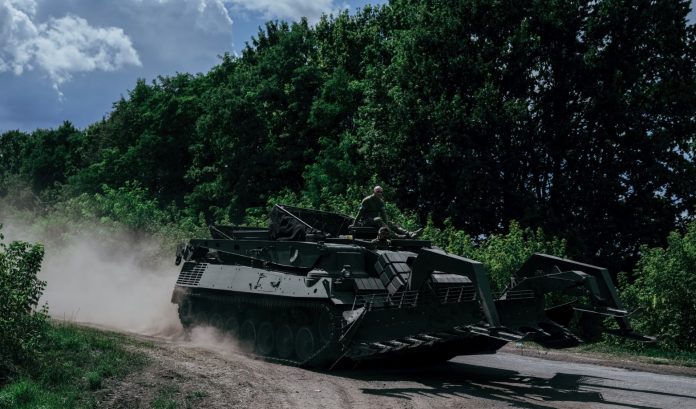
North Korean regular troops entered the war on Russia’s side in October, according to Kyiv and its western allies, who initially estimated their numbers at 10,000 or more.

In a post on X, Zelenskiy said that the soldiers had been brought to Kyiv and were communicating with the Security Service of Ukraine (SBU), the country’s domestic intelligence agency.

“As with all prisoners of war, these two North Korean soldiers are receiving the necessary medical assistance,” Zelenskiy stated.

He added that journalists would be given access to speak to them.

Kyiv says that North Korean troops are fighting in the Kursk region, where Ukraine launched an incursion in August. Kyiv says it still controls several hundred square kilometres of territory there.

Pyongyang has also been supplying Russia with vast quantities of artillery shells, according to Kyiv and its western allies.

Russia has neither confirmed nor denied the presence of North Korean troops in Kursk, and there was no immediate reaction from Moscow or Pyongyang to the latest report.

Ukraine had previously announced it captured North Korean soldiers in combat, but that they had been badly wounded and died shortly afterwards.

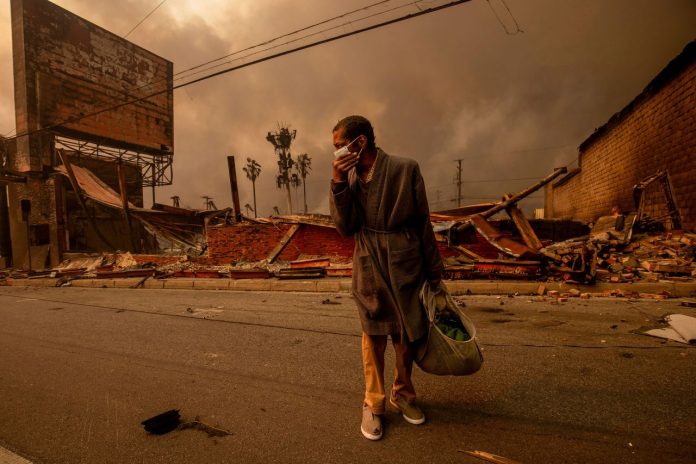
Iranian Interests Section in US offers consular services to California fire victims

On Saturday, the office in a statement expressed, “In sympathy with our fellow compatriots affected by the wildfire in Los Angeles, we declare our readiness to offer special consular services to you dear afflicted ones promptly.”

The statement began with a famous verse from the Persian poet Saadi: “Human beings are members of a whole, In creation of one essence and soul. If one member is afflicted with pain, Other members uneasy will remain.”

There are around 200,000 Iranians in Los Angeles.

The Interests Section also urged the affected individuals to send their requests via email to [email protected].

Earlier, the head of the Iranian Red Crescent Society had sent a message to the President of the American Red Cross, expressing condolences to the families of the deceased and affected individuals in the Los Angeles wildfire and declaring readiness to send humanitarian aid to the US.

The fire in LA has so far killed 16, destroying more than 12,000 structures. 13 more are also missing.