Thursday, April 9, 2026
Home Blog Page 5101

Iran Front Page a symbol of the Communications Age

Forghani in Iran Front Page officially launched
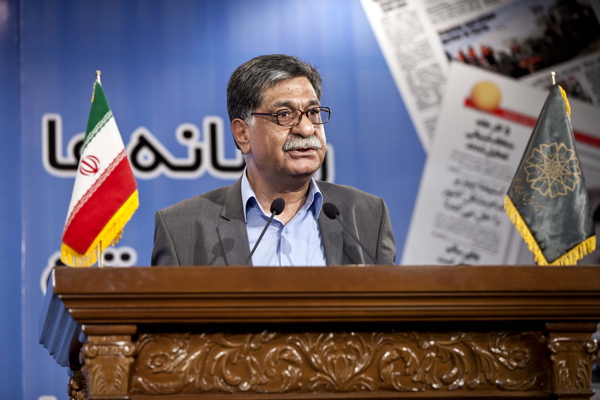
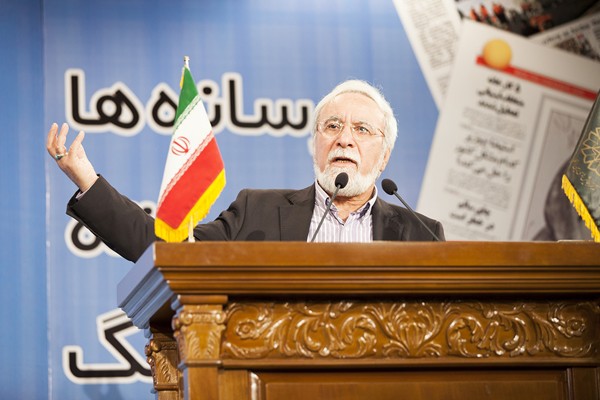
Dr. Mehdi Forghani

Iran Front Page (IFP) was officially launched at a gathering dubbed Iranian Media and the International Community in Tehran on Wednesday August 20. One of the speakers at the event was Dr. Mohammad Mehdi Forghani, a veteran journalist and prominent journalism professor at Tehran’s Allameh Tabatabai University. The following is the translation of the speech Dr. Forghani delivered at the meeting:

First of all, let me greet all those who have gathered here for this event. Thank you for giving me the opportunity to take up a few minutes of your time. I would like to offer congratulations to Mr. Askarieh on the latest of his innovative moves which is expected to be unveiled later tonight.

I know him for almost 38 years now. His willingness to take risks and sail into uncharted territory is his outstanding quality, something which is not so common these days. That is the quality I have always stayed away from. Naturally, I am a conservative person. Over the years, the people I know have asked me: “Why don’t you launch a newspaper or a magazine?” I have never done that because as the name uncharted waters suggests stress and anxiety come with the territory. He [Mr. Askarieh] has launched Safheyeavval [name of a magazine Mr. Askarieh has launched in the 1990s] and embarked on many other journeys. This latest push is meant to paint a better picture of Iran for the world public opinion.

I think what is going to be unveiled tonight is a symbol of the age we live in, an age which has been dubbed as the age of communications, an age in which media reign supreme.

Let me shift to another subject which is worth mentioning. I think what is going to be unveiled tonight is a symbol of the age we live in, an age which has been dubbed as the age of communications, an age in which media reign supreme. Willingly or unwillingly, we all live in an environment eclipsed by the media.

Jean Baudrillard has argued that all human knowledge comes from media, either directly or indirectly. In other words media have conquered our lives. Of course, such pervasive presence can be used for both positive and negative purposes. The presence of media in our lives is not always black and white. They are not necessarily an ailment, neither are they a cure. In some cases, they emerge as an ailment and in others as a cure. Depending on who is running them and what policies they follow, media can serve different purposes.

The website which is going to be launched later tonight is the result of what was thrust onto the world stage by communications technology, especially after the 80s. I believe, just like every other civilizational product, new technologies do have the potential to be used for negative goals. There are positive uses as well, just like the site which is going to be launched later tonight.

For decades we have complained about the hegemony of global media which are also known as mainstream media. We have complained about their monopoly, about the fact that they file reports containing millions of words on a daily basis without mentioning the Third World and if there is any mention of the Third World it simply involves things which are taken there from nearby countries to be processed.

Initially these technologies made cracks appear in the prevailing discourse of media. As time passed those cracks grew wider and wider. This is a great achievement. Media, whether within a country’s national borders or at an international level, have rivals. Although these rivals are mostly pressed for cash and lack a cohesive structure and strong human resources, they are very competitive.

Gaza provides a perfect example.People took to the streets in cities in the US, Britain, France, Spain and some other countries to condemn Israeli crimes and protest against their governments. The end result was not what the mainstream media covered. In those protest rallies participants even criticized the mainstream media for censorship.

How did the public learn about what was really happening? Governments were unable to censor the news that spread through social networks. As a result, cohesion developed in the court of public opinion. Never has the Israeli government been under so much pressure in the court of public opinion. Similarly, Western governments have never been under so much pressure at home to do something to stop this bloodletting and savagery.

That means each and every international citizen has been empowered. Sometimes an eye-witness account a person shares with others on a blog can not only compete with what Jean Baudrillard describes as hyper-reality but overshadows it to a large extent. We saw that happen during the wars in Iraq and Syria and in Arab countries swept by the Islamic Awakening and more recently in Gaza.

This is a positive phenomenon, it has some negative aspects too. It gives everyone a chance to speak, but who answers for what is published remains unanswered. It is also unclear how truthful the things which are published are. It is unclear how accurate the stories are and how much of a role personal hostilities have played in its content. These are two sides of a single incident. We need to make efforts to improve the positive aspect.

As Mr. Askarieh said he has received no government aid and that is what is important. We so badly need to get the private sector involved in these activities.

What is going to happen [the launch of the IFP website] is an auspicious move. As Mr. Askarieh said he has received no government aid and that is what is important. We so badly need to get the private sector involved in these activities.

Over the decades, in our country state-run media including print media have prevailed. When independence, freedom and pluralism are talked about in international communications and journalism, private media are being referred to.

I don’t want to imply that the government-run media cannot or should not exist. What I am saying is that private media should be given more room to focus on realities. Government elements should not trample them. We hope to see more such activities in our country and a more robust private sector on the media stage.

It seems that in local and global media spheres which are full of excitement we need a code of conduct more than ever before. I believe ethics are conspicuous by its absence in our society and in the international community today. Media should develop the code of conduct in question and remain committed to its provisions. However, one should not forget that such a thing cannot happen in vacuum. It should be part of a wider professional journalism structure.

Although journalism made its debut in Iran 180 years ago, journalistic professionalism is still absent in the country. There are some principles which should be worked into a comprehensive system of media rights. Professional independence is one of these principles. Any such system should cover the definition of professional journalists, their salary, and the terms of their insurance and retirement, etc. It should also guarantee their right to investigate and freely publish information, news and opinions.

Economic independence is of the essence too. In the absence of such independence a journalist’s performance might get dangerous.

A former student of mine who works for a news agency called me a few days ago and said he wanted to interview me on the phone. As part of the first question he asked he said he had heard reports that in the West journalists are encouraged to buy the shares of companies to minimize their financial dependence on the media company they work for. Is it true that such a practice gives them more independence, he demanded.

In response I said, the definition of a professional journalist is clear. A professional journalist is one who makes a living through working for an agency. When a person becomes a stakeholder in a company and the dividends that firm pays become the main source of his income, he cannot be viewed as a professional journalist. Such attitudes are becoming more and more mainstream these days.

A supreme media council that would protect the professional and social responsibilities of journalists on the one hand, and supervise their performance on the other should be created.

Professional and economic independence which brings about job security, specialized training, and a code of conduct should all be part of the package. A supreme media council that would protect the professional and social responsibilities of journalists on the one hand, and supervise their performance on the other should be created.

As a person who has been involved in journalism for more than four decades, I should tell younger journalists that in the absence of ethics journalism is a crime. When we are not committed to the truth, when we don’t make efforts to keep away from insults, slander and bribery, and when we don’t act in keeping with professional ethics, we are doing injustice to our fellow citizens. We need to be committed to global ethics and add our own cultural values to the universal convention.

In the absence of such criteria it would be difficult to determine when a journalist is serving his community and when he is committing treason. So let’s make a call for creation of an ethical movement in the journalistic community. That is the thing that should happen.

All of us should know how important this code of conduct is. We should also know that any profession which has its own code of conduct is viewed as more significant. You can’t expect journalists to answer for their conduct and abide by professional ethics without ensuring their professional rights.

I hope we can join hands and help realize something that has eluded us over the past 180 years. Thank you very much.
Active or passive presence on the global stage?

Iran Front Page officially launched
Dr. Sabah Zangeneh

Iran Front Page (IFP) was officially launched at a gathering dubbed Iranian Media and the International Community in Tehran on August 20, 2014. One of the speakers at the event was Dr. Sabah Zanganeh, a veteran diplomat who quit politics a few years ago and began to offer counselling to private-sector players on cultural and economic fronts during his retirement years. In his speech, Dr. Zanganeh described Iran as a land of culture and civilization which continues to draw global attention to date. He called on the private sector to step into the realm of media, citing the fact that state-run media cannot be as successful as their private peers in interactions. He also offered congratulations on the launch of such a move in the form of Iran Front Page by veteran journalist Mahmoud Askarieh. The following is the translation of the speech Dr. Zanganeh delivered at the get-together:

It is an honor to be at a gathering which is at the center of an independent, constructive and vital push. As it was said earlier after leaving office as a member of parliament I was appointed as deputy director of the Islamic Republic News Agency. Dr. Kharrazi was to vacate the position, and I was offered the job, but later the then minister of culture and Islamic guidance asked me to take charge of the Cultural Department of his ministry which has since turned into two departments which separately deal with cultural and media affairs.

There were certain difficulties associated with that job. At the same time one had to deal with cultural questions which normally require patience and media affairs which are part of a fast-paced current. I feel duty-bound to recall the patience Mr. Khatami exercised back then. As part of my job, I had to sign off on applications for establishment of printing houses and oversee the distribution of paper to publishers of magazines and newspapers. [The Iran-Iraq] war was still in progress and we did not have much foreign currency at our disposal. Thanks to the support we received, we were able to raise some money.

Two big institutes whose owners were bitterly opposed to the then minister of culture applied to set up their own printing houses and I would not approve their applications. In a graceful way that was typical of him, Mr. Khatami criticized me and asked me why I had not approved their applications. “We don’t have any foreign currency to give to them,” I responded. “Don’t worry about it. They will handle that part of the job themselves. Just give them the opportunity to speak their mind,” he said.

The concentric circles behind me can provide an example for our society. Throughout history Iran has been at the center of cultural and civilizational circles, not just in the immediate vicinity of its borders but in places as far as China in the east and Mauritania and Morocco in the west. These cultural and civilizational circles required efforts to cement the Persian literature in these regions. The impact is still evident.

As a result of a decline in political power and other historical factors, the circles shrank both politically and economically. But the Iranian-Islamic culture maintained its influence. The question is: Why haven’t we been able to ride the wave of these concentric circles in our media? One of the most natural areas for our media to exploit is the cultural foundation which has its roots in history. But, Iranian media have not fully tapped into this valuable legacy at their disposal.

Active or passive presence of Iran? In recent decades Iran has always been at the center of world news. Before the revolution Iran always drew attention as an oil-rich country. After the revolution, what placed Iran under the spotlight was varied. But Iran had a passive presence rather than an active one. In other words, the name of Iran came popping up, but Iran was never there to reflect its own realities. Why did this happen?

It seems we are at the center of a storm, but we don’t have the tools to describe the developments unfolding around us. Just like a person who is being tossed around in a swirling vortex. Those who are away see the waves and can describe what is going on, but the person who is caught in the middle is unable to describe what his condition is like.

I wish Mr. Askarieh luck. I want to ask a few questions here: What percentage of Iranian media knows foreign languages? As a person who seeks to embark on a new journey, how much do you know about widely-spoken languages in the world? Can your fellow journalists directly follow cultural developments of other countries and prepare a response in a foreign language? What percentage of Iranian media coverage is dedicated to foreign news?

As I said Iran is at the center of the concentric circles of its own culture and civilization. What percentage of Iranian journalists are on the ground in regions where the Iranian civilization has a foothold to provide us with news? Of course, some people have taken measures to contribute to that cause. For instance, Mr. Doaei has always worked toward that goal and has set up representative offices in Europe which have been able to reflect the cultural, media and social issues of the country. Iran Institute has made efforts in this regard too. But how successful have other media outlets been in this regard?

What percentage of Iranian authors, analysts, journalists and news website owners can have their articles published in foreign newspapers and magazines? To find answers to these questions one need to work out statistics. Have we prepared our personnel to analyze things or publish articles in foreign media?

Media are one of the fundamentals of this important question which gives Iran a chance to play a role on the international stage. What percentage of the stories that are related to the culture circle comes directly from Iranian media? As you know, a great volume of our news stories are prepared by others. We just make small changes before making them available to our audience. For instance, we change the word Sunni rebels into ISIS. But we never get into the depths of what is happening in their societies from an Iranian perspective, so we have to contend with what they provide us with and add as little as possible in the way of dressing up.

How much have we trained in remaining unbiased in reporting news stories and in our reporting? How much have we trained in developing social depths and remaining close to civil society? I think the step IFP has taken is a sign of good things to come. I hope it will stay on its intended course.

Once I asked whether it was necessary to have an external TV or radio service in addition to Al-Alam Magazine, everyone responded “yes”. But as the notion came closer to becoming a reality, everyone said it should be run by the government. That was how Al-Alam, Al-Kawthar and other state-run services emerged. Naturally the global audience can easily spot signs that a medium is run by a government. That stains its reputation and results in the audience to turn their back on it.

It seems Iranian society is mature enough to be able to use this transformative move to make a difference on the world stage. Let me offer congratulations on this auspicious move. By the way, it was great to see my friends, old and new, at this event.

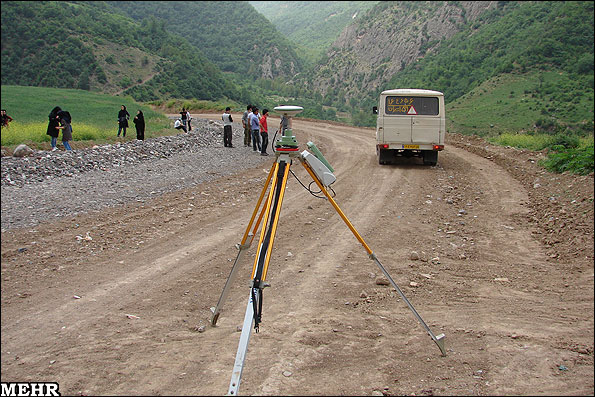
Benefactors, people and village councils are to help pave dirt roads in rural areas

Improvement of Rural Roads

Vatan-e Emrooz daily featured a brief report on 24 August, 2014 on public contribution to the improvement of rural roads. The following are comments by deputy transport minister in that regard:

“Some benefactors have signed up to make contributions to the pavement of roads in rural areas in the provinces of Fars, Hormozgan, Khorasan Razavi and Isfahan,” said deputy transport minister Seyyed Hossein Mirshafi.

Speaking about a plan designed to maintain rural roads by means of contributions by the public and village councils, he said, “One of the measures adopted to bring down the number of road accidents and thus casualties is massive public contribution to the pavement of dirt roads.”

Pointing out that the maintenance of rural roads within villages is taken care of by villagers and those in charge of village councils, he went on to say, “The major issue on the agenda this year is the maintenance of rural roads with the help of the public and village councils. In doing so, we are going to collaborate with village and city councils across the county to tap into all present potential.”

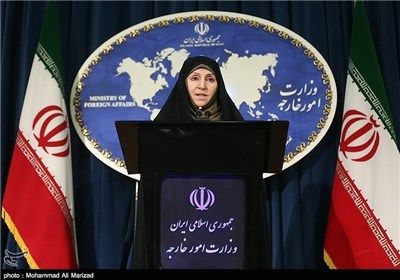
Spokeswoman: Iran Supporting Peaceful Settlement of Differences in Pakistan

Marzieh Afkham
Marzieh Afkham

“I hope that any difference in the opinions of the different Pakistani political parties and groups would end peacefully and without any tension in line with the interests of people of Pakistan,” Afkham said on Monday.

Underlining the need to respect democracy, Afkham called on all political parties in Pakistan to solve their dispute at the negotiating table.

The protests in Islamabad, that began August 15, entered the 10th day Monday as Pakistan Tehreek-e-Insaf (PTI), Pakistan Awami Tehreek (PAT) and the government remained deadlocked over the issue of resignation by Prime Minister Nawaz Sharif whom they accused of rigging the 2013 general elections.

Opposition leader Imran Khan and cleric Tahir ul-Qadri, who controls a network of Islamic schools and hospitals, have been leading protests in the capital Islamabad since last Friday.

Both want Prime Minister Nawaz Sharif to resign over allegations of “corruption and election rigging”. Sharif, who won the last election by a landslide, has refused.

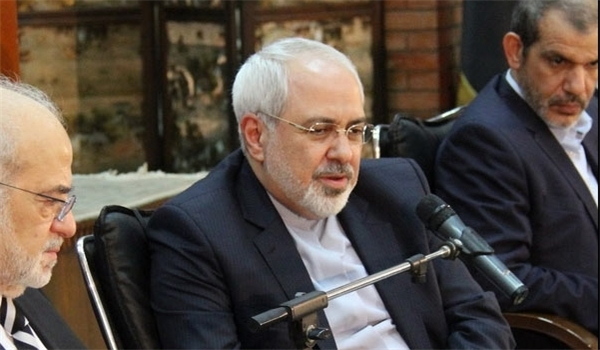
FM: Iran Supporting National Unity, Security in Iraq

Zarif in Iraq
Zarif in Iraq

“Iran’s objective, as already declared, is national unity, territorial integrity, development and security of Iraq which as a necessity,” Zarif told reporters after he met religious authorities and ulemas (scholars) in the Iraqi holy city of Najaf.

The Iranian foreign minister noted that during his meetings with several Iraqi officials as well as the country’s religious authorities and ulemas he has laid emphasis on the need for preserving the national unity in Iraq.

“All efforts should lead to helping the Iraqi nation and government and God willing, it should result in the fight against terrorism in the country,” Zarif said.

Also, in a meeting with Head of the Iraqi National Alliance Ibrahim Jafari on Sunday, Zarif underlined the necessity for the establishment of political unity and practice of Islam’s ideology in Iraq to fight the terrorist groups.

“Terrorism in Iraq is threatening all the world people from all the different religions, sects and tribes,” Zarif said during the meeting, also participated by representatives of different Iraqi political groups.

“Fighting terrorism in Iraq is not limited to military confrontation, but we also need political unity, increasing security and Islamic thinking to confront perverted thoughts of the Daesh (the Islamic State of Iraq and the Levant- ISIL),” he added.

Zarif arrived in the holy city of Najaf earlier today to exchange views with Ayatollah Seyed Ali Sisitani to discuss ways to soothe the ongoing crisis in the Muslim country.

The Iranian foreign minister plans to also meet with other grand Shiite clerics in Iraq, including Ayatollah al-Fayadh, Ayatollah Bashir Najafi and Ayatollah Hakim.

Zarif arrived in Baghdad on Sunday to meet the country’s new cabinet members to felicitate them on their appointment and start of work as the new Iraq government and discuss bilateral and regional developments as well as the latest security conditions in Iraq.

Several high-ranking Iranian officials congratulated Al-Abadi and the Iraqi nation on his appointment as the new premier last week and expressed their support for the new government.

Iranian Supreme Leader Ayatollah Seyed Ali Khamenei hailed the appointment of the new Iraqi premier, saying that enemies’ plot to push Iraq into further chaos through political disputes over premiership would be foiled once the new cabinet starts work.

Following Iran’s approach, Maliki also dropped his bid and voiced support for al-Abadi in a show of unity which is much needed in the crisis-hit country which has come under a surge of terrorist attacks by savage Takfiri terrorists of the Islamic State of Iraq and the Levant (ISIL) in the last few months.

Iran and Iraq have enjoyed growing ties ever since the overthrow of the former Iraqi dictator, Saddam Hussein, during the 2003 US invasion of the Muslim country.

Iraq’s Foreign Minister Hoshyar Zebari was in Tehran in February. During his stay in the Iranian capital, Zebari and Zarif discussed mutual cooperation on economy and trade as well as joint efforts to address environmental issues.

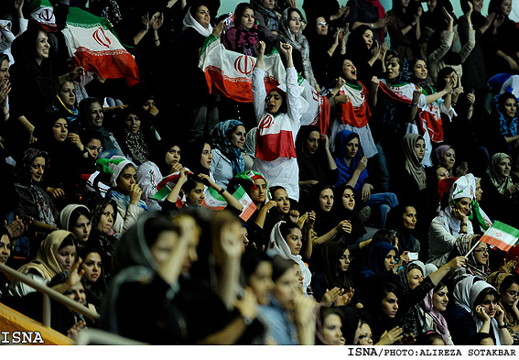
Will sexist attitudes toward the presence of women in stadiums end?

Iranian Women in Stadium

The head coach of the Iranian women’s national volleyball team Sima Sedighi was quoted by Islamic Republic News Agency (IRNA) on August 23 as saying that, “A professional approach has to be adopted to the presence of women in sports arenas.” Here is what else the official news agency reported on the issue:

Sedighi went on to say, “Sportswomen hope that the bylaw granting the green light to women to watch sports competitions in stadiums will be swiftly crafted and approved, because under such bylaw, true fans of sports and athletes will be gradually handed a chance to watch sports events at sporting venues.”

It came after Deputy Minister of Sports and Youth for Cultural, Educational and Research Affairs Abdul-Hamid Ahmadi said that a bylaw is being crafted to give the go-ahead to women to attend sport events.

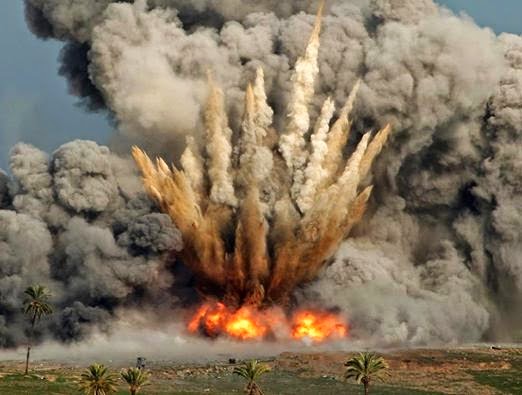
Top MP describes damage to Gaza environment unprecedented

Gaza war and Invironment

On Sunday August 24, Javan Newspaper quoted Parliament Speaker Ali Larijani as saying that in addition to human catastrophe, the recent Israeli invasion of Gaza has done unprecedented damage to the environment of the Palestinian coastal enclave. Here is an excerpt of the article that appeared in the daily:

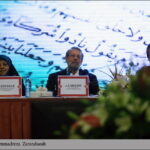
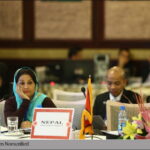
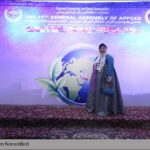
A 17th General Assembly of the Asia-Pacific Parliamentarian Conference on Environment and Development, also known as APPCED, opened in Tehran on August 23, 2014. The gathering was meant to raise awareness about the significance of efforts to preserve Mother Nature and promote laws that govern the protection of the environment. Economic development as well as the environmental damage the Gaza Strip has suffered as a result of the Israeli invasion was brought up at the gathering. […]

In a keynote speech at the meeting, Iran’s Parliament Speaker Ali Larijani said improper treatment of the environment has put the entire planet in danger. […]

He further said, “For almost two months, the Zionist regime’s bombs which have been as powerful as six nuclear devices in total, have been raining down on the defenseless people of Gaza. I regret to say that the Zionist crimes have met with silence and/or indifference on the part of the international community and many countries.”

The top MP further said that more than 2,000 Palestinians, most of them children, women and elderly people have been martyred in the Gaza Strip. “Thousands more have been injured and urban facilities have suffered substantial damage. What concerns this gathering here is that the damage caused to the environment during the offensive has been unprecedented.” […]


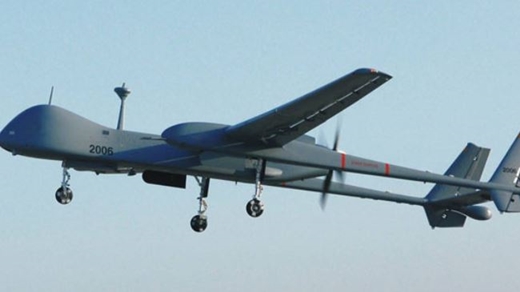
Iran shoots down Israeli spy drone near Natanz nuclear facility

Iran shoots down Israeli spy drone near Natanz nuclear facility

The IRGC’s Aerospace Force has intercepted and shot down an Israeli spy drone, the IRGC announced in a statement on Sunday.

It added that the stealth and radar-evading spy drone intended to reach the nuclear facility in Natanz, but was targeted by a surface-to-air missile before it reached the area.

“This mischievous act once again reveals the adventurist nature of the Zionist regime [of Israel] and added another black page to this fake and warmongering regime’s file which is full of crimes,” the IRGC statement said.

The statement emphasized that along with other Armed Forces, the IRGC is fully and strongly prepared to defend the Islamic Republic’s territory and airspace against any aggression and reserves the right to respond in kind to such moves.

Iran’s nuclear facilities have always been a regular target for espionage activities by US and Israeli secret services, which have at times used drones for this purpose. However, all efforts made to this end have been successfully thwarted by the Iranian military forces.

On December 4, 2011, the Iranian military’s electronic warfare unit announced that it had successfully downed the American RQ-170 reconnaissance and spy drone in the eastern part of Iran with minimal damage.

The RQ-170, an unmanned stealth aircraft designed and developed by the Lockheed Martin Company, had crossed into Iran’s airspace over the border with Afghanistan.

The drone was one of America’s most advanced spy aircraft and its loss was considered a major embarrassment for Washington.

Tehran Seeks Closer Ties with New Iraqi Government

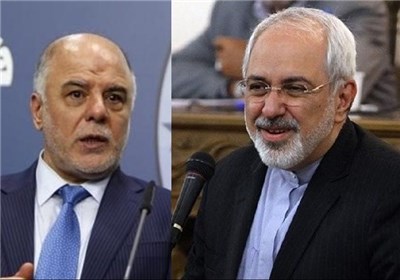
Zarif and Al-Abadi meeting in Iraq

“Tehran-Baghdad relations expanded during Nouri al-Maliki’s term, and we hope the ties would be upgraded during the new (Iraqi) government’s tenure,” Mohammad Javad Zarif said in a meeting with Abadi in Baghdad on Sunday.

The top Iranian diplomat is on an official visit to Baghdad in a bid to hold talks with high-ranking Iraqi officials on issues of mutual interest and regional developments.

Elsewhere in the meeting, Zarif underlined that relations with Iraq are of “strategic significance” for the Islamic Republic.

Back on August 11, Iraqi President Fouad Massoum officially commissioned Abadi, the Shiite coalition’s nominee for prime minister, to form the new government.

Massoum refused to nominate the country’s two-time Prime Minister Nouri al-Maliki for a third term in office.

Following Abadi’s election, Secretary of Iran’s Supreme National Security Council (SNSC) Ali Shamkhani voiced Iran’s support for the legal procedure in which the Iraqi prime minister has been elected.

“The legal frameworks determined in Iraq’s constitution are the basis for the election of the prime minister by the majority bloc in Iraq’s national parliament,” Shamkhani said.

President Rouhani: Iran Needs No One’s Permission to Defend Itself

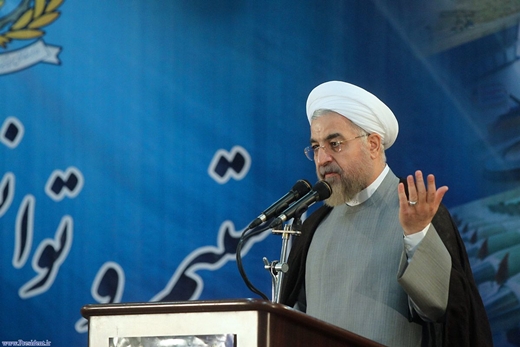
Iran-President Rouhani

“Our military doctrine is based on defense and we don’t design any weapon for aggression; we don’t carry out any research on how to occupy the regional states. All our researches are based on this defense principle that how we can defend ourselves or how we can stop the enemy,” Rouhani said, addressing a ceremony to unveil two new home-made cruise missiles and two new drones in Tehran on Sunday participated by Defense Minister Brigadier General Hossein Dehqan and other senior officials.

He said Iran’s defense programs are based on a deterrence strategy to prevent the breaking out of war in the region, reiterating that “our military capability is at the service of regional security”.

He underscored Iran’s strategy of preventing war in the region, and said Tehran is not after an arms race and the Weapons of Mass Destruction (WMDs) “but it doesn’t ask for anyone’s permission to defend itself and to develop our defense industries to whatever degree” that we deem necessary.

The President once again reiterated the necessity of a nuclear weapons-free Middle-East, saying that all WMDs in the Middle-East should be dismantled.

Rouhani also stressed Iran’s special geopolitical conditions, and asked, “Given Iran’s position in the region and the world, is it possible to speak about stability in the region and avoid mentioning Iran? Is it possible to speak of regional welfare and development without naming Iran?”

Senior regional officials have on many occasions praised Iran for the constructive role the country has always played in the reinvigoration of peace and tranquility in the region, and called for expansion of ties with Tehran.

Lebanese Foreign Minister Gebran Bassil and Parliament Speaker Nabih Berri in separate meetings with former Iranian Ambassador to Beirut Qazanfar Roknabadi in May extended their full support for Tehran’s logical and positive interactions with the world and regional states, and described Iran’s foreign policy as one of the major caused of restoration of security in the region, particularly in Lebanon.