Thursday, December 25, 2025
Home Blog Page 510

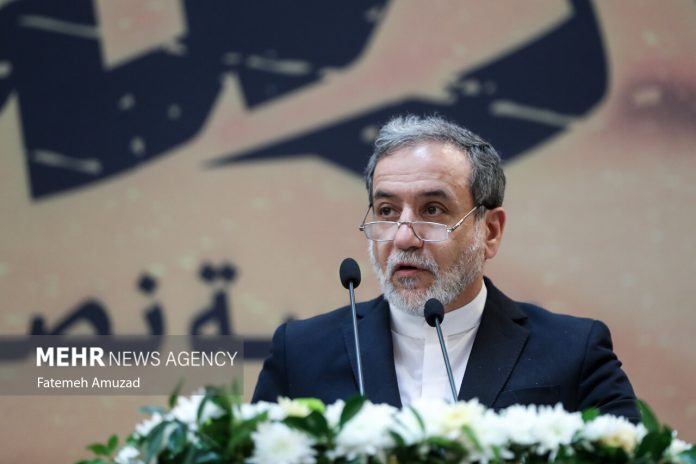
Deputy Interior Minister: Illegal Afghan migrants most important security issue for Iran-Afghanistan

Ali Akbar Pourjamshidian, referring to the problems along the border between Iran and Afghanistan, noted that Iran is working to secure its borders through wall construction, but experts from both countries need to determine the precise border lines.

Pourjamshidian added that combating terrorism along the borders of Iran with Afghanistan and Pakistan is one of the most critical security issues in Iran’s eastern borders, which requires close cooperation in intelligence and security matters.

The Deputy Minister also stated that despite Afghan leaders declaring a ban on the cultivation of narcotics and opium, there are still significant reserves of drugs in Afghanistan that are being transported to Iran through the eastern borders.

The Iranian official also identified human trafficking and kidnapping as serious issues with Afghanistan, saying that there are gangs involved in organized crimes in both Iran and Afghanistan, and addressing this problem also requires mutual cooperation.

Pourjamshidian was among the officials who accompanied the Iranian Foreign Minister in his recent visit to Afghanistan.

Syria’s de facto leader asks Russia to hand over Assad and close aides: Reuters

Syria War

Russia said on Wednesday it had held “frank” discussions with Syria’s new de facto leader as it tries to retain its two military bases in the country, but it declined to comment on what he was demanding in return.

A Syrian source familiar with the discussions told Reuters that the new leader, al-Sharaa, had requested that Moscow hand over al-Assad, who fled to Russia when he was toppled by Sharaa’s rebels in December.

Syrian news agency Sana reported that Damascus also wanted Russia, which backed Assad in the country’s war, to rebuild trust through “concrete measures such as compensation, reconstruction and recovery”.

Russia, whose troops and air force backed Assad for years against Syrian rebels, is seeking to retain its naval base in Tartous and Hmeimim air base near the port city of Latakia. Losing them would deal a serious blow to its ability to project power in the region.

The new Syrian administration announced after Tuesday’s talks with a Russian delegation headed by Deputy Foreign Minister Mikhail Bogdanov that it had “stressed that restoring relations must address past mistakes, respect the will of the Syrian people and serve their interests”.

But the Syrian source told Reuters that the Russians had not been willing to concede such mistakes and the only agreement that was reached was to continue discussions.

Russia’s Foreign Ministry said there had been a “frank discussion of the entire range of issues”. It added the two sides would pursue further contacts in order to seek “relevant agreements”, without referring specifically to the two bases.

Iran says no exchange of message with US for talks

Abbas Araghchi

On Wednesday, on the sidelines of a government meeting, Araqchi responded to a question about whether US President Donald Trump had sent a message to Iran regarding negotiations, saying: “No clear message has been sent or received.”

The Foreign Minister emphasized that if the country reaches the conclusion that negotiations should be conducted on an equal basis, a decision will be made. Currently, there is no decision, and our criterion remains the past distrust that continues to dominate Iran-US relations.

Referring to the US withdrawal from the Iran nuclear deal (JCPOA) in 2018, he continued: “We had previously agreed, and they violated the agreement. Now, the basis is distrust, and this distrust cannot be resolved with nice words and beautiful phrases; it requires practical actions and specific policies.”

Araqchi added that discussions with European countries are ongoing, and that Iran is waiting to clarify the policies of the other side.

Also in response to a question about his recent trip to Afghanistan, he stated that various topics were discussed, including Afghan nationals in Iran, border security, the safety of Shiites in Afghanistan, trade security, drug trafficking, the presence of terrorist groups, and water rights.

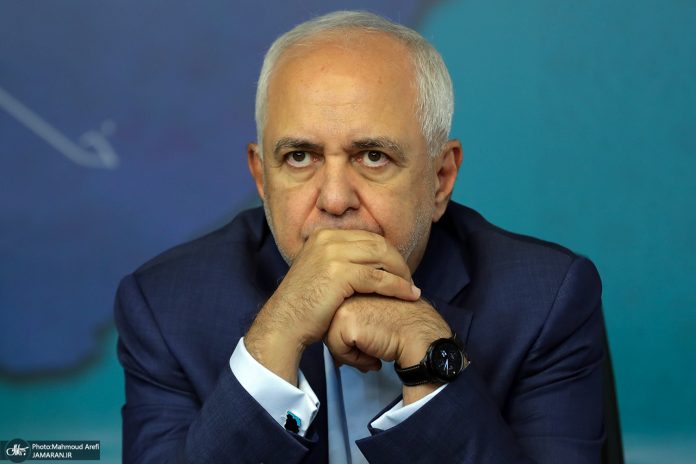
Iranian VP Zarif: Negotiation with US is not treason

Javad Zarif

Zarif was speaking at a conference entitled the “Prospect of Regional and Global Developments in Trump Era” held at the Institute for Iran-Eurasia Studies, IRAS.

As the Pezeshkian Administrations has voiced readiness to hold equal negotiations with the U.S., some in Iran, including members of parliament, have accused supporters of negotiations of treason.

Zarif said it seems plausible that US President Donald Trump might not have concluded that Iran is definitively moving towards nuclear weapons and instead he seeks to mitigate potential risks through negotiations with Iran.

He fadded Trump’s stance on Iran is neither “very positive nor very negative”.

Speaking about the US’s global role during Trump’s presidency, Zarif said Trump is not willing to continue Washington’s role as a hegemonic power, which is what the European countries have sought.

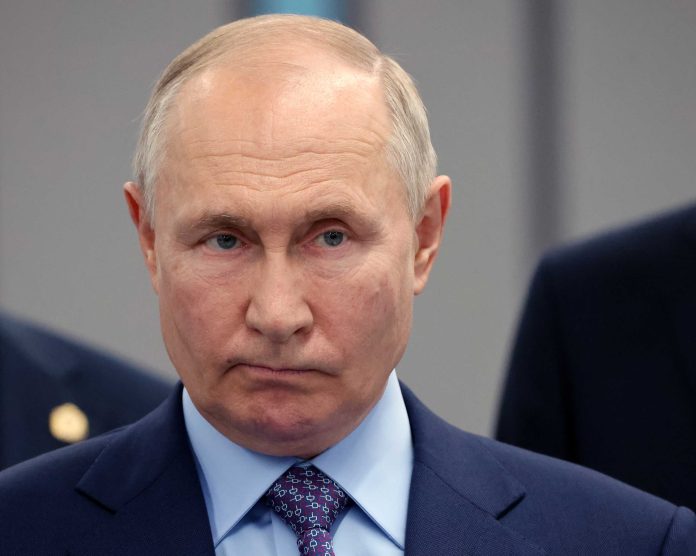
Putin afraid of negotiations: Zelensky hits back after Russian leader labels him ‘illegitimate’

Vladimir Putin

“Today, Putin once again proved that he is afraid of negotiations, afraid of strong leaders, and is doing everything possible to drag out the war. Every step he takes, every cynical maneuver, is aimed at making this war endless,” Zelensky said, as Putin reiterated on state TV that he considers Zelensky “illegitimate” and incapable of signing any agreements in potential peace talks.

“Negotiations can be held with anyone,” Putin stated, adding, “But due to (Zelensky’s) illegitimacy he has no right to sign anything. If (Zelensky) wants to take part in talks, I will delegate people who will conduct such talks. But the (key) issue is the ultimate signing of the documents.”

The claim, widely used in Russian propaganda, has been dismissed by Ukrainian legal experts as baseless.

Zelensky emphasized in his post on X that there is a real opportunity to achieve peace, but Putin is actively working against it.

“Instead of pursuing peace, Putin is either continuing large-scale killings or seeking a pause to prepare for another full-scale invasion using hybrid attacks,” Zelensky added.

Zelensky also urged global leaders to learn from past mistakes.

“Putin may have immense power to destroy, but his heart is too small and cowardly to withstand real pressure from strong leaders,” he stressed.

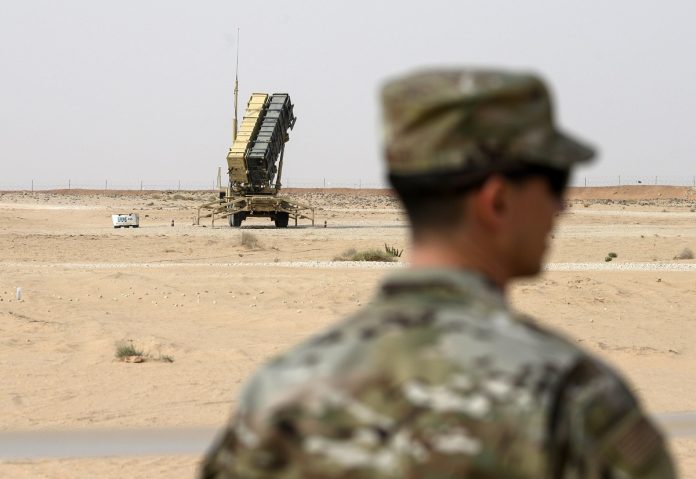
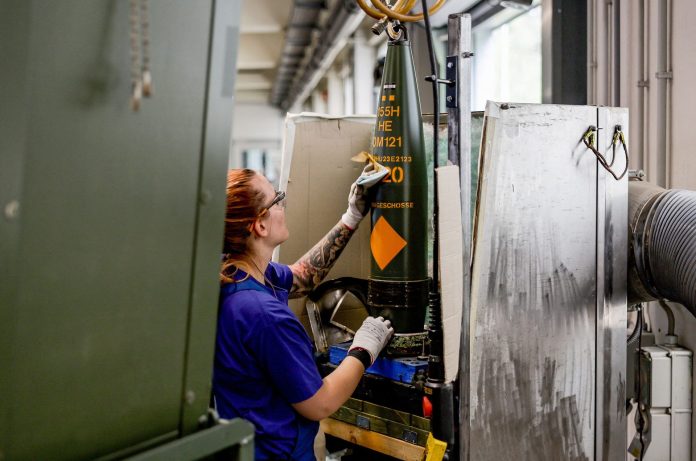
US transfers dozens of Patriot missiles from Israel to Ukraine: Axios

patriot defense system

The transfer comes as part of efforts by the Pentagon to bolster Ukraine’s air defense capabilities against Russian attacks on critical infrastructure. This marks the most significant delivery of weapons involving Israel to Ukraine since the start of Moscow’s full-scale invasion nearly three years ago.

The Patriot air defense system was officially decommissioned by the Israeli Air Force in April 2023, over three decades after it was first provided to Israel during the Gulf War. With Israel now relying on its own advanced air defense technologies, such as the Iron Dome, the Patriot system had been relegated to training or storage.

Following its retirement, Ukrainian officials approached both the U.S. and Israel with a proposal to return the missiles to the U.S. for refurbishment and subsequent delivery to Ukraine, Axios reports.

Despite the plan, Israel initially delayed its decision due to concerns that Russia might retaliate by supplying advanced weaponry to Iran. According to a Ukrainian official, Prime Minister Benjamin Netanyahu refused to engage in discussions about the proposal for weeks. However, Netanyahu reportedly approved the transfer in late September.

The Ukrainian official alleged that Netanyahu sought a concession from President Volodymyr Zelensky regarding an annual pilgrimage of ultra-Orthodox Israelis to Uman, Ukraine, before agreeing to the Patriot deal. Netanyahu’s office has denied any connection between the two issues.

In preparation for the transfer, U.S. Air Force C-17 cargo planes recently transported the interceptors from an air base in southern Israel to Rzeszów, Poland, a key logistics hub for military aid to Ukraine. Along with the interceptors, additional equipment, such as radars, will be sent to the U.S. for refurbishment before final delivery to Ukraine. The interceptors are compatible with the Patriot batteries already operational in Ukraine.

An Israeli official said that Russia was informed in advance of the transfer, emphasizing that Israel was merely returning the Patriots to the U.S. rather than directly supplying weapons to Ukraine. The official compared the move to a prior U.S. decision to transfer artillery shells from storage in Israel to Ukraine. A spokesperson for Netanyahu’s office confirmed that the Patriot system had been returned to the U.S. but stated they had no knowledge of whether the interceptors had been sent to Ukraine.

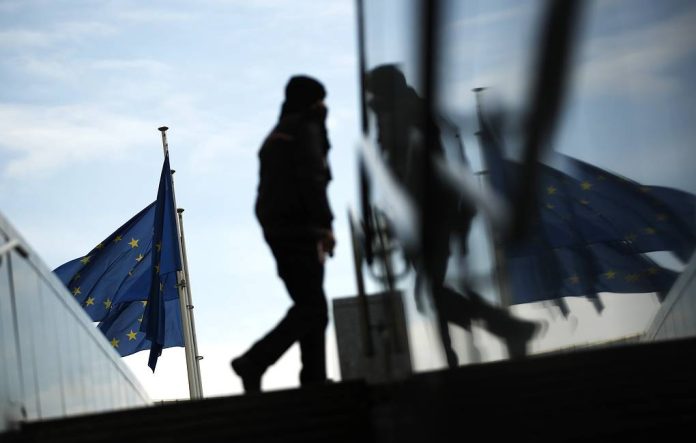
EU seeking to speed up Ukraine admission negotiations: Politico

European Union Flag

Joining the EU involves completing six “clusters” of talks, comprising 35 chapters of various requirements. To date, Kiev has not opened a single one.

“From the technical point of view, we can be ready to open two clusters for Ukraine in the first half of the year,” Kos told journalists during a news conference in Brussels on Tuesday.

“It’s not possible without the member states,” she added.

The admission process requires unanimous consent from all 27 EU member states at each stage. Hungary, Slovakia, and Austria have raised objections to Ukraine’s membership for various reasons. However, Brussels’ leadership appeared to back Kiev.

“It’s necessary for the EU to develop further and have new member states,” the bloc’s top diplomat, Kaja Kallas, told reporters at the same press conference.

Ukraine’s deputy prime minister, Olga Stefanishina, visited Brussels to push for faster admission into the EU. Politico described her trip as part of an effort to “reinforce” Kiev’s position ahead of anticipated peace talks with Moscow.

The previous European Commission suggested that Ukraine could potentially join the bloc by 2029 if it made sufficient progress in areas such as political and judicial reforms, as well as in combating organized crime and corruption. Last June, Kiev’s envoy to the EU, Katarina Mathernova, said that 2030 was a “very realistic date.”

Ukraine made EU and NATO membership official national goals by amending its constitution in 2019. While Russia did not object to Kiev’s EU aspirations at the time, it firmly opposed any involvement with the US-led military bloc. Following the escalation of the conflict between Moscow and Kiev in 2022, Russian Foreign Minister Sergey Lavrov described the EU as “an aggressive militant player that declares its ambitions far beyond the European continent.”

US judge temporarily blocks Trump’s federal aid freeze: NYT

Weapons Arms Russia Ukraine War

U.S. District Judge Loren AliKhan, appointed by President Joe Biden, issued an administrative stay, delaying the funding freeze until Monday.

The decision came after a virtual court hearing in which AliKhan listened to arguments from the Department of Justice and multiple plaintiffs.

One lawsuit was filed by activist group Democracy Forward, and a separate case was filed by attorneys general from 22 states and D.C.

Trump’s administration has now temporarily halted not only international but also federal aid, including the issuance of new grants and loans. The freeze will affect programs in the U.S., including preschools, medical research facilities, low-income food initiatives, housing assistance, and disaster relief organizations.

Previously on Jan. 24, as one of Trump’s first orders since assuming office, the U.S. State Department suspended almost all foreign aid, including non-military assistance to Ukraine.

The step threw Ukrainian NGOs, many reliant on U.S. support, into disarray, with some voicing concerns about their ability to survive the aid freeze.

Ukraine currently tops the recipient list of U.S. development assistance as it continues to face Russia’s war, official data shows.

The White House and State Department stated that the pause, in both domestic and international aid, is necessary to review programs and ensure their funding aligns with the “president’s priorities.”

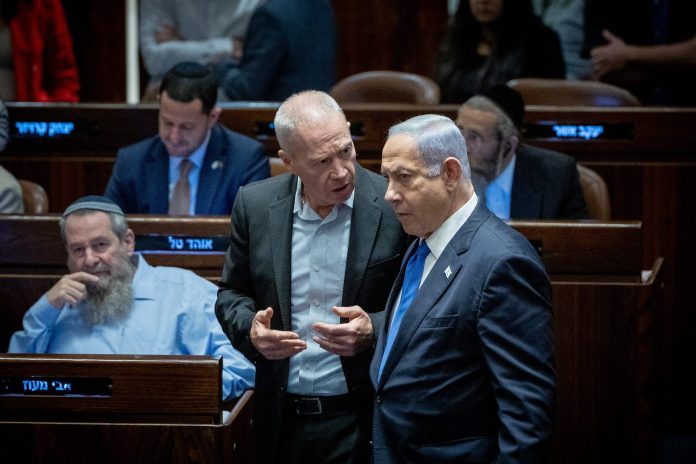
US Senate blocks bill sanctioning ICC over arrest warrants for Netanyahu, Gallant

Netanyahu Gallant

The vote on Tuesday saw the bill gain 54 votes in favour and 45 opposed, falling short of the 60 votes needed to advance to a final vote.

United Nations experts, European officials, and the current and former presidents of the ICC’s management body have all come out against the bill, warning it would set a dangerous precedent at a time of increased importance for the international legal order.

But many of the Democrats who voted against the measure still accused the court of taking unfair actions against Israel by issuing warrants against Netanyahu and Gallant. The court simultaneously issued a warrant for Hamas commander Mohammed Deif for his role in the attack on October 7, 2023, against southern Israel.

The ICC has denied bias in its actions.

Speaking before the vote, Chuck Schumer, the Democratic Party leader in the Republican-controlled Senate, said the sanctions bill is “one I largely support and would like to see become law”.

“However, as much as I oppose the ICC bias against Israel, as much as I want to see that institution drastically reformed and reshaped, the bill before us is poorly drafted and deeply problematic,” he added, arguing the bill could hurt both US allies and businesses that deal with the court.

He called for Republicans to go back to the negotiating table to tweak the language in the legislation.

Speaking on the Senate floor in support of the bill, Senate Majority Leader John Thune, a Republican, said the targeting of a “close US ally should concern all of us”.

“While the ICC is targeting Israelis today, it could easily set its sights on Americans,” he added.

Senator John Fetterman was the sole Democrat to vote in favour of the legislation. He swiftly earned praise from the American Israel Public Affairs Committee (AIPAC), the vastly influential pro-Israel lobby.

In a post on the social media platform X, the group thanked Fetterman for his “principled pro-Israel leadership and for standing with Israel against the ICC’s baseless attacks”.

In the past, President Donald Trump took a hard line against the ICC, imposing sanctions on its officials in 2020 over concerns that the court was probing US military actions abroad.

The administration of former President Joe Biden later revoked that order, but Trump reversed Biden’s decision upon taking office last week.

His move has so far been symbolic, as the reversal did not automatically re-impose the sanctions.

Neither the US nor Israel are parties to the Rome Statute, which established the ICC.

However, the court has argued that, because the alleged war crimes occurred in Gaza, Israeli officials could be held liable for their actions.

The State of Palestine has been a member of the ICC since 2015.

The court had used a similar argument in issuing arrest warrants for Russian officials for alleged abuses in Ukraine, a move hailed by US officials at the time. Russia is not a party to the ICC, but Ukraine is.

In issuing warrants against Netanyahu and Gallant, ICC prosecutors have argued that Israeli restrictions on aid to Gaza, including water and medicine, amounted to starvation as a method of warfare.

The two Israeli officials were also accused of crimes against humanity, including murder and persecution, as well as the war crime of directing attacks against civilians.

To date, Israel’s war in Gaza has killed 47,354 Palestinians, while displacing nearly the entire population of the enclave. There has been a tenuous ceasefire since January 19.

The ICC had also sought warrants for Hamas political leader Ismail Haniyeh and its top leader in Gaza, Yahya Sinwar, before both men were killed in Israeli strikes.

Earlier this month, UN experts called on the US Senate to reject the bill after it was passed by the Republican-controlled House of Representatives.

“It is shocking to see a country that considers itself a champion of the rule of law trying to stymie the actions of an independent and impartial tribunal set up by the international community, to thwart accountability,” the experts said.

They added that threats to the ICC “promote a culture of impunity”.

In an article published by the Just Security website on Monday, current and former presidents of the Assembly of States Parties of the International Criminal Court, the body that manages the court, warned that sanctions could “severely hinder” at least 20 investigations across the world.

“While challenges remain, we are committed to the ICC’s vision of justice and its mandate to ensure that no one is above the law, regardless of power,” they wrote.

“Efforts to undermine the ICC are attacks on the principle that law protects the weak against the powerful.”

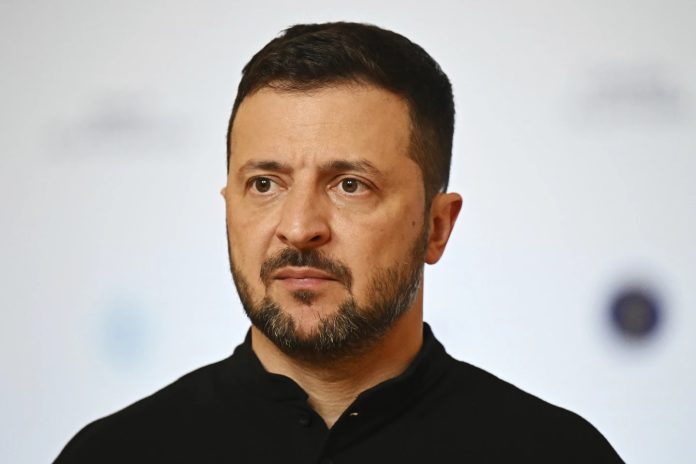
Putin says Zelensky lacks legitimacy to ink any agreement

Zelensky

Negotiating with the de-facto Ukrainian leadership will not have any legal meaning, given that Kiev explicitly banned itself from engaging in talks with Moscow, according to Putin.

In 2022, Zelensky, whose presidential term officially ended in May 2024, issued a decree prohibiting negotiations with Russia, and President Vladimir Putin specifically, a measure that remains in effect. Last week, Zelensky claimed the ban applies to all Ukrainian officials except himself, although the original decree did not specify a list of entities barred from talking to Russia, stating only that such negotiations were “impossible.”

“If we start negotiations now, they will be illegitimate… Because when the current head of the regime, that’s the only way to call [Zelensky] today, signed this decree, he was a somewhat legitimate president. But now he can’t cancel it, because he is illegitimate. That’s the trick, the catch, the trap,” Putin explained.

However, the Ukrainian leadership could find a way out of this situation and circumvent the ban, Putin said, suggesting that the country’s parliament could do that.

“According to Ukraine’s constitution, the president of Ukraine, even under martial law, cannot extend his term. Only the representative branch can have its term extended, that’s the Ukrainian parliament, while the president only has a five-year term, that’s it,” he added.

Asked whether Moscow would actually talk to Zelensky if he expresses the desire to do so, Putin stated that the Ukrainian leader lacks any authority to actually strike any sort of deal with Russia.

“It’s possible to negotiate with anyone. However, due to his illegitimacy, [Zelensky] has no right to sign anything. If he wishes to participate in talks, I will deploy people who will conduct such negotiations,” Putin continued.

He stressed that signing any deal would be a “very serious question” and the agreement must “guarantee the security of both Ukraine and Russia” for a “serious” period of time.

Any potential peace agreement must be flawless from the legal standpoint, Putin emphasized, adding that the authority and legitimacy of Kiev’s negotiating team would be subjected to intense scrutiny and assessed by a whole team of legal experts.