Friday, April 10, 2026
Home Blog Page 5093

Iranian political experts praise Nouri al-Maliki’s decision

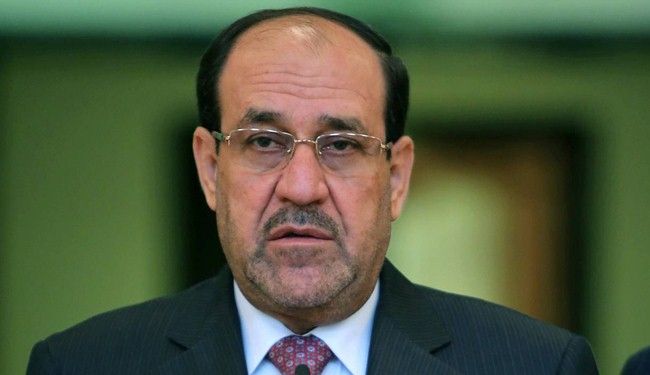
Nouri Al-Maliki
Nouri Al-Maliki

Designation of Haider al-Abadi as Iraqi prime minister following the resignation of Nouri al-Maliki from premiership in August drew a lot of attention in the region. Iran and Iraq share a long border. Naturally, as neighbors the repercussions of political developments in one country can be felt in the other. That is particularly true about a major shift as such. A 207th issue of Panjereh (Window) weekly, which focuses on political, cultural, economic and social news, featured an interview with foreign policy expert Dr. Hassan Hanizadeh and Dr. Hossein Sheikholeslam, a political expert and a foreign policy advisor to the parliament speaker. The following is a translation of the answers they provided in response to the weekly’s questions:

What is going on in Iraq at the moment indicates that the country is still in a state of disarray. Given the ambiguous handover of power from Nouri al-Maliki to Haider al-Abadi, how would you analyze the current developments in Iraq?  

I praise Mr. Maliki for his far-sightedness and selflessness. In spite of securing more votes than the previous election, he decided to waive his right just because of Iraq’s conditions and restore national cohesion between Shiites, Sunnis and ethnic groups. In fact, he put Iraqi unity ahead of his personal interests.
Sheikholeslam

Sheikholeslam: At a time when Iraq is under attack by terrorist insurgents of the Islamic State (IS), I praise Mr. Maliki for his far-sightedness and selflessness. In spite of securing more votes than the previous election, he decided to waive his right just because of Iraq’s conditions and restore national cohesion between Shiites, Sunnis and ethnic groups. In fact, he put Iraqi unity ahead of his personal interests. I hope that Mr. Abadi will build on support and cooperation offered by Maliki and other ethnic groups as well as Shiites to forge a government that can restore security.

Hanizadeh: The appointment of Haider al-Abadi came at a time when Iraq faced a political void after the legal deadline of 15 days to name a prime minster by major parliamentary caucuses expired, so Iraqi President Fouad Massoum exercised his right to pick Mr. Abadi as prime minister, a figure who is well respected by tribes and parties across the political spectrum. Shiites, Sunnis, and Iraqi Kurds view him as an influential political figure. Also, his relationship with religious leaders is fairly good. So it seems that when his cabinet make-up is determined and the new government takes charge, it will be able to address the present challenges in Iraq and turn things around in favor of the Iraqi nation.

What are the characteristics of Mr. Abadi that have made many Iraqi major players welcome his nomination? How will his appointment help Iraq as far as the political process is concerned?

That Western countries endorse Mr. Abadi is because of his 35-year political activity in Europe, especially in Britain, which has made him famous in the West.
Hanizadeh

Hanizadeh: His appointment can usher in pleasant interaction among all parties across the political spectrum, lift Iraq out of its security and political woes and direct it toward the formation of an inclusive government. His designation is the result of a consensus over a common need among all political parties. That Western countries endorse him is because of his 35-year political activity in Europe, especially in Britain, which has made him famous in the West.

Another thing is his respect for all political parties and clerics. With regard to such matters, it seems the prime minister-designate will pull off a lot of security and political accomplishments through the formation of a national unity government in the months to come. It’s worth noting that the support from the United Nations, the US, and Europe for Abadi can be rather helpful from a regional and international perspective. Of course, the Islamic Republic of Iran also expressed pleasure over Mr. Abadi’s appointment.

Certainly, a change of prime minister in Iraq will have a direct impact on Tehran-Baghdad interactions. What are your thoughts on it?

Sheikholeslam: Iran attaches immense significance to Iraq. To fathom the importance, we can point out the suffering Iran experienced under Saddam, or the 8-year war imposed on Iran by Iraq (1980-1988) which carried a heavy price tag for Iran. The significance underlines the fact that in interaction with Iraq, Iran should not let catastrophes like war repeat themselves. Iraq is our ally in the region, its cooperation with Iran to establish stability and peace along its border can help restore peace to the whole region.

For the time being, IS presence on Iraqi soil is the second biggest threat after the Zionist regime. In fact, IS follows the same approach, though in the name of Islam, yet they both have the same objectives: dividing Muslims, and fanning the flames of Islamophobia in the region.
Sheikholeslam

For the time being, IS presence on Iraqi soil is the second biggest threat after the Zionist regime. In fact, IS follows the same approach, though in the name of Islam, yet they both have the same objectives: dividing Muslims, and fanning the flames of Islamophobia in the region. These are the goals that the Zionists, Americans and arrogant powers pursue. I do not think the transition in Iraq will have much impact on relations between the two nations although we need to wait and see. We need to have close cooperation with Iraq and give a hand to the ruling current.

Supreme Leader Ayatollah Ali Khamenei in his Eid al-Fitr address stated that Iran has disagreement over some matters with other Islamic nations. However, Iran stands ready to set aside such differences in order to address the issue of Palestine. One of the questions over which there is disagreement is Iraq. We hope that both sides appreciate this move toward unity and respond positively.

Hanizadeh: Mr. Abadi lived in the West and Britain for 35 years and his approaches are not confined to his country and nation. He’s tapping into his experience on the political front to maintain and even beef up his ties with Iran and other Arab countries in the region.

At the moment, the incoming prime minister is faced with a series of grave domestic challenges on security, political and economic fronts. He will try to give priority to the consolidation of security and a crackdown on IS fighters. In light of the danger IS poses to the Iraqis, Abadi will use his cachet in the region and the world to quell the marauding group.

Aside from that, Iraq will come across some serious challenges such as the Kurdistan Region which Abadi should overcome with tact and maturity. Experience acquired over the last 11 years in Iraq suggests that some countries, including Saudi Arabia and Qatar, are not willing to see stability in the region. Since Iran shares a long border with Iraq, it always keeps its finger on the pulse of the latest developments in Iraq. Iraq should at all times heed its consultations with Iran over security, military and security matters.

The enormous challenge facing Iraq is IS. Do you think we will see any change in the fight against the terrorist group during Abadi’s premiership?

Sheikholeslam: On no account should concessions be made to those behind violence and murder in Iraq. IS militants should lay down arms and leave the Iraqi soil. I think if Iraqi volunteers called by Grand Ayatollah Ali al-Sistani [to combat the insurgents] are organized by the government and its allies, Iraq will be able to deliver a heavy blow to the terrorist group. Such counterattack is only attainable through the unity of all Iraqi forces.

Hanizadeh: If Haider al-Abadi preferred his ethnic tendencies to religious ones, he would not notch up any success. Abadi should put Iran’s experience to good use and should not come under pressure by Saudi Arabia and Qatar. He should crush IS with international assistance and ensure long-lasting security in the region. Also, he needs to clarify relations between the Iraqi Kurdistan and the central government, and the Iraqi Kurdistan should abide by the law. In case Kurdistan adopts a go-it-alone approach to establishment of ties with the West and the US, Iraq will definitely move toward breakup.

What are other political obstacles standing in the way of Iraq?

Hanizadeh: Iraq’s Constitution has some flaws. It’s necessary to fix them, so the Constitution should be reviewed now. Under Iraq’s law, the winning party in the parliamentary vote has no more than 15 days to name a prime minister. That was what annoyed Nouri al-Maliki and triggered a reaction from him.

instability in Iraqi Kurdistan and northern Iraq, extensive presence of IS in the north, and the remnants of Baathist generals in the structure of the Iraqi armed forces are hurdles that the Mr. Abadi needs to clear.
Hanizadeh

Today Iraq is mired in multiple security and political problems. Among other things, instability in Iraqi Kurdistan and northern Iraq, extensive presence of IS in the north, and the remnants of Baathist generals in the structure of the Iraqi armed forces are hurdles that the prime minister-designate needs to clear.

Another thing is that top religious leaders in Iraq have always tried to foster an interactive atmosphere on the political front, regardless of their political leanings. For instance, the recent warning by Ayatollah Sistani about putting a halt to political disputes was to that end. These leaders have always taken the expediency and interests of all different ethnic groups into consideration, that’s why the incoming premier should heed the advice of grand religious leaders.
Fighting terror is West pretext for intervention: Iranian official

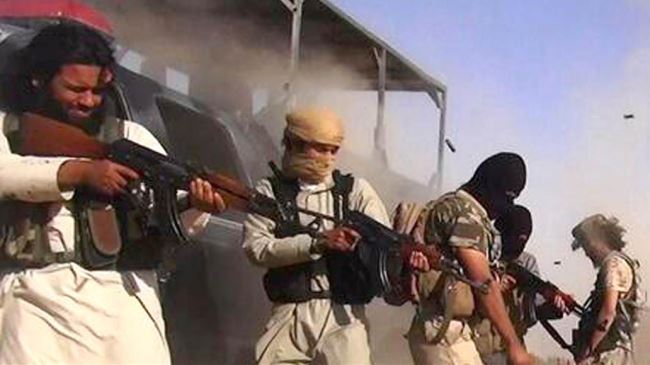
ISIL-Takfiri-militants

Secretary of Iran’s Supreme National Security Council Ali Shamkhani said on Sunday that fighting terrorism must not serve as a pretext for Western interference in the region.

The senior official also said that the international coalition against terrorism will succeed only if it takes into account the interests and concerns of regional states.

“Any regional and international coalition under the pretext of fighting terrorism without considering the regional countries’ interests and political and security considerations is doomed to failure,” he added.

Shamkhani added the presence of the United States and some Western countries in the region has resulted in the escalation of insecurity and the emergence of new terrorist groups.

He further noted that Western governments are not sincere in their anti-terrorism campaign as it is evident by their measures and stance regarding the current developments in Iraq.

Shamkhani also dismissed allegations over the cooperation between Iran and the US against terrorism in Iraq, saying the nature of Iran’s anti-terrorism campaign is not similar to that of the US.

[…]

Comprehensive plan needed against ISIL terror: Rafsanjani

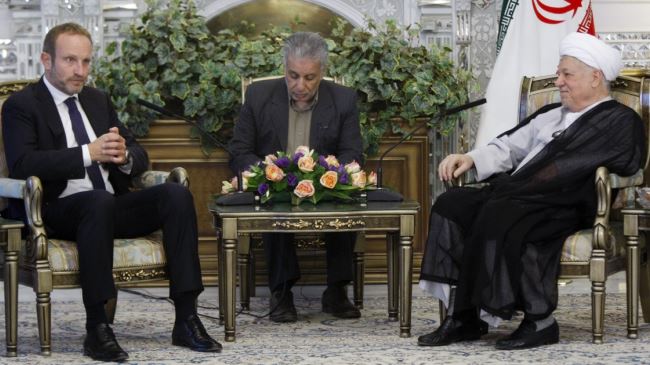
Iran-Denmark-Rafsanjani

“The international community should have a comprehensive plan in dealing with the barbaric acts of this group, because their access to chemical and biological weapons is dangerous to everyone,” Rafsanjani said in a meeting with Danish Foreign Minister Martin Lidegaard in Tehran Monday.

He said that Iran welcomes any plan for countering terrorists and boosting stability and security in the region, adding, “But this decision does not mean we are ready to fully abide by the policies of the West and the Americans. Based on its unswerving principles, the Islamic Republic of Iran supports the oppressed people in Afghanistan, Palestine, Syria and Iraq and anywhere else and considers this support as a sovereign, Islamic and human policy.”

He noted that expansion of terrorist groups such as the Taliban, al-Qaeda, Boko Haram and ISIL is the outcome of US double standards.

The Danish foreign minister, for his part, said Iran’s role is strategically important in regional and international issues.

Western countries have correctly understood that in the absence of Iran any plan for improving stability and security and fighting terrorism would fail, Lidegaard added.

[…]


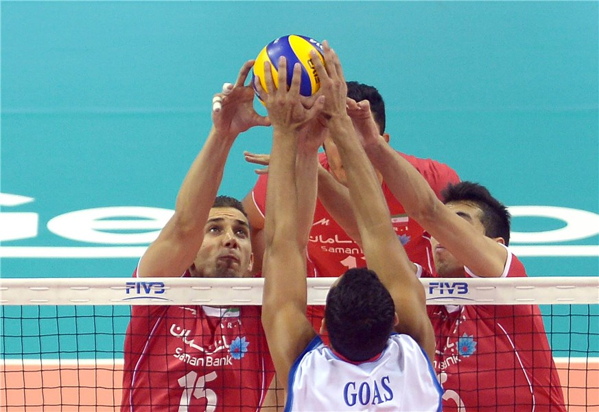
Iran beat Puerto Rico and finish second in Pool D of FIVB World event

Iran volleyball

“Another outstanding blocking display from tournament-leader Seyed Mousavi highlighted Iran’s smooth win over Puerto Rico by 3-0 (25-17, 25-22, 25-14).” That was how the official website of the Federation Internationale de Volleyball described Iran’s win in their last encounter of group stage in Pool D.

The win seals Iran’s second-place finish behind France in Pool D on 11 points. The US and Italy are third and fourth respectively. Their clash later Sunday determines who finishes third in the group stage.


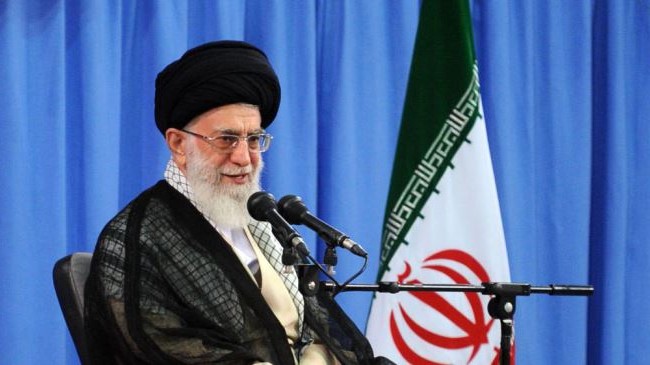
Enemies use Takfiri ideology to split Muslims: Leader

Iran-Leader

Addressing a meeting with Iranian Hajj officials on Sunday, Ayatollah Khamenei said the enemies are using the Takfiri ideology as a means to cause rifts among Muslims in an attempt to divert their attention from the issue of Palestine and serve the Israeli regime’s interests.

Ayatollah Khamenei then described the Palestinian issue as the most important concern of the Muslim world, adding, “The issue of Palestine is the top priority of the Muslim world which should be addressed during the Hajj [rituals].”

The Leader emphasized that Muslims have the “upper hand” with regard to the issue of Palestine, saying the defeat of the Israeli regime, as the West’s symbol of power in the region, in the 50-day war against the besieged people in the Gaza Strip was an apparent example of this issue.

“The recent victory in Gaza demonstrated that Muslims are powerful and have great capabilities and can challenge any enemy and defend themselves,” Ayatollah Khamenei pointed out.

Israel started pounding the Gaza Strip in early July, inflicting heavy losses on the Palestinian land. Almost 2,140 Palestinians, mostly civilians, including women, children and the elderly, were killed in the Israeli onslaught. Around 11,000 others were injured.

The Leader said hegemonic powers are making efforts and hatching plots to drive a wedge among Muslims and described the Hajj pilgrimage as a unique opportunity to strengthen unity and understanding among Muslims and settle their differences.


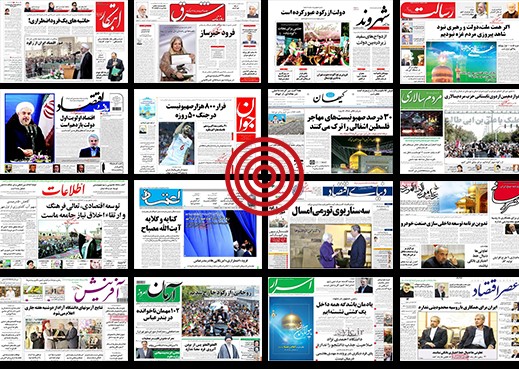
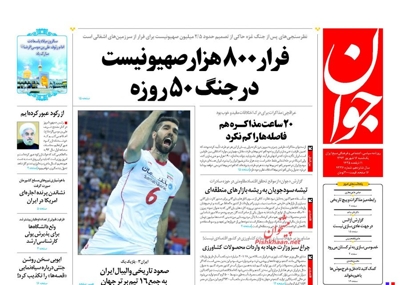
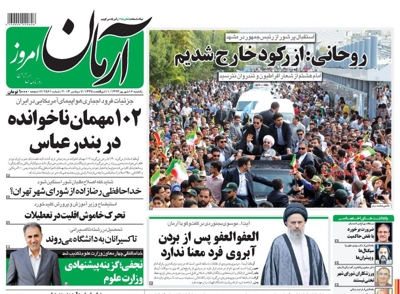
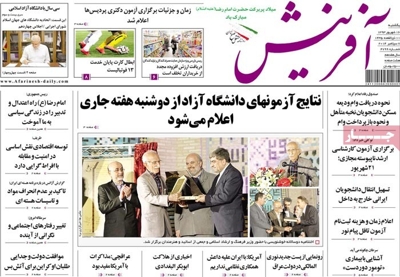
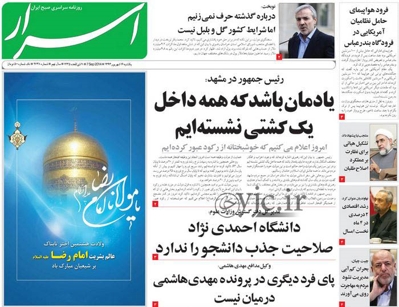
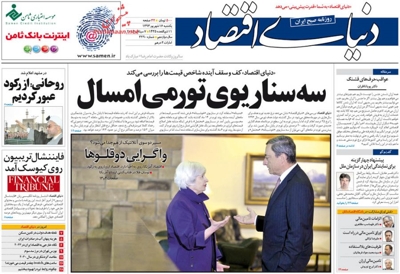
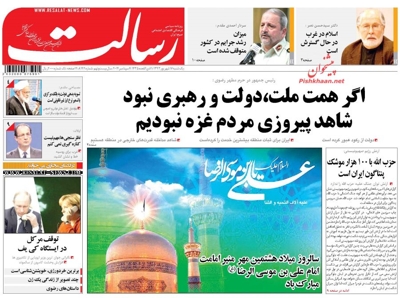
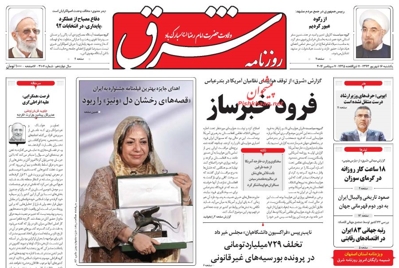
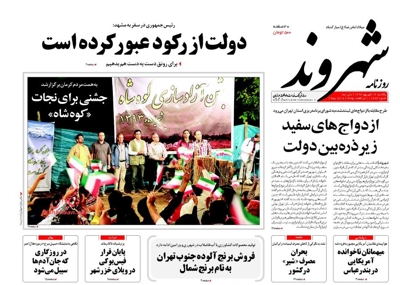
A look at newspaper headlines across the country on September 7

Iranian Newspapers-09-07

Most Iranian newspapers on Sunday (September 7) gave front-page coverage to President Rouhani’s visit to the northeastern province of Khorasan Razavi during which the chief executive said, “We are now out of recession.” The emergency landing on Iranian soil of a charter plane carrying American and NATO forces from Afghanistan to the UAE drew as much attention. “A NATO plane is forced to land in Iran” and “102 uninvited guests arrive at Bandar Abbas” were two of the headlines the Persian-language dailies used to cover the controversial emergency landing of the flydubai plane in the southern Iranian port city.

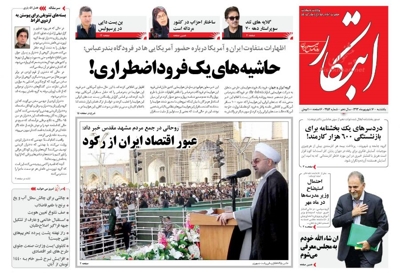
Ebtekar: “God willing, I will be the [President’s] choice for science minister,” acting Science Minister Mohammad Ali Najafi says in response to a question as to when the new science minister will be named by the president to secure parliamentary approval.

Ebtekar: “More than 50 MPs sign a petition to impeach the education minister.” The likely impeachment of President Rouhani’s education chief comes two weeks ahead of the reopening of schools in Iran after an almost three-month recess.


Ebtekaar Newspaper-09-07


Javan: “Twenty hours of talks seem to have failed to narrow the gap” is the title the principlist newspaper has chosen to cover bilateral talks between Iran and the US ahead of negotiations in New York with P5+1 later in September.


Javan Newspaper-09-07


Arman-e Emrooz: “Former sportsmen who sit on Tehran City Council are nowhere close to Takhti.” That is the title of an op-ed by university professor and political analyst Sadegh Zibakalam. It refers to the election of Mehdi Chamran, an ally of former President Mahmoud Ahmadinejad, as chairman of the council by its members. Chamran replaces Ahmad Masjed Jamei, a former Cabinet minister under President Khatami and a reformist. Until a few days before the in-house vote of the council, Abbas Jadidi, Hadi Saei, and Hossein Rezazadeh, who have won an array of medals in world and Olympic events in wrestling, taekwondo, and weightlifting respectively, were in the reformist camp. But on the day of the vote they broke ranks with reformists. Zibakalam describes the last-minute change of heart as unethical and contrary to the principles of sportsman chivalry which are widely attributed to Takhti, a famed Iranian Olympic gold medalist who passed away in 1967. The analyst argues that such practices are not in line with the spirit of sportsmanship, even if these athletes identify themselves as followers of Iran’s wrestling great: Takhti.

Arman-e Emrooz: Iranian taxi drivers are to learn the ABCs of their profession in universities.


Arman Emrooz Newspaper-09-07


Afarinesh: “Imam Reza set an example of moderation and prudence in politics,” President Rouhani told the people of Mashhad on the birth anniversary of Imam Reza, the eighth Shiite Imam whose mausoleum is in Mashhad. Imam Reza accepted to serve as deputy of Al-Ma’mun, the ruler of his time, only to help narrow divisions in the Islamic community.


Afarinesh Newspaper-09-07


Asrar: “Ahmadinejad’s university is not qualified to admit students,” the director general of the Science Ministry’s Development Department said.


Asarar Newspaper-09-07


Donyay-e Eghtesad: “Financial Tribune, a new English-language daily makes its debut on newsstands.”


Donyaye Eghtesad Newspaper-09-07


Resalat: “The growth in crime rate has stalled,” Police Chief Brigadier General Ahmadi Moghaddam said.


Resalat Newspaper-09-07


Shargh: Tales by Iranian director Rakhshan Bani-Etemad has won the Venice Film Festival’s award for best screenplay.


Shargh Newspaper-09-07


Shahrvand: “A plan to counter unregistered marriages [a reference to cohabitation] is to be presented to the Planning Council of Tehran Governor’s Office.”


Shahrvand Newspaper-09-07


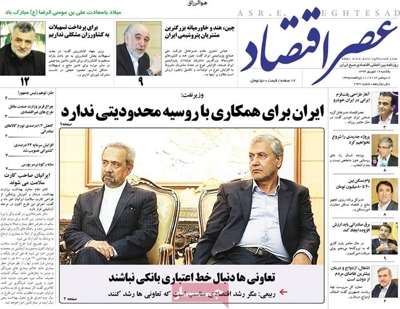
Asr-e Eghtesad: “Iranians to be issued health cards.”


Asr Eghtesad Newspaper-09-07


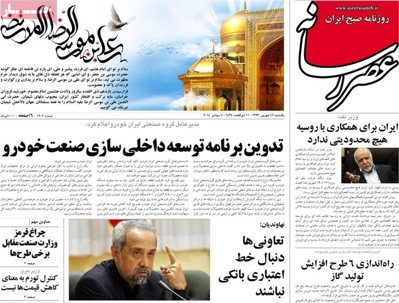
Asr-e Resaneh: “Iran faces no restrictions in having cooperation with Russia on different fronts,” Oil Minister Bijan Namdar Zanganeh said.


Asr-e Resaneh Newspaper-09-07


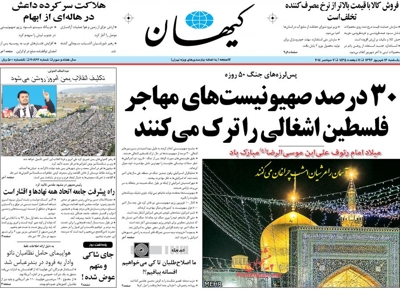
Kayhan: “The path to progress goes through unity among all institutions and strata,” President Rouhani said in Mashhad.


Kayhan Newspaper-09-07


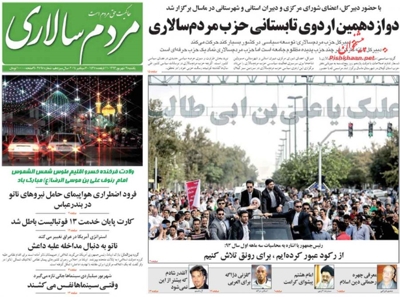
Mardom Salari: “The military-service-completion cards of 13 famous soccer players will be revoked.”


Mardom Salari Newspaper-09-07


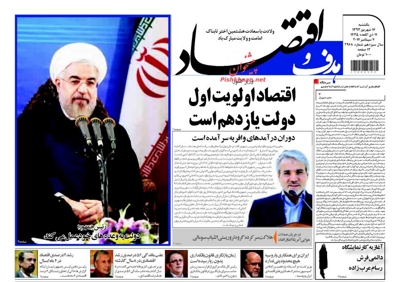
Hadaf va Eghtesad: “Economy is the first priority of the 11th government,” the interior minister said.


Hadaf va Eghtesad Newspaper-09-07


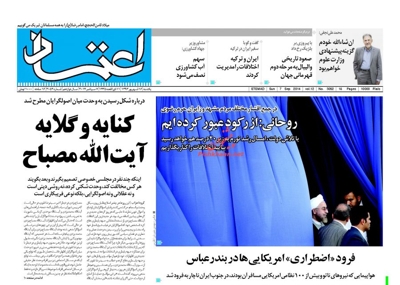
Etemad: “Iran and Turkey managed their disagreements.” That is the title the daily uses for an interview with Iran’s Ambassador to Turkey Alireza Bikdeli.

Etemad: “Ayatollah Mesbah Yazdi complains about the way principlists join hands.” Ayatollah Yazdi, a hardline member of the Islamic Revolution Stability Front, played a prominent role in helping Mahmoud Ahmadinejad rise to power in 2005. In the first two decades of the revolution, this member of the Assembly of Experts was more of a philosopher and scholar and largely stayed out of politics. In recent years he has expressed concerns about perceived deviation from the true path of the revolution and debuted on the political stage. He does not believe in democracy in the same way as reformists and moderate principlists do. He makes no secret of his lack of belief in popular vote, prompting his critics, both clergy and non-clergy, to suggest his ideals run counter to those of the architect of the Islamic Republic who famously said “Popular vote is the criterion.”

Etemad: “Iran’s national volleyball team is through to the second stage of the FIVB World Championship.”

Etemad: “The water share of farmlands to be cut in half,” said an adviser to the minister of agriculture jihad.


Etemaad Newspaper-09-07


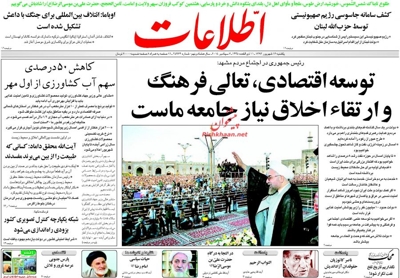
Ettela’at: “Economic development and promotion of culture and ethics are what our society needs.… By the end of the year [March 21, 2015] the oil sector will have posted 8 percent growth…. Primary steps have been taken to address environmental problems…. Had it not been for the assistance of the Iranian people and government, Iraq would not have been able to clear its towns of brutal terrorists…. Government tries to consolidate unity in society.” Those are some of the remarks the president made in a speech in Mashhad.

Ettela’at: “Those who do damage to the environment are corrupt,” said Ayatollah Mostafa Mohaghegh Damad, a philosopher and jurist who teaches law at Tehran’s Shahid Beheshti University. Dr. Mohaghegh Damad, who is also a board member of the Center for the Greater Islamic Encyclopedia, has penned a book titled “Environmental Jurisprudence”, which is meant to reconcile traditional jurisprudence with social life in the modern world.

Ettela’at: The Iranian police chief has said a nationwide closed-circuit police monitoring system will be launched shortly.


Ettelaat Newspaper-09-07


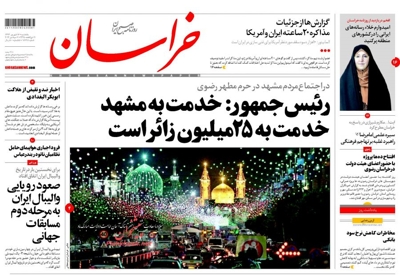
Khorasan: Iranian Foreign Ministry Spokeswoman Marziyeh Afkham, who is in Mashhad with the president, says Iranian media are largely absent on the global stage. Iran Front Page hopes to have taken the first steps toward filling that void.


khorasan Newspaper-09-07


World witnessing collapse of Western civilization: Hossein Nasr

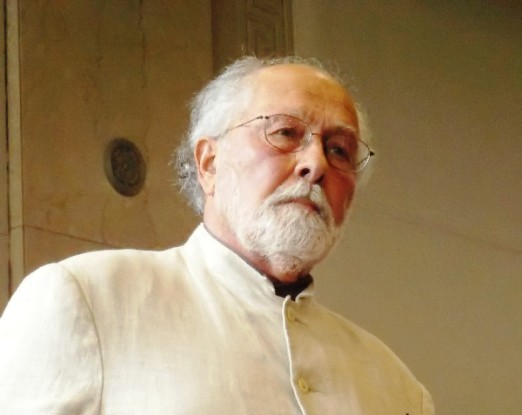
Hossein Nasr
Hossein Nasr

A prominent U.S.-based Iranian philosopher believes that Western civilization is on the path of collapse while Islamic civilization continues to rise in Western countries.

In an exclusive interview with the Mehr News Agency, Seyyed Hossein Nasr said that despite the incessant efforts by Western governments to sow discord among Muslims, the Islamic civilization continues to expand in the West and the Islamic thought continues to thrive.

Nasr, a professor of Islamic studies at George Washington University and a prominent Islamic philosopher, has authored many scholarly books and articles. He is also known for his contribution to the field of comparative religion.

Following is an excerpt of a translation from Persian of the interview with Professor Nasr, which appeared on the Mehr website on Saturday:

Q: Do you believe in the so-called renaissance of the Islamic civilization in the current world?

A: Yes. Despite all the tragedies we are currently witnessing in the Islamic world, in countries like Libya, Iraq, Syria, and Pakistan, the Islamic civilization is on the rise. If modern humans stop destroying the environment and allow the world to continue to exist and if there is something left of history, the Islamic civilization will certainly thrive.

Since I was a teenager, I always believed in the Islamic renaissance, and through the years, I have always tried to revive the logical and philosophical aspects of Islamic civilization. Even now, I am very optimistic about the Islamic renaissance.

Despite all the problems that the Islamic world is facing, the spiritual and religious position of Islam is much stronger than secularism and Christianity in the West.

For example, there are only 2 million Muslims living in Britain, which is a major European country that has a population of 55 million people. However, the number of people going to mosques for Friday prayers is more than the number of people attending churches on Sundays. This may seem inconceivable, but it is the reality. The world is witnessing the collapse of Western civilization, a civilization which once dominated and amazed everyone.

Q: What impact will the current Islamophobia campaign have on Western people’s perception of the religion of Islam?

A: Islam continues to spread in the West despite all the media attacks on the religion. Various governments continue to spend their money to sow discord between Shias and Sunnis, between Arabs and non-Arabs to break up their unity. However, Islam is on the rise in the West and its position is even better than what we saw 50 years ago.

At that time, when I was writing my Ph.D. dissertation at Harvard University, I studied most of the books written on Islam in the West. Now, after 50 years, the literature has remained the same. The Iranians, the Egyptians, and Muslims in other countries have done almost nothing new to promote Islam. It is, in fact, the reality of Islam itself which continues to thrive in an astonishing way.

As an Iranian and a Muslim, I firmly believe that Islamic civilization will be revived, despite all the problems and difficulties it is facing.

President describes containment of inflation as quite an achievement

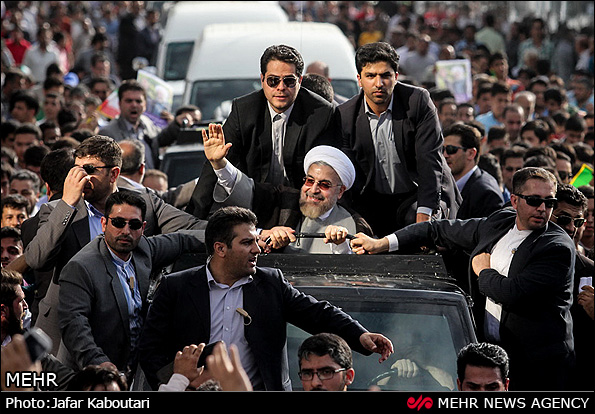
Rouhani in Mashhad
Rouhani in Mashhad

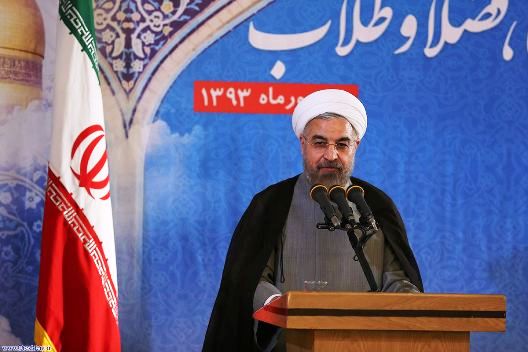
“Inflation will slip below 20 percent by yearend,” Iranian President Hassan Rouhani pledged on Saturday. The following is the translation of a report the Islamic Republic News Agency filed on the president’s comments at a meeting with religious scholars and seminary students in Khorasan Razavi Province:

The President said the country is “out of recession” and added, “What makes this achievement all the more important is that it comes on the back of two successive years of negative economic growth.”

Mr. Rouhani went on to say, “First-quarter figures suggest the economy posted 1.8 percent growth. Of course, that figure does not take account of oil exports.”

President Rouhani further stated that over the past year his government has taken important steps on the foreign policy front. “The way the world looks at Iran today is different from their attitude in the past. The government has managed to change the world’s mentality toward the Islamic Republic.”

[…]

In conclusion, the president described corruption as a deep-rooted problem the country is grappling with and said, “The fight against corruption can only be won in the long run. We need to join hands in order to eliminate the scourge of graft.”


Iran launches largest gas storage facility in Mideast

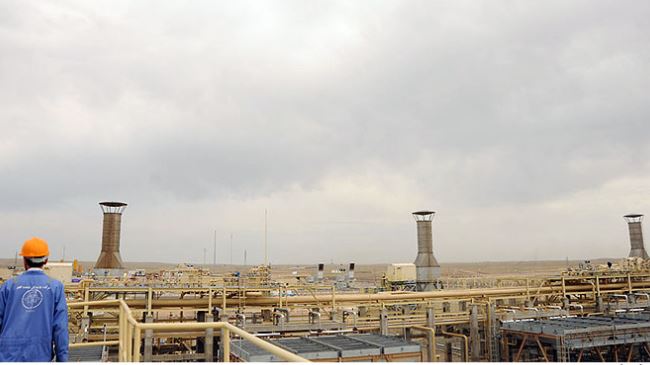
Iran-Gas Shourijeh facility

The inaugural ceremony of Shourijeh facility, which is located about 25 kilometers southeast of the city of Sarakhs, was held in the presence of Iranian Oil Minister Bijan Namdar Zanganeh on Sunday, IRNA reported.

Shourijeh storage facility, with the capacity of storing 4.8 billion cubic meters of natural gas, will help the country to reduce dependency on gas imports from Turkmenistan.

About ten million cubic meters per day of natural gas will be fed into the storage facility in summers and 20 million cubic meters per day withdrawn from it in autumns and winters.

Iran’s first gas storage facility was launched in the central province of Qom in early January. In November 2012, former managing director of the National Iranian Gas Company, Javad Owji, said the Islamic Republic plans to establish 40 gas storage facilities in the coming years.


Tehran backs Baghdad in fight with ISIL: Rouhani

Rouhani in Mashhad
Rouhani in Mashhad

The Iranian president made the remarks while addressing thousands of people in the holy city of Mashhad on Saturday.

President Rouhani praised the Iraqi nation’s efforts to battle the ISIL, saying security would not be possible in the neighboring country without Iran’s assistance.

He noted that some of the crisis-hit country’s towns would not have been liberated without Iran’s help.

“If it wasn’t for the assistance of the Iranian nation and the Iranian government, today we would not be witnessing relative security in Iraq. Alleys, towns, villages, and the region are being saved from the hands of savage terrorists and murderers day by day,” Rouhani said.

“All over Iraq the greatest service to create relative security and stability has been carried out by the Islamic Republic of Iran.”

Iraq has been fighting the ISIL terrorists since they took control of Mosul on June 10. The takeover was followed by the fall of the city of Tikrit, located 140 kilometers (87 miles) northwest of the capital Baghdad. The control of Tikrit was later retaken by the Iraqi army.

The ISIL terrorists have been committing heinous crimes in the captured areas, including the mass execution of civilians and Iraqi security forces.

Soldiers of the Iraqi army have been engaged in heavy fighting with the militants on different fronts and have so far been able to push back militants in several areas.

The United Nations says at least 1,688 were killed by violence in Iraq during August.