Tuesday, December 23, 2025
Home Blog Page 5080

Protests Rage in US over Brown’s Death

Shooting-black

The fatal shooting of 18-year-old Michael Brown by an officer on Saturday in Ferguson– a predominantly black suburb a few miles north of downtown St. Louis County — has sparked large protests, clashes and looting across the county.
After two nights of violent protests, President Barack Obama called the fatal shooting a tragedy and urged Tuesday for a thoughtful response.
“I know the events of the past few days have prompted strong passions, but … I urge everyone in Ferguson, Missouri, and across the country, to remember this young man through reflection and understanding,” Obama said in a statement.
Police officers, some in military-style uniforms, some carrying high-powered rifles and wearing balaclavas, fired teargas, rubber bullets and wooden baton rounds into the crowds, The Guardian reported Wednesday.
“We have a right to assemble, a right to freedom,” said Paul Muhammad, a protestor. “But here we are facing what looks like a military imposing martial law. It is not acceptable.”
The Police Department in the city of Ferguson refuses to reveal the name of the officer responsible for Brown’s death, citing threats to his safety.
Amidst the current unrest, a second police-involved shooting was reported overnight in Ferguson.
About 1:00 AM on Wednesday, multiple shots were fired and four or five armed individuals were seen, wearing ski masks, running near the intersection of Chambers Road and Sheffingdel Court in Ferguson, St. Louis Post-Dispatch, reported.
Police responded to the shootings and shot and injured one of the suspects. The man was in critical condition in hospital, a police spokesman said.
This is while a woman was shot in the head with a projectile about 12:20 AM in a drive-by shooting. Police said they were looking for four or five men. The woman was shot once and is expected to survive.
The Federal Aviation Administration approved a no-fly zone over Ferguson after police said one of their helicopters came under fire on “three or four occasions.” The no-fly zone is expected to remain in place until Monday.
Rev Al Sharpton, veteran civil rights leader and TV host, appeared alongside Brown’s parents on Tuesday to appeal for calm after two nights of protest in which about 50 people were arrested.
Vigils are being planned across the US for Thursday night in response to recent incidents of police brutality – including the death of Michael Brown.
Organizers say the vigils are part of the National Moment of Silence (#NMOS14), and that ceremonies will be held in more than 50 cities across 30 states.
Brown’s death has invoked the outrage after the 2012 racially-charged shooting of 17-year-old Trayvon Martin by a Florida neighborhood watch organizer who was later acquitted of murder charges.
The incident has once again raised questions about excessive police force when confronting black suspects.


#Michael Brown, #Ferguson police, #violence against blacks

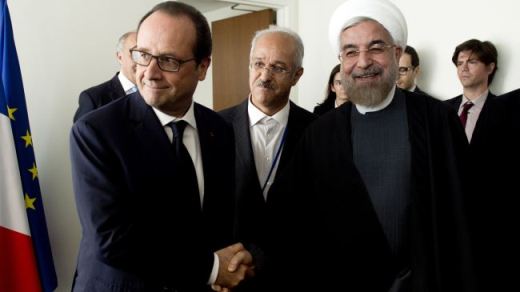
Iran determined in nuclear talks: President Rouhani

Iranian President Hassan Rouhani

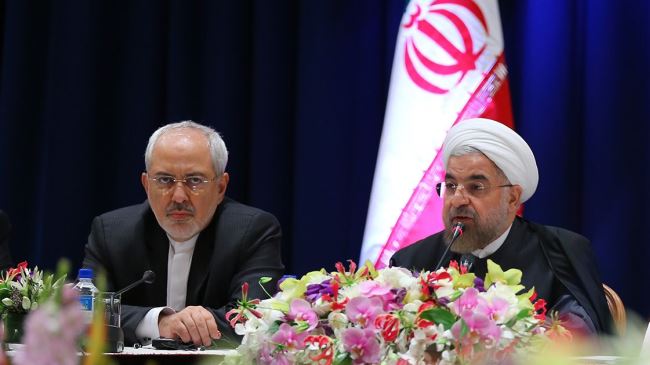
President Rouhani said in an address to an economic conference in the Iranian capital, Tehran, on Tuesday that Iran is serious and determined in the nuclear negotiations, but the world needs to know that the opportunity offered by the Islamic Republic is not everlasting.

The Iranian president also stated that a final nuclear deal over Iran’s nuclear energy program would serve the interests of all parties.

Also commenting on the US-led sanctions on the Islamic Republic, Rouhani said Iran has taken major steps to counter the bans. “We have weakened the sanctions… the lifting of the sanctions is in the interest of everyone.”

Iran and the five permanent members of the UN Security Council – the United States, France, Britain, Russia and China – plus Germany agreed on the extension of nuclear talks until November 24 with a view to achieving a permanent deal that would end the decade-old dispute over Iran’s nuclear energy program.

The two sides sealed an interim deal in Geneva, Switzerland, on November 23, 2013, for a six-month period. The deal, which took effect on January 20, expired on July 20.

Under the deal, dubbed the Geneva Joint Plan of Action, the six countries undertook to provide Iran with some sanctions relief in exchange for Iran agreeing to limit certain aspects of its nuclear activities.


History in a Slaughterhouse Called Ossification

Mohsen Esmaili is a jurist and a member of the Guardian


Mohsen Esmaili (Ph.D.) is a jurist and a member of the Guardian Council. Regardless of partisan orientation, he is viewed as an objective writer and critic by the country’s media. A 203rd issue of Panjereh (Window) Weekly has published an op-ed by Dr. Esmaili as to why Imam Ali, the first Shiite Imam and Prophet Muhammad’s son-in-law, was martyred. The publication of the original article – an analysis of a chapter in the history of Islam – was meant to coincide with the anniversary of the martyrdom of Imam Ali (PBUH). A translated version of the article in question is bound to help the readers develop a better understanding of the underlying reasons behind the emergence of the Taliban and extremist groupings such as ISIL (the Islamic State of Iraq and the Levant). It should be noted that ossification, fanaticism and irrationalism are not limited to Islam; they can be found among followers of other faiths, even among seculars, too. The following article is in fact a review of the opinions Martyr Motaharri held as to why Imam Ali was killed:

The martyrdom of the Commander of the Faithful, Imam Ali (PBUH) is one of the most tragic incidents in the history of mankind. He was and still is a legend, not just to Shiites and Muslims, but to all those who seek justice, morality and the Truth. That is why all edified souls mourn his loss. And the question remains as to why he was killed so cowardly.

The martyrdom of Imam Ali (PBUH) can be looked at from two different angles. First, who killed him and how? How was the stage set for his assassination? And what was the fallout of his assassination? Second, why did that assassin commit this inhumane crime? Although narrative history is useful, you should never end your quest for the truth about the past when you come up with answers to the first set of questions. In addition to answers as to who committed this tragic crime, you should explore why such a crime was committed. Only when the second question is answered can one make sure it is not repeated. Besides, research as such renders the martyrdom of Imam Ali, just like his life, into a lesson that deserves to be further explored.

A prominent thinker who has explored this issue is Martyr Morteza Motaharri. The present article is designed to take a look at his findings in this regard. Martyr Motaharri looks at this issue in the context of Islam and the Requirements of the Time. When someone asks, “Who killed Imam Ali?” the answer is Abd al-Rahman ibn Muljam. But when the question changes into what killed Imam Ali, the answer is ossification and fanaticism.

What has been reiterated in different books by Martyr Motaharri is that ossification poses the gravest threat to Islamic society and Muslim line of thinking. On several occasions he has warned about ossification. He believed that the Khawarij (a splinter group whose members initially supported Imam Ali, but later turned their back on the son-in-law of the Prophet) and the killers of the first Shiite Imam were only the tip of the iceberg. What is more important is the fact that the mentality of such individuals has always existed and continues to exist today.

In a book titled “Things about Ali that Attract and Repel” Martyr Motaharri writes, “From a religious perspective, breaking away is out of the question in the modern world, because the stage is not set for it today. But what Khawarij did can provide food for thought for us today. Although the offshoot of Islam they created is now history, the spirit of what they did lives on and is now part of the personality of many of us.”

What do ossification and the tendency to break away mean? What are their symptoms? And what constitutes an example of such mentality? Why are they so dangerous? Why should one always pay attention to them? And what are the ways of countering them? What comes below is an attempt to find answers to those questions in the books of a thinker the late Imam described as “always good”.

Tendency to break away draws a line between rationalism and religiosity

Martyr Morteza Motaharri

Martyr Motaharri believed that ossification and fanaticism were to blame for a tragedy as big as the assassination of Imam Ali in the altar. This is the danger that always threatens the humanity. To develop a better understanding of this threat, one should bear in mind that rationalism and religiosity are the two wings a person or a community needs as they fly toward prosperity.

Evidently, flight is impossible with a single wing. Elimination of religion from human life under the guise of wisdom amounts to treason and sinks humans to the nadir of misery. Examples of such misery are in evidence in the West today. To hide behind religiosity to ignore wisdom is bound to have terrible consequences. No doubt, recourse to the outward appearance of religion without paying heed to thinking will have more catastrophic consequences. In religious contexts too, rationalism takes priority and the religiosity of individuals is gauged on the basis of their wisdom.

Those who hide behind religion to deny the fundamentals of wisdom have not only not developed any insight into religion, but are painting an ugly picture of the Muslim faith, which is a divine boon, and thus prevent individuals from turning to religion. Is this not treason? They have stopped their search for the truth at the outermost layer of religion and are thus acting against faith. Khawarij were the epitome of individuals with such mentality. In this regard, Ibn Abi-Hadid says, “If you wish to understand the meaning of ossification and ignorance, pay attention to the fact that when they [Khawarij] decided to do it [kill Imam Ali], they deliberately chose the 19th of Ramadan, and said because they wanted to do good, it was much better to do it on a religiously important night so that they could be awarded by God.”

So Martyr Motaharri concludes that drawing a line between wisdom and religion is a pillar of the breakaway tendency, and warns that today such distinction is pretty much alive and as dangerous as ever. He further says, “Although the ideology of the splinter group did not last long, the mentality they cherished has been there in all Islamic periods. Today some contemporary intellectuals of the Muslim world have incorporated a modern version of such mentality into philosophy.”

Martyr Motaharri believes that Akhbari Shiites [who reject the use of reasoning in deriving verdicts] follow a similar line of thinking. “These two groups are very much like each other.”

Taking wisdom and reasoning away from religious instructions is like taking the soul away from human body. That is exactly what the Church did and today all faiths, including Islam, are paying a price for it. That is why the Koran and other religious texts lay much emphasis on reasoning and wisdom. Mohammad Reza Hamiki, a contemporary scholar, has put forth the theory of “Religious Goals, Religious Decree” to advise the faithful against becoming content with the outward appearance of religion. When caught in this snare, religious requirements which usually surface with the passage of time, turn into a force against the faith itself and fall into the hands of those who accuse Islam of inefficiency. That is an unforgivable sin to commit.

Signs and Consequences of the Breakaway Faith

It was mentioned that in the eyes of Martyr Motaharri what led to the martyrdom of Imam Ali (PBUH) was the fact that his fanatic, ossified killers drew a line between reasoning and religion. They were so fixated on the outward appearance of the faith that they believed those who committed cardinal sins were apostates. That is exactly what rendered their mentality more dangerous.

In his book, Martyr Motaharri said that the threat of hiding behind religion to reject reasoning still exists and has reared its ugly head several times since the emergence of Islam. He identified Khawarij as:

1. People who were diligent and steadfast in sticking to their ideology

2. Religious people who kept vigils and did not care about the material world

3. Ignorant people who were unable to tell right from wrong and misinterpreted things

4. Narrow-minded people who believed they were the only true Muslims in the world and alleged that others either misunderstood things or did not understand them at all and deserved to be tossed in hell.

Bringing these dangerous qualities together poses two serious threats to society. Imam Ali issued the following warning to Khawarij; “You are amongst the worst people. You are like arrows Satan uses against his targets and thus leads people astray and makes them doubtful.”

What are these two grave threats?

By putting aside tolerance and reasoning, Khawarij turn into tools in the hands of the powerful individuals. In other words, what makes the ignorance of these people doubly grave is that they might become playthings in the hands of the powerful and thus interfere with efforts to serve Islamic interests. Faithless hypocrites usually incite ignorant religious individuals against the Islamic community. In fact they turn into a sword in their hands and an arrow in their bows.

Their ignorance caused a certain victory of Imam Ali in the Battle of Siffin to be replaced by truce and his acceptance of arbitration which in turn resulted in the ouster of Imam Ali. Still, they later accused him of bowing to pressures to accept arbitration and assassinated him.

A second threat which the Nahj al-Balagha mentions is confusion among the public. That Khawarij capitalize on religious themes and implement the superficial aspects of the faith leads the public astray, consequently any effort to combat them becomes an uphill battle. Imam Ali (PBUH) likens their mentality to rabies and says, “In light of the fact that they keep a misleading appearance, no one other than me dares gouge their eyes.” (Nahj al-Balagha, 94)

Of all problems Imam Ali had to wrestle with Martyr Motaharri described Khawarij as the biggest. And Imam Ali so proudly says, “I was the only one who spotted the threat Khawarij posed. That they maintained a religious appearance and kept praying and were firm in their beliefs did nothing to keep the reality hidden from my eyes. It was me who realized if they gained power they would spread ossification, irrationalism and factionalism in the world and thus break the back of the Muslim faith. The Prophet has said, ‘Two groups really bothered me: irresponsible learned men and pious fools.’”…


Graves of Jewish martyrs in Tehran renovated

Iran martyrs
Iran martyrs

A 40th issue of Ofogh Bina Publication that belongs to Tehran’s Jewish Community reported in July that the Martyrs’ Foundation had renovated the graves of Jewish martyrs. The following is the translation of the short report by the magazine on the project:

Recent years have seen the Martyrs’ Foundation of the Islamic Revolution implement a project to renovate the graves of the martyrs of the Islamic Revolution and those who made the ultimate sacrifice during the imposed war [Iran-Iraq war in the 1980s].

The project to renovate Tehran’s Beheshtiyeh Cemetery, where followers of the Jewish faith are laid to rest, got underway in late March 2014. As part of the project the tombstones of Jewish martyrs were replaced and a martyrs’ symbol – Monument of Peace – jointly designed by Juliet Lalehzarian and Farzad Tubian was erected in the graveyard. The Martyrs’ Foundation of the Islamic Revolution has picked the up tab of the renovation project.

It should be noted that six Jewish martyrs, namely Shahram Zarrini, Salar Roshani, Azizeh Roshani, Yodyod Zion, Jacob Bakhaj, and Hamid Nahavandi have been laid to rest at the cemetery.

Nahavandi fell a martyr on the same day the Islamic Revolution was declared triumphant. He was killed when popular forces overran Tehran’s Eshratabad Garrison. His body was never retrieved.


Rare Corsac Fox Caught on Camera

Iran Wildlife - Rare Fox

Remember these bright inquisitive eyes staring into the camera. This is the first time Vulpes Corsac has locked eyes with the camera. This small carnivore is a rare mammal of Iran and until May when this picture was taken near Gonbad Kavus, there was no picture of it available.

Corsac Fox is smaller than the common fox. Besides the petite body and stretched eyes, what sets it apart from other foxes is cinnamon patches behind its ears, its black muzzle and short tail.

Photo: Fariborz Heydari

What Iran can do to halt the snowball of ISIL

ISIL Terrorist Group

What ISIL is doing in Iraq and Syria is a fixture of international news these days. An August 6th issue of Shargh, a Tehran-based newspaper, featured an article by Ardeshir Zarei-Qanavati on the new political landscape in the region and Iran’s potential role in efforts to contain the terrorist grouping. The following is the translation of the article in its entirety:

A new wave of attacks by the Islamic State – formerly known as the Islamic State, of Iraq and the Levant – on the Iraqi towns of Sinjar and Zamar, inhabited by Kurds, Yazidis, Shiites and other ethnic and religious minorities have pitted the grouping against Kurdish Peshmerga fighters and opened a new chapter in Iraq’s history.

The capture in recent weeks by Islamic State fighters of these towns and nearby oil fields, including a pipeline that takes Iraqi oil across the border to Turkey, as well as the country’s largest dam in Mosul shows that what is unfolding in Iraq is too important to turn a blind eye to.

That the terrorist grouping is focusing its attention on the Kurdish city of Kobane in neighboring Syria means Kurds in the region are being dragged into a conflict they have so far largely stayed away from.

Unfortunately miscalculations on the part of Kurdish leaders, particularly Massoud Barzani, and their subsequent attempt to capitalize on the feud between the Iraqi central government and the Islamic State to realize their lifelong dream of an independent Kurdistan are to blame for the failure of Iraqi Kurdistan to keep its eye on the ball and remain alert to the real danger.

That Massoud Barzani is playing up the gulf between Kurdistan and the central government in Baghdad on the one hand, and failure of an irresponsible Nuri al-Maliki to compromise on the other is cause for concern, particularly at a time when the Islamic State is gaining strategic ground in Iraq. Besides, such blunders give this terrorist grouping a free hand in capturing new territory and cementing its foothold in swaths of land it has already seized.

The fact that the Islamic State is disrupting the Iraqi and Syrian stability and has now taken its war machine to the heart of Kurdish land – all close allies of Iran – establishes new grounds for Iran to step in and defend its national interests.

It is time Iran, Syria, Iraq and Iraqi Kurdistan formed a responsible coalition to contain the Islamic State, ensure regional stability, turn up the heat on fundamentalist terrorists, secure their territorial integrity and develop a general policy on the foundation of regional security and integrity.

In light of what is happening on the ground in northern Iraq, one can conclude that the bubble of unilateralism has already burst. It seems that Tehran, Baghdad and Erbil have come to the conclusion that adoption of unilateral policies cannot stop the monster of the Islamic State in its tracks.

At a time when relations between Baghdad and Erbil are on the rocks and both are pursuing a one-sided policy to defuse the crisis, Tehran can build on the friendly relations it maintains with both sides to bring them together and set the stage for the emergence of new equations that would serve the interests of all moderates supporting regional stability.

The Foreign Ministry of the Islamic Republic of Iran can build on collective regional interests and warnings by the United Nations that the recent advances of the Islamic State could result in a humanitarian catastrophe to act as a mediator and get involved in a creative and constructive political game.

In light of the fact that the Iraqi Kurdistan is in the crosshairs of the Islamic State which poses a threat to regional stability as a whole, the stage has been set for those opposed to IS to form a united front.

At a time when the Iraqi government is struggling to stop the advance of the Islamic State and Kurds are no longer under the illusion that their Peshmerga fighters can defeat the Islamic State on their own, a more prominent role on the foreign policy front is inevitable for Tehran. This is a historic opportunity which should be seized immediately in a bid to serve our national interests.

It is true that the Islamic State is at present roaming territories in Iraq and Syria, but the fact that the stability of these two countries is intertwined with Iran’s national interests makes what IS fighters are doing an attack on our homeland.

Since the international community and the West, led by the United States, are simply issuing warnings about the danger posed by the Islamic State and do nothing constructive to contain the threat they pose, the importance of the role Iran plays as a regional power becomes more evident.

As a result of inaction on the part of centrist forces in the region and divisions in their ranks as to how the Islamic State should be taken on, the terrorist grouping has turned into a snowball that poses a graver threat as it rolls further down the hill.

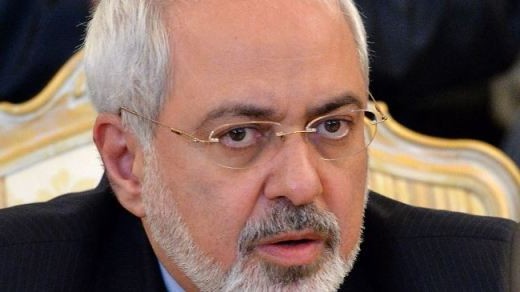
The Iranian diplomacy machine led by Foreign Minister Mohammad Javad Zarif should focus its attention on regional developments and realities on the ground in Iraq and Iraqi Kurdistan to end what has so far stopped Iraqi factions from forming a united front to take on the Islamic State.

Foot-dragging is a luxury we cannot afford at this juncture. Recent developments in Iraq and Syria show that the monster of the Islamic State is barreling toward a point at which its containment or isolation would be very costly, if not impossible.

As much as the Gaza war and the hypocritical policies of Benjamin Netanyahu could be a viewed as a ploy to make nuclear talks between Iran and the United State fail, a constructive role by Iran in Iraqi equations could be regarded as a good opportunity for Tehran to ensure regional security and signal to the world community that it is a force to be reckoned with when it comes to security in the crisis-wracked region of the Middle East.


Israel suffered humiliating defeat: Iran

Rouhani-Iranian Ambassadors

Addressing a gathering of Iranian ambassadors and envoys overseas in Tehran on Monday, President Rouhani said Israel’s crimes against the Palestinian people were so atrocious that even some of its supporters fell short of backing the regime.

The Israeli war on the Gaza Strip began on July 8. According to Palestinian health officials, the overall Palestinian death toll has reached nearly 1,940, with most of the fatalities being civilians. Nearly 10,000 others have also been wounded in the attacks.

The Israeli military says 3 Israeli civilians and 64 soldiers have been killed in the conflict, but Palestinian resistance movement Hamas puts the fatalities at more than 150.

Rouhani also referred to the nuclear talks between Iran and the five permanent members of the UN Security Council plus Germany and said Tehran is open to constructive interaction.

The Iranian chief executive, however, reiterated that Iran will not retreat from its legitimate rights, underscoring that the country’s national interests are the “red line” in the negotiations.

“We seek closer relations with the world; however, we defend our rights, interests and national security,” he said.

Iran and its six negotiating partners are holding talks to reach a final agreement aimed at resolving the standoff over Tehran’s civilian nuclear work.

The two sides signed a historic interim deal in Geneva last November. The agreement came into force on January 20 and expired six months later on July 20.

In July, Tehran and the six states agreed to extend their discussions until November 24 in a bid to work out a final accord.


No Plan for Russia’s Iran Oil Marketing

Zangeneh
Zangeneh
“In the negotiations for selling oil, we do not restrict ourselves to anything, but rumors about the signature of a contract with Russia for selling Iran’s oil are not true,” Zanganeh said.
He said during his meeting with Russian Energy Minister Alexander Novak, a memorandum was signed for development of economic, technical and trade ties between the two countries.
“During this trip [last week], an agreement was also signed for facilitating banking operations between Iranian and Russian banks with the objective of accelerating business operations in the two countries,” said the minister.
Zanganeh said Iran plans to raise its oil production by 700,000 b/d over the coming three years as part of the government plan to push the country out of recession.
The minister also said that Iran plans to increase production from the massive South Pars gas field by 300 mcm/d by March 2016.
He said that Iran will start developing Phase 11 of the offshore field, shared with Qatar, even if the Western governments do not lift sanctions to allow foreign companies to return to Iran.

Official: China Willing to Invest in Qom’s Monorail, Airport Projects

Iran-Qom's monorail
Iran-Qom's monorail

“Chinese companies are ready to cooperate with this province in the construction of the second phase of the monorail as well as the telecommunication networks, airport and highway construction projects and they intend to sign a memorandum of understanding (MoU) in this regard,” Top Adviser of China’s Gansu Governor General Oyang Jian said in Qom today.

He pointed to the activities of Gansu province in recent years, and said, “Gansu province is the first Chinese province that has set up a trade delegation.”

The Chinese official noted that the value of Gansu-Qom export/import has exceeded $100 million, and said since Gansu and Qom are sister provinces their cooperation should further increase.

He expressed the hope that Gansu and Qom provinces would increase their cooperation in the agriculture and energy sectors.

Gansu is a province of the People’s Republic of China, located in the Northwest of the country.

Last month, Chinese officials held talks with their Iranian counterparts to finalize a deal on financing railway development projects in Iran.

“Our priority is the development of railway through attracting finance and recently we have reached an understanding with China, which is being finalized now,” Deputy Director of Construction and Development of Infrastructures Transportation Company (CDITC) Seyed Massoud Nasr Azadani told FNA after the talks.

He, meantime, said that proper conditions are also ready for the Iranian companies to invest in building railway lines in the country.

Earlier today, Iran’s Ambassador to China Mehdi Safari underlined Tehran’s resolve to utilize every possible capacity to pave the ground for widening and deepening all-out relations with China.

Addressing the Iranian China-based Businessmen Council members, Safari said senior officials, in both Tehran and Beijing, have always underlined expansion of mutual cooperation between the two friendly countries.

He went on to say that the two countries’ trade stood at $39.5bln last year, of which $25.393bln pertained to China’s imports from Iran and $14.387bln to its exports to Iran.

Describing Iran as a reliable partner to China in the region, he further noted that China is well aware of Iran’s influential role in the strategic regions of West Asia, Middle-East and the Persian Gulf.

Recalling Iran’s very suitable situation for the Chinese investors, he further noted that a group of Chinese experts will visit Iran to study the location and infrastructure of Bandar Jask on rims of the Persian Gulf for investment and establishing industrial townships.

He called on the Iranian traders and economic activists to enter China’s great market and raise non-oil exports to the country.

Iran is currently China’s third largest supplier of crude, providing Beijing with roughly 12 percent of its total annual oil consumption.

Role of National Library in turning moderation to a discourse

Seyyed Reza Salehi Amiri, the current director of the NLI

The status of the National Library of Iran (NLI) as a determinant of power play and of relations between the establishment and the public is gradually improving. It was almost two decades ago that Seyyed Mohammad Khatami resigned his post in the Cabinet of then President Akbar Hashemi Rafsanjani to take charge of the NLI. That decision provided him a nice respite from the pressures of an executive position as well as from political wrangling so that he could focus on theoretical foundations of the Islamic revolution as well as on religious and historical issues, the common ground of civilizations, philosophy and rules of governance. He went on to put forth the idea of “Dialogue among Civilizations and Cultures” as the least expensive means to secure détente in international relations.

Mohammad Khatami’s stint at NLI has undoubtedly played a role in the idea of “Civil Society” he presented to the nation, in his victory in the 1997 presidential elections, and in the reform discourse he championed. Two decades on, will the directorship of NLI result in new theories and discourses? What will come next from the hills overlooking the capital’s Abbasabad Neighborhood, home to the NLI?


National Library of Iran

Seyyed Reza Salehi Amiri, the current director of the NLI has both similarities and differences with his predecessor: Mohammad Khatami. Salehi Amiri was only a small number of votes away from assuming a post in President Rouhani’s Cabinet. Of course, Khatami was successful in getting a vote of confidence from parliament, but gave in to pressures he could not tolerate and resigned as the minister of culture and Islamic guidance of the sixth government. One thing the two have in common is that both of them have focused on discourse – one on the discourse of reforms and the other on the discourse of moderation.

The present article features the answers the director of NLI or as a 221st issue of Mosalas Weekly would like to call “a close associate of Hassan Rouhani” has provided to questions asked by the editor of this principlist publication. The interview covers a wide range of questions including Amiri’s credentials, theoretical aspects of moderation and the coalition between reformists and moderates in elections.

The initial questions revolve around Amiri’s background and his association with Rouhani. “There are two distinct periods during which Mr. Rouhani and I worked together. In the first period that started in 2003 and ran through 2005, we were colleagues at the Supreme National Security Council, and in the second I was a member of the Center for Strategic Studies.”

In response to a question about his association with Mr. Rouhani, Salehi Amiri says: “Basically, I specialize in socio-cultural issues. At the Secretariat of the Supreme National Security Council and at the Center for Strategic Studies too, I focused on cultural and socio-cultural questions. At the university, I am in charge of the Cultural Management Department. Over the past decade, the Center for Strategic Studies has released a total of 400 research papers. The studies we conducted at the center fell into two categories. We would build on the results of the first-category research to prop up the academic atmosphere of the country, and the second category would eventually be used in policy-making as far as family, mass media and education were concerned at the State Expediency Council.”

On his academic and cultural background, he says, “The measures taken at the Center for Strategic Studies are of great importance. For example, if a government closely examined its own performance, it would be able to use the result of such assessment to develop a new discourse, either for itself or for its allies to be used in future races.”

He also talks about the theoretical aspects of moderation and their role in governance. The Q and A in question is presented in the form of an article here. The abridgment of the answers he has provided does not mean the content has been altered. In the interview which was conducted to mark the one-year anniversary of President Rouhani’s victory in election, Salehi Amiri also talks about the vote count:

“There were three of us: Hassan Rouhani, [Hesameddin] Ashna and me. Before midnight he [Mr. Rouhani] went to take some rest. We were worried, but he said he was not stressed at all because the tally would go ahead in keeping with procedure. Before he went to bed we told him about good results coming in from the provinces. He confidently told us, ‘His Excellency [the Supreme Leader] won’t let anyone rig the vote.’ Based on his familiarity with His Excellency and the latter’s sensitivity about the votes of the people, he was confident there would be no fraud. ‘There is no reason to be worried, results will be released the way they are.’’’

What the interview with Salehi Amiri reveals is that he is not tasked with developing a discourse for others – rather, he and other allies of Hassan Rouhani are trying to theorize moderation and win over some middle-of-the-road reformists and principlists in order to fare well in the upcoming parliamentary and presidential elections. The success of such efforts hinges on a number of factors, including the conclusiveness of nuclear talks and restoration of interactions with the rest of the world. Will world powers – namely P5+1 – once again ignore the moderation of Iranian statesmen which could lead to sustainable win-win interaction? If that turned out to be true, one can conclude that Salehi Amiri’s moderation discourse can only be useful in classrooms, and not in governance. The following is what he has said:


Mosalas magazine-221-Cover

Moderation is rooted in history and dates back to the time when Imam Ali [Prophet Muhammad’s son-in-law] was the caliph of the Muslim community. His five-year caliphate is an invaluable experience as far as religion, history and governance are concerned. […] The way he would treat those who were opposed to him, his tolerance of dissent and his just treatment of non-Muslims indicate that moderation was a hallmark of Ali-style governance.

In the course of history there were individuals such as Farabi, Naser Khosro and Avicenna who are hailed as intellectuals and wise thinkers. In the contemporary history and in the post-revolution Iran, Imam [Khomeini] manifested moderation. Unlike in other revolutions, Imam put forth a new idea and talked about popular uprising rather than armed struggle. He was bitterly opposed to the use of force in overhauling the foundations of a system. Although Imam followed a revolutionary approach, such behavior was moderate and came despite the fact that armed struggle would definitely have produced a swifter outcome. He was adamant that revelation of the crimes the Pahlavi regime committed would help society feel the impact of the performance of their rulers on their lives. That was what happened. When Imam said blood prevails against the sword, he revived the memory of the uprising the grandson of the Prophet led against injustice and incorporated that uprising with the Iranian revolution.

Such a prudent approach led to the emergence of a huge social movement. When Imam returned home, Iranian society had already embraced his revolution which was partly cultural in nature. The revolutionaries did not commit acts of violence. Imam neither supported nor attached importance to the militias who were bent on carrying out armed struggle.

It should be noted that all discourses that emerged in the wake of the revolution were partly based on Imam’s line of thinking. One of these discourses which came under the spotlight during the course of the war centered on values, a discourse which was championed by Imam and embraced by the government. It was the only period in which the official discourse was the same as the unofficial discourse, one which was integrated into society and its culture.

Afterwards, development and reconstruction, which were a necessity of the post-war era, took center stage. That discourse which could be described as a historical necessity proved effective in easing the country’s problems such as poverty and poor infrastructure and put it on course to growth and development.

The third discourse revolved around reforms of which public contribution [to day-to-day administration of affairs], political development and expansion of civil institutions were an integral part. The discourse in question came in response to a second set of social demands for public contribution to state decision-making. Then came the justice discourse. I believe the problem associated with this discourse is that its various aspects remained unexplained and justice was simply used as a slogan. Besides, the discourse of justice belongs to the Supreme Leader; in fact, it is a super-discourse that covers all other discourses of society.

After the justice discourse came moderation, one which was put forth as a necessity to secure national unity. A society weary of conflict, violence, political wrangling, illogical behavior and isolation was unwilling to be dragged into more disputes. In this tense atmosphere which was fraught with vengefulness, slander, and accusations society needed respite. That was when the discourse of moderation emerged.

The moderation discourse is an evolved form of previous discourses. It is not an imitation of previous discourses; nor does it run counter to the discourses that preceded it. This discourse believes in values, attaches importance to development and reconstruction, and views reforms as a vital necessity to sustain the political life of society. It regards justice as a source of all discourses. Still it believes that a new discourse is needed in order to secure national unity and political wisdom, and that a new language should be used in dealing with the rest of the world.

The most important reason behind the need for a new discourse is the inefficiency of the country’s foreign policy over the eight years [that led to the presidency of Hassan Rouhani]. This new discourse of moderation should not be viewed as conciliatory, inactive or unable to stand up for national interests and expediency. As we all know the macro-policies of the establishment are devised at a high level and different governments use different methods to implement those macro-policies. […]

Macro-policies of the establishment are those which eventually secure the go-ahead of the Supreme Leader and governments are required to implement them, through different methods, though. The methods the previous government used did not work, but I am certain the methods the current government is using will. The impact of those methods is already evident in the country’s foreign policy because the attitudes have changed. […]

The moderation discourse has a religious and ideological foundation which has manifested itself in the governance of the Commander of the Faithful: Imam Ali (PBUH). Moderation is part of our religious principles and can be easily traced in the conduct of religious greats. Historically, wisdom has been at loggerheads with ossification. Wisdom is one of the pillars of moderation. In fact, wisdom lies at the center of every decision we make. Why do wisdom and our national interests require us to opt for moderation in our foreign policy today? Why should we choose interaction on the domestic front? The answer is that wisdom necessitates measures to steer a politics-weary society toward calm. I believe moderation is built on a theoretically strong foundation. […]

The philosophical, religious, diplomatic, economic, cultural and social foundations of moderation are all there. What we are doing now is tapping into a historical experience, the approach of the Prophet and Imam Ali, and the mentality of Imam which continued well into the post-revolution era, in order to define, not invent, the discourse of moderation. Moderation is a discourse which is already part of the country’s political system.

Some prominent individuals including sources of emulation, elites and clergymen who have no political leanings manifest moderation. In other words, moderation which respects other discourses such as principlism and reformism has made it onto the country’s political scene with a new language. In this new language, political boundaries are not demarcated. The current government is a moderate one. You cannot call it a reformist government or one which is exclusively committed to reconstruction. This government brings together all components necessary to secure national unity and development, that is why individuals with different affiliations are brought on board based on merits. […] Political approaches usually entail red lines, and the president has called extremism as the red line of his government.

Only those who do not walk down the path of wisdom, those who constantly seek to incite violence and disrupt the political atmosphere, those who are out there only to secure individual and group interests, and those whose management becomes meaningful only in a tense atmosphere cannot be part of this government. I believe the extremist line of thinking is very limited in Iran, but its limited followers are loud enough to be heard. At the same time the potential for moderation is great. In light of the fact that those who are moderate believe in wisdom and follow a strategy of unity, they are less likely to make the political atmosphere tense.

A comparative study of how things were yesterday and where they stand today reveals that society is in an ideal condition as far as stability and tranquility are concerned. Some view this calm as running counter to their interests and try their best to provoke the government into reaction and thus disturb the prevailing calm. If that is not the case, what does this great volume of misinformation, slander, character assassination and misjudgment [targeting the government] mean? For example, an Iranian correspondent [who is in Vienna to cover talks between Iran and P5+1] asks the US Under-Secretary of State [Wendy] Sherman when the parties to the negotiations are going to talk about Iranian missiles. That question is asked despite the fact that the correspondent knows well that Iran’s missiles are not on the agenda and that the Islamic Republic has no intention of talking about its missiles. Why is such a question asked from the US diplomat? The answer is that they want to pitch the idea that [Iranian] diplomats do not tell the truth and the correspondent wants to hear the truth from Mrs. Sherman. They seek to disturb the calm that exists on the foreign policy front.

But the government is too smart to be caught in this snare, and believes it has to spend the better part of its energy on the country’s development drive and on answering the needs of the public rather than countering such movements. […]

The moderation discourse seeks to promote the kind of political system that makes optimal use of the experience of the last thirty-something years to secure full-scale political, economic, social and cultural development and serve the interests of the public. In the process it is the national unity, and not political reprisal, that takes center stage. This is the central pillar of the discourse that seeks to create a national government to which everyone contributes. […]

On the religious front, attention to the viewpoints of the sources of emulation and clergymen is instrumental in the success of the government. […] The government also views compliance with the orders of the Supreme Leader as a necessity. Over the past year the government has immediately implemented all the instructions and policies communicated by the leader. This is what real compliance means. Compliance should come in action rather than in words and superficial behavior.

Another approach of the government concerns the elite, pundits, thinkers and other influential individuals that serve as a link between the public and the government. The government is in close contact with these individuals and views dialogue with the elite as a vital necessity.

At present, extremists are bent on making the public draw a line between the establishment and the executive branch, and this does injustice to both. History shows that parallel governance is costly and inefficient, and the government of moderation believes that nothing comes between it and the establishment at large. […] In the Islamic Republic of Iran, all branches of government and all institutions are part of a central framework. The use of force, threats and pressure to push some out and thus set the stage for subjecting them to criticism is unjust.

Three factors have contributed to conclusions by reformists that sticking to power is not their ideal: the eight years they were at the helm and the challenges they faced in the process, the eight years Ahmadinejad was in office, and the [post-election] incidents of 2009 which they found extremely bitter to swallow. The experience of the past years proved to reformists that there are others who can run the country and steer it in the right direction without necessarily landing on a collision course with them.

Mr. Rouhani was an independent who ranona platform of independence. Reformists do not view the rise to power of Mr. Rouhani as contradictory to their goals and views, so they regard cooperation with a government that seeks to serve the interests of the public as part of their mission. […] What Mr. Rouhani says today is in line with what he has in mind. Basically, he does not accept duality in the policies that are announced and those which are implemented. He says what he believes in. […]

His stance on the nuclear issue has remained unchanged since day one. In an interview [before being elected], he said the direction the government of Mr. Ahmadinejad was leading the country in ran counter to our national interests. In the [presidential] debates, he reaffirmed his stance and called for a change in that direction.

On the economic front, he believes in development with an emphasis on social justice so that those who are on the lower rungs of society are given a chance to benefit from the development drive. On the cultural front, he has put modern thinking with an emphasis on principles of Islam and wisdom under the spotlight. He believes what he says is based on religious and ideological principles. For instance, his warning that people should not be forced to go to Heaven [a reference to insistence by some officials that the Islamic dress code should be enforced strictly at all costs] is based on a story involving the Prophet.

He follows a similar approach when it comes to the mass media and has recently elaborated on that approach in a press conference. He has touched on his policy vis-à-vis the elite during a speech at university. His approaches in other areas are more or less similar.

For a person like me who has spent years with him, those things are nothing new. They are in fact expressive of his views. But for those who are unfamiliar with the language he uses, they sound new. You take a look at his speeches on the campaign trail and you come across concepts such as cultural pluralism, national cohesion, national unity, civic rights, privacy, compliance with political ethics, respect for national and religious identity and support for guilds, including the Media Guild and the Cinema House. He believes that the public handed him a mandate to promote these concepts and that his government should be faithful to the things the public has entrusted it with. I believe what he’s doing is in line with the promises he has made to the public. […]

And the important thing here is that Mr. Rouhani believes that political activities should set the stage for development rather than dispute. I believe his strategy is a good one. He is not trying to blow up the country’s political atmosphere – rather, he is bent on tapping into the country’s political potential to secure national unity. Let me repeat it, the 11th government uses politics for loftier purposes, not simply for political purposes. Politics should not be a source of dispute – rather, it should be used as a basis for development. This is a very important approach. In other words, the government never seeks political confrontation; what the government is after is interaction.