Sunday, December 28, 2025
Home Blog Page 5012

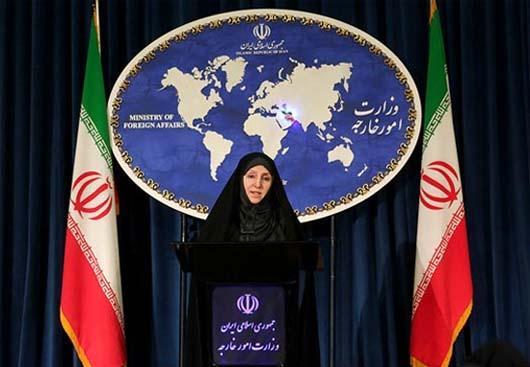
Zarif: Nobody questions Iran’s enrichment program

Iran-Zarif-nuclear

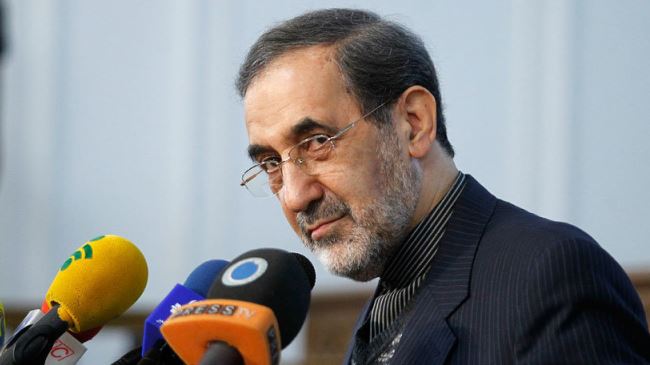
Iranian Foreign Minister Mohammad Javad Zarif says Iran has the right to have an enrichment program under any deal with P5+1.

Zarif made the remarks at a press conferences at the end of week-long talks between Iran and P5+1 – Russia, China, France, Britain, the US, and Germany– in the Austrian capital Vienna on Monday.

“I do not believe that anybody any longer questions Iran’s enrichment program. We believe that right of Iran to the peaceful nuclear energy, including uranium enrichment, is enshrined in the NPT (Non-Proliferation Treaty), which does not require anybody’s recognition. The right is there. What is important is for Iran to be able to implement that right, to exercise that right without the threat of sanctions and pressure which are, in our view, illegal,” Zarif stated.

“I believe everybody has worked hard particularly over the last week… in order to overcome rather important differences” between Iran and P5+1, Zarif said, adding, that the discussions centered on two objectives — ensuring that Iran’s nuclear program remains peaceful and sanctions imposed on Iran are lifted.

“We have always said that Iran has no strategic interest in nuclear weapons and nuclear weapons don’t serve our strategic interests,” Zarif further said, adding, “Nuclear weapons are against every principle of our faith and our beliefs.”

“We seek to develop nuclear energy for peaceful purposes,” Zarif noted.

The Iranian foreign minister further touched upon the issue of illegal sanctions imposed on Iran, saying, “The sanctions are not only misguided… but are totally ineffective.”

“Sanctions do not resolve the problem,” Zarif stated. “Only, and I stress, only a negotiated resolution” can lead to the termination of standoff between Iran and the West over Tehran’s nuclear energy program.

“We believe that a negotiated resolution is within reach,” he asserted.

A political agreement between Iran and the six countries is within reach with a positive-sum rather than zero-sum perspective, said the Iranian foreign minister, adding that four months are enough to resolve outstanding issues in the nuclear negotiations.

The top diplomat further said that the rest of a now extended seven-month deadline would be used to put complicated technical issues into a final agreement.

In their last round of talks before a November 24 deadline, Iran and P5+1 held nearly a week of intense negotiations in Vienna on how to tackle the remaining obstacles that exist in the way of reaching a comprehensive agreement.

At the end of the talks, the two sides agreed to extend the Joint Plan of Action to July 1, 2015.

President Putin: Iran has right to enrichment on its own soil

Russian-President-Putin

Russian President Vladimir Putin has emphasized Iran’s right to enrichment on its own soil.

The Russian president made the remarks in a Monday telephone conversation with Iranian President Hassan Rouhani after Iran and the Sextet of world powers agreed to extend the nuclear talks for seven months.

“It matters that the negotiations lead to Iran’s achievement of its rights, especially in the area of enrichment, and enrichment on its own soil is Iran’s right,” Putin stated.

He further said that during the talks between Iran and P5+1 the two sides “lacked only time for reaching a comprehensive agreement.”

Putin expressed hope that the negotiations culminate in an acceptable agreement that encompasses the interests of all sides.

The Iranian president also expressed hope that the talks lead to a comprehensive agreement which is in favor of all nations, the Middle East, and the world.

In their last round of talks before a November 24 deadline, Iran and P5+1 — Russia, China, France, Britain, the US, and Germany — held nearly a week of intense negotiations in Vienna on how to tackle the remaining obstacles that exist in the way of reaching a comprehensive agreement.

At the end of the talks, the two sides agreed to extend the Joint Plan of Action to July 1, 2015.

Iran will not bow to pressure, sanctions: Rouhani

Iran-Rouhani
Iran-Rouhani

“Today, the opposite negotiating sides have reached the conclusion that pressure and sanctions on Iran will not bear fruit,” Rouhani said in a live television interview on Monday after Iran and the six countries agreed to extend the nuclear talks for seven months.

He added that the Islamic Republic would never give up its nuclear rights, saying that the country’s nuclear facilities would certainly remain operational and Iran would never stop its centrifuges.

He noted that Iran pursues two main objectives in its talks with the P5+1 group, which include keeping its nuclear technology and lifting sanctions on Tehran.

“At present, no one in the world has any doubt that Iran must have nuclear technology, including enrichment on its soil, and no one has any doubt that sanctions must be lifted,” Rouhani added.

The Iranian president also pointed out that the Iranian nation will be the final winner in the negotiations with the P5+1 countries over Tehran’s nuclear program.

Rouhani emphasized that the path of nuclear negotiations would lead to a final agreement, noting that all the sides in the nuclear talks had consensus on the extension of the nuclear talks as an effort to reach a final goal.

“Iran’s logic is one of negotiations and dialog; and nuclear talks will be continued with seriousness until a final agreement is struck,” he said.

Stressing that the latest round of nuclear talks in Vienna was positive, Rouhani added that although the negotiating sides failed to reach a final agreement, they managed to take steps forward because the conditions now are “completely different from [what they were] three months and six months ago, logics have come closer together and may of gaps have been filled.”

The sides took steps to reach an understanding and a final agreement “but reaching a written and final agreement needs time,” he added.

In their last round of talks before a November 24 deadline for reaching a comprehensive nuclear deal, Iran and the P5+1 countries — the United States, Russia, China, Germany, France and Britain — held nearly a week of intense negotiations in Vienna on how to tackle the remaining obstacles that exist in the way of reaching an agreement.

At the end of the talks, the two sides agreed to extend the Joint Plan of Action to July 1, 2015.


Iran committed to Joint Action Plan: US

Kerry-Iran-Nuclear

Speaking at a Monday press conference in Vienna after the last round of nuclear negotiations, Kerry pointed to criticism of the Joint Plan of Action (JPOA), signed between Iran and the P5+1 last November, noting, “The interim agreement wasn’t violated. Iran has held up its end of the bargain, and the sanctions regime has remained intact.”

“We want the people of Iran to get the economic relief that they seek and to be able to rejoin the international community. We want to terminate the sanctions. Yes, we want to terminate the sanctions,” the secretary of state said.

“Today, Iran has no 20-percent enriched uranium; zero; none; and they have diluted and converted every ounce that they have and suspended all uranium enrichment above five percent,” Kerry said, adding, “Today, IAEA (International Atomic Energy Agency) inspectors have daily access to Iran’s enrichment activities and a far deeper understanding of Iran’s program.”

“That is how you build trust and that is how Iran made the decision to do it,” Kerry said, pointing out that the IAEA inspectors “have been able to verify that Iran is indeed living up to its JPOA commitments.”

He lauded the achievements made in the course of latest round of nuclear negotiations, saying, “In these last days in Vienna, we have made real and substantial progress and we have seen new ideas surface.”

“Progress was indeed made on some of the most vexing challenges that we face and we now see the path toward potentially resolving some issues that had been intractable,” the top US diplomat noted, adding, “We believe a comprehensive deal that addresses the world’s concerns is possible. It is desirable.”

He also praised the efforts by all the parties engaged in the talks, including the efforts devoted by Iranian Foreign Minister Mohammad Javad Zarif, saying, “The Iranian foreign minister has worked hard and he has worked diligently, has approached these negotiations in good faith and…that is what it takes to try to resolve the kind of difficult issues here.”

“We are jointly – the P5+1 six nations and Iran – extending these talks for seven months with a very specific goal of finishing the political agreement within four months.… At the end of four months, if we have not agreed on the major elements by that point in time – and there is no clear path – we can revisit [to see] how we then want to choose to proceed,” Kerry said.

The nuclear talks between Iran and the P5+1 group of countries ended in Vienna on Monday with the two sides agreeing to extend the Joint Plan of Action to July 1, 2015.

Iran, the United States, Russia, China, Germany, France and Britain held nearly a week of intense negotiations on how to tackle the remaining obstacles that exist in the way of reaching an agreement.

Under the Joint Plan of Action reached between the two sides in November 2013, a final comprehensive deal aims to give assurances that Tehran’s nuclear program is exclusively peaceful and, at the same time, lift all sanctions imposed against the Iranian nation over the country’s nuclear energy program.

Iran has repeatedly said its nuclear program is for peaceful purposes, including generating electricity and making radioisotopes for its cancer patients.

Iran complies with interim nuclear agreement: IAEA

Iran-IAEA-Vienna

The IAEA issued a positive report on Monday hours after Iran and the P5+1 ended breathtaking negotiations in the Austrian capital, Vienna, and agreed to extend the Joint Plan of Action to July 1, 2015, in order to reach a comprehensive deal on Tehran’s nuclear program.

The UN nuclear agency’s confidential report, obtained by Reuters, said Iran has lowered the stockpile of low-enriched uranium gas and taken other action as part of a series of moves agreed under the terms of the preliminary agreement.

Iran has always shown goodwill to clear any ambiguities about its nuclear program and the country’s nuclear facilities have been under constant IAEA supervision.

Iran and the P5+1 group of world powers – Russia, China, France, Britain, the US and Germany — held talks in Vienna over the past seven days to hammer out a comprehensive deal on Tehran’s nuclear program.

Under the Joint Plan of Action reached between the two sides in November 2013, a final comprehensive deal aims to give assurances that Tehran’s nuclear program is exclusively peaceful and, at the same time, lift all sanctions imposed against the Iranian nation over the country’s nuclear energy program.

Iran has repeatedly said its nuclear program is for peaceful purposes, including generating electricity and making radioisotopes for its cancer patients.

Iran, P5+1 make progress in nuclear talks: German FM

Frank-Walter-Steinmeier

“We have made progress, new ideas have been put on the table,” Steinmeier said on Monday at the end of seven days of talks between Iran and the six countries over Tehran’s nuclear program.

“The ideas have the capacity to bridge several differences that are still there. But because there are technical details, we have to say that the new ideas must be tested by experts,” he added.

The German minister said Iran and the P5+1 failed to bridge all the gaps but they are in the “right direction” and the atmosphere of the Vienna talks has been very constructive.

He urged the two sides to make use of the chance they have made in order to end a decade-long dispute over Iran’s nuclear issue.

“We are hoping to use this chance but we also have a responsibility not only towards ourselves but also towards all states in the world and the region and countries which have justifiable concerns about Iran’s nuclear program,” Steinmeier added.

He emphasized that both Iran and the P5+1 should resume intensive talks in the coming days and weeks, noting that a few months should be used to reach a framework that can later be complemented by a few details.

“But that at this moment, nobody is disappointed at the talks and I think all the participating parties believe there’s a chance to reach an agreement,” the German minister pointed out.

Meanwhile, Russian Foreign Minister Sergei Lavrov said on Monday that “substantial progress” has been made in the Vienna nuclear talks but Iran and the P5+1 have failed to reach a final agreement.

“Substantial progress was made,” Lavrov said, adding that he expects the sides would manage to agree on the “basic principles” of a final document in three or four months.

The nuclear talks between Iran and the so-called P5+1 group of countries – Russia, China, France, Britain, the US and Germany — ended in Vienna on Monday with the two sides agreeing to extend the Joint Plan of Action, which they signed last November, to July 1, 2015.

Iran nuclear talks to resume in December: Hammond

UK-Hammond

Hammond made the remarks on Monday after an agreement between Iran and the six world powers to extend the nuclear talks to July 1, 2015.

“There will be no pause, we will have meetings through December, we are determined to get to the outline of an agreement within the next three months and then spend the remaining period of the extension working out the precise detail and the technical schedules that would have to be done anyway,” he said.

Hammond expressed regret over the fact that the two sides did not reach a final agreement before the deadline, but hailed the significant progress the parties made in the latest round of negotiations.

“Well it’s a disappointment (failing to meet the Monday deadline) but as you say, there has been momentum and there has been good will on both sides and the atmospherics are positive,” he said.

In their last round of talks before a November 24 deadline for reaching a comprehensive nuclear deal, Iran, the United States, Russia, China, Germany, France and Britain held nearly a week of intense negotiations in Vienna on how to tackle the remaining obstacles that exist in the way of reaching an agreement.

Under the Joint Plan of Action reached between the two sides in November 2013, a final comprehensive deal aims to give assurances that Tehran’s nuclear program is exclusively peaceful and, at the same time, lift all sanctions imposed against the Iranian nation over the country’s nuclear program.

Iran has repeatedly said its nuclear program is for peaceful purposes, including generating electricity and making radioisotopes for its cancer patients.

Iranian bishops fully support nuclear team

letter

A host of high-ranking Assyrian and Armenian bishops in Iran have sent a letter to US President Barack Obama to express their full support for the ongoing nuclear talks between Iran and six world powers, describing the conclusion of a possible accord as a step forward toward establishment of sustainable peace.

Fars News Agency (FNA) on November 24 filed a report on the letter sent by the bishops of the Christian Assyrians and Armenians to the US president. The missive, which bears the signatures of the priests of Iran’s Christian community and their representatives in the Islamic Consultative Assembly, has some highlights as follow:

The experience [members of] the Christian community have gained from social life in Iran shows that despite the existing [anti-Iran] media hype, Muslim Iranians enjoy an old civilization and rich culture and have strong faith in Islamic principles and religious teachings.

Iran’s traditions which have been established based on religious beliefs and teachings have left a deep ideological and ethical impact on the country’s ruling system, political life and social relations. A case in point is the country’s religious tolerance which has manifested itself in the direct presence of people representing religious minorities in parliament; freedom to practice their faith, live their own communal life, and learn their mother tongue and their religious principles.

A fatwa issued by the Supreme Leader and the commander-in-chief of the armed forces banning the supply, purchase, production or use of atomic weaponry is yet another proof that like other divine faiths Shiite clerics disapprove of and reject weapons of mass destruction, chemical and nuclear arms included.

The fatwa is of great essence in Islamic traditions since it is binding on Muslims and they are required by their faith to comply with such edicts.

We, the archbishops of the Armenian and Assyrian churches in Iran, together with our representatives in the Islamic Consultative Assembly, fully support the ongoing nuclear talks with P5+1. Any possible deal which would come out of the talks will be a step forward in efforts to establish sustainable peace. A fair result of the talks could see tolerance and constructive interaction take the place of pervasive violence in the region.

New Yorker analyst: The collapse of nuclear talks unlikely

Hooman Majd
Hooman Majd

The November 24 deadline is upon us and the negotiations are reaching the hours of truth, with the two sides saying some gaps remain unfilled. There is a growing possibility that yet another interim agreement is concluded and talks are extended for a couple of months. Failure of the talks still remains an option, albeit not strong enough to be a factor in the calculus of Iran or the West.

Fars News Agency (FNA) filed an interview with Hooman Majd, a New York-based Iranian-American writer and journalist, on Monday November 24 on speculations over the nuclear negotiations and the slim chance of the talks breaking down.

Majd, who is an analyst with the New Yorker, said that chances for the talks to fail are slight and that the [positive] effects of a possible deal are of great importance for both Iran and the West. The following is a partial translation of what Majd had to tell FNA:

Parties to the talks are trying to clinch an agreement which could appease the critics.

For the time being, it is impossible to predict the result of the talks, because even the negotiators don’t know if they could ink a final deal. What is certain, though, is that both the US and Iran want to reach an agreement they could defend in the face of criticism. Another point is that neither party is willing to give in to what the other side is calling for.

A deal seems more likely to be concluded thanks to a strong political will on both sides following intense talks. It remains to be seen if the negotiators could strike a comprehensive accord or they agree to the framework of a deal and leave the details for future talks. I think the chances of reaching one of these two are more than 50 percent and the odds of a breakdown are less than 20 percent.

An agreement will carry weight for the two sides. It would mean the West’s regional interests can be put in order and the two countries can cooperate in areas of mutual interest and reduce tensions.

Whether a possible deal could mark the beginning of a thaw in US-Iran relations remains to be seen, but it could produce positive economic and political results for Iran. It will also boost the legitimacy of the Iranian establishment at home and abroad and will open the door to broader efforts to effectively deal with problems the region is facing.

If talks end inconclusively, the two sides will face dire consequences. Iran will probably be hit with more sanctions and isolation. As for the US, it will face obstacles in its efforts to stabilize the region and support its allies.

If so, tensions will mount and the specter of a war or conflict will continue to hover over the region. The total breakdown of the talks is the worst-case scenario one can imagine.

Why did Saudi foreign minister travel to Vienna uninvited?

Saudi Foreign Minister Saud al-Faisal to Vienna

In reaction to a surprise trip by Saudi Foreign Minister Saud al-Faisal to Vienna [the venue of ongoing nuclear talks between Iran and P5+1] and his talks with US Secretary of State John Kerry, Alef, a news website, said, “the presence of the uninvited guest on the sidelines of the Vienna talks” translated into a thank-you message from Washington to Riyadh for the latter’s efforts to send crude prices tumbling and thus put pressure on Iran and Russia.

Donyay-e Eghtesad newspaper described Saudi Arabia as a disruptor of the nuclear talks in Vienna which tries “to prevent the sides from arriving at an agreement”. It says that Saud al-Faisal is in the Austrian capital to represent Israel.

Presence of Saudi official belittled the kingdom: MP

Tasnim News Agency quoted Esmail Kosari, a member of the National Security and Foreign Policy Committee of the Iranian parliament, as saying, “The presence of the Saudi top diplomat in the venue of the nuclear talks amounts to disrespect for the kingdom.”

He went on to say, “Saudi Arabia should know that its petrodollars will not always pay off. It needs to wait and see the future of the talks more tactfully.”

Americans are selling the nuclear deadlock to Saudis

Fars News Agency filed a report on the reason why the Saudi foreign minister flew to Vienna to meet with his US counterpart. It said, “The West is trying to pitch the snag over the nuclear talks to the Saudis. Saudi Arabia and other sheikhdoms in the Persian Gulf are the ones who have to pay a price for the excessive demands of the Americans.”