Friday, April 24, 2026
Home Blog Page 5000

A look at Iranian newspaper front pages on Dec. 30

Iranian Newspapers Headlines

The row between parliament and the executive over the alleged withdrawal of money by the latter from the National Development Fund continued to dominate the front pages of Iranian dailies on Tuesday. Some newspapers led on comments by the Central Bank chief that the rial will gain ground against major currencies after the holiday season and those of President Obama about the likelihood of a thaw in relations between Tehran and Washington.


Abrar: Mohammad Bagher Nobakht has been tapped by the president to lead the newly-reinstated Management and Planning Organization.

Abrar: The Economy Council has approved the Oil Ministry’s plans to develop the oilfields Iran jointly owns with other countries.
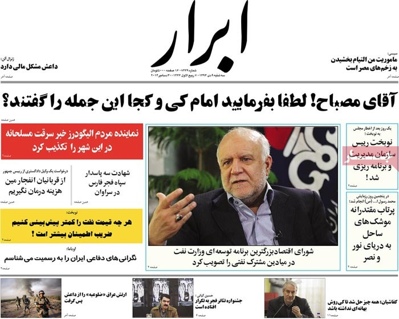
Abrar newspaper 12 - 30


Abrar-e Eghtesadi: The value of rial against the greenback will increase after January, said the governor of the Central Bank of Iran.
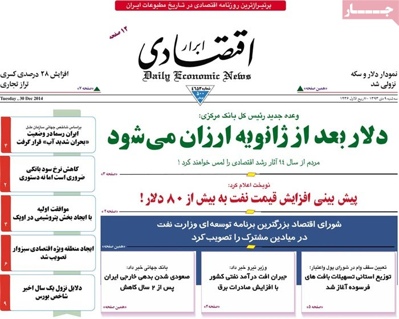
 

Abrare eghtesadi newspaper 12 - 30


Aftab-e Yazd: The $4 billion duel [between parliament and the executive branch] continues. The Inspector General has said there has been no withdrawal from the National Development Fund.

Aftab-e Yazd: President Obama has not ruled out the reopening of the US embassy in Tehran.
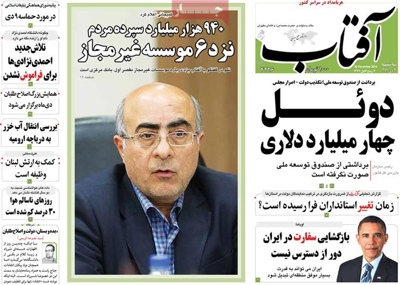
 

Aftabe yazd newspaper 12 - 30


Arman-e Emrooz: “[Islamic Revolution Guard Corps Brigadier General Hamid] Taghavi made the ultimate sacrifice in Samarra, Iraq to prevent Iranians dying inside Iran,” said Ali Shamkhani, the secretary of the Supreme National Security Council at the funeral of the Revolution Guards commander who was martyred in Iraq on an advisory mission.

Arman-e Emrooz: The spokesman of the Guardian Council has urged political groupings not to use the name of the council as a means to intimidate each other.
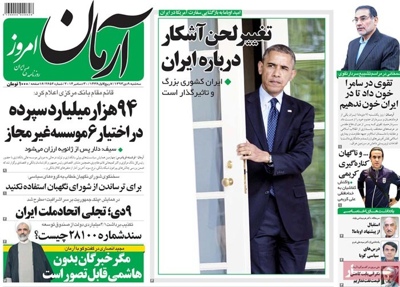
 

Armane emruz newspaper 12 - 30


Asr-e Iranian: The Iranian law enforcement has seized a ton of narcotics [in the southeast], killing two drug traffickers in an operation.
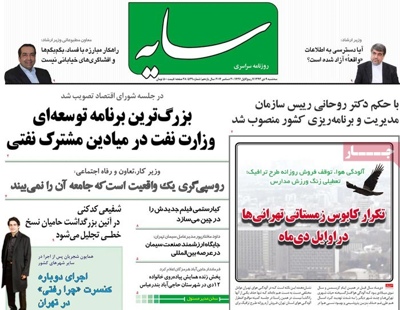
 

Sayeh newspaper 12 - 30


Ebtekar: Three members of the Islamic Revolution Guard Corps were martyred in an ambush by outlaws on the border with Pakistan.

Ebtekar: Some 2,000 Syrians have been executed by IS terrorists in the past six months.
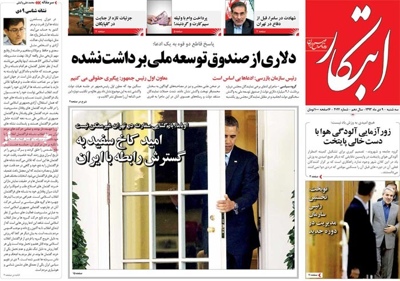
 

Ebtekar newspaper 12 - 30


Eghtesad-e Pooya: The number of foreigners entering the Iranian stock market has increased 8-fold.

Eghtesad-e Pooya: Six financial institutes that operate without permission hold some $30 billion in deposits.
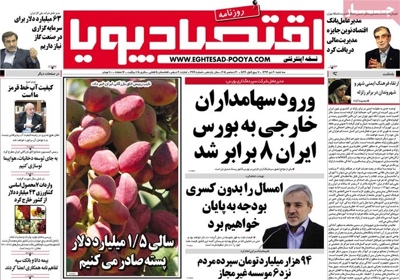
 

Eghtesade puya newspaper 12 - 30


Ettela’at: The government invests $2 billion in the water industry to make the country’s water-related problems a thing of the past.

Ettela’at: “Iran’s defense capabilities serve regional interests,” said the speaker of the Islamic Consultative Assembly.
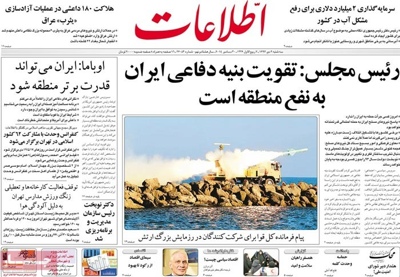
 

Ettelaat newspaper 12 - 30


Hambastegi: “Some are trying to deliberately create tension in relations between parliament and government,” said the first vice-president.
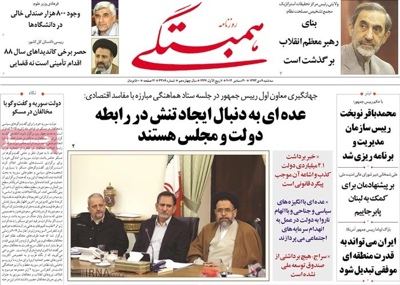
 

Hambastegi newspaper 12 - 30


Iran Daily: Iran test-fires latest indigenous torpedo.
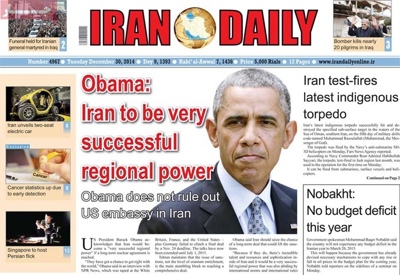
 

Iran daily newspaper 12 - 30
Javan: “The treason committed by those who caused unrest [following the presidential elections of 2009] is unforgettable,” participants in a gathering dubbed “The blow republicanism dealt to aristocracy” announced.
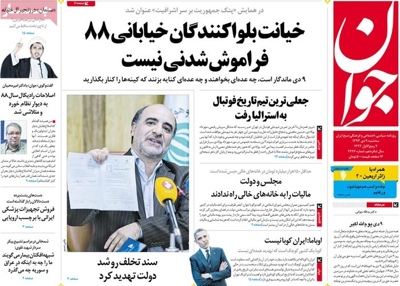
 

Javan newspaper 12 - 30


Jomhouri Islami: Bahrainis have staged rallies in protest against the apprehension of Shiite Cleric Sheikh Ali Salman.
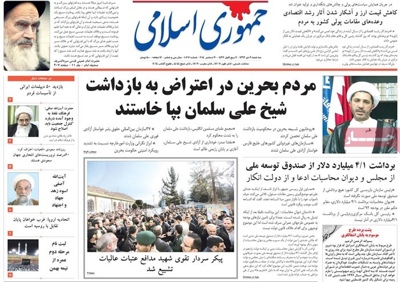
 

Jomhurie eslami newspaper 12 - 30


Kar va Kargar: “That the government has acted illegally in withdrawing $4.1 billion from the National Development Fund is beyond doubt,” said the prosecutor of the Supreme Audit Court.
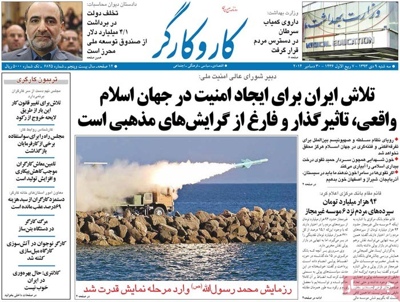
 

Karo karegar newspaper 12 - 30


Kayhan: A funeral has been held for Brigadier General Hamid Taghavi who was martyred in Iraq on a mission to advise Iraqi forces against IS terrorists.


Kayhan newspaper 12 - 30


Khorasan: The first vice-president has ordered a lawsuit to be filed against those who allege that the government has illegally withdrawn $4.1 billion from the National Development Fund.
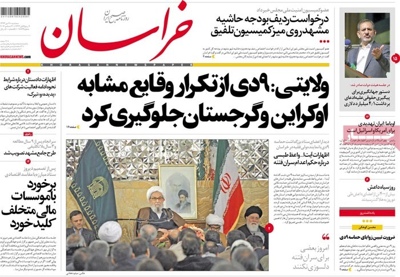
 

Khorasan newspaper 12 - 30


Mardomsalari: “There are as many as 800,000 empty seats in universities,” said the minister of science, research and technology.
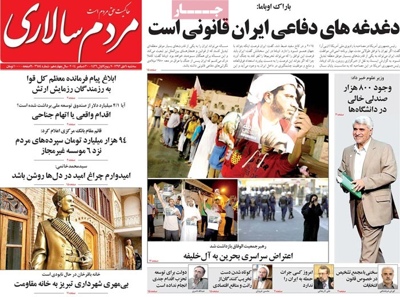
 

Mardom salari newspaper 12 - 30


Qods: “Construction of two new nuclear reactors has got underway,” said the spokesman of the Atomic Energy Organization of Iran.
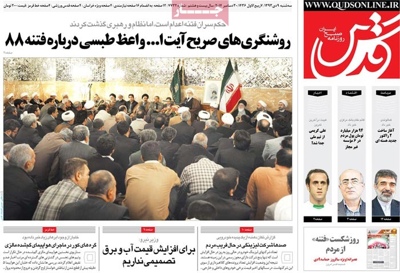
 

Ghods newspaper 12 - 30


Sayeh: The next movie of [renowned Iranian filmmaker Abbas] Kiarostami is set in China.


Sayeh newspaper 12 - 30


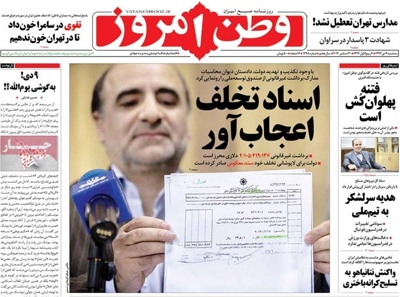
Vatan-e Emrooz: Four national soccer team players who were previously banned from flying to Australia because of draft-related problems have been allowed to join the Iranian squad in the Asian Cup 2015.
 

Vatane emruz newspaper 12 - 30


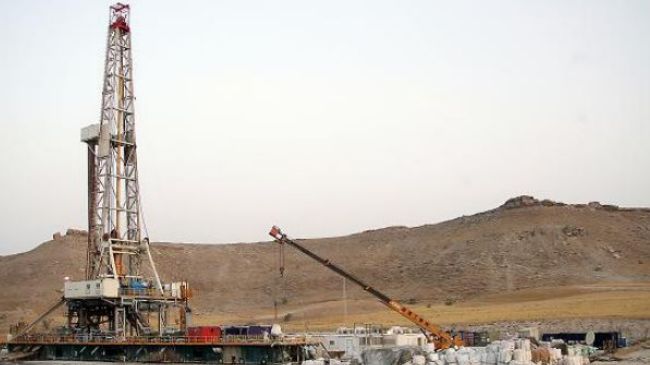
Iran allots $15.2b to develop joint oilfields with Iraq

Iran-Iraq-oilfield

The plan for the development of joint oilfields in the western part of Iran’s southwestern region of Karoun is aimed at bringing about an added production capacity of 550,000 barrels of crude oil per day.

The development plan will be implemented over the course of four years.

Iranian Oil Minister Bijan Namdar Zanganeh has described the project as one of the largest development plans of his ministry, saying that the implementation of the project would boost the country’s oil output.

Based on studies, there are 23 joint hydrocarbon fields between Iran and Iraq, which are divided into exploration, development and production categories.

Iran’s total in-place oil reserves have been estimated at more than 560 billion barrels, with about 140 billion barrels of recoverable oil. Heavy and extra heavy varieties of crude oil account for roughly 70-100 billion barrels of total Iranian reserves.

Iran Navy successfully tests latest torpedo, cruise missiles

Iran-Nasr-Missile

Iranian Navy’s anti-submarine SH-3D helicopter test-fired the forces’ latest domestically-made torpedo on Monday.

The torpedo successfully hit its predetermined sub-surface target in the waters of the Sea of Oman in southern Iran.

The overhauled SH-3D combat helicopter joined the Iranian Navy in November last year. It has anti-submarine capabilities and can carry missiles and torpedoes.

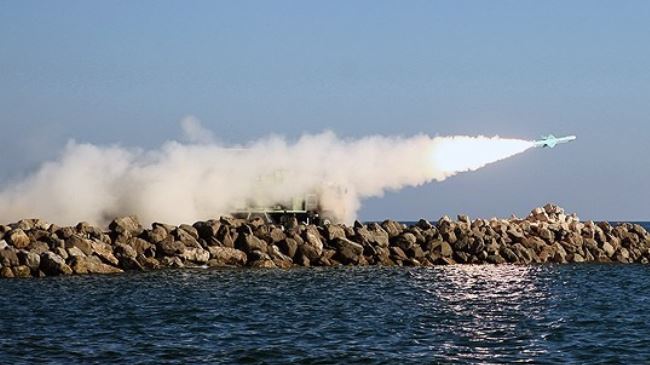
The Iranian naval forces also successfully fired their home-made Nasr (Triumph) and Nour (Light) coast-to-sea cruise missiles.

The Nour cruise missile was fired by the Coast Guard of the Iranian Navy and successfully hit and destroyed a target in the Sea of Oman.

Nour is a cruise missile with a range of over 120 kilometers. It has been used by the Iranian naval forces and the Islamic Revolution Guards Corps (IRGC) in different maneuvers.

Nasr is a short-range smart cruise missile capable of destroying 3,000-ton vessels.

It can be fired from coasts, various vessels and helicopters.

The joint maneuvers by the Iranian Army’s ground, naval, and air forces are logistically supported by Khatam al-Anbia Air Defense Base and cover an area of 2.2 million square kilometers (850,000 square miles) stretching from the east of the Strait of Hormuz to the southern parts of the Gulf of Aden.

The Islamic Republic has frequently announced that its military might poses no threat to other countries, stating that its defense doctrine is based on deterrence.

Terrorists kill 3 IRGC members in southeast Iran

Iran-border-guard

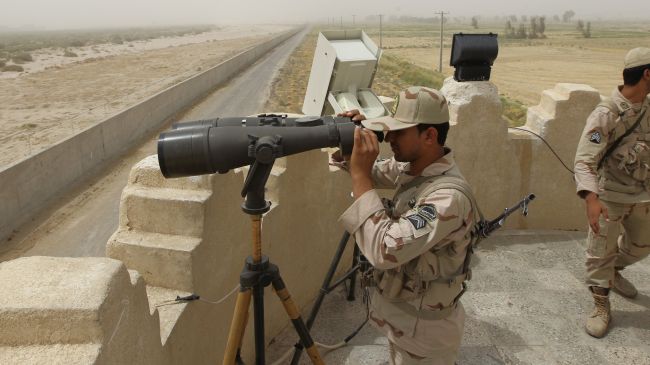
A number of terrorists on Sunday carried out an ambush against an Islamic Revolution Guard Corps vehicle on patrol in Saravan and fled to neighboring Pakistan after killing three guards, the deputy governor of Sistan and Baluchestan Province Ali Asghar Mirshekari, said on Monday.

According to reports, those killed included Major Akbar Abdollahnejad, Lieutenant Qodratollah Mandani and a soldier named Mousa Nasiri.

The southeastern Sistan-and-Baluchestan Province has been the scene of a number of terrorist attacks in recent years.

On October 8, three Iranian police officers were killed when they, along with other patrol forces, came under attack overnight by armed bandits while on a mission in the city of Saravan.

Another police officer was killed after an explosives-laden car rammed to a police station by terrorists went off hours after the first incident.

Iran has repeatedly criticized its eastern neighbor Pakistan for failing to rein in terrorists who cross the border into Pakistan after carrying out attacks on Iranian soil.

Jewish Iranian Solayman Haim remembered in Tehran

haim-ceremony
haim-ceremony

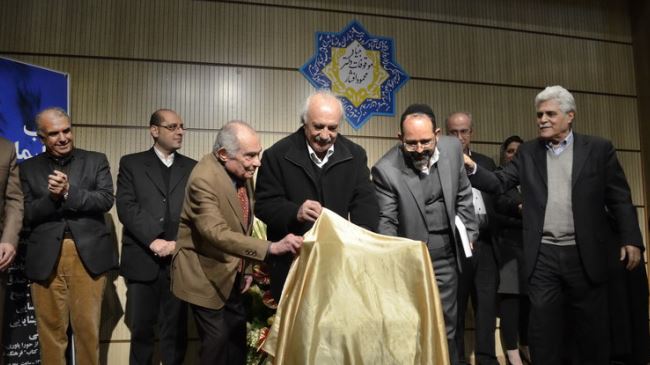
Literary figures and government officials attended a ceremony organized by Tehran’s Association of Jews on Sunday in commemoration of Haim and for his great services to the Persian language.

Haim, who is also known as Hayyim, dedicated almost his entire life to translation and writing dictionaries. He died at the age of 82 in February 1970 in Tehran and is known as the father of bilingual dictionary in Iran.

During the ceremony, Gholamali Haddad Adel, who serves as the director of the Academy of Persian Language and Literature, praised Haim for his great achievements and endeavors in expanding the Persian language. Haddad Adel said many Iranians of his age started learning English with Haim dictionary.

Mohammad Reza Batebi, a well-known professor of linguistics, said during the ceremony that “what Haim did was beyond the power and energy of a man,” reflecting his deep love and affection for the job.

Siamak Meresedq, the representative of the Jewish community in Iran’s Parliament (Majlis), commented on the role of the Persian language in creating solidarity among various ethnic groups in Iran. He said Iranian Jews have hugely contributed to the expansion of the Persian language as a way to facilitate their coexistence with followers of other religions in the country.

War on drugs inflicts huge cost on Iran: official

iran-drugs

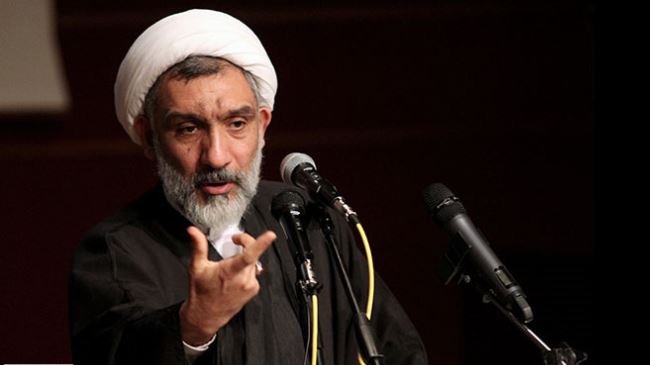
The Iranian justice minister says the country’s war on drugs has imposed enormous costs and a huge loss of life on the country.

Mostafa Pourmohammadi said Monday that the majority of the prisoners and most of the legal cases in the Iranian courts are related to drug offenses.

He said the government has not achieved the “desired outcome” in its war on drugs, despite the “huge investment” made to improve the situation.

Pourmohammadi called for a change in Iran’s approach to the issue and said the fight against drugs should acquire social dimensions.

Sharing a long border with Afghanistan, Iran is one of the major corridors of drug trafficking in the region. Hundreds if not thousands of traffickers, most of them armed, are arrested annually by Iranian police and border guards. Based on the Iranian laws, those involved in large-scale transfer and trafficking of drugs are sentenced to death.

Secretary of Iran’s High Council for Human Rights said in early December that the government is “making a big stride” in reducing the number of death penalties being meted out for drug offenses.

Mohammad Javad Larijani said the number of drug-related death penalties could be reduced by 80 percent if the current laws change.

The march toward final nuclear deal should gather momentum

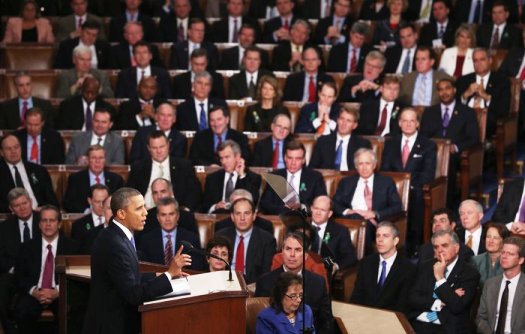
obama in cogress
obama in cogress

The US Senate has said that it will impose new sanctions on Iran, the latest in a series of threats by Senate Republicans against Iran and a possible comprehensive deal between Tehran and P5+1.

This is the lead of a report Fararu, a news website, released on December 28 on GOP plans to slap still more restrictions on Iran. The following is the translation of the report:

Sen. Lindsey Graham (R-South Carolina), who is known for his anti-Iran stances, claimed in a joint press conference on December 27 with Zionist Prime Minister Benjamin Netanyahu in occupied territories that adopting legislation that tightens the sanctions against Iran will be one of the first measures of Congress when Republicans take over the Senate next month.

The US Congress will meet on January 20, more than two months after midterm elections in which Democrats lost the majority of seats to their rivals: Republicans.

The GOP’s control of Capitol Hill comes as Iran and P5+1 are taking the final steps toward reaching a comprehensive nuclear deal; a deal which can change the fate of Iran’s nuclear case for good, and turn it from a security and political issue into a normal case, like those of other signatories to the nuclear Non-Proliferation Treaty (NPT).

The comprehensive deal is also expected to focus on international sanctions by the UN Security Council on Iran as well as unilateral sanctions the US and the EU have slapped on the Islamic Republic.

The leading players, including hawkish US Senators, who oppose a nuclear agreement between Iran and P5+1 frown upon the normalization of Iran’s atomic case – something which is in keeping with an Iranophobia strategy – and persistently ask for keeping sanctions against the Islamic Republic in place.

Although the US Congress is not a serious obstacle in the way of dealing with Iran’s nuclear case as a normal [non-political] dossier, conclusion of a comprehensive agreement is tied to the settlement of all outstanding disputes, among them sanctions. That is where the US Congress can step in and resort to legal tools [to prevent the lifting of sanctions].

It remains to be seen whether Obama’s [veto] threat can stop the imposition of new sanctions against Iran in the new Congress which is to convene in less than a month.

Therefore, normalization of Iran’s nuclear case and settlement of sanctions issue, especially sanctions slapped by the US Congress, are interdependent.

As Iran’s Foreign Minister Mohammad Javad Zarif has said and US President Barack Obama has echoed it, imposition of fresh sanctions against Iran would kill the talks and amount to an official declaration of the end of diplomatic contacts to resolve the decade-long nuclear dispute.

That’s why Barack Obama, who is very optimistic about diplomatically solving Iran’s nuclear case before his second term ends, has repeatedly warned Congress that he will veto any sanctions act which will threaten a nuclear deal with Iran.

The threat was efficient, at least, in dealing with the outgoing Congress where Republicans were in the minority and Democrats defended the policies of the White House – although some fellow Democrats were opposed to any agreement with Iran. Thanks to the Democratic majority, plans to levy fresh sanctions against Iran were taken off the agenda.

It remains to be seen whether Obama’s [veto] threat can stop the imposition of new sanctions against Iran in the new Congress which is to convene in less than a month. In the meantime, US hardliners have jumped to action – even before the new Congress convenes – to pave the way for fresh sanctions against Iran.

Ali Vaez, a senior analyst for Iran at the International Crisis Group, has said that two measures have been taken in this regard in the past several weeks. First a hardline US institute [Institute for Science and International Security (ISIS)] referred to a recent report by the International Atomic Energy Agency on the injection of gas into IR-5 centrifuges, claiming this amounts to gross violation of the Geneva agreement. Under the Geneva Joint Plan of Action, Iran will continue its R&D activities, including those which do not involve stockpiling enriched uranium.

With that being the case, Iran and P5+1 should accelerate their efforts to arrive at least at a diplomatic deal before the new US Congress convenes in January.

In another attempt, the US media claimed that Iran’s efforts to procure equipment for Arak Reactor run counter to its obligations under the Joint Plan of Action. This comes as Iran has promised – under the Geneva Agreement – not to install new equipment in Arak Reactor, but it faces no limitation for buying such equipment.

In the buildup to the inauguration of the new US Congress, Republicans are full of determination to derail the processes which lead to a nuclear deal.

With that being the case, Iran and P5+1 should accelerate their efforts to arrive at least at a diplomatic deal before the new US Congress convenes in January. They have to agree on fundamental principles about the comprehensive deal; if so, hopes for reaching a final nuclear deal will be kept alive.

Principlists and the Ahmadinejad paradox

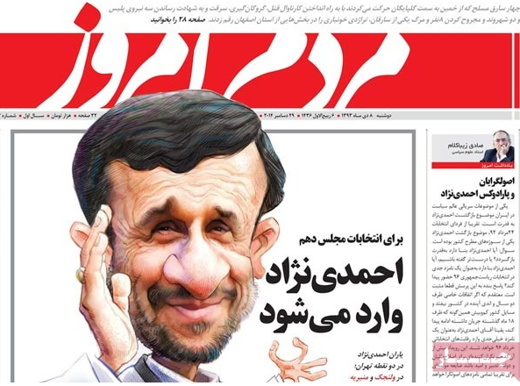
Mardom Emrouz Newspaper-Ahmadinejad cartoon

On December 29, the editorial of Mardom-e Emrooz, a new reformist-leaning daily that first hit the newsstands as recently as Saturday December 27, focused on whether or not former President Mahmoud Ahmadinejad would make a comeback to politics. The following is the translation of the editorial penned by Sadegh Zibakalam, a well-known professor of political science:

Whether Ahmadinejad will make a comeback to politics is a staple of Iranian politics these days. In fact, speculations as to whether he’ll return onto the political stage began to swirl on June 15, 2013, one day after the presidential elections [won by Hassan Rouhani].

The question is whether Ahmadinejad seeks to return to politics. To be more exact, the question is whether he’ll run for president in 2017. My answer to that question is a resounding yes. I believe that if nothing out of the ordinary happens in the country over the next two and a half years and things remain the same as they have been over the past 18 months, he will definitely be a serious contender in the June 2017 elections.

His potential candidacy would be more saddening to all principlist candidates than alarming to reformists and the government of Prudence and Hope [Rouhani’s].

His potential candidacy would be more saddening to all principlist candidates than alarming to reformists and the government of Prudence and Hope [Rouhani’s]. By the principlist candidates, I mean, two ever-on-the-scene-present contenders: General Mohsen Rezaei and General Mohammad Bagher Ghalibaf, Dr. Saeed Jalili and less prominent figures such as Haddad Adel Ph.D., Dr. Ali Akbar Velayati, Ali Larijani, Ph.D. and other figures in the principlist camp who may, over the course of the next years, want to run for president in 2017.

The presence of Ahmadinejad in the field of candidates is likely to increase the odds of principlists winning the vote. Ahmadinejad already has 10 to 15 million votes in impoverished rural areas, and among traditionalists, low-income individuals and those who live on the edge of major cities.

Religious issues aside, a small percentage of educated people who oppose the West and its civilization and culture and have found in Ahmadinejad their anti-West protagonist will vote for him too.

Another question that arises here is how good a chance he stands of returning to politics. Before fielding that question, a few others need to be answered first. The first one is, “Given that he has made the nation and the principlists go through hell, will they allow him to return?” And the second question is whether they would throw their weight behind him if he threw his hat in the ring.

The second question lies at the center of the puzzle of Ahmadinejad’s political comeback. It is a very difficult question to answer. But why is it difficult to guess whether principlists would support him if he entered the race? Because the answer to that question hinges on the commitment of principlists to ethics on the one hand, and their interest in power, on the other.

Principlists know well that in the absence of Ahmadinejad they stand a minimal chance of taking back control of the executive branch of the government.

Principlists know well that in the absence of Ahmadinejad they stand a minimal chance of taking back control of the executive branch of the government. Even if things remain on a gentle slope, as President Rouhani has put it, principlists do not stand a good chance of winning the vote, unless Rouhani proves unable to untie the Gordian knot of the nuclear talks. In that case, his chances of winning reelection would be slim.

But there is evidence he has taken giant steps toward solving the nuclear issue, and in case a final agreement is clinched even further drops in oil prices won’t harm him much. That means, as things are, the principlists’ chances of retaking charge of the executive branch are too slim.

Only if they all rally behind Ahmadinejad can they think of reclaiming the presidency. Even in that case, their victory would be far from certain. At least they can hold out hope if Ahmadinejad enters the race, otherwise they are already defeated.

Why did I mention ethics? Principlists need to say how far they are willing to go to win back the presidency and how important power is to them. Is it important enough for them to let the country re-experience the nightmare of Ahmadinejad?

Of course, this issue is not black-and-white to many of them who believe valuable steps have been taken during his presidency and say, “Of course there have been some shortcomings which, God willing, won’t be repeated next time.”

To soothe their conscience in allowing Ahmadinejad’s return to power, they might blame the “deviant current” for what happened [during his term in office] and suggest that Ahmadinejad is unique. Thank God now that Ahmadinejad has distanced himself from the deviant current, there won’t be any more problems, they may also say. In other words, they justify his return to power.

But the bitter fact of the matter is that his return to power would be equal to a principlist decision to brush aside ethics. It will also show the extent of the weakness of the principlist faction whose existence revolves around a single individual: Mahmoud Ahmadinejad.

Iran voices readiness to develop relations with China

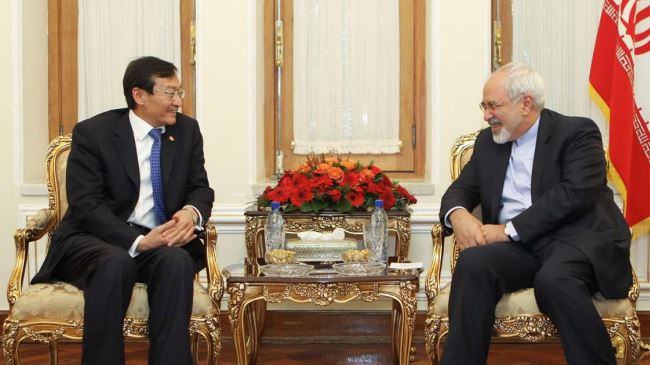
Zarif-Zhang-meeting

Iranian Foreign Minister Mohammad Javad Zarif expresses readiness for Iran to further develop relations with China in all fields.

He made the remarks at a meeting with Chinese Deputy Foreign Minister Zhang Ming in Tehran on Sunday.

“The Iranian and Chinese presidents paved the ground to further boost ties in their last meeting in (the Chinese city of) Shanghai, and It’s necessary for the relevant sectors in both countries to take steps toward implementation of the agreements signed by them,” Zarif said.

Zarif also hailed China’s positive role in the ongoing nuclear talks between Iran and the P5+1 Group (the five permanent members of the UN Security Council plus Germany).

Zhang, for his part, referred to the growing number of meetings between Iranian and Chinese officials in the last year, saying, “Relations between China and Iran is on the rise in all spheres, and we believe the two countries’ ties are strategic.”

Regarding Iran’s nuclear negotiations with the six world powers, Zhang expressed hope that the talks would lead to a comprehensive agreement.

Beijing welcomes a comprehensive nuclear deal that can “lead to allaying concerns on both sides,” he noted.

Iran’s nuclear policy is transparent: Nahavandian

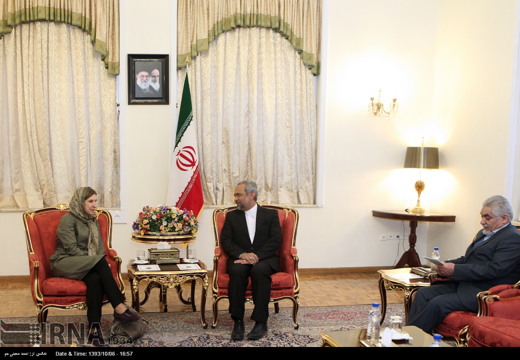
Nahavandian-Norway

Mohammad Nahavandian, President Rouhani’s chief of staff, said on Saturday that Iran’s policy on its nuclear program is transparent and there is no reason for concern in this regard.

He made the remark in a meeting in Tehran with new Norwegian Ambassador to Iran Aud Lise Norheim.

Nahavandian said that the negotiations between Iran and P5+1 could not proceed forever.

Underlining the need to conclude the nuclear talks within the specified timetable, Nahavandian called for further contribution of EU members, Norway in particular, to settlement of the 12-year-old dispute.

Nahavandian referred to enormous potential for investment in Iran and said that the Islamic Republic of Iran welcomes the presence, cooperation and investment of all EU members, including Norway, in economic and cultural areas.

Meanwhile, the Norwegian ambassador said that different Norwegian companies are willing to be present in Iran.

Norheim said that during her tenure in Tehran, she will make every effort to help boost bilateral cooperation between Iran and Norway.