Friday, May 8, 2026
Home Blog Page 500

Israel approves call-up of 400,000 reserve soldiers amid uncertainty over Gaza ceasefire accord

Israeli Army

Israeli Channel 14 said the decision came amid fears of renewed fighting in the Gaza Strip.

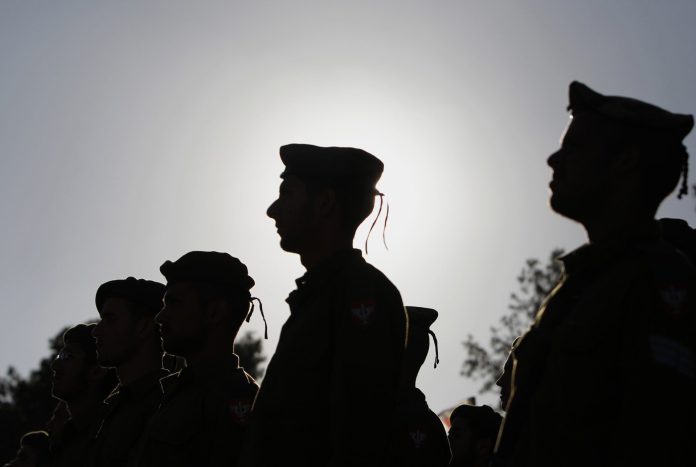
Under the new decision, the Israeli army will be able to mobilize up to 400,000 reserve soldiers by May 29, representing an increase of 80,000 soldiers compared to the previous order which approved a maximum mobilization of 320,000 reserve soldiers, the broadcaster said.

“This decision comes amid ongoing challenges in recruiting human resources for reserve duty,” the channel said.

The first six-week phase of the ceasefire agreement, which took effect on Jan. 19, officially ended at midnight on Saturday. However, Israel has not agreed to move forward to the second phase of the deal to bring an end to the war in Gaza.

Israeli Prime Minister Benjamin Netanyahu had sought to extend the initial exchange phase to secure the release of as many Israeli captives as possible without offering anything in return or fulfilling the military and humanitarian obligations of the agreement.

The Palestinian resistance group Hamas has refused to proceed under these conditions, insisting that Israel abide by the terms of the ceasefire and immediately start negotiations for the second phase, which includes a full Israeli withdrawal from Gaza and a complete halt to the war.

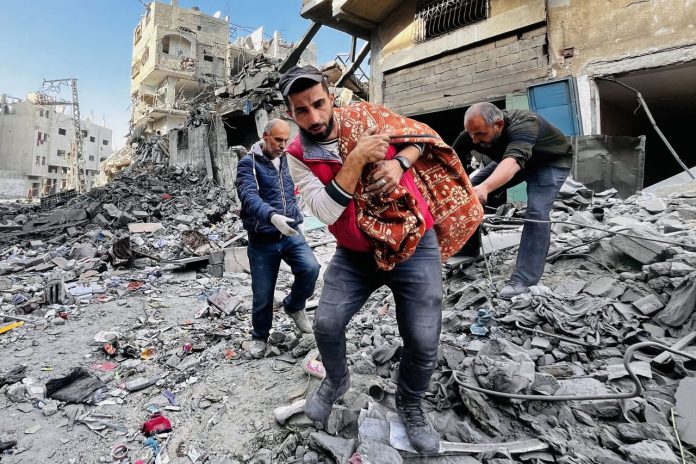
The ceasefire agreement has halted Israel’s genocidal war on Gaza, which has killed more than 48,380 victims, mostly women and children, and left the enclave in ruins.

Last November, the International Criminal Court issued arrest warrants for Netanyahu and his former Defense Minister Yoav Gallant for war crimes and crimes against humanity in Gaza.

Israel also faces a genocide case at the International Court of Justice for its war on the enclave.
Iran’s parliament ousts economy minister, first in President Pezeshkian’s cabinet

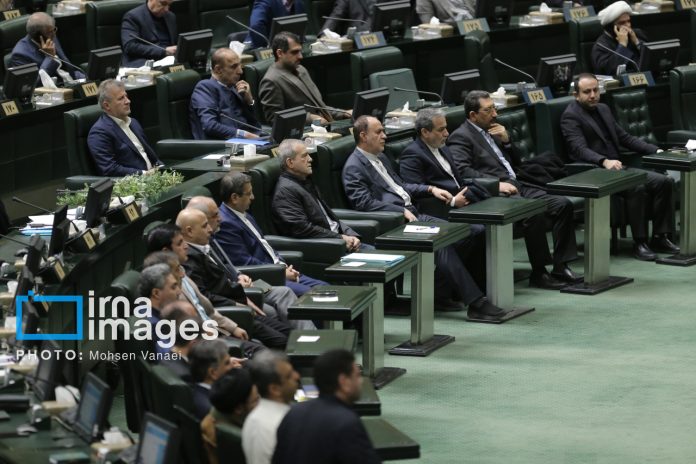
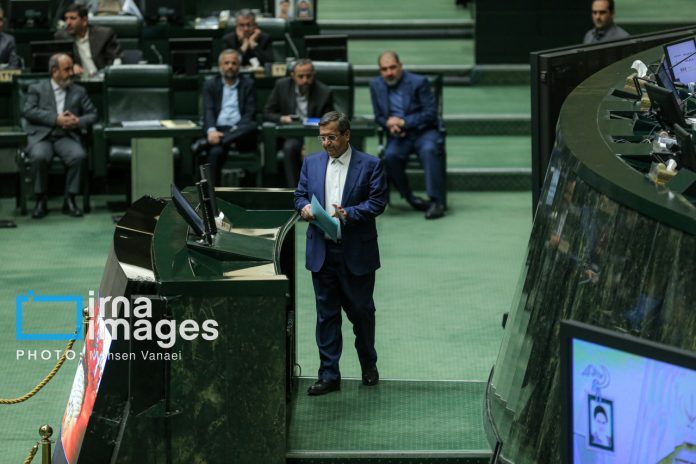
Hemmati, who previously served as central bank governor under former President Hassan Rouhani, was dismissed with 182 votes in favor, 89 against, and one abstention.

Hemmati’s tenure, which lasted fewer than 200 days, ended amid criticism of “economic mismanagement” and rising foreign currency parity rate.

President Pezeshkian defended Hemmati during the impeachment session, stating, “The country’s economic challenges cannot be attributed to one individual alone.”

This marks the first time in Iran’s political history that an economy minister has been impeached within the first six months of a government’s term.

Pezeshkian now faces the task of nominating a replacement, subject to parliamentary approval.

The impeachment came amid growing pressure on the government to address economic instability, including inflation and unemployment.

According to ECO Iran economic site, Hemmati’s dismissal follows a similar pattern seen during Rouhani’s second term, when two ministers faced impeachment but retained their positions.

NATO Secretary General urges Zelensky to ‘restore relationship’ with Trump following White House clash

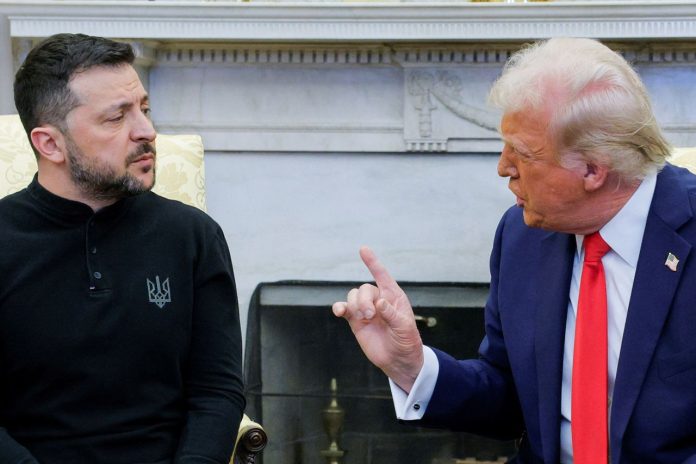
Zelensky left Washington early without signing a mineral deal with the United States following a tense argument in front of journalists between the two leaders. Trump later reportedly ordered his officials to tell the Ukrainian delegation to leave the White House, despite protest from the Ukrainians.

Speaking to the BBC, Rutte stated that it was “important that President Zelensky finds a way to restore his relationship with the American president and with the senior American leadership team.”

Rutte, who said he has spoken to Zelensky twice since the incident, called the public argument “unfortunate.”

The secretary general noted that “we really have to give Trump credit,” for providing weapons to Ukraine during Trump’s first term in office, adding that that US commands “respect” for their support.

Rutte’s comments come as a number of European leaders reaffirmed their support for Ukraine and Zelensky.

EU foreign policy chief Kaja Kallas emphasized the EU’s commitment to stepping up assistance to Ukraine, enabling the country to continue resisting the aggressor.

“Today, it became clear that the free world needs a new leader. It’s up to us, Europeans, to take this challenge,” Kallas posted on X.

Following the tense exchange, Zelensky appeared on Fox News to attempt to mend any fractured relations that may have emerged with Trump.

“We are very close partners,” Zelensky told Fox News, adding, “I think this kind of spat is not good for both sides.”

Ukraine’s president told Fox News’ Bret Baier that he doesn’t feel he needs to apologize to Trump after a heated exchange at the White House.

“No, I respect president, and I respect American people, and I think that we have to be very open and very honest and I’m not sure that we did something bad,” Zelensky stated, adding, “I think some things we have to discuss out of media with all respect to democracy and free media.”

US Secretary of State Marco Rubio later called for Zelensky to apologize for how the meeting unfolded, questioning whether the Ukrainian leader was truly committed to peace.

When asked if Zelensky though the relationship could be salvaged following the tense exchange, Zelensky replied: “Yes, of course, because it’s more than to the president. It’s a historical relations between our people.”

Iran’s non-oil exports surge 19% y/y in Apr-Feb: IRICA

Iran Trade

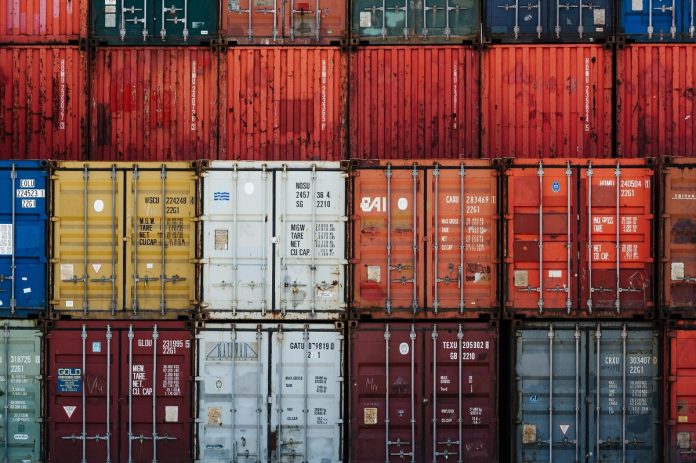
IRICA figures released on Saturday showed that Iran had exported some $53.376 billion worth of non-oil goods and commodities in the 11 months to February 18, up 19% compared to the previous same period.

The figures showed that exports had also increased by 12.6% in volume terms in April-February to reach 141 million metric tons (mt).

Petrochemicals accounted for more than 40% of Iran’s non-oil exports in the 11 months to late February as shipments reached $23.5 billion, an increase of 31.5% from the same period in 2023-2024, showed the customs figures.

Natural gas was Iran’s top export revenue earner in the April-February period with some $6.6 billion worth of sales, followed by liquefied propane at $3.3 billion and methanol at $2.1 billion, the figures showed.

IRICA said imports into Iran had reached $63.606 billion in the 11 months to late February, up 5.6% from the previous same period.

It said, however, that import shipments had dropped by 5.6% in volume terms year on year over the same period to reach 35 million mt.

Iran’s total foreign trade rose by 11.2% and 9.2% in value and volume terms, respectively, in the 11 months to late February compared to the previous same period, the Iranian customs office said.

Iran has seen a major growth in its non-oil exports in recent years despite US sanctions that target the country’s access to international banking and shipping services.

The country has adopted policies to encourage more activity in its agriculture, mining, and manufacturing sectors in recent years, leading to increased exports and higher levels of hard currency revenues for the country.

Cristiano Ronaldo to miss match against Iran’s Esteghlal due to injury, says Saudi league

The Portuguese star is among seven key players sidelined for the first leg of the round of 16 clash, set to take place on Monday night at Tehran’s Azadi Stadium.

Al-Nassr faces significant absences, including Ronaldo, Otávio, Aymeric Laporte, and Sultan Al-Ghannam, due to injuries and other issues.

However, Senegalese forward Sadio Mané is expected to play in the high-stakes match.

The return leg will be held in Saudi Arabia a week later. Al-Nassr, preparing for the knockout stage, faces a daunting task to overcome Esteghlal amid the absence of several starters.

Ronaldo’s injury comes as a blow to fans eagerly anticipating his appearance in Tehran.

The five-time Ballon d’Or winner has been instrumental for Al-Nassr since joining the club in 2023.

Israel halts humanitarian aid entry to Gaza after 1st phase of ceasefire ended: Report

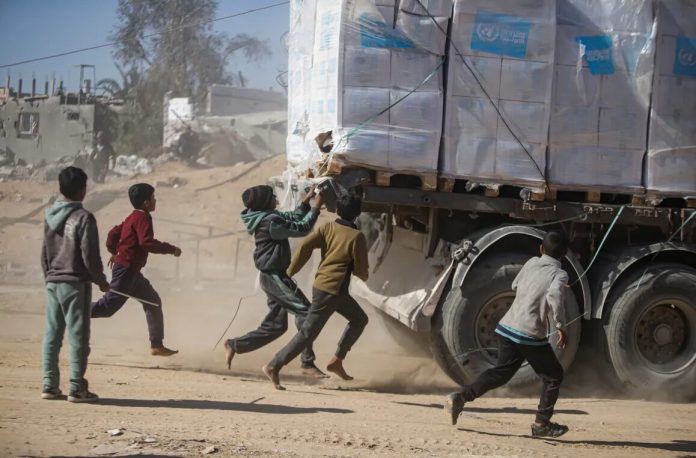
Channel 12 reported that “the entry of humanitarian aid into Gaza has been stopped following the official end of the ceasefire.”

Meanwhile, Israeli Channel 14 stated that “in a discussion led by Prime Minister Benjamin Netanyahu last night, a decision was made to halt humanitarian truck deliveries into Gaza until further notice.”

The report added that the decision was coordinated with the United States.

The first phase of the ceasefire agreement, which lasted 42 days, officially ended at midnight on Saturday. However, Israel has not agreed to move forward with the second phase or bring the war to an end.

Earlier on Sunday, Israel announced that it agreed to a temporary ceasefire in the Gaza Strip during Ramadan and Passover, following a proposal from US Middle East Envoy Steve Witkoff, hours after the first phase of a ceasefire was set to expire.

A ceasefire and prisoner exchange agreement has been in place since January, pausing Israel’s genocidal war on Gaza that has killed more than 48,380 victims, mostly women and children, and left the enclave in ruins.

Starmer reaffirms UK support for Ukraine during meeting with Zelensky after White House clash

Starmer’s comments come one day after a heated exchange between Zelensky and US President Donald Trump in the White House that further exposed rifts in relations between Europe and the United States.

Zelensky left Washington early without signing a mineral deal with the United States after Trump reportedly ordered his officials to tell the Ukrainian delegation to leave the White House, despite protest from the Ukrainians.

“We stand with Ukraine for as long as it may take,” Starmer told reporters at a press briefing alongside Zelensky, adding that Ukraine has “full backing across the United Kingdom.”

Starmer also emphasized the UK’s “unwavering determination” to achieve a just and lasting peace in Ukraine.

Zelensky thanked Starmer for his country’s staunch support, stating, “We are happy to have such partners and such friends.”

The meeting with Starmer comes one day ahead of a summit with European leaders hosted by the British PM to discuss joint defense and security plans.

Following the exchange, a number of European leaders reaffirmed their support for Ukraine and Zelensky.

EU foreign policy chief Kaja Kallas emphasized the EU’s commitment to stepping up assistance to Ukraine, enabling the country to continue resisting the aggressor.

“Today, it became clear that the free world needs a new leader. It’s up to us, Europeans, to take this challenge,” Kallas posted on X.

Zelensky arrived at 10 Downing Street earlier in the day to cheers from the crowd while exiting his motorcade. The president did not respond to shouted questions on Trump as he was greeted by Starmer.

Buckingham Palace confirmed that Zelensky met King Charles. The meeting comes days after King Charles invited Trump for a second state visit to Buckingham Palace. Trump previously visit Queen Elizabeth II in 2019 during his first term in office.

Israel accepts US proposal for temporary Gaza ceasefire during Ramadan

Gaza War

Israeli Prime Minister Benjamin Netanyahu’s office announced in a statement that half of the hostages in Gaza, dead and alive, will be released, and the remaining captives would be freed once a permanent ceasefire is reached.

It said Witkoff proposed extending the ceasefire after determining that additional time was needed for negotiations on a permanent truce.

The statement added the plan gives Israel the right to resume the war after 42 days if talks do not progress, and claimed that Israel has accepted the proposal to free prisoners but Hamas has not yet accepted.

It emphasized that if Hamas changes its position and accepted the plan proposed by Witkoff, Israel would immediately begin negotiations on the details of the second phase.

Hamas, Egyptian and Qatari mediators, and Witkoff have yet to comment on Israel’s statement.

The Palestinian resistance group’s spokesperson Hazem Qassem reaffirmed earlier in a statement to Anadolu its “commitment to implementing all phases of the agreement.”

A ceasefire and prisoner exchange deal has been in place since January, pausing Israel’s genocidal war on Gaza that has killed more than 48,360 victims, mostly women and children, and left the enclave in ruins.

Iranian parliament begins impeaching economy minister

The session, chaired by Parliament Speaker Mohammad Bagher Ghalibaf, saw the participation of 246 lawmakers and key government officials, including ministers of industry, agriculture, and foreign affairs, as well as the central bank governor.

The impeachment motion, signed by 91 MPs on February 20, accuses Hemmati of mismanaging economic policies.

Under Article 224 of the parliamentary bylaws, the five-hour session allocated two hours for questioning by MPs and three hours for defense by Hemmati, President Pezeshkian, and supporting lawmakers.

President Pezeshkian defended Hemmati, stating that major monetary and banking policies were decided collectively by the heads of government branches, economic committees, and experts.

“It is unfair to blame one individual for all shortcomings,” he emphasized, calling for unity to address economic challenges and the plummeting value of national currency against the dollar.

The session will conclude with a vote, determining Hemmati’s fate.

Iran releases 1st footage of Israeli-linked ship seized months ago

IRGC Navy

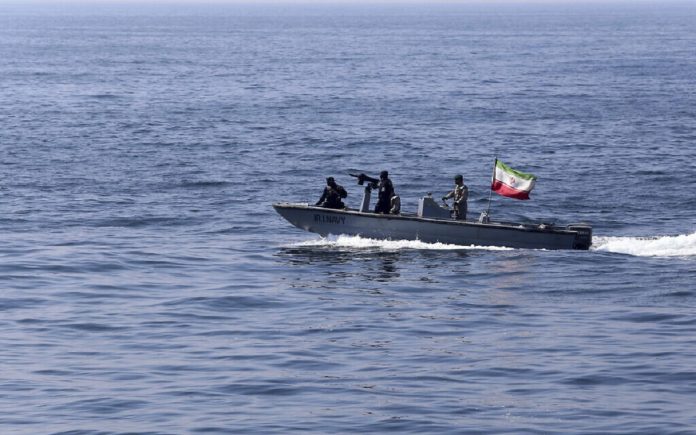
The video, broadcast on state television and shared across Iranian media outlets on Saturday, showed the ship that was subjected to a heliborne operation by the forces, who took control of the vessel during the mission on April 13, 2024.

The MSC Aries, owned by Zodiac Maritime, a company linked to Israeli billionaire Eyal Ofer, was flying the Portuguese flag at the time of its capture. It was seized along with its 24-strong crewmembers.

According to reports at the time, the vessel was intercepted in a swift and highly-coordinated military operation, emphasizing Iran’s ability to monitor and control strategic maritime routes, particularly in the Persian Gulf and the hugely strategic Strait of Hormuz.

The seizure of the ship came amid the Islamic Republic’s pledges of retaliation against the regime’s deadly aggression against the Iranian soil, including its July 2024 assassination of the Palestinian resistance movement Hamas’ former Political Bureau chief, Ismail Haniyeh, and Tel Aviv’s atrocities against other regional territories.

On the same day, the IRGC launched the country’s Operation True Promise, an extensive reprisal that targeted sensitive and strategic Israeli military targets, using hundreds of ballistic missiles, cruise missiles, and loitering munitions.

The Corps launched Operation True Promise II last October, similarly slamming hundreds of ballistic missiles into high-stakes Israeli military targets.

Iran has consistently warned against the regime’s targeting either the Iranian soil or the Islamic Republic’s interests overseas, with a high-ranking IRGC commander recently announcing that the country would “soon” launch Operation True Promise III.