Friday, December 19, 2025
Home Blog Page 4999

Iran Exporting Tractors to 13 Countries

Tractors made in Iran


Abolfath Ebrahimi told reporters on Tuesday that tractors manufactured in Iran are exported to 13 countries.

He said his company has manufactured a total number of 22000 tractors.

Ebrahimi noted that the domestic market is the first priority for selling the company’s products.

According to Ebrahimi, the Iranian Tractor Manufacturing Industrial Group is the largest producer of agricultural equipment in the Middle East and has tractor assembly plants in several other countries such as Venezuela, Tajikistan and Zimbabwe.

The first tractor manufacturing plants in Iran was established more than 40 years ago and now the country is a major manufacturer and exporter of tractors.


Tasnim News Agency

MP suggests Iran, Powers change negotiation venue

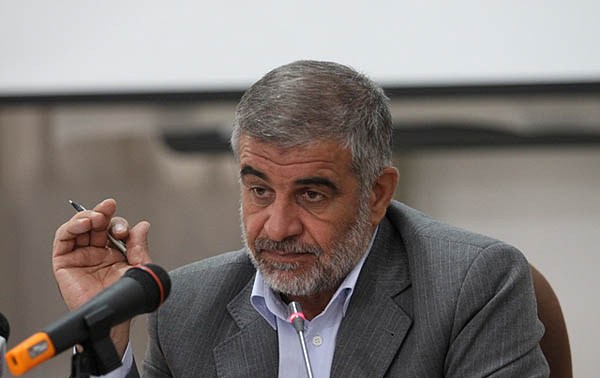
mohammad saleh jokar


A member of Iran’s Parliamentary  National Security and Foreign Policy Commission told Mehr News that since US denied a visa for the Iran’s new envoy to UN, Abutalebi, “ we can suggest the group P5+1 to change the place for the negotiations.”

Mohammad Saleh Jokar said that “Iran condemns US refusal to issue a visa of its envoy and in a reaction suggests that Iran and Powers change place of negotiations.”

Next round of Iran, Powers negotiations will be held on the sidelines of a meeting for revision in NPT in New York.

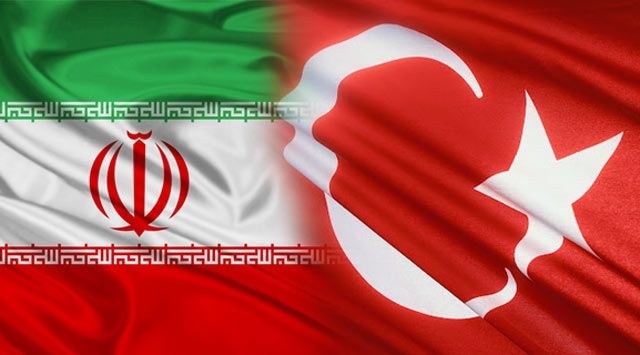
Envoy: Iran-Turkey trade ceiling set at $16bn

iran-turkey-flags
iran-turkey-flags


Bigdeli told reporters that the trade volume stood at $1.2 billion in the first three months of 2014 based on the available monthly reports.

He said the figure is expected to reach $20 billion once a preferential trade agreement is signed and enforced by Iran and Turkey.

He added that the Iranian government plans to enter into talks with the Turkish party to set up a border terminal in the region.


Islamic Republic News Agency

MP: Islamic, western human rights differ basically

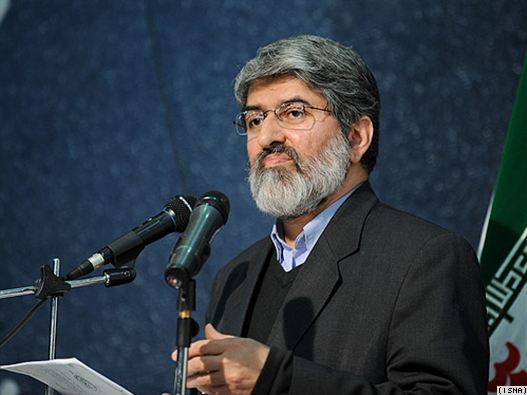
Ali Motahari
Ali Motahari

Independence and freedom, which were two important mottoes in the Islamic Revolution and were later on included in the Constitution of the Islamic Republic, set the foundations for the citizenship rights and justice in Iran, said the Tehran constituency Parliament Member Ali Motahhari in an address for Isfahan Industrial University students, titled The Nationˈs Rights.He said that the motto of the French Revolution was freedom, the motto of the Russian Revolution was justice, and the justice and freedom demanded in our revolution were based on the Islamic foundations, which definitely differ with the freedom and justice in the West.

Referring to some of the articles of the Iranian Constitution on the citizensˈ civil rights, he said that any type of inquisition, eavesdropping, revealing the peopleˈs private communications, illegal banishing, torture to gain confessions, and the like are forbidden in Iran, according to the IRI Constitution.

The MP elsewhere in his address focused on some of the differences in Islamˈs cognition of the human being versus the western conception of the humankind, arguing, ˈAlthough the international Charter of the Human Rights is acceptable for us, but there are fundamental differences in details between these two mentalities.

He said that it is wrong to assume that the entire mentalities and beliefs are based on thoughts, because there are some mentalities which are inherited from the fathers and ancestors, or pursued due to following the path of a majority, not because of sound reasoning and thoughtful deductions.

ˈTherefore, freedom for all mentalities is not permitted, because in the way of life of the prophets (p) there are their campaigns against the false beliefs, such as idol worshipping,ˈ he said.

The Tehran constituency MP added, ˈThe divine prophets never said that the beliefs of the whole human beings are respectable, but in the Declaration of the Human Rights the beliefs of the entire human beings, even the false ones among them, are regarded as respectable.ˈ

Motahhari said that the human nature from the Islamic and the western viewpoints differ, adding, ˈIn the western mentality any creature with two legs that walks straight is a human being, with a fixed and respectable entity.ˈ

He added, ˈIn Islam, though, the entity of the human being differs, because the human beings are considered with their free wills and rights to choose.ˈ

Motahhari said that such Islamic verdicts as punishments and execution are based on related philosophical foundations, adding, ˈFor instance, a criminal human being for whom killing the others is a common practice can annihilate the others easily and the continuation of his life poses a threat for the society. He therefore must be executed.ˈ

The Iranian lawmaker referred to the roots of the western liberties, saying, ˈThe basis for the western types of freedoms should be sought in the Middle Ages and the extremism observed by the heads of the (Catholic) Church; therefore, the human beings who were trying to escape from that kind of extremism were fallen preys to another type of radicalism.ˈ

Motahhari said that kindling the flames of war between the religion and rationalism, between having faith and loving the sciences, faith and love of wealth, faith and love of positions, or faith and sexual desires were among the other mistakes of the church during the Middle Ages.

ˈThe church in those days considered marriage as a non-sanctified practice and remaining unmarried as a holy status, while in Islam the opposite has always been true,ˈ he said.

He referred to his late father Martyr Morteza Motahhariˈs viewpoints on freedom and his farsightedness and deep insight in that respect, arguing, ˈMartyr Motahhari believed in an Islamic country even the non-Islamic parties can have activities, on condition that they should not act pretentiously, so that the people could freely choose their paths.ˈ

Zarif: Iran, Russia constantly consulting on various issues

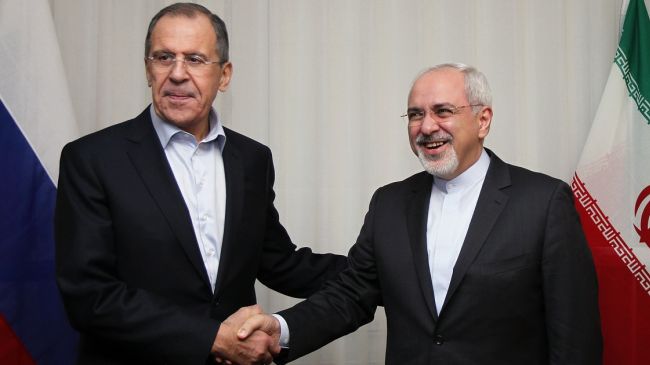
Lavrov - Zarif
Iran and russia PM

ˈTeheran and Moscow have regular consultations on issues such as our countryˈs nuclear program, the ongoing Muddle East developments, and the current status in Syria,ˈ said Mohammad-Javad Zarif moments after his arrival in Moscow in a meeting with the press.

Referring to his schedule for attending the Tuesday Caspian Sea Littoral States Foreign Ministers Conference, he said, ˈThe discussions on the Caspian Sea, as a shared water body among its littoral countries are among the significant issues pursued as of many years ago.ˈ

He said that the expertsˈ level meeting of the Caspian Sea littoral states was held on Monday and the Tuesday ministerial meeting, too, will focus on preparing the ground for the Caspian Sea Littoral States Summit Meeting in the fall season of 2014 in Russia.

ˈOur colleagues have held several meetings in the course of the past few months on the legal regime of the Caspian Sea and they have achieved important results,ˈ he said.

The Iranian top diplomat hoped that the meetings on the status of the Caspian Sea would improve the conditions for the peoples living by the coasts of that water body.

Pointing to his planned visit with his Russian counterpart Sergei Lavrov on the sidelines of the 3rd Caspian Sea Littoral States Foreign Ministers Conference, Zarif said, ˈWe also have constant consultations with the foreign ministers of the other littoral states of the Caspian Sea, which will continue tomorrow.ˈ

He said that such issues as Syria and Afghanistan were top on the agenda of the Iran-Russia consultations, adding, ˈAfghanistan, keeping in mind the recent presidential elections there, has high significance in our consultations.ˈ

ˈWe also regularly consult with the Russian officials on the Syrian developments and harmonize our stands in that respect,ˈ he said.

Zarif said that the efforts aimed at peace making as well as the campaign against terrorism are high on agenda of Iran-Russia shared interests in Syria.

After arrival in Moscowˈs Vnukovo Airport, Zarif was officially welcomed by the Russian Foreign Ministry officials, the Iranian ambassador to the Russian Federation, and the heads of the Iranian organizations in Moscow.

During his two-day visit of Moscow the Iranian top diplomat is scheduled to meet his Russian counterpart Sergei Lavrov tomorrow (on Tuesday) on the sidelines of the Caspian Sea Littoral States Conference.

Among the issues of high importance in Zarif-Lavrov meeting there will be the most significant developments in bilateral ties, the latest status of the Caspian Sea legal regime, international and regional developments, such as the aggravating status in Ukraine and the resolving crisis in Syria.

The Iranian foreign minister is meanwhile scheduled to have a meeting with the Iranians residing in Russia in the residence of the Iranian ambassador in Moscow on Tuesday.

Zarif and Lavrov will hold a joint press conference at the end of the Iranian foreign ministerˈs visit of the Russian capital city.

The Moscow 3rd Caspian Sea Littoral States Foreign Ministers Conference, comprised of the top diplomats of Iran, Russia, Turkmenistan, Azerbaijan, and Kazakhstan and will be held in Moscow on Tuesday.

Atop the agenda of the Moscow conference there is preparing the draft of the 4th Caspian Sea Littoral States Conference communiqué, which is scheduled for September 2014 in Astrakhan, Russia.

The preliminary meeting of the legal affairs experts of the 5 Caspian Sea littoral countries was held today (on Monday) at Moscow World Trade Center and the head of the Iranian delegation in it was Deputy Foreign Minister for Asian and Pacific Affairs Ebrahim Rahimpour.

This is Zarifˈs second visit of Moscow as the Iranian foreign minister. His first visit was in March, 2014.

Rahimpour had earlier on Monday told IRNA that the Caspian Sea legal regime has not been finalized yet by the littoral states.

Talking to IRNA, he noted that despite the constructive talks among Caspian Sea littoral states, resolving the legal status of the world’s largest inland sea needs more discussions.

Ministerial meeting of the Caspian Sea littoral states aims to prepare the ground for the fourth Caspian summit due to be held in Astrakhan in autumn, the deputy foreign minister added.

He noted that foreign ministers of the Caspian Sea littoral states will discuss the program and agenda of the summit as well as the final document.

The issue of the Caspian Sea’s legal regime has gained importance following the breakup of the USSR and the emergence of newly independent states.

The meeting will also analyze the work done since the last Caspian summit in Baku in 2010.

Rafsanjani: New criterion for cooperation among Muslim World should be defined

rafsanjani - Abdur-Rahman bin Gharman al-Shahri
rafsanjani - Abdur-Rahman bin Gharman al-Shahrirafsanjani - Abdur-Rahman bin Gharman al-Shahri


Rafsanjani made the remarks in a meeting with the new Saudi Ambassador to Tehran Abdur-Rahman bin Gharman al-Shahri.

Referring to the status of Iran and Saudi Arabia in regional developments, Rafsanjani said ambassadors play vital role on expansion of relations and cooperation between governments.

Rafsanjani highlighted the significant roles of ambassadors in bringing world nations much closer.

He wished the Saudi ambassador to be successful during his tenure in Iran.

Close cooperation and coordination between Iran and Saudi Arabia in dealing with regional developments as well as those in the Muslim World will deprive the intruders of sowing discord among Muslim sects, he said.

If Ulema were to resolve differences, the hardliners and extremists could not kill the people and divide the Islamic states which is to the benefit of arrogant powers, he said.

The Muslim World with a population over 1.7 billion in some 60 independent states with huge access to sources of energy and strategic locations with full of religious and cultural commonalties fail to make use of their capabilities in rendering services to the World Muslims, he said.

Expansion of cooperation and relations between Iran and Saudi Arabia would meet mutual interests and help improve the status of other Islamic countries, he said.

The new Saudi ambassador, for his part, conveyed the special greetings of Saudi King and Crown Prince to Rafsanjani and said the Saudi officials and its people attach importance to your status and hereby I would like to re-extend the invitation of Saudi King to you to pay a visit to Saudi Arabia.

Developments leave transient impacts on relations but all should mind cultural and historical affinities which consolidate us as Muslim, he said.

The new approach adopted by the government of President Hassan Rouhani has left positive impacts on Iran-Saudi Arabia ties and with other Islamic states, said the Saudi ambassador.

Exchange of visits between the Iranian and Saudi officials help broaden and deepen relations between Iran and Saudi Arabia, he said adding that it is expected the visits of foreign ministry officials to prepare the ground for the visit of high ranking officials.


Islamic Republic News Agency

Gov’t Spokesman: Foreigners Eager to Expand Investment in Iran

mohammad bagher nobakht-1
Iranian Government Spokesman Mohammad Baqer Nobakht

Speaking on Saturday, Nobakht underlined that many western companies are willing to invest in Iran’s projects and expand trade relations with Tehran.

On Saturday, Iranian Deputy Economy Minister Behrouz Alishiri announced that the value of foreign investment in Iran has witnessed a remarkable growth of 100 percent in the last Iranian year (ended March 20, 2014).

“The value of foreign investment in Iran last year reached $16bln which shows more than 100 percent of growth as compared with the year before that, which was $7.5bln,” Alishiri told reporters.

The Iranian deputy economy minister pointed to the influence of the Geneva agreement between Iran and the six world powers (the US, Russia, China, France, Britain and Germany) in November, and said, “We have held talks with trade delegations from France, Italy and China in Tehran, which shows their interest and eagerness for presence and investment in Iran.

He underlined that about 800 foreign investors have entered Iran in recent months.

In January, Alishiri underlined the upward trend of foreign investment in Iran despite the US-led unilateral sanctions against the country.

Alishiri pointed to the willingness of foreign investors to return to the Iranian market, and said, “The negative effects on (the economies of) the countries that have imposed sanctions on Iran have been much greater than Iran and we have learnt big lessons from the sanctions, including quitting oil-dependent economy as has been required by the Fifth Five-Year Economic Development Plan (2010-2015).”

He referred to the programs of the Iranian Investment Organization for attracting further foreign investment in the current Iranian year (started March 21, 2014), and said, “Dispatching economic attaches to target countries to persuade and enhance attraction of foreign investment, paving the way for the visit of World Bank experts to Iran, holding joint economic commission with China … are among the organization’s measures.”

Iran and the six world powers sealed an interim deal in Geneva on November 24, 2013 to pave the way for the full resolution of Tehran’s nuclear standoff with the West. The deal came into effect on January 20.

Under the Geneva deal, dubbed the Geneva Joint Plan of Action, the six powers have undertaken to provide Iran with some sanctions relief in exchange for Iran’s agreeing to limit certain aspects of its nuclear activities during six months.

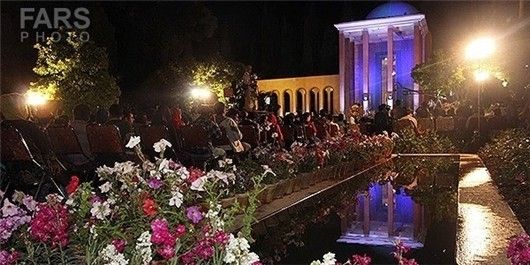
National Day of Saadi Commemorated throughout Iran

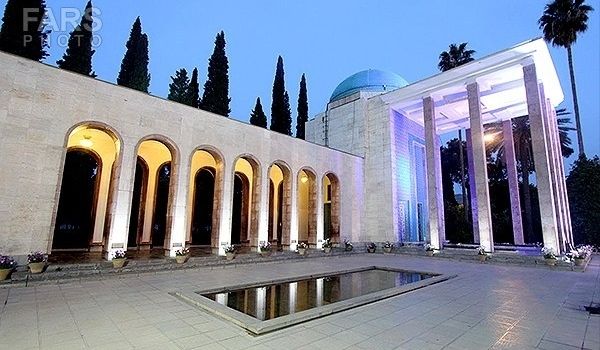
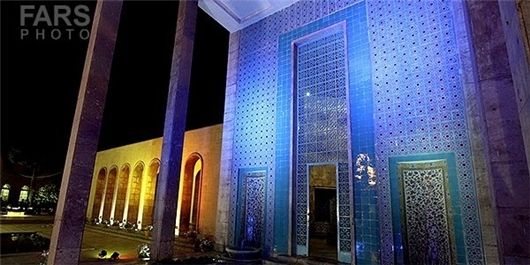
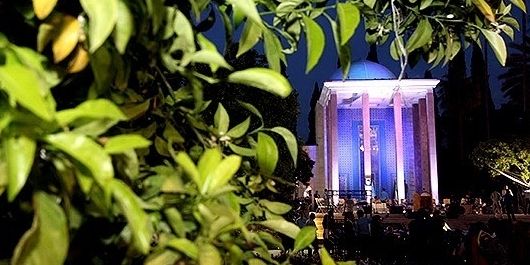
Saadi's tomb
Saadi's tomb


Different ceremonies were held throughout Iran and in Saadi’s hometown Shiraz in southern Iran on Monday and large numbers of Iranian and foreign guests convened in remembrance of the talented poet who lived from 1184-1283/1291 AD.

Abu-Mohammad Mosleh al-Din bin Abdallah Shirazi, better known by his pen-name as Saadi was one of the major Persian poets of the medieval period. He is recognized not only for the quality of his writing, but also for the depth of his social thoughts.

A native of Shiraz, his father died when he was an infant. Saadi experienced a youth of poverty and hardship, and left his native town at a young age for Baghdad to persue a better education. As a young man he was inducted to study at the famous an-Nizzamiya center of knowledge (1195-1226), where he excelled in Islamic Sciences, law, governance, history, Arabic literature and theology.

Although Saadi was born and died in Shiraz, Persia (Iran), during his life he traveled extensively. He is said to have traveled for thirty years throughout the Islamic world. Iran has filled the centuries with some of the world’s finest poets, but Iranians consider Saadi to be one of the greatest.

Historians often divide his life into three parts. His first twenty-five years were spent studying in various countries, going to university at Baghdad. During the next thirty years he traveled widely, east to India and as far west as Syria. He made his pilgrimage to Mecca fourteen times. Finally, Saadi returned to Shiraz where he devoted himself to writing and to teaching.

Saadi was a disciple of the Sufi master Sheikh Shahabud-Din Sahrawardi.

Saadi’s two best known works are the Bustan (the Garden), composed entirely in verse, and the Golestan (the Rose Garden), in both prose and verse. He was particularly known for the wry wit he injected into his poems.

Saadi is probably the first Persian poet to have been translated into European languages. A German version of the Golestan appeared in 1654.

Saadi’s tomb can be seen in the town of Shiraz. Lines from Saadi’s poems are still commonly used in conversations by Iranians today.

بنی آدم اعضای یک پیکرند

که در آفرینش ز یک گوهرند

چو عضوى به درد آورد روزگار

دگر عضوها را نماند قرار

تو کز محنت دیگران بی غمی

نشاید که نامت نهند آدمی

Of One Essence is the Human Race,

Thusly has Creation put the Base.

One Limb impacted is sufficient,

For all Others to feel the Mace.

The Unconcerned with Others’ Plight,

Are but Brutes with Human Face.

Story

A scholar of note had a controversy with an unbeliever but, being unable to cope with him in argument, shook his head and retired.

Someone asked him how it came to pass that, with all his eloquence and learning, he had been unable to vanquish an irreligious man.

He replied: ‘My learning is in the Quran, in tradition and in the sayings of sheikhs, which he neither believes in nor listens to. Then of what use is it to me to hear him blaspheming?’

To him of whom thou canst not rid thyself by the Quran and tradition the best reply is if thou dost not reply anything.


FARS NEWS AGENCY

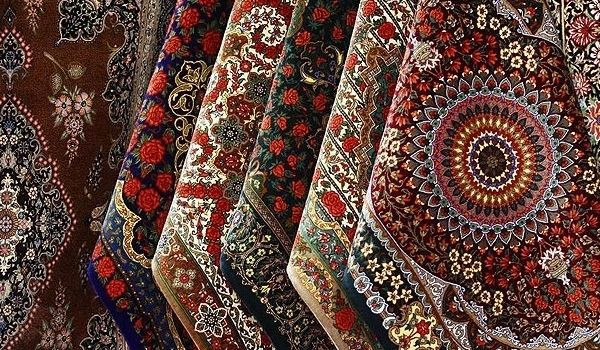
Iran Exports over $314mln Worth of Hand-Woven Carpets in One Year

Iran hand-woven carpet


Hand-woven carpet shares about 1 percent of the country’s total non-oil exports’ value.

Hand-woven carpets ranked 21 in the list of Iranian non-oil exports during the mentioned period.

According to the latest report of the Iranian Customs Administration, the figure indicates a fall by 26.35 percent, compared to the preceding year.

The country exported its hand-woven carpets to some 80 countries during the last year. Germany, UAE, Japan, Lebanon, Italy, the UK, Pakistan, Qatar, Switzerland and Sweden topped the list of the countries which imported Iran’s carpets in the mentioned period.

Iran also exported some $51,000 worth of hand-made carpets to the USA.

Iran is the leading exporter of hand-woven carpets. Persian rugs are highly sought out for their intricate design and skilled craftsmanship, and that’s why Iran exports carpets to more than 100 countries in the world.

Carpet-weaving is undoubtedly one of the most distinguished manifestations of the Persian culture and art, and dates back to ancient Persia.

There is an estimated population of 1.2 million weavers in Iran producing carpets for domestic markets and international export.

The country produces about five million square meters of carpets annually of which 80 percent are sold in international markets.

The United States, Europe (specially Germany and Italy), China, Brazil, South and Central Africa, along with neighboring countries are the most important markets for Iranian made Persian Carpets.


FARS NEWS AGENCY

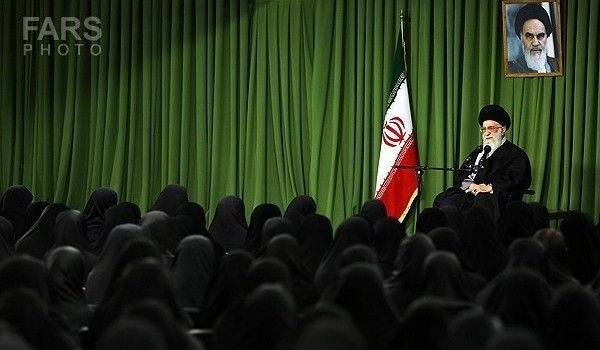
Supreme Leader Raps West’s Materialistic View of Women

Leader
Supreme Leader of the Islamic Revolution Ayatollah Seyed Ali Khamenei


“The business-centered view about women’s capacities in economic issues, including job, and the humiliating view about women and degrading them to an instrument to mollify men’s passion is one of the principles which has made the western thoughts about women completely cruel and fanatic,” Ayatollah Khamenei said, addressing a large number of female visitors in Tehran on Saturday on the occasion of National Women’s (Mothers’) Day.

“If we want to have a sound, logical, precise and helpful view about the issue of women, we should distance from the western thoughts in issues like job and sexual equality,” he added.

Ayatollah Khamenei described “women and men’s sexual equality” as one of the West’s wrong views, and said, “Equality doesn’t always mean justice, justice is always right but equality is sometimes right and sometimes wrong.”

In relevant remarks in 2011, the Supreme Leader blasted the western countries for their instrumental use of women, and said, “In the wrong equation that the West has gradually induced and inspired in the different societies, the human being is divided into two parts; Men who are considered as beneficiaries and women who are exploited and used.”

Based on this very wrong view, if women in the West want to prove themselves as renowned personalities in the society, they should behave in a way that men, as the beneficiaries, like, and this insult is the biggest oppression and cruelty against women, Ayatollah Khamenei added.

Referring to the figures published by the international centers, Ayatollah Khamenei reiterated that the weakening foundations of the western families, rapid growth of women trafficking and women trade, illegitimate births and shared life outside matrimony are just a few of the evil consequences of the West’s improper view of women, which is based on misuse.

Every day, women in Europe and the US fall victim to one of the most flagrant abuses of their human rights – the right to live without violence.

It might be the stranger lurking in the back alley: much more likely it is the partner, relative, friend or colleague – for most violence against women is carried out by someone they know.

Crime statistics show that one woman in four has been attacked at some time in their lives and that at least 15 per cent of all European women have experienced domestic violence in a relationship after the age of 16. With domestic violence still very much a hidden crime, the real figure is sure to be higher. Other forms of violence – such as stalking, forced marriage, forced abortions, and forced sterilization – still pass largely unrecorded.

Conviction rates for any type of violence against women are notoriously low. When police pick up a case, on average there are 35 previous incidents to take into account. And law enforcement agents do not always possess the required expertise to produce the evidence necessary to see perpetrators brought to justice. Is it any wonder that convictions are rare?

Governments throughout Europe are recognizing the challenge, but have fallen short of action. Some have now set up refuges for abused women, some have criminalized harassment. Others use restraining orders, counseling or mediation services, or expel the violent partner from the home. Practices differ from country to country, with no clear legislative model – leaving Europe’s women vulnerable to a crime that should have passed into the history books years ago.

Given the mottos chanted by Europe about its pioneering role in the protection of human rights throughout the world, is this the utopia that the western society is calling everyone to?


FARS NEWS AGENCY