Sunday, December 21, 2025
Home Blog Page 4982

Leader’s Aide: Iran Ready to Help Iraq If Baghdad Asks

Ali Akbar Velayati : Iran Helps Iraq
Ali Akbar Velayati

“Iran is ready to provide Iraq with any kind of help if it is asked by the ‘legal’ government in Baghdad,” Velayati said on Thursday.

The Supreme Leader’s top advisor said Iran will not cooperate with the US over the crisis in Iraq as Tehran and Washington pursue different objectives in helping the Iraqi nation.

“While Washington is after gaining dominance over Iraq by offering help to Baghdad, Tehran is not after bad purposes and does not seek to interfere in the crisis-hit country’s domestic affairs,” Velayati said.

He explained that if Washington truly intends to help Iraq counter the ongoing Takfiri violence, it should first condemn terrorism and those parties that support and fund the terrorists.

On Wednesday, Chief of Staff of the Iranian Armed Forces General Hassan Firouzabadi rejected western media speculations about Tehran’s likely cooperation with the US over Iraq, and also stressed that Iran has not deployed troops in Iraq.

“There is no need to the presence of Iranian forces in Iraq,” General Firouzabadi told reporters, and added, “Cooperation between Iran and the US will never take place and is meaningless.”

He pointed to the capture of Iraq’s Nineveh province by the ISIL as the result of a premeditated and coordinated plan, and said, “Such works do not mean brave military operations.”

General Firouzabadi further blamed former US Secretary of State Hillary Clinton for having prepared the grounds for the presence of ISIL in the region by collecting cash from the regional countries, and said, “They prepared the grounds for Takfiris to gather naive Muslim youth with Jihadi motivations under the command of Baathists who had defected Iraq’s army.”

And these criminals (Takfiris), who do not have the power to fight in a war, have recruited the youth aged between 18 to 20 years, he added.

“The ISIL is a move by Israel and the US to create a safe margin for the Zionists against the resistance forces in the region and their recent attempt was a reaction to the recent victories of President Bashar Al-Assad in Syria and the (Syrian) people’s massive turnout in that country’s presidential election as well as victories … in Iraq,” General Firouzabadi said.

Yet, he said the ISIL’s attack has backfired as its uncalculated and angry move has resulted in the unity of religious leaders in Iraq.

Iran, Denmark to Increase Technical, Engineering Cooperation

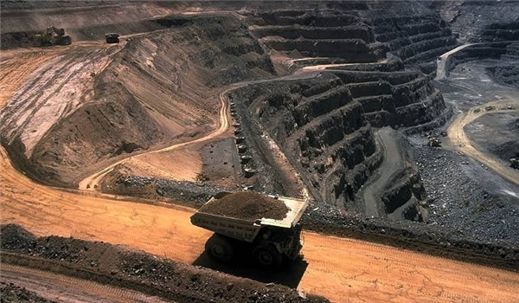
Iranian Mines and Mining Industry

The cooperation will take place between the Iranian Mines and Mining Industries Development and Renovation Organization (IMIDRO) and Denmark’s FLSmidth.

The two sides will explore and extract rare soil elements.

FLSmidth supplies the minerals and cement industries globally with everything from engineering, single machines and complete processing plants to maintenance, support services and operation of processing facilities.

IMIDRO and FLSmidth will also cooperate in iron ore processing, using modern methods, while going for extraction and processing rare soil elements as well as chanting salted water in desert areas to water used in the mining industries, including iron ore processing.

In February, Danish Ambassador to Tehran Anders Christian Hougaard said that following the implementation of the Geneva nuclear accord sealed by Tehran and the six major world powers in November, the ground has been paved for the consolidation of all-out ties with Iran.

He expressed hope that sanctions against Iran would be completely removed with the new atmosphere prevailing in Iran.

“The reality is that we consider Iran as an important partner in the volatile Middle East region and accordingly Iran needs the European Union,” Hougaard said in an address to a ceremony marking 80th anniversary of establishment of relations between Iran and Denmark.

He said, “Relations between Iran and Denmark are age-old and since 1934 we have had an Embassy in Tehran with envoys and commercial and trade delegations from Denmark visiting the country to follow up different issues such as building north-south railway.”

The Danish envoy said commercial and economic relations between Iran and Denmark should further expand and the two countries can be good economic partners for each other.

Fifth Round of Iran-Powers Talks Ends, Next Round in Vienna in Early July

Vienna Iran nuclear Talks
Iran nuclear Talks

“Iran and G5+1 will start their next round of talks in Vienna on July 2,” an Iranian diplomat told FNA in Vienna on Friday.

The diplomat said the talks “are making good progress” as the two sides are “writing the draft of the deal”.

As both Iran and the six world powers described the trend of the talks as “positive”, a member of the Iranian delegation told FNA on Friday that negotiators are not yet through with “drafting the introduction to the comprehensive deal”.

Iran’s Foreign Minister Mohammad Javad Zarif and his accompanying team of negotiators arrived in Vienna Monday morning to participate in the fifth round of talks between Tehran and the six major world powers in the Austrian capital from June 16-20.

Iran and the world powers have said that they are resolved to start drafting a long-awaited final deal in this round of talks.

The six powers present in Vienna to conduct another round of talks with Iran on its nuclear program started internal talks after Iranian Foreign Minister Mohammad Javad Zarif and EU Foreign Policy Chief Catherin Ashton ended another round of bilateral negotiations on Thursday.

The meeting between Zarif and Ashton which lasted for two and a half hours focused on drafting a final nuclear deal.

After the two officials ended their bilateral talks, internal negotiations among the members of the Group 5+1 (the US, Russia, China, Britain and France plus Germany) kicked off. Also the Iranian team of negotiators went for internal consultations.

Zarif announced on Wednesday night that Tehran and the world powers started drafting the long-awaited final deal, criticizing the other side for adopting unacceptable positions which make the negotiations difficult.

Iran and the G5+1 have started writing the text of a final agreement, Zarif said.

Noting that the two sides had tough discussions over the past two days of talks in Vienna, he said, “Some stances of the other side are completely unacceptable.”

On Wednesday, deputy chief negotiators from Iran and the six world powers (the US, Russia, China, Britain and France plus Germany) wrapped up their second day of talks in Vienna earlier today.

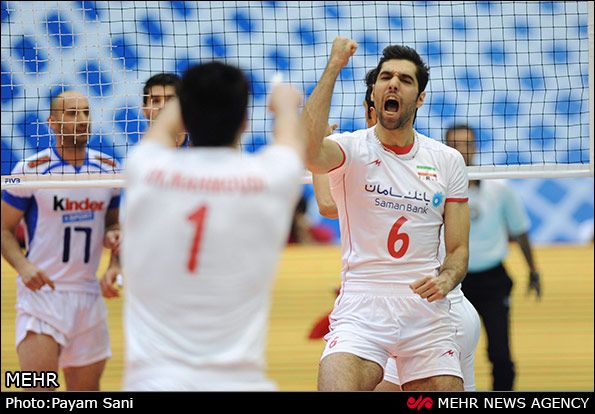
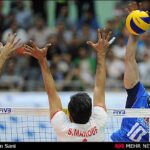
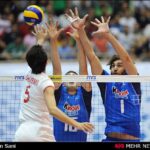
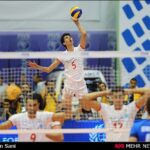
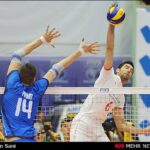
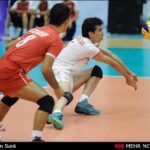
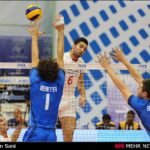
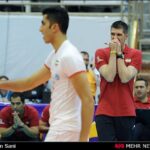
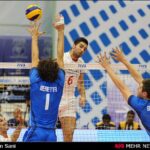
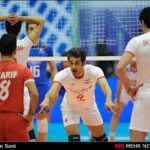
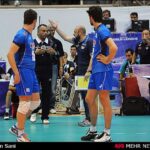
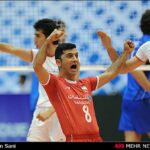
Iran Thrash Italy 3-0 in Volleyball World League

Iran Italy volleyball world league match in Iran
Photos by Mehr News Agency

The Iranians overpowered their stunned guests 25-18, 25-20 and 25-15 in the 2014 FIVB Volleyball Men’s World League at Azadi Stadium in Tehran this evening.

This was the third match between the two teams.

Iran had lost two matches to the Italians with similar 3-0 results in the first leg of the two teams’ confrontation in Italy last month.

In their other world league confrontations this year, the Asian champions had won two and lost two other matches against Brazil.

The Asian champions now should get ready for their fourth and last confrontation against Italy in Tehran on Sunday, to be followed by four matches against the Polish in Tehran and Warsaw.

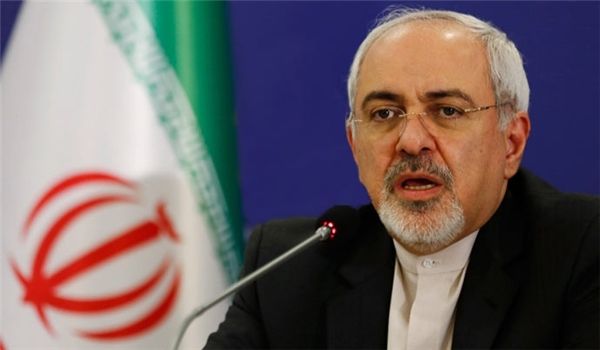
Iran, Powers Drafting Deal, Zarif Criticizes Powers for Excessive Demands

Iran Powers Drafting Deal Zarif Criticizes Powers for Excessive Demands
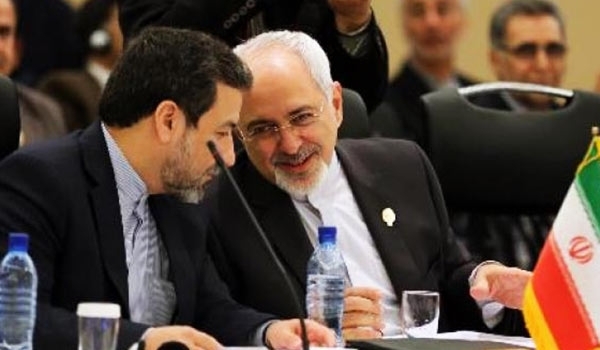
Mohammad Javad Zarif Iran Fm

Speaking to reporters after the latest round of talks with the Group 5+1 (the five permanent UN Security Council members plus Germany) in Vienna on Friday, Zarif said although the seven nations have started compiling the draft deal, the harsh stance taken by the western powers, which is reflected in their excessive and maximum demands show that they are not fully ready to enter serious negotiations to attain a final solution to the decade-old standoff.

He stressed that Iran would not give up its rights, and would continue resistance until restoring all its nuclear rights.

Yet, he said the seven nations are now working on the introduction to the deal.

“We have entered the phase of drafting the agreement, but we can’t say we have agreed on a common thing as we have not reached an understanding over essential subjects,” Zarif told reporters after four days of talks in Vienna on Friday afternoon.

“The talks were intensive and still continue. The discussions started this morning with my meeting with Mrs Ashton and now Mr Araqchi and Ravanchi and the rest of our team are working on the introduction of the text (of the final deal) with Ashton’s deputy,” he added.

“The introduction deals with the goals, frameworks and mechanisms and the way differences can be resolved,” Zarif said, adding that attaining agreement over the introduction of the text of the final deal is likely.

Zarif said although the seven nations have started drafting the deal, “we can’t say that we have a common text as in many items there are different views over the content and the way the agreement should be written”.

The Iranian foreign minister complained that “the opposite side has not attended the talks with the needed preparedness to enter serious negotiations on the basis of the realities”.

He said Iran has offered solutions to some differences based on the Geneva interim deal, but the opposite side is raising “excessive demands and Iran will not give up the Iranian nation’s interests and rights due to these excessive demands”.

He said Iran has always held logical stances and demands based on the international laws and solutions which are based on the previous agreements, “and we stand firm on our words”.

Zarif reiterated Iran’s goodwill, and said Tehran is serious about a deal.

The Iranian lead negotiator said his team has worked hundreds of hours on the text, adding that Tehran and the six powers have so far worked ten hours on the draft jointly.

He said the next round of the talks will start in Vienna on July 2, “and we will continue the negotiations as long as they are useful and needed and until achievement of the results.”

He asked the West to be realistic, and reminded that the International Atomic Energy Agency has announced earlier today that Iran has complied with its undertakings, which proved Iran’s goodwill.

Zarif complained that during the talks only the maximalist and excessive demands of one of the powers is raised, and asked the 5+1 members to work more among themselves to reach a common stance which would help the negotiations move towards a solution.

“Position-taking would not lead to an agreement, we have come here to attain a solution,” Zarif said, adding that Iran has presented a specific definition for its practical needs, and the other side should also think of a solution to the “unnecessary” decade-old crisis and problem instead of chanting slogans which are good only for interviews for domestic consumption and satisfying certain parties.

He once again stressed the need for the removal of all sanctions, and said “I am still hopeful about (attaining a) solution because I believe the issue is not complex”.

The Iranian foreign minister also criticized the world powers for their slow and delayed compliance with their undertakings under the Geneva interim nuclear deal.

In November 2013, Iran and the six world powers signed an interim nuclear deal in the Swiss city of Geneva that came into force on January 20. The seven nations also agreed on July 20 deadline to work out a final agreement.

Since the November deal, the seven nations have been discussing ways to iron out differences and start drafting a final deal that would end the West’s dispute with Iran over the country’s nuclear energy program.

But after the seven nations ended their monthly meetings in May, Iran said there has been no tangible progress in writing the draft text of the agreement and it blamed the US for the failure, saying Washington has made excessive demands beyond the agreements made in the previous rounds of talks.

Last week, Iran and several members of the G5+1 held a series of bilateral talks to narrow down their differences before the start of the multilateral negotiations in Vienna on June 16. Zarif and his accompanying team of negotiators arrived in Vienna Monday morning to participate in the fifth round of talks between Tehran and the six major world powers in the Austrian capital from June 16-20.

Prior to the start of this round of talks, both Iran and the world powers had repeatedly stressed that they were resolved to start drafting the long-awaited final deal in this round of talks.

Upon arrival at Vienna airport, Zarif told reporters that Iran and the G5+1 have one month to reach a comprehensive deal and “if the other side is ready, we will (also) be prepared to draft the final agreement”.

“Whenever the other side is ready to enter talks seriously, there will be a possibility for reaching results,” he added.

Zarif also noted the fatwa (religious decree) issued by Supreme Leader of the Islamic Revolution Ayatollah Seyed Ali Khamenei against the production and use of the nuclear weapons, and said it provides an “objective guarantee” to ensure the opposite sides that Iran’s nuclear program will remain peaceful.

Then after several bilateral meetings with the EU foreign policy chief, Zarif announced on Wednesday night that Tehran and the world powers have started drafting the final deal, but he criticized the other side for adopting unacceptable positions which make the negotiations difficult.

“Iran and the G5+1 have started writing the text of a final agreement,” Zarif said.

Noting that the two sides had tough discussions over the past two days of talks in Vienna, he said, “Some stances of the other side are completely unacceptable.”

Iranian Deputy Foreign Minister Seyed Abbas Araqchi accompanied by Iranian Deputy Foreign Minister for European and American affairs Majid Takht Ravanchi and EU foreign policy deputy chief Helga Schmidt had several rounds of talks in Vienna in the last four days.

Speaking to reporters on Tuesday night after holding negotiations with the representatives of the G5+1, Araqchi described the atmosphere of the talks as positive.

“The meetings are held intensely and the discussions are made in a constructive and positive atmosphere,” he said.

The senior negotiator expressed the hope that the two sides would reach an initial general text in this round even if some differences still remain in place.

Asked about the common points and differences between Iran and the G5+1, Araqchi said both sides agree the continuation of Iran’s enrichment program and the removal of sanctions, while they hold different views on the operation of Iran’s heavy water reactor in Arak and Fordo enrichment facility.

He pointed to the presence of US Deputy Secretary of State William Burns in this round of talks and his meeting with Zarif in the presence of EU foreign policy chief Catherin Ashton in Vienna on Monday, and said the US delegation is headed by Wendy Sherman who is Undersecretary of State for Political Affairs and she participates in the negotiations, but the presence of Mr. Burns was useful and it may be repeated in future.

Araqchi underlined that no other issue than Iran’s nuclear program is discussed in the talks between Iran and the G5+1, adding that the other side still maintains its past positions and sometimes raises excessive demands which makes reaching an agreement difficult.

He said that Iran seeks the removal of all sanctions against the country but the two sides haven’t been able to agree on the timeline and arrangements for such a move.

Swiss journalist: Iran could be a model example for all Middle East

swiss journalist in Iran Neue Zürcher Zeitung

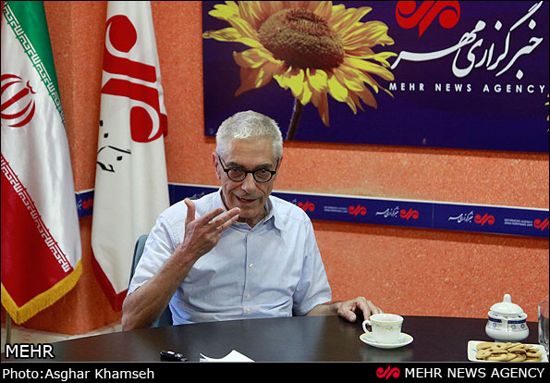
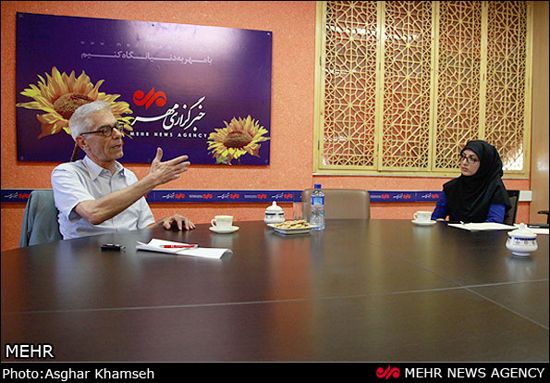
In an exclusive interview with Mehr News, Jürg Bichoff said that Iranians were very politically informed and added that “this is a consequence of Iran’s history and Iran’s historical experience of last hundred years and in that sense this is Iran that could be a model example for the whole region.”

He believed that a problem in Lebanon and other Arab countries was that anti-Iran propaganda for many years had succeeded in persuading Arabs to perceive Iran as imperialist power which strived to extend its influence in Arab countries.

“How Iranians fought for their independence during last hundred years since the constitutional revolution in the beginning of the twentieth century to Mosaddeq movement and to the Islamic Revolution in the country, this political-historical voyage of Iranians is what Arabs have not achieved; so Iran should be an example for them to learn from, accept its advice and help.

swiss journalist in Iran

Bichoff is the Middle East correspondent of a Swiss-based newspaper, and lives in Lebanon. Asked about his analysis of Syrian and Lebanese developments, he expressed his personal opinion that many Arab countries including Syria, Bahrain, Egypt and Tunisia were involved in revolutions because they were all living under dictatorships for many years. The movements started in Tunisia and it gave hope to people that they could change something about their life to find a modicum of freedom but this is very general. The problem of the so-called revolutionary movement in Syria is that it was all spontaneous and not organized, the opposition groups did not have any leader so their movement was very chaotic which gave the foreign countries, regional or international in geo-strategic level the possibility to interfere. The problem is that those who called themselves revolutionary did not sense and understand the huge implications of their movement so they became victim of international forces who tried to change events.

Pointing to the western intervention with the Syrian crisis, Mr. Bichoff said that the opposition were equipped and financed by the regional countries such as Saudi Arabia. Mr. Bichoff believed since Assad was an anti-American figure; the west especially the US helped the opposition. On the other hand, regional countries like Saudi Arabia, as US allies, waged helps there.  They now know the danger of their measures in the region but the will of west to dominate Middle East will go down. They still think they are as powerful as before like UK is now behind US seeking the past power, on the other hand French have the nostalgia of their past powerful time when they were in Algeria.

Asked about Takfirists and western support to such extremists groups and the recent terrorist movements of ISIS, Takfirists are not a genuine group and added that he was sure there will be a campaign against ISIS.

Rouhani orders investigation of possibilities of women presence in stadium

shahindokhtmollaverdi

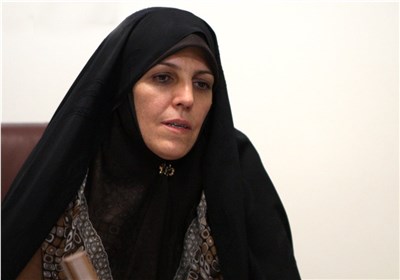
Deputy President for Women and Family Affairs pointed to her objection over prevention of women presence in stadium during the cabinet meeting and said that more talks on the issues were held with the Minister of Sports and Youth.

Shahindokht Mollaverdi told Mehr News that she had already voiced concern over prevention of women presence in stadiums and president Rouhani demanded more explanation of the issue and that the issue should be discussed with the minister of sports and youth.

Mollaverdi and Goudarzi held a meeting and decided to take measures which would eliminate barriers on women’s way to stadiums under conditions for their protection.

Through a Facebook post Molaverdi had said that in the cabinet meeting she objected to the prevention of women presence in stadiums as the message of despair and frustration of young generation to the cabinet members.

“Women were allowed to attend matches in stadiums in the past government; but the new restrictions on women to come to stadiums in 11th cabinet is quite surprising; the cabinet should revive hopes of the young generation of women through proper measures [lifting the ban on women’s presence in stadiums,” reads the Facebook post.

Iranian ethnicities lead peaceful coexistence

Iranian ethnicities
Iranian ethnicities
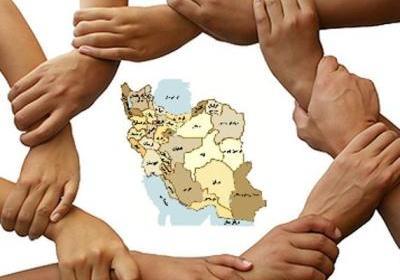
Hojjatoleslam Ali Younesi, who was speaking to a meeting of Sunnis in the provincial governorate conference hall, Kermanshah, on Saturday, said that in the past, “many attempts had been waged to divide the unity and solidarity; however, national unity had aborted these misguided attempts,” Younesi told the meeting.
He cited one of the objectives of the government was to address the general concerns of the Kurds in the region. “These concerns are not specific to particular ethnicity and religion, and the government is responsible to address and meet all these needs,” he added.
Younesi emphasized that extremist groups inflicted Islam with greatest amount of damage. “In Iraq, they are neither Shiite, nor Sunnis, but the number-one enemy of both only spreading violence and hatred, with the aim of displaying a bad image of Islam to the world,” he said.
Younesi explained the position taken by the government on the minorities rights. “The government considers all groups, either majority or minority, as equally entitled to their constitutional rights. A year after the government assumed power, people have been more hopeful about the future. The government saved the people from the desperate situation they had been in the past years,” he said.
He also demanded recognition and protection of all religious groups in the country. “We see a good atmosphere in Kermanshah, and despite the plurality of different faiths, they lead a peaceful coexistence exemplary in itself through unity and solidarity,” said the president’s assistant.

Iran, Italy Agree to Boost Anti-Drug Cooperation

Iran anti-drug
Iran anti-drug

The agreement was reached in a meeting between  Commander of the anti-narcotics squad of Iran’s Law Enforcement Police General Ali Moayyedi and Italy’s Director of the Central Directorate for Anti-Drug Services Major General Andrea De Gennaro in the Italian capital on Thursday.

During the meeting, the Iranian and Italian officials underlined the need for closer cooperation between Tehran and Rome in the fight against drugs.

They also called for establishment of a joint operations center between Iran, Italy and Afghanistan in that regard.

“The center would follow up the implementation of previous agreements reached between the three countries,” General Moayyedi said.

Moayyedi noted that Iran and Italy have also agreed to cooperate in training drug enforcement forces and exchange information and experience in that respect.

Gennaro, for his part, highlighted Iran’s role in the global anti-narcotics campaign and praised the Islamic Republic’s effective measures against drug trade.

The meeting came on the sidelines of the 31st session of the International Drug Enforcement Conference (IDEC), which wrapped up its work on Thursday.

The IDEC is an annual meeting of the heads of anti-drug agencies worldwide.

Iran, which has a 900-kilometer common border with Afghanistan, has been used as the main conduit for smuggling Afghan drugs to narcotics kingpins in Europe.

Despite high economic and human costs, the Islamic Republic has been actively fighting drug trafficking over the past three decades.

Iranian Speaker: Terrorists Strengthened by US Incorrect Approach

Larijani

“Given the incorrect strategies of the westerners, specially the Americans, in confronting the phenomenon of terrorism, the campaign on terrorism hasn’t succeeded and has rather strengthened the terrorists in some cases,” Larijani said, addressing a forum in Iran’s Southern port of Jask on Wednesday.

He said that the western states have shown a tactical behavior towards the terrorists which is based on their own interests and losses.

Larijani referred to the volatile situation in Iraq created after the US occupation of the country in 2003, and said the break-out of such wars shows that the equations in the region and even the world are not based on honesty and wisdom, stressing the need for Iran to have a powerful military and defensive force in such a situation.

In relevant remarks on Tuesday, Iranian Deputy Foreign Minister Hossein Amir Abdollahian told a parliamentary meeting that the US does not have any intention to fight against terrorists, and called Washington the main sponsor of terrorism in Syria and Iraq.

“The Americans have created the terrorist groups in Syria and Iraq themselves,” Rapporteur of the Iranian Parliament’s National Security and Foreign Policy Commission Seyed Hossein Naqavi Hosseini quoted Amir Abdollahian as telling the commission members in a meeting on Tuesday.

“The extremists and terrorist groups engage in such acts on the assumption that the Middle East is in the best condition for setting up Al-Qaeda governments in there,” Amir Abdollahian said, according to the MP.

Naqavi Hosseini said that the Iranian deputy foreign minister had informed them that several important events such as a fatwa by Grand Ayatollah Ali Sistani which resulted in unity of all Iraqi groups resulted in spiritual and material support of the Iraqi groups for the government and intimidated the Islamic State of Iraq and the Levant (ISIL) militants.

Also on Tuesday, Chief of Staff of the Iranian Armed Forces General Hassan Firouzabadi said Israel has created and supported the ISIL to ward off danger from its borders.

Firouzabadi made the remarks in Tehran on Tuesday and in reaction to the recent crimes committed by the ISIL in Iraq and its attacks in Syria since the start of the crisis in the Arab country in 2011.

“The ISIL is Israel’s cover up for distancing the revolutionary forces from Israeli borders and creating a margin of security for the Zionists, and the Zionist media have also admitted this fact,” he added.

Firouzabadi emphasized the necessity for the Iraqi people’s unity and resistance, and said, “The only way for the Iraqi people to overcome this problem is unity, resistance and suppression of these modern-day ignorance (darkness) fighters.”

Firouzabadi voiced opposition to any military meddling in Iraq, and warned that the US is attempting to pave the ground for its armed intervention in a bid to destroy the democratic trend in the country.

Firouzabadi underlined that the US which created terrorist groups during Hillary Clinton’s tenure as state secretary is displeased with the results of the recent elections in Iraq and is cancel election results.

“By any meddling and military intervention in Iraq, the Americans are seeking to attain ungracious goals, at the top of which undermining the elections in Iraq, and the crocodile tears of the Americans should not receive any attention, as they are still the allies of the sponsors and supporters of terrorists in the region,” Firouzabadi said.

He said that Iraq’s Muslim and revolutionary people and army can further strengthen their country using the current conditions.