Sunday, December 21, 2025
Home Blog Page 4983

Rouhani: government committed to curb inflation

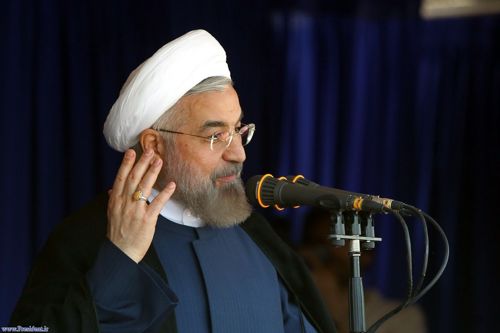
Presidnet Rouhani in khorramabad

Rouhani and the cabinet are in Khorramabad for a two-day visit to the western province of Lorestan. Reportedly, the governor and Friday Prayer imam of the city, and a group of army commanders welcomed Rouhani at the airport.

Upon arrival in the Khorramabad airport, President Rouhani told reporters that the cabinet would make decisions intended to ‘improve the social welfare especially in employment.’

“The province has problems such as unemployment, fresh water, and other problems to which cabinet will attend,” Rouhani said, and added that he was proud to be among the ‘great and intrepid people of the province.’

He made a memorial tribute to all martyrs of the province who defended the country during the eight year sacred defense.

After a brief talk with the reporters at the airport, he will go to Takhti Stadium in Khorramabad to address a meeting of general public.

Rouhani said that the Islamic Republic of Iran had always been in the path of cooperation in dealing with other countries. “I strongly promise that the government has considerable steps to revive the nuclear rights of the nation and eliminating the sanctions and it will definitely take additional steps if necessary,” Rouhani asserted.

He made sideswipes to the Iraqi development, saying that Iran would not spare any opportunity to protect Shiite holy shrines in Iraq.

“The government is resolved to curb inflation and will act accordingly. Cabinet works to improve public health gradually,” he said, lavishing praise on Lorestan’s people as ‘being guilelessly devoted to the Islam and the Prophet’s household and their country.’

Rouhani maintained that the province was not a place where people suffer from unemployment. “We heard voices articulating public frustration with unemployment; today, however, multitudes of young people, university graduates feel the bitter taste of unemployment,” he asserted.

President will also visit Khorramabad petrochemical complex during the 2-day visit.

Iran ready to take final step towards resolving nuclear issue: President

president Rouhani Iran nuclear talks
president Rouhani

Speaking to a large gathering of local people, he noted that Iran is committed to increase interactions with the world.

Referring to Iraqˈs invasion by Daesh (the Islamic State of Iraq and the Levant) terrorist group, the President added that the Iranian nation is ready to help Iraqi people defend their holy sites.

Iran top holder of worldˈs natural gas reserves: BP

Iran gas
Iran gas

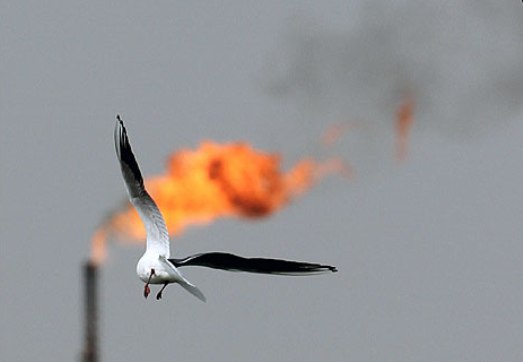
According to the BP Statistical Report, Iran has risen to the first place with its 33.8 trillion cubic meters of the blue fuel, 18 per cent more than Russia and Qatar.

Iran produced 10 million tones of liquefied natural gas in 2013 and plans to produce up to 75 million tones in 2015, said the report.

The company downgraded Russia’s reserves estimate to 32.9 trillion cubic meters from 44.6 trillion cubic meters in its earlier report, putting global proven gas reserves at 187.3 trillion cubic meters as of the end of 2012.

Circumstances right to reopen UK embassy in Iran: Hague

Circumstances right to reopen UK embassy in Iran
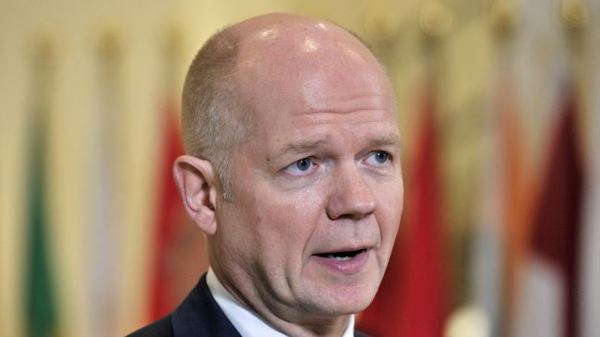
British Foreign Secretary William Hague

Addressing the British parliament in a written statement on Tuesday, Hague expressed his satisfaction that British embassy staff would be safe in the Iranian capital of Tehran and that diplomats would be allowed to work without hindrance.

He said the two sides first need to resolve “a range of practical issues” before the embassy can restart operations.

“It is our intention to reopen the embassy in Tehran with a small initial presence as soon as these practical arrangements have been made,” the foreign secretary added.

In November 2011, Iranian lawmakers voted by a large majority to downgrade diplomatic ties with the UK in response to Britain’s decision to impose sanctions on the Central Bank of Iran over the allegation that Tehran is pursuing non-civilian objectives in its nuclear energy program.

Hague announced on November 30, 2011, that London is withdrawing its diplomatic staff from Iran and that the Iranian Embassy in London would be closed.

Iran and Britain agreed in October last year to appoint non-resident chargés d’affaires as a first step towards reopening their respective embassies.

The development followed a September 2013 meeting between Iranian Foreign Minister Mohammad Javad Zarif and his British counterpart in New York, during which they discussed ways to improve Tehran-London ties based on mutual respect.

Iran urges ‘realistic’ approach in nuclear talks

Abbas Araqchi

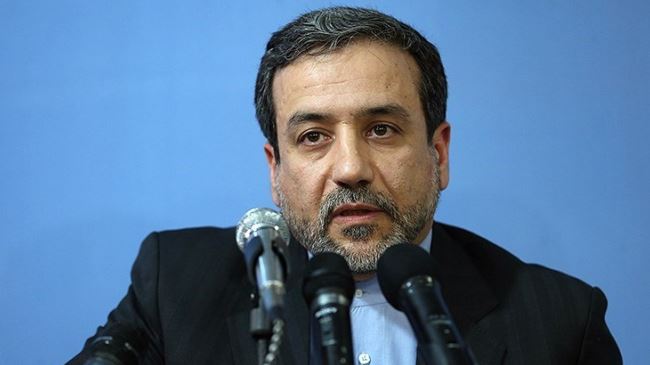
ranian Deputy Foreign Minister for Legal and International Affairs Abbas Araqchi made the remarks at a press conference in the Austrian capital Vienna on Tuesday, the first day of the latest round of talks with the Sextet of world powers.

“Some parties in the P5+1 still have some illusions, still stick to positions which belong to the past,” Araqchi said, adding that “a solution can be possible only if all sides” try to be “realistic”.

The Iranian negotiator described this round of talks with the six countries as serious and useful and that all parties were determined to bridge the gaps.

Araqchi also expressed hope that the latest round of talks would yield a result acceptable to all parties.

He called on the negotiators to stick to the goal of the talks, which is to ensure that Iran’s nuclear energy program is exclusively peaceful.

The latest Vienna talks came after Iran held several bilateral nuclear talks with delegations from the United States, France, Russia, and Germany.

Iran and the five permanent members of the United Nations Security Council – China, Russia, Britain, France and the United States – plus Germany clinched a landmark interim deal in the Swiss city of Geneva on November 24, 2013.

Under the deal, dubbed the Geneva Joint Plan of Action, the six countries undertook to provide Iran with some sanctions relief in exchange for Iran agreeing to limit certain aspects of its nuclear activities during a six-month period. It was also agreed that no nuclear-related sanctions will be imposed on Iran within the same timeframe. The agreement took effect on January 20.

Iran Condemns Israeli Aggression against Palestinians

Marzieh Afkham speakerwoman

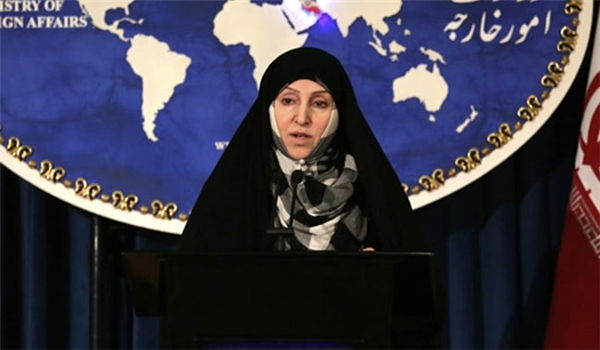
Afkham strongly condemned the Israeli regime’s aggression and bomb attachs on parts of the Gaza Strip and apprehension of a number of Palestinians in the West Bank, specially a number of legislators.

“The criminal act of the Zionists shows their weakness and anger and reveals their internal disputes,” Afkham said in a statement on Tuesday.

“By escaping forward, the Zionists have again resorted to the old and worn-out methods of state-sponsored terrorism,” she added.

Afkham called on the regional and international bodies to show reaction, deplore Israel’s inhumane and aggressive measures, adopt serious actions to prevent the repetition of such crimes and provide the ground for the immediate freedom of the Palestinian prisoners.

Over 40 Palestinians were arrested overnight Sunday, bringing the total to some 150 since early Friday.

Israeli forces raided the Southern West Bank city of Hebron and detained Aziz Dweik, the speaker of the Palestinian parliament, along with five additional Palestinian MPs: Basim Zaarir, Samir al-Qadi, Azzam Salhab, Muhammad al-Tal and Nayif Rajoub.

The speaker of the Palestinian legislative council is the stand-in for President Mahmoud Abbas if necessary, according to the Palestinian constitution.

Hamas members were also arrested in the city of Hebron and in the Southern parts of Hebron district, as well as in the outskirts of Ramallah, Nablus and Jenin.

Three Palestinians were wounded in a raid on a house in Hebron when Israeli troops shoot a missile at its door.

Residents of the Jalazone refugee camp near Ramallah clashed on Sunday night with Israeli forces. Violent clashes were registered near Jenin as well.

Also, 20-year-old Jalazone resident Ahmad Sabarin was shot in the chest and died upon arrival at the hospital with two other wounded.

Ashton’s Spokesman: Iran, Powers Working on Text of Possible Agreement

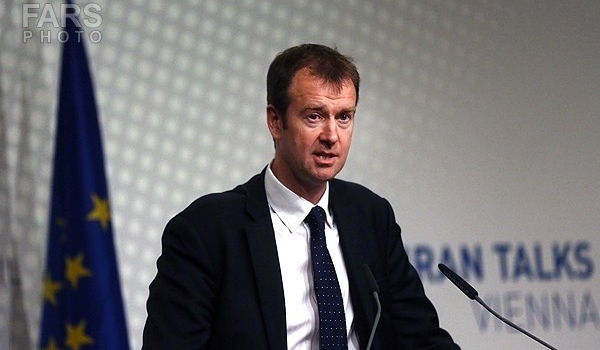
Micheal Mann , Iran and p 5+1 talk in Vienna

Mann told FNA on Monday afternoon that the seven nations had a hectic day on Monday with several bilateral and trilateral meetings between Iran and the different members of the Group 5+1 (the US, Russia, China, Britain and France plus Germany).

Elaborating on the contents of the meetings, he said, “The first preview session today worked and focused on elements of a text that could be possible agreement.”

He said experts teams of the seven nations are now to “discuss the technical level of some of the questions that have been raised at the preliminary session today and so, you know, we have obviously been working very hard, everybody knows that the negotiations are very complex technically and politically but we from the E3+3 are determined to make progress this week and to reach an agreement as quickly as possible”.

“But the most important thing is that the agreement is good and fully reassures the international community about the pure and peaceful nature of the Iranian nuclear program,” he continued.

Ashton’s spokesman said the agreement should be palatable to all the seven nations and provide for the concerns of both sides. “We know that there is a lot of work to do we don’t know when an agreement might be reached so it’s impossible to predict what is the most important thing is that everybody focuses very hard on reaching an agreement that everybody is happy with.”

Reiterating the determination of the negotiators to reach a final deal, he said, “We are very serious about these negotiations this is an important agreement for the international community. Catherine Ashton is mandated by the United Nations to reach an agreement on behalf of the international community to ensure that Iran meets all its international obligations and she is focused very seriously on this and will do everything she can to make an agreement possible.”

Iranian Foreign Minister Mohammad Javad Zarif and his accompanying team of negotiators arrived in Vienna Monday morning to participate in the fifth round of talks between Tehran and the six major world powers in the Austrian capital from June 16-20.

The Iranian delegation is led by Zarif. The talks started by a working luncheon between Zarif and Ashton followed by a trilateral meeting with the US delegation.

Iran and the world powers have said that they are resolved to start drafting a long-awaited final deal in this round of talks.

Upon arrival at Vienna airport, Zarif told reporters that Iran and the G5+1 have one month to reach a comprehensive deal and “if the other side is ready, we will (also) be prepared to draft the final agreement”.

“Whenever the other side is ready to enter talks seriously, there will be a possibility for reaching results,” he added.

Zarif also noted the fatwa (religious decree) issued by Supreme Leader of the Islamic Revolution Ayatollah Seyed Ali Khamenei against the production and use of the nuclear weapons, and said it provides an “objective guarantee” to ensure the opposite sides that Iran’s nuclear program will remain peaceful.

His remarks came after senior Iranian and German diplomats in a meeting in Tehran on Sunday stressed the necessity for the seven nations to start drafting a final nuclear deal in this round of talks.

Following two hours of bilateral talks between senior Iranian and German negotiating teams in Tehran on Sunday afternoon, Iranian Deputy Foreign Minister and senior negotiator Seyed Abbas Araqchi told FNA that the two sides exchanged views over the topics to be covered in the multilateral nuclear negotiations between Iran and the G5+1 in Vienna.

“These (bilateral) talks which were carried out on the verge of the next round of negotiations in Vienna were of special importance,” he said, and added, “During the talks, the two sides laid emphasis on the need to start drafting the text of the final deal in the negotiations.”

Araqchi, who is also Iran’s deputy lead negotiator, said the “consultations with Germany will continue in Vienna”.

In November 2013, Iran and the six world powers signed an interim nuclear deal in the Swiss city of Geneva that came into force on January 20. The deadline for attaining a final deal is July 20.

Iran and the six world powers last met in their fourth round of talks in Vienna on May 14-16. Since the November deal, the seven nations have been discussing ways to iron out differences and start drafting a final deal that would end the West’s dispute with Iran over the country’s nuclear energy program.

After the May meeting, Iran said there has been no tangible progress in writing the draft text of the agreement and it blamed the US for the failure, saying Washington has made excessive demands beyond the agreements made in the previous rounds of talks.

Last week, Iran and the powers decided to hold a series of bilateral talks to narrow down their differences before the start of the multilateral negotiations in Vienna. Thus, the Iranian negotiating team had a series of bilateral talks with most of the members of the G5+1 during the last week.

Last Monday, representatives from Iran, EU and the United States had five hours of trilateral talks, followed by a bilateral meeting between the Iranian and American delegations in Geneva last Tuesday.

The Iranian team then met with the Russian negotiators, including Deputy Foreign Minister Sergey Ryabkov, on the sidelines of the Disarmament Conference in Rome on Wednesday.

The Iranian diplomats who were headed by Araqchi and Iranian Deputy Foreign Minister for European and American affairs Majid Takht Ravanchi then met with the French for more than 3 hours of “useful talks in a positive atmosphere” in Geneva on Wednesday.

“These talks on the threshold of the upcoming Vienna negotiations were useful,” Araqchi told FNA on Wednesday.

He said that the two sides discussed issues related to the nuclear talks as Iran and the G5+1 are preparing for the next round of talks in the Austrian capital.

The French foreign ministry’s new political director Nicolas de Rivière, who has replaced the longtime lead negotiator and political director Jacques Audibert, was leading France’s negotiating team in the meeting.

Undue nuclear demands from Iran will backfire: Analysts

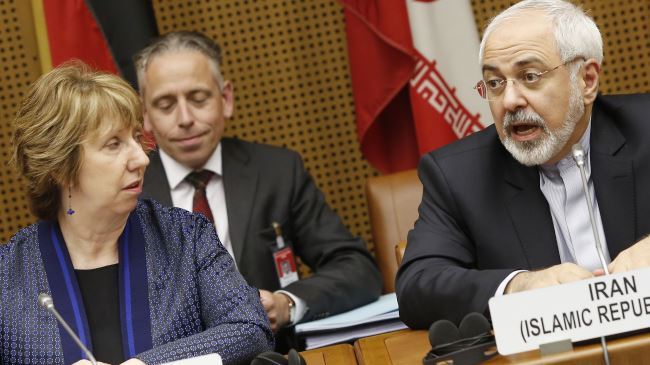
Iran nuclear talks Zarif Ashton

“In the nuclear talks, America and its Western partners have insisted on terms that would cut Iran’s uranium enrichment…. This will not just fail—it will backfire against Western interests on multiple fronts,” Mohammad Marandi, Flynt Leverett and Hillary Mann Leverett wrote in a column for the Press TV website.

They said the US is required to deal with Iran’s nuclear issue in a “genuinely reciprocal way.”

“The West should instead focus on crafting a deal recognizing Iran as an independent, truly sovereign and rightfully rising power in its own region,” the commentators wrote.

They recommended the US government to follow the way it dealt with China 40 years ago, adding, “In the Chinese case, Washington eventually realized that two decades of trying to isolate, economically strangle and undermine the People’s Republic had not just failed—it had backfired.”

Iran and the six world powers – the United States, China, Russia, France, Britain, and Germany – on Tuesday entered the second day of the latest round of nuclear negotiations over Tehran’s nuclear energy program in the Austrian capital, Vienna.

Representatives of the Islamic Republic and the six countries sat down at the negotiating table in Vienna, working to draw up the draft of a final nuclear deal.

Iran and the six world powers have been discussing ways to iron out their differences and start drafting a final deal that would end the West’s dispute with Iran over the country’s nuclear energy program.

In November 2013, the two sides signed an interim nuclear deal in the Swiss city of Geneva that will expire on July 20, but can be extended.

Iranian FM, IAEA Chief Meet in Vienna

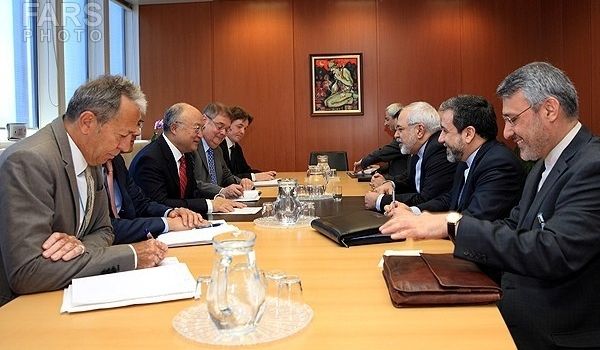
Iran and IAEA Vienna

 The meeting was held at the IAEA offices in Vienna and before the start of the fifth round of multilateral talks between Iran and the Group 5+1 (the US, Russia, China, Britain and France plus Germany).

Also reports from Vienna said that Iran and the G5+1 are due to hold an experts meeting this afternoon to discuss the technical aspects of the long-awaited final agreement on Tehran’s nuclear program.

The meeting will be headed by Hamid Baeidinejad, the director general for political and international affairs at Iran’s foreign ministry, and Stephen Clement, an aide to EU foreign policy chief Catherine Ashton.

Zarif and his accompanying team of negotiators arrived in Vienna Monday morning to participate in the fifth round of talks between Tehran and the six major world powers in the Austrian capital from June 16-20.

The Iranian delegation is led by Zarif. The talks started by a working luncheon between Zarif and Ashton followed by a trilateral meeting with the US delegation.

Iran and the world powers have said that they are resolved to start drafting a long-awaited final deal in this round of talks.

Upon arrival at Vienna airport, Zarif told reporters that Iran and the G5+1 have one month to reach a comprehensive deal and “if the other side is ready, we will (also) be prepared to draft the final agreement”.

“Whenever the other side is ready to enter talks seriously, there will be a possibility for reaching results,” he added.

Zarif also noted the fatwa (religious decree) issued by Supreme Leader of the Islamic Revolution Ayatollah Seyed Ali Khamenei against the production and use of the nuclear weapons, and said it provides an “objective guarantee” to ensure the opposite sides that Iran’s nuclear program will remain peaceful.

His remarks came after senior Iranian and German diplomats in a meeting in Tehran on Sunday stressed the necessity for the seven nations to start drafting a final nuclear deal in this round of talks.

Following two hours of bilateral talks between senior Iranian and German negotiating teams in Tehran on Sunday afternoon, Iranian Deputy Foreign Minister and senior negotiator Seyed Abbas Araqchi told FNA that the two sides exchanged views over the topics to be covered in the multilateral nuclear negotiations between Iran and the G5+1 in Vienna.

“These (bilateral) talks which were carried out on the verge of the next round of negotiations in Vienna were of special importance,” he said, and added, “During the talks, the two sides laid emphasis on the need to start drafting the text of the final deal in the negotiations.”

Araqchi, who is also Iran’s deputy lead negotiator, said the “consultations with Germany will continue in Vienna”.

In November 2013, Iran and the six world powers signed an interim nuclear deal in the Swiss city of Geneva that came into force on January 20. The deadline for attaining a final deal is July 20.

Iran and the six world powers last met in their fourth round of talks in Vienna on May 14-16. Since the November deal, the seven nations have been discussing ways to iron out differences and start drafting a final deal that would end the West’s dispute with Iran over the country’s nuclear energy program.

After the May meeting, Iran said there has been no tangible progress in writing the draft text of the agreement and it blamed the US for the failure, saying Washington has made excessive demands beyond the agreements made in the previous rounds of talks.

Last week, Iran and the powers decided to hold a series of bilateral talks to narrow down their differences before the start of the multilateral negotiations in Vienna. Thus, the Iranian negotiating team had a series of bilateral talks with most of the members of the G5+1 during the last week.

Last Monday, representatives from Iran, EU and the United States had five hours of trilateral talks, followed by a bilateral meeting between the Iranian and American delegations in Geneva last Tuesday.

The Iranian team then met with the Russian negotiators, including Deputy Foreign Minister Sergey Ryabkov, on the sidelines of the Disarmament Conference in Rome on Wednesday.

The Iranian diplomats who were headed by Araqchi and Iranian Deputy Foreign Minister for European and American affairs Majid Takht Ravanchi then met with the French for more than 3 hours of “useful talks in a positive atmosphere” in Geneva on Wednesday.

“These talks on the threshold of the upcoming Vienna negotiations were useful,” Araqchi told FNA on Wednesday.

He said that the two sides discussed issues related to the nuclear talks as Iran and the G5+1 are preparing for the next round of talks in the Austrian capital.

The French foreign ministry’s new political director Nicolas de Rivière, who has replaced the longtime lead negotiator and political director Jacques Audibert, was leading France’s negotiating team in the meeting.
Iraqi government powerful enough to defeat terrorists: Velayati

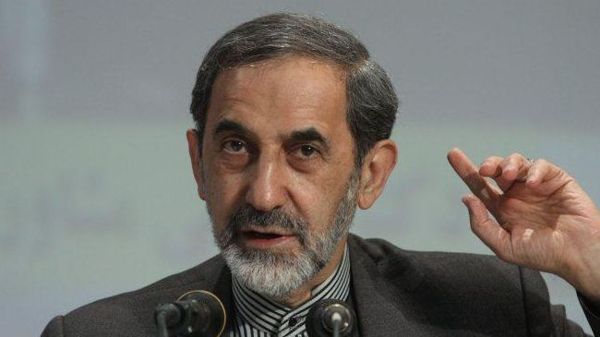
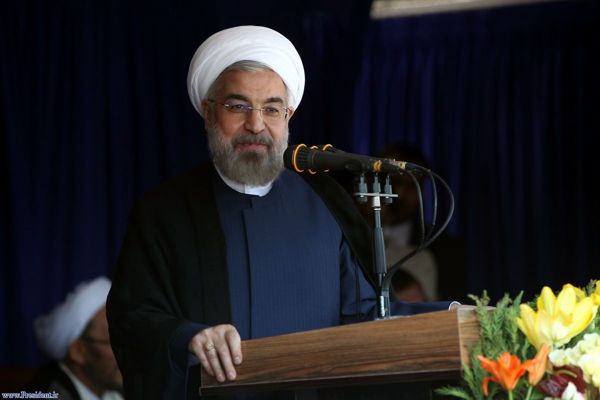
Ali Akbar Velayati : Iraqi government powerful enough to defeat terrorists

He made the remarks in a meeting with the Chinese journalists at the Iranian Embassy in Beijing.

After the victory of al-Maleki in the democratic election, the terror group known as Daesh entered Iraq from Syria to make a type of psychological war against the Iraqi government, Velayati added.

Velayati said that Iran and China have similar stance against the spread of extremism and terrorism in the region.

Answering a question about the nuclear talks between Iran and G5+1 underway in Vienna, he noted that Iran would continue with peaceful nuclear activities under supervision of the IAEA to provide its power plants with the required fuel.

Iran seeks strategic relations with China, Velayati who is also a top advisor to Iranˈs Supreme Leader asserted.

He called for revival of Silk Road as an important step towards enhanced ties between Tehran and Beijing.

Velayati is currently on a visit to China. He conferred with Chinese high ranking officials.