Sunday, April 26, 2026
Home Blog Page 4902

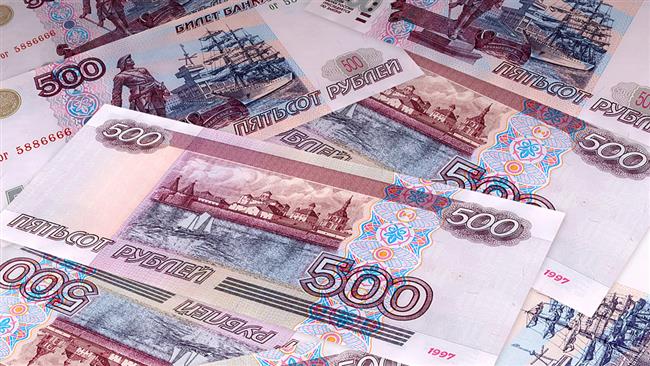
Iran, Russia ditch dollar, trade in ruble

7

Bank officials in Tehran said on Sunday that a mechanism to transfer money to the country’s banks from Russia is now on stream.

Gholam-Reza Panahi, the deputy governor for currency affairs of Bank Melli of Iran (BMI), said the mechanism enables Iranian exporters to transfer payments in rubles from their Russian clients to Iran through the Moscow-based Mir Business Bank.

Panahi said BMI is ready to support Iranian exporters to receive the ruble payments of their Russian clients through Mir Business Bank.

He said Iranian exporters can even choose the same bank for opening letters of credit.

Both countries are subject to a series of draconian US-engineered sanctions. They had already announced plans to ditch the US dollar and trade in their own currencies.

The US and the European Union have imposed an array of embargoes on Russian individuals and businesses over the crisis in Ukraine. They accuse Moscow of supporting anti-Kiev protesters in eastern and southern Ukraine. Russia denies the allegation.

The US and its European allies have also imposed sanctions against Iran over Tehran’s civilian nuclear activities.

Iran decries Saudi obstacle to delivery of emergency supplies

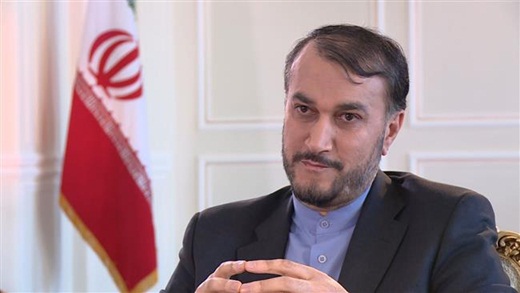
Hossein Amir-Abdollahian

Deputy Foreign Minister for Arab-African Affairs Hossein Amir-Abdollahian on Sunday expressed outrage at the obstacles created by the Saudi government to the delivery of emergency supplies to Yemen.

He said that Iran reviews all options for assisting people in Yemen such as the immediate shipment of relief supplies and transfer of injured civilians.

The Saudi government does not have the right to dictate its policies on others in the region, he said, adding that their military intervention in Bahrain left hundreds of casualties.

He said that the Saudi government is not honoring its obligations under the international law and the Charter of the United Nations which prohibits intervention in the internal affairs of other states.

The Saudi aggression on Yemen has led to the escalation of violence and bloodshed in the country and the entire region, he said, adding that the Saudi government is expected to help promote peace and security in the region, but they have put regional security at risk.

Amir-Abdollahian said that the Saudi government is responsible to play a constructive role and not to disrupt peace and security in the region.

He underlined that Tehran always backs diplomatic talks with the Saudi government.

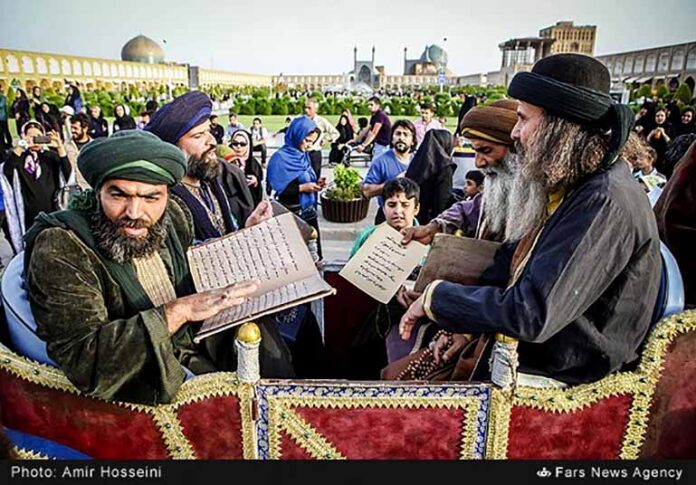
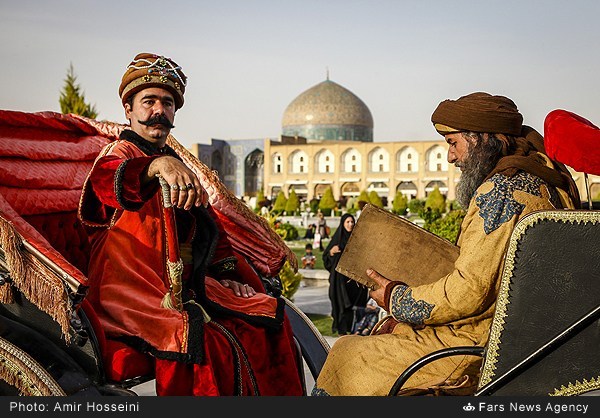
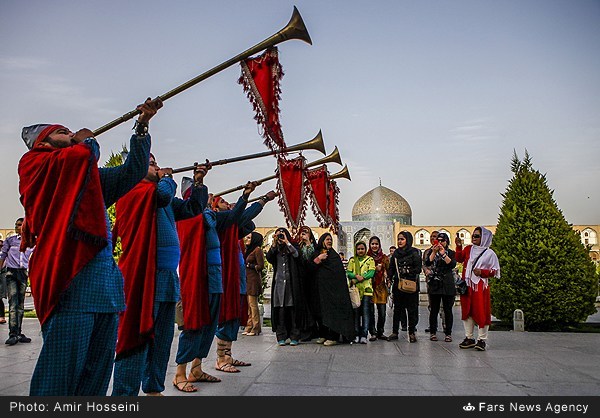
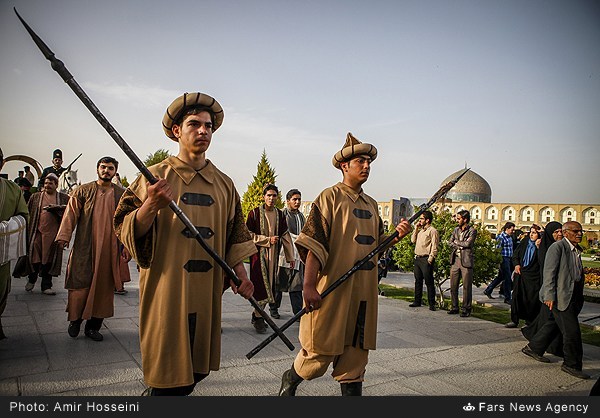
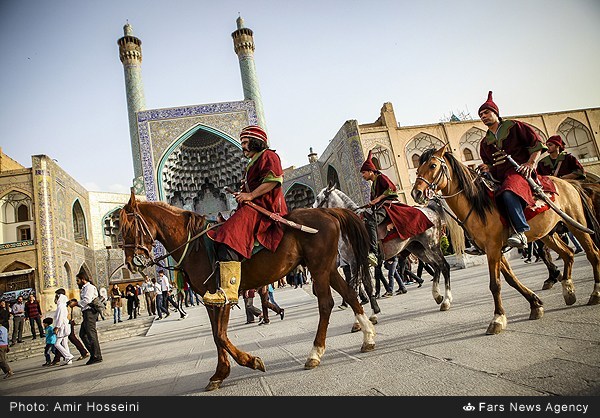
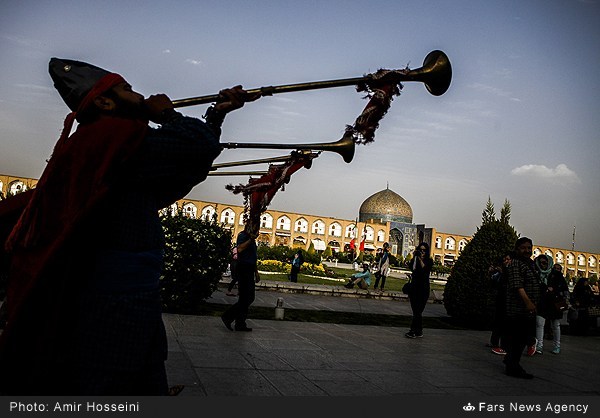
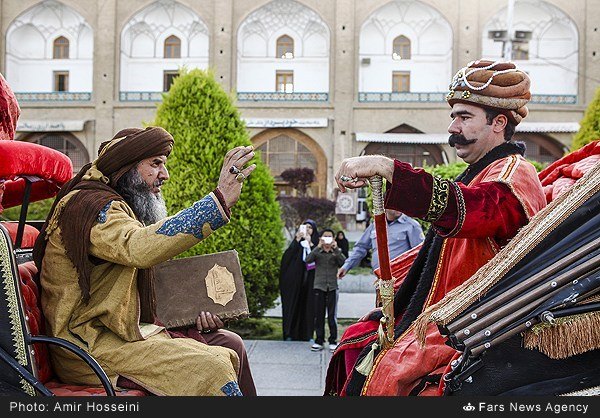
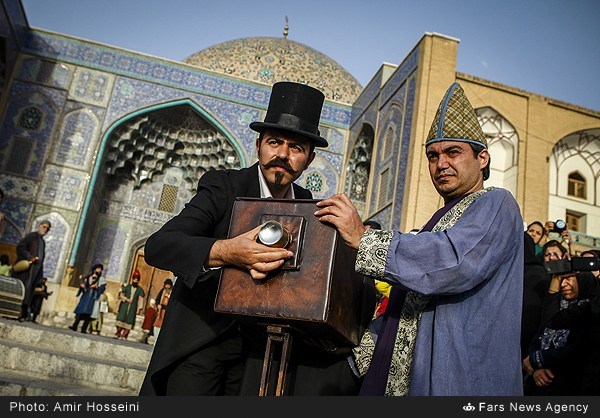
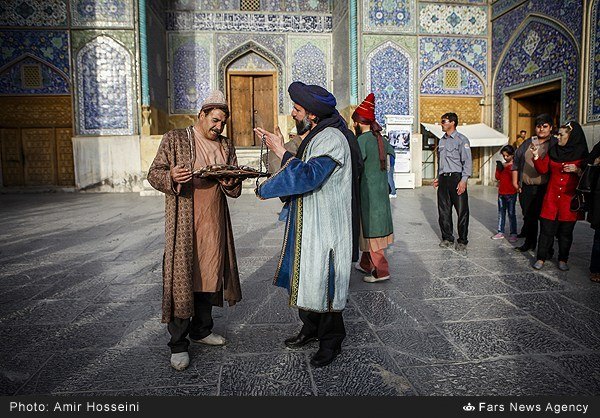
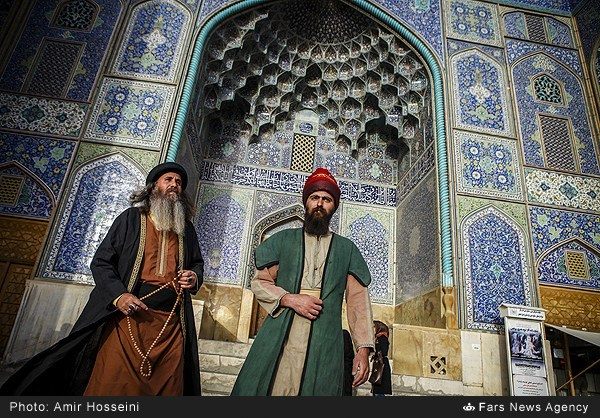
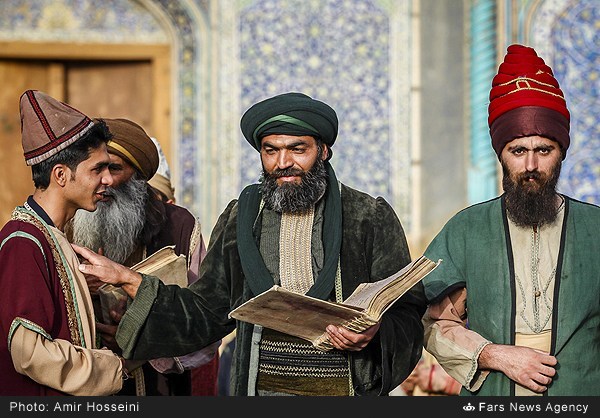
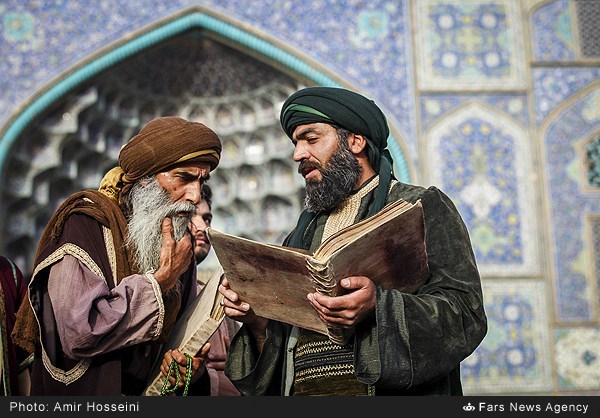
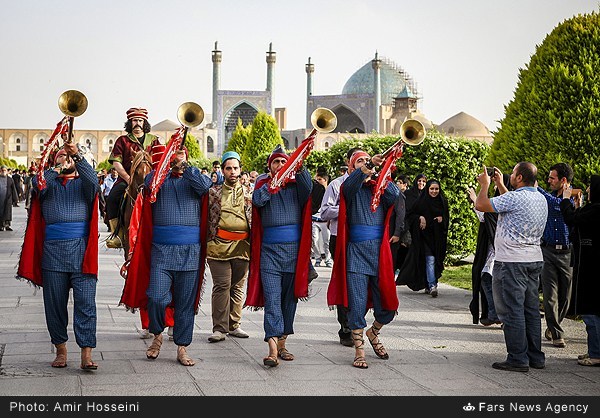
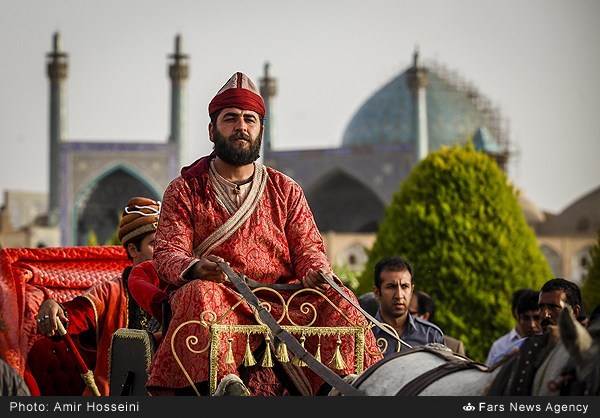
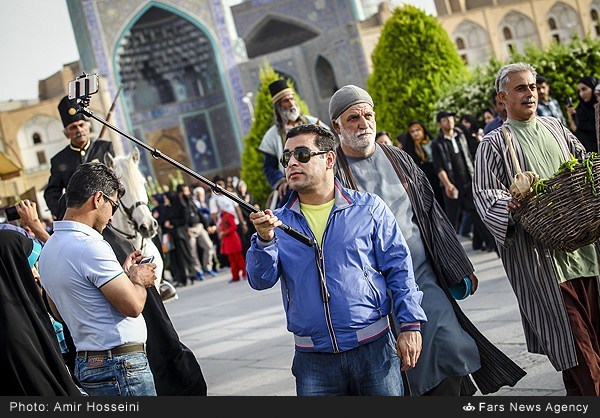
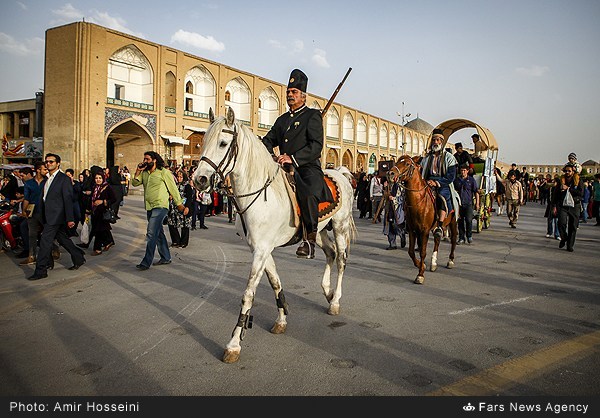
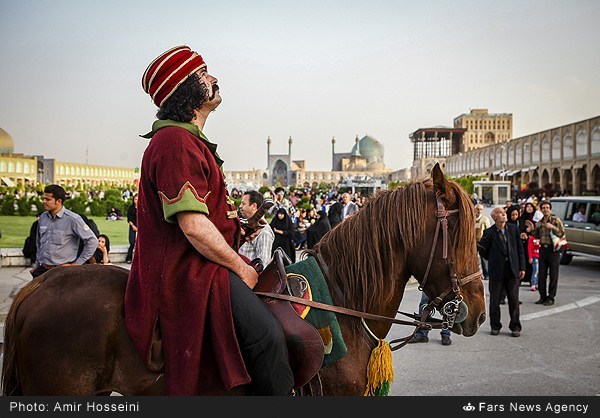
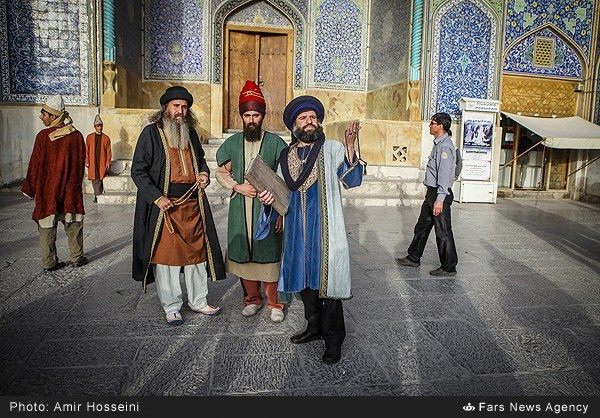
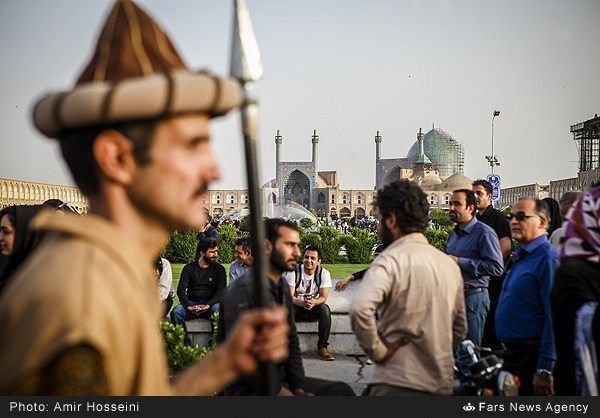
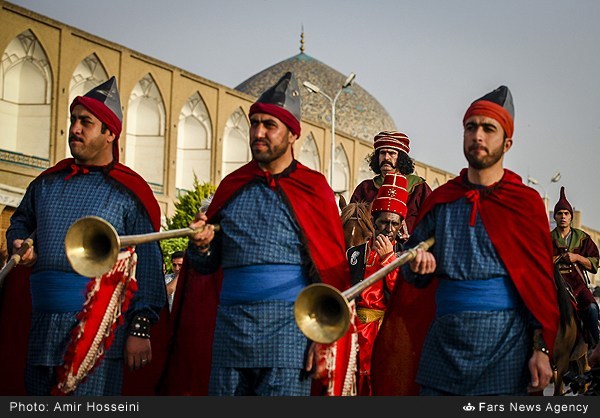
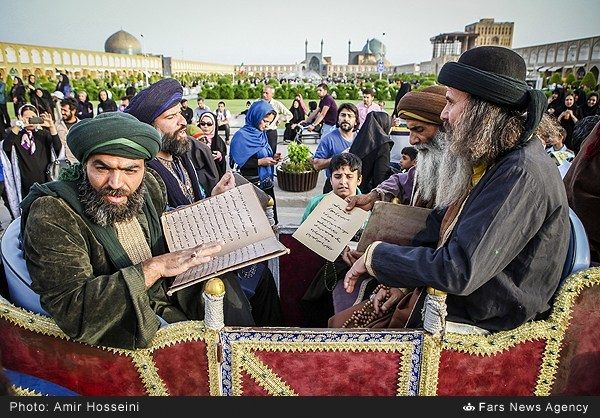
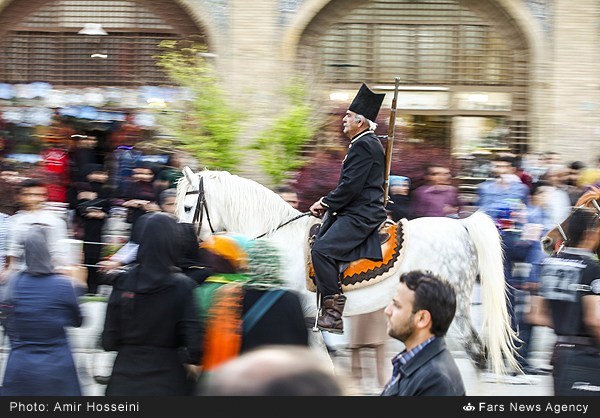
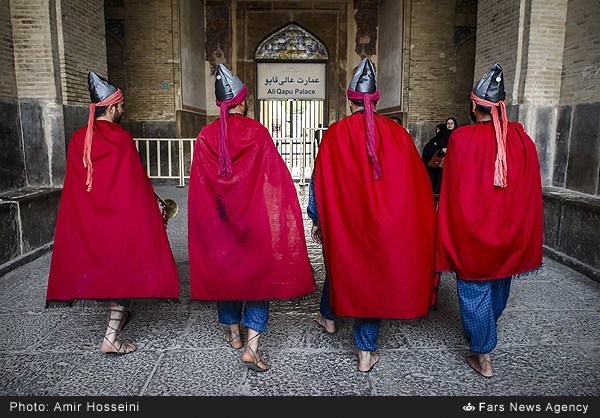
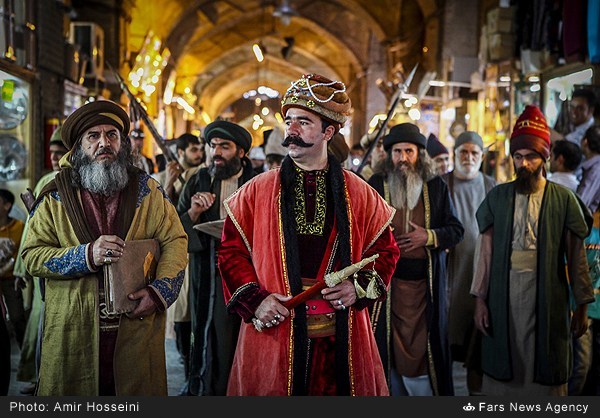
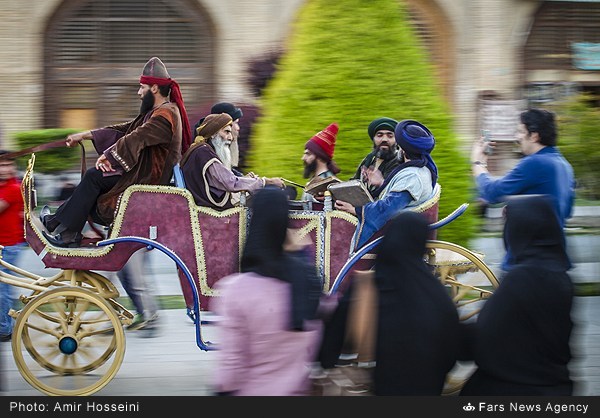
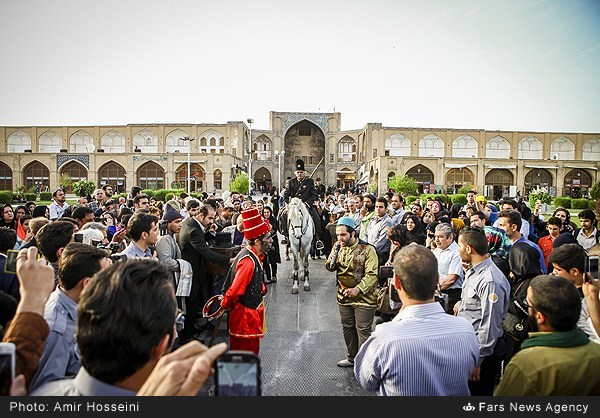
Iran in Photos: Isfahan History Show

Isfahan History Show

A three-day ceremony featuring troupes reenacting part of the history of Isfahan has been held in the historical central city.

The following are images released by Fars News Agency:


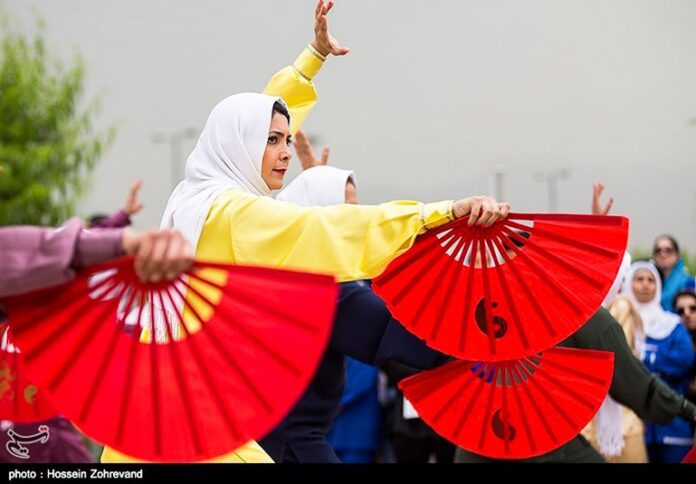
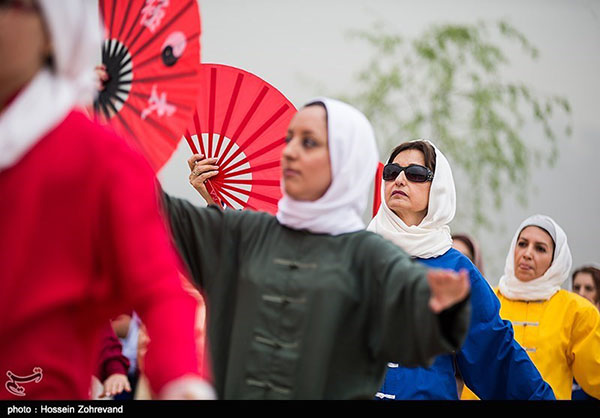
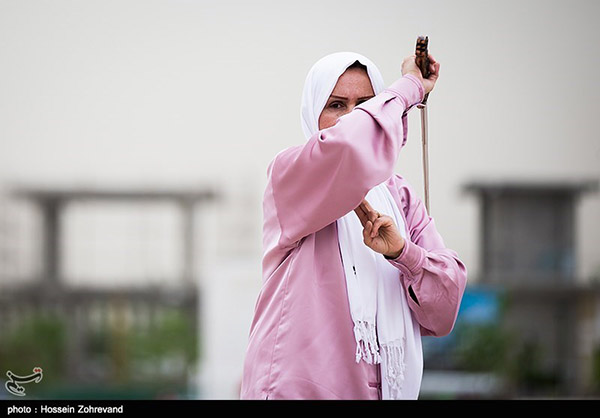
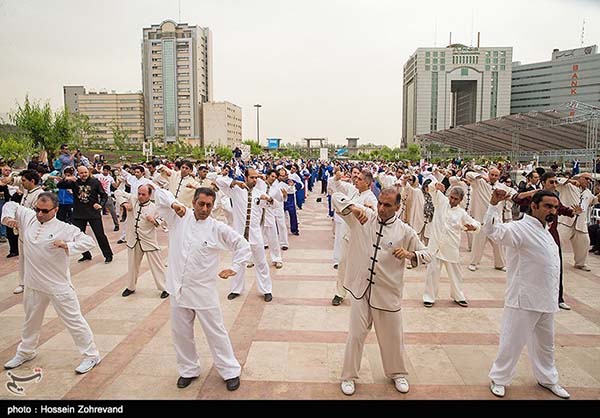
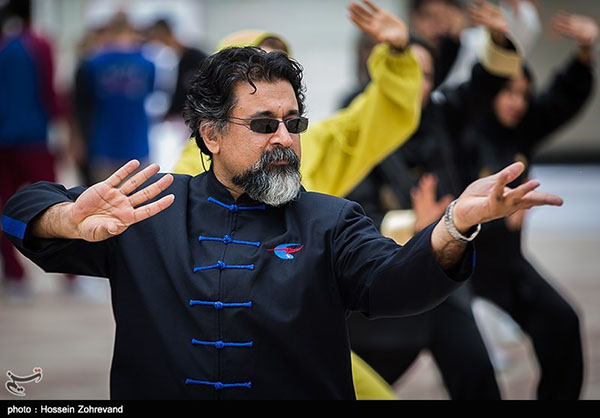
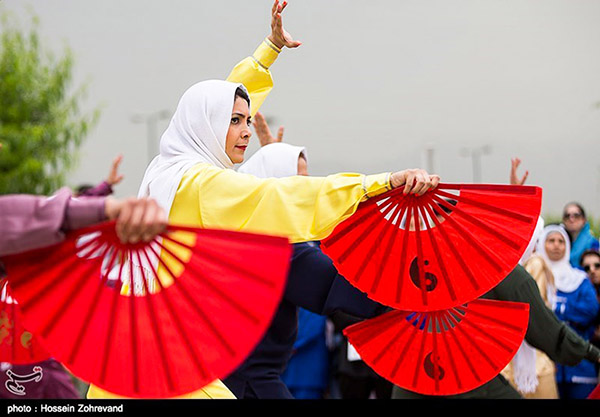
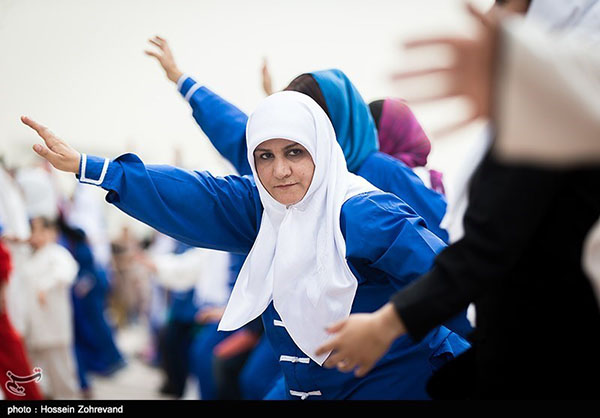
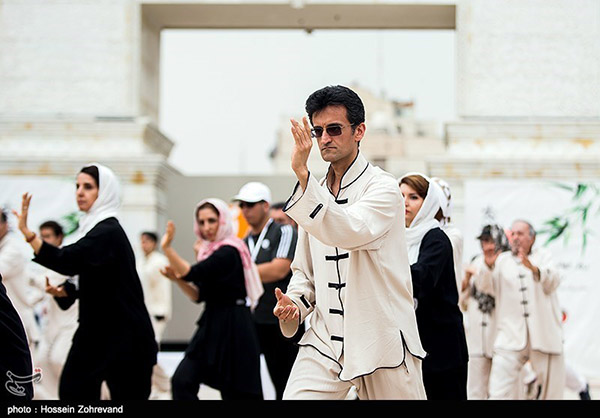
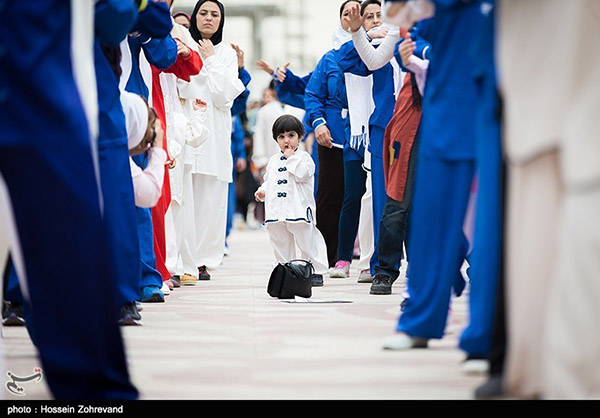
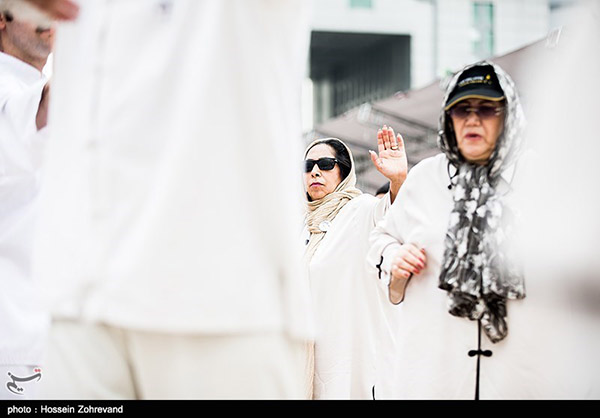
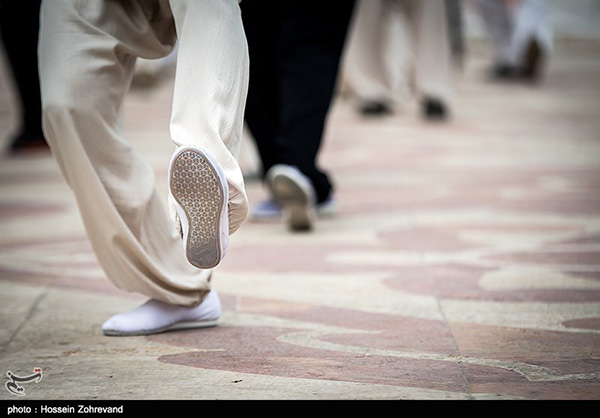
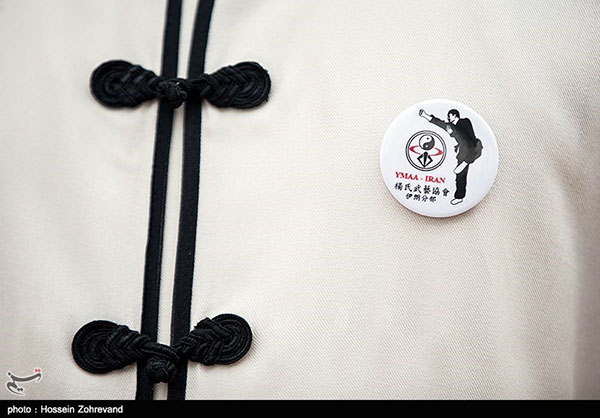
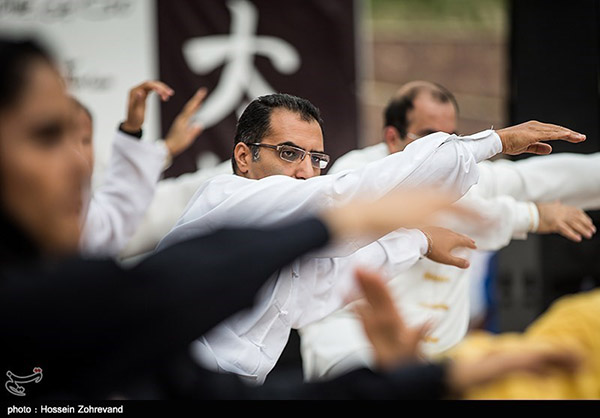
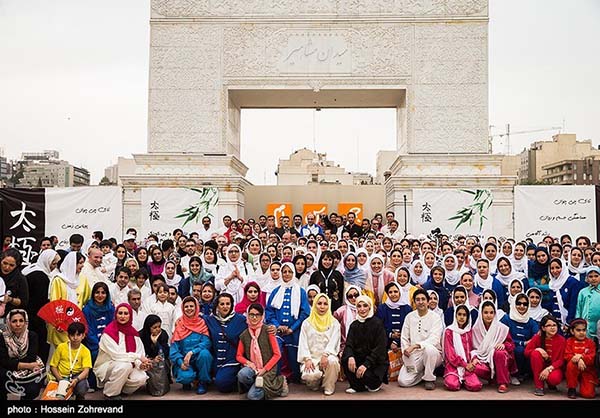
World Tai Chi, Qigong Day observed in Tehran

World Tai Chi, Qigong Day

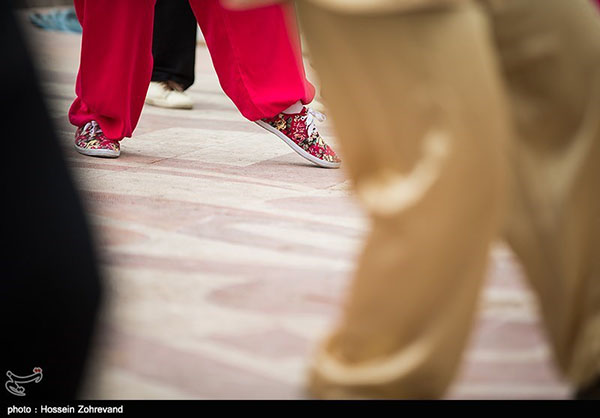
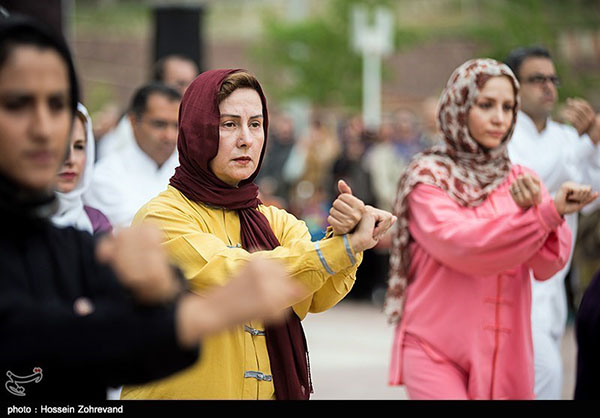
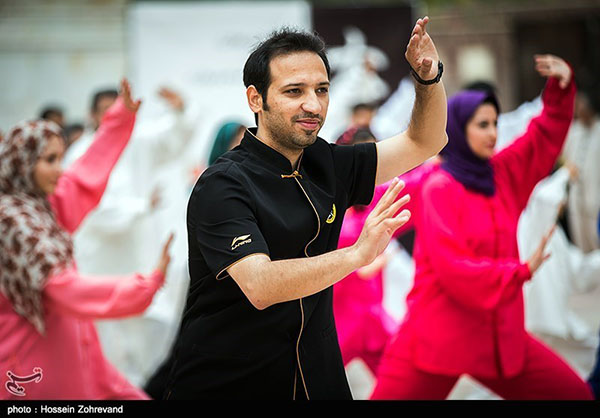
People gathered in a Tehran park to observe the World Tai Chi and Qigong Day.

The annual event is held on the last Saturday of April each year to, among other things, inform people of health and healing issues and call on people from all cultures of the world to embrace wisdom.


Photos of the annual event in Tehran have been released by Tasnim News Agency:

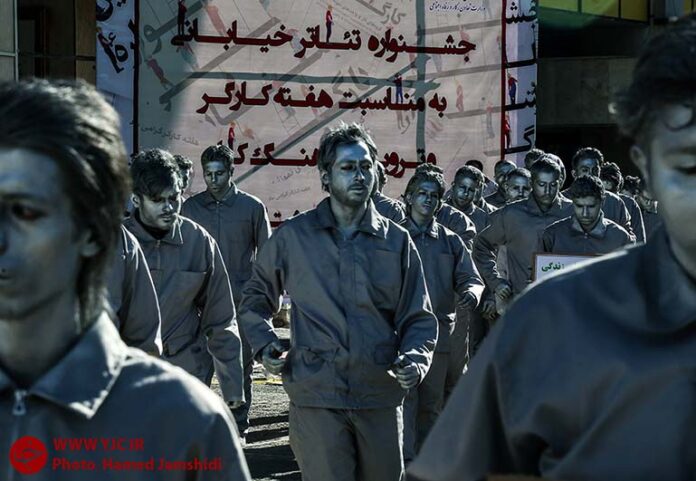
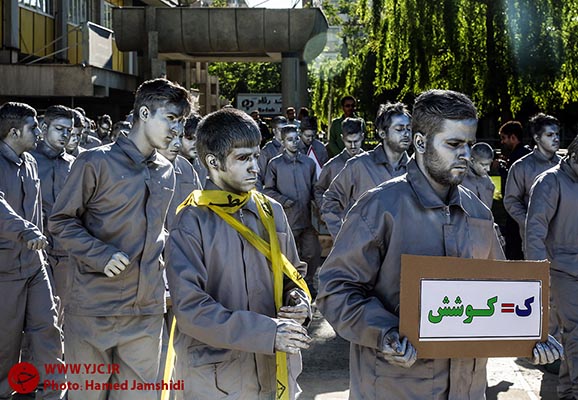
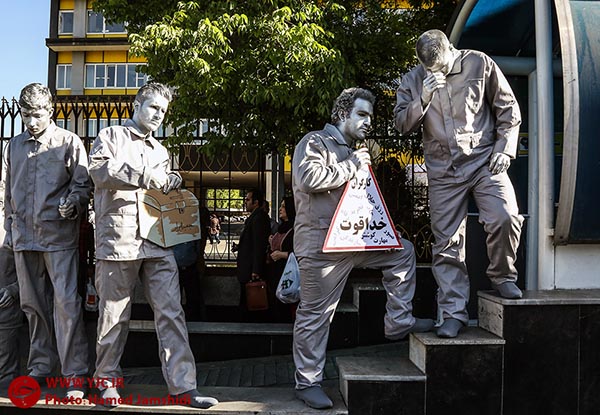
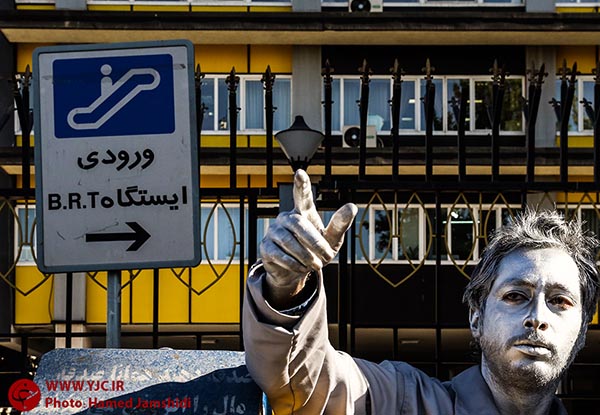
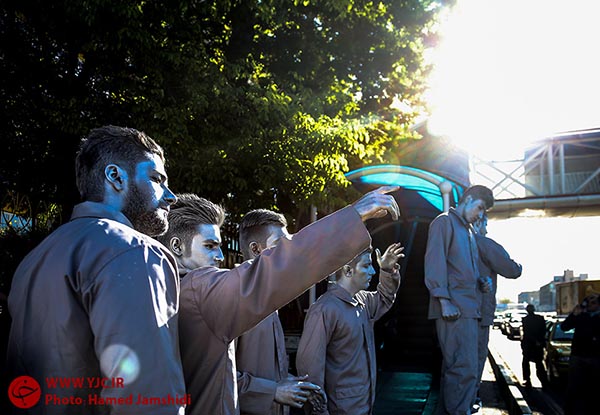
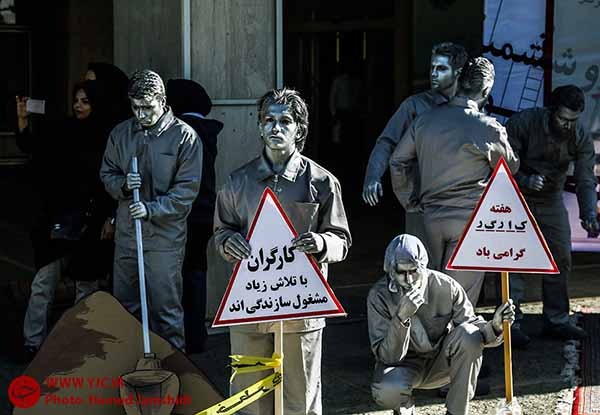
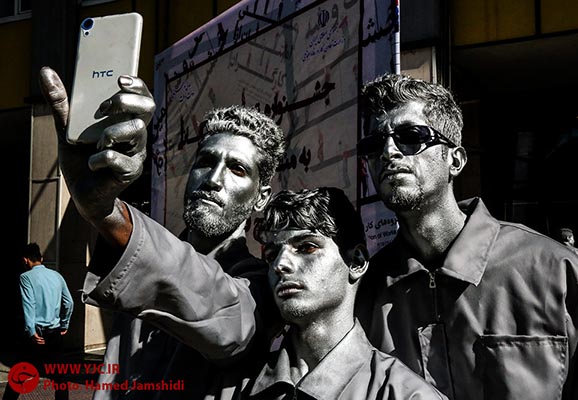
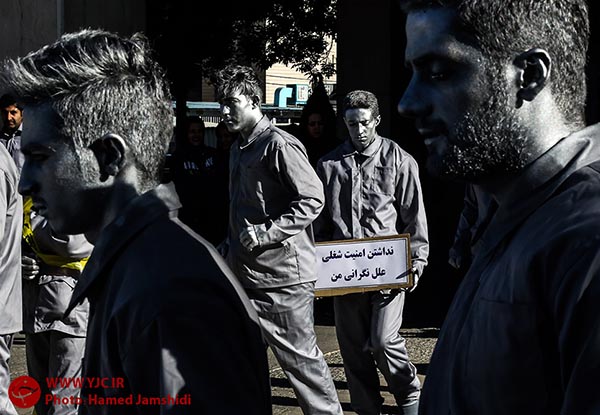
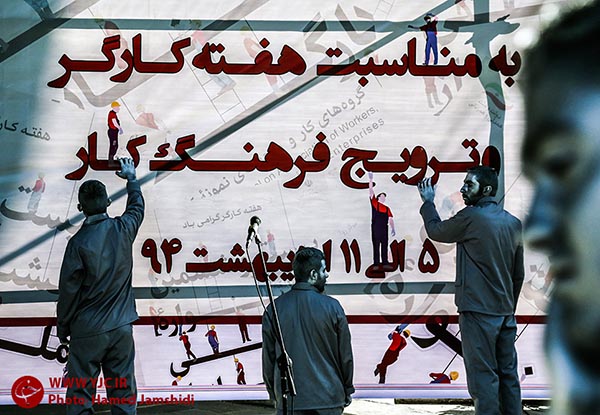
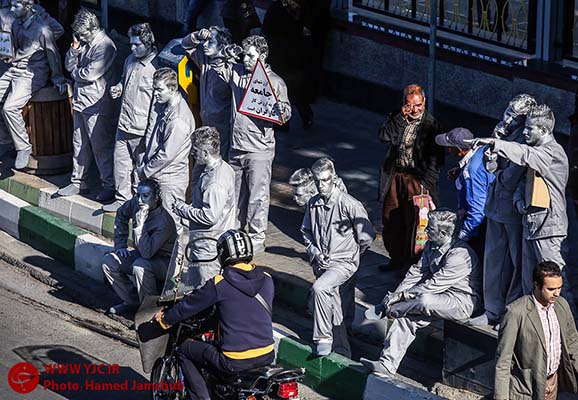
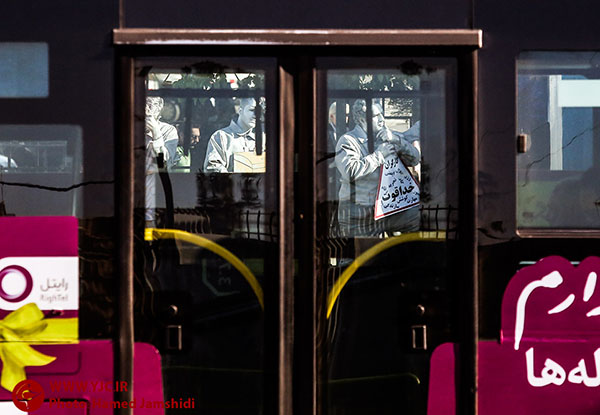
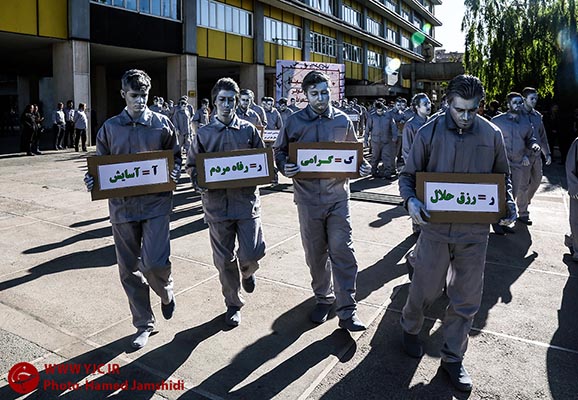
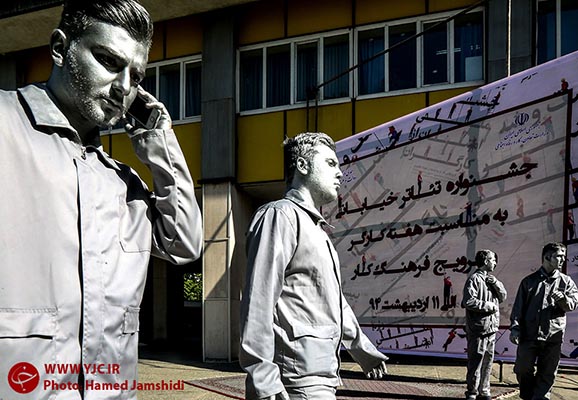
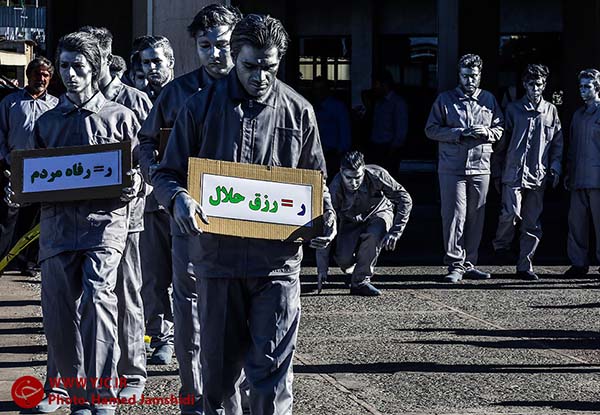
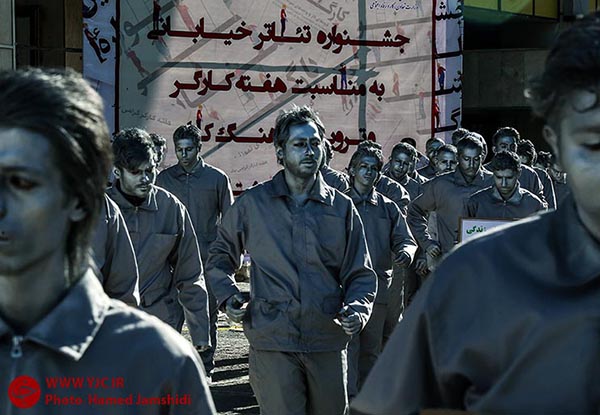
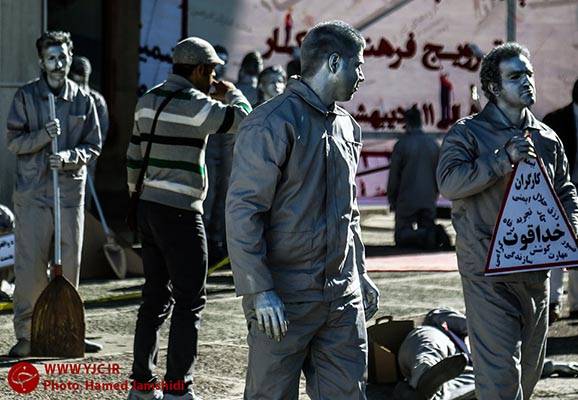
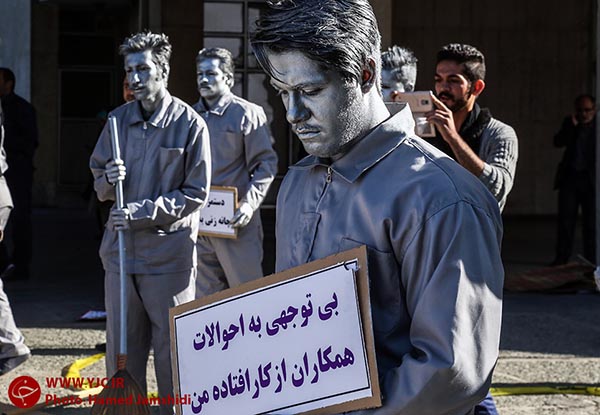
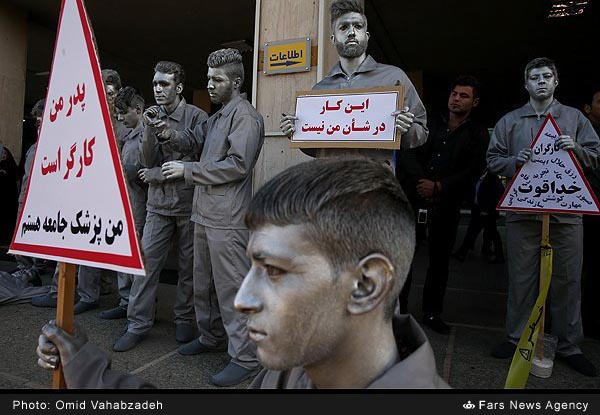
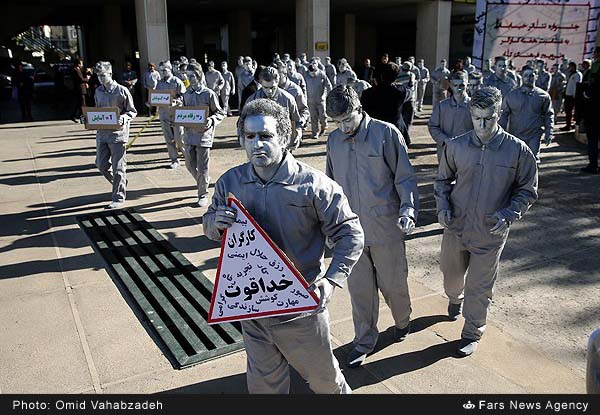
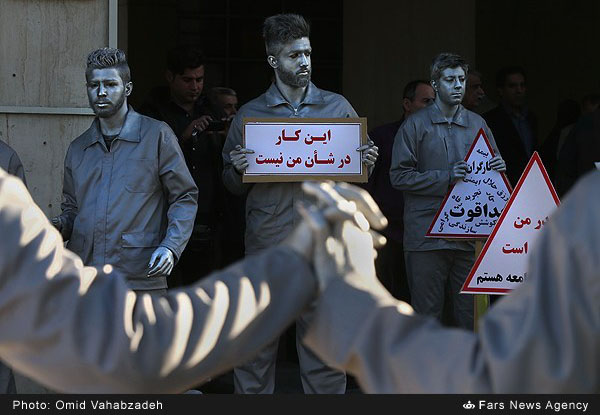
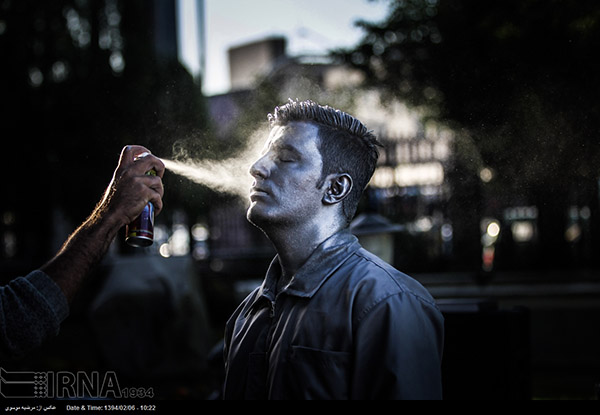
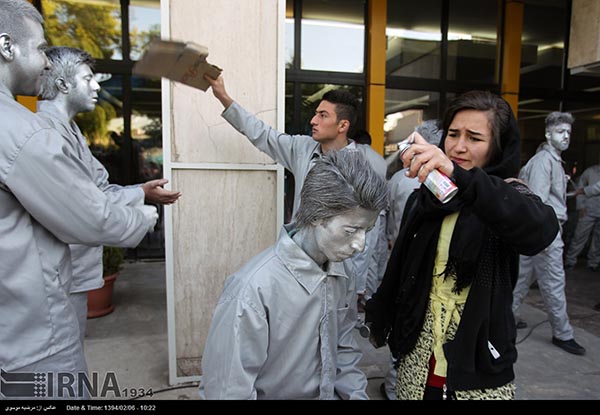
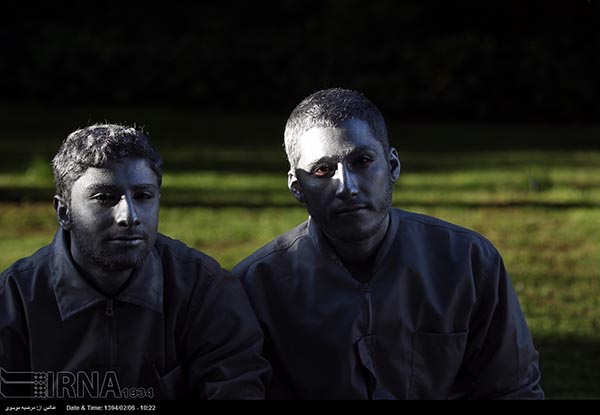
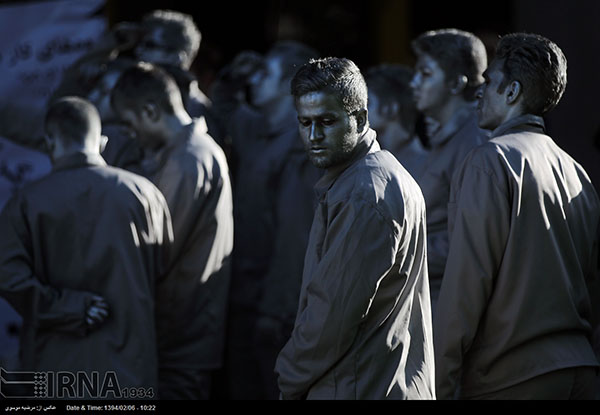
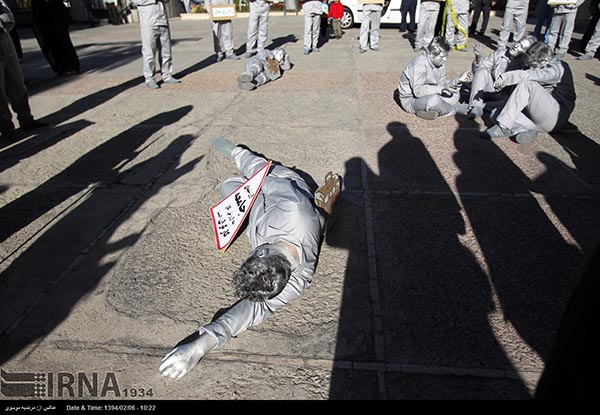
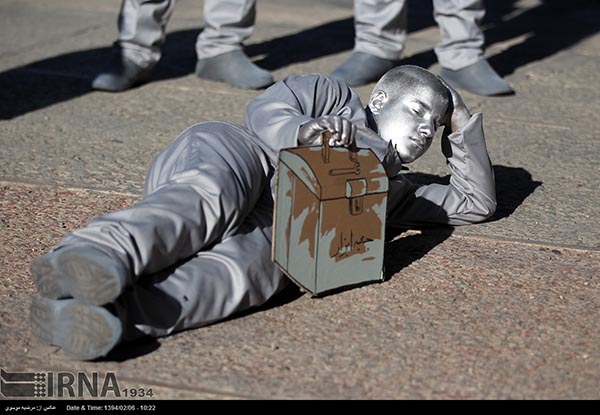
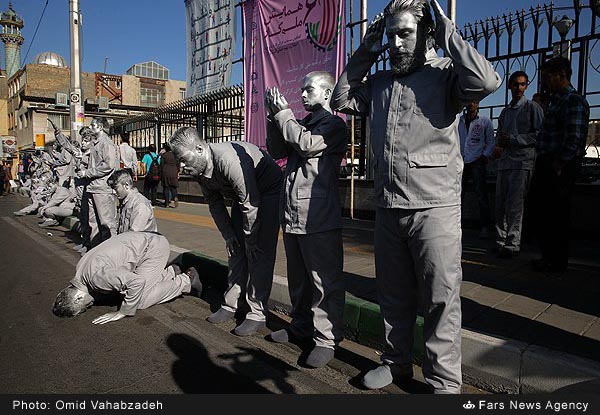
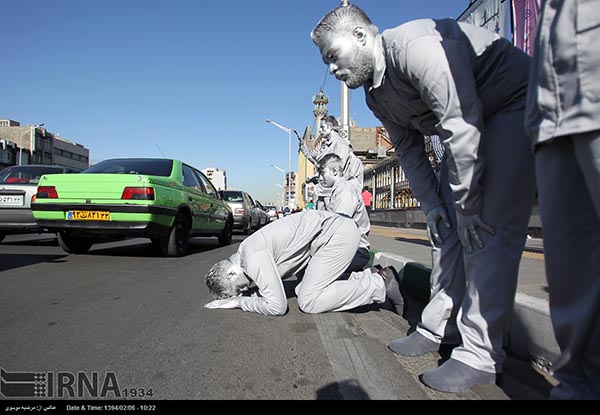
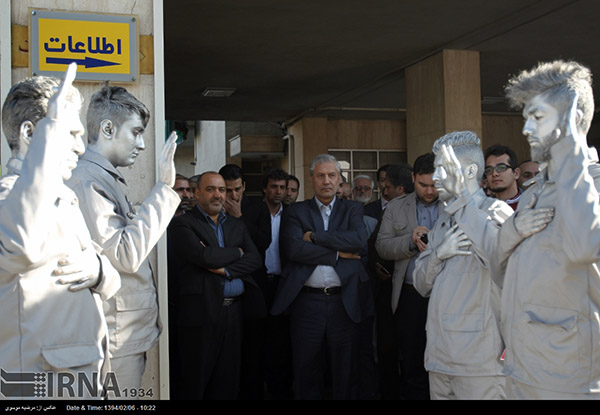
Street theater festival in Tehran to mark Labor Week

Street theater

A street theater festival was held in Tehran to mark the Labor Week. Minister of Cooperatives, Labor, and Social Welfare Ali Rabiei was also present in the festival of theatrical performances.

The following are images of the festival released by several news agencies:

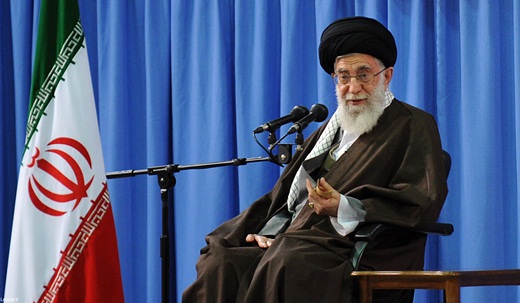
Supreme Leader stresses need for strong police

leader5

Supreme Leader of the Islamic Revolution Ayatollah Seyyed Ali Khamenei has highlighted the necessity of having a powerful police in the country.

Speaking at a meeting with police commanders, Ayatollah Khamenei referred to the Law Enforcement Forces as the symbol of country’s authority and security and said they should focus on enhancing both individual and social security, promoting ethics and improving the spiritual status of society.

He urged the police to focus on improving security on different fronts in society and said confronting and eliminating spiritual threats to the public is of higher importance compared with the physical safety of people.

Of course, the Supreme Leader added, Iran is not seeking an authoritative Hollywood-style police, or one which acts in the same way police are acting in Western and American societies because such an authority will not only fail to provide security but even create insecurity in society.

Ayatollah Khamenei further pointed to the treatment of the American police of black citizens as an example of unjust authority.

The Supreme Leader said even at the present time when the US president himself belongs to the black community, black people are treated with contempt and injustice. Such a treatment, he noted, has of course led to unrest on occasion.

Ayatollah Khamenei also said the police were easier to find their ways close to the Almighty because what they did as their job was a service to the Islamic society which ultimately led to victory of Islam in the world.

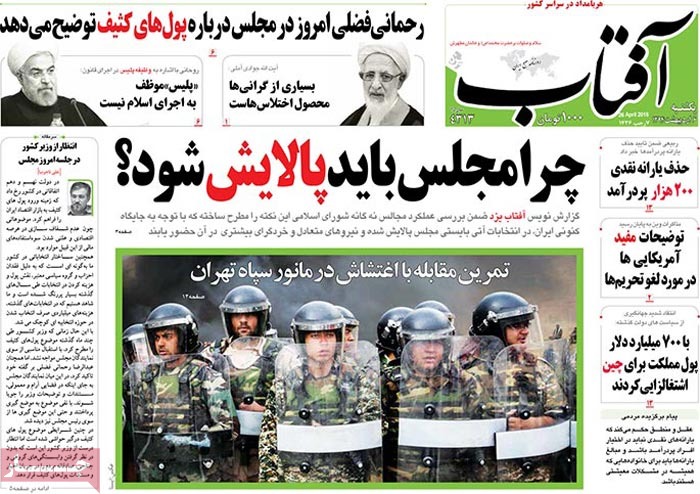
A look at Iranian newspaper front pages on April 26

Iranian Newspapers Headlines

President Hassan Rouhani’s comments at a gathering of senior law enforcement commanders on police responsibilities and the devastating quake that rocked Nepal and left more than 1,800 dead dominated the front pages of Iranian newspapers on Sunday.


Aftab-e Yazd: Interior Minister Rahmani Fazli will appear in parliament on Sunday to present a report to MPs on the so-called dirty money.

[His earlier comments on dirty money being channeled to the electoral campaigns of some candidates caused a stir.]

Aftab-e Yazd: “Some $700 billion in Iranian money was spent on creating jobs in China,” the first vice-president said.

Eshagh Jahangiri made the comment as he took a swipe at the previous government’s economic policy.

He also said that wisdom dictates that government stop paying cash subsidies to high-income individuals.

Aftab-e Yazd: Recent maneuvers of the Islamic Revolution Guard Corps have featured anti-rioting drills.
 

A look at Iranian newspaper front pages on April 26


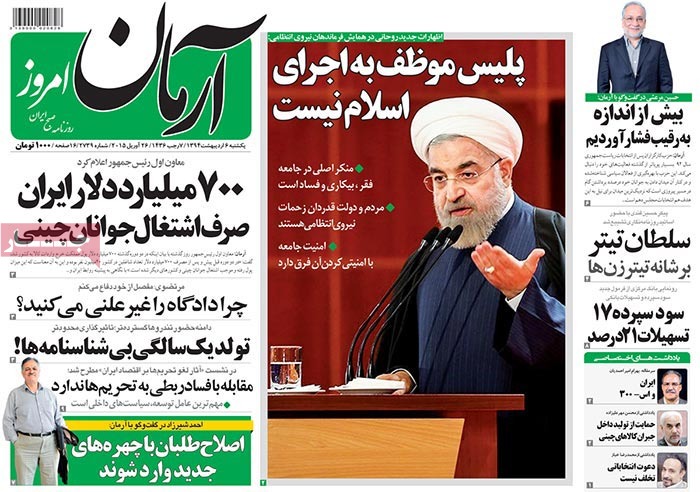
Arman-e Emrooz: Why are you holding my trial in camera?

Saeed Mortazavi, a former prosecutor and director of the Social Security Organization, said in the first session of his trial on fraud charges.

A next hearing in the case is slated for Monday.

Arman-e Emrooz:”It is not police’s duty to implement the rules of Islam,” President Hassan Rouhani said at a meeting with senior police commanders.

In his speech, the president described poverty, unemployment and corruption as real ills in society.

“Ensuring security in society is different from making the social atmosphere security-centered,” the president warned.
 

A look at Iranian newspaper front pages on April 26


Asrar: “The cash subsidies of some 200,000 individuals have been cut,” said the deputy cooperatives minister.

Asrar: Thanks to the support of the Ministry of Sports and Youth, Carlos Queiroz will remain at the helm of the Iranian national soccer team.

[Earlier he had said that he was quitting the job because of disagreements between him and the Football Federation.]
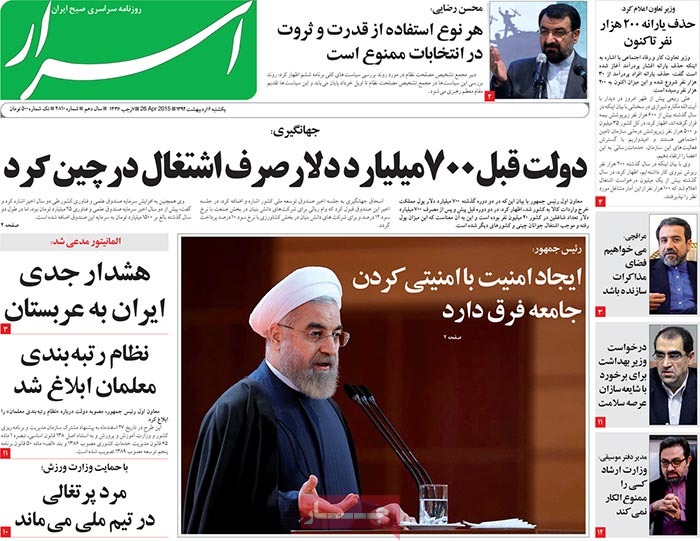
 

A look at Iranian newspaper front pages on April 26


Ebtekar: A response to a threat made against Seyyed [Hassan Khomeini]

The prosecutor of Gorgan, the provincial capital of Golestan, has said that the judiciary is now looking into a statement [purportedly] issued by Hezbollah, threatening the grandson of the founder of the Islamic Republic.

[Hezbollah has dismissed reports that it has made a threat against Seyyed Hassan Khomeini ahead of a never-materialized visit to the northern province.]
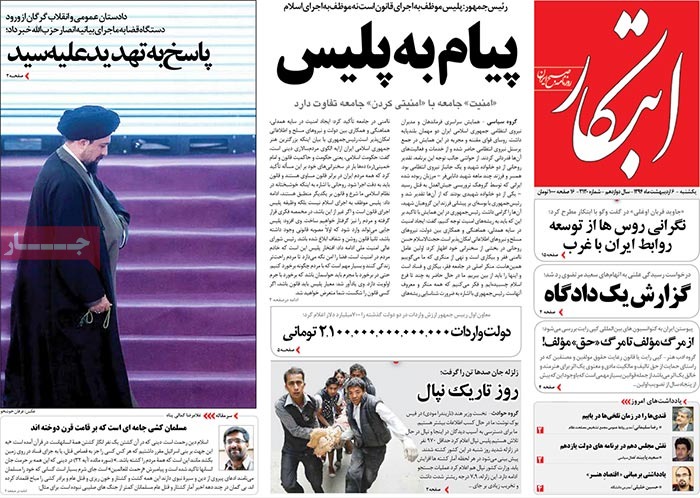
A look at Iranian newspaper front pages on April 26


Ettela’at: President Rouhani said poverty, addiction, hypocrisy and corruption are the social vice of the modern day.

Speaking at a meeting with police commanders, he said that police need to identify the root causes of social harms in the country.

“A line should be drawn between real and hypothetical threats; police need to respect the dignity of individuals in dealing with members of the public; in enforcing laws, police need to pay close attention to priorities.”
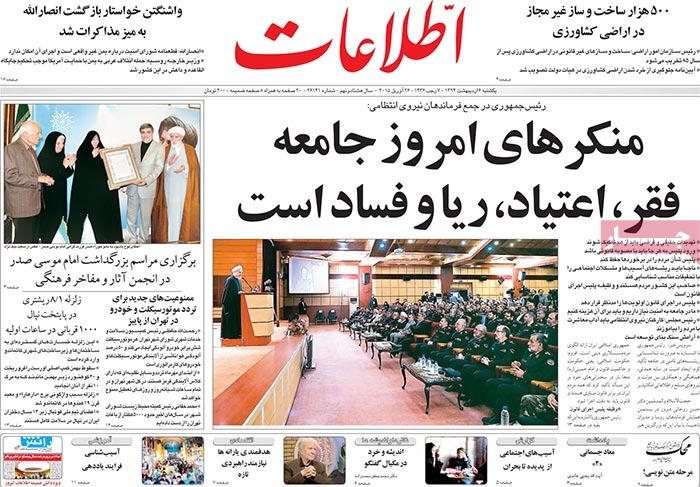
 

A look at Iranian newspaper front pages on April 26


Hambastegi: Parliament Speaker Ali Larijani has warned about a likely increase in security threats along the eastern border this year.

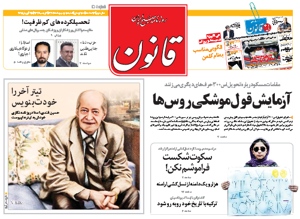
Hambastegi: Hossein Ghandi, a top journalist who was known as king of headline-writing, has been laid to rest at a plot dedicated to dignitaries at Behesht-e Zahra Cemetery, south of Tehran.
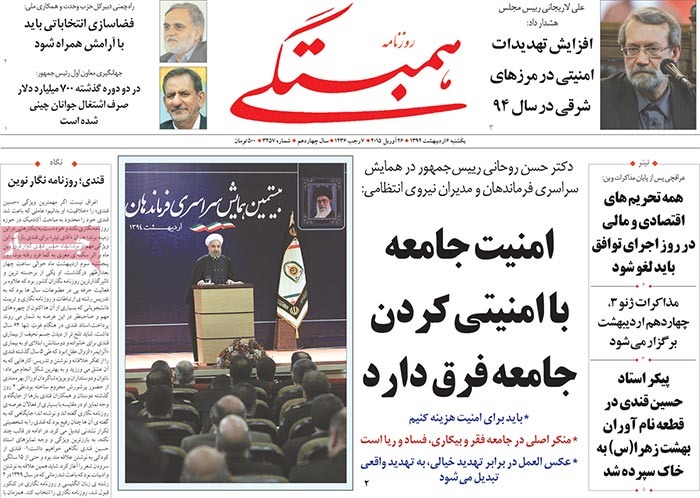
 

A look at Iranian newspaper front pages on April 26


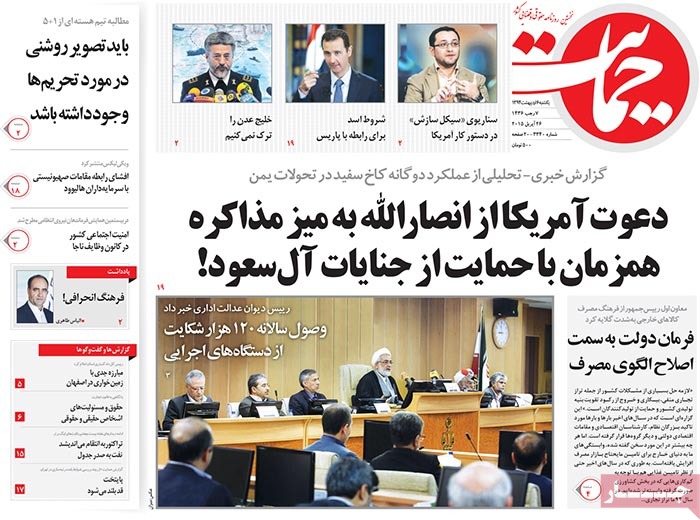
Hemayat: The US urges Ansarullah to sit at the negotiating table and continues to support Saudi crimes in the same breath.

Hemayat: Government order to modify the consumption pattern.

The first vice-president has criticized public tendency to buy foreign-made products.

Hemayat: “Some 120,000 complaints are lodged against the executive branch on a yearly basis,” said the top judge of the Supreme Administrative Justice Court.
 

A look at Iranian newspaper front pages on April 26


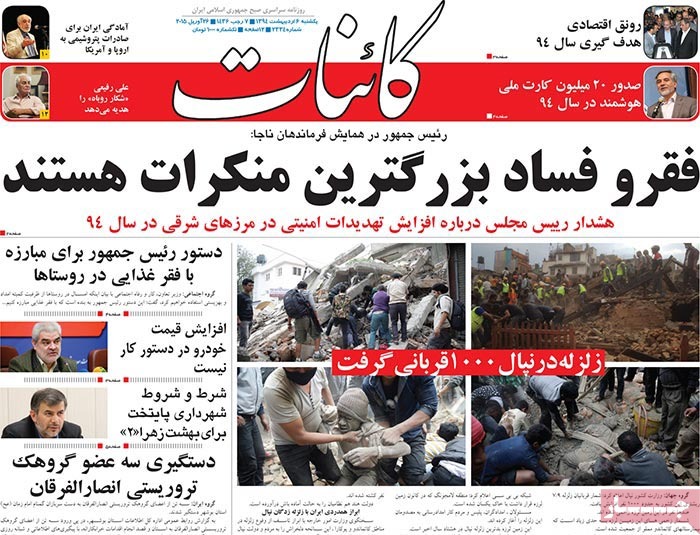
Kaenat: Three members of the Ansar al-Furqan terrorist group have been arrested by the Intelligence Ministry in the south.

Kaenat: The president has ordered measures to fight rural food poverty.
 

A look at Iranian newspaper front pages on April 26


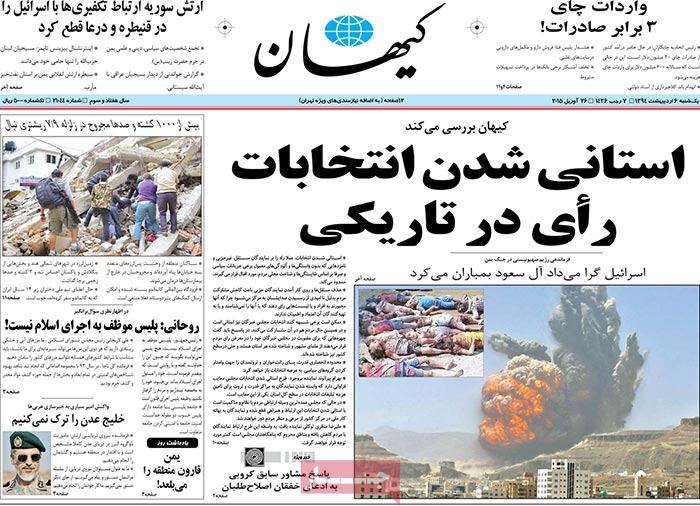
Kayhan: Iran’s tea imports are up three-fold.

Kayhan: Rouhani: Police do not have a duty to enforce Islam!

The daily has described the President Rouhani’s comment at a meeting with police commanders as “controversial”.
 

A look at Iranian newspaper front pages on April 26


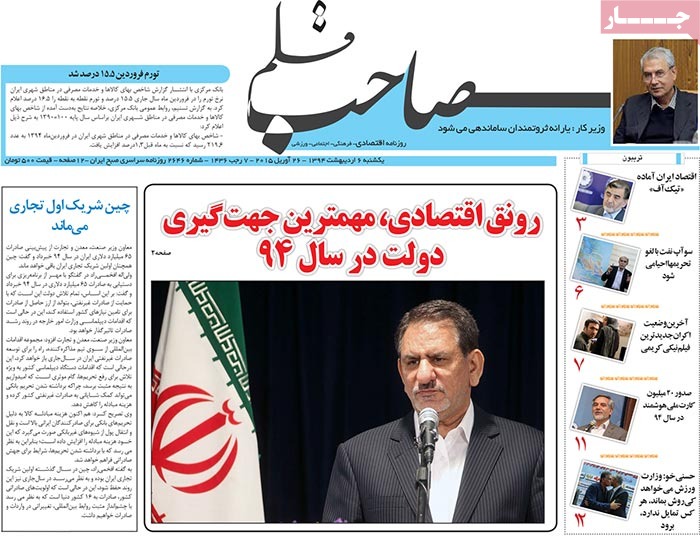
Saheb Ghalam: The first vice-president has said that economic prosperity is the top approach of the government this year.

 

A look at Iranian newspaper front pages on April 26


Why did authorities allow Iran’s Armenian community to stage protest rally?

Iranian Armenians98
Ghanoon_daily-5-4
Ghanoon newspaper – April 25

Hundreds of Christians of Armenian descent staged a rally outside the Turkish embassy in Tehran on Friday to mark the centennial of the massacre of Armenians by the Ottoman Empire during World War I.

In an opinion piece in Ghanoon newspaper on April 25, Sadegh Zibakalam, a political analyst and university professor, has tried to answer that question. The following is the partial translation of the piece:

What is certain about the massacre – or genocide – of the Armenians at the hands of the Ottoman Turkey is that it has taken place. That unlike previous years, the Iranian government decided to give the green-light to the rally is surprising.

As you know, the Islamic Republic of Iran and Turkey are deeply divided over some issues in the Middle East such as Syria and Yemen….

Why it happened

The killing of the Armenians came at a critical juncture. The Ottoman Empire was on the brink of breakup and its army on the edge of defeat in Europe. Thanks to the experience of World War I and Armenian alignment with the Russians, Ottoman officials viewed Arabs and Armenians bent on seceding from the empire as a fifth column of the enemy.

Over the years, Turkish governments have been at pains to deny that any such massacre has taken place. Given that the Ottomans nurtured a grudge against the Armenian community, the killing of 1.5 million ethnic Armenians is not unlikely.

Whether the massacre has taken place or not, what is important is that each year memorial services are held for the 1.5 million people massacred. Many believe we should not forget the crimes our ancestors have committed, because denial of such realities will translate into failure on the part of the future generations to learn a lesson from the past. It also makes the repeat of such crimes all the more likely.

That each year we recall the fact that some 1.5 million Armenians were killed simply because they were Armenians helps prevent the repeat of such incidents, or makes it at least less likely.

History is rife with similar killings, for instance, the killings committed by the Japanese during World War II. The Japanese killed many thousands in China and parts of Korea during the war. Years later, the Japanese government removed that chapter of history from Japanese textbooks, but a number of teachers continued to teach what really happened during the Second World War in classrooms.
What they did was designed to prevent the commission of similar crimes in the future. The Japanese education ministry sacked the teachers, but the Supreme Court ruled in their favor. As a result, teaching that chapter of history was placed back on the agenda simply because of its educational value.
That is similar to Holocaust. Some in Iran and elsewhere in the world are trying to eliminate the Jewish genocide from history. But in Europe denial of Holocaust is a crime. That is meant to prevent the spread of anti-Semitism in the world.

So what makes the event in Tehran [a centennial rally in honor of the Armenian dead] important is its educational value. If we know about the crimes committed by our ancestors, we won’t commit them down the line.


Karen-Khanlary
Karen Khanlari

In response to the opinion piece, Karen Khanlari, a deputy who represents Christians in the Islamic Consultative Assembly, said apparently Mr. Zibakalam’s historical knowledge is anything but broad, citing the fact that the Armenian community has gotten approval for such gatherings year in, year out since the victory of the Islamic Revolution.

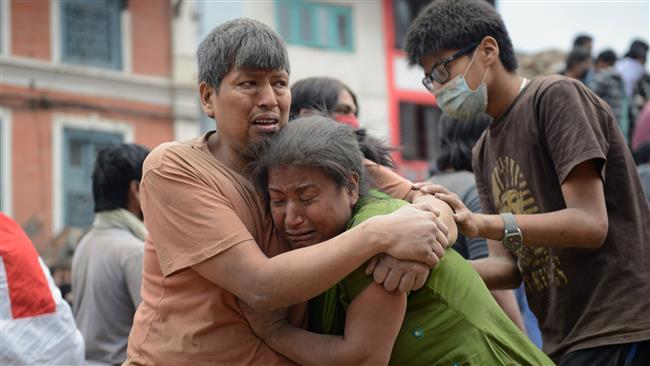
President Rouhani extends condolences to Nepal after quake

Nepal Earthquake

Iran’s President Hassan Rouhani has offered condolences to the Nepali people for a devastating earthquake which has killed over 1,800 so far.

The Iranian president offered his “sympathy and condolences” to the people of Nepal and President Ram Baran Yadav over the deadly earthquake on Saturday.

Rouhani wished swift recovery of the injured, and patience for the bereaved families.

Earlier in the day, Iranian Foreign Ministry Spokeswoman Marzieh Afkham conveyed deep sorrow over the deadly earthquake and offered Iran’s sympathy to the Nepalese government and the families of the victims.


International aid response

Iran has also said it is prepared to send assistance and aid to Nepal’s quake-hit regions.

The Iranian Red Crescent Society has called on Kathmandu to inform it of its aid requirements.

International aid groups have also rushed to Nepal as rescue efforts have been hammered by aftershocks and severed communications.

“We do not yet know the scope of the damage, but this could be one of the deadliest and most devastating earthquakes since the 1934 tremor which devastated Nepal and Bihar,” said Jagan Chapagain, Asia-Pacific director of the International Federation of the Red Cross and Red Crescent Societies (IFRC).

The IFRC also voiced concerns over the plight of villages close to the quake epicenter, some 80 kilometers from the capital Kathmandu.

“Roads have been damaged or blocked by landslides and communication lines are down preventing us from reaching local Red Cross branches to get accurate information,” added Chapagain.

A massive earthquake measuring 7.8 on the Richter scale shook Nepal near its capital with aftershocks continuing through the region hours later.

According to the country’s Home Ministry, 1,805 have been killed and 4,718 injured by the powerful earthquake so far, but many more are feared dead under rubble as rescue efforts are underway to pull out the victims.

According to the country’s information minister, Minendra Rijal, the death toll could reach 4,500 during the next 24 hours.

International section of 33rd Fajr Film Festival kicks off

Fajr international film festival

The international section of the 33rd Fajr Film Festival kicked off on Saturday in the presence of world-famous film director Abbas Kiarostami and Head of Cinematic Organization Hojjatollah Ayoubi.

The cultural event opened in Pardis Mellat cinematic complex on Saturday.

A number of foreign guests along with Iranian cinematic figures were also present in the event.

The international section of the 33rd Fajr Film Festival will continue till May 2nd.