Monday, April 27, 2026
Home Blog Page 4886

Attacking Iranian aid ship will start war in the region: Top commander

A senior Iranian commander has stressed that attacking the Iranian aid ship heading to Yemen will “ignite the flames of war” in the region.

Deputy Chief of Staff of the Iranian Armed Forces Brigadier General Masoud Jazayeri made the remarks in an interview with Arabic-language news channel Al-Alam on Tuesday.

Saudi Arabia, the United States, and their allies must keep in mind that if they want to block Iran’s humanitarian aid to the regional countries, “they will start a fire which they cannot put out,” the commander added.

“I clearly announce that the self-restraint of the Islamic Republic of Iran has its limits,” Jazayeri stated.

Iran’s Nejat (Rescue) cargo ship, containing 2,500 tons of much-needed aid, including food, medical supplies and tents, left the southern port city of Bandar Abbas for Yemen on Monday.

On April 28, Saudi Arabia forced an Iranian cargo plane carrying medical aid and foodstuff for people in Yemen to return.

The Iranian aircraft, which had earlier received permits from Omani and Yemeni aviation officials to cross into Yemen’s airspace, could not land at the Sana’a International Airport, as Saudi warplanes were violently striking the runway of the airport.

It came less than a week after Saudi warplanes intercepted another Iranian airplane, carrying humanitarian aid to Yemen, and prevented it from entering the Yemeni airspace on April 22.

Naval protection

On Tuesday, a senior Iranian commander said that Iran’s navy will protect the cargo ship en route to Yemen.

“The Islamic Republic of Iran’s 34th naval group, which is currently in the Gulf of Aden and Bab al-Mandab Strait, is responsible for supporting Iran’s humanitarian aid cargo ship,” IRNA quoted Admiral Hossein Azad as saying on Tuesday.

He added that the naval group includes the Alborz Destroyer and the Bushehr logistic ship, which are both currently on a 90-day mission, “demonstrating Iran’s navel might, insure the security of international shipping lines and defend the country’s interests.”

Pentagon warning

Pentagon spokesman Colonel Steve Warren told reporters on Tuesday that the cargo ships’ escort is “absolutely unnecessary.”

Earlier in the day, a US defense official said that reports that the Iranian Navy escorting the aid ship are worrying.

The United States has information that the Iranian aid ship does not contain weapons, the official added.

The Pentagon has also said the ship should change course and head to Djibouti, where the UN is supervising humanitarian deliveries.

Saudi violates ceasefire

Earlier on Tuesday, Saudi Arabia violated a ceasefire in Yemen immediately after it took effect.

Four raids were carried out by Saudi jets in the southwestern Lahij province, the eastern Hajjah province, and the northwestern Sa’ada province.

Saudi Arabia started its military aggression against Yemen on March 26 – without a UN mandate – in a bid to undermine the Houthi Ansarullah movement, which currently controls Sana’a and other major provinces, and to restore power to Yemen’s fugitive former President Abd Rabbuh Mansour Hadi, who is a staunch ally of Riyadh.

According to the latest UN figures, the Saudi military campaign has so far claimed the lives of over 1,400 people and injured close to 6,000 people, roughly half of whom civilians.

Yemen crisis needs political solution: Zarif

zarif-un

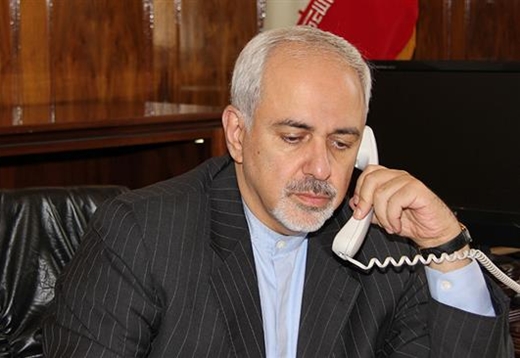
Iran’s Foreign Minister Mohammad Javad Zarif has called on the United Nations to do something to stop the Saudi aggression against Yemen.

In a phone conversation with UN Secretary General Ban Ki-moon, Zarif said the crimes committed against the Yemeni people are in clear violation of international law.

The Iranian foreign minister stressed that such crimes have led to the rise of extremist and terrorist groups in Yemen, further deteriorating the humanitarian catastrophe there.

Zarif said Tehran supports efforts by the new UN envoy to Yemen to stop the Saudi aggression and resume dialog among Yemeni parties.

“The solution to the crisis in Yemen is solely political and through forming an inclusive government with the aid of all political forces and without the interference of certain foreign countries,” he said.

“The crisis does not have a military solution and militarizing the crisis is in favor of no side” of the conflict, the top Iranian diplomat added.

For his part, the UN chief hailed Tehran’s efforts to send humanitarian aid to the people of Yemen. He also stressed that the crisis in Yemen can only be solved through political means.

Saudi Arabia started its military aggression against Yemen on March 26 – without a UN mandate – in a bid to undermine the Houthi Ansarullah movement, which currently controls Sana’a and other major provinces, and to restore power to Yemen’s fugitive former President Abd Rabbuh Mansour Hadi, who is a staunch ally of Riyadh.

According to the latest UN figures, the Saudi military campaign has so far claimed the lives of over 1,400 people and injured close to 6,000 people, roughly half of whom have been civilians.
UN ready to carry Iran relief aid to Yemen

6a0120a66ea5b5970b0163058a1d7b970d

The Executive Director of the United Nations World Food Programme (WFP) Ertharin Cousin said the UN agency is ready to forward the food and medical relief consignments of Iran for the war-hit people of Yemen.

In a telephone talk with Deputy Foreign Minister for Arab and Affairs Hossein Amir Abdollahian on Tuesday, she said WFP is continuing its humanitarian operation in Yemen despite all problems and is ready to step up its work by setting up a joint team with Iran.

Amir Abdollahian welcomed WFP’s relief aid for Yemen and said, “Dispatching humanitarian aid to the Yemeni nation has been a concern of Iran ever since they came under the military aggression and we continue our efforts in this regard through various channels.”

He said Iran is ready to send three Red Crescent planeloads of food and medicine to Yemen to be carried by WFP.

The Iranian official stressed political settlement of the Yemen crisis and said Iran will sustain its consultations with UN secretary general and other international figures to bring an abrupt end to the massacre of the defenseless and oppressed people of Yemen.

Tehran Book Fair an important cultural event in Mideast

Voisin

Former French cultural attaché to Tehran Jean-Claude Voisin said: “People’s warm reception of Tehran International Book Fair makes us excited, and I can say it is an important event in the Middle East.”

In an interview with IBNA, Jean Claude Voisin stated that he had visited the Fair about 9 years ago when he was the French cultural attaché to Iran. This year, however, people seem to be more enthusiastic compared with the previous years.
Pointing to the atmosphere of the Fair, he said: “While visiting this cultural event, I noticed that a better arrangement has been adopted which enabled me to visit many stands. Also, as I was watching the works on the counters, I could see the happy faces of those who were present at this important cultural event.”
Mr. Voisin further stated: “The enthusiasm of the people present at the fair excited us too and drew us to search through different topics, and we enjoyed the tour in the atmosphere of Iranian culture and thoughts.”

Spokeswoman rejects ‘baseless’ US claims about Iran’s regional role

Iran-Afkham
Iran-Afkham

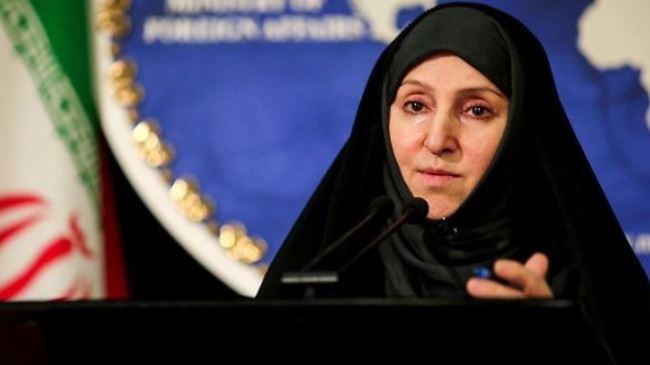
Iranian Foreign Ministry Spokeswoman Marzieh Afkham on Tuesday dismissed as “baseless” recent claims by some US officials about Iran’s ‘destabilizing actions’ in the region, saying that Washington is the one that is in fact destabilizing the Middle East.

“Instability in the region has its roots in foreign intervention in regional affairs,” Afkham said, adding that foreign meddling has not only endangered security and stability, but also hindered “constructive and deep” interaction and cooperation among regional countries.

Her remarks came a few days after US Secretary of State John Kerry claimed that Iran is a destabilizing force that must not be allowed to have a nuclear weapon.

“We made clear that we remain concerned about Iran’s destabilizing actions in the region,” Kerry said after Thursday talks with Saudi King Salman in Riyadh.

Afkham also said that the US support for Saudi Arabia in its military attacks against Yemen is a new kind of illegal intervention in internal affairs of other countries.

She further slammed the US for following a double-standard approach towards terrorism, saying that Washington is the real destabilizing force in the Middle East.

“Supporting governments that are among the main financial and intelligence supporters of terrorism has intensified instability (in the region),” she stressed.

Earlier on Wednesday, Supreme Leader of the Islamic Revolution Ayatollah Seyyed Ali Khamenei said that the US has the most disgraceful government in the world, an obvious sign of which is Washington’s support for the Saudi atrocities against people of Yemen.

“The Al Saud government is busy killing innocent people, women and children in Yemen without any justification and under the mere pretext that why Yemenis do not agree of a specific person for presidency, and Americans are also supporting such serious crimes,” the Leader said.

“Americans are supporting the killing of Yemenis without any shame, but accuse Iran – which wants to deliver medical and food aid to people of Yemen – of interfering in that country and dispatching arms,” Imam Khamenei added.

Controversy surrounding a bill that would call for a halt to nuclear talks

Parliament-Iranian

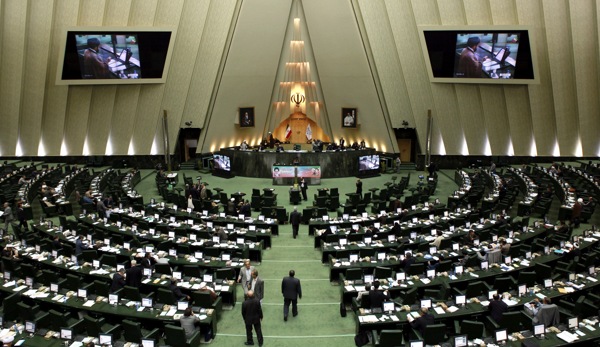
Despite expression of opposition by Parliament Speaker Ali Larijani earlier, a bill that carries a triple urgency status and, if adopted, would require a halt to nuclear talks [until the US apologizes to Iran for its use of threatening language] was presented to the Presiding Board of the Islamic Consultative Assembly on May 12.

According to Entekhab.ir, a news website, the bill that is dubbed Islamic and Revolutionary Defense of the Honor, Identity and Authority of the Iranian Nation during Nuclear Talks, has been signed by 80 MPs.

On Tuesday Alireza Salimi, a principlist deputy in the chamber, lashed out at Mashhad Deputy Javad Karimi Ghoddusi, who co-sponsored the bill, and said, “He brought us a bill with double urgency status for signature, but later we realized it carries triple urgency status.”

He further said he is bitterly opposed to the current bill, “Unfortunately, some MPs including Mr. Ghoddusi, have used my decision to sign the bill to encourage others to follow suit.”

Salimi, who represents Mahallat in parliament, further said a number of deputies including Messrs. Ali Motahari, Mohammad Taghi Tavakoli, [Hossein] Naghavi Hosseini, Esmail Kowsari and himself are opposed to the bill and are withdrawing their signatures from the bill even in its previous status [double-urgent].

In another development, a number of MPs filed a complaint with the Presiding Board of the chamber against Ghoddusi.

According to Mohammad Hossein Farhangi, the complaint has been referred to the Complaint Office of the Islamic Consultative Assembly.

Iran’s strong presence in Expo Milano 2015

expo2015-0

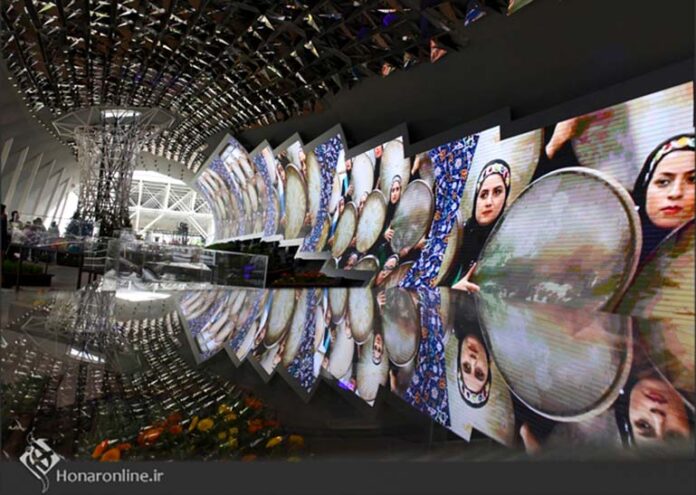
“Feeding the Planet, Energy for Life” is the motto of Expo Milano 2015 and Iranian architect Kamran Safamanesh has built on that motto to put together a pavilion dubbed “Global tablecloth, Iranian Culture”.

His pavilion has earned the best design title at the Iranian section of the event.

The Iranian pavilion was mainly designed with a focus on nature, climatic diversity, colorful Iranian cuisine and its ancient culture and traditions in line with the expo’s motto.

In the structure of the pavilion, living elements were used. Inspired by ancient Iranian wind catchers, the design focuses on optimal use of climatic elements like wind and humidity.

Snapshots of the Iranian presence at the event released online by different news websites:

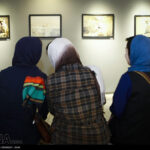
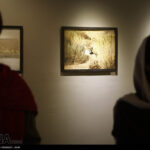
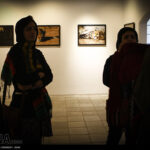
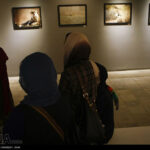
Photo exhibition in Tehran to help save an endangered species (PHOTOS)

Cheetah

Tehran is hosting a photo exhibition of Asiatic Cheetah, an endangered species whose ranks are dwindling across the continent – only 70 remain in the wild.

The proceeds will go to a project to help save the fleet-footed species from extinction.

The Islamic Republic News Agency has put online the following photos on display at the exhibition:

Iranian negotiator hopeful a deal is clinched before July 1 deadline

Seyyed Abbas Araghchi

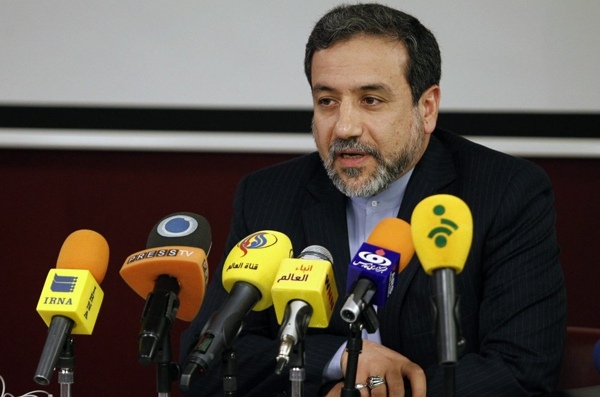
There is hope that Iran and world powers reach a final deal over Iran’s nuclear program before a July 1 deadline, Iran’s top negotiator was quoted by Mehr News Agency as saying upon his arrival in Vienna, Austria Tuesday.

Araghchi went on to say, “We succeeded in producing a first draft in New York and from now on we will continue to work on it.”

He added, “The draft is based on the terms and solutions hammered out in Lausanne. We need to stay committed to what was concluded in the Swiss city and will only negotiate within that framework to put the final deal on paper.”

When asked about how far they have gone in addressing the outstanding questions, Araghchi said, “As for some paragraphs there is disagreement over one phrase, whereas in some others we disagree over one sentence or the whole passage. However, a great deal of job has been done so far.”

The negotiator said, “We will have a bilateral meeting with the Americans on Thursday. We will also hold talks with the Chinese delegation on the same day.”

We will definitely have a meeting with the Russian delegation, Araghchi said, adding, “We will hold talks with Europeans either as part of a single session or separately.”

Where has THAT money come from?

Turkan

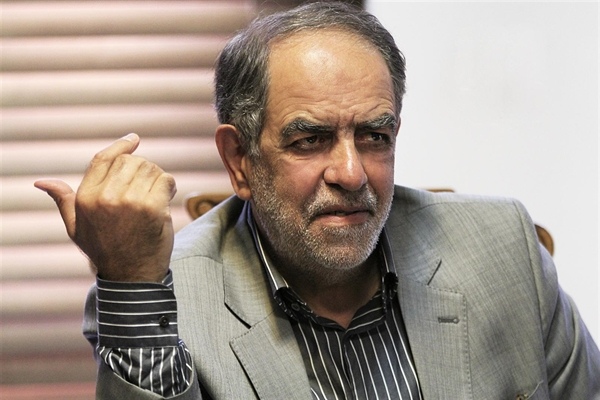
President Rouhani’s chief advisor has said those who run for public office should declare the source of their campaign finances, urging legislators to make it mandatory for office holders to watch the money they use before and after coming to office.

Ali Akbar Torkan made the remark in a speech at a conference dubbed Missing Zeros on money and corruption in Iran over the past decades.

In his speech, he addressed the root causes of corruption and blamed it on adoption of laws which result in measures reeking of rent-seeking, and said rent-seeking and rent-seekers are the cause and effect of legal loopholes in the country.

“What I say in this conference is my own point of view, not those of a presidential advisor,” he said, reiterating that his views do not necessarily reflect those of the [eleventh] government’s.

Aftab-e Yazd daily on May 11 covered the advisor’s speech at the conference held in a Tehran University faculty. The following is the translation of excerpts from Torkan’s remarks:

[…]

The senior advisor said, “In the Western industrialized countries, office workers are not picked based on merit and virtue, but in Iran merit is the yardstick in selecting jobholders. We try to pick the best of all, but how come these best picks slip up at times?”

[…]

He further said the best individuals should be selected; even that does not guarantee everything will be done without a hitch. “Inherently, an individual has all forces within themselves, and no one is totally immune to the [temptations of] Satan”.

[…]

“Some say import of one item is illegal, unless it is given a permit. This has caused the pen an office worker uses [to grant such a permit] to be worth billions [of rials]. There are few who do not slip under such a circumstance.

“When rent-seeking is pursued in a place, we cannot blame rent-seekers. Normally, people are pursuing their own benefits. The ones who have helped create rent-seeking are at fault,” Torkan said.

Dirty money does not exclusively change hands in Iran, he said, adding, “Other countries have enforced laws and regulations to bring the flow of such money under control. In Germany and the UK, for instance, there are laws on dirty money which say money will be protected by law if it meets three conditions: 1) It is collected from legal transactions, 2) It is legally registered, and 3) The tax levied on the money has been paid. Money is viewed as dirty in these countries if it fails to meet these three conditions”.

[…]

The official went on to say that Iran’s money laundering legislation is partially enforced, adding the origin and destination of money should become known [to the public]. To that end, he said, the Western countries’ laws on dirty money can serve as a good model for Iran to follow.

“In Iran, some office holders are elected through popular vote. Those running for office have to spend money on the campaign trail. This has been the trend since the [Islamic] revolution. In the early years of the revolution, certain people would spend money simply to advance their beliefs, but it [campaign contribution] has now turned into a business [for some people],” he said.

[…]

“In industrialized nations, anybody – real and legal entities – who enters politics has to offer their balance sheet which lists their revenues and expenses. Any given party which enters a race for certain office should be accountable to the officials for the money it has spent on the elections. In case they fail to do so, they will face legal action. We need to learn from them,” he added.


One way to avoid mistakes is to introduce legally binding measures, Torkan said, adding, “All political players who stand for office have to declare their funding transparently. We call on lawmakers to make it mandatory for contenders – for the offices from the president on down – to report their campaign finances [to officials and the public].

[…]