Monday, December 29, 2025
Home Blog Page 4837

A visit to Tehran by a former US Congressman

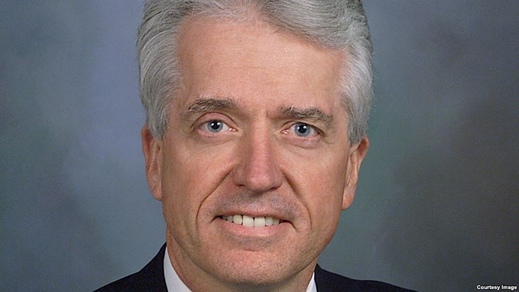
Jim Slattery, a former US Congressman

Jim Slattery, a former US Congressman, after his visit to Iran in December said, “Very few members of our administration … have any personal relationships with Iranians. One of the great problems we have to overcome right now is ignorance.” What comes below is a report that Fararu website filed on his comments on February 10:

“The Iranians are deeply concerned about respect – the one thing they yearn for is respect,” Jim Slattery, 66, said in a presentation at the Atlantic Council think tank.

He was told by his hosts in Tehran that it was first invited trip by a US lawmaker since the 1979 Revolution.

The Kansas Democrat, who served in the House of Representatives from 1983 to 1995, attended an international conference in Tehran against violence and extremism. He also met with Iranian officials, including key members of parliament.

Slattery said he believed President Hassan Rouhani and his inner circle were “deeply committed to improving this relationship with the United States. And I believe that if they fail, we are likely to see the return of a much more hardline government in Iran.”

The Iranian officials he met were “all deeply concerned about what effect Congress elections last November will have on President Obama’s capacity to actually implement any agreement” on Iran’s nuclear program.

“They are very troubled by the prospect of … putting their best deal on the table,” only to have US lawmakers reject it.

“This would be a political disaster,” Slattery added. “So they need assurances that if there is a deal that is worked out, they want to be confident that it can actually be approved and implemented by the Obama administration.”

Slattery argued that both Tehran and Washington bore responsibility for obstacles to an international deal.
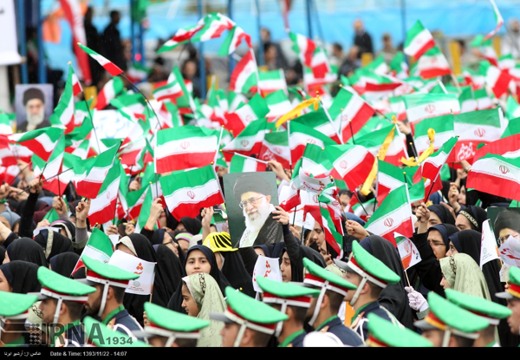
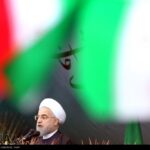
Iranians turn out in force for Feb. 11 rallies (Photos)

Islamic Revolution victory 1

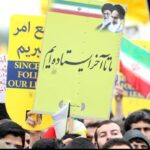
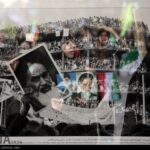
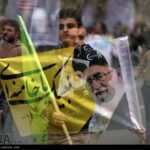
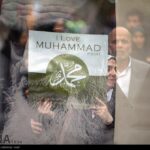
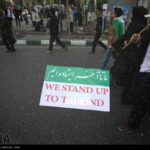
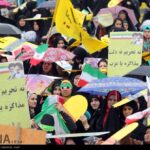
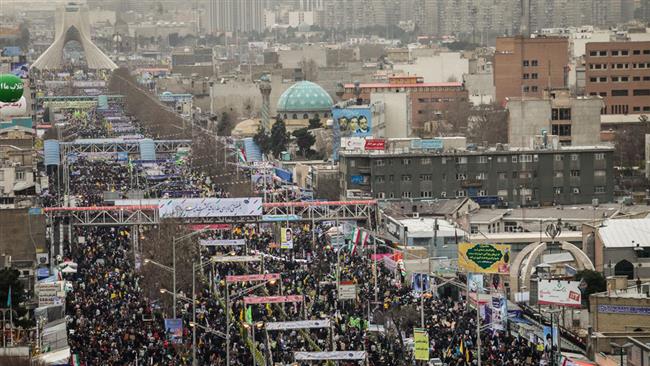
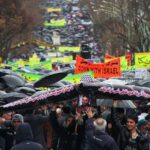
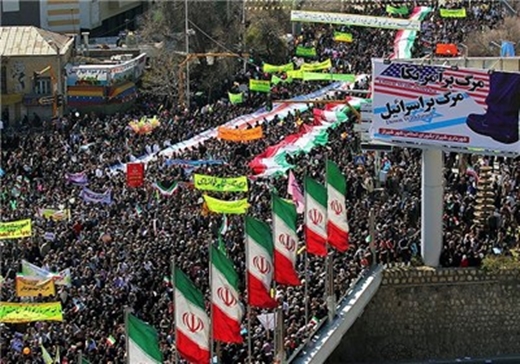
Iranians on Wednesday turned out in their millions across the nation for the Feb. 11 rallies marking the victory of the Islamic Revolution 36 years ago, pledging allegiance to the lofty ideals of the revolution and commitment to the guidelines of Supreme Leader Ayatollah Seyyed Ali Khamenei.

The demonstrators in Tehran praised, in a final resolution, Iran’s scientific and technological achievements and expressed support for the negotiating team in nuclear talks with P5+1, urging the country’s negotiators to take into account the red lines drawn by the Supreme Leader.

The following are the photos the Islamic Republic News Agency (IRNA) posted online of the massive rallies:


Iranians rally in their millions to mark Revolution victory

Islamic Revolution

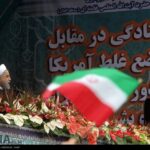
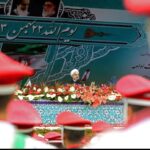
Millions of the Iranians took to the streets nationwide Wednesday to mark the 36th anniversary of the Islamic Revolution.

Tehran and other cities and towns across the nation witnessed rallies in celebration of a revolution that brought down the curtain on the US-backed Pahlavi monarchy.

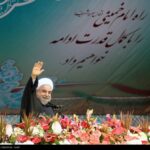
Rouhani-11 feb

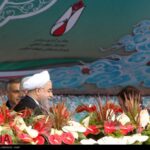
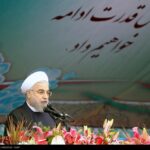
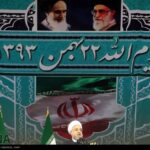
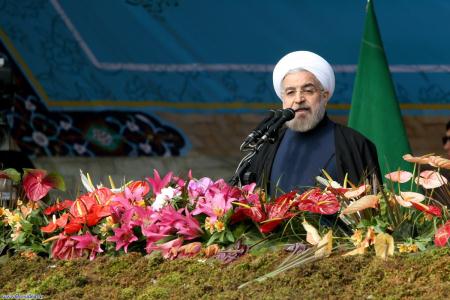
Addressing a rally in Tehran, President Hassan Rouhani said: “We seek a win-win agreement, under which Iran would [guarantee] the transparency of its peaceful nuclear activities within the framework of international law and [in return] the opposite side put an end to inhumane and illegal sanctions [against Iran]. This will benefit both sides.”

He further dismissed claims by Western countries that sanctions have forced Iran to sit at the negotiating table.

“That you say Iran has come to the negotiating table because of sanctions is not true. Iran has not come to the negotiating table due to the pressure of sanctions, [but] on account of logic and to establish peace and stability in the region and the world,” Rouhani said in comments aimed at Western officials. “If you say that sanctions have forced Iran to negotiate, why don’t you keep imposing sanctions? Stop telling lies and be honest with your nations,” he said.

Rouhani said that the West has no option but to interact with the Islamic Republic, stressing that Iran is afraid of neither sanctions nor pressure.

He also said Iran wants a nuclear deal that ensures the dignity and progress of the nation.

The Iranian president also touched on the issue of terrorism in the Middle East and said without engaging Iran, peace will not be restored and terrorism will not be uprooted in the region.

Rouhani described the Islamic Republic as “the power” that helped Iraq, Syria, Lebanon and other regional countries in their fight against terrorist groups.

He also said these rallies indicate the reaffirmation of the Iranian nation’s allegiance to the Islamic Revolution.

Rouhani said that the Iranian nation wants “constructive interaction” with the world, but stressed that the Islamic Republic will continue to protect its interests and remain committed to the Revolution’s principles and ideals.

[…]

Iran’s achievements brought US to nuclear talks: Afkham

Marziyeh-Afkham
Marziyeh-Afkham

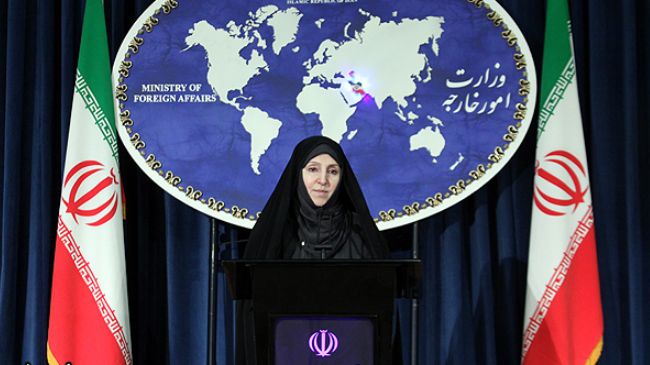
The Iranian Foreign Ministry spokeswomen has said Iran entered nuclear talks with a constructive intention to put an end to the “fabricated” crisis, refuting claims that Tehran was forced to sit at the negotiating table.

Marziyeh Afkham made the remarks in reaction to the latest statements by US President Barack Obama about Iran’s “political will” to reach a nuclear agreement.

“Iran entered the nuclear talks given the peaceful nature of its nuclear activities and with an approach which is based on having constructive interaction,” Afkham said.

“It seems”, she added, “winning the US public opinion as well as fighting political rivals inside the US are the true reasons behind repeating a wrong analysis that Iran’s presence in the nuclear talks was a result of the oppressive and illegal sanctions.”

Afkham stressed it was “crystal clear that putting pressure on Iran has not been effective and has instead resulted in our country’s remarkable progress in all fields including in its peaceful nuclear program. We believe that is what has brought the US to the negotiating table.”

Reiterating Tehran’s political will to reach a nuclear agreement, the spokeswoman said, “Various reports of the International Atomic Energy Agency have proven that Iran has been committed to its obligations under the (interim) Geneva deal. This is proof of Iran’s seriousness in its decision on one hand, and will, on the other hand, and is indicative of the existence of a firm political will among Iranian authorities to reach a good nuclear agreement.”
“Now it is the American side that must make its final decision and prepare the grounds for reaching a comprehensive nuclear deal after throwing away its excessive demands and overcoming its domestic problems,” Afkham stressed.

Referring to the US president’s remarks on Iran’s internal affairs as well as on the relationship between the Iranian nation and its government, the spokeswoman recommended President Obama “avoid making such baseless and unrealistic comments and review the huge presence of the Iranian people on all national occasions and in post-Revolution elections.”

She referred to the anniversary of the victory of Iran’s 1979 Islamic Revolution as a symbol of the unity and solidarity among the Iranian nation and a firm response to those statements.

Afkham also denied as “unfounded and repeated” President Obama’s claims about Iran’s support for the terrorism describing them. “The US which is a supporter of the Zionist regime and encourages terrorist acts has better answer this question: ‘Weren’t it the US and its allies that supported the terrorist groups currently causing tensions in the region by making new crimes on a daily basis?’”

Islamic Revolution has exposed Western double standards: Deputy minister

Ghashghavi-12

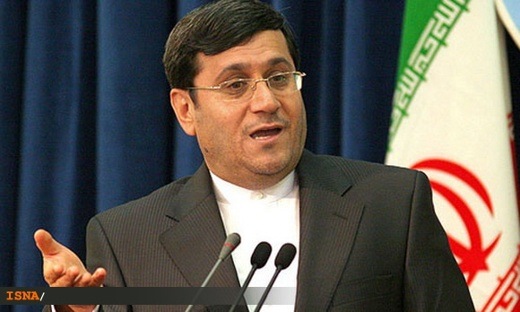
Deputy Foreign Minister Hassan Ghashghavi has challenged the double standards of the West when it comes to the nuclear Non-Proliferation Treaty (NPT) and human rights conventions and said after the emergence of the Islamic Revolution and the discourse that originated from it, hegemonic powers encountered a conceptual crisis.

The following is the translation of a report by the Iranian Students News Agency on what the diplomat said in a ceremony on February 8 to mark the victory of the Islamic Revolution:

As for the nuclear talks between Iran and P5+1, the deputy minister said, “A half-baked deal would be of no use.”

Underscoring the influence of Iran as a source of inspiration in the region, Ghashghavi said, “Iran has exposed the West’s double standards. Israel is not a signatory to the NPT and has not signed the Additional Protocol; it has about 200 atomic bombs. That is a sign of injustice in the world because no inspector has ever visited Israeli facilities; no camera has been installed in their facilities. Besides, they have bought nuclear submarines in the last few years.”

Ghashghavi went on to say, “According to United Nations Security Council Resolution 598, Iran was the victim of the war [Saddam’s Iraq imposed on us]; we are a signatory to the NPT and we have been a victim of chemical weapons. Although Iran has allowed inspectors to install cameras in its nuclear facilities, there are over 20 million news stories against Iran on the Internet, while Iran does not have any Atomic bombs. However, the number of reports on Israel’s Dimona can hardly reach 100. That reflects the double standards of hegemonic powers in dealing with Iran.”

He further said, “I am sure that the Iranian negotiating team will stand its ground when it comes to Iranian dignity and the red lines set by the establishment. I hope a solution is reached. Even if that does not happen, our nation will remain on the scene.”

On double standards of the West, he said in China, Russia and Iran each year around 3,000 people are hanged mostly on the back of conviction of drug offenses. “The West views their executions as violation of human rights, but the total number of people killed in the wars in Iraq, Afghanistan, and Syria in the past decade is between 80,000 and 100,000, but that is not violation of human rights!”

“For those 3,000 they hand out awards, make movies, set up NGOs, launch websites, churn out hundreds of articles, but for those 100,000 people nothing happens.”

The original article was titled: A half-baked deal would be of no use.


Leader’s call for a one-stage deal is meant to prop up the talks: Former negotiator

Mousavian

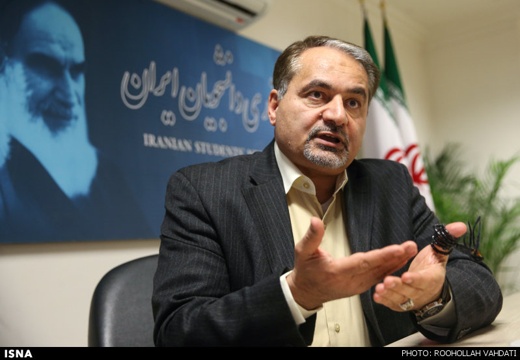
The emphasis of the Supreme Leader that any nuclear deal with P5+1 should encompass both general principles and details is a realistic, wise piece of advice to boost the likelihood of a sustainable deal at the talks, former Iranian nuclear negotiator Hossein Mousavian said Tuesday. The following is a partial translation of what else he told the Iranian Students News Agency on February 10:

Mousavian described Iran’s measures in line with Geneva deal as rational, and said I believe the Supreme Leader has always been in favor of a deal. “Unfortunately, there is a mysterious current that seeks to instill in the court of public opinion a feeling that the Iranian leadership is against a deal. That is meant to set the stage for leaving the blame on Iran’s doorstep in case the talks fail, or if sanctions are ratcheted up or even a war breaks out.”

He went on to say over the past five years he has said in many interviews and articles that the leader has always supported a fair deal. “But a deal that would deprive Iran of its rights under the Nuclear Non-Proliferation Treaty won’t be acceptable to him.”

He concluded, “That the leader wants the deal in one go is because evil forces are hard at work behind the scenes to foil the talks. In case a two-stage deal is struck, they would go into overdrive to hammer the process, so I think the instructions of the leader are in line with the success of the talks not their failure.”

Emphasis on a one-stage deal stems from Western failure to honor its promises: MP

Kazem Jalali-Iran MP

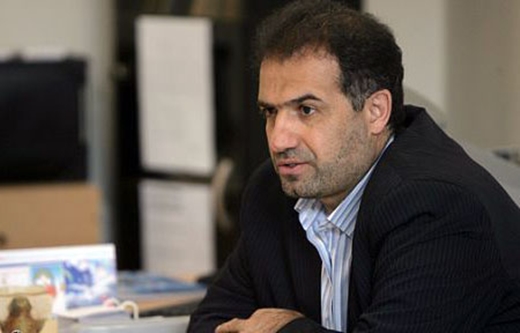
Kazem Jalali, a deputy that represents Shahrood in parliament and heads the chamber’s research center, said on Monday the leader’s “prudent and rational” statement that any nuclear deal with P5+1 should come in a single stage stems from a lack of trust in the West. “Over more than a decade of negotiations, Westerners have proved that they are not committed to nuclear deals with the Islamic Republic of Iran.”

According to Fars News Agency, Jalali, who has a seat on Parliament’s National Security and Foreign Policy Committee, also said Western failure to honor their commitments has come in stages. “At the talks in Sadabad Palace [in Tehran], in a confidence-building, non-binding measure Iran agreed to suspend its nuclear activities, but the West interpreted the move as a shutdown of all Iranian nuclear activity.”

He went on to say, “Later, Iran agreed to explain all outstanding issues about its nuclear program to the IAEA, when it did so, Westerners raised new questions.”

The MP further said the reason the Supreme Leader has said that the deal should not be subject to interpretation is that in the past similar agreements have been arbitrarily interpreted by Westerners. “Iran has never left the negotiating table, but we cannot stand the illogical behavior of the West.

In conclusion, he said in the opinion of the leader a good deal would be one which is in line with national interests, protects our dignity and safeguards the nuclear achievements of the country. “In fact, through his recent comments the leader warned the West to be realistic in talks with Iran.”

February reminder of Iranian resolve to transform: Culture chief

Ali Jannati-Culture min

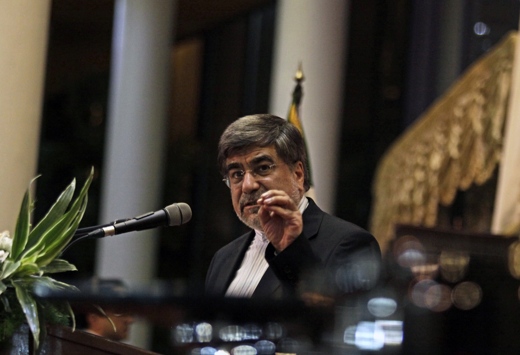
Minister of Culture and Islamic Guidance Ali Jannati released a message Tuesday to mark the glorious victory [36 years ago] of the Islamic Revolution.

In the message, the Iranian culture chief said, “February is a reminder of Iranian resolve to usher in a sea change and rewrite their destiny. It led to an achievement indebted to the self-belief of a noble nation and to the leadership of a source of enlightenment: the architect of the Islamic Republic.”

[…]

The message further said, “Today once again we recommit ourselves to tapping into our capacity on artistic and cultural fronts and relying on honesty and integrity, morality and ethical excellence to safeguard our national independence, and protect the legitimate freedoms of everyone without any discrimination, and in line with the principles of the Islamic Republic; we also vow to try to promote culture and human value and respect individual and collective rights to replace preferential treatment with unbiased relations and promote interaction and synergistic dialogue as a major strategy to secure social understanding.

“We are certain we will walk down that path with our heads held up high. Despite plots by overt and covert enemies, great, lasting victories lie ahead for the Iranian nation.”

Iranian negotiators act in line with instructions of leader: Advisor

velayati-2

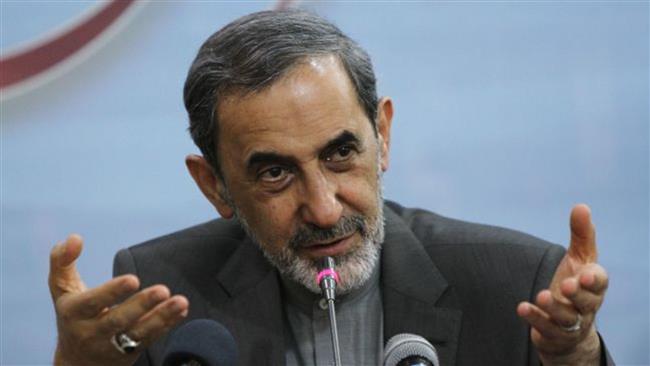
As the Supreme Leader has said Iranian hands are not tied; rather, the American have their hands tied because they have been unable to impose their will on Iran and stop the Islamic Republic from making progress, Ali Akbar Velayati, an advisor to the Supreme Leader for international affairs, told reporters Tuesday on the sidelines of an international congress attended by foreign guests who are in Tehran to take part in ceremonies to mark the victory of the revolution.

He further said the Supreme leader supports the Iranian negotiators who are trying their best to stand up for Iranian rights, adding as the leader has said Western attempts to stop the progress of Iran’s peaceful nuclear program are bound to fail.

In conclusion, Velayati expressed hope that the Iranian nuclear negotiating team will be successful at the talks and in defending the rightful insistence of the Islamic Republic on tapping peaceful nuclear energy.

Iran’s president urges high turnout in February 11 rallies

Iran Islamic Revolution

Iranian President Hassan Rouhani called for massive presence in the upcoming nationwide demonstrations to mark the anniversary of victory of the Islamic Revolution, which falls on February 11.

The higher turnout in the demonstration, the better the world will get the message of Iran’s “national solidarity,” President Rouhani said on Monday.

He noted that the “ill-wishers and enemies” of Iran will better feel the Iranian nation’s power in the form of mass rallies during the national celebration.

President Rouhani also described the February 11 rallies as a factor that will help the country better deal with the economic woes and help manage the nuclear talks with world powers.

Iran and P5+1 (Russia, China, the US, Britain, France and Germany) are in talks to hammer out a final agreement to end more than a decade of impasse over Tehran’s nuclear energy program.

Massive turnout in the demonstration enables Iran to “encounter those who make excessive demands with more power on all international issues and to defend the Iranian nation’s right in an easier and less costly manner,” he added.

In relevant comments on Sunday, Supreme Leader of the Islamic Revolution Ayatollah Seyyed Ali Khamenei predicted a huge turnout in the upcoming demonstration, noting that the mass rallies will indicate that the Iranian nation is not constrained.

The Iranian nation toppled the US-backed Pahlavi regime 35 years ago, on February 11, 1979, ending the 2,500 years of monarchic rule in the country.

The revolution, spearheaded by the late Imam Khomeini, established a new political system based on Islamic values and democracy.

On February 11 each year, Iranian people pour into the streets in their millions to commemorate the great victory of the Islamic Revolution.