
Nature has put on display different colors in autumn.
Tasnim News Agency has posted amazing pictures of Mother Nature in the capital of Kermanshah Province.
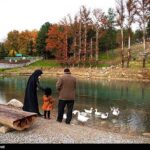
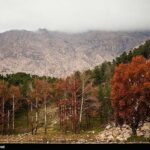
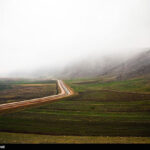

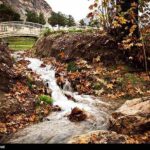

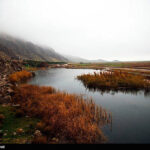



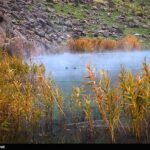
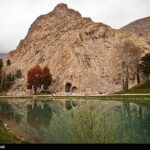

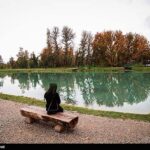
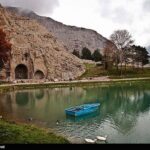
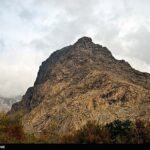

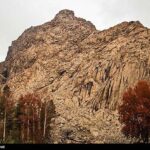
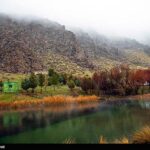

Nature has put on display different colors in autumn.
Tasnim News Agency has posted amazing pictures of Mother Nature in the capital of Kermanshah Province.
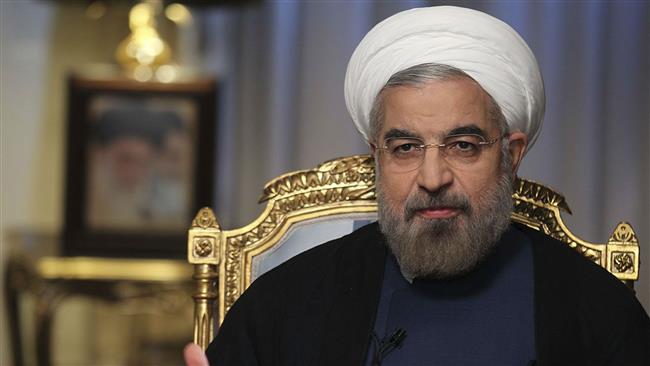
President Rouhani has extended condolences to his Russian counterpart Vladimir Putin over a deadly plane crash that killed over 200 people.
In a message to Putin on Saturday, President Rouhani expressed his sympathy with the Russian government and nation as well as the bereaved families of the victims.
Foreign Ministry Spokeswoman Marzieh Afkham also offered her condolences to the Russian government and people over the tragic incident.
The Russian passenger aircraft crashed in Egypt’s Sinai Peninsula with Egyptian officials and the Russian Embassy in Cairo confirming that all 224 people on board the flight have been killed.
The Airbus A-321 chartered by Russian airline Kogalymavia was carrying 217 passengers, including seven children, and seven crew members.
Russia’s Ria Novosti news agency has reported that the bodies of 100 passengers, including five children, together with one of the aircraft’s flight recorders had been found.
[…]

Parliament Speaker Ali Larijani has said Saudi Arabia has committed “unprecedented” crimes in Yemen during its seven-month war on the country, stressing that Riyadh is a “wicked regime” in the Middle East.
In a meeting with the deputy head of the Yemeni Supreme Revolutionary Council, Naef Ahmad al-Qanis, in Tehran on Saturday, Larijani said the Yemeni people would undoubtedly emerge victorious in the “unequal war” against their country.
“Yemen and the Yemeni people are very important to us and the country’s issues constitute a constant concern for the Islamic Republic of Iran,” the top MP said.
He added that the Saudi regime has committed “numerous crimes” in Yemen which have led to the destruction of the impoverished country’s infrastructure and the deaths and injuries of thousands of civilians.
Larijani emphasized that the settlement of the Yemeni crisis is a main political priority for Iran, saying resistance of the Yemeni people can teach a lesson to all aggressive countries.
Qanis, for his part, said Iran is a close country to Yemen, urging the Islamic Republic to prepare the ground for the transfer of the injured Yemenis to Tehran given the lack of medical facilities in the war-hit country.
Riyadh seeks to dominate Yemen, but the Yemeni people will turn the country into a grave for Saudis through the support of friendly countries, he said.
[…]
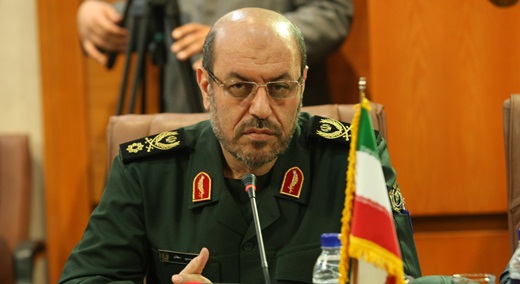
Iran’s defense minister dismissed the rhetoric of military action by the US or Israel as merely having domestics consumption, stressing that the Iranian armed forces are prepared to respond to any vicious move against the country.
Brigadier General Hossein Dehghan underscored on Saturday that the Iranian armed forces are ready to respond to any “malicious” behavior by the US government or the Zionist regime of Israel.
He made the comments in reaction to the provocative comments by the US and Israeli defense ministers about the viability of military action against Iran.
US Defense Secretary Ash Carter said at a joint press conference with his Israeli counterpart at the Pentagon on October 28 that Iran must comply with the Joint Comprehensive Plan of Action (JCPOA) or face a military threat from the US.
“I’m under instructions from President Obama to make sure the military option remains intact,” Carter said.
Israel’s Moshe Yaalon also said that “we will again be dealing with a potential military nuclear Iran. And we must be ready.”
The Iranian defense minister also said that Tehran will continue to boost the defense capabilities according to its defensive doctrine in order to counter the threats and support the resistance movement in all fields.
Dehghan described the US and Israeli officials’ comments as desperate attempts to deflect attention away from their failures, saying their rhetoric has only domestic consumption.
“The criminal, murderer and aggressive image of Israel and the US is known for all of the world nations, and the nations regard those two regimes as bellicose, aggressive, bloodsucker and anti-human rights,” he noted.
Iran is ready to give the aggressors a lesson they would never forget, Dehghan underlined.
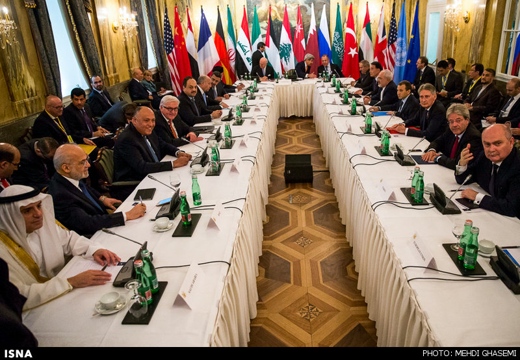
Distinguished Arab analyst and journalist Abdel Bari Atwan says the presence of Iran’s Foreign Minister Mohammad Javad Zarif in a Vienna conference on Syria was most conspicuous, citing the view held by many observers that the exclusion of Tehran from earlier talks on Syria – under pressure from Riyadh and with a Washington green-light – was illogical.
What follows is the translation of a report Alalam – published in Farsi on October 30 – about Atwan’s statements in an opinion piece:
 Atwan further said that Iran is a major player in the Syrian case and has lent unwavering support to the Syrian government over the past five years. It has also played a key role in helping the Syrian army and countering Arab and Western plots to topple the Syrian government as well as in preventing a repeat of the Libyan and Iraqi – and on a smaller scale Egyptian – scenarios in Syria.
In an interview with FRANCE 24 Wednesday US Deputy Secretary of State Antony Blinken admitted for the first time that it is hard to imagine a solution to the Syrian crisis without Iran’s involvement. Although the admission came four years too late, it was still important.
As for Saudi annoyance over Iran’s involvement in the Vienna talks, Atwan said the presence of the Iranians at the negotiating table gives Saudi Foreign Minister Adel Al-Jubeir indigestion.
The Arab analyst mocked the comments of Al-Jubeir that Bashar al-Assad has to leave office either through peaceful means or by war. “He even forgot his position and talked as if he was the representative of a major power equipped with nuclear weapons and an aerospace program.”
Al-Jubeir said that inviting Iran to the negotiations is an effort to see how serious Iran is and test the intentions of Iran and Russia on Syria.
Assuming a threatening tone, the Saudi foreign minister then said that if the talks failed, Riyadh would pursue other options.
Atwan doubted the other options of Al-Jubeir and recalled the Saudi failure in the war the Saudis lead through a fragile coalition against Yemen and said it’s still unclear what his other options are and whether another Decisive Storm is expected to sweep through Syria at a time when the first storm has yet to fulfill its objectives in Yemen.
The analyst also asked: Which country will be ready to be part of this new storm? Can Riyadh cross the Russian red line and provide anti-aircraft missiles to terrorists in Syria? What will happen if a Russian fighter is downed by such missiles? What will happen if they end up – by chance or design – in the hands of IS terrorists and are used against US or even Saudi fighters?
An international gathering in Vienna on Syria and Iran’s presence there dominated the front pages of Iranian newspapers on Saturday. Also in the news were flash flooding in different provinces in Iran and the president’s order to rush help to stricken people in flood-hit areas.
Ettela’at: Washington has signaled readiness to cooperate with Tehran and Damascus in a bid to solve the Syrian crisis.
The announcement by the US State Department came as Vienna hosted a meeting on the Syrian crisis. Deputy Foreign Minister Hossein Amir-Abdollahian, an Iranian delegate to the talks, said there has been no change in Iran’s policy on Syria.
Ettela’at: Iran’s pavilion at Expo Milano 2015 was toured by as many as four million visitors in the 6-month event which winds up today.
Iran has been elected as a principal member of the strategic committee of the expo.
Ettela’at: Twenty-three members of Hypocrites (a reference to Mojahedin Khalq Organization) were killed and 200 others wounded in a missile attack on Camp Liberty in Iraq.
Hossein Abrishamchi, a notorious torturer of the terrorist grouping, was among those killed in the attack claimed by Jaysh al-Mukhtar.
Ettela’at: The president has ordered swift assistance to people stricken by flooding in the provinces of Kermanshah, Ilam and Lorestan.
Floods in the western and west-central provinces claimed seven lives. One person is unaccounted for.
Ettela’at: The trees which are felled and the punishments that are never meted out.
The managing director of Tehran Parks and Green Spaces Organization says Municipality keeps a close eye on those who cut trees for development purposes and sends their cases to the Judiciary.
The Chairman of Tehran City Council says so far there has not been a single case of punishment against those who cut trees and destroy gardens to erect high rises.
Ettela’at: The New York Times has described Saudi Arabia as a gift to Islamophobia.
The daily described the Saudi criminal justice system as medieval.

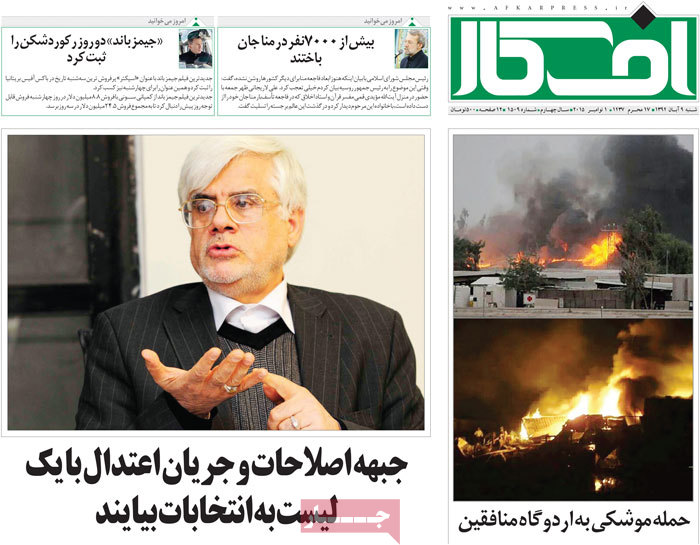
Afkar: Mohammad Reza Aref [a reformist leader and a former first vice-president] has called for reformist and moderate fronts to put together a single ticket in the upcoming elections.
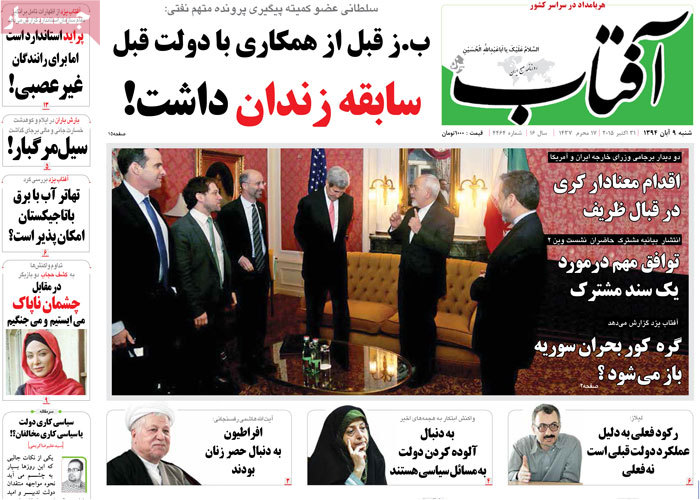
Aftab-e Yazd: “Babak Zanjani [a young billionaire on trial for corruption] served time in prison before launching cooperation with the previous government,” said a member of a committee looking into the case of the so-called oil defendant.
Aftab-e Yazd: “The existing recession is the result of what the previous government, and not the current administration, has done,” said Saeed Laylaz, an economist.
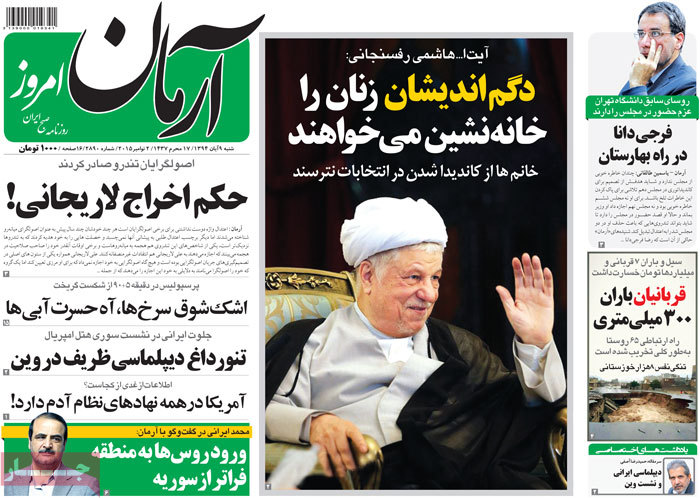
Arman-e Emrooz: “Dogmatic individuals want women only as housewives,” said Chairman of the Expediency Council Ayatollah Akbar Hashemi Rafsanjani,
He further said that women should not be afraid of fielding their candidacy in elections.
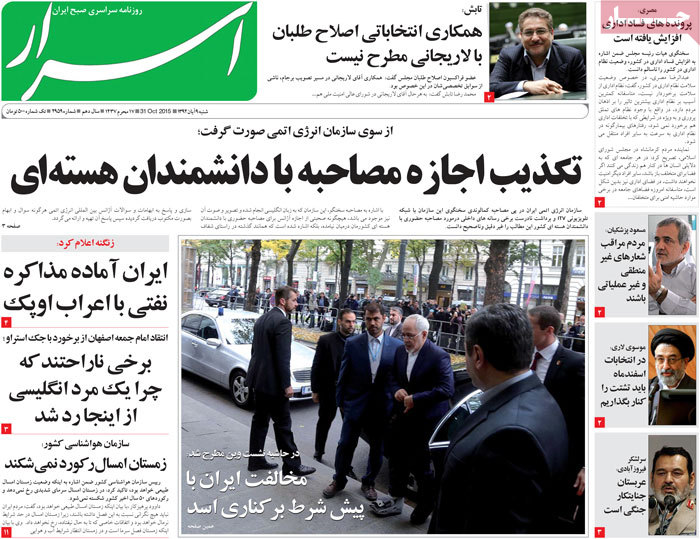
Asrar: The Atomic Energy Organization has denied reports that it has given the go-ahead [to the UN nuclear agency] to interview Iranian nuclear scientists.
Asrar: Reformists have no plan to have electoral cooperation with [the principlist speaker of the Islamic Consultative Assembly Ali] Larijani, said a member of the reformist caucus in parliament.
Asrar: The Friday prayer leader of Isfahan has lashed out at those who were critical of an Isfahan visit by former British Foreign Secretary Jack Straw.
“Why are some upset that an Englishman has taken in Isfahan [during his Iran tour]?” asked the cleric.
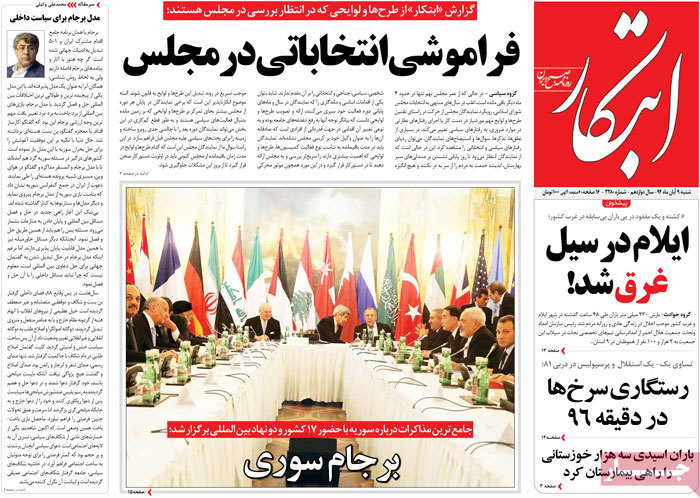
Ebtekar: Acid rain has sent more than 3,000 people in Khuzestan Province to the hospital emergency rooms.
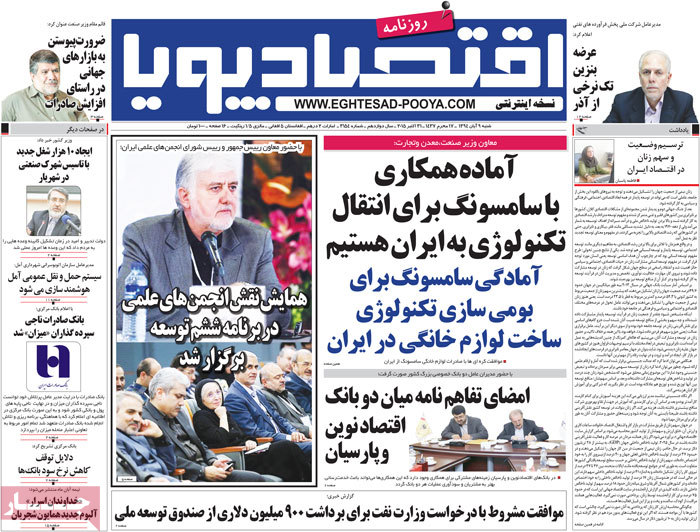
Eghtesad-e Pooya: Adeputy minister of industries, mines and trade has said that Tehran is ready to cooperate with Samsung to transfer its technology to Iran.
Samsung has voiced readiness to indigenize the technology to make home appliances in Iran.
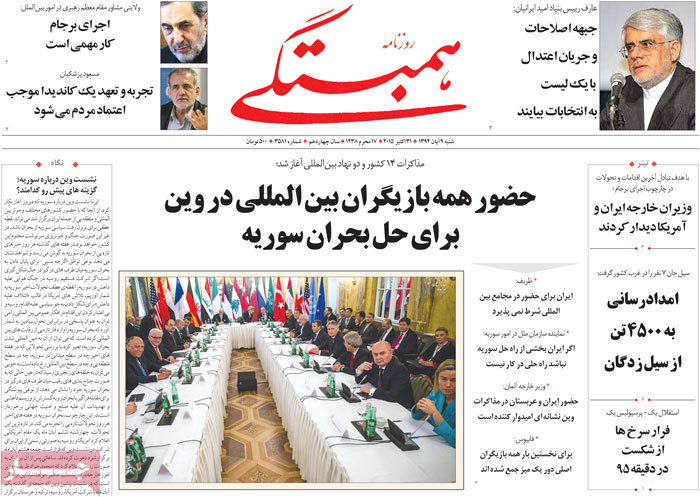
Hambastegi: The top diplomats of Iran and the US met in Vienna to discuss the latest developments in line with the implementation of the Joint Comprehensive Plan of Action.
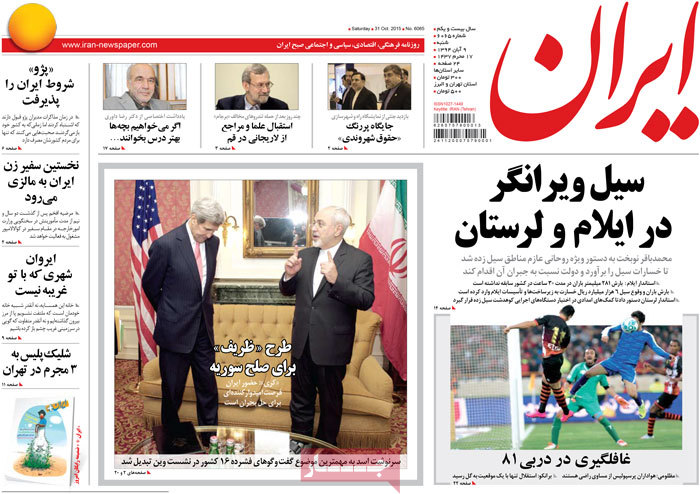
Iran: Islamic Republic of Iran’s first female ambassador to go to Malaysia.
Marzieh Afkham, who served as Foreign Ministry spokeswoman over the past two and half years, will go to Kuala Lumpur as Iran’s ambassador.
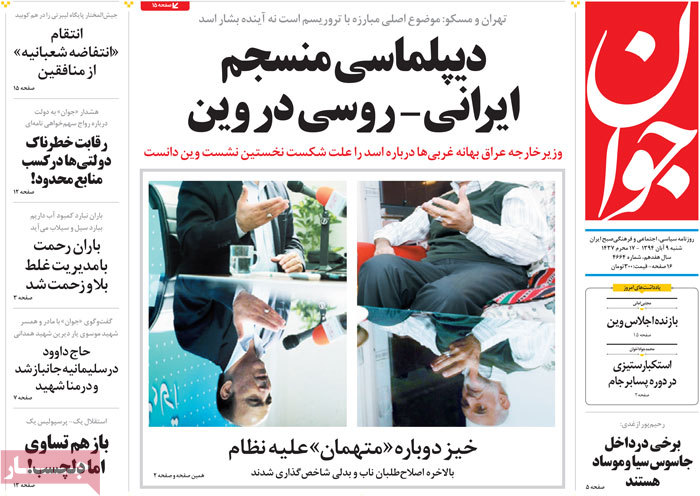
Javan: Concerted Iranian-Russian diplomacy in Vienna
Tehran and Moscow: The core issue is the fight on terrorism, not the future of Bashar Assad.
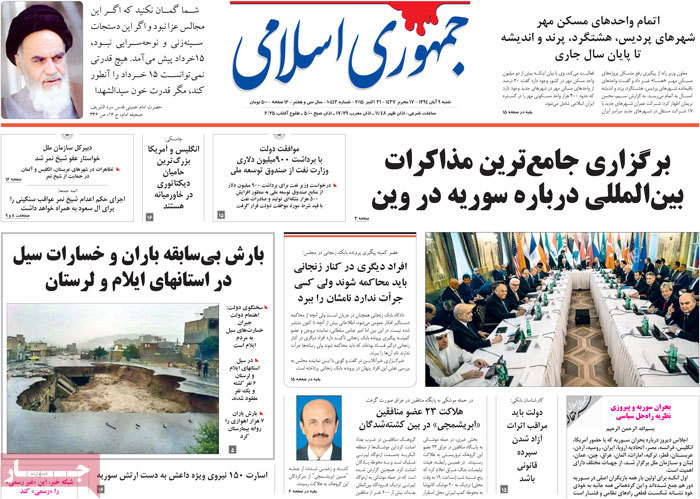
Jomhouri Islami: The most comprehensive international talks on Syria were held in Vienna.
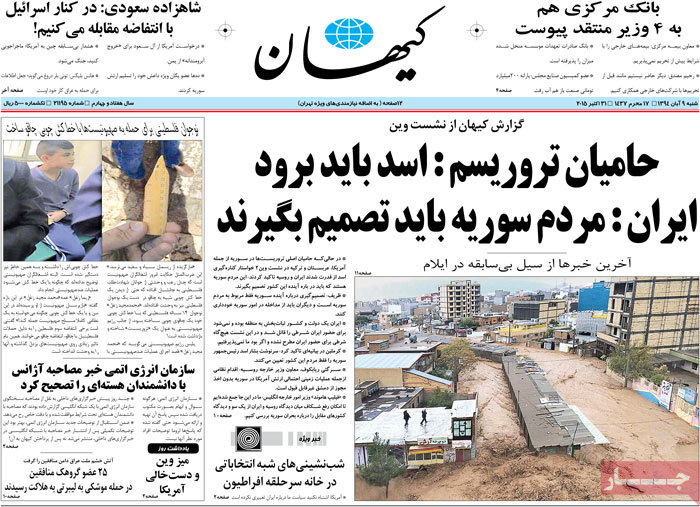
Kayhan: The daily’s report on the Vienna talks
Supporters of terrorism: Assad should leave office.
Iran: The Syrian people should decide.
Khorasan: Flooding has swept 12 provinces in the country, claiming seven lives in three.
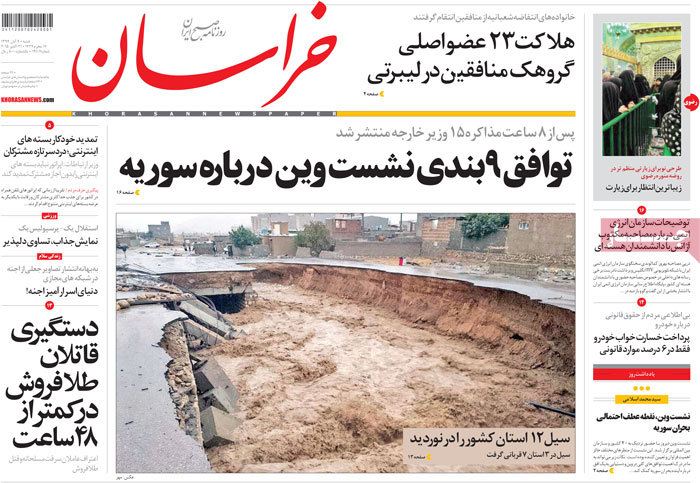
Mardomsalari: Saudi Arabia is after covering up the Mina tragedy, said the speaker of the Islamic Consultative Assembly.
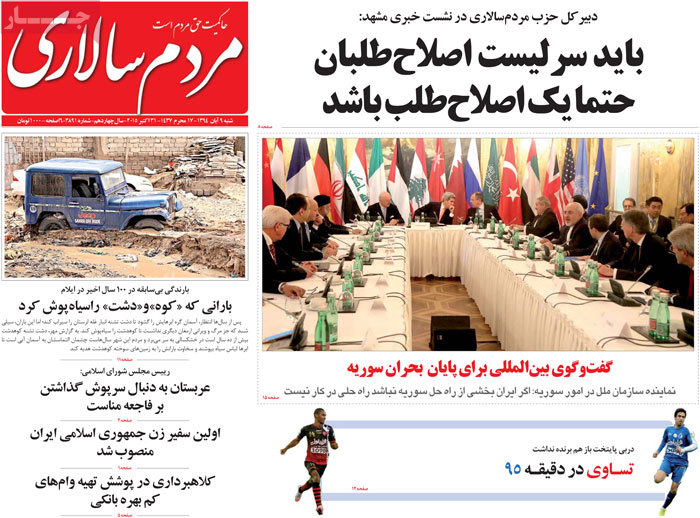
Noavaran: In the name of Syria, to the benefit of JCPOA
Expert talks between Iran and P5+1 came to an end in Vienna.
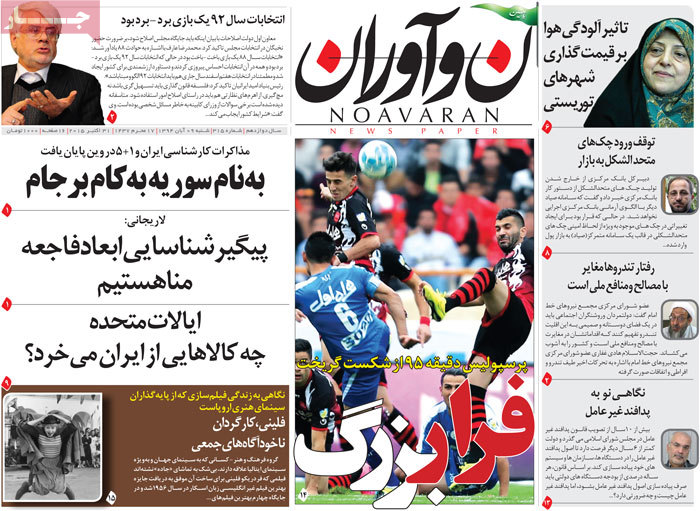
Resalat: “We will recognize the Joint Comprehensive Plan of Action, only if the conditions the Supreme Leader has set are met,” said Ayatollah Movahedi Kermani in Tehran’s Friday prayers.
Resalat: “The Joint Comprehensive Plan of Action comes with multiple limitations for Iran,” said Ali Akbar Velayati, an advisor to the Supreme Leader.
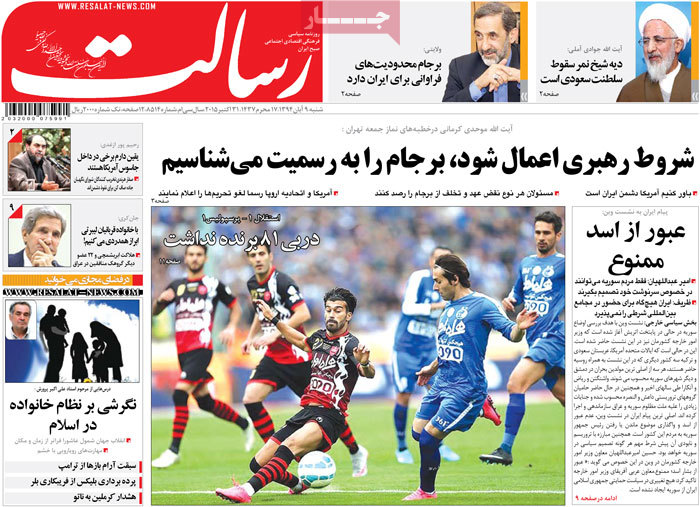
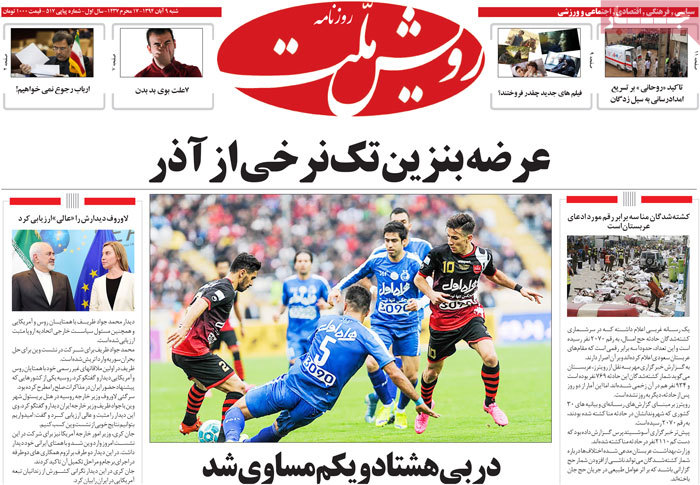
Rooyesh Mellat: The 81st Tehran derby ended in a draw.
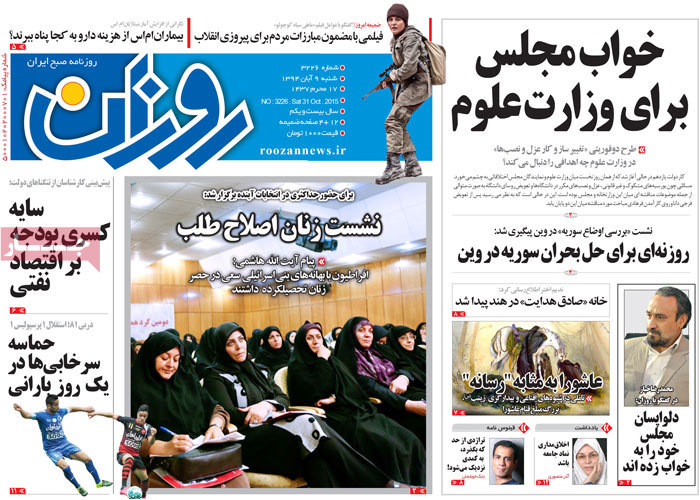
Roozan: A gathering of female reformists to discuss the maximal presence [of women] in the upcoming elections.
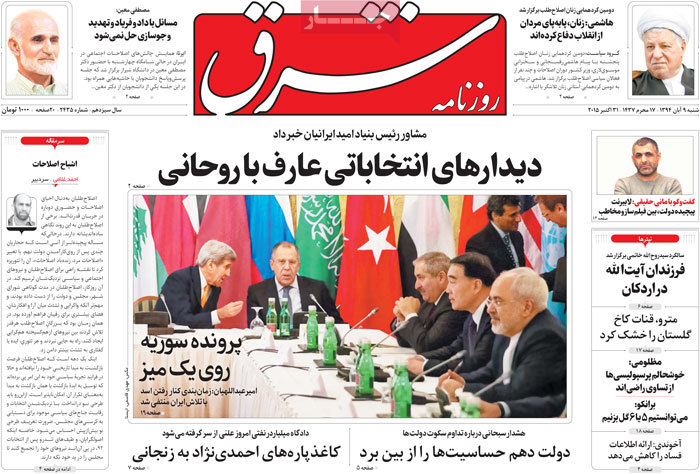
Sharq: An advisor to the head of the Iranian Hope Foundation has revealed electoral meetings between Aref and Rouhani.
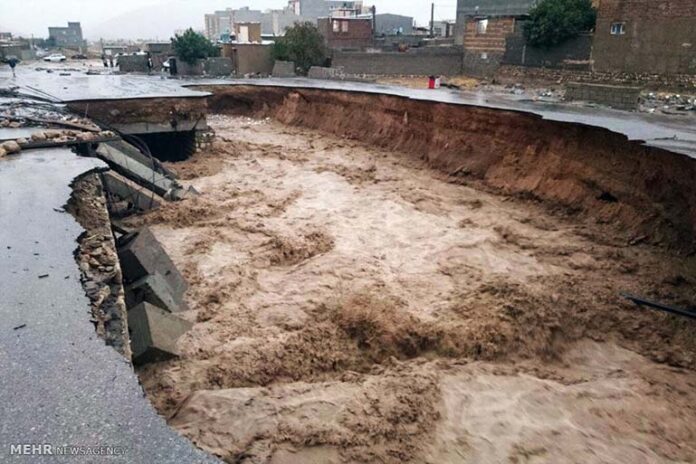
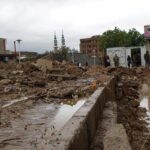
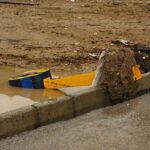
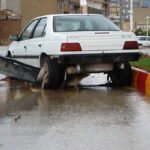
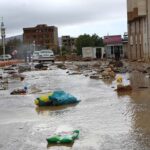
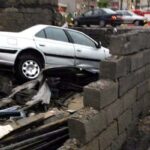
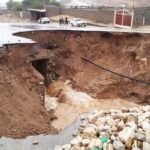
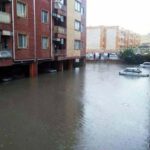
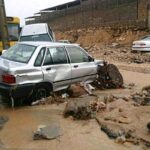
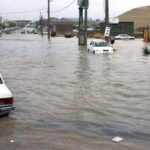
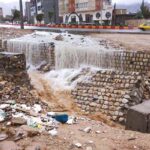
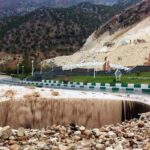
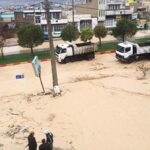
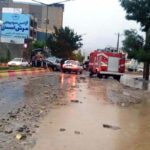
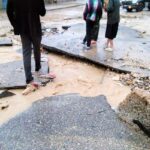
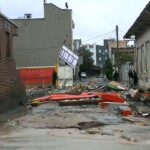
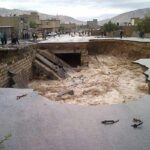
Heavy rainfall in Ilam has triggered floods and ground subsidence.
The following shots by Mehr News Agency show the trail of destruction that flooding left in its wake in the western Iranian city:



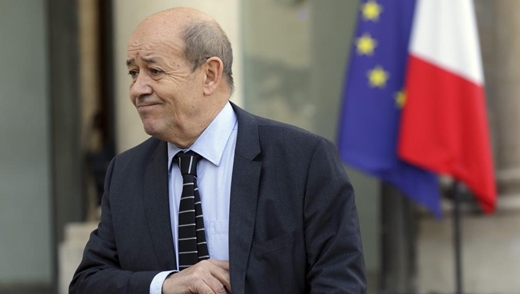
A former Iranian nuclear negotiator has given a strong response to allegations by the French defense minister that Iran is a threat to global security, by saying that Tehran does not have an atomic bomb and poses no threat to the world security.
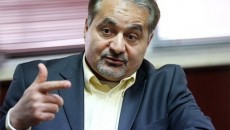
Hossein Mousavian, a former Iranian ambassador to Germany, made the comment in the IISS Manama Dialogue 2015 in response to charges by Jean-Yves Le Drian that Iran is a threat to global security. The following is the translation of what Mousavian said at the 11th Regional Security Summit: The IISS Manama Dialogue (October 30 – November 1) as reported by entekhab.ir on October 30:
Mousavian addressed the French minister and said, “Mr. Minister! You described Iran as a threat as far as the proliferation of nuclear weapons is concerned. You know that Iran does not possess any atomic bomb and there has been no sign of diversion in Iran’s nuclear program toward developing atomic bombs.
“You know that Israel is the only country in the Middle East which has atomic bombs. The fact of the matter is that Israel’s stockpile of 400 atomic bombs poses a threat to peace and security in the Middle East.”
“Why haven’t you talked about such a fact?” the former Iranian ambassador asked, saying, “Mr. Minister! You know better [than anybody else] that nuclear disarmament is the very first objective of the Nuclear Non-Proliferation Treaty (NPT). Five powers that negotiated with Iran are in possession of as many as 22,000 nuclear bombs. Over the past 40 years, they have ignored and violated the NPT.”
Mousavian went on to say, “Have you dismantled those 22,000 nuclear bombs? Why hasn’t France eliminated its nuclear arsenal and why has it violated the NPT?
“Conversely, France and other big powers have established strategic ties with those nations which have refused to sign the NPT and developed atomic bombs such as Israel, Pakistan and India. They have imposed sanctions against Iran [instead]. This comes despite the fact that Iran is a signatory to the NPT and does not have an atomic bomb. It is also striking that France helped Israel build atomic bombs.”
The former Iranian nuclear negotiator concluded, “Why do you ignore these realities?”
The French defense chief could not provide answers to the questions raised by Mousavian and simply said that France and other powers as well as the International Atomic Energy Agency (IAEA) have not been convinced of the peaceful nature of Iran’s nuclear program yet.
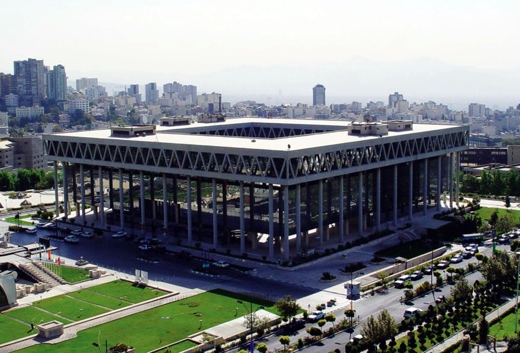
The spokesman for the Followers of the Leader [Rahrovan-e Velayat], a principlist caucus in the Islamic Consultative Assembly, has announced that the president of Islamic Republic of Iran Broadcasting (IRIB) will attend a meeting of the caucus’ central council on Sunday.
Safar Naimi Raz made the announcement on Saturday and added that the meeting will discuss the faults the Iranian MPs have found with the national broadcaster’s performance, especially its coverage of news on the Joint Comprehensive Plan of Action (JCPOA).
Khabaronline.ir on October 31 published a report on the announcement which includes remarks by another MP on IRIB’s performance and the need for its impartiality in the buildup to the upcoming parliamentary elections. What comes below is the translation of the report followed by an Iran Front Page note:
Abbas Ali Mansouri Arani, a member of parliament’s National Security and Foreign Policy Committee, stressed the need for the neutrality of the national broadcaster in the elections and said, “When IRIB takes a factional line, its decision will have an adverse result. The national medium should look at society in its entirety. It is expected to help people gain an insight, serve as a university which raises awareness [in society], and reflect different viewpoints.
“IRIB is also expected to adopt a standard approach and a regulated framework for the elections which are applicable to all people. When a piece of law which applies to everybody is enforced, dissatisfaction will reach the bottom of the barrel.”
Mansouri Arani further said, “Iranian people perfectly understand that IRIB is trampling upon their rights, that’s why they show opposition. What IRIB is doing [its unqualified support for a special political faction] will certainly backfire. The broadcaster has so far failed to achieve its intended result.”
The MP who represents Kashan in parliament went on to say, “Suppose there are five factions in our society. People see one, out of five factions, highlighted on TV. They would feel that the other four factions have been treated unfairly. Consequently, people help those [four] factions and cast their ballots for them, because the Iranian people are anti-injustice and always stand by the side which has been treated unjustly.
“If they sense it [IRIB’s biased support for one faction in the run-up to the 2016 elections], no doubt, they will definitely rally around the one who’s been subjected to injustice.
“By the same token, if IRIB continues this trend, it will make losses, so will the groups affiliated with the national broadcaster. The best option for IRIB is to pursue policies within a logical and fair framework.”
The biased performance of Iran’s state-run radio and TV organization in recent days has drawn strong reactions from certain political factions, even senior religious figures such as Ayatollah Nasser Makarem Shirazi, a top Shiite cleric based in Qom.
A few days ago the vice-president and director of the Environment Protection Organization wrote a letter to the IRIB president and lashed out at the way news on her organization is covered by the national broadcaster and accused IRIB of fueling [public] discontent with the Rouhani administration.
At the end of her letter to Mohammad Sarafraz, Masoumeh Ebtekar warned that IRIB is plunging into the trap of partisan bias and is turning into the mouthpiece of the Stability Front (a branch of the principlist front which lent all-out support to the previous government led by Mahmoud Ahmadinejad and virtually distanced itself from other political groups in the country).
Amid growing protest by political and religious figures [against IRIB], the news spread that parliament has summoned the IRIB chief over his organization’s performance. The Iranian parliament acted on a proposal initiated by its most powerful caucus which helped the Joint Comprehensive Plan of Action clear the Islamic Consultative Assembly and proved its sympathy and like-mindedness with the moderate government of President Hassan Rouhani.
This indicates that the scope of dissatisfaction with the showing of the country’s radio and television organization has gone too far and such dissatisfaction is most likely to compel IRIB to rethink its political stances.
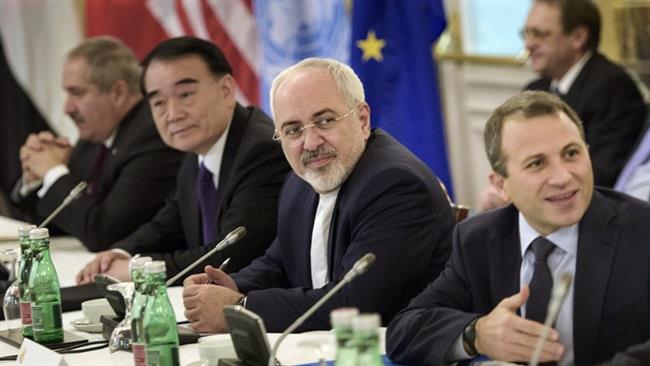
Foreign Minister Mohammad Javad Zarif has said no one should “dictate” their own decisions and views to the Syrian people, who have been suffering from foreign-backed militancy for over four years.
Zarif made the remark on Friday after the conclusion of the international negotiations aimed at resolving the ongoing crisis in Syria in Vienna.
“The future of Syria can only be determined by the people of Syria. People here are not here to dictate,” he said, adding that those who want “to help in the future of Syria have to facilitate political dialog between the Syrian people.”
The Iranian foreign minister also said all sides involved in the conflict should recognize that terrorism and extremism cannot be used even as temporary assets, urging a collective effort in the fight against extremist groups operating in the Middle East.
“There won’t be a possibility to take advantage of terrorists, however temporary, and they all need to realize that the security in this region requires everybody to work together in order to fight terrorism and extremism,” Zarif said.
Talks on JCPOA
Separately, Zarif described recent talks between Iran and P5+1 on the implementation of the agreement over Tehran’s nuclear program as constructive.
Representatives from Iran and P5+1 held several rounds of negotiations on the implementation of the Joint Comprehensive Plan of Action (JCPOA) in Vienna on Thursday and Friday.
Iran’s Deputy Foreign Minister for Legal and International Affairs Seyyed Abbas Araghchi held talks with European Union Political Director Helga Schmid, as the representative of P5+1, over the two sides’ measures for the implementation of JCPOA.
Separately, legal and technical experts of Iran and six world powers discussed the rebuilding of Arak heavy water reactor. Iranian Foreign Ministry’s Director General for Political Affairs Hamid Baeedinejad headed the Islamic Republic’s team.
“Regarding the acceleration of the fulfillment of the other side’s obligations, we had numerous discussions with P5+1, especially the Americans. We wanted to make sure that the commitments would be met in various fields of JCPOA,” Zarif told reporters, adding that good progress was made in the extensive talks over rebuilding the Arak reactor.
[…]
© All Content by IFP News ( Iran Front Page ) is licensed under a Creative Commons Attribution 4.0 International License.
