Friday, December 26, 2025
Home Blog Page 4647

Senior cleric describes embassy attack as wrong move

Senior Shiite cleric Ayatollah Nasser Makarem Shirazi says the Saudis who have experienced failure in pursuit of their regional policies and unholy goals are bent on taking revenge.

“The Saudis should know that bombardment of Yemen won’t get them anywhere,” he said, adding the Saudis want to take revenge for the defeats they have suffered in Syria, Yemen and Iraq.

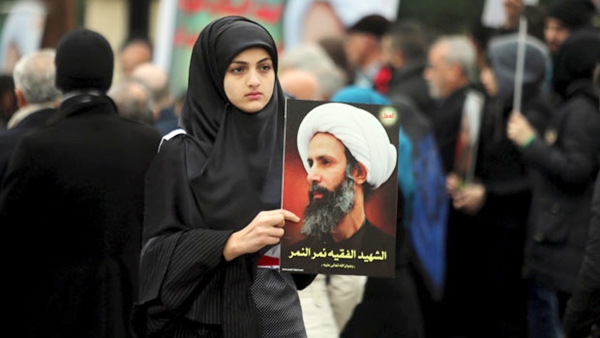
The Islamic Republic News Agency (IRNA) on Monday released Ayatollah Makarem Shirazi’s remarks following the execution of Shiite cleric Sheikh Nimr al-Nimr and the storming in Tehran and Mashhad of the Saudi Embassy and consulate. The following is the translation of part of his remarks:

The source of emulation said the martyrdom of this great sheikh will carry a heavy price tag for the Saudis.

He once again offered condolences over the martyrdom of Sheikh Nimr and condemned the Saudi crime and said that the storming of the Saudi Embassy in Tehran and its consulate in Mashhad by certain elements was an inappropriate measure.

The Ayatollah then advised people and all staunch followers of the Islamic establishment and revolution against taking measures which could prove costly for the country and the establishment.

He further said that such a measure [storming the embassy] is likely to have been taken by two groups: One, the supporters of the establishment who have been enraged by the Saudi policies and decision; although they sometimes get carried away, they need to remain vigilant.

“Another group is comprised of the infiltrators who seize such opportunities to fish in troubled waters. They seek to fuel animosity between the Shiites and Sunnis and help conflicts flare up so that they can reach their own objectives,” he added.

The grand ayatollah went on to say that both the establishment and Islam will have to pay a dear price for such measures. “When global condemnation is pouring in against the Saudis, why should we do something which can turn the tables? I hope our friends can stay calm, cool and collected and do not take measures which are likely to play into the hands of the enemies. I hope they can seriously block the path of infiltrators.”

Iran, Denmark express willingness to expand ties

Iran and Denmark have expressed willingness to enhance bilateral relations in various fields, particularly in economy.

Speaking at a joint press conference with his Danish counterpart Kristian Jensen in Tehran Monday, Foreign Minister Mohammad Javad Zarif said the two sides can expand ties through diplomatic efforts.

Referring to the ongoing crises in the Middle East, Zarif said there are some who seek to escalate extremism and terrorism in the region.

Jensen, for his part, hailed the long-running and expanding cooperation between Iran and Denmark, especially in view of the impending implementation of the nuclear agreement between Iran and P5+1.

He added that Iran has the potential to become a hub for political and economic reasons.

The Danish minister is on a two-day visit to Tehran at the head of an economic and political delegation to hold talks with Iranian officials on issues of mutual interest.

PART TWO: Iran’s role in and contribution to the war on terror

A former French premier has said that his country will not follow in the footsteps of the United States if Washington unilaterally goes back on its promises under the Iran nuclear deal.

Jean-Pierre Raffarin, who served as French prime minister (2002–2005), made the remark in an interview with Etemaad daily’s Ehsan Badaghi and added that JCPOA is an agreement between Iran and six world powers and that one country, out of P5+1, cannot unilaterally violate the nuclear deal.

The opposition UMP party senator – who is now the chairman of the French Senate Committee for Foreign Affairs, Defense and Military – also talked about trans-partisan policies of France on the war on terror and stressed that Iran should be a key player in international efforts to take on terrorism.

Raffarin was in Tehran in mid-December as part of a French delegation led by President of the French Senate Gerard Larcher. The following is the translation of PART TWO of the interview which focused on the international fight against terrorism and implementation of the Iran nuclear deal:

Q: Where does Iran stand in France’s classification of countries which are supposed to help with the fight on terrorism?

A: We have a positive evaluation of Iran’s role in encountering terrorism under the current circumstances. This is what we have announced in our policies and conveyed it to our Western partners. We know that Iran is a country whose people and officials have repeatedly been attacked by terrorists and have suffered big losses.

We think Iran’s firsthand experience of terrorism over the course of history has helped it develop an appropriate understanding of the threat terrorism poses and, of course, of the need to launch a constant and effective fight against such a phenomenon. Iran has gained good experience in fighting terrorism. It has already been involved in serious confrontation with its domestic terrorists. Iran is now involved in the fight against terrorists in Syria and Iraq in a serious and effective manner.

Iran’s mindset – that the fight on terrorism needs the presence of powerful governments – has started to find its way [into other countries] since several months ago. Now we have come to the conclusion that to effectively combat terrorism, a strong national determination as well as well-coordinated international efforts should be in place.

Given what I’ve already mentioned, not only does Iran play a helpful and effective role in such international efforts, but – as France has realized – its presence is a must.

Q: But there are many Western countries in Europe and North America which do not see eye to eye with you over Iran. They are completely opposed to what you’re saying. What role can France play to help create more effective coordination for the fight on terrorism?

A: France plays its role within the [US-led anti-ISIS] coalition. France welcomed the idea of Iran getting involved in efforts to work out a solution to the Syrian crisis. We [in France] view as our allies all those countries which are involved in the international fight against ISIS, and Iran is for sure one of them.

One of the figures I met with in Iran [in my recent trip] correctly put it this way: Paris terror attacks were a wakeup call. I think it was also a wakeup call for the European Union. Like what we did, they [EU officials] have reviewed their classification of international players that can effectively help the war on terrorism.

The recent developments [which unfolded in Paris] have changed the political landscape in Europe, both at national and international levels. Multiple Paris terror attacks on November 13 helped create a very strong national unity in France. Since then, partisan rivalry is no longer the core issue of foreign policy in France.

As members of the opposition, we started to forge close cooperation both with the government and with other [political] groups. As the chairman of the French Senate Committee for Foreign Affairs, Defense and Military, I was assigned by President Hollande to go on multiple missions.

Q: Does the positive attitude you’re saying currently exists in France have anything to do with the Rouhani administration and its policies?

A: It [the rise to power of President Rouhani] was very much effective. A new Iran [under President Rouhani] displayed – in practice – its strong and renewed determination for helping settle international disputes. We witnessed that diplomatic relations in your country doubled back from the path of political confrontation and walked down the path of dialogue. When Iran shows its determination, we cannot remain indifferent to or ignorant of it.

Since [the 2013] elections in which President Rouhani won the public vote, we knew that we had to get ready for a new chapter in relations based on bilateral and multilateral cooperation. There is no denying the fact that the previous government insisted on highlighting the differences in Iran’s foreign relations.

I believe that we need to give a stronger role to Iran in French diplomacy. French officials, I think, will correctly show their new attitude during Mr. Rouhani’s much-awaited Paris visit.

In short, we need to shore up Iran’s position in French diplomacy for three reasons: First, France and Iran share a common civilizational awareness which is a cultural issue. Second, regional peace will remain elusive in Iran’s absence. And third, a step-by-step diplomatic recognition will lead to broad economic cooperation which will be in the best interests of all [nations].

Q: Let me recall a historic issue from the time the government of President Mohammad Khatami in Iran was pursuing détente with Europe and, to some extent, with the US in its foreign policy. As President Khatami was seeking to promote dialogue in Iran’s international relations, George Bush, the then US president, branded Iran as part of “the axis of evil”, something which came with many consequences. How much did the American stance – which was multiplied in the policies of Western countries, including the Europeans – affect global diplomacy after the Khatami presidency?   

A: As you know I was the French prime minister in the [President Jacques] Chirac administration. Back then France was not simply opposed to the US military invasion of Iraq. We also showed opposition to the characterization by Mr. Bush of the world countries as either good or bad.

Let me recall a memory. There was a dinner banquet in the Elysee Palace attended by Messrs. Chirac, Bush, [US Secretary of State Colin] Powell and me. George Bush was speaking about the Palestinian-Israeli war using harsh rhetoric against Hezbollah. Jacques Chirac explained to him that the case was more complicated. Mr. Chirac asked George Bush if he knew that Hezbollah was a political party whose members had been chosen to contest the seats in the national parliament of Lebanon.

He then asked George Bush why as a person who believes in the principles of democracy hewas accusing those who had been democratically elected as members of parliament. As a result, the French president gave a lesson in logic to the US president. I noticed that Powell unhappy with such a lesson, because he himself had already tried to give the president the very lesson but he had failed.

Q: But other Western and European countries finally pursued Bush’s foreign policy. In fact Iran entered an era in which the term “axis of evil” was boosted and was etched in the minds of people.     

A: France was opposed to such a view. As you know France was against the US military intervention in the Middle East as well, and if you can remember all of France’s neighbors aligned themselves with the US in its intervention, but France would not. This was not the first time France did so [acted independently]. France is an independent country with its own sovereignty.

At times France has been at odds with the Americans because of its independence and sovereignty. We do not forget the US assistance in the Second World War, but we don’t like to follow in the footsteps of the US or any other country.

In the period you just mentioned, no other powerful, influential country in Europe challenged its allies politically as much France did. Basically we disapproved of the Bush administration’s diplomatic thesis and its attitude toward Iran. We did have some criticisms, but they were independent stances which had no bearings on others.

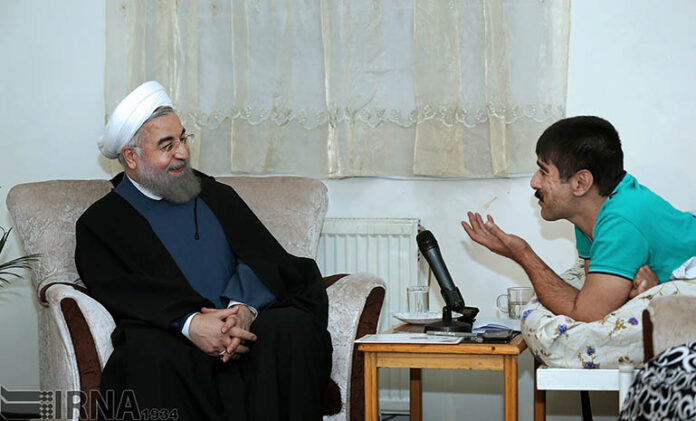
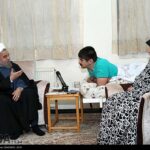
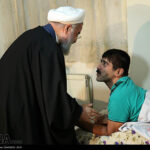
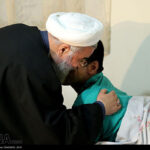
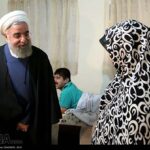
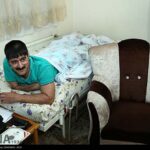
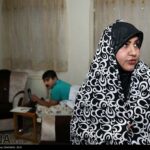
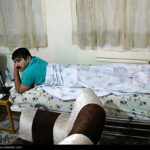
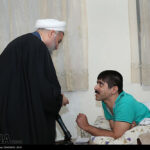
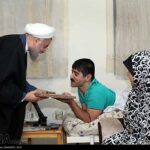
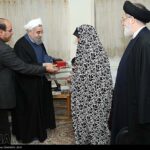
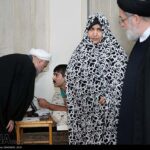
President Rouhani visits disabled war veteran (PHOTOS)

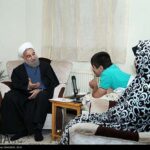
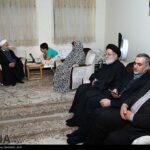
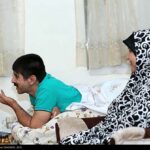
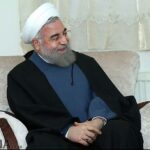
President Rouhani has dropped in on Hossein Azadbakht, a paraplegic veteran of the Iran-Iraq war who suffered severe spinal injury at the age of 18 almost 30 years ago.

At the meeting, the president said the patience of veterans such as Hossein Azadbakht serves as a lesson for members of the public and officials.

At the friendly get-together, Azadbakht said if he had been given an opportunity to choose his future path once again, he would have opted for the same thing: rushing to the defense of homeland and Islam.

The following images of the visit have been released by the Islamic Republic News Agency:

Saudi Arabia sees survival in escalating tensions: Iran

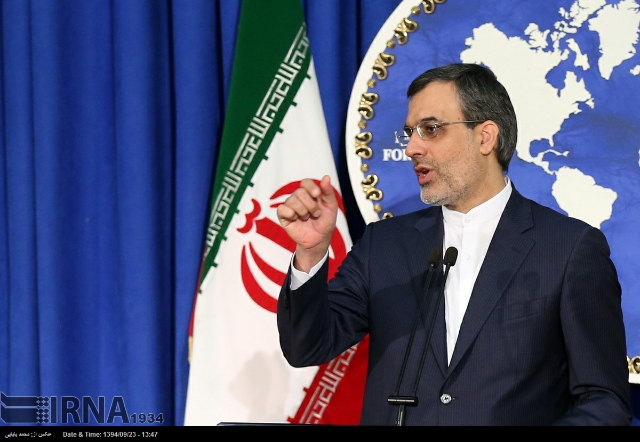
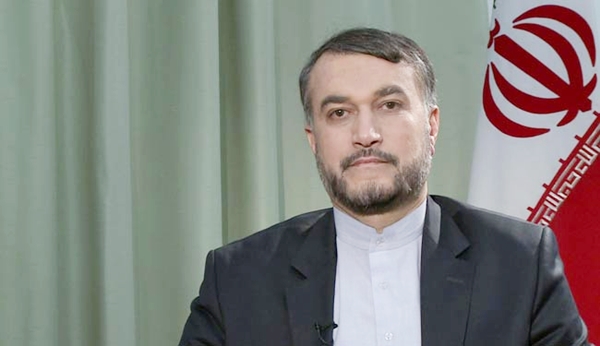
Jaber Ansari

Iran says the Saudi bid to sever ties with the Islamic Republic shows Riyadh’s belief that the kingdom’s survival hinges on mounting tensions.

“It seems that Saudi Arabia considers not only its interest, [but also] its survival in the continuation of tensions and conflicts and is trying to settle its domestic problems through blame games,” Iran’s Foreign Ministry Spokesman Hossein Jaberi Ansari said during his weekly press conference on Monday.

He added that Saudi Arabia’s severance of ties with the Islamic Republic is part of Riyadh’s efforts to divert attention from its domestic problems.

Jaberi Ansari said that the Islamic Republic has fulfilled its duty to reign in public anger and is committed to securing the immunity of diplomatic missions as stipulated in international conventions.

“Saudi Arabia has, however, used the issue as a pretext to increase tensions and conflicts,” he said.

The Iranian official said that creating tensions and conflicts is the Islamic Republic’s red line, adding that as long as Riyadh seeks tension, there is no possibility of a change in Iran-Saudi relations.

Jaberi Ansari said that Saudi Arabia has adopted a policy to destabilize the region since the Al Saud regime was isolated in the international community due to its support for the Takifri terrorist groups.

“The Islamic Republic of Iran pursues a clear and transparent policy with regard to the expansion of interaction and cooperation with all neighbors and world countries and enjoys excellent relations with many regional governments, especially Arab governments,” he said.

Jaberi Ansari further said that Iran will use its diplomatic potential to prevent tensions and called on the international community to take necessary measures to force the Saudis to change their policy.

On Sunday, Saudi Foreign Minister Adel al-Jubeir announced the severing of diplomatic relations with Iran following Tehran’s strong condemnation of the execution of prominent Shia cleric Sheikh Nimr al-Nimr.

The move followed demonstrations held in front of the Saudi embassy in Tehran and its consulate in the northeastern city of Mashhad by angry protesters censuring the Al Saud family for the killing of the top cleric as part of a crackdown on Shias mostly residing in the kingdom’s Eastern Province. Some people mounted the walls of the consulate in Mashhad while incendiary devices were hurled at the embassy in Tehran. Some 50 people were detained over the transgression.

Deputy Foreign Minister for Arab and African Affairs Hossein Amir-Abdollahian was the first Iranian official to react to the Saudi termination of ties, stressing that Riyadh “cannot cover up” its “big mistake” by cutting ties with Tehran.

He noted that no Saudi diplomats were harmed during the protests in Tehran and Mashhad and that “Iran is one of the safest countries in the region” where diplomats are carrying out their responsibilities.

The Iranian official said that this is not the first time Saudi Arabia has threatened regional security with its “strategic errors” and “hasty approaches.”


Iran calls off Major Hajj

The spokesman of parliament’s Judicial and Legal Affairs Committee has said Major Hajj has been cancelled due to the severance of ties between Iran and Saudi Arabia.

Commenting on the impact of a break in ties between Iran and Saudi Arabia on this year’s Hajj, Mohammad Ali Esfanani said, “Iran should have taken the first step to cut its ties with Saudi Arabia after the Mina tragedy. After committing all these crimes, Saudi Arabia should not have been allowed to make a decision in this regard because the Saudis martyred many innocent pilgrims and now they have shamelessly executed Sheikh Nimr al-Nimr.”


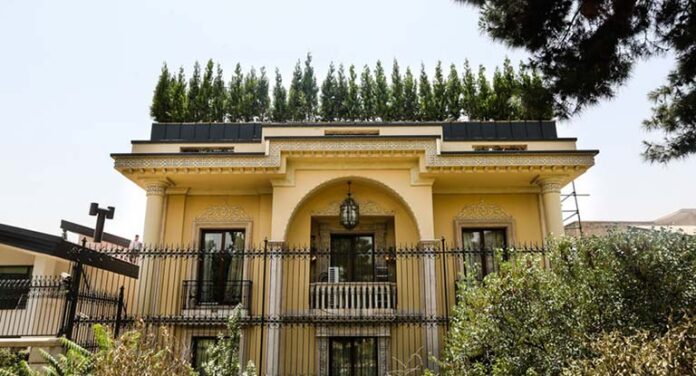
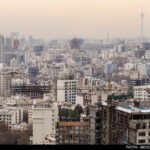
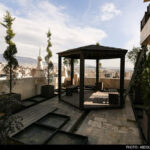
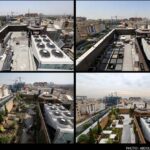
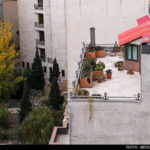
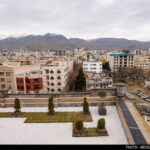
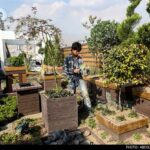
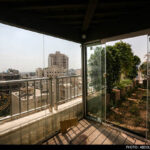
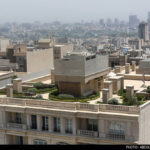
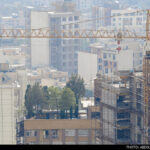
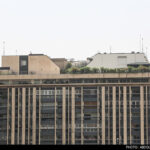
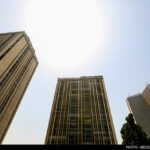
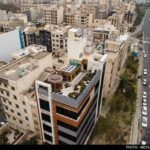
Gardens which made it to rooftops (PHOTOS)

With high-rise apartment buildings replacing conventional houses, for the residents of Tehran living in old-style houses complete with yards, lawn and wading pools is becoming nostalgic.

One way to get the better of that nostalgic feeling is to have your roof-garden; of course not everyone can afford it.

The following images of lawn and bushes appearing on rooftops in Tehran have been published by the Iranian Students News Agency:

Execution of Nimr, a message by Riyadh to Tehran

By executing prominent Shiite cleric Nimr al-Nimr, Saudi authorities seek to illustrate their determination to take on Iran, an Iranian history researcher and political science professor has said.

Nabavi
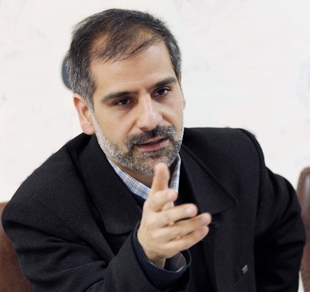
Dr. Abdolamir Nabavi

The following is the translation of part of a wide-ranging interview Dr. Abdolamir Nabavi, a Karaj University professor, gave to Khabaronline.ir’s Saeed Jafari:

Q. In the wake of the execution by Saudi authorities of Sheikh Nimr, how do you see the future of equations in the Middle East and the prospects of ties between Iran and Saudi Arabia?

A. It seems the Saudi measure is a continuation of the iron-fist policy launched toward the end of King Abdullah’s rule. Saudi authorities decided to introduce change to their foreign policy and walk down a more confrontational path with Iran.

The announcement of the execution which came on the same day the ceasefire with the Houthis in Yemen was declared over can signal different messages.

One should not forget the fact that ties between Turkey and Saudi Arabia are on the mend. And the Egyptian foreign minister paid a surprise visit to Saudi Arabia. Normalization of ties between Turkey and Egypt is said to have been on the agenda of the visit. That means Riyadh seeks to buttress the axis to confront Iran and bring Turkey and Egypt on board.

I believe the execution of Nimr was part of a ploy by hardliners both inside the kingdom and outside to muddy the waters and render relations with Iran tense. You should keep in mind that there are many who benefit from high levels of tensions between the two countries and seek to make relations tenser. This latest measure by the Saudi government should be analyzed through that lens.

Official: Saudi Arabia can’t cover up mistake by cutting ties with Iran

Deputy Foreign Minister for Arab and African Affairs Hossein Amir Abdollahian said Saudi Arabia should not try to cover up its big misdeed by cutting ties with Tehran.

He said the decision by Saudi officials to cut relations with Iran will not cover up the grave mistake they did in executing the outstanding religious scholar.

The Foreign Ministry official made the remarks following an announcement by the Saudi Foreign Ministry that Riyadh has cut off its diplomatic relations with Iran.

He said that Saudi Arabia has records of creating insecurity in the region by making strategic mistakes and adopting hasty and unwise policies which have led to the spread of terrorism and extremism.

It also inflicted economic damage on Muslim nations of the region by hatching a plot aimed at reducing oil prices.

He further noted that Saudi Arabia also played a non-constructive and disparaging role during Iran’s nuclear talks with P5+1.

He said the latest mistake of the Saudi government was the execution of Sheikh Nimr al-Nimr, who was a prestigious religious scholar esteemed by the whole Islamic world.

Stressing that none of Saudi diplomats in Iran suffered any injury or damage, Abdollahian noted that Iran enjoys one of the world’s highest security status.

He said [foreign] diplomats in Iran are carrying out their duties in absolute safety.

Saudi Foreign Minister Adel al-Jubeir announced on Sunday that Riyadh severed its diplomatic relations with Tehran one day after the government and people of Iran protested the execution of the prominent cleric Sheikh Nimr al-Nimr.

He told reporters in Saudi capital that Iranian diplomats were asked to leave the country within 48 hours.
Iran, ideal destination for renewable energies investment: VP

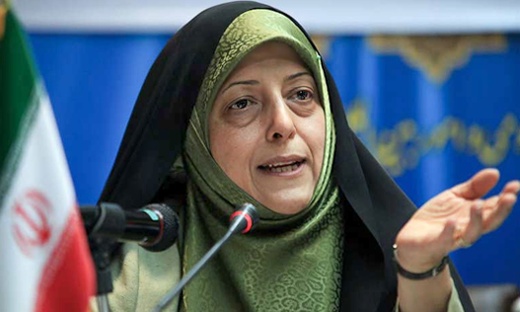
Masoomeh Ebtekar

Studies show that Iran is among the world’s most suitable destinations for investment in the field of generating renewable energies, particularly solar energy, said the head of Iran’s Environment Protection Organization.  

Addressing professors and faculty members of Tarbiat Modares University on Sunday, Masoumeh Ebtekar stressed that her organization and universities can enhance cooperation in conducting applied studies in the field of the environment.

“We do not have much time to waste. Currently, the country is faced with serious environmental challenges and crises. We are required to work out scientific strategies and make effective decisions, based on applied studies, to overcome the problems,” she added.

The government is required to adopt a more practical approach to addressing the country’s environmental challenges in the Sixth Five-Year Economic Development Plan (2016-21).

“We should further promote using green and environment-friendly technologies in domestic industries. In the post-sanctions era, we will have a great deal of favorable opportunities to expand foreign cooperation in this regard and increase investment in the field of environment,” Ebtekar said.