Thursday, January 1, 2026
Home Blog Page 4578

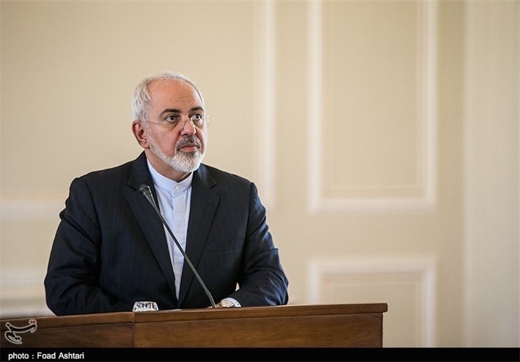
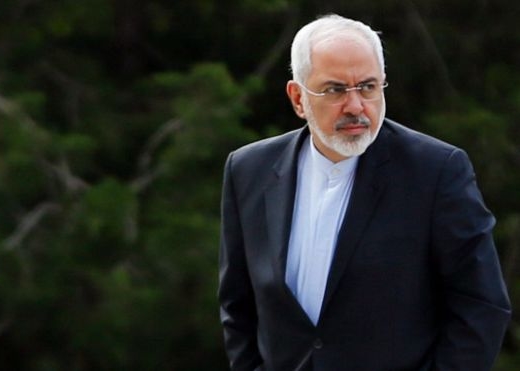
Iran’s Javad Zarif on Syria, Russia, and Donald Trump

Zarif

Fars News Agency published a translation of Foreign Minister Zarif’s interview with the New Yorker’s Robin Wright.

The following is the full text of the interview the New Yorker put on its website on December 18:

Two years of transformative diplomacy between the United States and Iran—after almost four decades of hostility—are reaping tentative benefits on other Middle East flashpoints. Foreign Minister Mohammad Javad Zarif, whom I wrote about in the magazine, is meeting again today with Secretary of State John Kerry, in New York, as part of the new, seventeen-nation initiative to end Syria’s savage civil war. Washington and Tehran support rival parties in the conflict. But, in an interview, Zarif said he sees a “more realistic” tone from the West and “rather promising” statements from the United States recently. The effort faces a January 1st deadline to bring the government of President Bashar al-Assad and the myriad opposition groups to the negotiating table.

Zarif’s visit to the United States, where he was educated and where his children were born, comes as Iran moves into the final days of implementing the historic nuclear deal, known as the Joint Comprehensive Plan of Action. He said that Tehran may be able to fulfill its commitments within two weeks, an estimate confirmed by the State Department. In an interview at the elegant residence of Iran’s U.N. Ambassador, Zarif also discussed Iran’s recent missile test, the Senate move to restore sanctions, and the U.S. Presidential campaign. The interview has been condensed and edited for clarity.

THE SYRIAN PEACE PROCESS

What do you think the prospects are that this Syrian peace process will actually produce something tangible and enduring?

Zarif: Our purpose here is to facilitate a process of national unity and reconciliation between those Syrians who are interested in finding a peaceful resolution—and not those who are bent on destroying Syria for a perverted ideology. This is a tall order.

What role does Iran see for President Assad during the six-month transition government?

Zarif: It’s not for us to decide what would be the role of anybody in the process. Nor is it the role of anybody else to decide.

The peace process talks about convening the Syrian opposition and the government by January 1st, a ceasefire, the creation of a transitional government that is “credible, inclusive, and non-sectarian” within six months, leading to a new constitution and democratic elections within eighteen months. The agreement also requires all countries involved in the negotiations to insure that their allies honor the ceasefire.

Zarif: It is important for everybody to insure that the process will go on, that the ceasefire will hold. Of course, there is no ceasefire against Daesh [the Islamic State], Jabhat al Nusra, and Al Qaeda. . . . So there are two separate tracks. One track is for the Syrian government and the opposition that is interested in a peaceful future of Syria to come together for national unity, for the political process. At the same time, it is a requirement for everybody to stop supporting the extremist groups, to stop allowing them safe passage, to stop allowing them to receive weapons, to stop allowing them to receive financial assistance, and to come together in actually fighting them.

Is Iran prepared to insure that President Assad and his forces engage in a full ceasefire, stop dropping barrel bombs, and stop the campaign against rebel groups?

Zarif: People have been fed misinformation. The fact is that the fighting that is going on on the ground in Syria is with Al Qaeda, with Jabhat al Nusra, with Daesh. The pockets, small pockets, of other groups are usually surrounded by these various extremist groups. . . . Once they stop fighting, there is nothing for the Syrian government to hit other than the terrorist organizations.

You’ve heard the language coming out of Washington recently, with Secretary Kerry saying the U.S. is not looking for “regime change.” Do you sense a change of tone or position in Washington on the role of President Assad?

Zarif: I certainly sense a more realistic tone coming out of Europe and the West in general, and sometimes from the United States. Of course, there have been fluctuations in statements that come from Washington. The latest statements are rather promising. Of course, we believe that it was never up to Iran, the United States, Russia, or anybody else to decide the role of President Assad.

Do you think President Assad is prepared to step aside to facilitate peace?

Zarif: I think we are making an assumption that that is the outcome of the negotiations. I think President Assad will be prepared to accept whatever the outcome of the intra-Syrian dialogue and the decision of the Syrian people is. But people are trying to decide and determine the outcome of the negotiation before even we agree to start the negotiations.

I ask you this question every time I see you. Is Iran wedded to President Assad?

Zarif: Tehran believes it’s none of our business or anybody else’s to decide the future of personalities in other countries.

Do Moscow and Tehran think identically on every issue on Syria?

Zarif: Nobody thinks identically on Syria. But we share the same view with Russia that the future of the personalities in Syria will be determined by the people of Syria and not by people outside Syria.

Iran has played an increasingly visible role in Syria. By my last count, eight generals have died in Syria in the past year and a half.

Zarif: That shows that we are serious about fighting Daesh. We consider ISIS and extremism to be a threat to all of us in the region. . . . Our position is that we help the legitimate governments in the region that have representation in the United Nations. We help the Iraqi government on their request through advisers; we help the Syrian government on their request to help with advisers to fight extremists. . . . So it’s both lawful and legitimate.

But most of the advisers have been helping the Syrians fight the opposition. The Syrian government is notably not really engaged as much in fighting ISIS.

Zarif: No, it is. Who else is engaged in fighting ISIS? The United States?

The array of rebel groups.

Zarif: That’s a joke. The United States wanted to send its trained rebel groups to Syria to fight ISIS. Out of twenty-five hundred rebels they had trained, only seventy accepted to go to Syria to fight ISIS. Everybody else wanted to go to Syria to fight the government. So you’ve got to wake up and smell the coffee. . . . The rebel groups have not fired a shot against ISIS.

How much are Tehran and Moscow coordinating, either about what’s happening on the ground in Syria or in trying to negotiate peace?

Zarif: We try to coordinate regularly with Russia, as well as with others—except for the United States—on what is happening in the region. And we’re open to discussing with everybody the situation in Syria, because we believe it’s a common threat.

IMPLEMENTING THE NUCLEAR AGREEMENT

Where does the Iran nuclear deal stand? What is your timetable to complete steps pledged in dismantling part of the program?

Zarif: We’re not dismantling anything. We are uninstalling some centrifuges and reconstructing the Arak reactor, modernizing it. . . . The remaining activities that we need undertake will not take more than several days, less than two weeks.

Is there a projected day for implementation?

Zarif: Well, we need to resolve still some political issues. . . . There are obligations on the other side that we have to make sure are implemented before we start the final stage of our implementation. . . . So once these are finalized, the practical measures that need to be implemented on our side will start. So I’m not saying two weeks from today. I’m saying two weeks from the time we settle all the difficulties.

What does Iran see as the challenges to implementation that remain?

Zarif: I think the most important challenge that remains is this mentality in Washington that sanctions have been an asset, and some people want to find even an excuse to keep them or an excuse to reintroduce them. I don’t know whether they’ve looked at the record of how sanctions actually produce exactly the opposite of what they wanted to produce. . . .

About three dozen senators have written a letter to the President and called on him not to lift sanctions.

Zarif: They didn’t want the President to accept the Joint Comprehensive Plan of Action to begin with. There are more than three dozen members of our parliament who do not want us to implement J.C.P.O.A. So I think that we’re even.

The Senate letter refers to the Iranian missile test on October 10th.Why is it so important for Iran to test launch a missile?

Zarif: It’s our legitimate defense. These are not missiles that are designed to be capable of carrying nuclear warheads and, therefore, it is within our right to self-defense.

So there’s no prospect there will be an agreement down the road on missiles.

Zarif: None whatsoever. Why should there be? Your allies are spending tens of billions of dollars on buying weaponry that they don’t need in this region. Iran’s military hardware is less than a fraction of that of any of the countries in this region.

Congress has just passed legislation modifying the visa-waiver program. It requires travellers to apply for visas and go through a security check—rather than have visas automatically waived—if they have been to countries on the U.S. list of state sponsors of terrorism. And Iran is on that list.

Zarif: This visa-waiver thing is absurd. Has anybody in the West been targeted by any Iranian national, anybody of Iranian origin, or anyone travelling to Iran? Whereas many people have been targeted by the nationals of your allies, people visiting your allies, and people transiting the territory of, again, your allies. So you’re looking at the wrong address. . . .

You know where the people who killed people in San Bernardino came from. You know where people who did 9/11 came from. You know where the people who did Paris came from, where they transited, where they went. None of them even set foot in Iran. So why are you punishing people who are visiting Iran for that? . . . We’re not going to radicalize them. We never have. Your allies have radicalized people who visited.

There are the cases of some Iranian-Americans who are held in Iran. That really resonates throughout this country.

Zarif: I’ve been doing my best in order to resolve this as humanitarian issue. And I will continue to do my best in this regard.

The case of Jason Rezaian, of the Washington Post, is particularly visible. The government of Iran announced that there had been a verdict but didn’t announce what it was, and then said there was a sentence, but has still not said what it is. Do you know what the sentence is?

Zarif: I’m not privy to that.

DOMESTIC POLITICS

You have elections coming up. How much do you think the success of diplomacy by the Rouhani government and the lifting of sanctions might affect the political mood?

Zarif: It will certainly affect the political mood in Iran, but we’re not running for an election. The Presidential elections are a couple of years away.

Speaking of politics, Iran has come up often in the U.S. campaign debates. On Tuesday, Donald Trump said the nuclear deal was a “horrible, disgusting, absolutely horrible deal” with a “terrorist nation.”

Zarif: That’s not the first interesting statement that he has made. It won’t be the last, probably. But I said “interesting statement.” I didn’t use a derogatory remark.

Governor Chris Christie said that we need to focus our attention on Iran because, “if you miss Iran, you are not going to get ISIS. The two are inextricably connected, because one causes the other.”

Zarif: If anything caused ISIS, it was the 2003 U.S. invasion of Iraq.

Ted Cruz said, “The regime we should change is in Iran, because Iran has declared war on us.”

Zarif: We’ve never declared war on anybody. We defended ourselves against wars that were imposed on us. We have no desire to engage in confrontation with anybody.

Do you have any messages for the American candidates?

Zarif: Wake up to the real world. Look at what’s happening in the region. Look at where people are going, how people react to humiliation and marginalization. I do not think a few more votes is worth making this menace—that we all face—far more complicated. People have to wake up to that and respond to that, not politicize it.
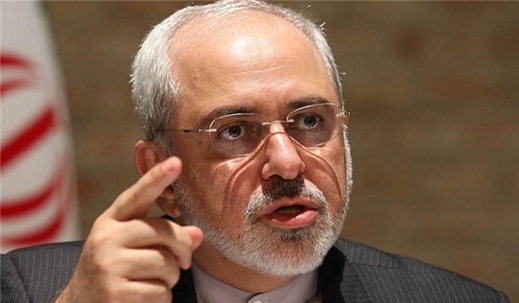
Opposition groups must contribute to peace in Syria: Iran FM

Mohammad Javad Zarif

Iran’s Foreign Minister Mohammad Javad Zarif says the activities of opposition forces in Syria must comply with international rules and regulations, stressing that they should also contribute to the promotion of peace in the crisis-hit country.

Speaking to reporters following a meeting with United Nations Secretary General Ban Ki-moon in New York on Friday, Zarif added that they discussed the latest developments in Syria and Yemen as well as ways to implement a nuclear agreement reached between Iran and the P5+1 group of countries, dubbed the Joint Comprehensive Plan of Action (JCPOA), in July.

“We emphasized the importance of the proper presence of opposition [groups] based on international regulations, which would be acceptable to the Syrian people and which would contribute to peace in Syria,” the Iranian foreign minister added.

He said the opposition group in Syria should have no link with terrorist groups, including al-Qaeda, Daesh, al-Nusra Front and Ahrar al-Sham.

“We have not seen an acceptable list of the names of the existing opposition and terrorist groups in Syria yet,” Zarif pointed out.

The Iranian foreign minister arrived in New York on Wednesday to participate in the third round of international talks aimed at finding a solution to the Syria crisis. The first two rounds of talks on Syria were held in the Austrian capital, Vienna, onOctober 30 and November 14.

Iran-China interaction on Syria

In a meeting with Chinese Foreign Minister Wang Yi in New York on Friday, Zarif said Iran is keen to interact with China to help settle the Syrian crisis.

He added that China played a constructive role during the two previous rounds of international talks on Syria and emphasized that Tehran and Beijing can reach better outcomes in cooperation with other participants in the New York meeting.

He said despite all efforts, there are still different views about certain issues but expressed hope that the parties would manage to reach better and more positive results in the third round of Syria talks.

The Chinese minister, for his part, expressed his country’s readiness to help solve the Syrian conflict and said Beijing would make use of its utmost capacity in this regard.

It is important to differentiate between opposition groups and terrorists in Syria, Wang added.


Ali Akbar Salehi on Nature’s “Ten people who mattered this year” list

Ali Akbar Salehi

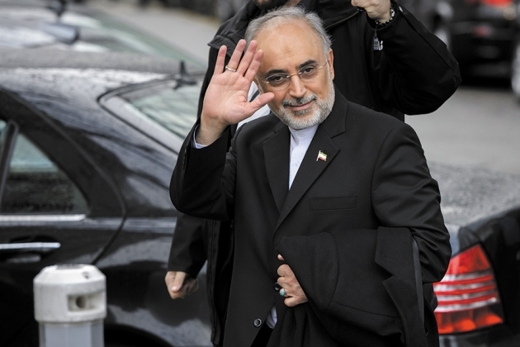
Director of the Atomic Energy Organization of Iran Ali Akbar Salehi has secured a berth on Nature’s list of “Ten people who mattered this year”.

Also appearing on the list alongside Ali Akbar Salehi are Christiana Figueres: Climate guardian; Junjiu Huang: Embryo editor; Alan Stern: Pluto hunter; Zhenan Bao: Master of materials;; Joan Schmelz: A voice for women; David Reich: Genome archaeologist; Mikhail Eremets: Super conductor; Christina Smolke: Fermenting revolution; Brian Nosek: Bias blaster.

The following is the Salehi part of an article the science journal’s Davide Castelvecchi wrote:

ALI AKBAR SALEHI: Nuclear diplomat

The head of Iran’s nuclear programme helped to forge a pact to keep it peaceful.
On 14 July 2015, Iran signed an agreement with six world powers to limit the country’s nuclear development in exchange for lifted international-trade sanctions. If the deal is implemented successfully — still far from certain — it could ease years of tension over Iran’s alleged efforts to build nuclear weapons and so allow the country to become a major player in global science. That an accord was reached at all, however, was due in no small measure to nuclear engineer Ali Akbar Salehi, who is head of the Atomic Energy Organization of Iran. He worked closely with his US counterpart, energy secretary Ernest Moniz, to iron out the deal’s technical aspects.

Educated at the American University of Beirut and the Massachusetts Institute of Technology in Cambridge, Salehi returned to Iran after the Islamic Revolution of 1979 and quickly rose to top posts in both academia and the government. By the 2000s, he had become the international face of Iran’s nuclear programme — a man described as fiercely loyal to his country, but also a voice of reason to whom negotiators could appeal in times of crisis.

Salehi is said to be a deeply spiritual person who has the trust — and the ear — of the country’s supreme leader, Ayatollah Ali Khamenei. And he is one of very few people to have held senior posts in both hardline and comparatively liberal governments.

This talent for building bridges is what enabled Salehi to work so effectively with Moniz during the negotiations, says Reza Mansouri, an astronomer at the Institute for Research in Fundamental Sciences in Tehran and a former deputy science minister of Iran; they shared the language of science. Mansouri, who has known Salehi for more than three decades, says that he has the modern, rational frame of mind that enables people to “agree on how to talk to each other”.

Iran’s Zarif: Peace in Syria Vital

Zarif-Iran

Iran’s Foreign Minister Mohammad Javad Zarif in an article published by The Guardian on Friday underlined the significance of peace in the war-hit Syria.

The full text of Zarif’s article is as follows:

The International Syria Support Group has provided a unique forum for important discussions among a number of significant players, and there is genuine potential to turn the existing political will to help forge peace into tangible action towards this noble end.

Focus must turn to the political process, and the imperative of a unified front against extremist violence. Yet progress continues to be hindered by preconditions which have prolonged the violence and bloodshed for four years. Indeed, what is most ironic and distressing about these preconditions is that they do not represent the wishes of the Syrian people; rather, they reflect the agendas of outside actors, none of whom have the right to impose their will on an independent nation.

The Syrian people do not need guardians. The age of mandates and protectorates is long gone. It is utterly absurd that those who have denied their own population the most rudimentary tenets of democracy, such as a constitution and elections, are now self-declared champions of democracy in Syria. Their democracy, however, is not to give Syrians a voice, but instead to thwart the political process by stonewalling a ceasefire, while pushing for self-proclaimed al-Qaida affiliates to have a prominent place at the negotiating table.

Indeed, it is alarming that some are oblivious to how bands of villains such as Isis or al-Qaida’s multiple incarnations and reincarnations are a common threat to all of us, including their patrons. It is delusional to believe that sponsoring these terrorists, directly or through their newborn ideological siblings, can ever be an asset or leverage to achieve even short-term political objectives. Yet those who support militant extremism are not only continuing to do so, but they sponsor terror with impunity. They even use their political patronages and web of lobbyists to seek to legitimise such assistance, and its recipients, by differentiating between “good terrorists” and “bad terrorists”.

Beyond slaughtering countless innocents, the hooded villains have proven that while terrorism has no religion, no nationality or ethnic background, it certainly has backers with known addresses and horrific agendas. Ask Syrians. Or Iraqis, who during the past 12 years have been the target of almost 2,000 suicide bombings. The perpetrators of these atrocities, and those who created carnage in New York, London, Madrid, Peshawar, Beirut, Tunis, Paris and San Bernardino all have one common thread. They were all radicalised by demagogues preaching the same petro-fuelled perversion of Islam.

What happened in New York that fateful September morning 14 years ago, and the response, is directly linked to the tragedies in Paris, Beirut and San Bernardino during the past few weeks. Despite its immense cost of hundreds of thousands of lives and more than $400tn, the so-called “war on terror” has failed to achieve its purported objective. The perverted ideology behind groups such as al-Qaida not only lives, but thrives. It has spawned ever more vile manifestations of raw hatred and open thirst for blood. Hooded villains are now ravaging the cradle of civilization.

Terrorists should never have been allowed to set the agenda, or dictate the response. These villains are the offspring of indiscriminate retribution, failure to unite in confronting the roots of terrorism, and continued impunity extended to those so-called allies who perceive extremism as an asset or leverage. We must all recognise that security cannot be achieved at the expense of the insecurity of others. Unless there is a serious change in the course of action, violent extremism will haunt us all, including the hands that feed it.
Make no mistake: for the past four years, Syria has been ground zero in nothing short of a paramount fight for our future. I say “our” – repeating the theme of a recent message by Ayatollah Khamenei, who called the menace of perverted extremism “our common worry” – because the world’s fate is common. No one is immune from the consequences of the outcome of the existential battle that we need to fight.
From the outset of the Syrian crisis, Iran’s position has rested on three pillars: respect for the wishes and free will of the Syrian nation to decide its own destiny and to manage its own affairs; opposition to foreign interference geared to impose the wishes of outside actors on an independent people; and rejection of terrorism as a tool to achieve political objectives.
Based on these pillars, Iran has always insisted that there is no military solution to the Syrian crisis. Only ballots – not bullets – can ultimately usher in a new era in Syria. To this end, Iran has consistently advocated an immediate ceasefire and an end to the bloodshed; dialogue between the Syrian government and the opposition groups who reject terrorism; a concerted and genuine international effort to uproot extremist violence; and a global campaign to address the humanitarian catastrophe now, and to rebuild Syria once the flames of war subside.

The International Syria Support Group should encourage, facilitate and enable Syrians to change the course of their future, and by extension, change the course of our collective future. To do so, all must join hands to put into effect an immediate end to the bloodshed and vigorously focus on promoting an inclusive intra-Syrian political process, bringing together all Syrians with a vested interest in a brighter tomorrow. We must close ranks in the fight against extremist violence and terror, while not allowing rage to come in the way of collective reflection and wisdom for a rational and joint response.

Most importantly, we must together work to confront the roots of extremist violence, including double standards, marginalisation, repression, xenophobia and Islamophobia. If not, our children, and their children, will be forced to. And at much greater cost.

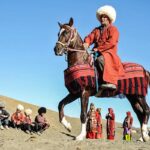
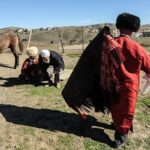
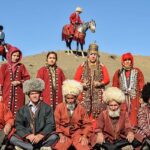
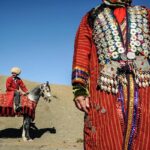
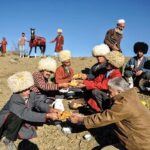
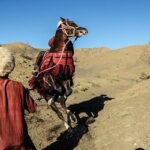
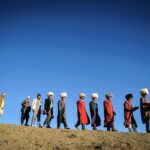
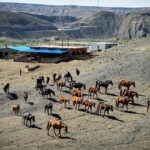
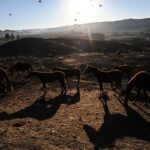
Turkmen thoroughbred horses (PHOTOS)

horse 00

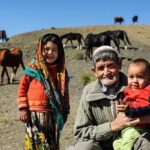
North Khorasan Province in northeastern Iran leads the country’s thoroughbred horse breeding programs.

For generations, methods of horse breeding have been passed from fathers to sons in the area.

The following images have been released by Mehr News Agency:


Roknabadi died of thirst, heat in Mina crush: Iran diplomat

Hossein Amir-Abdollahian

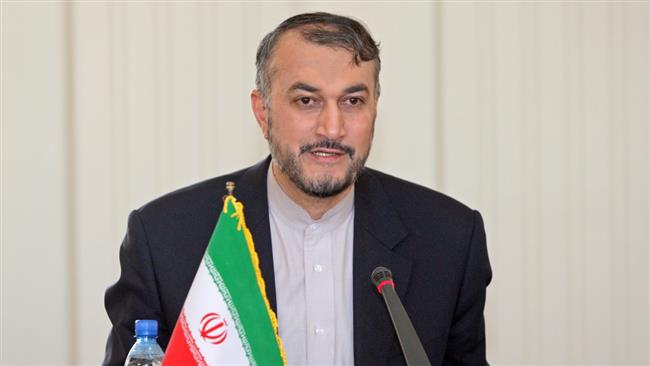
A senior Iranian official says former Iranian ambassador to Lebanon, who lost his life in the September crush during Hajj rituals in Saudi Arabia, died of extremely hot weather, thirst and lack of proper treatment.

The former Iranian diplomat, Ghazanfar Roknabadi, had been missing since the September 24 crush in Saudi Arabia until his body was identified following DNA testing late last month. His body was returned to the Iranian capital, Tehran, on November 27.

The crush in Saudi Arabia occurred when two large masses of pilgrims were directed by Saudi authorities toward one another and fused at a crossroads in Mina, a few kilometers east of the holy city of Mecca, as they were on their way to participate in the symbolic stoning of Satan in Jamarat.

Iran’s Deputy Foreign Minister for Arab and African Affairs Hossein Amir-Abdollahian said on Friday that the fate of 14 Iranian pilgrims, who went missing in the Mina crush, has not been determined yet and added that investigations are still underway.

He added that Iran is pursuing the issue through legal channels and noted that some international NGOs have compiled documents to help determine the exact causes of the incident.

Amir-Abdollahian emphasized that Iran would certainly continue with investigations to determine the fate of the missing pilgrims.

Saudi Arabia claims nearly 770 people were killed in the incident, but officials with Iran’s Hajj and Pilgrimage Organization say about 4,700 people, including 464 Iranians, lost their lives in the tragedy.

The number of the Iranian fatalities exceeds that of other countries.

Iran has criticized Saudi Arabia for failing to responsibly carry out its duties during Hajj, saying Riyadhs incompetence in handling safety at the rituals caused the deadly incident.

Iran takes back purchased artworks from US after nearly 40 years

Iranian Artworks

Iran has taken back over a dozen pieces of American art pieces purchased nearly 40 years ago but blocked for export due to a break in bilateral relations since Iran’s Islamic Revolution.

According to an informed source with Iran’s Center for International Law of the Presidential Office, 10 of the 14 pieces were drawn by late Michael Graves and the remaining four by Robert A. M. Stern, both highly acclaimed American architects.

The artworks were purchased by Tehran Museum of Contemporary Art in 1978, a year prior to the Islamic Revolution, the unnamed source said, adding the art delivery was the outcome of a lawsuit filed by Iranian officials two years ago with a tribunal created in 1981 under an agreement known as the Algiers Accords.

The tribunal, based in The Hague, Netherlands, created a mechanism for Iranians and Americans to seek impounded assets from each other after their bilateral relations were severed in 1979.

The Iranian official also further noted that the artworks were first transferred to Amsterdam and once experts from Iran’s Ministry of Culture and Islamic Guidance confirmed their authenticity, they were taken to the Islamic Republic.

The New York Times said in a report on Friday that an unnamed US State Department official has confirmed the delivery.

“A claim was brought before the tribunal related to various pieces of artwork Iran contracted to purchase prior to 1979,” the official said, adding that the claim “has now been resolved and the specific pieces of artwork have been transferred to Iran,” and that the transfer had been completed “in the last couple of months.”

The value of the masterpieces has not been disclosed.

A message from Darul Quran to Al-Azhar

Alazhar

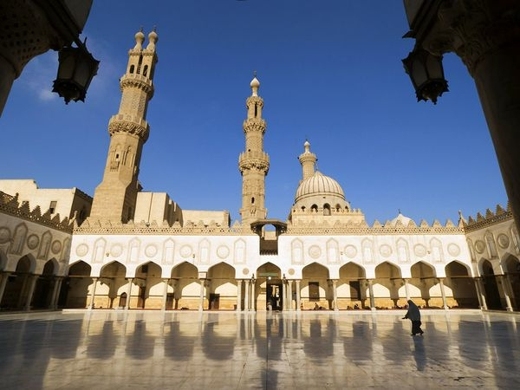
Two Egyptians have been banned from reciting the holy Koran for their trips to Iran. In reaction, the Islamic Republic of Iran’s Darul Quran institute has sent a message to the Egyptian Ministry of Religious Endowment (Awqaf) and Al-Azhar University.

Entekhab.ir on December 15 released the message on the two banned Egyptian Qaris [a person who recites the Koran with the proper rules of recitation (Tajwid)]. The following is the translation of the message:

Dar-al-QuranWhen we heard reports that a recitation ban has been placed on two Egyptian Qaris for their trips to Iran, we found it regretful that you act against what you have repeatedly listened to in the cradle of Koranic recitation: “Muhammad is the Messenger of Allah; and those with him are forceful against the disbelievers, merciful among themselves.” [Al-Fath (The Victory), 29]

Now that you have placed a ban on the Egyptian reciters for their Iran visit, can you please provide answers to the following questions?

Don’t we all make up the Ummah of the Prophet of Affection and isn’t the holy Koran our divine book? Or under the influence of Wahhabist efforts to promote this deviant sect, you believe that our Koran is different from yours?

If the answer is yes, those two Qaris – who have been the target of your anger – should be asked whether the Koran they recited in Islamic Iran was different from the version they read in your country.

If not, what wrong have we done that you treat us unfairly and as your enemies? What a pity! We wish you had treated the real enemies of the holy Koran and the world of Islam that way.

The day the great Egyptian nation was liberated from the hegemony of an unjust ruler and overwhelmed by the joy of its victory thanks to the Islamic Awakening, your Iranian brothers – unlike the US, Israel and those who lend financial and military support to seditionist ISIS and Al-Qaeda rebels – expressed their support for your revolution.

Isn’t the behavior of the enemies of the Egyptian Islamic Awakening who spared no plot [against the revolution] an example of what the holy Koran says, “If good touches you, it distresses them; but if harm strikes you, they rejoice at it” [Ali Imran (Family of Imran), 120]? Doesn’t it mean that you have made a mistake in identifying your real enemy?

Now that a corrupt, pillaging, stone-hearted and ruthless group sheds the blood of innocent people in Islamic lands and other countries in the name of the Islamic State and paints a hateful and disgusting picture of Islam which is a religion of affection, isn’t it time [for you] to stop opposing us and putting the wind in the enemy’s sail by creating divisions [among people]?

Isn’t it time to help your frontline brethren – even kind words would be enough – in the fight against these savage beasts [ISIS terrorists] that are trained by US and Israeli intelligence services, and dissuade them from creating rifts in the world of Islam?

If you set aside the destructive prejudices and choose the second option [helping your brothers in the fight against terrorists], haven’t you actually complied with divine orders such as, “Those with him are forceful against the disbelievers and merciful among themselves” and “And hold firmly to the rope of Allah all together and do not become divided” [Ali Imran (Family of Imran), 103]?

For years, the great clerics in Al-Azhar and Qom Seminary School have tried to bring the viewpoints [of Muslims in Egypt and Iran] closer together and highlight their common ground in order to frustrate the efforts of those who seek to benefit from a chasm in the Islamic world.

How do you think viewing the recitation of the holy Koran by Egyptian reciters in Iran as a crime will serve those efforts? Will such a move benefit or harm those efforts?

Dear brothers! Iranians who are the followers of the Prophet’s Household treat you the way they treat their Palestinian brothers and treat you as their own flesh and blood.

As the great leader of the Islamic Revolution – the late Imam Khomeini who was rightfully a harbinger of Muslim unity in the contemporary world – has put it, “We take proud, and the dear Iranian nation which is fully committed to Islam and the holy Koran takes pride in following a faith that seeks to save the Koranic truths – which mainly focus on unity among Muslims and the entire humanity – from the tombs and cemeteries, and cast them as the biggest savior of humans. This prescription rescues humans from all that restricts their physical, mental and emotional activities, and takes them toward annihilation, destruction, slavery and serving the despots.”

The Iranians have practically proven – as the great Iranian poet, Saadi, has put it – that “If one member is afflicted with pain; Other members uneasy will remain”.

You can clearly witness that today the Shiite Iranian people are uneasy about the painful sufferings of their Sunni brothers in Palestine, Syria, Yemen and other Islamic nations, and do not hesitate to offer their lives and money to defend the territory and honor of the Islamic Ummah.

The holy Koran, which is the common divine rope between you and us, says, “Indeed, the disbelievers are ever to you a clear enemy” [An-Nisa (The Women), 101].

Let’s think about it in order not to make a strategic mistake in telling friends from foes.

“And Allah is most knowing of your enemies; and sufficient is Allah as an ally, and sufficient is Allah as a helper” [An-Nisa (The Women), 45].

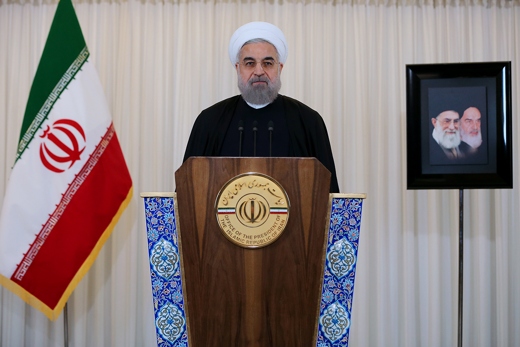
Iran president says PMD closure ‘big success’

Rouhani

Iranian President Hassan Rouhani says the UN nuclear monitoring body’s resolution closing the book on the so-called possible military dimensions (PMD) of the country’s nuclear program constituted a big victory for the Iranian nation .

Addressing the Iranian nation live on state television on Wednesday, Rouhani said the International Atomic Energy Agency (IAEA) vindicated the Islamic Republic after nearly 14 years of investigation.

“After nearly 14 years, it became clear that this [Islamic] establishment has been speaking honestly with its own people and the world. It has never lied. It does not lie, [and] it remains committed to its promise,” he said.

Rouhani reiterated that the Islamic Republic will continue to respect its obligations under its agreement with six world powers.

The Iranian president was speaking one day after the IAEA’s Board of Governors overwhelmingly voted in favor of a draft resolution which brings down the curtain on its investigation into the past and present outstanding issues regarding Iran’s nuclear program.

The draft resolution on Iran’s past nuclear activities had been submitted by P5+1 on December 7.

Rouhani said the “resolution of the PMD issue” removed one of the “important obstacles to the implementation” of Iran’s nuclear deal with the world powers, known under the Joint Comprehensive Plan of Action (JCPOA).

“The ground is now prepared for the implementation of JCPOA,” he said.

Rouhani said international sanctions imposed against the Islamic Republic will have been removed early next year.

“We hope that the other side would take one or two remaining steps in the coming weeks. We also can take positive steps in the coming one to two weeks,” he said.

Iran and P5+1 – the United States, Britain, France, China, and Russia plus Germany – concluded the Joint Comprehensive Plan of Action in Vienna on July 14.

Under JCPOA, limits are put on Iran’s nuclear activities in exchange for, among other things, the removal of all nuclear-related economic and financial bans against the Islamic Republic.

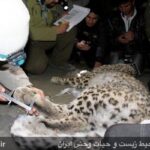
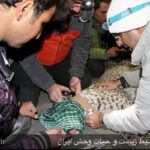
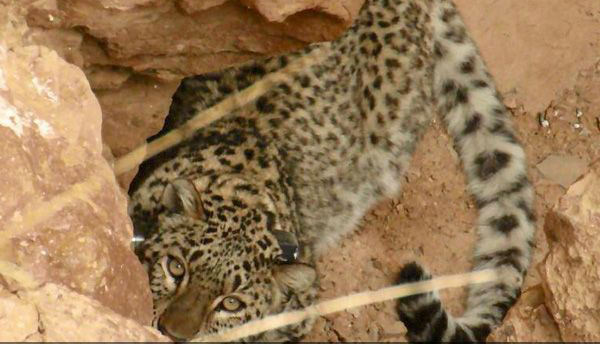
Female leopard fitted with GPS tracking neckband (PHOTOS)

940923_iran-tandure-00

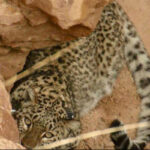
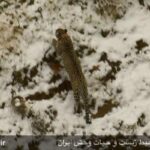
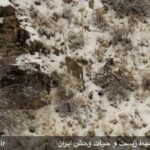
A fifth Persian leopard has been captured alive in Tandooreh National Park and fitted with a GPS tracking neckband.

Unlike the previous four, the leopard is a three-year female weighing in at 40 kg.

The leopard which has yet to give birth has been named Iran.

The following images have been released by the website of Iran Environment and Wildlife: